


Does Financing Furniture Hurt Your Credit

Financing furniture does not hurt credit by default; in Canada, its impact follows two distinct pathways, hard inquiries and payment history, and depends on whether the provider reports the account. A purchase can be manageable when the application is considered carefully and the repayments fit comfortably within the household budget.
But if a financing plan never appears on a credit report, does that mean it carries no financial risk? That's the gap behind many furniture-financing decisions, particularly with checkout instalment plans.
For Southern Ontario homeowners, choosing a sofa involves more than finding the right proportions, upholstery and colour. The payment arrangement deserves the same care as the piece itself, especially when the intention is to invest in heirloom quality rather than make a short-lived purchase.
What Financing Furniture Means for Your Credit
A homeowner finds a sofa that suits the room beautifully. Its scale works, the fabric complements the existing rug, and the construction feels appropriate for years of everyday use. The remaining choice is whether to save longer or bring it home through financing.
That choice isn't automatically a credit problem. The useful question is what happens during the application and throughout repayment, not whether the furniture was purchased outright.
Separate the application from the account
The Financial Consumer Agency of Canada identifies payment history as the most important component of a credit score. Its guidance on improving a Canadian credit score also explains that lender checks connected with credit applications are hard inquiries, which can affect the score and generally remain on credit reports for 3 years.
These are different events. The application concerns a lender's review of the borrower; the account concerns how the borrower manages the obligation afterwards.
Think of it as the difference between being assessed for a responsibility and demonstrating that the responsibility can be handled. A carefully selected application and dependable repayments are a different proposition from submitting applications repeatedly while still deciding what to buy.
Understand what is being offered
Furniture financing can take the form of a store credit card, a personal loan, point-of-sale financing or a lease-to-own arrangement. A similar-looking monthly payment doesn't make those contracts interchangeable.
Before proceeding, a household should establish:
- The provider's identity. The retailer presenting the offer may not be the organisation administering the credit.
- The account structure. A credit card, instalment agreement and lease require different questions.
- The reporting policy. The provider should explain whether the account and payment activity reach credit bureaus.
- The budget fit. Approval shouldn't replace a household's own affordability assessment.
The available furniture-financing information offers a starting point for asking about current plans, rather than assuming that every showroom purchase uses the same arrangement.
For a family-run furnishing destination established in 1914, the appropriate perspective is a long-term one. A piece selected for timeless craftsmanship should be accompanied by an equally considered repayment plan, not a hurried decision made at the end of a showroom visit.
How Hard Inquiries Affect Your Score
Before agreeing to furniture financing, ask what happens to your credit file. A hard inquiry is a record that a lender reviewed your credit after you applied. It is not a record of missed payments, and its presence alone does not tell you exactly how much your score will change.
A retailer may discuss payment terms before you apply. The key moment is when you give permission for a credit check. Ask whether the provider is only explaining the offer or is submitting an application.
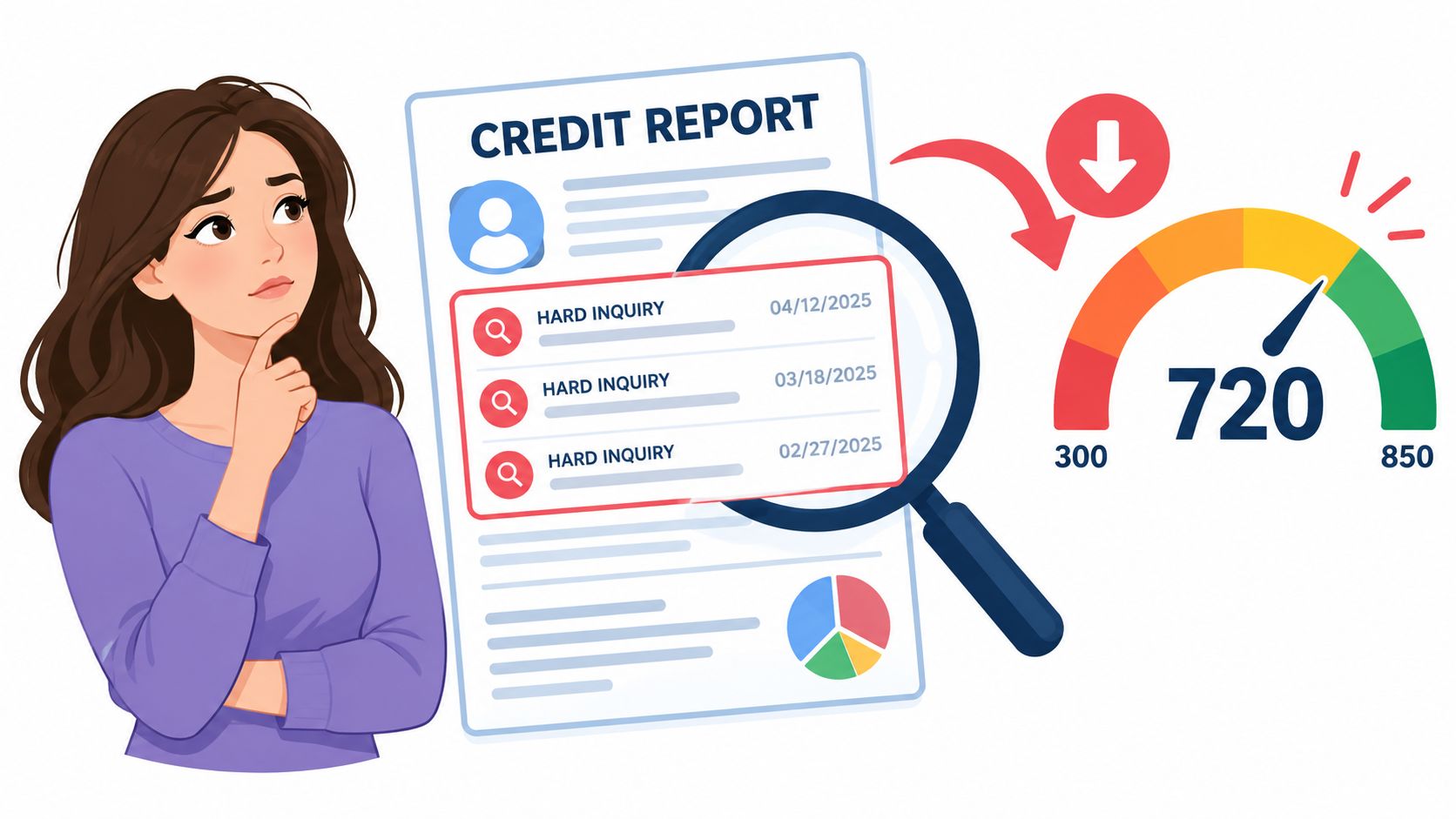
What an inquiry can, and cannot, tell you
An inquiry may remain visible on a credit report for the period described in FCAC guidance, but that does not mean it has the same effect on a score throughout that time. There is no reliable way to predict a particular borrower's score change from a furniture application alone. Existing credit history and the type of financing both matter, so be cautious of anyone promising an exact point impact.
A soft check and a hard inquiry are different kinds of credit checks. Read this guide to credit inquiries for borrowers for an explanation, then confirm directly with the provider which check it plans to make and when. In Canada, the provider's disclosure should make the proposed credit check clear before you consent.
A useful rule: Compare the furniture and financing terms first, then authorize a credit application only when you are ready to proceed.
Ontario shoppers should also read the cost-of-borrowing information presented with a credit offer. Disclosure rules require relevant credit details to be provided, helping borrowers understand the agreement before accepting it. That information can clarify the financing, but it does not replace asking whether a credit check will be made.
Get the answers before applying
A homeowner furnishing a living room might visit several showrooms before choosing a sofa. If every visit becomes an application, several inquiries could appear before a purchase is settled. Asking questions first keeps browsing separate from applying.
Find out when the credit file will be checked, whether the first assessment is soft or hard, and whether continuing after an initial assessment requires another check. Ask for the agreement's terms before submitting an application, too. These answers help a household compare offers without turning each possibility into a credit application.
The aim is not to fear every inquiry or follow an arbitrary waiting period. It is to understand what consent covers and avoid applications made to gather information.
The Role of Payment History in Your Credit Score
Once the sofa is delivered, the financing agreement becomes part of the household's regular bills. A payment due date is easy to overlook among utilities and other expenses, so it helps to understand what payment history can mean for a Canadian credit file.
On-time payments can support a positive credit record when the provider reports the account. Late or missed payments may hurt the score if they are reported. The reporting detail matters: a financing plan can have a payment schedule without every payment necessarily appearing on a credit file. Confirm the provider's reporting practices and read the agreement's rules for missed payments.
What payment trends can and can't tell you
Equifax Canada's Q2 2024 credit-trends report reported that 1 in 23 Canadian consumers missed a payment on at least one credit product, compared with 1 in 25 a year earlier. The national non-mortgage balance delinquency rate was 1.4%, up 23.4% year over year, and at its highest reported level since 2011.
Those figures describe credit products broadly, not furniture financing alone. They cannot predict whether a particular furniture buyer will miss a payment. They do, however, offer a reason to check whether a new bill fits comfortably beside existing obligations. The report also described significant financial pressure for Ontario households, making it sensible to consider the monthly payment in the context of the whole budget.
A furniture payment is like another place setting at the family table: it needs room alongside everything already there. Focus on the amount due and when it is due, rather than assuming the financing label tells the whole story. A store-card balance, a personal-loan instalment, and payments under point-of-sale or lease-to-own agreements can follow different terms. In each case, the contract explains the consequences of missed payments.
For background on late payment credit score damage, see the linked discussion. Canadian borrowers should use their own agreement to confirm reporting practices and default provisions, since contract terms and provider policies can differ.
Make the due date easy to remember. A calendar reminder can keep it visible, while automatic payment can help only if the account has enough funds when the payment is taken. Check statements, too, to confirm that payments have arrived and that the remaining balance makes sense.
A repayment plan should still work in an ordinary, expensive month, not only when the furniture is first purchased.
If a payment may be difficult, contact the provider before it becomes overdue. A conversation cannot erase an amount owing, but it can clarify what options the agreement allows.
Comparing Furniture Financing Options
The phrase furniture financing describes a purchasing method, not a single financial product. Homeowners should identify the underlying agreement before comparing offers.
An attractive monthly figure can obscure differences in ownership, borrowing cost and reporting. The comparison below is a decision framework, not a claim that every provider follows identical practices.
Furniture Financing Options at a Glance
| Option | Credit Type | Reporting | Key Risk |
|---|---|---|---|
| Store credit card | Revolving credit | Confirm the issuer's reporting policy | Balance relative to available credit, plus payment and promotional terms |
| Personal loan | Instalment credit | Confirm whether the lender reports the account | Repayments that exceed the household's comfortable budget |
| Point-of-sale financing | Checkout instalment agreement, potentially including BNPL | May vary by provider and product | Assuming checkout convenience means limited financial consequences |
| Lease-to-own | Contractual payments with ownership conditions | Confirm directly with the provider | Misunderstanding total cost, ownership timing or default conditions |
No typical interest-rate range should be assumed from these categories alone. The relevant figure is the actual annual borrowing cost in the offer, together with fees and the total repayment.

An instalment balance isn't a credit-card balance
A furniture loan isn't normally assessed through the same card-style credit utilisation ratio as revolving credit. Canadian government guidance nevertheless recognises outstanding debt, available credit, credit types and instalment-loan balances as relevant considerations.
The FCAC publication explaining credit reports and scores explains that owing money on an instalment loan doesn't make someone a high-risk borrower. Successfully paying down that debt can weigh favourably, and a loan nearer full repayment is generally viewed more positively.
For example, a homeowner comparing a store card with a separate furniture loan shouldn't assume that identical purchase prices create identical credit effects. The account structure matters alongside the household's other debts.
Match the agreement to the room plan
A financing choice should follow the furnishing budget, not expand it. Reviewing furniture purchases that may be financed can help a household identify priorities before discussing an application.
For homeowners considering Luxury furniture Niagara, a complete room concept can distinguish essential purchases from finishing touches. Interior design services St. Catharines and Custom furniture Southern Ontario searches often reflect a desire for coordinated, bespoke choices; those choices still benefit from a clear spending boundary.
Designer's Insight: A complete room concept can be planned before every piece is purchased. Settling the layout, upholstery palette and rug direction allows a household to build a cohesive interior in stages without borrowing for every finishing detail at once.
Artisanal materials and design-forward forms are design decisions. They shouldn't become reasons to accept a financial arrangement that the household doesn't understand.
The Hidden Side of Buy Now Pay Later
What happens to a furniture payment plan that never appears on a Canadian credit report? Buy now, pay later, or BNPL, can look like a simple checkout option, but each instalment is still a financial commitment. A credit file is only one part of the picture.

What Canadian borrowers may not see
Canadian reporting in The Globe and Mail citing Payments Canada reported that 26% of Canadians had used BNPL in 2025. At the time, providers generally did not report payment activity to credit bureaus and commonly used soft checks or alternative data.
That describes practices at the time of the reporting, not every agreement available now. Ask the provider whether this specific plan reports payments, and whether it treats on-time and missed payments differently. Reporting can vary by product and policy.
This creates a visibility gap. Someone may make every payment on time without adding to a visible credit history, while the repayment obligation still affects the household budget. A quiet credit file does not mean the debt has disappeared.
The agreement matters beyond reporting
Missed payments may lead to fees, collection activity, restricted access to future plans or cash-flow pressure, depending on the contract and how the provider handles delinquency. Policies can change, too, so a lack of reporting today is not a promise that the account will stay invisible.
Before agreeing, read the terms and ask what the plan costs beyond the furniture price, what happens after a late payment, how collections are handled, when automatic withdrawals occur, and how you would be notified if reporting practices change. Those details help reveal the full commitment, much like checking the whole room plan before choosing one piece.
Ontario borrowers may also encounter specific disclosure rules, but their scope matters. Ontario Regulation 108/22 sets written disclosure requirements for credit unions that grant credit. It should not be taken as proof that every BNPL provider or furniture plan follows the same rule. Ask the provider for the written terms that apply to the agreement.
Consumer-purchase reading, such as this how to finance a PC with bad credit guide, can suggest affordability questions, but it cannot replace the terms of a Canadian furniture agreement.
A smaller refresh may avoid another payment obligation. These budget-friendly furniture refresh ideas offer ways to rethink a room through modest changes or staged purchases. A new accent or a different furniture arrangement may be enough, without overlapping repayment commitments.
How to Minimize Credit Impact When Financing Furniture
The most useful protection is a deliberate sequence: establish the budget, obtain the terms, clarify the application process and organise repayment. None of those steps requires a rushed decision in the showroom.
A household should evaluate the full purchase before discussing approval. Furniture, applicable delivery charges and any selected extras belong in the same spending plan.
Review the written agreement
Ontario Regulation 108/22 requires a credit union that grants credit to provide a written disclosure statement containing the information required by the regulation. This is a credit-union requirement, not a basis for claiming that every furniture-financing provider operates under the same rule.
Regardless of provider, a homeowner should request clear information about:
- Amount financed. The borrowing amount should match the agreed purchase and included charges.
- Annual borrowing cost or interest rate. Promotional wording shouldn't replace the contractual cost.
- Payment amount and frequency. The schedule must fit the household's income timing.
- Term and total repayment. A comfortable instalment can still accompany an unsuitable overall commitment.
- Fees and default consequences. These deserve attention before anything is signed.
A low-interest or deferred-interest promotion still creates a payment obligation. If the promotional conditions aren't clear, the household should ask for an explanation in writing rather than infer the meaning from an advertisement.
Build a manageable purchasing process
Compare before applying. Keep the preferred furniture selection separate from permission to check the credit file. This makes it easier to choose a financing offer without generating unnecessary applications.
Confirm reporting directly. The question should cover both positive payment history and missed payments, not just whether the provider “works with” a credit bureau.
Review the credit file. A borrower can request a copy and examine the lender inquiries and account information. If something appears incorrect, the practical next step is to contact the credit bureau and the organisation that supplied the information, keeping copies of the relevant documents.
Keep the room budget unified. A furniture payment should be assessed alongside other renovation and decorating commitments. The home-improvement financing information provides context for discussing a broader project without treating each purchase as an isolated expense.
Before signing: A homeowner should be able to explain the repayment schedule, total cost and consequences of a missed payment in plain language.
If that explanation remains difficult, clarification is more valuable than immediate approval.
The Bottom Line on Furniture Financing and Your Credit
The answer to does financing furniture hurt your credit is conditional, not automatically yes. The decision rests on the application, the account's reporting practices and the household's ability to manage repayment.
The broader lesson is that credit-score protection and financial comfort aren't identical. An agreement can be less visible on a credit report and still be a poor fit for the budget; another can be reported and remain manageable when chosen carefully.
Choose for the home and the household
Furniture deserves thoughtful consideration because it affects daily comfort, room function and the character of a home. These reasons furniture purchases are high-consideration decisions support taking time over both the piece and the payment method.
A curated selection shouldn't feel like a deadline. Saving longer, choosing a smaller scope or furnishing in stages are valid outcomes, not compromises in judgement.
At the Rug Market, rugs are approached as Art for your Floor, the foundation for a room's palette and personality. For homeowners exploring Hand-knotted rugs Ontario, selecting that foundation can help guide later purchases without requiring the entire room to be completed immediately.
- Design priority. Choose pieces that suit the architecture, lifestyle and intended use.
- Financial priority. Keep the repayment obligation within a comfortable household budget.
- Delivery priority. Include white-glove service in the purchasing plan so the transition from showroom to home is understood from the outset.
Across Greater Niagara, Hamilton and Toronto, a well-considered interior can combine lasting materials with careful financial choices. The goal is a room that feels settled and welcoming, without a payment arrangement that creates avoidable concern.
Critelli Furniture offers a curated selection, collaborative design services and furniture-financing information to help homeowners consider the room and its budget together. Experience the craftsmanship in person at our King Street Showroom, and ask about current financing terms before submitting an application. Book your complimentary design consultation today.