
Furniture to Finance Made Simple for Your Dream Home


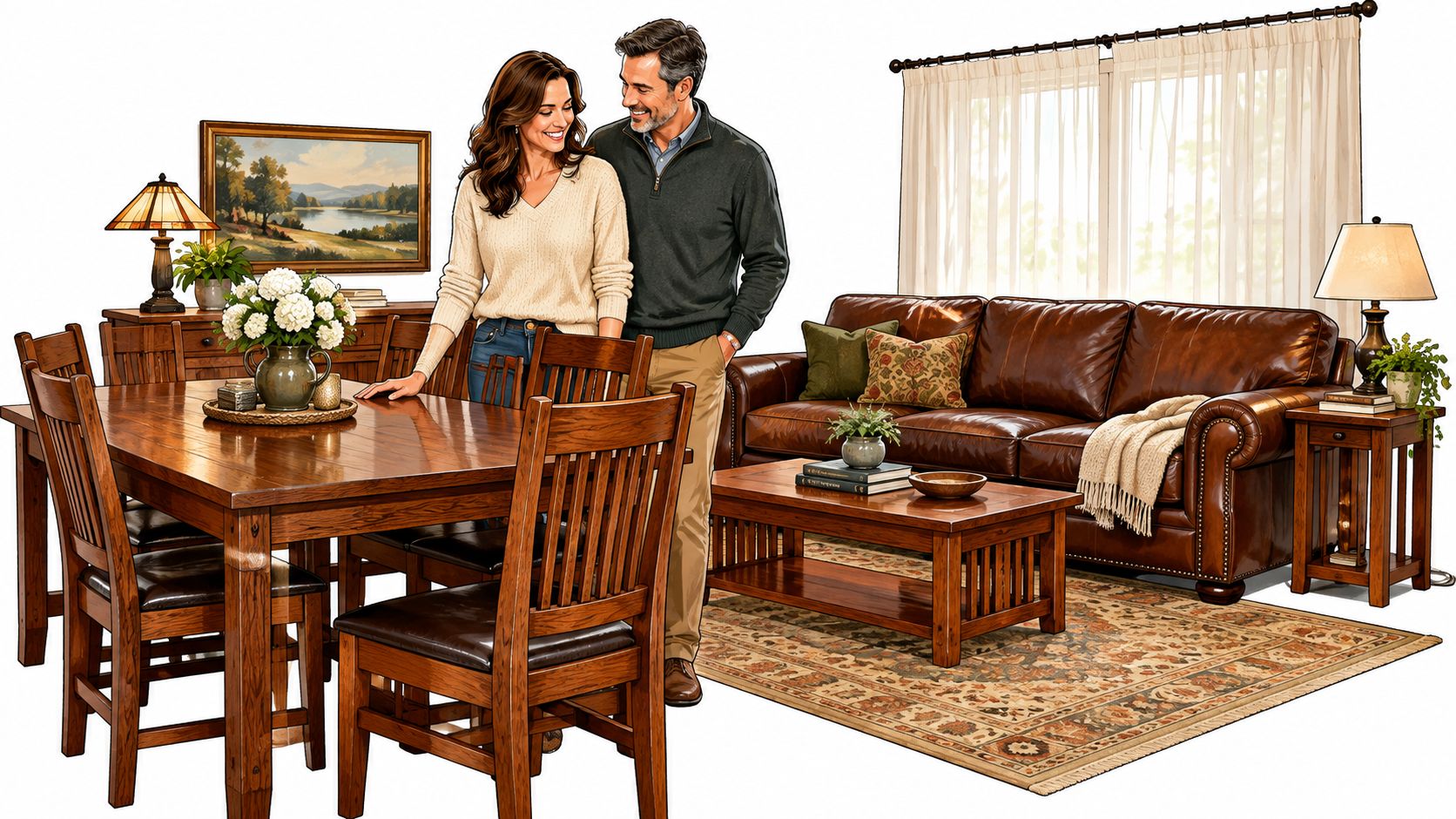
A Southern Ontario homeowner walks into a showroom after months of saving, only to meet a familiar pause. The dining set has the quiet presence of Stickley. The leather sofa carries the depth and character expected from Hancock & Moore. The room finally feels right, but the full price in one payment doesn't fit neatly beside a mortgage, school fees, travel plans, or a kitchen project already underway.
That moment doesn't always call for a compromise. Often, it calls for a better framework.
Furniture to finance works best when it isn't treated as a shortcut to approval. It's a planning tool. For busy households across Greater Niagara, Hamilton, and the Toronto market, the question isn't only whether a purchase can be financed. It's whether the payment structure suits the piece, the timeline, and the home itself.
Introduction to Investing in Heirloom Quality Without Compromise
A couple settles on the sofa they have been searching for for months. The scale is right. The fabric suits the light in the room. The frame is built to last. Then a practical question interrupts a design decision. Should they pay all at once now, or choose a financing plan that better matches a custom order timeline and the day the piece arrives?
That question sits at the heart of heirloom buying. Well-made furniture asks for patience, and often for planning. Rooms with staying power are rarely assembled in a rush. They come together piece by piece, with the same care used to choose the home itself.
Furniture financing can support that process well, but only when it is treated as a timing and total-cost decision. A bespoke dining table with a longer lead time creates a different payment question than an in-stock accent chair. The issue is not approval. It is whether the financing structure fits the order, the delivery schedule, and the household budget without forcing a lower standard of quality.
That distinction matters for busy professionals and growing families. Many want to preserve cash for renovations, school costs, travel, or seasonal expenses while still choosing pieces they expect to live with for years. Sensible hesitation at checkout often reflects discipline, not doubt.
A room works the same way as a wardrobe built over time. The foundation pieces do the heavy lifting. A well-proportioned sofa, a solid-wood dining table, or a bed with lasting construction sets the tone for everything added later. Buying those anchor pieces well often matters more than filling every corner quickly.
Designer's Insight
Start with the pieces that shape daily life. Comfort, scale, and construction are harder to correct later than accessories or styling details.
This is one reason financing can feel polished rather than stressful when it is explained clearly. Buyers need to know three things early:
- What the full cost will be, not just the monthly number.
- When payments begin in relation to production, delivery, and installation.
- What protections apply if timing changes, especially for custom or special-order pieces in Ontario.
That payment start date causes more confusion than many buyers expect. If a custom sectional takes months to arrive, the financing plan should be reviewed with the same care as the fabric memo or floor plan. A beautiful purchase can feel poorly handled if payments begin long before white-glove delivery, or if the buyer did not understand the terms tied to a bespoke order.
Heritage-minded furnishing stores have long understood this balance. Since 1914, Critelli Furniture has served Southern Ontario clients who want quality that lasts, and many of those purchases begin with pieces from an heirloom quality furniture collection chosen for years of daily use, not a short season.
Handled well, financing protects the vision of the room and the rhythm of the household at the same time.
Understanding How Furniture Financing Really Works
A busy couple chooses a custom sofa in the showroom in March. The fabric is right, the scale fits the room, and delivery is expected in early summer. The financing decision is not only about whether they qualify. It is about what the purchase will cost in full, when repayment starts, and how those dates line up with production, white glove delivery, and installation.
That is the clearest way to understand furniture financing. It is a payment structure attached to a purchase timeline.
At the simplest level, furniture financing lets you spread the cost of a larger purchase over time instead of paying the full amount at once. For furniture, that often means a higher-value basket rather than a small impulse buy. The important detail is that the financing clock and the furniture clock do not always start together, especially with custom or special-order pieces.
A helpful comparison is a made‑to‑measure suit. You agree to the price when the order is placed, but the finished piece arrives later. Furniture financing can work the same way. The order may be confirmed today, while repayment may begin at application, at invoicing, or according to a promotional schedule set in the agreement. That start point matters more than many buyers expect.
The three mechanics buyers usually encounter
The language sounds technical, but the structures are familiar once they are explained plainly.
Promotional financing
This usually provides a defined period with reduced or deferred interest, provided the balance is handled exactly as the agreement requires. The appeal is obvious. The risk is timing. A plan that looks attractive for an in-stock item can feel very different if a bespoke piece will not arrive for weeks or months.Installment repayment
The purchase is divided into fixed monthly payments over a set term. This structure suits households that want predictability and a clear end date. It also makes total cost easier to calculate from the start.Revolving retail credit
This works more like an open credit account tied to retail purchases. It offers flexibility, but it can also extend repayment well beyond the original order if the balance is not cleared promptly.
Why timing changes the financing conversation
Furniture is unusual because many purchases involve lead times. A stock lamp and a custom sectional do not place the same demands on your payment plan, even if both can be financed.
Confusion often begins here. A buyer may focus on the monthly figure and overlook the date that repayment starts. If payments begin long before the piece arrives, the practical cost of waiting becomes part of the decision. For custom furniture, timing is part of the price.
That is also why Ontario buyers should read the agreement with the same care they give fabric selection, dimensions, and finish samples. Delivery windows, special-order terms, and consumer protections can affect how comfortable a financing plan feels in real life, not just on paper.
A simple explainer such as this beds buy now pay later guide can help frame how delayed-payment arrangements interact with a major home purchase.
A financing offer should be read like a specification sheet. Monthly payment, total repayment, start date, promotional conditions, and delivery timing all belong in the same decision.
What buyers should ask before agreeing
The best questions are practical and specific.
- When does repayment begin for custom, special-order, or made-to-order pieces?
- What is the total cost over the full term, not only the monthly amount?
- Is the payment fixed for the entire agreement?
- What happens if a promotional term is missed or a balance remains after the promotional window ends?
- How does the financing agreement relate to delivery timing, delays, or changes to the order?
- Which Ontario protections apply if the order schedule changes after purchase?
For buyers who want those details in one place, this Canada furniture financing overview is a useful starting point, especially for custom or premium pieces where lead time and delivery timing shape the decision as much as the payment itself.
Comparing Your Main Furniture Financing Options
A financing plan for a custom dining table should fit the purchase the way the table fits the room. If the piece is built over several weeks, delivered by white-glove service, and inspected on arrival, the payment structure should make sense with that timeline, not fight against it.
That is why the strongest comparison is not monthly payment versus monthly payment. It is order timing, total borrowing cost, and how closely the agreement follows the life path of the furniture from order to delivery.
Furniture Financing Options Compared by Cost and Timing
| Financing Option | Best For | How It Usually Works | What to Check Carefully |
|---|---|---|---|
| Store financing and payment plans | Custom orders, multi-piece projects, higher-value room purchases | Payments are often arranged through the retailer with promotional terms or fixed monthly schedules | Confirm when payments begin, what happens after any promotional period, and how the agreement relates to delivery timing |
| Buy-now-pay-later services | Smaller in-stock purchases with short decision cycles | The purchase is split into a handful of scheduled payments over a shorter period | Short repayment windows can feel tight if delivery, order changes, or household cash flow shift |
| Personal loan or line of credit | Buyers who want borrowing kept separate from the furniture transaction | Funds come from a bank or lender, and repayment continues under that separate agreement | You still repay on schedule even if the furniture order is delayed, revised, or disputed |
Store financing and payment plans
Store financing often suits premium furniture because it is attached to the purchase itself. That can be useful when an order includes custom upholstery, special finishes, or several pieces that need to arrive together.
The details matter. A promotional offer can look graceful on paper and become expensive if a remaining balance triggers higher interest under the contract terms. The wise approach is to read it the way you would read a fabric memo or finish specification. Check the full term, the full cost, and the date payments start.
Buy-now-pay-later services
Buy-now-pay-later services work best for simpler purchases with short lead times. A lamp, accent chair, or in-stock mattress is easier to match to a short repayment schedule than a made-to-order sectional that may take longer to build and deliver.
The main risk is timing mismatch. If payments begin well before the piece reaches your home, the plan may feel less convenient than it first appeared. For readers dealing with the aftermath of missed payments in this category, credit repair for Affirm late payments offers context on how late payments can affect credit.
Personal loans and lines of credit
A personal loan or line of credit gives you separation. Some buyers prefer that, especially if the project includes more than furniture, such as window treatments, lighting, or a small renovation.
The trade-off is straightforward. The borrowing agreement stands on its own. If a custom order is delayed or a delivery issue needs to be resolved, your repayment obligation usually continues according to the lender's schedule.
One practical rule helps here. Match the financing term to the life cycle of the purchase. Shorter, simpler purchases can work with shorter repayment plans. Longer custom projects often call for a structure that respects production lead times, delivery coordination, and the protections that apply once the order is underway.
If your project blends furnishings with broader home updates, this guide to home improvement financing options can help you compare the financing decision in a wider household context.
Eligibility Budgeting and What You Can Comfortably Afford
A couple falls in love with a made to order sofa in the showroom. The scale is right, the fabric is right, and the room finally starts to make sense. Then the monthly payment looks small enough to say yes quickly.
That is the moment to slow down.
Furniture financing works best when you treat it like a room plan, not a checkout button. The question is not whether a lender approves the application. The better question is whether the full cost, the payment start date, and the delivery schedule fit comfortably into real life.

A useful benchmark for Southern Ontario households
Earlier in the article, national spending data showed that furnishings are a real household category, not an occasional afterthought. That matters because many buyers mentally file furniture under one-time indulgence, while the monthly payment lands in the same budget as groceries, utilities, school costs, and travel.
A benchmark helps set proportion. It does not set permission.
If your proposed furniture payment would push this category far above what your household usually absorbs without stress, the piece may still be right. The timing may not be. That distinction is especially important with custom orders, where a household may commit months before white glove delivery takes place.
Another useful perspective comes from Statistics Canada's consumer spending and CPI basket reference, which places furniture and household textiles inside an ordinary spending basket rather than outside it as a rare luxury purchase, as shown in this consumer spending and CPI basket reference. The practical takeaway is simple. Treat furniture financing as part of the household system, with the same discipline you would bring to any other recurring obligation.
A simple comfort test before you apply
Start with the room, then move to the payment.
A dining table that anchors daily life deserves more budget attention than occasional accent pieces. In the same way, a financing plan for a bespoke sectional deserves more scrutiny than a short-term purchase for an in-stock lamp. The larger and slower the project, the more carefully the payment timeline should be arranged.
Before applying, use a short written check:
- List fixed monthly obligations. Include housing, vehicle costs, tuition, subscriptions, insurance, and any existing installment payments.
- Add the proposed furniture payment to an ordinary month. Use a normal month, not your most optimistic one.
- Test a difficult month. Include gifts, school fees, winter utilities, travel, or an unexpected home repair.
- Check the delivery calendar against the payment calendar. If payments begin long before the furniture arrives, decide whether that timing still feels acceptable.
- Prepare documents early. Proof of income, identification, and address details often make the approval process cleaner.
- Confirm the inquiry type. A soft credit check and a hard credit check affect the process differently, so ask which one applies and when.
One reaction matters more than many buyers expect. If the payment fits on paper but makes the month feel tight, that discomfort is useful information. Good rooms feel composed. Good financing should feel the same way.
What to prioritise first
Budgeting by room usually works better than budgeting by isolated item. Designers do this for a reason. The foundation pieces determine scale, circulation, and how the room will be used every day.
Designer's Insight
Rugs are often the quiet financial decision-maker in a room. As Art for your Floor, a hand-knotted foundation can guide scale, colour, and upholstery choices so the household buys fewer “correction” pieces later.
That logic applies even more strongly in Luxury furniture Niagara projects or Custom furniture Southern Ontario homes, where the goal is a layered interior with staying power. In Hand-knotted rugs Ontario searches, the strongest rooms usually begin with proportion and foundation first, then add secondary pieces with more control.
The same principle protects the financing decision. Choose the pieces that shape the room and the years ahead. Then choose a payment structure that respects custom lead times, delivery coordination, and the point at which the purchase is in your home.
From Design Studio to White Glove Delivery and Your Payment Timeline
The most overlooked part of furniture to finance is timing. A household may compare rates carefully and still miss the practical question that matters most with custom furniture. When do payments begin in relation to delivery?
That issue becomes more important as the purchase becomes more bespoke. A made-to-order sofa, a custom dining arrangement, or a room anchored by artisanal rugs may move on a different schedule than in-stock furniture.

Why the room plan affects the financing plan
Ontario design firms commonly structure services around space planning, furniture selection, floor plans, colour and finishes consultations, and in-home or virtual consultations, according to this overview of Ontario interior design service models. In the Toronto area, consultation-based workflows often begin with a discovery call or in-home meeting, then move into measurements, budgets, and recommendations. Examples in Ontario include one-hour consults priced at $250 and virtual consultations priced at $750 CAD for one hour with two designers, as shown in these consultation pricing examples from the region.
Those details show something useful. Design advice in Southern Ontario isn't casual chat. It's a structured service tied to planning, measurements, and sequencing. Financing works better when it follows that same logic.
For households seeking Interior design services St. Catharines, the room should be designed first, then financed in a way that respects the order timeline.
The delivery calendar deserves written clarity
Custom furniture often carries a longer lead time because upholstery, finishes, dimensions, or rug sourcing are selected specifically for the home. A buyer needs to know whether financing begins at purchase, at shipment, or at delivery. That answer should never be assumed.
Ontario-specific guidance also makes delivery timing especially relevant. Consumer-protection rules require clear disclosure of financing terms and written delivery timelines for direct agreements, and that becomes important when a premium buyer wonders whether payment is due before the product is received or inspected. This discussion of household borrowing and Ontario delivery protections helps frame why that question matters.
A complete room concept often includes more than the furniture itself:
- Space planning keeps scale and traffic flow coherent.
- Bespoke customization aligns fabrics, leathers, and finishes with the architecture of the home.
- Rug selection establishes the visual foundation. “Art for your Floor” becomes more than a phrase.
- White-glove delivery ensures the transition from showroom to home feels effortless and fully placed.
One practical option for buyers who want those final-mile details handled with care is a dedicated white-glove furniture delivery service, especially across Greater Niagara, Hamilton, and the Toronto market where placement, assembly, and inspection shape the full experience.
Payment timing should match lived timing. If the room won't be ready for installation until the custom order arrives, the financing conversation should reflect that reality before any agreement is signed.
Common Pitfalls and How to Protect Yourself in Ontario
A common Ontario scenario looks polished in the showroom and messy at home. The custom dining table is still six weeks away, the financing has already started, and the first statement arrives before the room is even ready for installation.
That is the risk to guard against. Furniture financing is not only an approval decision. It is a timing and total-cost decision, especially with bespoke orders, staged renovations, and white-glove delivery.
Households also need to weigh any new payment against everything else already claimed by the monthly budget. Analysts tracking consumer insolvency statistics and debt trends continue to show pressure on Ontario borrowers. For furniture buyers, the practical lesson is simple. A beautiful purchase should still leave enough breathing room after delivery, not just on signing day.
The costliest problems usually start with timing
Promotional financing often sounds straightforward, but the details can behave like fabric care instructions on a fine textile. Miss one line and the result can be expensive. A deferred-interest offer, for example, may depend on full repayment by a specific date, even if the piece itself arrives much later.
That is why the payment calendar should be checked against the furniture calendar.
Use this short protection list before signing:
- Read the full promotion terms. Confirm whether interest is waived or only postponed unless the balance is paid in full by the deadline.
- Match the payment start date to the order timeline. Ask in writing when payments begin, especially for custom, made-to-order, or delayed-delivery pieces.
- Confirm the delivery window in writing. For bespoke furniture, lead times are part of the financial decision, not a separate detail.
- Inspect the order as soon as it arrives. Premium items such as recliners, mattresses, or bespoke upholstery should be checked promptly and documented with photos.
- Keep one complete file. Store the order form, financing agreement, receipts, delivery promises, and email correspondence together.
- Ask about cancellation, return, and dispute procedures before you agree. Clarity is easier to get before a problem starts.
Ontario protections work best when your records are organised
If something goes wrong, documentation matters more than frustration. Ontario buyers should keep a written trail from the first quote to the final placement in the home. That includes promised delivery dates, notices of delay, condition on arrival, and any mismatch between what was ordered and what was delivered.
Ontario's complaint process for furniture and home furnishings generally starts with contacting the business directly and keeping copies of that communication. If the issue is not resolved, organised records make the next step far easier. In practical terms, your paperwork functions like a floor plan. It gives structure to the conversation and shows exactly where the problem sits.
Protecting the piece also protects the purchase
Care during transit and placement matters too, particularly for finished wood, upholstery, and items that may need temporary storage before a room is complete. Buyers planning a move, renovation, or in-home repositioning can review handling advice such as What are the best furniture moving blankets? to reduce the chance of avoidable damage.
The calmest furniture purchase is usually the one with the clearest paperwork, the clearest delivery expectations, and a payment schedule that starts at the right time. Approval matters. Alignment matters more.
Bringing Your Vision Home With Confidence
A well-furnished home rarely comes from chasing the cheapest path. It comes from choosing pieces with permanence, then matching the purchase method to the life around them. Furniture to finance supports that process when it is used deliberately.
The strongest decisions usually rest on three checks. The first is total cost. The second is timing, especially for bespoke and custom orders. The third is cash flow after the room is complete, not just on the day the agreement is signed.

The most refined purchase is usually the most organised one
A heritage-minded household often wants more than a transaction. It wants a room that feels settled, a delivery process that feels white-glove, and selections that will still look right years from now. That's where financing should feel curated, not improvised.
For buyers who want a more structured path, a collaborative design process helps bring together planning, customization, and room cohesion before the payment details are finalised.
A calm framework for the next step
The clearest approach is often the simplest:
- Choose the foundation first. The rug, sofa, dining table, or bed usually deserves priority over smaller accessories.
- Match financing to the order type. Stock purchases and custom orders don't move on the same calendar.
- Protect the handoff. Delivery dates, inspection notes, and written terms matter in premium purchases.
- Buy for longevity. Heirloom quality, artisanal character, and timeless craftsmanship reward patience.
A family-run business founded in 1914 carries quiet weight. Longstanding trust matters when buyers are making decisions that blend design, budgeting, and household timing. Even a practical detail like a Low Price Guarantee becomes more meaningful when it sits inside a broader service model that values curated selection, complete room concept planning, and white-glove follow-through.
The result is confidence. Not pressure. Not haste. Confidence.
Experience the craftsmanship in person at our King Street Showroom. Book your complimentary design consultation today. Visit the Rug Market to find your room's foundation.
Critelli Furniture offers premium furnishings, design-forward room planning, custom order support, financing guidance, and white-glove delivery in a way that suits how real homes come together over time. For households weighing furniture to finance, a visit to Critelli Furniture can turn a scattered purchase into a clear, curated plan.