

Best Fabrics for Sofas: A Curated Guide for Lasting Comfort

Saturday coffee, a dog parked on the corner cushion, a child's feet tucked under a throw, and the sofa doing the quiet work of family life. That's the true test of the best fabrics for sofas, not a showroom pose that lasts five minutes. The right textile has to welcome, endure, and still look composed when the room is busy.
A good fabric choice is a long relationship, not a quick purchase. In a well-planned room, the sofa, rug, lighting, and surrounding pieces need to read as one complete room concept, which is why fabric should be judged the way a designer judges a swatch: by hand, by wear, and by how it behaves in the light. A curated selection beats a rushed one every time.
The Sofa You Live On, Not Just Look At
A sofa earns its place by surviving ordinary life with dignity. Saturday morning coffee drips, a child climbs onto the same cushion, a pet claims the warm spot by the arm, and the piece still has to look intentional by Wednesday evening. That's why fabric choice is less about a pretty sample and more about whether the sofa can become part of the house's rhythm.
Critelli's Design Studio approach treats upholstery as one decision inside a larger room story. A fabric swatch only makes sense when it sits beside the floor, the light, and the other materials already in the home. That's also why a sofa can't be chosen like a standalone object, then expected to carry the whole room on its own.
Practical rule: if the sofa lives in a room used every day, it should be chosen for real wear first, then for beauty, never the other way around.
The most useful way to think about upholstery is through four filters, lifestyle, durability, aesthetics, and care. A family room, a sunroom, and a formal sitting room do not ask the same thing of a textile, even if the sofa shape is identical. A good designer starts there, not with colour alone.
For households comparing pet-friendly options, a good starting point is Critelli's guide to pet-friendly couches, because the right answer usually comes down to weave, finish, and how forgiving the surface is in daily use. A fabric can look refined and still work hard, but only if its construction matches the life around it.
How to Read a Fabric's Durability Before You Fall in Love With It
Durability testing sounds technical until it's translated into household language. Martindale and Wyzenbeek are abrasion tests, which means they measure how well a fabric stands up to rubbing and wear. The important part is not the lab name, it's the number beside it and whether that number fits the room.
For everyday residential use, 15,000 double rubs is widely treated as the minimum according to upholstery guidance. For active family rooms, the practical range is 25,000 to 40,000 double rubs. Homes with children or pets should be looking at 40,000-plus. Those figures turn a vague “durable” label into something a buyer can compare.
Quick Reference for Sofa Fabric Durability
| Household Profile | Minimum Double Rubs | Recommended Double Rubs | Best Fabric Family |
|---|---|---|---|
| Light-use sitting room | 15,000 | 15,000+ | Linen blend, cotton blend |
| Active family room | 25,000 | 25,000 to 40,000 | Tight-weave performance blend, microfiber |
| Children or pets | 40,000+ | 40,000+ | Performance synthetic, microfiber, leather |
| Sun-exposed room | 25,000+ | 30,000+ | Solution-dyed performance fabric |
That table only tells part of the story. Weave tightness matters because a tight weave resists snagging and holds its shape better than a loose, airy construction. Lightfastness matters just as much in bright Southern Ontario homes, especially in a south-facing room where the sun hits the same arm every afternoon. Fabrics rated Blue Wool Scale 5 or higher are the safer bet when fading is a real concern.
For anyone comparing upholstery construction more carefully, this upholstery-material guide is worth a look because fabric labels alone never tell the whole story. The stronger choice is usually the one that combines a solid rub count, a tight weave, and a finish that fits the room's light.
Designer's insight: a fabric that feels softer in the hand isn't automatically the better performer. In a bright, busy room, structure usually outlasts sentiment.
A Tour of the Fabrics Worth Considering
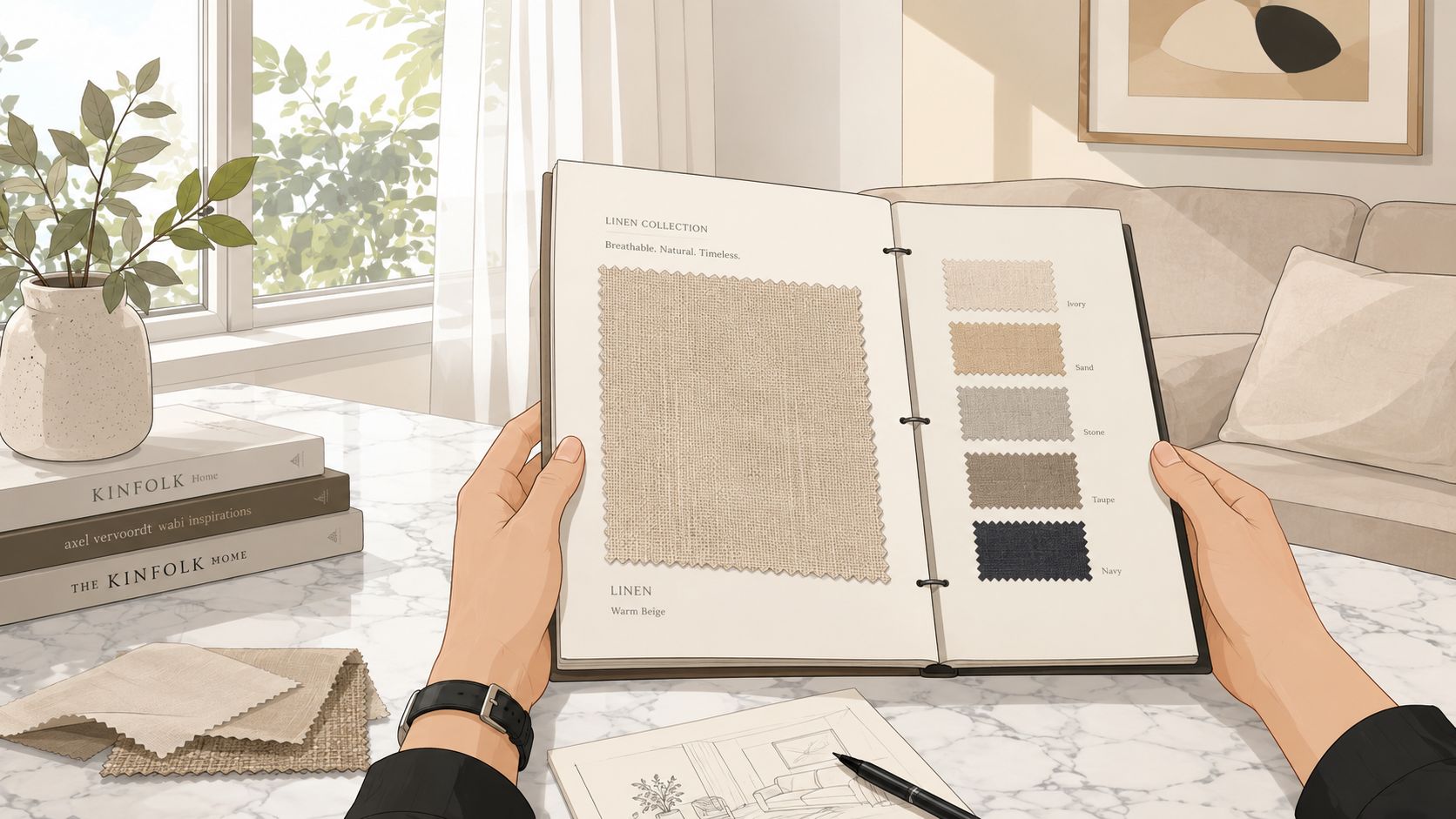
Linen has a relaxed, natural elegance that feels right in a quiet, design-forward room. It breathes well and looks honest, but it creases easily and can ask for more care than people expect. It suits buyers who want softness in the visual sense, not necessarily the most forgiving surface in a family room.
Cotton is the approachable classic. It feels familiar, works well in comfortable homes, and brings a soft hand to the sofa, but it does ask for prompt stain care because it can absorb spills. Cotton blends usually make more sense than pure cotton when the sofa will be lived on hard.
Wool and wool blends are the quiet workhorses, and they deserve that reputation. A UK consumer survey found wool and wool-blend sofas were the most durable sofa materials by user report, with less than one quarter of respondents saying their sofa showed signs of damage or wear and tear Which?. That kind of durability makes wool blends especially persuasive for buyers who want warmth, resilience, and a polished look.
Velvet is the design-forward choice when the room needs depth and a little drama. It catches light beautifully, which gives the sofa presence, but the pile can show pressure marks and direction changes. In a formal sitting room, that's part of the charm. In a rough-and-tumble family room, it needs more discipline.
Microfiber earns its place by being practical. It's forgiving, easy to maintain, and less likely to panic under small daily accidents. For homes with claws, snack crumbs, and constant use, it's a sensible option that doesn't feel precious.
Performance synthetics and solution-dyed acrylics are the modern answer to stain, moisture, and fading concerns. They belong in rooms where the sofa sits near sunlight or sees repeated use. Blends are often the smartest compromise because they balance hand, strength, and appearance without leaning too far into either luxury or utility.
Leather sits in its own category. Full construction matters, especially because mixed backs or sides can undercut performance. For buyers who want a material with a crisp profile and a surface that wipes clean easily, leather can be excellent, but the frame, finish, and construction details have to be right.
Matching Fabric to the Way You Live
A young family in a St. Catharines open-concept home does not need a fragile fabric that asks for perfect behavior. It needs a sofa that can handle spills, constant movement, and everyday lounging without looking worn out. For that kind of household, a high-quality blended fabric with a 30,000-plus rub count makes far more sense than a delicate natural fibre, especially in a tight-weave performance construction that stands up to abrasion and resists visible wear. A tight weave and a stronger construction matter here because they keep the sofa looking composed even when the room is busy.
Pet households narrow the field fast. Two Labradors, a cat that treats the chaise as a throne, or a dog that presses into every arm tells the story clearly, and the shortlist usually lands on microfiber, leather, or tight-weave performance fabric. The core question is not whether the fabric looks polished in the showroom, it is whether fur, claws, and quick cleanup will stay manageable at home.
Entertaining calls for a different kind of judgment. A velvet sofa in a Niagara living room, a refined wool blend, or a carefully finished leather piece can all work when the room is meant to make an impression. The fabric still needs to look collected after the guests leave, not theatrical without the substance to support it.
A sun-drenched Pelham sunroom changes the brief again. Light exposure pushes you toward stronger finishes and better lightfastness, because a fabric that fades early starts looking tired long before the frame has earned that. In a space like that, the weave, the fibre, and the finish all have to hold their ground.
Room planning matters too. If the sofa sits on hardwood, the rug underneath has to support the layout rather than fight it, and the best rugs for hardwood floors guide is a practical companion for getting that balance right. In a room where the floor, the seating, and the traffic pattern all share the same space, the wrong rug makes a good sofa work harder than it should.
For buyers deciding between soft upholstery and a cleaner wipe-down material, Critelli's fabric versus leather sofa guide is a sensible next stop. That choice often settles the whole shortlist, because the difference shows up every time someone sits down with a drink, a dog, or a muddy bag.
Designer's insight: a family sofa should look composed from a distance and forgiving up close. If a fabric cannot do both, it is the wrong fabric.
Living With the Fabric You Choose
The first five minutes after a spill matter more than most buyers realise. Blot, don't rub. Get the moisture out before it spreads, and use the cleaning method that fits the fibre instead of reaching for the strongest product under the sink. That is especially true for a sofa that's meant to age well rather than just survive the year.
Three habits keep upholstery looking good longer, regular vacuuming with a soft brush attachment, immediate stain removal, and avoiding direct sunlight Arredare Moderno. Those are not decorative suggestions. They're the quiet routines that preserve both appearance and lifespan. A sofa placed in a bright window without proper lightfastness is already working against itself.
Wool, blends, leather, and performance fabrics all ask for slightly different care, but the fundamentals stay steady. Vacuum weekly, rotate cushions so wear doesn't settle in one corner, and treat the sofa as a balanced system rather than a single sitting surface. That's how a room keeps its shape over time.
For leather specifically, a separate care plan helps because the surface responds better to gentle maintenance than to improvisation. Critelli's leather care guide is a practical reminder that leather rewards consistency. It's not difficult, but it does punish neglect.
Direct afternoon sun, the wrong cleaner, and skipped rotation are the main enemies. A beautiful textile can tolerate normal life, but it can't tolerate being ignored. That's why the maintenance question should be asked before the purchase, not after the first stain.
Why Custom Upholstery Is Often the Smarter Investment
Off-the-floor sofas usually make buyers choose between the right colour, the right hand, and the right level of durability. Custom upholstery removes that compromise. It lets the frame, cushion fill, scale, and fabric work together so the final piece fits the room instead of merely filling it.
That matters most when the room has a specific demand. A south-facing sunroom needs a lightfast textile. A household with pets needs a tighter weave. A family with allergies may prefer a material choice that supports easier maintenance. Standard lines rarely solve all of that cleanly.
A custom frame also changes the long view. A well-made piece from a heritage maker such as Stickley or Hancock & Moore can be recovered rather than replaced, which is how a sofa starts acting like heirloom quality furniture instead of disposable seating. That's the difference between a purchase and a long-term room decision.
For buyers in Greater Niagara, Hamilton, and Toronto, a custom path is also more efficient than revisiting the market repeatedly. Critelli's custom-couches page is one place to start when the goal is a sofa that fits the home, not the other way around.
Building the Room Around the Sofa
A sofa fabric always reads in context. A hand-knotted wool rug can ground a velvet sectional and keep the room from feeling too formal, while a performance rug can make a linen sofa feel less fragile in a family setting. That's why the floor should be treated as the foundation, not the afterthought.
Lighting changes the story too. Warm light softens texture, cooler light sharpens it, and daylight reveals the true personality of the weave. A textile that looked perfect under showroom lighting can feel entirely different at home, which is why swatches need to be seen beside the actual floor, paint, and drapery.
Critelli's Rug Market treats rugs as art for your floor, and that framing makes sense here. The rug anchors the seating, the sofa answers it, and the room feels intentional only when both are chosen together. A sofa chosen alone often ends up looking orphaned once the rest of the room is in place.

That layered approach is exactly why a two-showroom model, Critelli Furniture on King Street and Critelli Modern on St. Paul Street, works so well for design-minded buyers. The sofa, rug, and surrounding pieces can be considered as one composition instead of three separate purchases.
Five Myths Worth Leaving Behind and the Sofa Worth Choosing
Leather isn't indestructible. It can be a strong choice, but construction and care still matter. Linen isn't too delicate for daily life either, it's better in rooms where the household accepts a softer, more relaxed wearing-in process.
Higher thread count doesn't automatically mean better sofa fabric, because weave structure, fibre content, and finish matter more than a single number. Dark colours don't hide everything, they often show dust and lint more clearly than buyers expect. Performance fabrics also don't have to look like outdoor furniture, especially when the weave is refined and the finish is thoughtfully selected.
For buyers who want an efficient way to compare upholstery and bespoke furniture care, this collaboration application resource is useful context for how premium material decisions tend to be handled in design-forward spaces. The larger point is simpler. The right sofa fabric is the one that suits the room, the household, and the light, not the one that sounds best in theory.
A family-run destination since 1914, Critelli serves buyers across the Greater Niagara, Hamilton, and Toronto markets with a white-glove approach, a curated selection, and support from the showroom to the home. For anyone comparing the best fabrics for sofas and wanting the decision made with confidence, that's the right place to begin.
A CTA for Critelli Furniture. Experience the craftsmanship in person at our King Street Showroom, then book your complimentary design consultation today so the sofa, rug, and room can be planned as one complete composition.