
What Is Minimalist Interior Design? a 2026 Guide

Minimalist interior design is less, but better, a philosophy of intentionality, quality, and calm shaped by the larger residential design market, which reached about $133.6 billion globally in 2024. In North America, which holds 35% of that market, about 18% of consumers prefer minimalist styles, while 25% lean towards Scandinavian or minimalist-adjacent designs, so this is clearly a mainstream way to furnish a home, not a cold niche.
That matters on a busy evening in Southern Ontario, when a room feels crowded before the day's noise has even left it. Warm minimalism answers that tension with curated selection, heirloom-quality pieces, and a quieter rhythm at home, the kind of approach a family-run business like Critelli has supported since 1914 through timeless craftsmanship and thoughtful room planning.
The Philosophy of Intentional Living
A home often feels most exhausting when every surface asks for attention. Minimalist interior design begins by reducing that strain, so the room can support rest, conversation, and daily life without constant visual friction. In practice, that means choosing fewer, better pieces and letting each one carry real weight in the composition.
Unlike the stereotype, warm minimalism isn't an empty white shell; rather, it's a thoughtfully edited home where furniture, light, and texture work together with restraint. The idea is close to the simplified-living mindset explored in RBA Home Plans on simplified living architecture, where the environment supports clarity instead of distraction.

The philosophy also aligns with the broader idea of loving the home you already have, which pairs naturally with the design perspective on home as self-care. A restrained room can feel personal when the selections are deliberate rather than decorative for decoration's sake.
Practical rule: If an object doesn't support comfort, function, or proportion, it probably doesn't belong in the room.
For a heritage-minded home, the appeal is longevity. A well-made sofa, a hand-knotted rug, or a beautifully scaled table ages with the room instead of chasing it into the next trend cycle. That's why minimalism feels compatible with heirloom quality, it leaves space for craftsmanship to be seen.
The Origins and Evolution of Minimalism
Minimalism didn't appear as a showroom look. Its roots are usually traced to 1920s Bauhaus architecture and Japanese Zen influences, where form, purpose, and proportion carried more importance than ornament. That history still matters because it explains why minimalism feels disciplined rather than casual, even when today's rooms are softer and more inviting.
Over time, the style moved away from rigid austerity. What began as severe modern reduction has become a more livable language, one that values clarity without rejecting warmth. That evolution is why many contemporary homes now use minimalism as a foundation, then layer in natural materials, better scale, and personal objects with restraint.
A useful way to think about it is through the market it occupies. The global minimalist home décor market was valued at $56.65 billion and is projected to reach $95.21 billion by 2032, which underlines its enduring commercial and aesthetic relevance as a projection rather than a passing mood (StrategyMRC minimalist home décor market). A style doesn't sustain that kind of attention unless it solves a real design problem.
The solution here is simple. Minimalism answers the need for order, daylight, and purpose in a way that still feels elegant. In that sense, it belongs in the same conversation as modern furniture design, because both rely on clean structure and purposeful composition.
What changed from early minimalism to today
Early versions often prized strict reduction. Today's better rooms soften that edge through texture, natural colour, and more livable proportions. The result feels less like a doctrine and more like a lasting design discipline.
The Six Core Principles of Minimalist Design
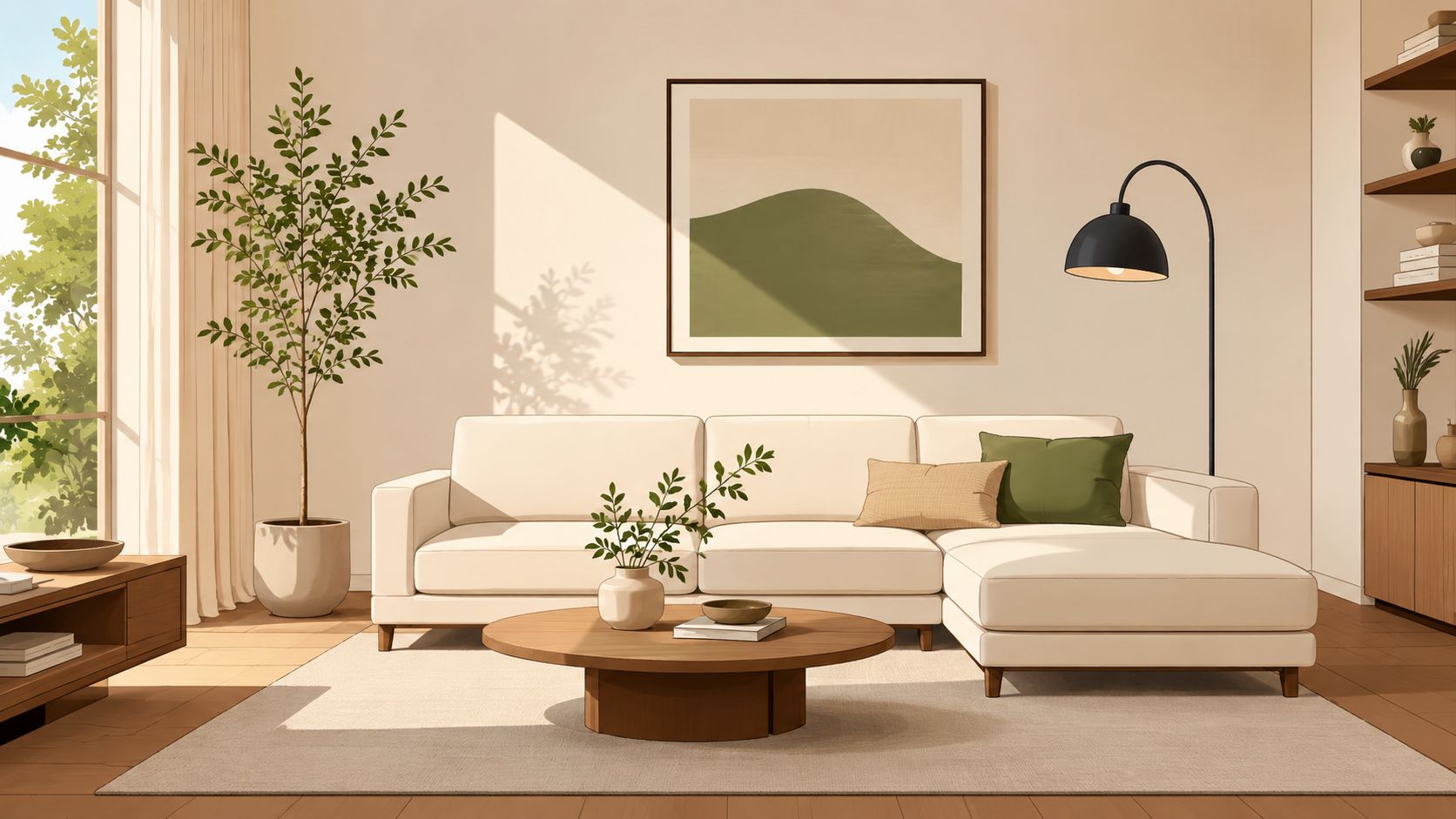
Minimalist interiors are defined by prioritizing function and composition over ornamentation. The style relies on clean, geometric lines and simple forms to create order, so every object either serves a purpose or materially supports the room's balance (Marazzi Group on minimalist home furnishing colours, materials, and furniture). That sounds abstract until it's translated into the actual decisions a home demands.
1. Use space intentionally
Empty space isn't wasted space. It gives furniture room to breathe and lets the eye rest, which is especially useful in open-concept homes where too many shapes compete at once. A single sofa with room around it often feels calmer than a crowded seating arrangement.
2. Let natural light do more work
Minimalist rooms usually feel brighter because they reduce visual interruptions. Low-contrast surfaces, simple window treatments, and a clear line of sight help daylight move through the space. In practical terms, that can make a compact room seem less compressed without changing its footprint.
3. Keep the palette restrained
Neutral or monochromatic colour schemes work because they stop surfaces from arguing with one another. That doesn't mean the room has to feel flat. A warm ivory wall, a pale oak table, and a soft taupe textile can create depth without adding noise.
4. Choose tactile materials
Once ornament disappears, texture becomes the mood-setter. Wood, stone, cotton, and linen add warmth through touch and grain, not pattern. A linen sofa or a stone-topped table can achieve an understated expressiveness because the material itself does the visual work.
5. Respect scale and proportion
Minimalism is unforgiving when pieces are too large or too small. A bulky table in a small seating area will dominate the room, while undersized pieces can make it feel unfinished. Good proportion keeps the room composed even when there are only a few elements in it.
6. Make function non-negotiable
Every piece needs a reason to stay. That often means concealed storage, multifunctional furniture, and surfaces kept clear except for a few select objects. The practical side of minimalist interiors is not about deprivation, it's about making each decision carry its share of the room's performance.
A minimalist room doesn't feel empty when the essentials are chosen with discipline. It feels complete.
Beyond the White Box Common Misconceptions
The most common fear is that minimalism will make a home feel cold. That happens when a room is stripped of personality, not when it's edited with care. A warm minimalist interior still has softness, depth, and lived-in comfort, it removes visual excess so those qualities can register more clearly.
Natural materials are a large part of that shift. Wood, stone, and linen bring warmth back into the room through texture and subtle variation, and the style depends on high-finish discipline rather than decoration for its character (Antic Colonial on minimalist decoration). A room with fewer pieces can still feel rich if the remaining pieces are beautifully made.
Families in Niagara, Hamilton, and the wider Southern Ontario region often need rooms to carry more than one role. A living room may need to host guests, hold toys, and support a quiet work corner, all without looking chaotic. That's where minimalist thinking becomes practical rather than aesthetic, because it asks what the room must do before asking how it should look.
The misconception that minimalism is impractical comes from treating it like an image, not a method. A curated bench with storage, a table with hidden drawers, or a rug that anchors a busy seating area can keep the room orderly without making daily life harder. For a more personal approach, this guide to personalising a minimalist room gives helpful direction on how to keep individuality in the mix.
What gives the style its staying power is that it doesn't ban comfort. It asks for better editing, stronger materials, and a calmer relationship between objects. That's a very different proposition from an empty white room.
Bringing Minimalism Home Room by Room
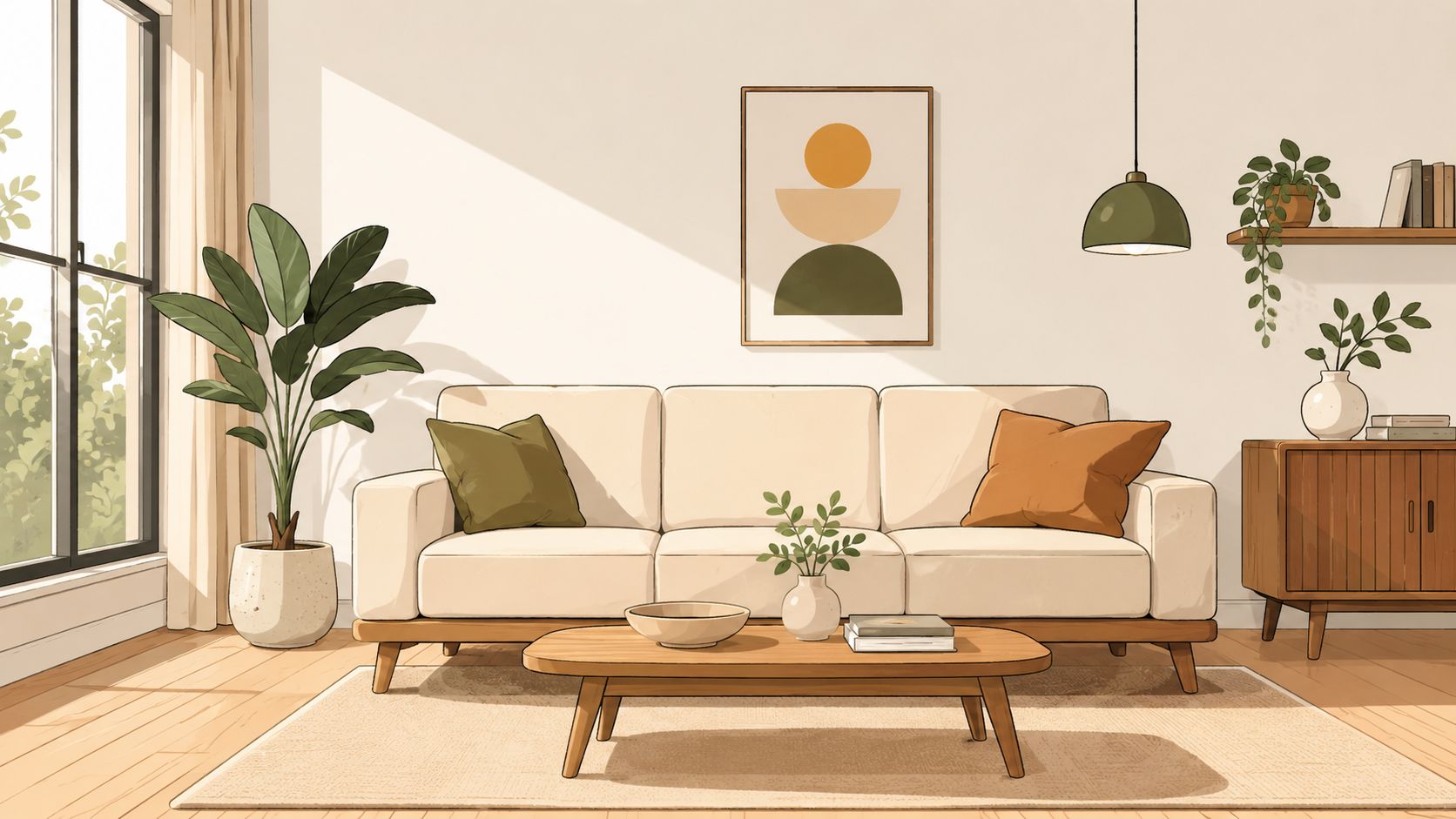
Minimalism becomes easier to understand once it is seen at work in actual rooms. A living room, bedroom, and kitchen each call for a slightly different balance of restraint and utility, yet the same principle still holds. Every item must earn its place, as noted in Apartment Therapy on minimalist interior design.
Start with the room's anchor and let the rest follow. In a living room, a well-scaled sofa gives the space its structure, while a Stressless recliner can add comfort without crowding the view if its shape and finish are chosen with care. One coffee table in wood or stone usually does more for the room than several smaller surfaces, because the eye reads a single clear gesture more easily than a collection of compromises.
Bedrooms ask for a gentler version of the same discipline. Magniflex suits that setting because the bed should support rest before it supports styling. Keep bedside surfaces clear except for one lamp and one useful object, then let the bedding provide softness through texture rather than pattern.
The rug often belongs first
A room can feel unfinished until the floor has been addressed. In a minimalist setting, a rug becomes Art for your Floor, the piece that sets scale, tone, and warmth. A hand-knotted rug in Ontario can ground the room before any accessory is added, which is why the Rug Market is often the right starting point for a curated room concept.
That same logic matters in the kitchen, especially where storage and circulation shape daily comfort. Readers who want a focused example can use the Guide to Reston minimalist kitchens, where clean lines and hidden utility give the room its calm. The idea also fits homes that need visual order without losing everyday usefulness, and it connects naturally to interior design for small spaces, where every choice has to work a little harder.
Designer's Insight
Pair a sculptural wood table with a neutral rug and one tactile upholstered chair, then stop. The room usually feels more resolved when the composition is edited one step earlier than expected.
For homeowners comparing options for Luxury furniture Niagara, Interior design services St. Catharines, Custom furniture Southern Ontario, or Hand-knotted rugs Ontario, the decision should always return to how the room will live. Minimalism works best when the pieces are chosen as part of a whole, not as separate purchases.
Your Curated Home A Simple Checklist
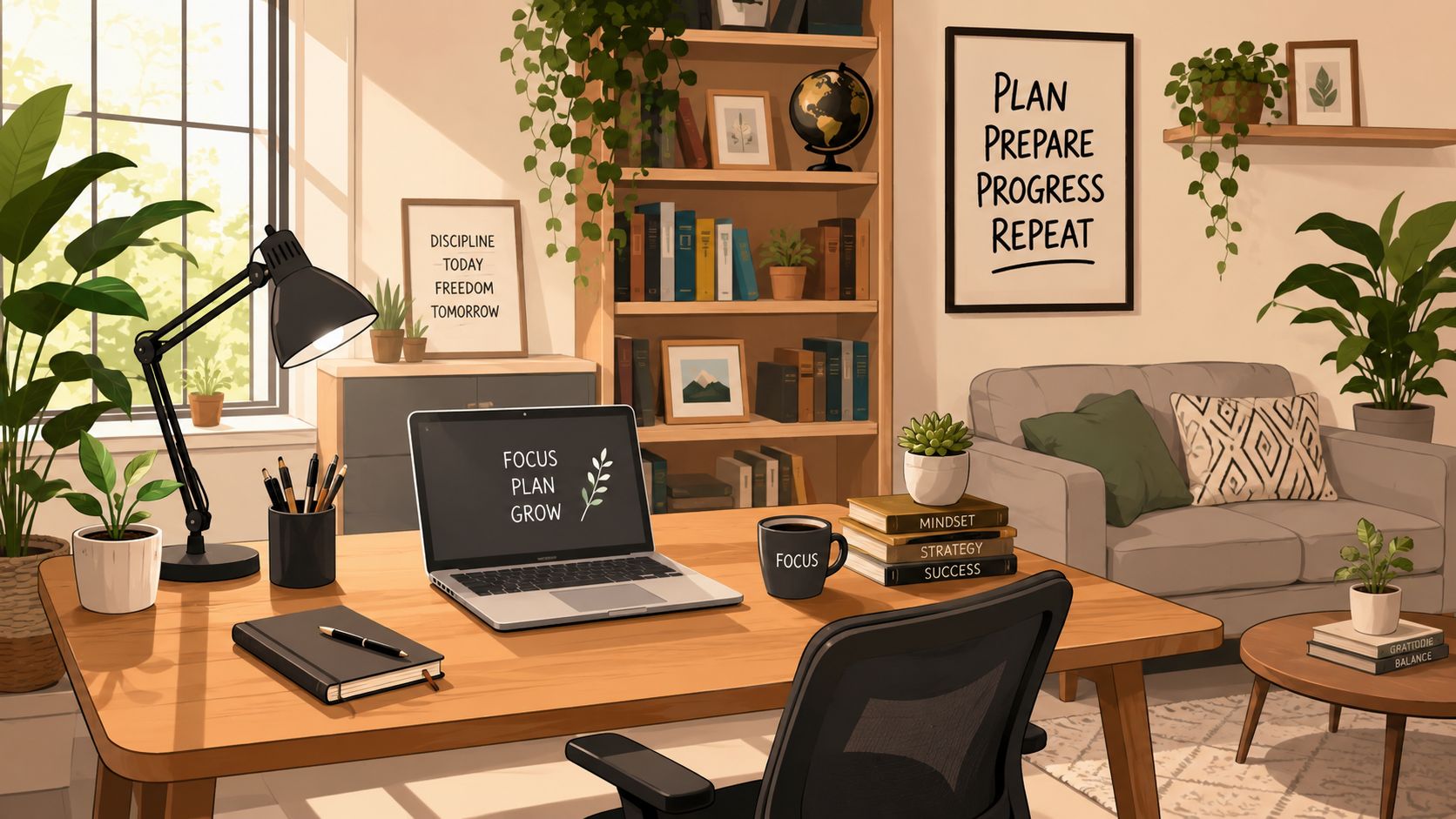
A minimalist home gets built through a series of clear decisions, not a single shopping trip. This quick checklist helps reveal where the room already supports calm and where it still asks too much of the eye.
- Assess Function: Which activities happen here every day, and which pieces support them?
- Edit Possessions: Which objects earn their place because they're useful, meaningful, or both?
- Define a Palette: Do the colours feel calm together, or are they competing for attention?
- Invest in a Foundation Piece: Would one strong rug, sofa, or bed frame simplify the rest of the room?
- Hide the Practical Clutter: Can storage be concealed so the room stays visually quiet?
- Refine the Surfaces: Are the tabletops and shelves holding only the objects that belong there?
The best answer usually isn't “remove everything.” It's “keep what improves the room's rhythm.” That distinction makes the whole process feel more achievable and much more personal.
Crafting Your Vision with Bespoke Design
A refined minimalist interior usually needs more than good taste. It needs scale, restraint, and room-by-room coordination, which is where Interior Design Studio support becomes valuable. A thoughtful designer can help turn a collection of good pieces into a complete room concept, so the home feels coherent rather than assembled.
That is especially helpful when a space calls for bespoke choices. Custom furniture Southern Ontario projects can solve awkward proportions, storage limits, and layout problems without breaking the calm of the design. A sofa depth designed to fit, a made-to-measure table, or a curated selection of artisanal finishes can keep the room minimal while still making it feel specific to the home.
Critelli Furniture operates from St. Catharines with two showrooms, serves the Greater Niagara, Hamilton, and Toronto markets, and pairs design guidance with white-glove delivery that places each piece carefully in the home. The process also fits naturally with the brand's 1914 heritage, because timeless craftsmanship and careful placement matter just as much as the furniture itself.
When a room is meant to feel warm rather than stark, the details matter. A curated selection, a properly scaled rug, and a few heirloom-quality pieces can make minimalism feel personal, lived-in, and lasting. This is a key strength of the style, it doesn't ask for less living, only more intention.
A CTA for Critelli Furniture.