


Leather Types for Furniture: A 2026 Buyer’s Guide

Standing between two leather sectionals, many homeowners feel the same quiet frustration. Both pieces look refined under showroom lights, both sound luxurious when described aloud, and yet one will age gracefully in a busy Southern Ontario home while the other will start showing its limits almost immediately.
That is the central question behind leather types for furniture, not which sofa looks richer for five minutes, but which one will still suit the room after winters of dry heat, bright afternoon sun, pets jumping on and off, and children using the arms as a perch. A family-run furniture house like Critelli, serving St. Catharines and the broader Greater Niagara market since 1914, has spent generations seeing which choices hold up and which ones become compromises.
The right answer starts with three decisions. What leather is it, what finish sits on top of it, and how will it live in the room every day? Get those right, and the purchase feels considered rather than impulsive.
The Showroom Moment That Changes How You Buy Leather
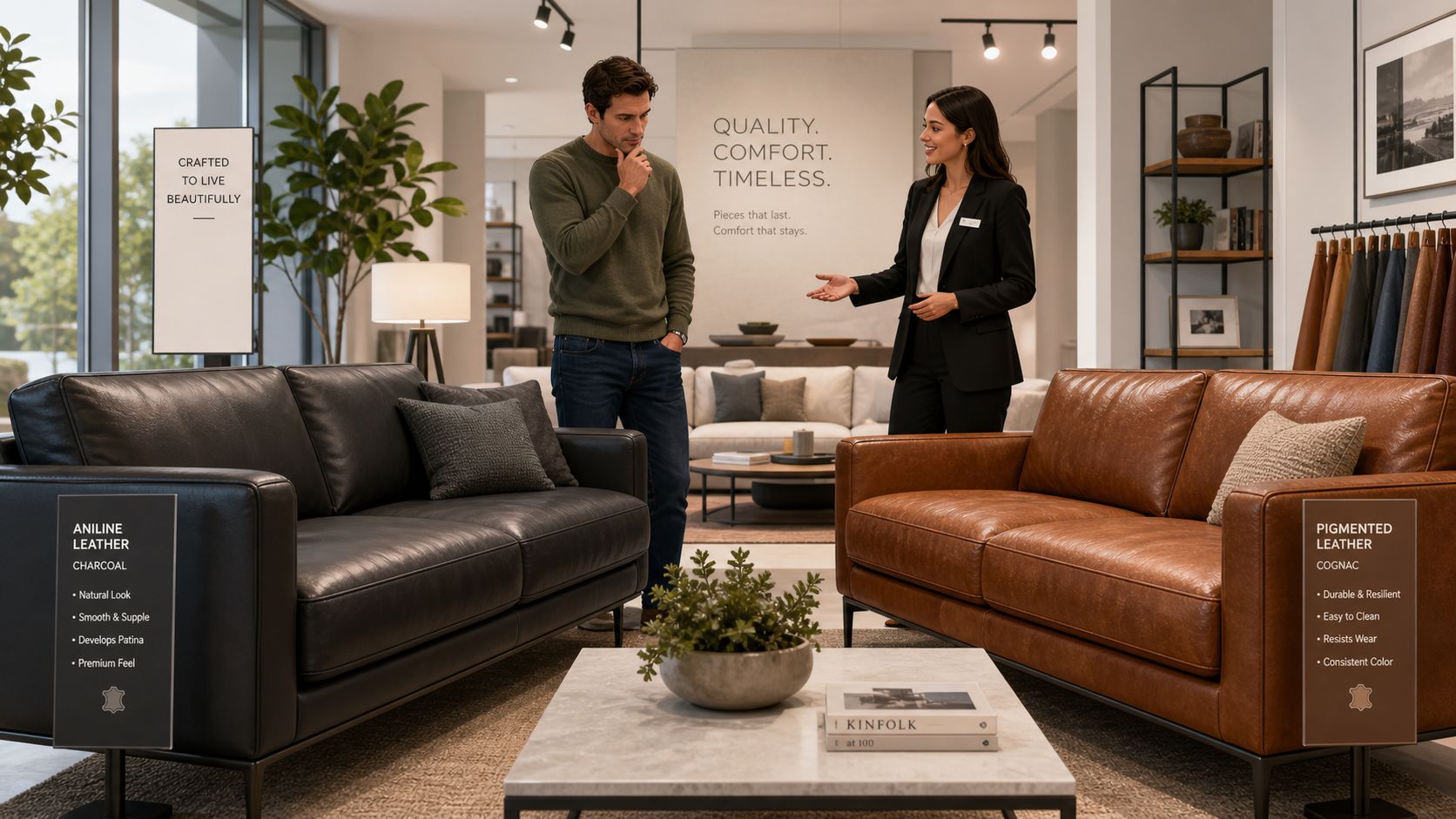
A homeowner often falls in love twice in the same showroom. First with the soft, handsome leather on the floor, then with the story attached to it. One sectional is described as more natural, another as easier to live with, and the price gap can be wide enough to make the decision feel mysterious instead of clear.
Start with the room, not the sales tag
The smart way to buy is to ask what the piece will face at home. A formal sitting room, a family great room, and a bright windowed den all ask different things of leather. The same surface that feels wonderfully organic in a low-use room can be a hassle in a sunny, high-traffic space.
That is why grain labels alone do not settle the question. Leather can look similar on the floor and behave very differently at home, especially once central heating, sunlight, and daily use enter the picture. The furniture should suit the household, not the fantasy version of it.
Practical rule: buy the finish for the way the room lives, not for the way the sofa photographs in the showroom.
Critelli's long presence in Southern Ontario matters here because buyers in the Greater Niagara, Hamilton, and Toronto markets are not shopping for one-season décor. They are usually building a complete room concept, and the sofa has to work with the rug, lighting, table surfaces, and traffic flow. That is the difference between a decorative purchase and heirloom quality planning.
The best showroom question is simple. What kind of leather is this, what finish protects it, and what kind of household was it designed for? Once those answers are clear, the price starts making sense.
The Five Leather Grades Every Buyer Should Know
The five names you keep hearing in furniture retail are full-grain, top-grain, split-grain, genuine, and bonded leather. They are the common language of the showroom, even though not all of them are strict grading terms. Once a buyer understands that ladder, the sales pitch becomes much easier to read.
Read the hierarchy like a materials map
Full-grain sits at the top because it keeps the hide's natural grain layer intact. Top-grain is still a premium choice, but the surface has been lightly corrected, which makes it more uniform. Split-grain, genuine, and bonded leather move further down the processed end of the spectrum, so they usually trade some natural character for lower cost.
| Grade | What It Is | Look and Feel | Typical Use |
|---|---|---|---|
| Full-grain | The complete grain layer remains | Most natural, richest character, strongest sense of authenticity | Heirloom seating, statement sofas |
| Top-grain | Surface is lightly corrected | Cleaner, more uniform, still premium | Quality sectionals, recliners, custom seating |
| Split-grain | Lower layer of the hide | Less refined, more processed | Budget-conscious upholstered pieces |
| Genuine leather | A retail label often used in the market | Variable, usually below top-tier grades | Entry-level leather furniture |
| Bonded leather | Leather fibres mixed with binder | Most manufactured, most inconsistent | Lowest-cost seating and accent pieces |
The useful comparison is simple. Think of full-grain leather the way you would think of solid hardwood, and think of bonded leather more like an engineered surface that is designed to look convincing. One has depth and natural variation, the other aims to imitate the appearance at a lower price point.
Buyer's shortcut: if the description sounds premium but the label says bonded or genuine, assume the piece is not built for the same long-term standard as full-grain or top-grain.
For buyers comparing premium sofas, recliners, and custom upholstery, that distinction matters more than many realize. A well-made top-grain piece can be a very sensible choice when the room needs polish and easier handling. For a deeper product comparison, a useful internal guide is top-grain vs full-grain leather furniture, because that is often the decision point where buyers narrow the field.
Aniline Semi-Aniline and Pigmented Finishes Explained
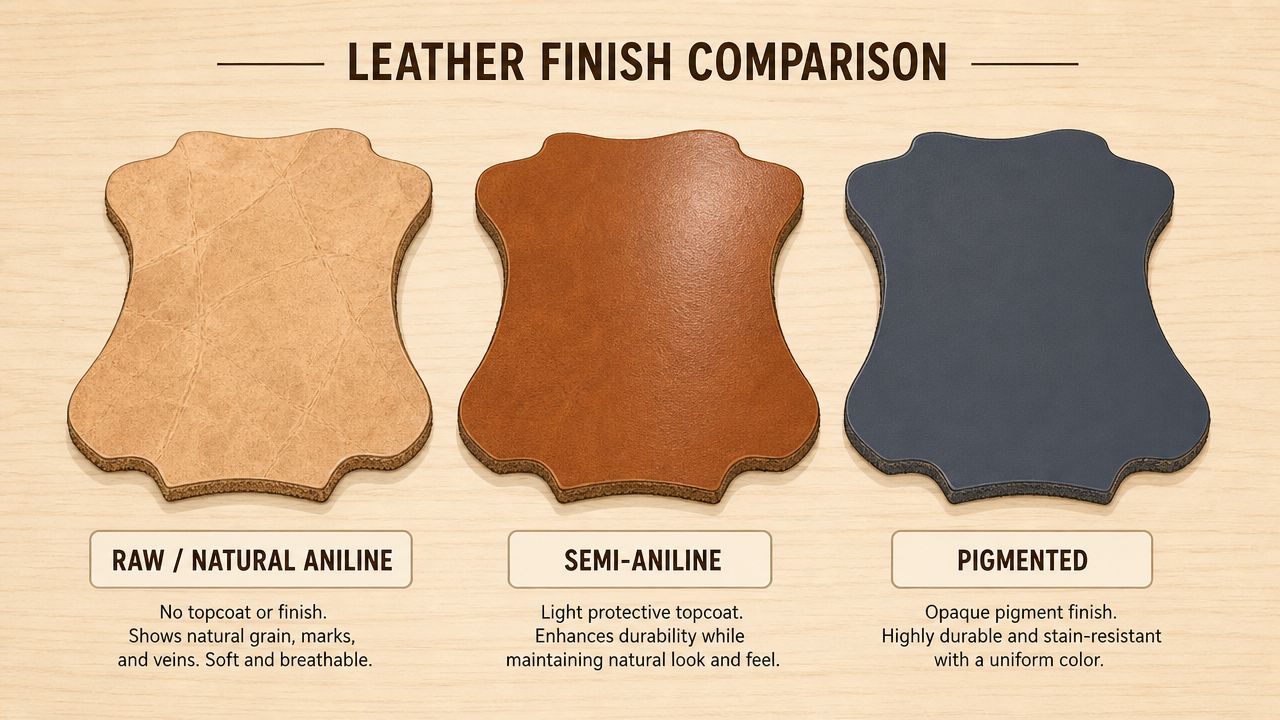
Grade tells you where the leather sits in the hide. Finish tells you how it will behave in daily life. That second decision is often the one that saves a buyer from regret.
Choose the finish for maintenance, not just beauty
Aniline leather has no pigment layer, so it looks the most natural and feels the most alive. It is also the most vulnerable to wear and staining. In a quiet study or a carefully used formal room, that vulnerability can be worth accepting because the surface ages with character rather than uniformity.
Semi-aniline leather adds a light layer of protection while keeping much of the natural look. It sits in the middle, which makes it the balanced choice for buyers who want beauty but do not want to baby the sofa every day. Pigmented leather has the most surface protection and the easiest maintenance, so it suits busy households that want predictability more than patina.
A sunlit reading nook often rewards a more natural finish because the room sees lighter use and the leather can be appreciated up close. A basement media room, family lounge, or busy open-plan great room usually needs a more protected finish. That is not a style compromise, it is a practical one.
The clearest question is this. Does the household want the leather to collect character, or does it need to resist life first and foremost? For many families, the answer is obvious the moment the dog jumps on the cushions or a child spills a drink. The maintained look of pigmented leather often wins because it keeps the room feeling composed with less effort.
For care planning and long-term upkeep, a useful internal reference is how to care for leather furniture. The right finish still needs sensible care, but the level of effort changes dramatically depending on how protected the surface is.
Designers' insight: choose aniline for a room that is meant to feel collected and restrained, choose semi-aniline for a room that needs refinement with some forgiveness, and choose pigmented leather when the household wants elegant seating without constant vigilance.
How Leather Performs in Real Canadian Homes
Southern Ontario homes ask more from upholstery than showroom displays ever do. Dry winter heating pulls moisture from the air, summer light shifts by the hour, and family routines rarely respect a delicate surface. The leather type that looks luxurious on day one needs to survive those conditions without turning high-maintenance.
Dry heat, sun, pets, and children change the equation
Dry winter heating can make leather feel stiffer if the surface is already delicate, which is one reason fully aniline pieces need more careful placement and routine attention. Strong sunlight is another concern, because direct exposure can fade finishes unevenly and make one seat look older than the rest of the sofa. Families with pets and children also need to think about paw marks, spills, and the practical reality that seating gets used from every angle.
That is where protected finishes earn their place. More covered surfaces cope better with the daily mess of a family home, while very natural finishes reward gentler households that can keep conditions stable. Split and bonded products sit lower on the resilience scale, and they are not the pieces to choose when the room gets hard use.
Leather can last many years, but the ownership equation is bigger than the hide. Cushions may need refilling over time, and mixed materials can age differently, which makes repairs more complicated than buyers expect.
That hidden cost matters. A sofa is not just a shell of leather, it is also the frame, the seam work, the cushion build, and the way those parts age together. A leather-vinyl combination may look smart on the sales floor, but if the materials wear at different speeds, the piece can become awkward to repair.
For homes where pets are part of the design, a practical internal guide is finding pet-friendly couches. The best advice is not to pretend pets do not exist, but to choose a finish and construction that make the home livable.
Here is the candid rule for Southern Ontario buyers. If the room gets strong sun, heavy use, or frequent mess, choose a more protected leather and a sturdier construction. If the room is quieter and the goal is softness, patina, and a more artisanal feel, a natural finish can be worth the extra care. White-glove delivery is useful here too, because proper placement on arrival makes it easier to keep the sofa out of harsh light and away from the most punishing spots.
What You Actually Pay For at Each Price Tier
A leather sofa price tag only looks like it is about the hide. In a real Southern Ontario home, you are paying for the leather grade, the frame beneath it, the cushion build, the stitching, and how much of the piece uses the better material. That matters because dry winters, bright summer sun, kids, and pets will expose weak construction fast.
Read the quote from the inside out
Entry-level pieces often use corrected-grain or bonded leather to keep the showroom price lower. That can work in a lower-use room, but do not expect the same durability, repairability, or long-term presence you get from better leather construction. The mistake is treating it as a small downgrade when it is really a different category of furniture.
Mid-range pieces commonly use top-grain seating surfaces with split-grain sides and backs. That is the practical sweet spot for many homes, because it gives you a cleaner look where people sit and touch the sofa, while keeping the cost more controlled on the hidden sections. The smart question is where the leather grade is applied, because the front-facing areas usually get the better material and the back and sides get the more economical one.
Heirloom-grade furniture uses full-grain or high-grade top-grain throughout much more consistently, and that is where the value starts to feel built into the structure, not just the surface. A strong hide still needs a strong frame, and a weak frame wastes expensive leather. A well-made leather chair should feel precise in the joinery, steady in the stitching, and solid every time you sit down.
That is the tier where you are buying long service, not a quick refresh. For homeowners who want furniture that can stay in the room for years and age with character, heirloom quality furniture is the standard to look at first.
The wider market also shows that leather furniture remains a serious category for design-led homes. One industry report tied to the broader leather furniture market points to steady demand for premium seating, which makes sense because good leather still has a real place in homes that want both polish and durability. That does not choose the sofa for you, but it does explain why better-made leather keeps holding its value in the market.
Price only makes sense when you compare it to the room it has to live in. A sofa sitting in strong sun, getting daily use, and sharing space with pets needs a better construction than a piece destined for an occasional sitting room. Spend more where the home will test the furniture, and stop paying for leather quality you will never use.
Choosing the Right Leather for Your Room and Your Life
The right leather choice becomes obvious when the room and the household are named. A formal living room that sees occasional use can support a fuller, more natural leather story. A family great room needs the opposite approach, a surface that forgives constant use and still looks refined.
Match the finish to the room's job
For a quiet sitting room, full-grain or a carefully selected top-grain aniline piece can make sense. For the main family sofa, a semi-aniline or pigmented top-grain sectional is usually the better decision because it handles living, not just looking. For a guest room or lower-use media space, the buyer can afford to prioritise feel and appearance more heavily.
A practical way to decide is to stand in the room and ask three questions. How much sun hits the seating area, how often will it be used, and who will be using it? Once those answers are honest, the leather choice narrows quickly.
A useful external planning resource for broader décor direction is the interior design trends 2026 guide, especially for homeowners coordinating a leather purchase with updated finishes, flooring, and room colour. Leather should never be chosen in isolation. It belongs inside the same visual conversation as rugs, tables, lamps, and wall colour.
Designer's insight: pair a bolder leather sofa with a neutral hand-knotted rug so the room has a grounded foundation, then let cushions and lighting do the softer work. Critelli's Rug Market treats rugs as art for your floor, and that matters because the rug anchors the leather instead of competing with it.
For buyers still deciding between upholstery categories, an internal comparison such as fabric vs leather sofa helps clarify the broader trade-off. Some homes want the tactile softness of fabric. Others need the clean presence and timeless craftsmanship of leather.

Experience the craftsmanship in person at our King Street Showroom. Critelli Furniture brings together custom furniture Southern Ontario shoppers can live with, interior design services St. Catharines homeowners can rely on, and white-glove delivery that makes the transition from showroom to home smooth. Visit Critelli Furniture to book your complimentary design consultation today and choose the leather that fits your room, your routine, and the way you live.


