
Best Sofas for Small Spaces: A Design-Forward Guide


A beautiful small room can be the hardest one to furnish well. In Southern Ontario, that often means a compact condo, a tidy townhouse, or a charming older home with excellent light, handsome millwork, and just enough square footage to make every furnishing choice matter.
The sofa usually decides whether that room feels calm and composed or cramped and compromised. The wrong one steals circulation, blocks sightlines, and turns even lovely architecture into an obstacle course. The right one does the opposite. It gives the room structure, comfort, and a sense of permanence.
That's why the best sofas for small spaces aren't the shortest models on the floor. They're the pieces with the right scale, the right posture, and the right construction for the way people live. For households refining rooms across Niagara, Hamilton, and Toronto, a compact footprint can still support timeless craftsmanship and a design-forward interior.
Many clients begin with inspiration boards and finish with practical constraints. Good guidance helps with both. For anyone planning a smaller home from the ground up, RBA's small home guide offers useful perspective on living beautifully with less square footage. For room-specific support, small-space interior design guidance can help translate those ideas into a complete room concept.
Table of Contents
- An Introduction to Grand Living in Compact Spaces
- Beyond the Loveseat Defining a Small Space Sofa
- The Measure of Success A Two-Part Checklist
- A Curated Selection of Small Space Sofa Styles
- The Impact of Design Details Fabric Form and Finish
- Creating the Complete Room Layout and Styling
- From Our Showroom to Your Sanctuary The Critelli Experience
An Introduction to Grand Living in Compact Spaces
You find a sofa you love. The proportions look right in the showroom, the upholstery has presence, and the seat feels like somewhere you could spend an entire winter evening. Then the practical question arrives. Will it turn past the front hall radiator, clear the narrow stair, and make it through the doorway of a century home in Hamilton, Oakville, or Toronto without damage to the frame or the plaster.
That is the beginning of furnishing a small room well.

A compact living room can feel generous, composed, and comfortable, but only when scale and access are considered together. Clients often focus first on width. Designers know the better questions come earlier. How much visual weight can the room carry. How deep can the seat be without crowding circulation. How will the sofa enter the home in the first place.
Small-space design asks for discipline, not compromise.
In older Southern Ontario homes, delivery paths are often the hidden constraint. Tight vestibules, steep stairs, low basement ceilings, and sharp landings can rule out an otherwise excellent piece before it ever reaches the room. In newer condos, the challenge shifts to elevator dimensions, corridor turns, and booking restrictions. Good selection starts with the room, but a successful purchase also respects the route that leads to it. Our interior design for small spaces service approaches the sofa as one part of a larger plan, so proportion, layout, and delivery are solved together.
The best small-space sofa is rarely the smallest one available. It is the one with the right presence for the architecture and the right construction for daily life. A refined silhouette, visible legs, disciplined arm shape, and thoughtful upholstery can give a room breathing space while still offering genuine comfort. That balance is what distinguishes a stopgap purchase from an heirloom-quality piece chosen with care.
For households considering a smaller footprint from the outset, RBA's small home guide is a useful reference point for how compact homes are being planned around efficient living. The furnishing lesson is similar. Every element needs a reason, and the sofa usually sets the standard for the rest of the room.
At Critelli Furniture, a family-run firm established in 1914, that process has always been grounded in judgment, proportion, and craftsmanship. The aim is not to fill a room. It is to give even a modest room the calm, finished character of a home that has been considered properly.
Beyond the Loveseat Defining a Small Space Sofa
A small-space sofa is defined less by category than by proportion. In practice, I often specify an apartment sofa, a compact three-seater, or even a fitted bench-seat model instead of a loveseat, because the right piece must do more than come in short lengths. It needs to sit comfortably in the room, support daily use, and pass through the realities of the home itself.
That last point matters in Southern Ontario. In older houses across Toronto, Hamilton, and the surrounding neighbourhoods, the limiting factor is often not the living room but the approach to it. Narrow stairs, angled landings, tight vestibules, and original door frames can rule out a sofa that looks perfect on the floor plan.
Width still plays a role. Industry guidance for apartment-scale seating often places the workable range around 50 to 72 inches, with some compact rooms allowing a bit more if the frame is visually light and the layout is disciplined. The number alone does not decide the matter.
Form does.
A sofa with narrow arms, a tight back, exposed legs, and a controlled depth will usually read smaller than a shorter piece with overfilled cushions and thick rolled arms. The eye notices mass first. That is why a well-proportioned 72-inch sofa can feel calmer in a room than a bulky loveseat several inches shorter.
A strong small-space sofa usually includes these qualities:
- Trim arms that preserve seat width without adding unnecessary bulk
- A shallower profile that keeps walkways and sightlines open
- Visible leg height so more floor remains in view
- Clean upholstery lines that suit compact rooms and older architecture alike
Comfort follows the same logic. In a small room, support and posture matter more than exaggerated depth. Upright seating often serves these spaces better because it suits conversation, reading, and everyday living without pulling the whole layout off balance. A sofa should feel composed, not overbuilt.
Practical rule: Choose the sofa that looks settled in the room, not the one that fits against the wall.
Before choosing a silhouette, review how to measure furniture properly for room fit and delivery access. In compact rooms, and especially in older Southern Ontario homes, a good sofa is one that respects both proportion and the path required to bring it home.
The Measure of Success A Two-Part Checklist
A client finds a sofa with the right silhouette, the right fabric, and the right scale for the room. Then delivery day comes, and the piece stalls at a narrow stair turn in a century home or an elevator vestibule in a downtown tower. In small-space design, success depends on two separate measurements. The room must suit the sofa, and the building must admit it.
Part one. Measure the room
Begin on the floor, not on a product page. Tape out the sofa's footprint and live with it for a day if possible. Walk past it with a laundry basket. Open the drapes. Sit where the chair or side table will go. Good proportion is easier to judge in motion than on a spec sheet.
Three checks matter here:
Wall fit
Measure the wall, then measure what shares that wall. Radiators, drapery return, art placement, switches, and side tables all affect the final width you can use comfortably.Depth in use
Depth changes how a room performs. A shallower sofa often keeps circulation intact and allows a coffee table to sit at a civilized distance, instead of forcing the whole arrangement too far into the room.Companion pieces
A sofa should support the full plan. Leave space for lighting, occasional tables, storage, and the clear paths that make a compact room feel ordered rather than crowded.
For many smaller living rooms, apartment-scale sofas tend to fall within a restrained width range that preserves more layout flexibility, as noted in this overview of small sofa sizing. Width alone is not enough, but it is a useful first filter.
Part two. Measure the delivery path
This is often the quieter half of the decision, and in Southern Ontario it can be the harder one. Older homes in Niagara and Hamilton regularly have tight vestibules, steep stairs, and narrow upper hallways. Condos in Toronto may offer a generous suite but a restrictive elevator or an awkward turn from the loading area.
A handsome sofa that never reaches the sitting room has no design value at all.
Measure the full route from curb to room:
Doorways and hallways
Record the narrowest interior opening, not only the front door. Trim, hardware, and hallway turns reduce usable clearance.Stairwells and landings
Check width, ceiling height, railing projection, and the turning circle at each landing. Many well-chosen sofas fail here.Elevators
Measure cab height, interior depth, and the door opening. In many buildings, the elevator sets the true maximum size.Building approach
Gates, vestibules, porch posts, and common-area corners count. The route begins before the piece enters the home.
Construction details can solve access problems before they become expensive ones. Slimmer arms reduce overall bulk. Removable legs can gain a little clearance. Modular construction or a custom configuration may allow a sofa to pass where a fixed frame will not. That is one reason I advise clients to treat the purchase as part of a larger furnishing plan, not a standalone item. If you are weighing those choices, this guide to choosing the best sofa for your room and lifestyle is a useful place to start.
A Curated Selection of Small Space Sofa Styles
A client in an older Toronto semi may have room for a generous sofa on paper and still need a different form once the architecture, daily use, and visual balance of the room are considered together. In compact homes, style selection is never only about width. It is about proportion, seating capacity, and how the piece supports the way the room lives.
Small-Space Sofa Styles at a Glance
| Sofa Type | Typical Width | Best For | Design Feature |
|---|---|---|---|
| Loveseat | 50 inches and under to the lower small-space bands | Tight rooms, reading corners, secondary seating areas | Compact silhouette with easy placement |
| Apartment Sofa | 51 to 72 inches | Primary seating in condos and smaller living rooms | Balanced scale without the weight of a full-size sofa |
| Apartment Sectional | Varies by configuration | Open-plan rooms that need defined seating | Corner seating that can organise the room |
| Sleeper Sofa | Varies by mechanism and arm profile | Guest-ready spaces and multi-use rooms | Dual function in one footprint |
Which type suits which room
The loveseat suits rooms where every inch of circulation matters. It often works well in a front parlour, a condo seating nook, or a smaller family room that also needs bookcases, side tables, or a desk. I often recommend it when a client would be better served by a composed arrangement of smaller pieces rather than one sofa that tries to do everything.
The apartment sofa is usually the most balanced answer for everyday living. It gives proper seating depth and a more settled presence than a loveseat, yet it does not overtake the room. In many small Southern Ontario homes, this is the shape that keeps the room feeling complete instead of improvised.
A compact sectional deserves a more careful read. It can define an open-plan room beautifully and reduce the need for additional seating, which helps keep the layout disciplined. In a room with several doorways, fireplaces, or heritage millwork, it can limit furniture placement and make future changes harder than clients expect.
The sleeper sofa suits spaces that must work hard. A study that becomes a guest room or a condo living room with visiting family may justify the added mechanism. The trade-off is straightforward. Sleeper frames usually carry more visual weight, and comfort depends heavily on the quality of the cushion construction, mattress design, and upholstery. Clients weighing those details should review upholstery materials and performance considerations before making a final specification.
One principle holds across all four types. A small room rarely benefits from a sofa chosen only because it is the shortest option available. The better choice is the one with the right interior seating width, arm scale, and profile for the architecture around it.
Curated selection matters here. A compact sofa can still offer heirloom-quality construction, custom upholstery, and measured proportions that feel permanent rather than temporary. That is the standard worth pursuing in a small space, especially when the sofa is being chosen as part of a full room plan rather than as an isolated purchase.
The Impact of Design Details Fabric Form and Finish
The difference between a sofa that merely fits and one that improves a small room often comes down to detail. Form, fabric, and finish affect how a sofa occupies space long before anyone sits on it.
The details that lighten a room
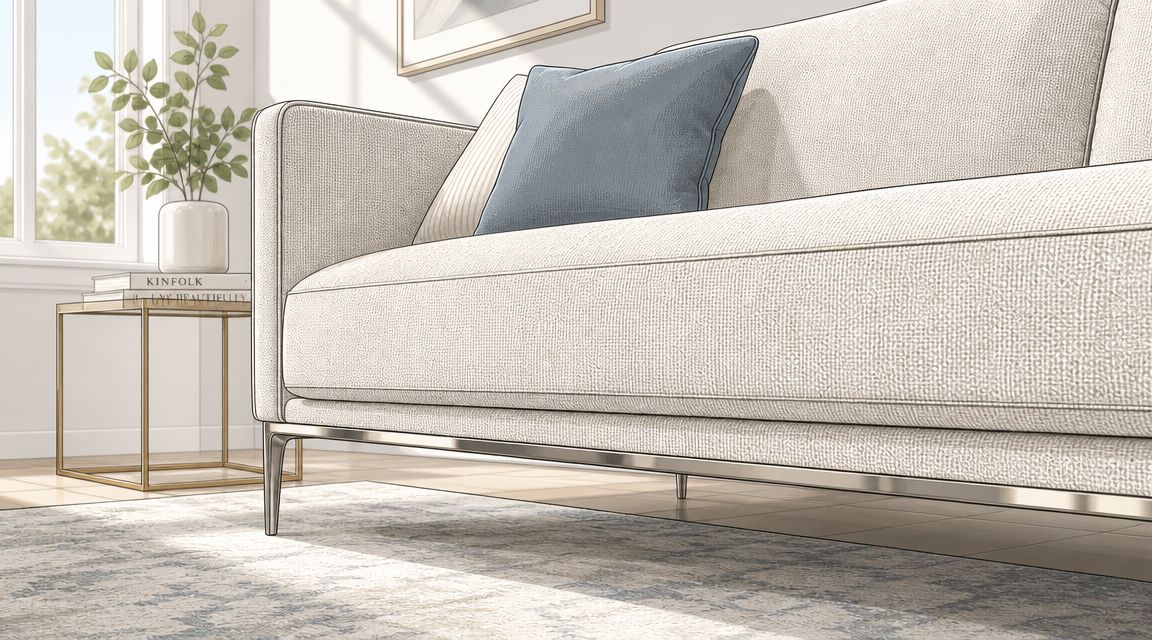
Raised legs are one of the oldest visual tricks in interior design because they work. When more floor remains visible beneath the frame, the room feels more open and less obstructed. The same logic applies to slim track arms and tidy side profiles. They hold the line of the sofa neatly and avoid the outward spread that can make a compact room feel burdened.
Back style also matters. A tight back tends to read cleaner and more architectural. A well-padded pillow back can be inviting, but it often looks softer, looser, and visually larger. In a compact room, too much softness can make the whole arrangement appear under-edited.
Useful details to prioritise include:
- Leg visibility for a lighter silhouette.
- Narrow arm profiles to maximise seating inside the footprint.
- Structured backs and cushions that keep the outline crisp.
- Refined base proportions so the sofa doesn't appear squat or overbuilt.
Upholstery that earns its place
Fabric and finish should support the room's overall temperament. Lighter neutrals can help a small room feel broader and calmer, especially where natural light is limited. Richer tones can also work, but they ask for confidence and restraint elsewhere in the scheme.
Texture often matters more than colour alone. A matte woven upholstery can feel grounded and elegant, while a subtle leather can bring polish and depth without adding visual noise. The key is to choose a material that will age well and support everyday use.
A small room benefits from upholstery that has presence, not fuss.
Heirloom quality begins below the fabric, of course. A well-made frame, disciplined tailoring, and durable upholstery all matter more in a smaller room because the sofa is asked to do more. It is usually the dominant object in the space. Every seam, cushion line, and finish decision is more visible.
For those comparing coverings and wear characteristics, this upholstery materials guide is a practical starting point. In compact spaces, craftsmanship isn't an indulgence. It's what keeps a modest room from feeling temporary.
Creating the Complete Room Layout and Styling
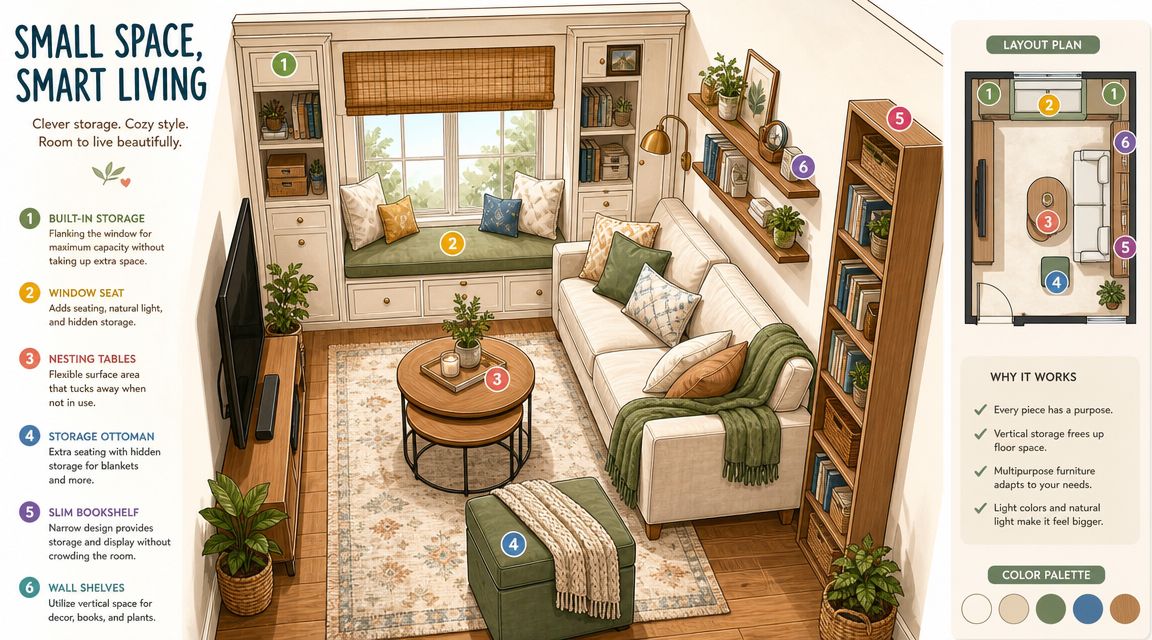
A sofa should never be treated as an isolated purchase. In a compact room, it has to cooperate with circulation, lighting, storage, and the visual foundation underfoot. That's where a complete room concept becomes far more valuable than a single-object decision.
Start with movement then add beauty
For small Canadian living rooms, interior designers recommend leaving 70 to 90 cm of walking space around the sofa so the room remains functional and doesn't feel visually crowded. That same guidance notes that a 2-seater or compact 3-seater with slim arms and raised legs is often the best fit because the lighter visual footprint reads as less bulky.
That circulation rule changes the entire layout. It affects coffee table scale, side table choice, lamp placement, and whether the room can support an ottoman at all. In narrow homes, thoughtful planning around sightlines and natural light matters just as much. Readers interested in broader architectural strategies may appreciate Flascon's narrow lot design expertise, especially where compact footprints and daylight are in constant negotiation.
A composed layout often follows this sequence:
- Anchor the main seat first so the room has a clear centre.
- Protect the walking path before adding occasional pieces.
- Use fewer, better objects instead of many small interruptions.
- Let lighting and textiles finish the room rather than overfurnishing it.
The rug establishes the room
In well-resolved interiors, the rug is often the element that makes the sofa look intentional. It defines the seating area, softens the architecture, and gives the room a sense of finish. This is why many designers speak of the rug as Art for your Floor. In a smaller room, that idea is especially useful because the rug can unify the furniture and make the footprint feel purposeful rather than compressed.
A hand-knotted rug also adds the sort of depth and texture that smaller spaces need. When the room can't rely on scale for drama, it has to rely on material quality and careful composition. The rug becomes the foundation of that effect.
Designer's Insight
Pair a tailored apartment sofa in a quiet neutral with a hand-knotted wool rug that carries deeper tonal variation. The sofa keeps the room open, and the rug supplies the richness that gives the space maturity.
The final layer is editing. One excellent floor lamp, one proper side table, and one meaningful textile often do more for a small room than a collection of undersized accessories. The room should feel settled, not busy.
For anyone refining placement and flow, living room furniture arrangement guidance can help align the sofa with the rest of the scheme. This is also where the design studio approach proves its value. A bespoke room plan can prevent a small space from becoming a sequence of individually good choices that don't quite work together.
From Our Showroom to Your Sanctuary The Critelli Experience
A well-chosen sofa for a compact room does several jobs at once. It respects the room's proportions, supports daily comfort, survives the delivery route, and contributes to a complete interior rather than standing apart from it. That's why the strongest decisions tend to come from careful curation rather than impulse.
For a family-run house founded in 1914, that process has always been about continuity. The piece should feel right now, but it should also feel right years from now. Heirloom quality isn't a marketing phrase in a smaller room. It's a practical standard, because the sofa will be seen, used, and judged every day.
White-glove delivery matters here as much as design. In heritage homes and urban buildings across St. Catharines, the Greater Niagara region, Hamilton, and Toronto, professional placement can spare a client the usual stress of manoeuvring a substantial piece into a delicate space. That final transition from showroom selection to home installation should feel smooth and organised.
The room often includes one more modern negotiation. Sofa scale should also relate sensibly to media placement when a television is part of the composition. For readers balancing seating with screen size, Home AV Pros TV size advice can be a useful planning reference as part of the broader layout conversation.
The result should feel serene, bespoke, and settled. Not crowded. Not improvised. Well resolved.
Experience the craftsmanship in person at Critelli Furniture. Book your complimentary design consultation today, or visit the Rug Market to find your room's foundation.