


Eames Hang It All: Specs, Authenticity and Styling Guide


With a door opening into a narrow hall, its swing arc can claim the same wall space a rack needs. Measure the clear wall after accounting for that arc and the boot tray. Then check how far the rack projects, since hanging items need room without narrowing the path.
The Eames Hang-It-All belongs on a wall that can support both the rack and its load. The wall substrate, fixing choice and clearance set the limits before colour or styling enters the picture. A sound layout starts with those constraints.
What the Eames Hang-It-All Is and Why It Endures
A wet coat, a school bag and a leash can turn a small entryway into a daily jumble. The Eames Hang-It-All gives each item a visible place on the wall. Charles and Ray Eames designed it in 1953, using a welded wire frame and rounded wooden ends to make storage feel open rather than tucked away.
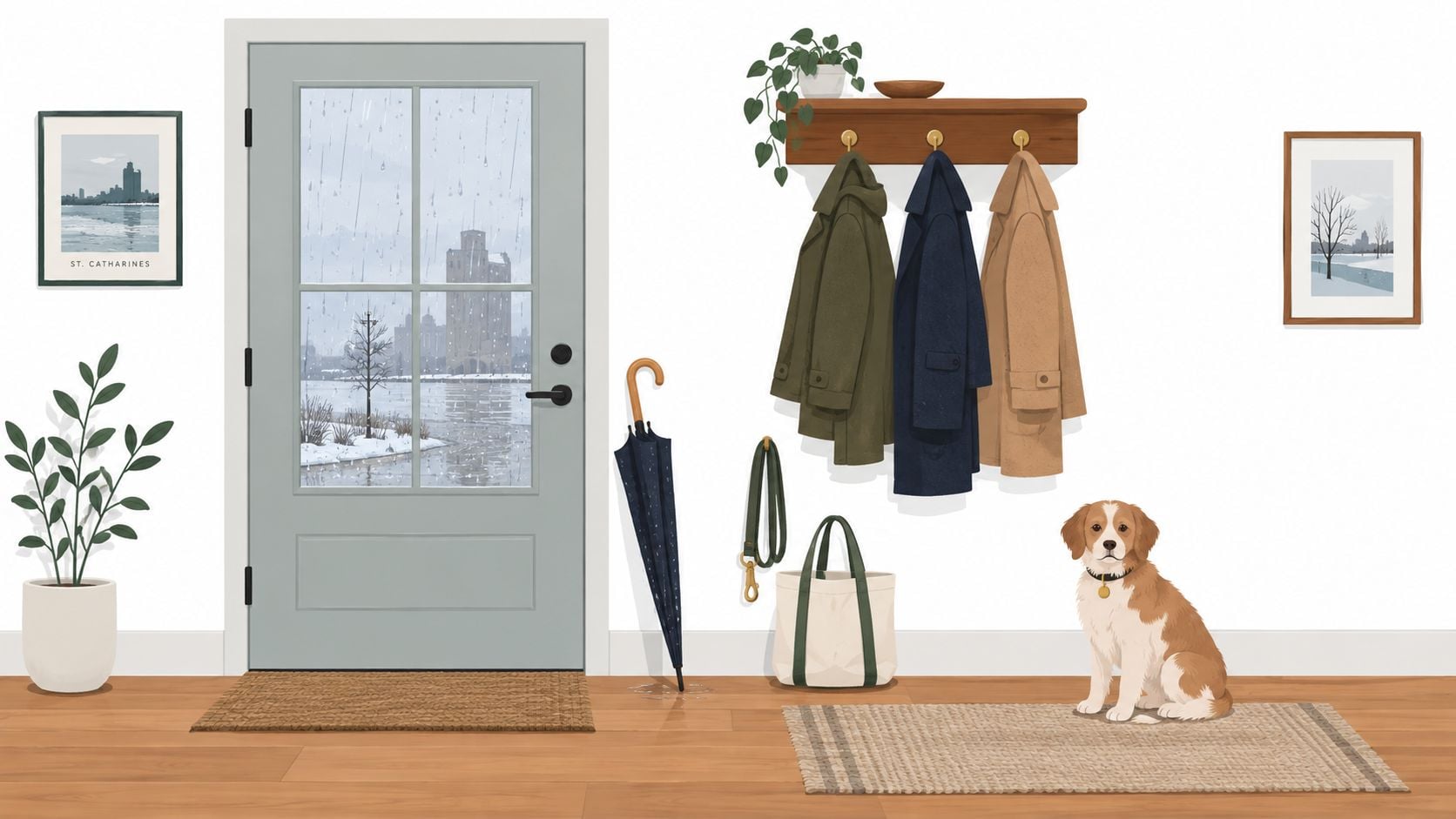
Each end works like a separate hook, so you can spread belongings across the rack instead of stacking them on one peg. The product sheet describes the rounded ends in two sizes and lists the rack's weight. That open arrangement makes it easy to see what is hanging and to notice when the entryway is getting crowded.
Wire that stays rigid
The frame's welded crossings and angled geometry help it resist twisting while keeping the structure visually light. Its construction supports everyday use, though the rack still depends on sound wall fixings and a sensible load. A coat and a bag do not place the same demand on a hook, so distribute belongings rather than treating each end as equally suited to every item.
The published product information lists 21% recycled content, 65% recyclability and a five-year warranty. These details describe the material and product terms; they do not determine whether the rack can be recycled locally or how much weight a particular wall can safely support. For an entryway, the wall substrate and fixings set that practical limit.
The design has lasted because it does two jobs at once: it provides everyday storage and gives a plain stretch of wall a clear, sculptural outline. A licensed reissue followed in 1994, so a colourful example may be a vintage piece or a later licensed version. Their appearance can overlap, which makes documentation useful when identifying one.
Dimensions, Materials and Load Ratings at a Glance
Before choosing a finish, check what the rack projects from the wall and what the wall can support. The Canadian listing and a vintage museum record give different measurements, so treat them as references for different versions rather than expecting identical specifications.
| Specification | Current Canadian listing | Vintage museum record |
|---|---|---|
| Height | 14 5/8 in | 16 in |
| Width | 19 3/4 in | 19 3/4 in |
| Depth (projection) | 6 3/8 in | 6 1/4 in |
| Product weight | 2.25 lb | Not stated on the museum record |
| Rated total load | 50 lb across the rack | Not stated on the museum record |
| Ends | 14 rounded ends | Not itemised the same way |
| Frame | Welded steel rod, powder-coated white or black | Metal with paint and varnish |
| Warranty | 5 years | Not applicable |
| Recycled content and recyclability | 21% recycled, 65% recyclable | Not published for the vintage object |
The current listing specifies a height of 14 5/8 in, a width of 19 3/4 in, and a depth of 6 3/8 in. It gives the product weight as 2.25 lb and the total rated load as 50 lb. That load rating applies to the assembled rack, not to each individual end. Distribute coats and bags across the rack, and make sure the wall fixings and substrate are suitable for the load.
The frame is welded steel rod with a powder-coated finish. Because the rack arrives assembled, installation is about securing the whole unit to the wall, not tightening separate joints. The wall matters as much as the rack: drywall, masonry, and wood framing require different fixing choices, so identify the substrate before drilling.
Allow room for the projection
The rack extends about 6 3/8 inches from the wall. Check the full projection against door swings, stair rails, and the space a bulky coat occupies. A paper template can help you mark its footprint and check clearance before making holes.
Place heavier items near the strongest fixings, and spread bags and coats across the ends. For a practical entryway space-planning check, include the walking route as well as the rack's footprint.
The vintage record lists a height of 16 in and a depth of 6 1/4 in. Those differences alone do not establish whether a piece is authentic. Use the measurements as clues when assessing a particular rack, not as a substitute for checking its history.
Finishes and Versions Compared for Your Room
In a working entryway, choose the finish after you know where the rack will sit and what needs to hang from it. A projecting coat can brush a door or crowd a stair rail, so the wood and frame colour come after measuring the available space. The finish changes the room's look, not the rack's reach or stated load rating.
The Canadian listing identifies four end options and white or black powder-coated frames. Confirm the exact combination with the dealer before ordering. Choose among the ends by considering the room's existing materials and how busy the spot is.
Start with the floor and nearby wood. Walnut suits rooms with warmer, darker timber; maple blends more readily with pale floors and lighter joinery. If those materials are already doing plenty of visual work, a painted end can add one measured note of colour.
Then consider how the rack will be used. Solid walnut has visible grain, and variation from ball to ball is part of the wood. Solid maple gives a lighter impression. Painted solid maple keeps the wood beneath the colour, making it a focused accent rather than another material to match.
Cast glass catches light and appears less visually weighty than wood. It is also more vulnerable to knocks, so a high-traffic hook beside backpacks may be a poor fit. A quieter place in the entry gives the glass ends more protection.
Finally, choose the frame. White or black can relate to the wall, door hardware, or nearby metalwork. On a pale wall, a dark frame makes the wire outline more visible; a light frame against a similar wall gives the ends more attention. Treat that as a visual choice, not a change to projection or capacity.
Authenticity Checks for Vintage and Reissue Pieces
A rack in a real entryway has two jobs: hold everyday items and belong on the wall safely. For authenticity, start with what the seller can document, then compare the materials, finish and identifiers. Museum records describe early examples as made with metal, wood, paint, varnish and adhesive.
| Check | Vintage original | Current licensed unit |
|---|---|---|
| Materials | Metal, wood, paint, varnish and adhesive | Welded steel-rod frame with a powder-coated finish; solid walnut or maple ends |
| Identifiers | Period materials and seller history | SKU HIAMLC91 and item number 104319, to confirm with the seller |
| Documentation | Provenance and ownership history | Authenticity documentation with the piece |
| Expected wear | Patina and age-related finish changes | Finish covered by the stated five-year warranty terms |
What age should look like
An original's finish may show wear. Paint, varnish and adhesive age differently from a new powder coat, while refinishing can conceal clues about the surface's history. Dimensions may also vary between documented objects and a current retail specification. Use the table as a reference, and treat a mismatch as a question for the seller.
For a current unit, ask the seller to confirm the SKU and item number and provide its authenticity documentation. For a vintage piece, request its provenance and ownership history. These records help you judge whether the rack's condition fits its claimed history. A Canadian home that combines vintage and mid-century furniture can make that distinction especially useful.
Questions worth asking the seller
- Origin: Where did the rack come from, and who owned it previously?
- Papers: Can you provide provenance for a vintage piece, or authenticity documentation for a current one?
- Finish: Is the surface original, or has it been stripped and recoated?
- Identity in writing: Will you confirm the SKU and item number before payment?
Ask for records before paying. Missing paperwork does not establish that a rack is inauthentic, but it leaves you with less evidence to assess its history. If the seller cannot clarify the materials, finish or identifiers, pause and weigh that uncertainty against the price and your plans for the piece.
How to Hang It Safely on Your Wall
A winter coat swings toward the door as someone walks through a narrow Southern Ontario foyer. That small everyday test is a good place to start: before choosing the rack's height or arranging coats, check the wall, the fixing points and the space around its projecting ends.
The current Canadian listing gives the rack a 6 3/8-inch projection and describes eight wooden spheres along the wire. Allow room for both the rack and the items hanging from it, especially near doors, stairs and a tight passage. The listing describes a total capacity of 50 pounds. Treat that as a load for the whole mounted unit, not a promise that each sphere can carry the same weight. Herman Miller
| Wall type | Recommended fixing | Watch for |
|---|---|---|
| Wood stud | Structural screws driven into the stud centre | Locate the stud; it provides a firm fixing point |
| Drywall with no stud | Heavy-duty anchors rated for the combined load | Choose for coats and bags as well as the rack |
| Plaster and lath | Long screws into a stud or lath, pre-drilled | Plaster can crack, so test a small area first |
| Brick or masonry | Masonry anchors set into solid brick or block | Avoid hollow mortar joints |
| Tile or specialty finish | Specialist fixings chosen with a professional | Ask an installer before drilling |
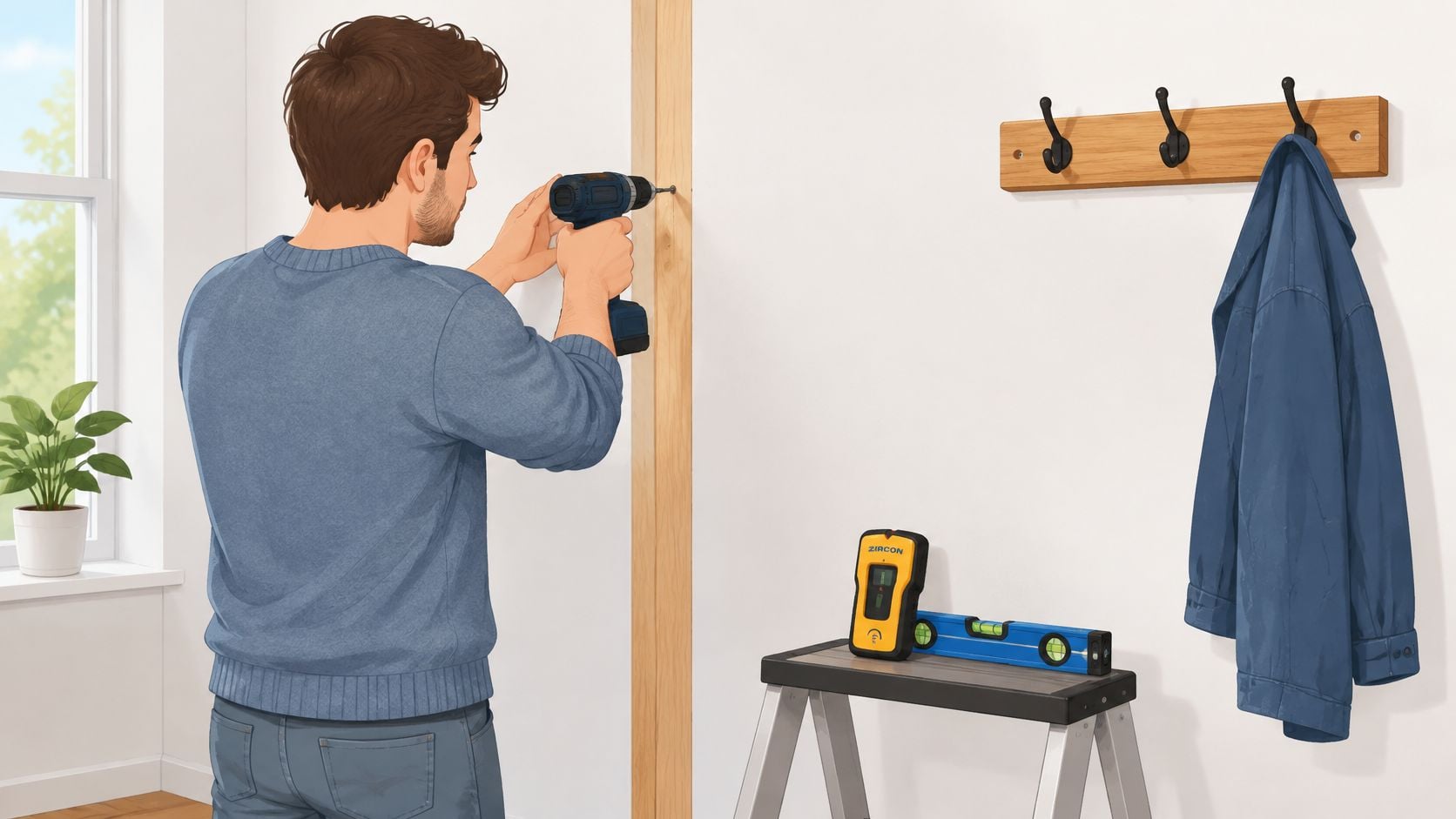
A sequence that starts before the drill
Use a picture hanging guide for careful measuring, then account for the greater load of coats and bags.
- Measure the wall, mark the rack's centre and intended height, and check clearance from doors and stairs.
- Test the position with a cardboard template or tape mock-up. Put real coats and bags against it. If sleeves catch the door, adjust the layout before drilling.
- Locate the studs and mark their centres. A stud finder is more reliable than guessing, particularly behind older plaster.
- Choose a fixing suited to the wall material. Pre-drill plaster to reduce cracking; in masonry, place anchors in solid brick or block.
- Level the rack and fasten it into studs where the layout allows. Otherwise, use anchors rated for the combined weight of the rack and what you plan to hang.
- Tighten the fixings, then press the frame gently. If it rocks, stop and correct the installation before adding weight.
- Add items gradually. Put the heaviest coats near the strongest fixing points and distribute the remaining load across the rack.
If one rack does not provide enough storage, the manufacturer suggests installing several together. On a longer wall, multiple units can create a steady visual rhythm while spreading storage across more mounting points. Still, each rack needs fixings suited to its wall and its intended load.
Practical rule: If a mock-up crowds the doorway, change the position or use another wall before drilling. A sound fixing cannot create clearance where there is none.
Caring for the Finish, Ends and Fixings
Care is mostly a light routine, plus a seasonal look at the screws. The five-year warranty on the current sheet is only useful if the receipt and the authenticity papers stay together.
Monthly, and after wet weather
Dust the wooden ends with a dry, soft cloth. Wipe the powder-coated frame with a damp cloth and mild soap. Skip abrasive pads and solvents, which dull the coat or lift it. Clean cast glass with a standard glass cleaner and a lint-free cloth, and support the end while you do it so the wire is not twisted.
A few times a year
Oil or wax solid walnut and maple sparingly. Test the product on an underside first, because a heavy film looks cloudy on a small ball. Inspect every fixing at the change of season. Heavy outerwear adds load, and anchors loosen without warning. Touch up small chips in the frame promptly. Exposed steel invites rust, and a chip is cheaper to seal than a repair later.
Keep the rack off heating vents and out of direct sun. Heat dries wood, and strong light fades both paint and powder coat.
When to stop adding weight
Loose anchors, a cracked end, or a frame that sags are repair problems, not storage problems. Unload the rack, fix the cause, and only then hang coats again. Another jacket will not settle a fixing that has already moved.
Styling the Hang-It-All as Part of a Complete Room
When the front door opens, the rack, bench, rug and walking path all compete for the same few feet. Plan the Hang-It-All as working storage first: the wall must support its load, and its projection must leave enough clearance for people and coats. Choose colours and accessories after those practical limits are clear.
Start with the floor. A wool rug can set a palette for the wood ends, while also marking the area where shoes and bags gather. A hand-knotted rug has a visual weight of its own, so let its colours guide the rest of the entry rather than asking every item to make a statement.
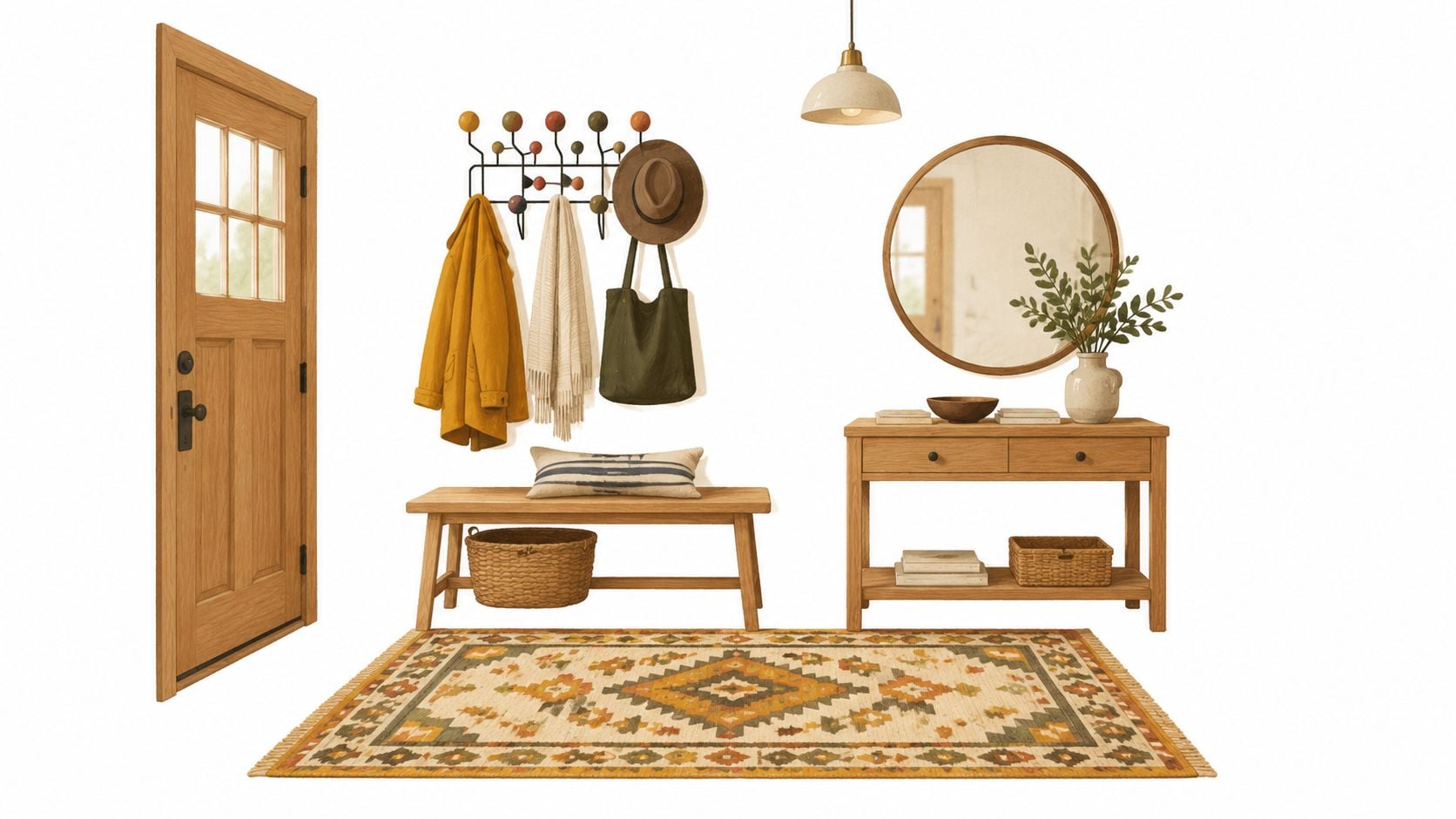
Three layouts that respect the projection
A level cluster. Two or three racks at one height can read like a small gallery and add hooks without stacking coats high. Keep the spacing even so sleeves have room to hang.
A rhythm of frames. On a longer wall, alternate walnut ends with a white frame. Repeating the same hanging height keeps the arrangement composed; varied heights can make it feel accidental.
A bench underneath. A slim bench under 14 inches deep can sit below the rack, provided the walking path remains clear. The rack's 6 3/8-inch projection is only part of the calculation. Add the bench depth, then check where knees and coat hems fall. A well-planned entryway coat rack setup makes the route past the furniture easy to see before installation.
Designer's Insight: Pair walnut ends with a neutral hand-knotted wool rug. The rug gives the entry a calm base, allowing the wood to feel warm without dominating the room.
In a condo foyer, limit the palette to two wood tones and one metal finish. That restraint helps a small space feel settled rather than crowded with samples. For an entry complicated by stairs, a side door or a tight coat closet, homeowners in St. Catharines can book an in-home consultation for space planning. A custom bench or console can then be sized to the rug and the available clearance, rather than forcing the layout around a piece that projects too far. The final test is practical: there should be a clear path, and coats should hang without brushing the bench.
Confirm the Seller and Delivery Before You Buy
Before paying, ask how the seller identifies the rack, what documentation comes with it, and what happens if it arrives damaged or differs from the order. A wall rack becomes part of the entryway's storage system, so confirm the exact dimensions and delivery arrangements before choosing where it will go.
Check that the written item number matches the piece. For a current model, ask for its product documentation; for a vintage rack, ask what is known about its history. Compare the listed dimensions with the specifications, not a product photo. Get the inspection and return terms in writing, including how soon you must report a problem.
Read the furniture product descriptions closely, especially for dimensions, finish, fixings, and delivery. Those details help you judge whether the rack will fit the wall and whether the agreed item is the one that arrives. If the wall material or available clearance is still uncertain, settle that before delivery rather than assuming the rack can go anywhere.
Critelli Furniture's family history gives buyers a place to ask about the piece, its documentation, and the wider room. The firm was founded in 1914 by Joseph Critelli and his young son Thomas at Ormond Street and Albert Street in Thorold. It remains family-owned, with fourth-generation owner Joe Critelli and fifth-generation owner Julia Critelli in leadership. A downtown St. Catharines store opened in 1939. A seller who can discuss the rack alongside the room's other furnishings can help clarify what is included and what still needs to be planned. Heirloom quality also depends on having someone to contact after the piece leaves the showroom.
What the white-glove service includes
White-glove delivery can include placement in the chosen room, unpacking, assembly when needed, final positioning, and removal of packaging. Ask which of these steps apply to your order, and whether wall mounting is included. Delivery placement is not the same as secure installation: a rack carrying coats and bags needs fixings suited to the wall substrate.
For the Hang-It-All, there is little to assemble. The delivery team can still help protect the finish and leave the entryway clear of packaging. Confirm who checks the item on arrival and how to record any damage before the delivery team leaves. If installation is part of the service, agree on the mounting location and wall conditions in advance.
Visit the King Street Showroom to examine the piece and discuss the room. Book a complimentary design consultation if you would like help planning the entryway.
Frequently Asked Questions
Will one rack fit a narrow hallway? Yes, when the wall is wide enough and doors and stairs keep their clearance. Check projection in the specifications table, then run the tape mock-up before drilling.
Is it suitable for a family entry with children? Choose solid walnut or maple rather than cast glass, which is more fragile. Mount into studs where you can, so the rack stays put when jackets and bags land on it at once.
Can the rack move to a new home? Yes. Remove it with help, patch the old holes, and repeat the substrate checks on the new wall before anything is hung. A fixing that was right for one house is not automatically right for the next.
Order one unit or several? Start with one for a single wall. Add units for a longer run when the mock-up shows the household outgrowing fourteen ends. A complimentary design consultation can confirm that layout before the order is placed.
Critelli Furniture helps Southern Ontario homeowners plan an entry as a complete room, from a documented Eames Hang-It-All to the rug and bench that make the wall usable through winter. The King Street Showroom in St. Catharines is the place to compare finishes, talk through wall fixings, and book a complimentary design consultation. Visit Critelli Furniture to start that conversation in person.