
Modern Mid Century Furniture Canada Buyer’s Guide 2026

You’ve likely had this moment. You see a beautifully proportioned walnut sideboard, a lounge chair with graceful tapered legs, or a sofa with a low, architectural profile, and you know it would bring calm to your room. Then the practical questions arrive. Will it clash with your existing trim and traditional millwork? Will it feel too stark beside the rug you already love? Will a piece that looks perfect in a Toronto condo feel undersized in a Niagara family home?
That hesitation is sensible. Mid-century modern has a strong point of view, and strong points of view need thoughtful placement. In real homes across Southern Ontario, very few rooms begin as blank canvases. Most already have inherited pieces, favourite artwork, established colour palettes, and architecture that leans classic, transitional, or somewhere in between.
That’s why a guide to modern mid century furniture canada should begin with integration, not ideology. The style has enduring appeal, but the success of a room depends on proportion, materials, and how each piece relates to what’s already there. If you’re refining a living room, it can help to start with a practical framework such as this guide to living room essentials, then evaluate which silhouettes deserve to become permanent fixtures.
Across the country, furniture remains a major part of home investment. The Canadian home furniture market is valued at USD 9.40 billion in 2026 and is projected to reach USD 13.21 billion by 2031, while Ontario accounts for 41.37% of sales according to Statista’s overview of the furniture market in Canada. For homeowners in the Greater Niagara, Hamilton, and Toronto markets, that tells us something important. People aren’t merely buying to fill rooms. They’re making considered decisions about how they want to live.
In a family business founded in 1914, you learn that timeless rooms rarely come from impulse. They come from understanding quality, scale, and permanence. If Canadian craftsmanship matters to you, it’s worth exploring a thoughtful selection of made in Canada furniture as part of that process.
An Introduction to Timeless Canadian Design
Mid-century modern has stayed relevant because it solves real design problems. It clears visual noise. It respects function. It gives a room shape without burdening it with ornament. In homes that already carry character, those qualities can be a gift.
A St. Catharines homeowner, for example, may already have crown moulding, a traditional fireplace surround, and a well-made antique cabinet from family. Adding one mid-century piece, such as a credenza with disciplined lines, can sharpen the room rather than fight it. A young couple in a Hamilton condo may want exactly the opposite feeling. They may need furniture that looks lighter, occupies less visual space, and still feels refined. Mid-century answers both needs because its best forms are restrained.
Why the style still resonates
The appeal isn’t nostalgia alone. Good mid-century design balances beauty and use in a way that feels fresh even now. A dining chair should support the body comfortably. A sideboard should store generously without looking heavy. A sofa should define a room without swallowing it.
That’s why so many homeowners are drawn to the style before they even know its name. They respond to proportion first.
Good furniture doesn’t ask for attention all day. It quietly improves how a room works.
Where confusion usually begins
Most buyers don’t struggle with liking mid-century design. They struggle with three practical questions:
- How much is enough. One statement chair can feel intentional. Five mismatched pieces can make a room feel staged rather than lived in.
- What belongs together. Walnut, teak, brass, wool, leather, stone, and painted trim can work beautifully together, but only when the palette is edited.
- Whether to buy vintage or new. That decision depends on lifestyle, budget, maintenance tolerance, and whether you want collector value or design influence.
Those are the questions that turn admiration into a confident purchase. They’re also the questions that keep a room from looking like a showroom vignette disconnected from everyday life.
The Hallmarks of Mid-Century Modern Style
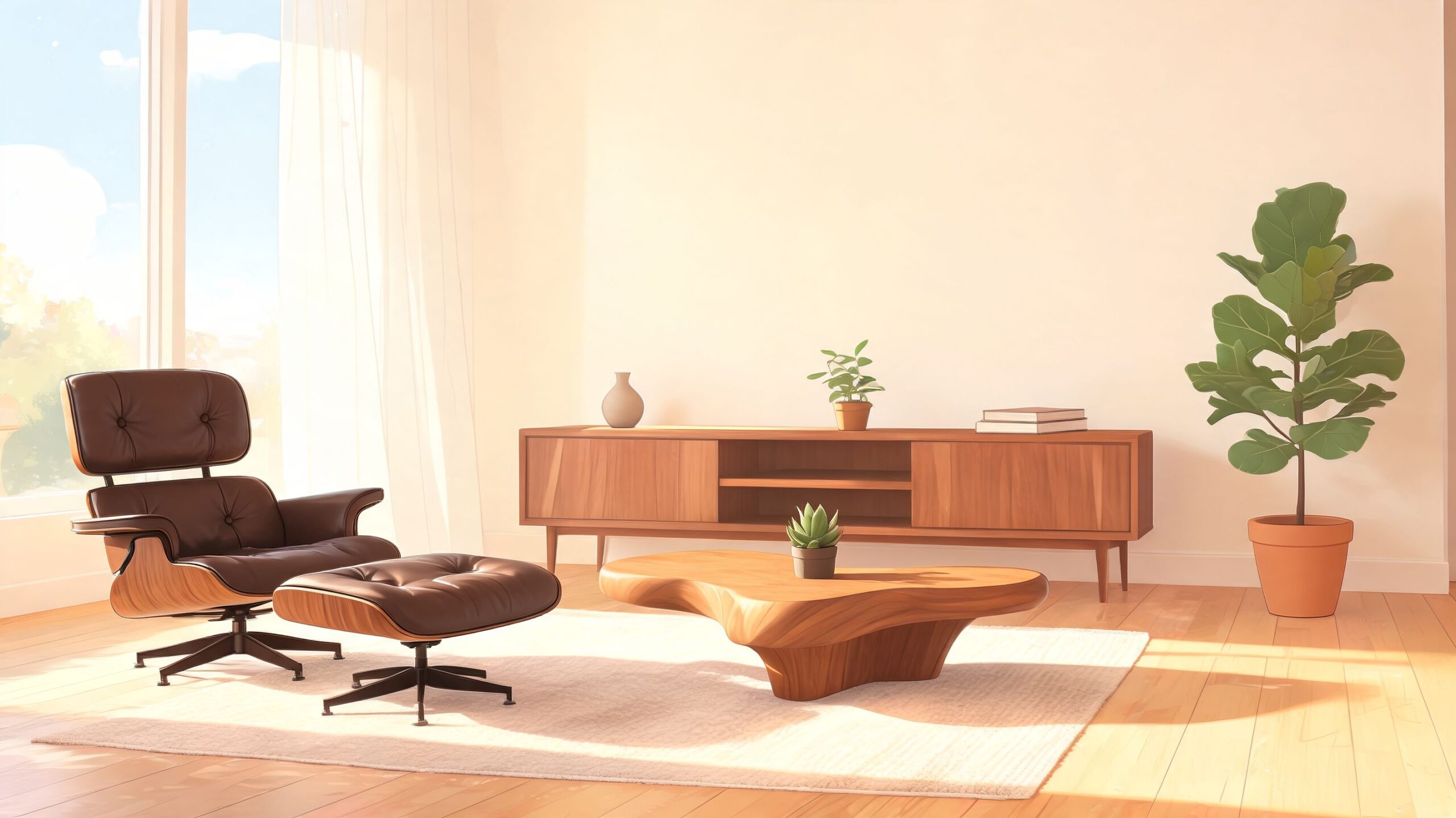
Mid-century modern is often reduced to a few familiar visuals: tapered legs, walnut wood, and low profiles. Those elements matter, but they aren’t the whole story. The style is really a design philosophy. It asks furniture to be useful, elegant, and clear in intention.
In Canada, that story has its own heritage. After the Second World War, companies such as the Canadian Wooden Aircraft Company repurposed technology used in Mosquito bomber production, specifically bent laminated wood and moulded plywood, to create inventive post-war furniture, as outlined in this account of mid-century modern furniture in Canada. That connection matters because it explains why authentic pieces from the period often feel so technically resolved. They weren’t casual sketches made fashionable later. They emerged from serious material experimentation.
For readers considering seating in this language, a browse through mid-century modern couches can help clarify the silhouettes that define the look.
Clean lines and disciplined shapes
The first hallmark is visual economy. Mid-century pieces don’t waste line. Arms are slimmer. Cabinet fronts are flatter. Legs are exposed rather than hidden behind skirts and bases.
This restraint gives a room breathing space. In homes with existing traditional elements, that’s often the exact counterbalance needed.
A few signs you’re looking at a true mid-century vocabulary:
- Straightforward profiles that read clearly from across the room
- Geometric order in shelving, sideboards, and tables
- Visible structure rather than decoration applied after the fact
Organic curves and softened edges
The style isn’t cold when it’s done well. Some of its most memorable forms curve where the body needs support. Chair backs bend gently. Tabletops soften at the corners. Armrests feel carved rather than assembled.
That balance is one reason the style adapts so well to Canadian homes. A room can feel edited and warm at once.
The best mid-century rooms mix precision with ease. If everything is angular, the space grows severe.
Minimal ornament with a strong purpose
Traditional furniture often uses carving, turnings, tufting, or decorative trim to create richness. Mid-century modern creates richness through proportion, grain, and silhouette instead. That’s a different kind of luxury. It asks you to look closer.
A walnut sideboard, for instance, may appear simple at first glance. Then you notice the rhythm of the doors, the grain match across the front, the shadow line beneath the case, and the way the base lifts the whole piece lightly off the floor.
A quick style check
| Element | Mid-century expression | Why it matters in a room |
|---|---|---|
| Sofa profile | Lower, cleaner, lighter | Keeps sightlines open |
| Wood furniture | Flat planes with clear grain | Adds warmth without fuss |
| Legs and bases | Tapered or slender | Reduces visual heaviness |
| Accent pieces | Functional, sculptural | Lets fewer objects do more work |
Discerning Quality Materials and Artisanal Construction
A handsome silhouette can still hide mediocre construction. If you want heirloom quality, you have to look beneath the finish, inside the case, and under the seat. Mid-century furniture rewards that closer look because much of its value lies in how intelligently it was built.
Authentic Canadian-made MCM pieces often used advanced methods such as moulded plywood with multiple laminated layers and, in some cases, fiberglass-reinforced composites adapted from wartime aerospace manufacturing. Those techniques contributed to structural integrity and longevity, as described in this piece on Canadian mid-century designers and construction methods. In practical terms, that means a chair or case piece may feel lighter than expected while remaining impressively strong.
If upholstery is part of your search, understanding coverings matters just as much as understanding frames. A primer on upholstery materials can help you assess leather, woven textiles, and performance fabrics with more confidence.
What to look for in wood furniture
Material selection tells you whether a piece was made to endure or merely to imitate the look. Mid-century design often highlights the wood itself, so poor material choices are harder to disguise.
Look for these cues when you inspect a table, sideboard, or cabinet:
- Consistent grain character that feels intentional across visible surfaces
- Stable edges and corners with no bubbling, separating, or lifting veneer
- Clean interior construction inside drawers and cabinets, not just polished showroom surfaces
- Balanced weight. A piece should feel substantial, but not clumsy
Some buyers assume heavier is always better. It isn’t. A well-engineered case in quality materials can feel surprisingly refined in weight and still be exceptionally sound.
How construction reveals character
Joinery is the quiet language of quality. You don’t always need to know the technical names to recognise care. Drawers should move smoothly without wobble. Doors should align evenly. Seams should look deliberate, not hidden in haste.
The strongest mid-century pieces usually share a few traits:
- Thoughtful transitions between horizontal and vertical parts.
- No unnecessary bulk added to compensate for weak structure.
- Consistency from the most visible surface to the least visible underside.
Practical rule: Turn the piece around if you can. The back and underside often tell the truth the showroom angle conceals.
Upholstery and seat comfort
A beautiful frame won’t redeem poor seating comfort. On lounge chairs and sofas, sit long enough to notice support through the back, seat pitch, and arm height. Mid-century inspired upholstery can look slender and still be comfortable, but only if the internal build is disciplined.
Watch for three common issues in lower-grade pieces:
- Collapsed seat cushions that look tired quickly
- Overly thin padding on rigid frames
- Fabric choices that don’t suit the sharpness or softness of the form
The most enduring rooms combine good bones with tactile comfort. That blend is the difference between furniture you admire and furniture you continue to use for years.
Authentic Originals Versus Inspired Reproductions
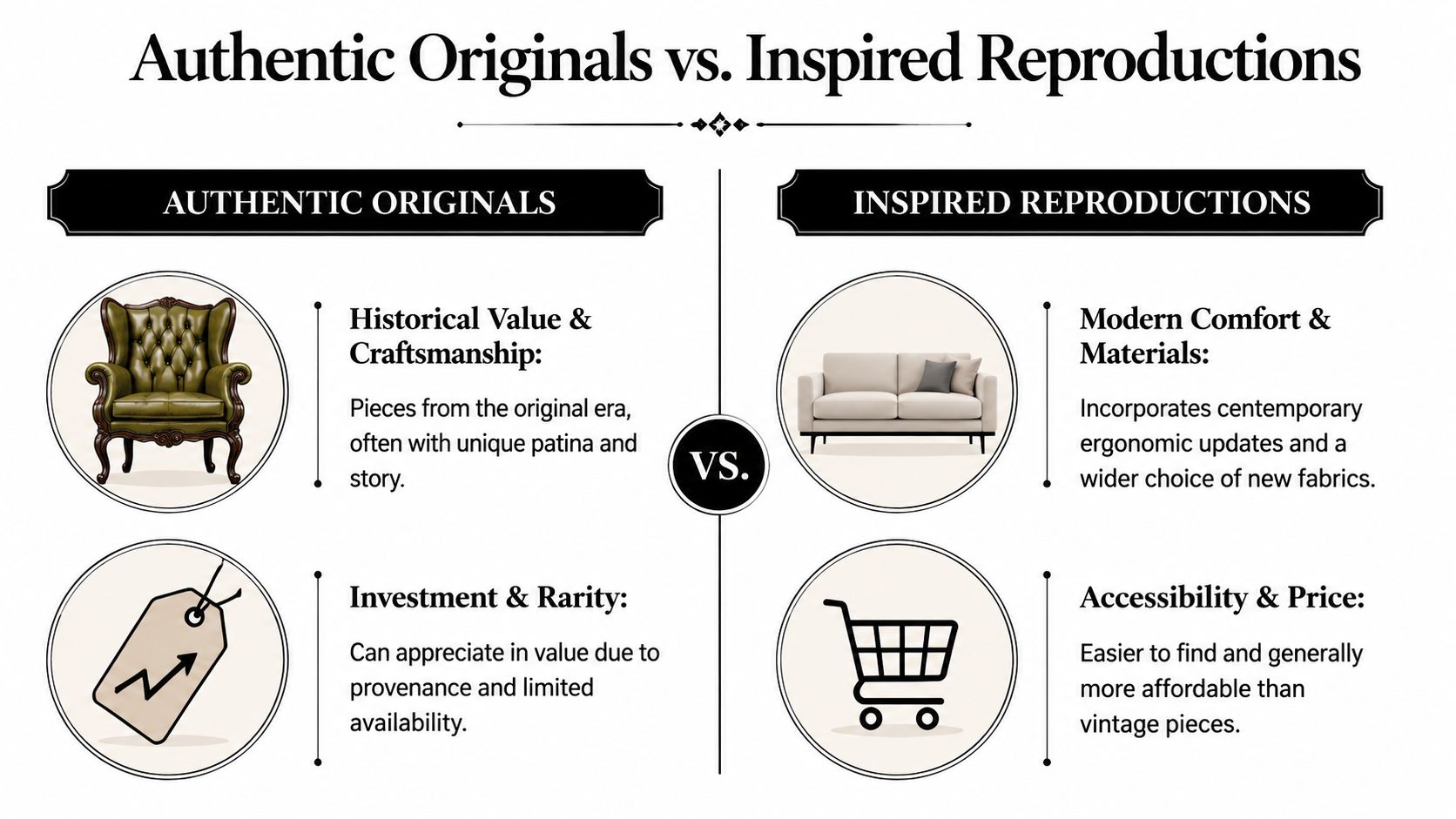
This choice deserves nuance. An original vintage piece and a well-made inspired reproduction serve different needs, and either can be the right answer. The mistake is assuming one path is automatically more refined.
Collectors often value originality, provenance, and the subtle depth that comes with age. Busy households may prefer newly made pieces that respect the language of the era while offering updated comfort, fresh finishes, and less maintenance anxiety. Both approaches can belong in a design-forward home.
When an authentic original makes sense
Originals are often the better fit if you love design history and enjoy living with furniture that shows a measured patina. They also appeal to buyers who appreciate rarity and material richness.
In the Canadian market, woods such as teak, rosewood, and walnut can command 15 to 25% price premiums over lighter wood variants, and pieces with degraded joints or delaminated plywood can lose 40 to 60% of their value, according to this guide to mid-century modern materials and restoration. That tells you two things at once. Premium materials matter, and condition matters just as much.
Signs that support confidence in an original include:
- Maker’s marks or labels still present and legible
- Patina that feels honest, not artificially distressed
- Joinery and proportions that look resolved from every angle
- Material ageing that remains stable rather than compromised
When an inspired reproduction is the wiser choice
A reproduction can be a disciplined decision, not a compromise. That’s especially true if your priority is function in daily life. A newly made dining chair may offer easier upkeep. A modern sofa in a mid-century profile may fit your body and your room better than a strict vintage original.
Look for these strengths in an inspired piece:
| Consideration | Strong reproduction | Weak imitation |
|---|---|---|
| Scale | Respects classic proportions | Looks oversized or shrunken |
| Materials | Uses quality wood, metal, fabric, or leather | Uses thin veneers or unstable substitutes |
| Comfort | Updates support sensibly | Feels generic or underbuilt |
| Craft | Clean seams and sound assembly | Rough joints and shortcut finishing |
A balanced buying approach
Many of the most successful interiors mix the two. An original sideboard might anchor the room with character, while a newly made sofa introduces comfort and durability. That combination often feels more natural than forcing every piece to come from one era.
A few questions help clarify your path:
- Do you want provenance, or do you want flexibility?
- Will the piece live in a formal room or a hard-working family space?
- Are you prepared for restoration if a vintage piece needs it?
- Does your eye favour patina, or do you prefer a cleaner finish?
Buy originals for their story and material depth. Buy reproductions for their practicality and fit. A good room rarely cares which category wins, as long as the proportions are right.
Styling MCM in Your Southern Ontario Home

Many homeowners encounter a common dilemma. They don’t need another definition of mid-century modern. They need to know how to place it in a home that already has history, habits, and furnishings they’re not replacing all at once.
That challenge is especially common in Southern Ontario. One source notes that Canadian homeowners often struggle to integrate MCM into existing traditional or transitional decor without creating visual discord, particularly in mature housing stock, as discussed in this guide to mid-century modern furniture in Canada. The issue isn’t whether the style works. It’s how to make it work with what’s already there.
Room planning helps. If you’re trying to judge circulation, conversation zones, or scale before moving anything heavy, this overview of designing effective room layouts is a useful starting point. For a closer look at arrangement principles in everyday spaces, living room furniture placement ideas can also help you think through flow.
In a Toronto condo
Condos reward furniture that looks light on its feet. Choose one anchored piece, such as a slim sofa or compact sideboard, then keep surrounding tables visually open. Exposed legs help the eye travel, which makes the room feel less crowded.
Avoid forcing a full “set.” Mid-century works best when each piece earns its place.
- Choose lower profiles so windows remain part of the room
- Limit wood tones to one dominant family
- Use a rug to define the seating zone instead of adding extra occasional pieces
In a Niagara or Hamilton family home
Larger homes create a different problem. A single MCM chair can look lost against broad walls, traditional trim, or substantial fireplaces. Here, layering matters more than minimalism.
The answer is often contrast with continuity. A sculptural chair, a walnut console, and a hand-knotted rug can coexist beautifully with inherited case goods or classic upholstery if the palette is controlled, making a complete room concept more important than an isolated purchase.
The rug as the bridge
In mixed-style rooms, the rug often does the hardest work. It can soften the crispness of a modern silhouette, introduce warmth under cleaner-lined furniture, and connect old and new through colour and texture. That’s why I often describe rugs as Art for your Floor. They aren’t background. They set the emotional tone of the room.
A hand-knotted wool rug, for example, can make a low walnut coffee table feel settled rather than spare. It can also temper leather, glass, and angular lines with a needed softness.
Designer’s Insight
Pair a sleek mid-century sideboard with a neutral hand-knotted wool rug and one upholstered chair in a tactile fabric. The wood brings clarity. The rug brings warmth. The textile keeps the room from feeling too hard.
A simple integration framework
When clients want to blend styles without visual strain, I usually suggest this sequence:
- Start with one anchor piece that clearly expresses the mid-century language.
- Repeat one element from that piece elsewhere, such as wood tone, leg shape, or hardware finish.
- Use textiles to mediate. Drapery, rugs, and cushions can absorb the transition between styles.
- Edit accessories sharply. Mid-century forms dislike clutter.
- Check the whole room at once. The room should feel collected, not themed.
For homeowners who want a more customized plan, design studios can be helpful because they work from the architecture outward, not from a single sofa inward. That’s often the difference between a room that looks assembled and one that feels bespoke.
The Seamless Journey From Showroom to Home
A beautiful purchase can lose its pleasure quickly if the final steps are careless. Fine furniture doesn’t end at selection. It has to arrive safely, fit properly, and be placed with intention. That’s especially true for pieces with delicate finishes, precise joinery, or upholstery that can be damaged in transit or during improvised assembly.
A clear delivery process reduces uncertainty. Even if you’re comparing general policies across retailers, reviewing a straightforward example such as the shipping and returns policy from Haniesta helps you see what details matter: inspection, timing, conditions, and how problems are handled.

Why white-glove service matters
Premium delivery isn’t about ceremony. It’s about protection. A sideboard can be scratched in a hallway turn. A sofa leg can be strained by incorrect lifting. An area rug can be placed slightly off-centre and subtly distort the whole room.
A proper white-glove team handles more than transport. They inspect, position, assemble where needed, and remove packaging so the room is ready to live in.
That’s particularly valuable in the Greater Niagara, Hamilton, and Toronto markets, where homes vary widely. Some have narrow entries and stair runs. Others need careful placement in open-concept spaces where every inch affects the final composition.
What to confirm before delivery day
Use this checklist before any major furniture arrival:
- Access conditions. Measure doorways, lifts, staircases, and tight turns.
- Placement decisions. Know where the piece will go before the team arrives.
- Floor protection. Confirm how surfaces will be protected during placement.
- Assembly scope. Clarify what will be assembled on site.
- Packaging removal. Ensure cleanup is included, not left behind.
For homeowners who want support with setup, furniture assembly services near me is one example of the type of service that can help bridge the last mile between purchase and a finished room.
Delivery is part of design. If placement is wrong, even excellent furniture won’t feel right.
The value of a calm final step
The last stage should feel measured, not frantic. When furniture enters the home properly, you can judge scale, rug relationship, lighting, and sightlines without distraction. That’s when the purchase becomes part of your life rather than another item to manage.
For bespoke or design-forward pieces, that calm handoff isn’t optional. It protects both the investment and the room you’ve worked to shape.
Begin Your Legacy with Timeless Design
A well-chosen mid-century piece does more than update a room. It clarifies it. Clean lines bring order. quality materials bring permanence. Careful integration allows new furniture to sit comfortably beside the architecture and pieces you already value.
That’s why the best approach to modern mid century furniture canada isn’t to chase a trend or copy a period interior wholesale. It’s to choose thoughtfully. Look for disciplined construction. Pay attention to materials. Decide carefully whether an original or an inspired reproduction better suits your home and your habits. Then place each piece in conversation with the full room.
In a family-run business with roots going back to 1914, you learn that people rarely regret buying timeless craftsmanship. They regret buying too quickly, without enough thought for proportion, comfort, and longevity. A room becomes memorable when it reflects judgement, not impulse.
If you’re ready to refine a condo in Toronto, soften a transitional Hamilton living room, or add design-forward character to a Niagara home, begin with the pieces that will still feel right years from now. Experience the craftsmanship in person at our King Street Showroom. Or book your complimentary design consultation today.
If you’re considering a more customized approach, Critelli Furniture offers access to curated furnishings, interior design services in St. Catharines, hand-knotted rugs in Ontario, and white-glove support for homeowners across Southern Ontario who want a complete room concept rather than a one-piece purchase.