
Tables for Living Room: How to Choose the Right Size

The sofa is already placed, the lamp has a home, and the walk from the kitchen still cuts across the middle of the floor. A low table that looked generous in a showroom now forces a sideways step every time someone passes the armchair. The recliner's footrest stops short of the table edge, and a laptop has nowhere steady to sit. That is the usual point at which tables for living room stop being a style decision and become a question of how the room moves.
Clearance comes before the finish. A striking centrepiece can be the wrong purchase in a compact, multipurpose room, because blocked paths cost more comfort than a smaller top ever will.
Table Sizes at a Glance for Every Living Room Format
A table should fit the sofa and preserve a comfortable route through the room. Use these ranges for tables for living room as a starting point, then adjust for the floor plan, hearth, and any recliner.
| Table format | Height | Length, width or diameter | Distance from seating |
|---|---|---|---|
| Coffee table | 40 to 46 cm, within 5 cm of the seat-cushion top | About two-thirds of the sofa length; a 220 cm three-seater suits a table near 130 cm | Leave a walkable gap in front of the sofa |
| Side table | 55 to 65 cm, close to armrest height | 40 to 55 cm wide or in diameter | 15 to 30 cm from the sofa arm, within arm's reach |
| Nesting tables (largest) | 45 to 55 cm | 50 to 60 cm wide, with smaller tops nesting beneath | Keep stacked when not in use; pull one closer to a seat when needed |
| Console table (behind sofa) | 75 to 85 cm | A little shorter than the sofa, so the sofa remains the main line | 0 to 10 cm behind the sofa back |
Why the ranges bend
For a 180 cm sofa, two-thirds gives a coffee table about 120 cm long. That leaves a useful surface without letting the table take over the room. Keep its height near the cushion top so reaching for a cup feels natural, not like a stretch or a stoop.
Set side tables close to armrest height, so a lamp, phone, or mug stays easy to reach. Nesting tables suit rooms that need extra surface for guests, homework, or snacks, then need that floor space back. A console behind the sofa should sit low enough to keep the sofa's outline clear and close enough to avoid creating a trip ledge.
Treat every measurement as a first pass. An open kitchen-family plan, a child's route around a corner, or a reclining chair can leave less usable floor than the table dimensions suggest. A dramatic centrepiece is the wrong choice if it narrows the everyday path.
Check the fit before choosing a shape
For a 220 cm sofa, the table range points to about 130 cm in length. Keep that as a candidate, not a final decision: if it interrupts a route or crowds the seats, choose a shorter table. In a compact, multipurpose room, the clearer path matters more than a larger top.
The family-run Critelli Furniture showroom on King Street serves households across St. Catharines, Hamilton, Toronto, and the Greater Niagara region. The Greater Niagara Chamber of Commerce records the company's beginnings in Thorold in 1914. Use these ranges to narrow the options, then judge each table by the space it leaves around the sofa.
How to Measure Your Room and Sofa Before You Shop
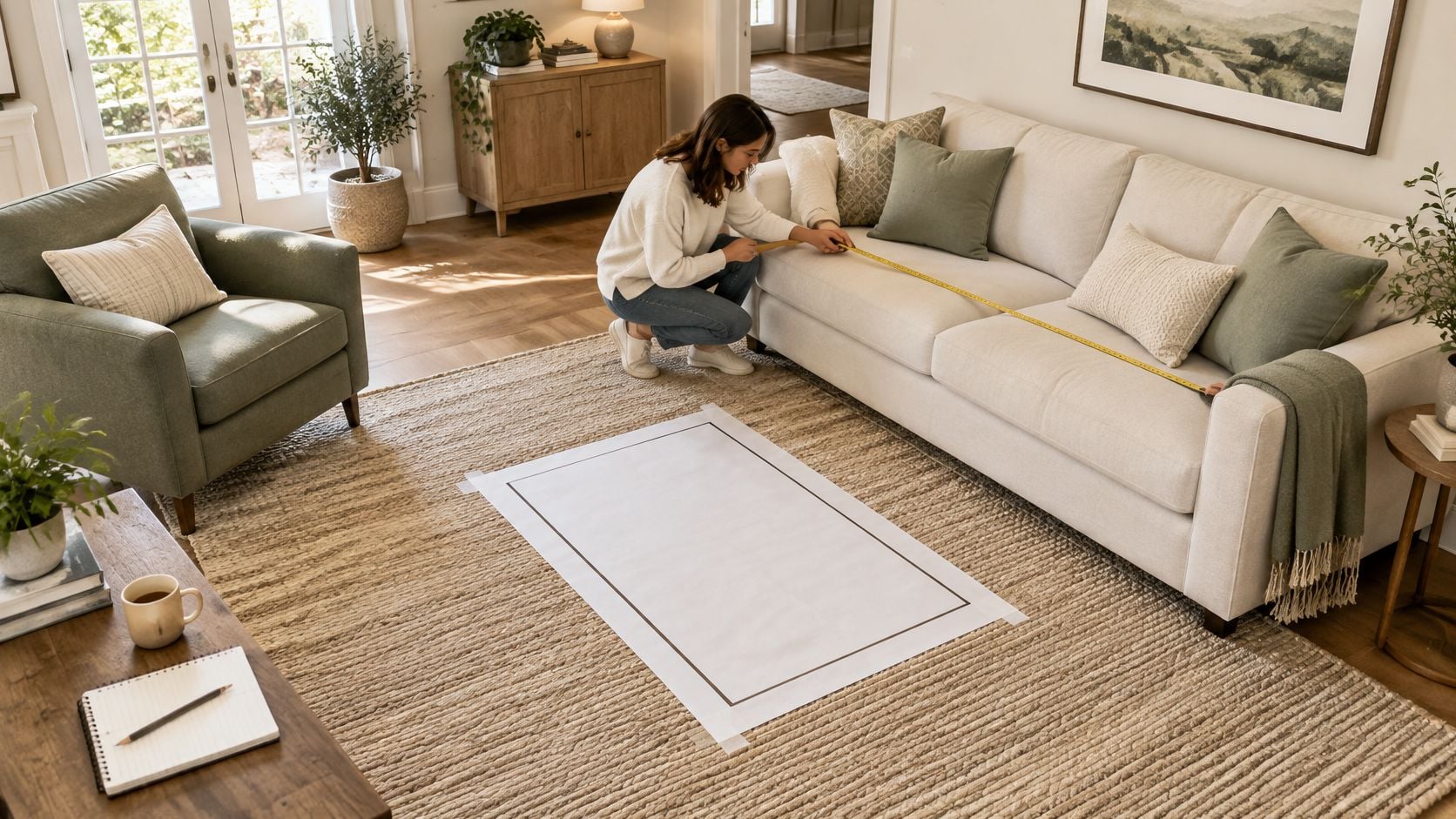
Measure the room and mark the walkways before ordering a table. A few minutes with a tape measure and painter's tape can reveal whether a piece that looks right in a showroom will leave enough room to move at home.
The ten-minute routine
- Record the sofa. Measure its length, seat height, and arm height from the finished floor. These dimensions guide the table's position and height.
- Mark the sofa front. Run painter's tape along the front edge, then measure the space to walls, the fireplace, and the entry. This shows how much floor remains for movement.
- Mark the walkways. Leave 60 to 90 cm of clear path between large pieces. That space lets people pass without turning sideways or squeezing through.
- Trace the recliner. Mark the full swing of any reclining chair or sofa, then allow about 10 cm beyond the arc. The footrest needs room to open, even if it is folded away in the showroom.
- Measure the rug plan. If you plan to add a rug, mark where it will meet the seating. The table should sit within that area rather than crowding its edge.
- Tape the footprints. Mark each candidate's exact dimensions on the floor, including nesting pieces when pulled apart. Walk around the shapes before you buy.
- Sit and reach. From the sofa, reach toward each mark. A side table should be easy to reach without leaning, so it works for cups and everyday items.
Practical rule: If someone must turn sideways to pass the taped table, choose a smaller one. A striking centrepiece is the wrong purchase when it blocks movement in a compact, multipurpose room.
Book professional space planning before ordering a top, and check the taped layout against recliner clearance and traffic. Choose the finish after the footprint works.
Matching Each Table Type to Its Daily Job
In a compact, multipurpose living room, a striking centrepiece can block the route between seats. Choose tables for living room by what people need to reach and how they move through the space. Looks come after daily use.
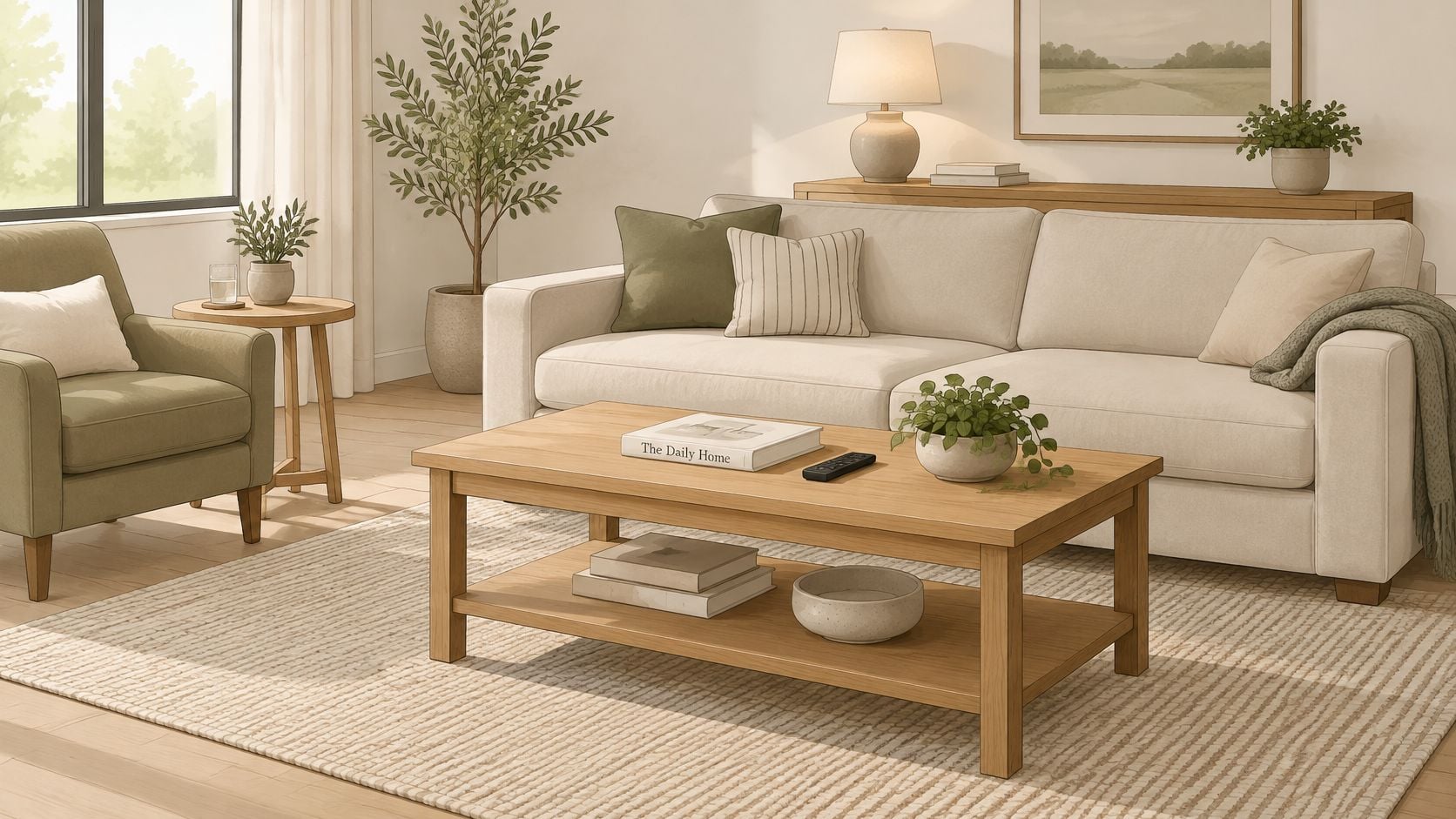
Coffee tables anchor the seating area. Choose one for drinks, books, and remotes when several seats face the same surface. Keep its job focused. A top expected to serve as a desk, toy bin, and display piece can crowd the room and make everyday use harder.
Side tables keep lamps, cups, and phones within reach of the main seats. Place one beside each seat that needs its own surface. Different heights add visual rhythm without filling the centre of the room with one oversized piece.
Nesting tables suit a room that needs extra surface only some of the time. Keep the pieces stacked for everyday use, then separate them when guests arrive or a child needs a snack surface. See nesting and side tables for sets designed to tuck together, rather than squeezing one large top into a tight plan.
Consoles sit behind the sofa and hold lamps, décor, or sometimes a screen. Health Canada's tip-over guidance identifies top-heavy designs, uneven floors, heavy objects placed high, and climbing or pulling as tip-over risks. Choose a wide base that rests on the floor, keep weight low, and secure the console to a stud or suitable heavy-duty anchor. If it holds a television, make sure the stand fits the set and secure the set to the stand and, where possible, the wall.
Lift-tops and C-tables work well for eating or working from the sofa. A lift-top raises a laptop to a usable height. A C-table slides under the sofa arm, keeping a cup nearby while leaving the middle of the room open.
Designer's Insight: In a typical three-seat plan, one substantial coffee table paired with two slim side tables at different heights gives the room a rhythm. A leather accent chair reads calmer beside that varied arrangement than beside one oversized block.
Start with the job the table must do on an ordinary day. Choose a larger or more flexible surface only if guests or other regular needs call for it.
Materials and Finishes That Hold Up Over Decades
In a compact living room, the right table leaves a clear path and suits the way the household uses it. Judge the material by daily wear and future repair, then choose a finish that fits the room. Solid hardwood such as oak, walnut, or maple can be sanded and refinished several times. Veneer allows a light refresh, while deep wear needs specialist repair. MDF, particleboard, and laminated cores cannot be refinished. When the outer layer fails, replace the surface.
| Material | Scratch and heat tolerance | Refinishing potential | Composite content |
|---|---|---|---|
| Solid hardwood (oak, walnut, maple) | Good; dents blend into the grain over time | Sand and refinish several times | None in the top; check drawers and base |
| Veneer over hardwood or plywood | Good surface; sharp scratches can cut through | Light refresh only; deep wear needs professional re-veneering | Plywood core is composite |
| MDF or particleboard with laminate or lacquer | Good for everyday wear; edges swell if water sits | Not refinishable; replace the surface | Full composite; request emission documentation |
| Natural stone (marble, travertine) | Heat-resistant when sealed; honed finishes stain and etch | Professional honing or polishing | None |
| Glass top on metal base | Scratch-resistant surface; chips at edges and shows fingerprints | Not refinishable; replace the glass | None |
| Metal frame (steel, iron) | Dents and finish chips; rust once the finish breaks | Repaint or re-powder-coat | None |
Air, water, and who uses the table
Composite panels are common in tabletops, drawer boxes, and storage coffee tables. Health Canada's residential formaldehyde guideline sets a short-term limit of 123 µg/m³ (100 ppb) over one hour for eye, nose, and throat irritation, and a long-term limit of 50 µg/m³ (40 ppb) over eight hours for respiratory symptoms in children with asthma. Ask the seller for emission-test documentation for composite panels, especially on large surfaces. Ventilate during installation or refinishing, since furniture and building materials can add to indoor pollutants.
Choose for the household's actual routine. Children, pets, hot mugs, and feet on the surface all affect how a finish holds up. Stone needs coasters and sealing. Glass shows fingerprints, and metal can chip where it gets struck. For a stone top, compare thickness and edge profiles alongside tabletop budgeting for NCR interiors, then weigh the cost against how often the surface may need professional care. This guide to sustainable furniture materials offers a broader look at fibres, woods, and finishes.
A warm oak top on a steel base gives a transitional room durability without visual heaviness. The wood can be renewed, and the slim metal legs keep more of the floor visible. That open footprint can make the table a better fit in a multipurpose room than a heavier centrepiece.
Reading Style Cues for Traditional, Transitional and Modern Rooms
A table can match a room's style and still block its flow. Set the size and construction around the room's needs first, then choose details that connect with the sofa and other furnishings.
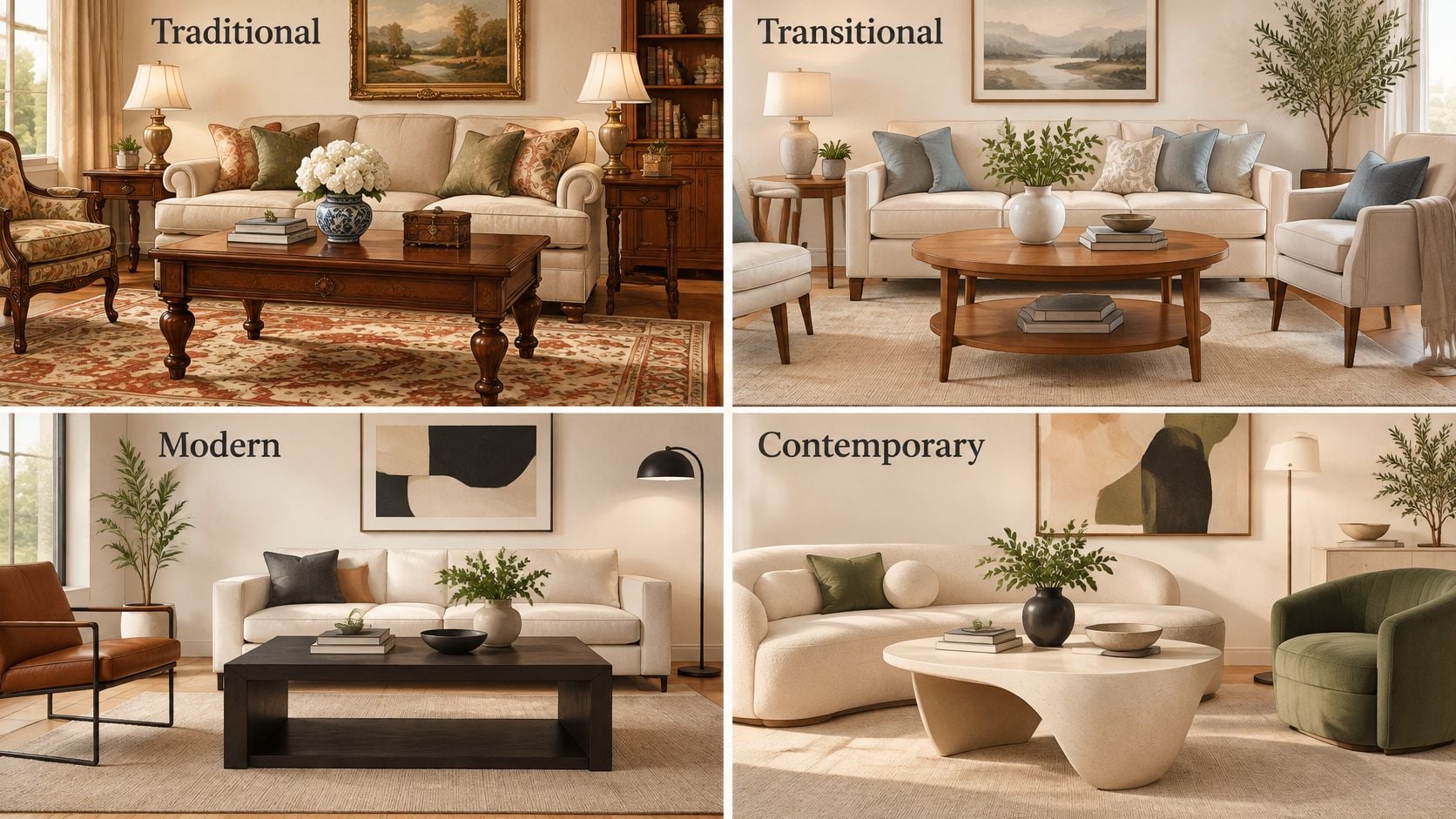
Traditional tables often feature turned legs, carved edges, deep stains, and the mortise-and-tenon joinery typical of traditional pieces. Choose one when the room's sofa has shaped arms or substantial feet, so the furniture shares a sense of weight.
Transitional tables pair clean lines with warm wood and work well among mixed seating. For guidance on what transitional style means in a room, consider how the style combines familiar materials with simpler forms.
Modern tables tend to have low profiles, glass or metal details, and hand-finished planes. Keep accessories restrained to preserve a calm, intentional look. Contemporary wall decor and canvas prints can bring pattern to the walls while the tabletop stays visually quiet.
Mid-century tables use tapered legs, slim profiles, and warm walnut. Their lighter lines can balance a sofa that already feels visually heavy.
The sofa-reading test
Check the sofa's arms and legs before choosing a table. Repeat one shape in the table's legs or edge, then pick a finish that connects with an existing accent, such as a leather accent chair or timber window frame. One repeated detail creates a connection; matching every material can make the room feel overly coordinated.
Critelli's Contemporary, Uptown, New, and Casual Traditional specialty shops display table styles in furnished settings. Seeing a table beside a sofa makes it easier to judge whether their shapes and visual weight work together. Set the footprint first, then assess style in context.
Pairing Tables With Sofas and Rugs in Smaller Rooms
A narrow walkway beside a sofa can make a striking coffee table a poor choice. In smaller Southern Ontario homes, judge each table by how people move through the room and what clearances it leaves. Multifunctional, nesting, folding, and storage-integrated designs can serve open plans where kitchen, dining, and family areas share one floor. The table should support those daily routines without blocking the path.
Choose a round or oval top where people cut through the seating area. Nesting tables add a surface when guests arrive, then tuck away. A lift-top offers a work surface or storage, while a C-table slides beside the sofa without taking up the centre of the room. In a home with children or recliners, prioritize room to pass and operate the seating over a large centrepiece.

Art for the floor
Set the rug size and placement before settling on a table. A rug anchors the seating group and gives the room's palette a starting point. General practice is to place at least the front legs of each sofa and chair on the rug, leaving about 30 to 60 centimetres of floor between its edge and the walls when the room allows. An 8-by-10-foot rug suits many standard seating groups; a 9-by-12-foot rug can fit a larger group. For more placement examples, see this living room rug size guide.
| Room type | Rug size | Placement rule |
|---|---|---|
| Compact room with sofa and one chair | Size to the seating footprint, not the whole room | Put the sofa and chair's front legs on the rug; keep the coffee table fully on it |
| Standard room with sofa and two chairs | 8 by 10 ft | Put the front legs of all seating on the rug; leave 30 to 60 cm of floor showing at the walls |
| Large seating group or sectional | 9 by 12 ft | Put the front legs of all seating on the rug; place the coffee table on the rug or just in front of its edge |
A rug that is too small leaves the table visually disconnected from the seating. If the sofa's back legs sit on the rug's edge, the rug can also create an uneven footing. Measure the seating footprint, then check the Canadian rug-sizing guide for additional sizing guidance.
Visit the Rug Market to establish the room's foundation. Choose the table once the rug's placement and the clear walking routes are settled.
Caring for Your Table and Booking Your Consultation
A table that stays sturdy through moves and daily use needs care from the day it arrives. Plan for routine maintenance and repair before choosing a finish, especially if the table will see heavy family use.
Coasters and felt pads prevent heat marks and floor scratches. Seasonal repositioning spreads sun exposure across the tabletop, while steady indoor humidity helps solid wood hold its shape at the joints. Wipe up spills promptly to protect veneer edges and stone from water damage.
For a shallow scratch in solid wood, use a stain matched to the finish. Have loose joints tightened before wobbling worsens. Water rings on veneer call for gentle polishing, since sanding can cut through its thin surface. Keep replacement hardware details with the invoice so repairs are easier to arrange.
Canadian federal research reports that 44% of consumers usually or always repair furniture when it breaks, while 44% lack the skills or knowledge to do so, and 58% prefer donation or resale for a second life. The research also discusses furniture and white goods as part of Ontario's waste stream, drawing on York University's Waste Wiki, and Toronto's Furniture Bank as a way to divert furniture from landfill. Choose a table with repairable surfaces, and decide where it could go if your needs change. A seasonal cloth can protect the top between uses. These seasonal table runner styling tips offer ways to cover wood while keeping its grain visible.
White-glove delivery should include placement in the room, unpacking, assembly, inspection, and packaging removal. Critelli's furniture assembly service describes these steps. Ask the delivery team to check the legs, hardware, level, and moving parts while the surfaces are still visible. Keep invoices, payment records, delivery photos, and correspondence in one place. Ontario's complaint process is another option if an issue needs follow-up.
See the craftsmanship in person at the King Street Showroom, and book a complimentary design consultation. Critelli Furniture helps Southern Ontario households choose living-room tables around clearances, daily use, seating, and rugs. A design studio visit and white-glove placement can help turn those measurements into a table suited to your home. Visit Critelli Furniture to see the King Street Showroom or book a complimentary consultation.