


Rug Placement with Sectional: Design Rules

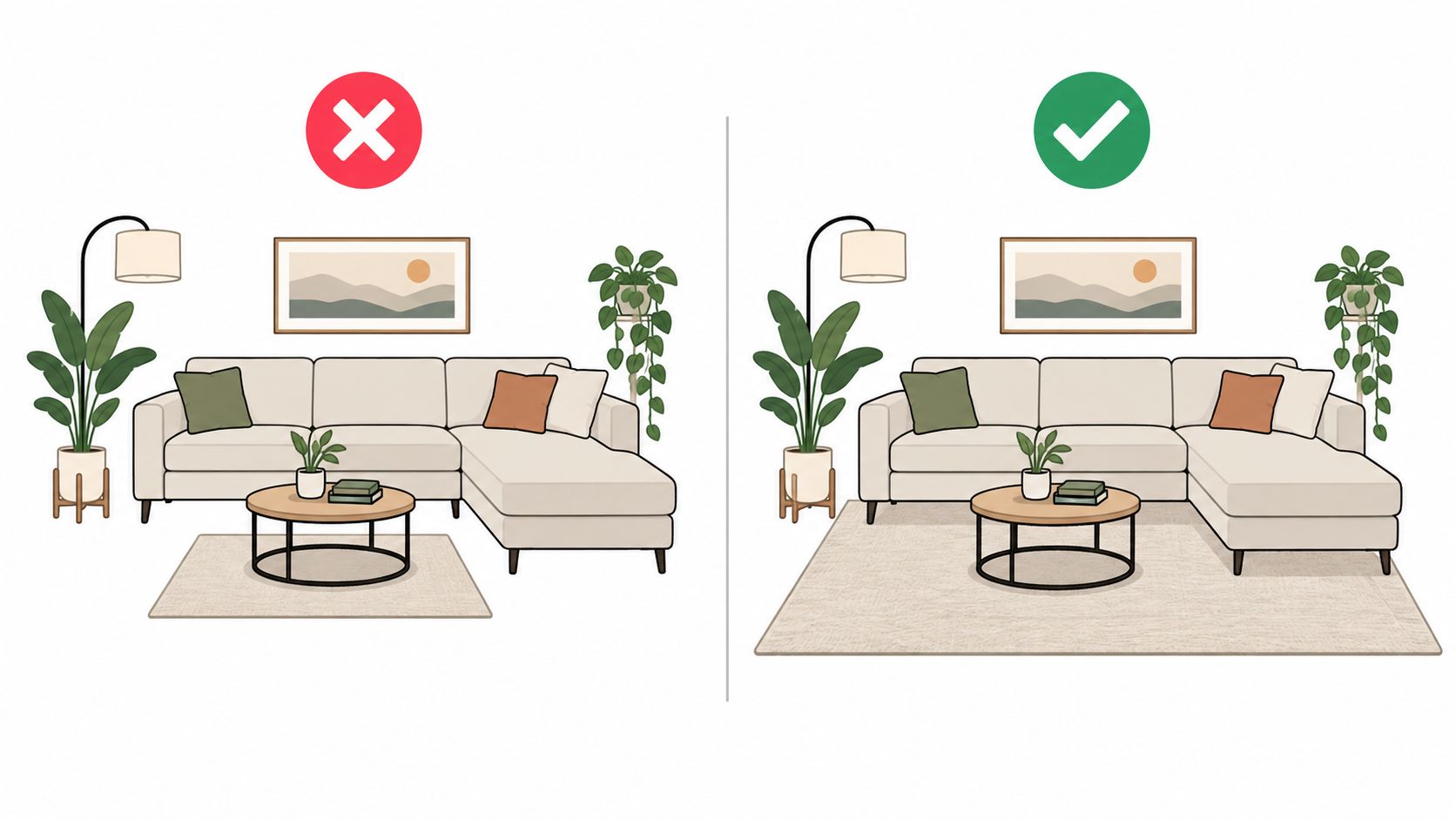
Anchor the front legs of the sectional and chaise on the rug, extending it at least 6 to 12 inches beyond the seating edges. That placement creates a connected seating zone without forcing the entire sectional onto the textile.
A sectional can arrive, settle into its corner, and still leave the living room feeling strangely unfinished. The coffee table may be centred, the upholstery carefully chosen, and the lighting beautifully layered, yet the seating appears to float across the floor. The issue is often not the furniture. It's the missing architectural boundary beneath it.
Rug placement with sectional works best when the rug is treated as a tool for floor space zoning. It defines where conversation happens, gives the eye a clear centre, and lets a large sofa feel intentional rather than oversized. For homeowners across Southern Ontario, especially those planning open layouts that connect living, dining, and kitchen areas, that boundary matters as much as the sectional itself.
Understanding the Foundation of Sectional Living
A living room without a properly scaled rug often reads as a collection of separate objects. The sectional sits against one wall, the coffee table occupies the middle, and an accent chair appears to belong to another room. Even high-quality furnishings can lose their sense of relationship when the floor offers no visual foundation.
A better arrangement gives the seating group one shared surface. The rug gathers the sectional, coffee table, and nearby chairs into a defined social zone, while the surrounding floor remains available for circulation. This is why rugs deserve to be considered Art for Your Floor, not merely soft accessories placed after the furniture has been delivered.
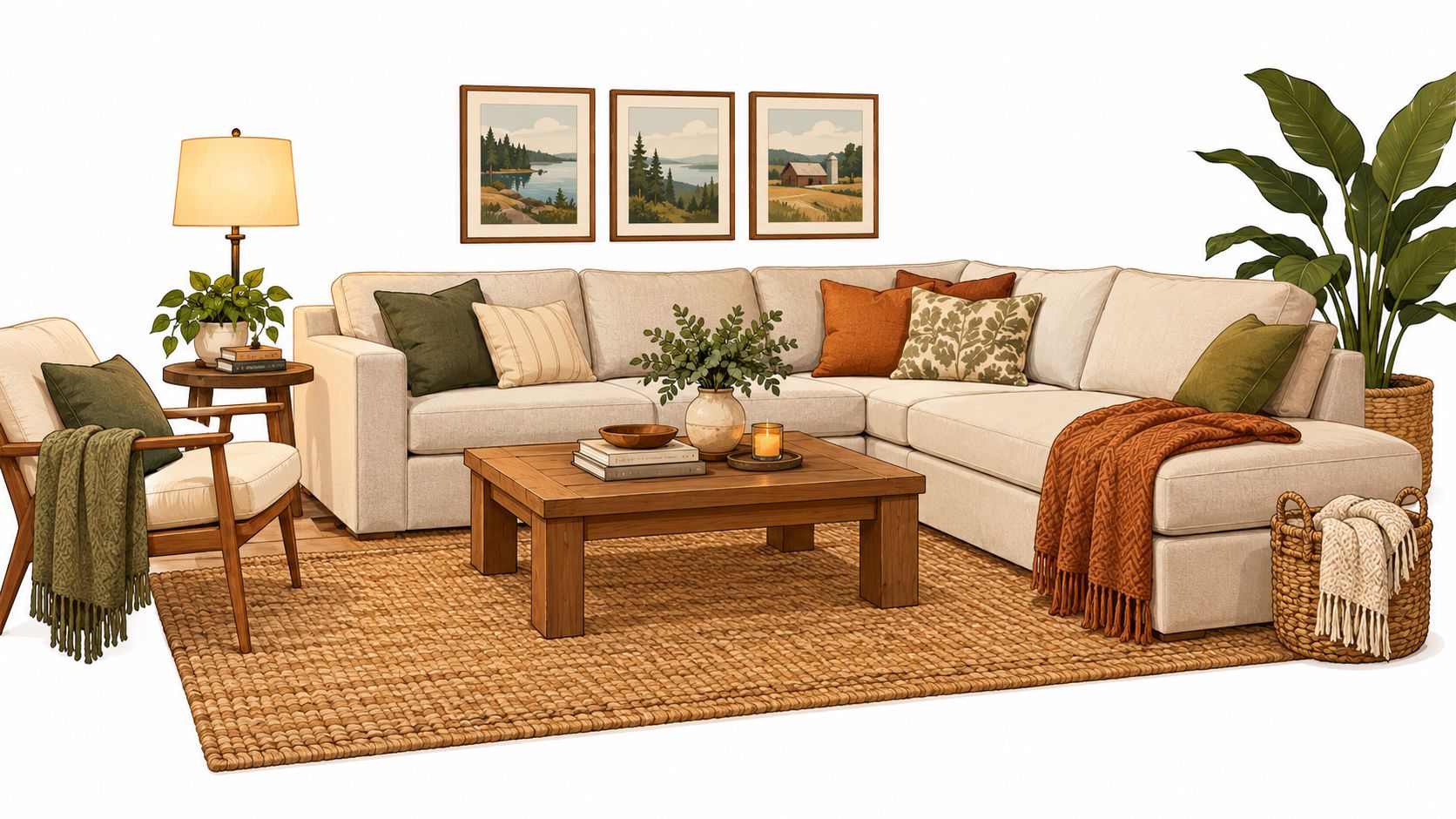
A room that feels gathered
Consider a Southern Ontario family room with a generous L-shaped sectional, a timber coffee table, and open sightlines toward the kitchen. Before the rug is positioned, each piece occupies its own island. Once the rug reaches beneath the front legs of both seating runs, the room becomes more legible. The sectional no longer appears parked in the corner. It becomes the anchor of a composed room.
The same principle applies when assessing sectionals before buying. The sofa's depth, chaise, and corner return should be considered alongside the floor area available for the rug. A sectional and its rug need to be selected as parts of one complete room concept.
Designer's Insight: A rug should support the sectional's visual weight, not compete with it. A restrained pattern can calm substantial upholstery, while a richly artisanal design can give a quiet sectional more presence.
This approach reflects the way an expert curator organises a room. The rug establishes the zone, the sectional defines its use, and the smaller pieces complete the composition. The result feels warm and settled, with enough negative space to remain comfortable rather than crowded.
Applying the Front-Leg Anchor Method
A sectional can look settled against the wall yet leave the seating area visually disconnected. The front-leg anchor method corrects that imbalance by placing the front legs of each sectional run on the rug while allowing the rear legs to remain on the floor. The textile then links the sofa, coffee table, and surrounding chairs into one defined zone instead of sitting like a small island in front of the furniture.
Measure the complete footprint
Start with the sectional in its intended position. Record its full width and depth, including the chaise, corner return, and front-most edge. Measuring only the straight sofa run often produces an undersized rug because a chaise reaches farther into the room than the main frame suggests.
The rug should extend at least 6 to 12 inches beyond the chaise or front-most edge, as outlined in this sectional rug placement guidance. That visible border gives the seating group breathing room and prevents the upholstery from swallowing the rug visually.
Where the room allows, leave about 12 to 18 inches of exposed floor between the rug and the walls. In a smaller living room, 8 to 10 inches of wall clearance may still work. Use painter's tape to test the footprint before buying, especially where a narrow passage or door could make the clearance feel tight.
Match the size to the room
An 8' x 10' rug can suit a standard living room, while a 6' x 9' rug may fit a smaller space. Treat those sizes as starting points rather than fixed answers. The sectional's depth, chaise length, coffee table position, and usable floor area determine whether the composition feels grounded.
For larger sectionals, a 9×12 or 10×14 footprint may create better zoning than an 8×10. The larger rug can accommodate more of the seating group and leave enough textile visible around the furniture. In an open-plan room, that extra coverage also helps distinguish the living area from nearby dining, kitchen, or circulation space.
A compact sectional may work with only its front legs on the rug. A deeper chaise arrangement often benefits from a larger footprint, particularly when the rug needs to extend past the chaise and maintain a comfortable perimeter. Use the area rug placement guide to assess the rug against the room's furniture arrangement, walkways, and architectural boundaries.
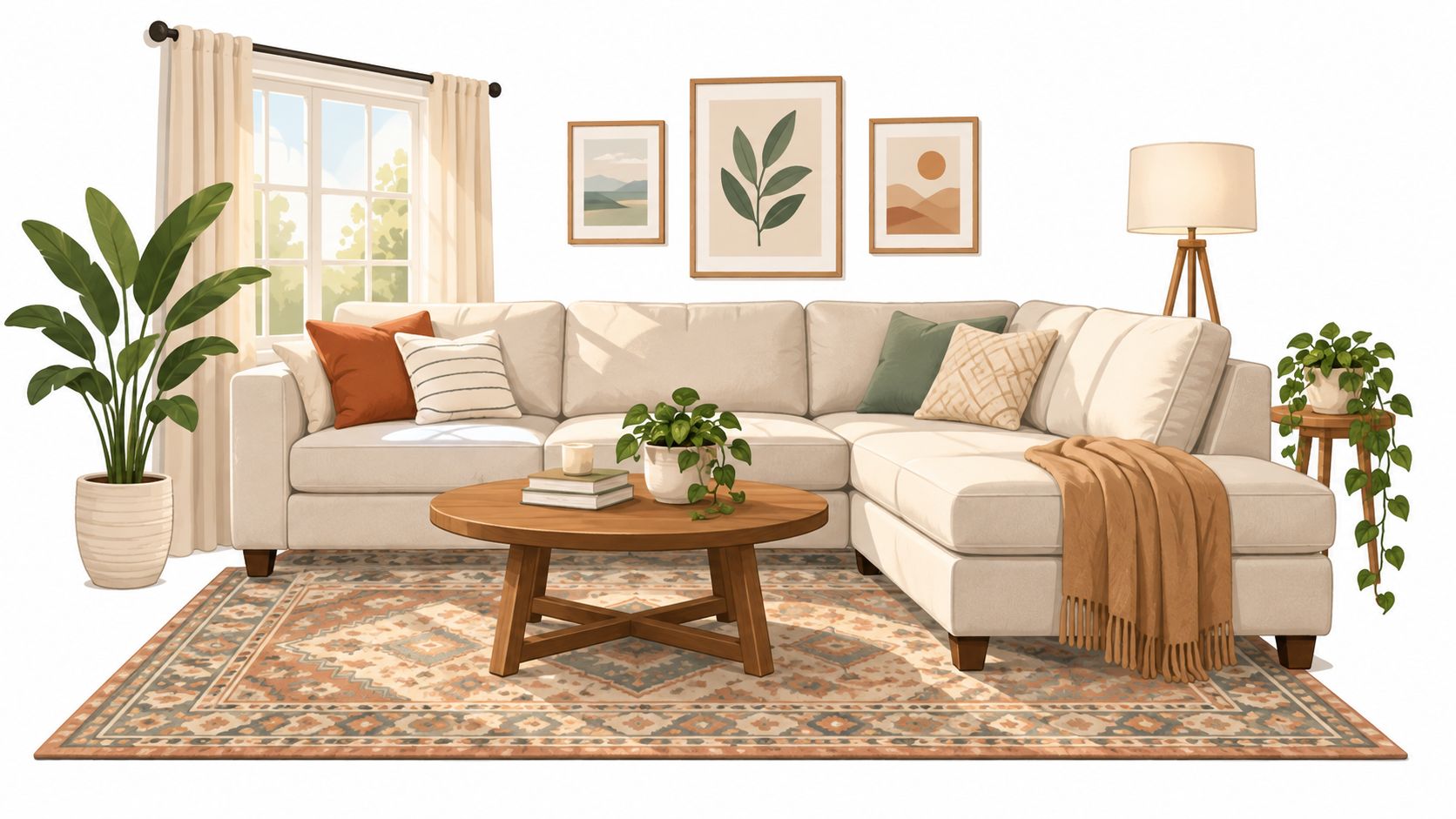
A rug that stops at the sectional's inner edge can make the room feel divided, particularly when it misses the chaise entirely. If the room has sufficient perimeter space, placing all furniture legs on the rug creates a stronger, more unified composition. The right choice depends on floor-space zoning, not a size chart alone.
Visualizing Your Layout with Painter's Tape
A rug can look perfectly proportioned on a product page and still feel wrong once it meets the architecture of a real room. Painter's tape removes that uncertainty before a purchase. It turns an abstract dimension into a visible boundary that can be tested with the sectional, coffee table, doors, and walkways in place.
Mark the proposed footprint
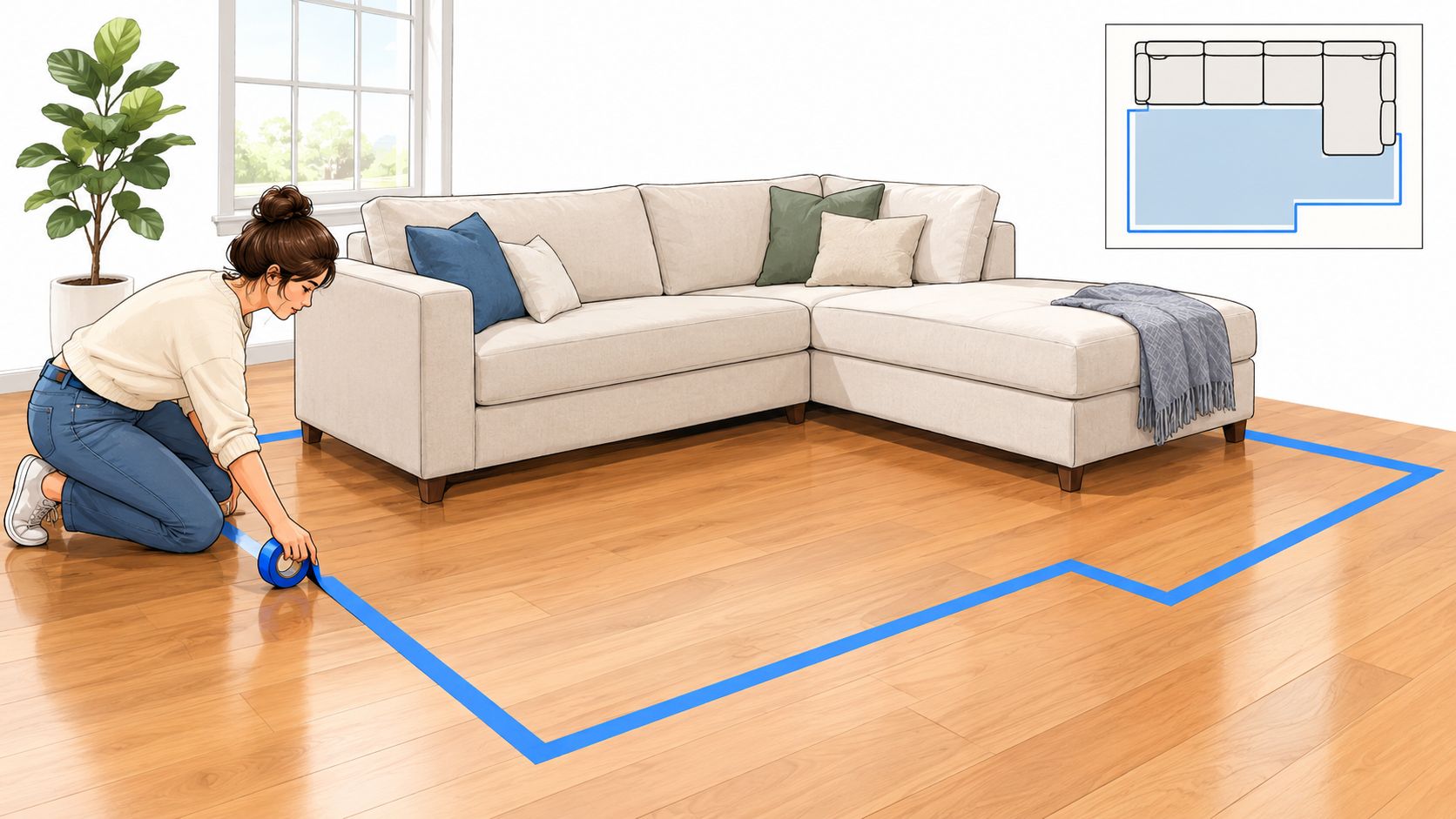
Clear the floor as much as practical and use a tape measure to mark the rug's exact length and width. Apply the tape lightly so it outlines the perimeter without creating a thick visual line. Include the full depth required by the chaise and extend the outline beyond the front-most seating edge.
Stand at the room entrance, then view the outline from the kitchen, hallway, and main seating position. The rug should relate to the sectional's visual midpoint rather than being forced to align with a wall that sits at a different angle. In an open-plan home, this test reveals whether the rug defines the living zone or drifts into an adjacent passage.
Walk the room before deciding
Leave the tape in place while testing ordinary movement. Walk around the coffee table, approach the sectional, open nearby doors, and check how a child, guest, or pet would move through the space. A rug that anchors the furniture but blocks the natural path has been scaled for appearance alone.
The tape test also exposes asymmetry. If one sectional run sits comfortably within the outline while the chaise edge nearly touches the boundary, the rug may need a different orientation or a larger size. A rug size calculator can support the planning process, but the floor test remains essential because it accounts for architecture and daily movement.
The most useful measurement is the one that can be walked around.
Canadian guidance recommends painter's tape as a practical way to mock up the rug footprint before buying. The test confirms whether the rug leaves roughly 12 to 18 inches of visible floor at the perimeter, while the same guidance allows 8 to 10 inches in smaller rooms (Canadian planning method). The purpose isn't mathematical perfection. It's confidence that the seating zone feels deliberate from every important viewpoint.
Choosing Materials for Timeless Elegance
Placement establishes the rug's architectural role, but material determines how that foundation feels over time. A sectional used for everyday lounging needs a surface that can accommodate frequent movement, furniture weight, and the visual scale of substantial upholstery. A formal sitting room may permit a more delicate, decorative construction.
Wool brings warmth, resilience, and a tactile quality that suits heirloom interiors. Its natural texture can soften the hard lines of a contemporary sectional, while a low-profile weave keeps the furniture easy to move and the room visually calm. Silk offers luminous detail and refined pattern, but it belongs where the rug's artistry can be appreciated without the same level of daily wear.
Synthetic blends can offer practical versatility, particularly in homes where easy maintenance is a priority. The choice should still support the room's complete concept. A heavily textured rug beneath a plush cushioned sectional can create too much visual density, while a flat, quiet weave may need layered upholstery or throws to prevent the composition from feeling stark.
Build texture with intention
The most successful rooms balance rather than match every surface. Smooth leather can benefit from a softly dimensional rug. Linen-like upholstery may pair well with a more graphic weave. A patterned sectional usually calls for a rug with controlled movement, while a simple neutral sectional can carry a more expressive floor piece.
The same discipline applies to smaller textile details. Guidance on styling throws and upholstery can help coordinate fabric, pattern, and tactile contrast without making the room feel overworked.
Critelli Furniture's selection of hand-tufted area rugs fits naturally into this design conversation. Hand-tufted construction can provide substantial texture and pattern presence, making it important to assess the rug's pile in relation to coffee-table clearance, chair movement, and the sectional's proportions.
For homeowners seeking Hand-knotted rugs Ontario, the strongest choice is one that combines artisanal character with the practical demands of the room. Heirloom quality isn't defined by ornament alone. It comes from a considered material, a well-scaled design, and a placement that allows the rug to remain part of daily life.
Avoiding Common Spatial Mistakes
A sectional can look carefully selected yet still feel wrong when the rug stops short of the furniture. The problem is usually the floor-space zone, not the colour. If the rug ends inside the sectional's outer edges, the coffee table and seating read as separate pieces rather than one grounded arrangement.
Use painter's tape before moving heavy furniture. Mark the proposed rug perimeter on the floor, then assess the exposed border from the main entry, seating positions, and walking routes. This simple plan shows whether the rug supports the sectional without crowding door swings or reducing usable circulation. It also lets you test an 8×10 rug, which can provide about 44.4% floor coverage in an illustrated living-room layout, against a larger 9×12 footprint intended to anchor a more spacious room. Those figures describe a sample arrangement, not a universal rule.
Troubleshoot by looking at the zone
A rug with every sectional leg outside its boundary often functions as an accent instead of a foundation. It can work if its taped perimeter still defines the central floor area, but a small floating rug usually disconnects the sofa from the coffee table. At the other extreme, pushing the rug too far beneath the sectional hides its pattern and leaves too little visible surface in front.
Check four relationships before committing:
- Chaise edge: Include the front-most chaise area in the rug's planned zone rather than leaving it beyond the boundary.
- Coffee table: Keep the table visually connected to both the sectional and the rug.
- Perimeter: Leave enough exposed flooring for the room to breathe and for circulation to remain clear.
- Conversation: Make sure chairs and ottomans can join the arrangement without sitting outside its composition.
Spatial rule: If the sectional overpowers the rug, test a larger taped footprint before choosing a plainer design.
Pet furniture also affects zoning. Place a pet bed away from the rug edge and primary walkway, while keeping it accessible. A practical dog bed frame guide can help coordinate its height and position with the seating plan.
Rooms with fireplaces, television sightlines, door swings, or open-plan circulation may need a more detailed interior design space planning review. The aim is a clear floor plan in which every object supports movement, comfort, and visual balance.
Bringing Your Vision to Life
A sectional rug should be chosen as part of a complete room concept, not added after every other decision has been made. Critelli Furniture has remained family-run since 1914, bringing a Century-Old Legacy to its curated selection of luxury furniture, custom pieces, and artisanal rugs in St. Catharines.
The design studio can help coordinate upholstery, rug scale, lighting, and circulation as one composition. The Rug Market treats rugs as Art for Your Floor, while white-glove delivery supports a smooth transition from the King Street showroom to the home across the Greater Niagara, Hamilton, and Toronto markets.
Experience the craftsmanship in person at our King Street Showroom. Book your complimentary design consultation today.
Critelli Furniture offers a curated selection of heirloom quality sectionals, hand-knotted rugs, and custom furniture for complete room concepts. Visit Critelli Furniture to plan a grounded, design-forward living room and arrange a personal consultation for your space.