


Sustainable Furniture Materials That Last for Generations


A dining table can look impeccable in a showroom and still leave a difficult question unanswered once it reaches a busy home. Will its joints remain tight after years of family meals, can its surface be renewed rather than discarded, and will anyone be able to find a responsible home for it when its useful life finally ends?
That is the more meaningful test for sustainable furniture materials. A responsible choice considers origin, construction, indoor air quality, maintenance, repair, and the Ontario pathway after the final move. A label can help, but it can't replace judgement.
A Century of Choosing Materials That Endure
On King Street, a client once stood between two dining tables and asked the question that matters more than colour, finish, or immediate price: which table might still belong to the family in 2076?
The answer wasn't found in a green tag. It was found underneath the top, in the way the legs joined the apron, the character of the timber, the finish that could be renewed, and the maker's willingness to support repair. One table had the reassuring weight and visible structure of a piece intended to be maintained. The other presented a polished surface but offered little clarity about its core, adhesives, or future service.
That distinction becomes clearer with time. Trade floors regularly reveal furniture from the 1960s that has survived children, pets, moves, and daily meals because its frames were properly built and its upholstery could be renewed. Other pieces from last season already show separating veneers, loose hardware, or finishes that have no graceful route back to health. Durability is environmental performance in everyday clothing.
California offers a useful reminder that responsible material systems can be industrial rather than niche. In 2021, the state's forest-products economy included more than 1.6 billion board feet of timber harvest, nearly 2.4 billion board feet of lumber, and 2.1 million bone-dry units of mill residue, alongside 72 facilities and 58,373 full- and part-time private-sector workers directly employed in the sector, according to the USDA Forest Service data referenced in this California wood-products overview. Mill residue and salvaged wood can become reclaimed lumber, panels, and secondary furniture components instead of relying entirely on virgin material.
The generational test: Ask where a material came from, how honestly it will perform, and what can happen to it after the last owner is finished.
For homeowners searching for heirloom quality furniture, that framework is more useful than a fashionable sustainability claim. Since its family-run founding in 1914, Critelli has treated furniture as part of a longer domestic story, one shaped by craftsmanship, care, and the possibility of inheritance. The same standard serves buyers across Greater Niagara, Hamilton, and Toronto, whether the setting calls for Stickley, Stressless, or a custom dining room made for decades of gathering.
What Sustainable Furniture Materials Actually Mean
Sustainable furniture materials should be judged through three questions:
- Origin: Is the material renewable, recovered, recycled, or drawn from a finite resource?
- Performance: Can it withstand the room's actual use, including moisture, abrasion, children, pets, and moving?
- Afterlife: Can the piece be repaired, separated, reused, refinished, or recovered in Ontario?
The phrase “eco-friendly” doesn't answer those questions. It may describe a responsible fibre, but it says nothing about weak joinery, difficult adhesives, or a composite product that can't be separated at the end of its life. A durable material also isn't automatically sustainable if the piece cannot be repaired or reused.
The seven material families
| Material family | Origin | Durability tier | End-of-life pathway |
|---|---|---|---|
| Reclaimed wood | Recovered material | High when inspected and stabilised | Reuse, refinishing, wood recovery |
| FSC-certified timber | Responsibly sourced forest fibre | High when properly dried and constructed | Repair, reuse, refinishing, wood recovery |
| Bamboo | Rapidly renewable grass | Medium to high, depending on construction | Reuse, component recovery, limited recycling |
| Cork | Renewable bark | Medium, best in protected applications | Reuse, limited material recovery |
| Recycled metals and plastics | Post-industrial or post-consumer feedstock | Metals high, plastics variable | Repair, resale, metal recovery, selective recycling |
| Natural-fibre upholstery | Plant or animal fibre | Variable by weave, fibre, and care | Reupholstery, reuse, limited textile recovery |
| Low-VOC finishes | Reduced-emission coating systems | Depends on formulation and substrate | Refinishing, sanding, component reuse |
Reclaimed wood carries a material history and avoids the need for newly milled timber, but it must be assessed for contamination, movement, and structural stability. FSC-certified timber provides a clearer sourcing framework, while bamboo and cork offer renewable alternatives with different hardness, moisture, and repair characteristics.
A useful Canadian example is recovered-wood particleboard designed for furniture, millwork, and cabinetry. TAFIPAN is reported as using 100% recovered or recycled wood fibre and meeting a formaldehyde-emissions benchmark below 0.09 ppm, with compliance references including EPA TSCA Title VI, CARB ATCM 93120, and CAN/CSA 0160-16 in the UBC furniture life-cycle assessment. That makes the board relevant where a case piece needs dimensional consistency, though the construction and future repair plan still matter.
For a broader design-oriented discussion of responsibly selected materials and manufacturing, Lewis and Sheron Textiles' eco-luxury furniture resource is useful context. Buyers can also compare these principles with sustainable furniture options in Canada, then ask for material details specific to the piece under consideration.
Reclaimed Wood, FSC Timber, Bamboo, Cork, Recycled Metals, Natural Fibers, and Low-VOC Finishes
No single material wins every sustainability argument. The strongest selection is the one whose strengths suit the room and whose weaknesses can be managed.
Wood with a past and wood with a paper trail
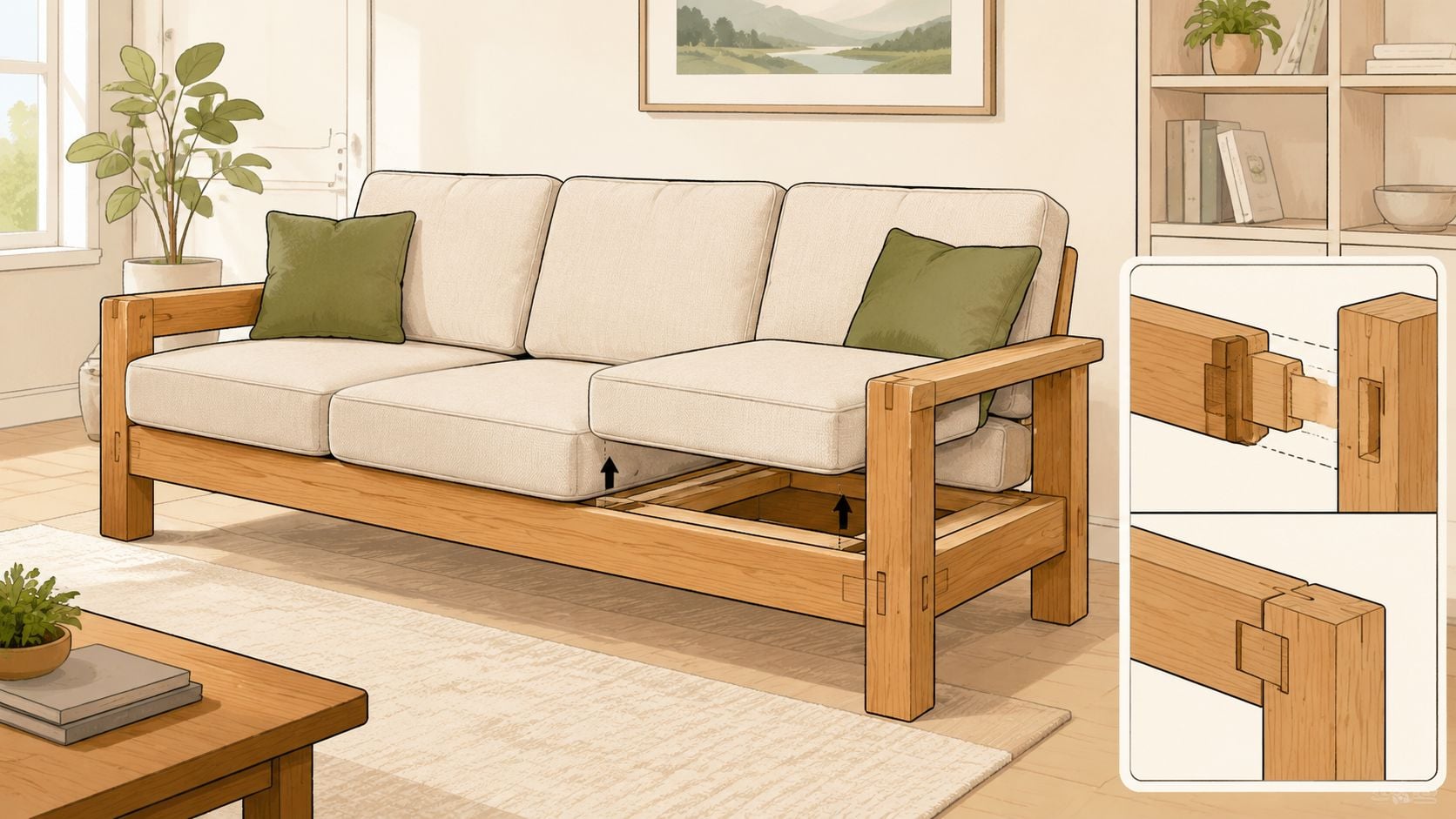
Reclaimed wood brings irregular grain, old-growth character, and a surface that already has a story. Its risks are practical. Old paint may contain lead, previous exposure may have affected the boards, and poorly stabilised timber can split or move after installation. A reputable maker should explain how the wood was inspected, dried, cleaned, and joined.
FSC-certified timber is less romantic, but often more predictable. Properly kiln-dried solid wood can hold a finish for decades, accept future refinishing, and support traditional joinery. The FSC mark is strongest when the claim is connected to the actual component being purchased, not placed beside a general brand statement. Solid wood furniture remains compelling for that reason, especially when the construction is visible and serviceable.
Bamboo is a grass rather than a tree and can produce a hard, stable surface when properly processed. Lower-grade bamboo plywood may rely on adhesive systems with a heavier formaldehyde burden, so the board specification and emissions documentation deserve attention.
Cork feels warm under the hand, softens sound, and renews through bark harvesting. It's also softer than many buyers expect, making it better for selected accent pieces than for a tabletop that will receive constant sharp, wet, or abrasive use.
Metals, plastics, fibres, and finishes
Recycled aluminium and steel can deliver excellent structural life, particularly in frames, bases, and outdoor furniture. They can also be separated for metal recovery more readily than glued mixed-material assemblies. Recycled plastics vary considerably. A chair made from a clearly identified polymer is a different proposition from a composite that cannot be repaired or sorted.
Wool, linen, hemp, and leather age in distinct ways. Wool can develop a handsome patina and recover well through careful cleaning. Linen offers a relaxed hand but may crease or wear differently in a high-friction seat. Leather can last beautifully when the hide and finish are appropriate, though tanning, dyes, and protective coatings must be disclosed rather than assumed harmless.
Low-VOC finishes are easy to overlook because they're quiet. They influence indoor air after the delivery team has gone, particularly in bedrooms, nurseries, and rooms with limited ventilation. A finish that can later be sanded and renewed has an advantage over a surface that must be stripped, replaced, or discarded.
Canadian environmental declarations illustrate how recycled content and recoverability can coexist with furniture-grade construction. One lounge product reports 78.9% pre-consumer recycled content, 21.1% post-consumer recycled content, and 71.8% wood by material content, while another recliner reports 22.49% pre-consumer recycled content, 10.46% post-consumer recycled content, and up to 34.65% recyclability at end of life, as described in federal Canadian circular-economy guidance. The lesson is not to chase the largest recycled-content claim. It's to examine whether the frame, upholstery, fasteners, and finish can continue serving the household and then be separated sensibly.
Reading the Certifications That Matter
Certification helps when it verifies a defined standard, names the responsible organisation, and applies to the product or component being purchased. It becomes decorative when a brochure uses a broad environmental phrase without identifying the material, scope, audit method, or current certificate.
What the principal marks address
FSC relates to responsible forest management and chain of custody. An FSC claim attached to the actual solid tabletop or timber component carries more meaning than an unqualified statement about “sustainable sourcing.”
GREENGUARD Gold addresses emissions from finished products and is particularly relevant where indoor air quality matters. It doesn't certify that a table will last for generations, so it should be read alongside construction details.
Cradle to Cradle examines several design and material criteria, including material health and circularity. Its value depends on the certification level and the product scope.
PEFC provides a forest-certification and chain-of-custody framework. OEKO-TEX is associated with tested textile substances, while BIFMA level applies to sustainability attributes in commercial furniture, including manufacturing and material considerations.
| Certification | What it verifies | Weight on showroom floor |
|---|---|---|
| FSC | Forest responsibility and chain of custody | Strong for timber when product-specific |
| GREENGUARD Gold | Low chemical emissions from finished products | Strong for bedrooms, nurseries, and enclosed rooms |
| Cradle to Cradle | Broader material health and circularity criteria | Useful when level and scope are clear |
| PEFC | Certified forest sourcing and traceability | Relevant for timber documentation |
| OEKO-TEX | Tested textile substances | Useful for upholstery and soft goods |
| BIFMA level | Sustainability attributes for commercial furniture | Most relevant to commercial specifications |
The practical showroom question is simple: What does the certificate cover? A wood certification may not cover the adhesive, foam, stain, or fabric. A textile certification may not say anything about frame durability. Buyers considering non-toxic solid wood beds can use the same discipline by checking the specific product and material scope rather than relying on category language.
Showroom rule: Look for a measurable standard, traceable supply, and evidence of continuing compliance. Then ask for the certificate number or product documentation.
Self-declared labels, vague “green” seals, and certifications that don't identify an auditor deserve caution. The guide to reading furniture product descriptions offers a useful companion to that conversation, particularly when a specification combines solid wood, engineered panels, foam, textiles, and finishes.
Choosing the Right Material for the Right Room
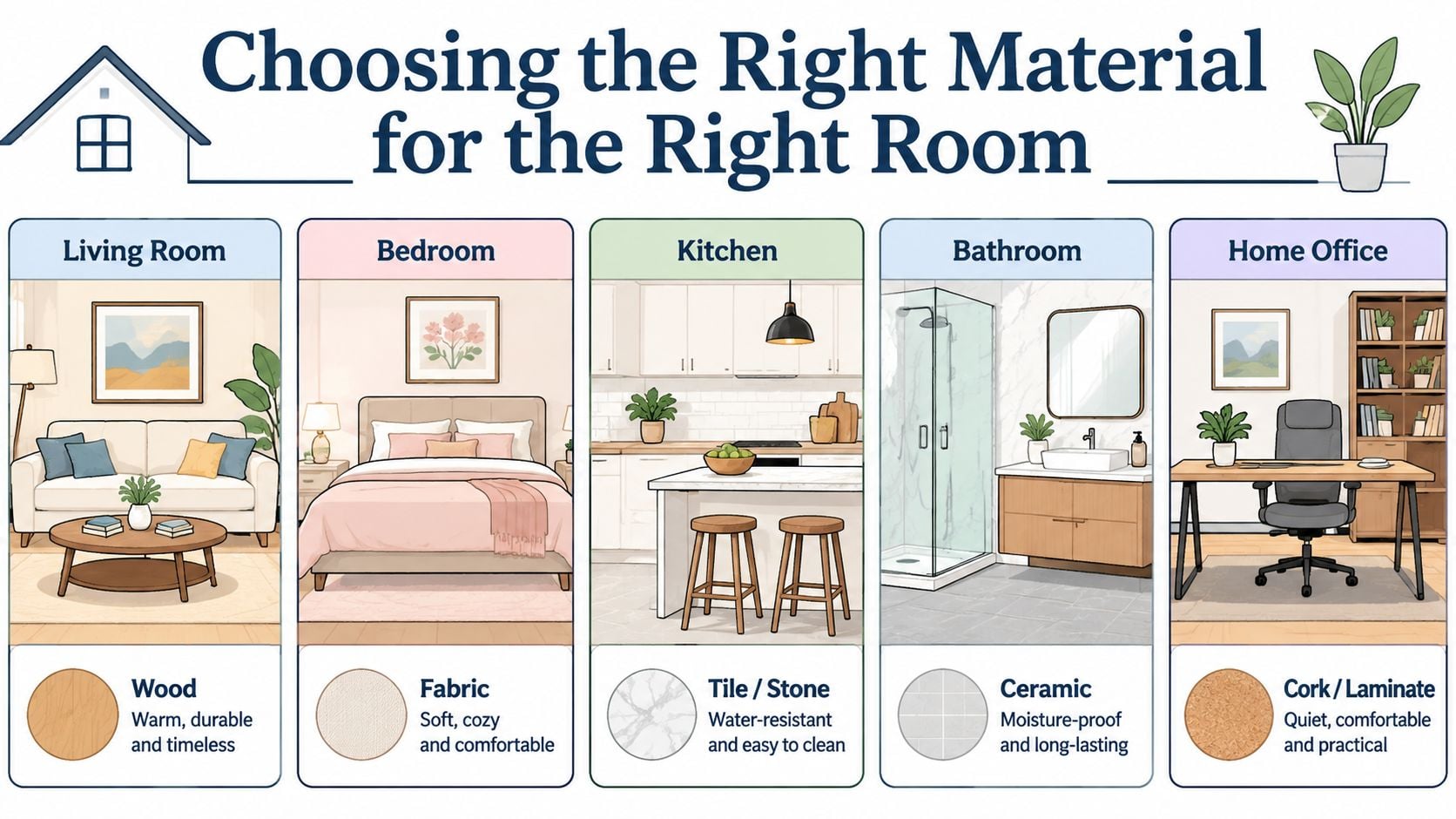
A sustainable material in the wrong room becomes a premature replacement. The better decision begins with use: who sits there, what spills there, how often the surface is touched, and whether the buyer intends to keep the piece through changing décor.
Match the material to the work
A formal dining room rewards reclaimed oak or FSC walnut when the owner welcomes patina. Both can become more expressive with age, provided the top is stable and the finish is suitable for meals, heat, and routine cleaning. A kitchen table needs a more practical brief. Properly dried FSC ash, with a finish designed for daily contact, is better suited to constant service than a delicate surface chosen only for its initial appearance.
Bedrooms and nurseries call for restraint. A low-emission finish and documented board specification matter more there because occupants spend extended time in enclosed rooms. Recovered-wood panels can be appropriate when their emissions documentation is clear, as the Canadian benchmark discussed earlier demonstrates.
Bamboo and cork suit accent furniture and home offices where lightness, warmth, and a particular tactile quality are valuable. Cork needs protection from sharp edges and concentrated pressure. Bamboo requires attention to adhesive composition and edge treatment, especially when the product is a layered board rather than a solid element.
For outdoor and high-traffic seating, recycled aluminium frames offer a useful combination of low maintenance and recoverability. Upholstery still needs separate scrutiny. Performance fabrics can be considered alongside certifications such as OEKO-TEX, while proprietary stain or moisture treatments should be disclosed rather than treated as automatically benign. A tightly woven wool, linen blend, or carefully specified leather may serve a family sofa better than a material selected solely because its fibre content sounds sustainable.
Questions worth asking before ordering
A serious showroom conversation should cover more than dimensions and delivery timing.
- Joinery: Are the structural connections screwed, dowelled, mortise-and-tenon, or permanently bonded?
- Finish: Can the surface be repaired or refinished, and how long should the finish cure before regular use?
- Fabric: What fibre blend, weave, cleaning method, and abrasion information apply?
- Cushions: Can the inserts be replaced without replacing the entire frame?
- Warranty: Does coverage include frames, mechanisms, finishes, and upholstery separately?
- Repair: Can the retailer or maker supply replacement parts, covers, cushions, or touch-up materials?
A practical guide to sofa fabrics can help narrow the textile decision before a consultation. The aim isn't to find a flawless material. It's to choose a composition that can tolerate the room's actual life and remain serviceable when a smaller component needs attention.
Designing for End of Life in Ontario
The most uncomfortable sustainability question is often the last one: what happens after the furniture has served its household? A piece can use responsibly sourced timber and still become waste if the frame is inaccessible, the upholstery is permanently bonded, and replacement parts don't exist.
Construction determines the second life
Repairable furniture reveals its logic. Mortise-and-tenon joints, replaceable cushions, accessible screws, modular upholstery, and standardised hardware give future owners options. A solid wood top that can be sanded is more forgiving than a thin decorative layer that cannot tolerate renewal. A sofa with a sound frame and removable cover can be reupholstered, while a glued composite shell may have no practical route beyond disposal.
Ontario's policy direction makes bulky furniture a significant consideration. The province generated between 12.7 million and 15.5 million tonnes of non-hazardous waste in 2022, equivalent to approximately 0.925 to 1.127 tonnes per person, and furniture was among the bulky materials identified for diversion under its circular-economy planning, according to the Ontario baseline waste report. The same policy discussion points toward extended producer responsibility, but practical local pathways still require attention from homeowners, municipalities, retailers, and manufacturers.
Ontario's reuse infrastructure offers a useful model. A CalRecycle-funded project in California awarded Habitat for Humanity East Bay/Silicon Valley $488,635 in California Climate Investment funds to rescue quality wood products, including furniture, doors, windows, lumber, and flooring, from landfills and route them to ReStore outlets, as documented in the CalRecycle reuse grant profile. The principle transfers well to Ontario: direct reuse preserves more of a product than reducing it to fibre or chips.
Plan the exit before the purchase
Municipal bulky-item collection, charitable reuse organisations, wood-recovery facilities, and metal recyclers may each handle different components. Local acceptance changes, so a responsible owner should confirm the route before arranging removal. A timber frame, steel base, foam cushion, and mixed textile cover may require separate handling.
Ontario's baseline reporting estimates that diverting furniture and other bulky items could add 327,700 tonnes of diversion per year, which gives reuse, refurbishment, and material recovery a meaningful place in the province's waste strategy, as stated in the Ontario baseline executive summary.
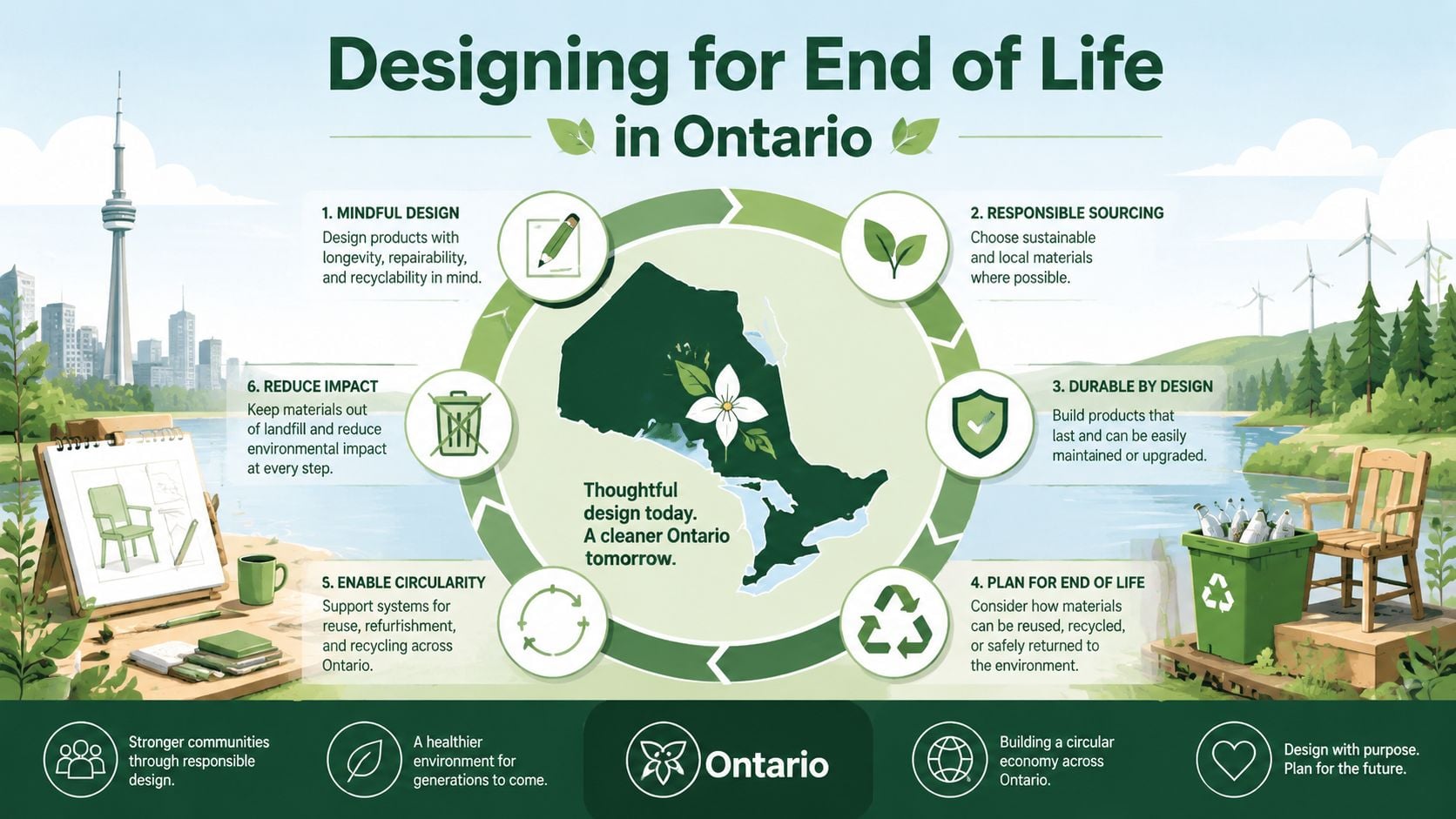
A piece designed for the landfill is an unsustainable choice, regardless of how attractive its environmental credentials appear on purchase day.
Building a Room Around a Considered Piece
A sustainable furniture decision becomes more powerful when it governs the room around it. A reclaimed-oak dining table can establish warm timber, hand-finished surfaces, and a palette that welcomes natural fibres. A cork-and-walnut console can introduce quiet texture, then guide the choice of lighting, wall colour, and secondary timber. A sofa upholstered in undyed wool can make restraint feel deliberate rather than sparse.
Trade designers typically select the heirloom-grade anchor first. Secondary millwork, occasional tables, lighting, and textiles then follow compatible origins, finishes, and proportions. That sequence prevents the room from becoming a collection of disconnected “good intentions,” each chosen for a different label but none designed to serve the others.
The rug deserves particular attention. At Critelli, the Rug Market is treated as Art for Your Floor, because an heirloom rug can unify timber, upholstery, metal, and colour while remaining useful through future furniture changes. A carefully chosen hand-knotted rug can soften a room's acoustics, establish scale, and create continuity between the original scheme and the one that follows years later.
Low-VOC finishes and natural-fibre accents keep the material story coherent, but coherence doesn't mean uniformity. A room can combine FSC timber, reclaimed elements, recycled metal, wool, linen, and a repairable upholstered piece if the designer understands how each material will age and how each can be maintained.
For homeowners exploring how to transform a home into an eco-friendly haven, the most useful principle is measured selection. Choose fewer, better-made pieces, specify them for the life they'll lead, and make the complete room concept strong enough to remain desirable.
The Critelli Design Studio applies that approach through space planning, custom fabrics and finishes, in-home consultations, and a curated selection intended to work as a complete room concept. The result should feel design-forward, artisanal, and practical, with white-glove delivery providing a smooth transition from showroom to home across Southern Ontario.
Experience the craftsmanship in person at our King Street Showroom, where the design team can discuss sustainable furniture materials, custom furniture Southern Ontario options, and a complete room concept anchored by an heirloom rug. Book your complimentary design consultation today, or visit Critelli Furniture to begin planning a considered interior for the Greater Niagara, Hamilton, and Toronto markets.