
Heirloom Quality Furniture: A Guide to Timeless Investment

A walnut dining table can hold a family's history more faithfully than a photo album. It keeps the marks of daily life, the polished edge where hands rest, the chair legs that have been pulled in and out by different generations.
That's the promise of heirloom quality furniture. It isn't just expensive furniture, or even beautiful furniture. It's furniture made with enough integrity that a household doesn't think in seasons or trends, but in decades.
Table of Contents
- An Introduction to Furniture with a Future
- Defining True Heirloom Quality
- The Hallmarks of Timeless Craftsmanship
- Why Investing in Heirloom Furniture Matters
- A Buyer's Checklist for Inspecting Quality
- Understanding the Lifetime Value Beyond the Price Tag
- Curating Your Legacy with Expert Design Guidance
An Introduction to Furniture with a Future
Heirloom quality furniture begins with a different question. Instead of asking whether a piece fits this year's scheme, a discerning buyer asks whether it will still feel right after years of family dinners, moves, sunlight, and routine use.
That mindset changes everything. A chair is no longer just seating. A sideboard is no longer just storage. Each piece becomes part of a home's architecture and memory, which is why the best selections tend to feel grounded, composed, and permanent.
In Southern Ontario, that perspective resonates with homeowners who want more than a quick refresh. They want custom furniture Southern Ontario families can live with for the long term, and they often want it to sit comfortably beside art, textiles, and materials that feel equally lasting.
A room becomes timeless when its most important pieces are chosen for endurance first, decoration second.
There's also a cultural comfort in buying from businesses that understand longevity because they've lived it themselves. Critelli Furniture was founded in 1914 by Thomas Critelli in Thorold and later became a downtown St. Catharines staple for over 110 years, establishing a century-old family-run legacy, as noted in this local history reference.
Why legacy matters in practical terms
A heritage lens tends to produce better decisions. Buyers become slower, more deliberate, and less vulnerable to the usual disappointments of rushed purchasing, such as weak frames, poor proportion, and finishes that look tired too quickly.
That's especially relevant in rooms that do the heaviest lifting. Dining tables, upholstered seating, bedroom suites, and case goods all need to survive real domestic life, not just look polished in a showroom.
For clients searching for luxury furniture Niagara homes can grow into, heirloom quality is best understood as a standard of stewardship. The owner cares for the piece, and the piece rewards that care by remaining useful, beautiful, and structurally sound over time.
Furniture with a future feels different
Well-made furniture has a particular presence. It sits solidly. Drawers close with confidence. Upholstery doesn't collapse into itself. Timber has visual depth because the material itself has depth.
That's why heirloom quality furniture is so often associated with comfort and calm. Temporary pieces ask to be replaced. Permanent ones allow a room to settle.
Defining True Heirloom Quality
Heirloom quality furniture is often used as a marketing phrase, yet the standard it embodies is far more demanding. It refers to furniture engineered and crafted to outlast ordinary household replacement cycles through better materials, stronger construction, and more disciplined detailing.
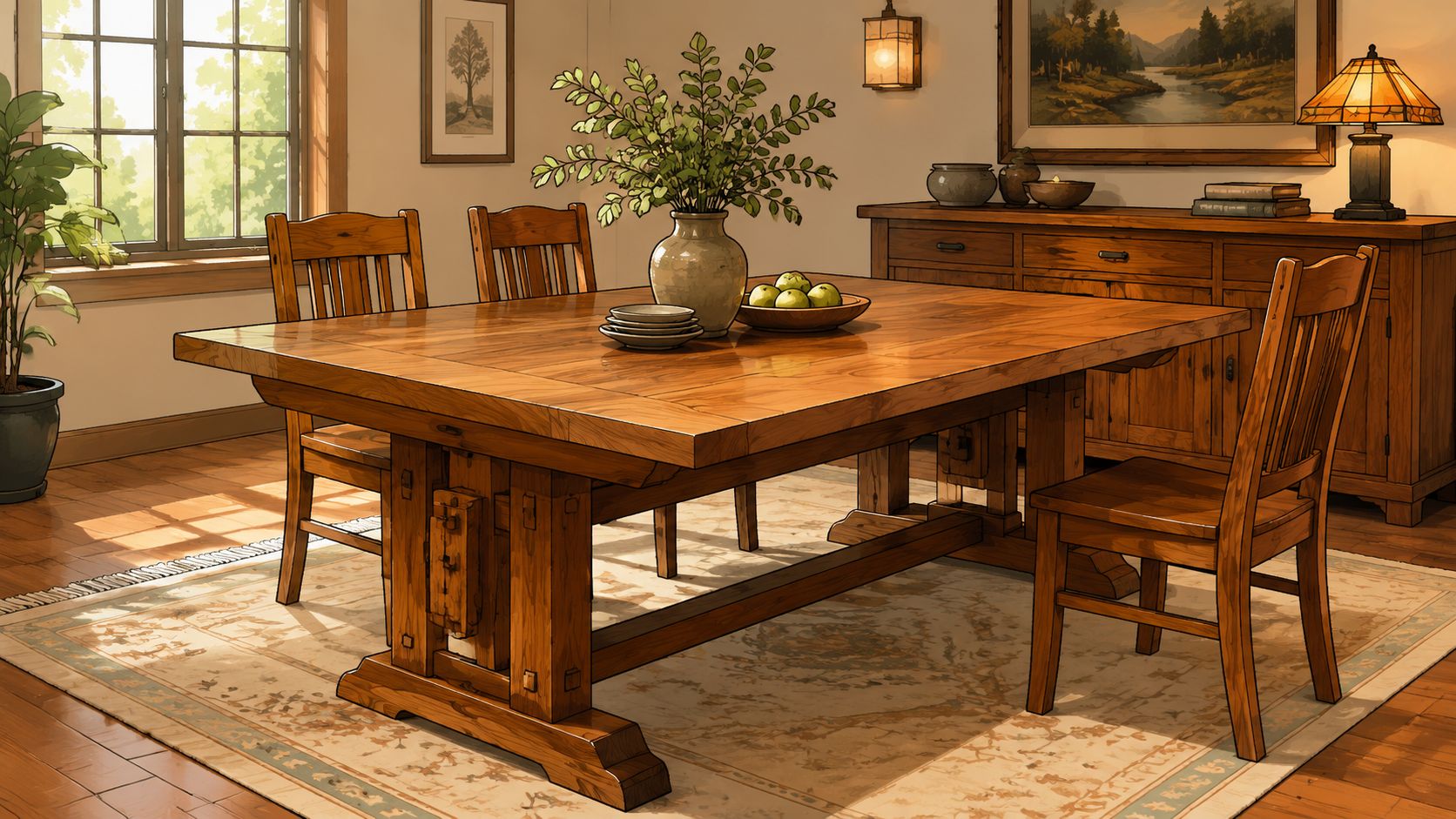
Built to outlast ordinary replacement cycles
For indoor furniture, the industry-standard replacement cycle averages 7 to 10 years, while true heirloom furniture is engineered to surpass that through superior materials and construction, including traditional mortise-and-tenon joinery, according to this heirloom construction reference.
That distinction matters because many mass-produced pieces are assembled around convenience, not longevity. Thin members, shortcut hardware, and screw-based assembly can look acceptable at first, but they often loosen where stress concentrates most. Dining chairs wobble. Drawer boxes rack. Bed rails begin to complain.
Joinery reveals the truth
A simple way to understand joinery is to think about how a building frame works. If the structure depends on fasteners alone, movement eventually wins. If the parts are shaped to lock into each other, the frame carries weight more naturally and resists fatigue better.
That's why mortise-and-tenon construction remains a hallmark of heirloom work. One component is shaped to fit within another, creating a mechanical bond that supports daily use without relying entirely on screws to hold the story together.
Practical rule: If a piece hides every structural decision behind decorative surfaces, inspect it more closely. Good furniture usually has nothing to conceal.
Visible craftsmanship also matters. Through-tenons, dovetails, and a confident underside all signal that the maker expected scrutiny. Buyers exploring classics such as Stickley living and dining collections will often notice that the construction language is part of the design itself, not something disguised after the fact.
Heirloom quality, then, isn't a mood. It's a set of technical and aesthetic decisions that let furniture remain useful long after trend-driven pieces have been discarded.
The Hallmarks of Timeless Craftsmanship
The clearest way to judge heirloom quality furniture is to look at three things together. Material, construction, and finish should support one another. If one falls short, the piece may still look refined, but it won't age with grace.
Materials that earn their age
Solid hardwoods such as oak, cherry, maple, and walnut remain the benchmark because they offer durability and visual depth that manufactured boards can't imitate for long. Weight is often informative here. Dense material tends to feel composed rather than hollow, and grain should look consistent rather than printed or overly uniform.
Wood selection also affects how a room matures. Natural timber develops character as light, touch, and time interact with the surface, which is one reason design-forward interiors often prefer honest materials over imitations.
For buyers who prioritise local making, Canadian-made furniture collections can be especially appealing because they often emphasise solid construction, customisation, and artisanal finishing.
Construction that can be inspected
Quality becomes obvious at the stress points. Open the drawers. Look at the back. Check the inside corners of a table apron. The best pieces remain disciplined where most manufacturers are tempted to save money.
For a useful primer on what strong drawer construction looks like, this South Jersey guide to dovetail drawers gives a clear visual explanation of why interlocking drawer joinery matters. A drawer box that resists pulling apart under daily use is doing exactly what heirloom furniture should do.
Heirloom Quality vs. Mass-Market Furniture At a Glance
| Attribute | Heirloom Quality | Mass-Market Standard |
|---|---|---|
| Primary material | Solid hardwood with visible grain character | Engineered board, veneer, laminate, or mixed materials |
| Joinery | Mortise-and-tenon, dovetails, through-tenons | Screw-based assembly, staples, basic brackets |
| Structural feel | Dense, steady, and resistant to wobble | Lighter, often flexible at stress points |
| Repairability | Can often be refinished or restored | Often difficult to repair once surfaces fail |
| Ageing | Develops patina and character | More likely to chip, swell, or look dated quickly |
A finish deserves attention too, even when it's subtle. A well-applied finish protects the wood, respects the grain, and allows the material to look richer with age rather than plasticky or brittle.
Why Investing in Heirloom Furniture Matters
A well-made piece justifies itself slowly. Not because it demands admiration on arrival, but because it keeps working beautifully while cheaper alternatives ask for replacement, apology, or compromise.
Value lives in use, not novelty
The value of heirloom furniture is anchored in solid hardwoods like oak and cherry. Pieces from reputable makers, such as Amish craftsmen, often show “little signs of wear” even after 10 to 25 years, proving their ability to become part of a family's history, as described in this discussion of long-lasting heirloom pieces.
That kind of performance changes the meaning of a purchase. Instead of cycling through substitute pieces, the owner lives with one object long enough for it to gain emotional authority. A dining table begins as furniture and ends up as the place where birthdays, difficult conversations, school projects, and holiday rituals all happened.
This is also why heirloom quality furniture aligns so naturally with sustainability. The greener choice is often the piece that doesn't need replacing.
Furniture that stays in the home is usually furniture that was chosen with discipline, not impulse.
A home keeps what it can live with
There's a useful parallel in personal style. The strongest wardrobes are usually built around lasting materials and dependable shapes, not novelty for its own sake. The same logic appears in this guide on how to build a lasting wardrobe, where longevity comes from selecting pieces that remain relevant and wearable over time.
Homes work the same way. A room anchored by a strong sofa, a serious dining table, or a beautifully made cabinet tends to absorb change gracefully. Art can rotate. Lighting can evolve. Cushions, throws, and accents can shift with season and mood. The foundation holds.
That's especially important for homeowners balancing elegance and daily life. A room should be resilient enough for living, not so fragile that everyone feels they must tiptoe around it.
For those considering interior design services St. Catharines clients often seek, a seasoned eye becomes useful. The right investment pieces don't just survive. They steady the whole interior.
A Buyer's Checklist for Inspecting Quality
A buyer doesn't need a workshop to recognise quality. A careful showroom inspection usually reveals whether a piece has substance or only surface charm.
What to inspect with your eyes and hands
For superior durability, look for solid hardwoods that have been kiln-dried to a moisture content of 6 to 8% to prevent warping, and upholstery with high-density foam of at least 2.5 lb/ft³ to support structural integrity over generations, according to this guide to discerning heirloom construction.
Use that information as a checklist, not trivia:
- Check the frame: Lift one side slightly. A strong piece should feel stable and composed, not loose at the joints.
- Open and close everything: Drawers should travel smoothly and feel aligned. Doors shouldn't sag or catch.
- Look underneath: The underside often tells the truth. Rough shortcuts, flimsy corner blocks, and exposed weaknesses usually signal compromise elsewhere.
- Read the grain: Real wood has variation. Repetition often suggests printed surfaces or lower-grade visual treatment.
- Test the seat: Upholstery should recover cleanly after pressure rather than collapsing or staying compressed.
The underside of a piece is often more honest than the front.
What to ask before ordering
Questions matter because many quality details aren't visible at a glance. Ask about wood species, drying methods, upholstery density, and how repairs or refinishing are handled later. If the answers are vague, caution is sensible.
Custom work deserves even more scrutiny because bespoke doesn't automatically mean well built. A thoughtful custom furniture ordering process should help the buyer clarify dimensions, finishes, use patterns, and construction choices before anything is made.
A final note on touch. The best furniture usually feels finished even where nobody expects praise, including the back of a chair rail, the edge beneath a tabletop, or the interior of a drawer.
Understanding the Lifetime Value Beyond the Price Tag
A family can spend less on a dining table and still pay more for it over fifteen years. I see that pattern often in Southern Ontario homes. A lower upfront price feels prudent at first, then the surface fails, the joints loosen after a move, or the scale never really suited the room, so the piece is replaced long before it should have been.
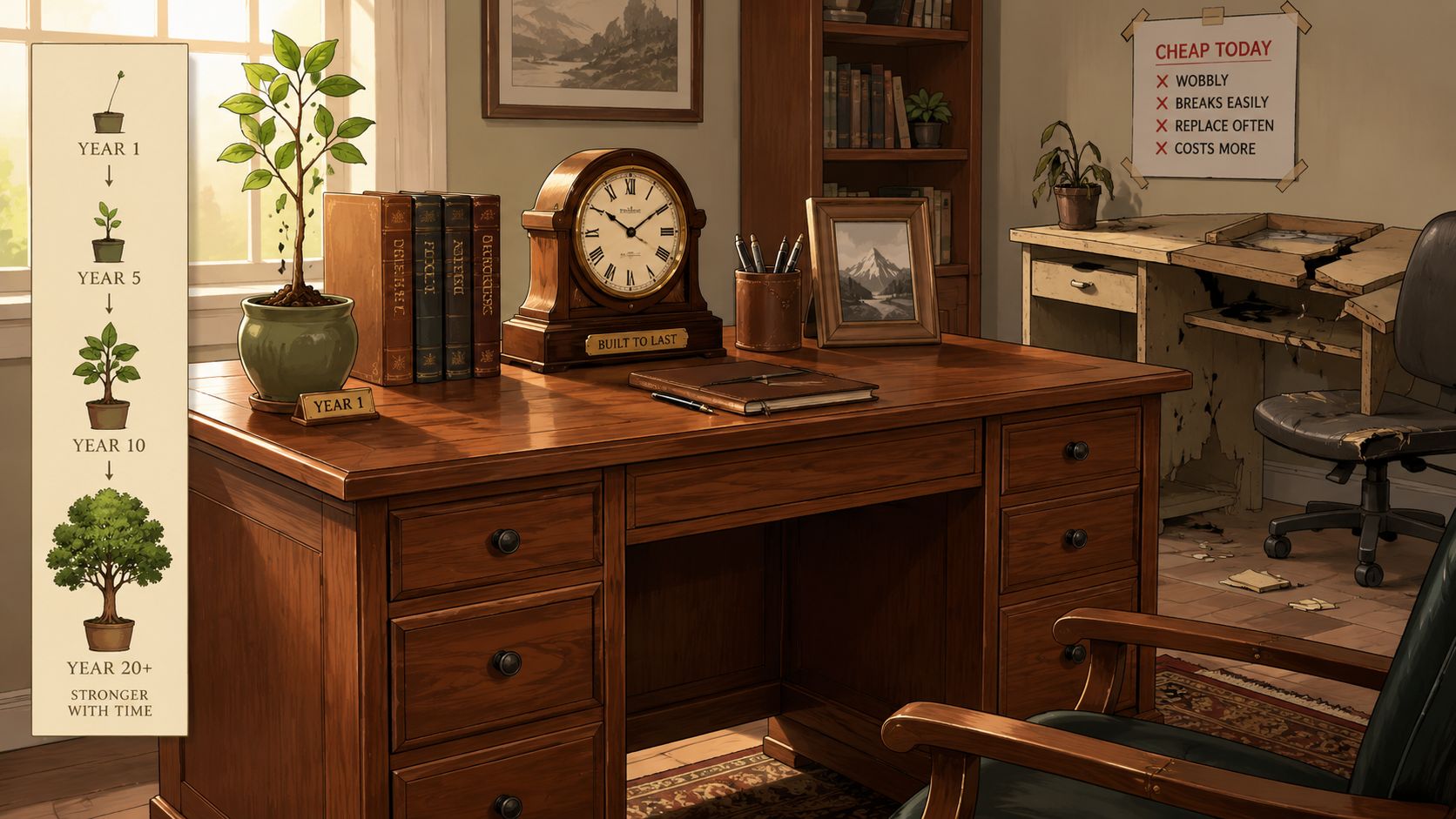
Stewardship costs are part of the value
The true cost conversation should be honest. Heirloom furniture is not maintenance-free. Solid wood responds to humidity. Fine finishes can show wear in sunny rooms. Upholstery lasts longer with proper cleaning, cushion rotation, and fabric choices that suit the household.
That reality does not weaken the case for buying well. It explains why ownership should be treated as stewardship.
For homeowners in Southern Ontario, that matters in practical ways. Seasonal humidity swings, winter heating, summer sun, and frequent moves between city condos and larger family homes all affect how furniture performs over time. A table that can be refinished after years of daily use holds value differently from a cheaper surface that peels or swells and has no meaningful repair path.
The trade-off is straightforward. Disposable furniture spreads spending across repeated replacements, delivery charges, and disposal. Heirloom furniture concentrates more of the cost at the beginning, then asks for periodic care that preserves usefulness, appearance, and resale or family value.
Good furniture earns its keep over time, but only if it is used thoughtfully and maintained with intention.
Early decisions shape long-term cost
Lifetime value starts before the first dinner party or holiday gathering. It starts with specification, delivery, placement, and support after the sale. If a case piece is forced into a room with poor clearance, if a table sits in harsh direct sun without protection, or if a sofa is chosen in the wrong scale and rehomed a year later, the financial loss is real even if the construction was sound.
This is one reason expert retail guidance matters so much. A legacy retailer does more than sell a piece off the floor. It helps homeowners avoid expensive mistakes that are easy to make and hard to reverse.
Critelli's service model adds value here because inspection, assembly, and precise in-home placement protect the furniture from preventable damage on day one. That is especially relevant across the Greater Niagara, Hamilton, and Toronto areas, where transportation, stair access, condo elevators, and room layout constraints can complicate delivery.
There is also a budgeting side to quality. Used carefully, furniture financing options can help a household choose the better-made piece once, instead of settling for a short-term compromise that costs more to replace later.
Price matters. Total ownership matters more. The households that get the best long-term value usually understand both.
Curating Your Legacy with Expert Design Guidance
The best heirloom purchases rarely happen in isolation. They work because proportion, material, colour, and use have been considered together as a complete room concept rather than a single standalone decision.

A complete room concept changes the outcome
Critelli's Interior Design Studio offers a collaborative journey, including complimentary consultations and bespoke customization, to transform furniture selection into a complete, harmonious room concept. That design-led process is reflected through interior design services.
For homeowners seeking interior design services St. Catharines, that matters because a strong room isn't assembled piece by piece without a plan. It's curated. Upholstery scale relates to rug scale. Wood tones respond to light. Leather, stone, and textile all need to converse rather than compete.
Designer's Insight
A bold Hancock & Moore leather piece often settles beautifully when paired with a neutral hand-knotted wool rug. The rug softens the visual weight, steadies the palette, and gives the room a foundation before smaller accents are introduced.
This is also where Hand-knotted rugs Ontario collectors seek become especially important. Critelli's Rug Market is known as Art for your Floor, with one-of-a-kind hand-knotted, artisanal rugs sourced globally and used as the foundation of a room's colour palette and character. In well-designed interiors, the rug often comes first because it establishes the room's emotional register.
Experience the craftsmanship in person at Critelli Furniture at the King Street Showroom. Book your complimentary design consultation today, or visit the Rug Market to find your room's foundation.