
Solid Wood Furniture: An Heirloom Buyer’s Guide for 2026

A walnut dining table often tells its history in small ways. The softened edge where hands have rested for years, the faint change in colour where sunlight once reached, the quiet confidence of a piece that still feels relevant after decades.
That's the core appeal of solid wood furniture. It doesn't just fill a room. It carries a home forward.
Table of Contents
- An Investment in Your Family Story
- Defining The Gold Standard in Furniture
- A Curated Palette of Hardwoods
- The Art of Timeless Craftsmanship and Joinery
- Finishes Longevity and Lifelong Care
- Styling Wood in a Complete Room Concept
- Your Guide to Investing in Heirloom Furniture
An Investment in Your Family Story
A well-made sideboard often begins as a practical purchase and ends as part of family memory. It's where holiday serving pieces are stored, where photographs gather, and where daily life leaves its gentle mark. Years later, nobody remembers the receipt. They remember the piece.
That's the lens that matters most when evaluating solid wood furniture. A dining table, bed, or cabinet made from real hardwood isn't only judged by finish, scale, or silhouette. It's judged by whether it still feels dignified after years of use, whether it can be repaired rather than replaced, and whether it still belongs when the room around it evolves.
That long view has deep roots in Southern Ontario. Critelli's heritage in home furnishings sits within a family tradition that began in 1914, when Thomas Critelli founded the business in Thorold, Ontario, beginning a 110-year legacy as a fifth-generation family-owned and operated business serving Southern Ontario, as noted by Furniture World's archive on Critelli.
What makes a piece feel heirloom worthy
Not every wood piece earns that description. The ones that do usually share a few qualities.
- They age with grace. Minor wear doesn't ruin them. It often deepens their character.
- They invite repair. Surface issues, finish changes, and everyday marks can often be addressed instead of hidden.
- They outlast fashion cycles. Good proportions and honest materials don't date quickly.
Practical rule: If a piece only looks good when it's untouched, it isn't built for a real home.
A curated, multigenerational home doesn't come together through impulse purchases. It's assembled through pieces chosen for permanence, usefulness, and timeless craftsmanship. That's where solid wood moves beyond product status and becomes part of a family story.
Defining The Gold Standard in Furniture
What solid wood actually means
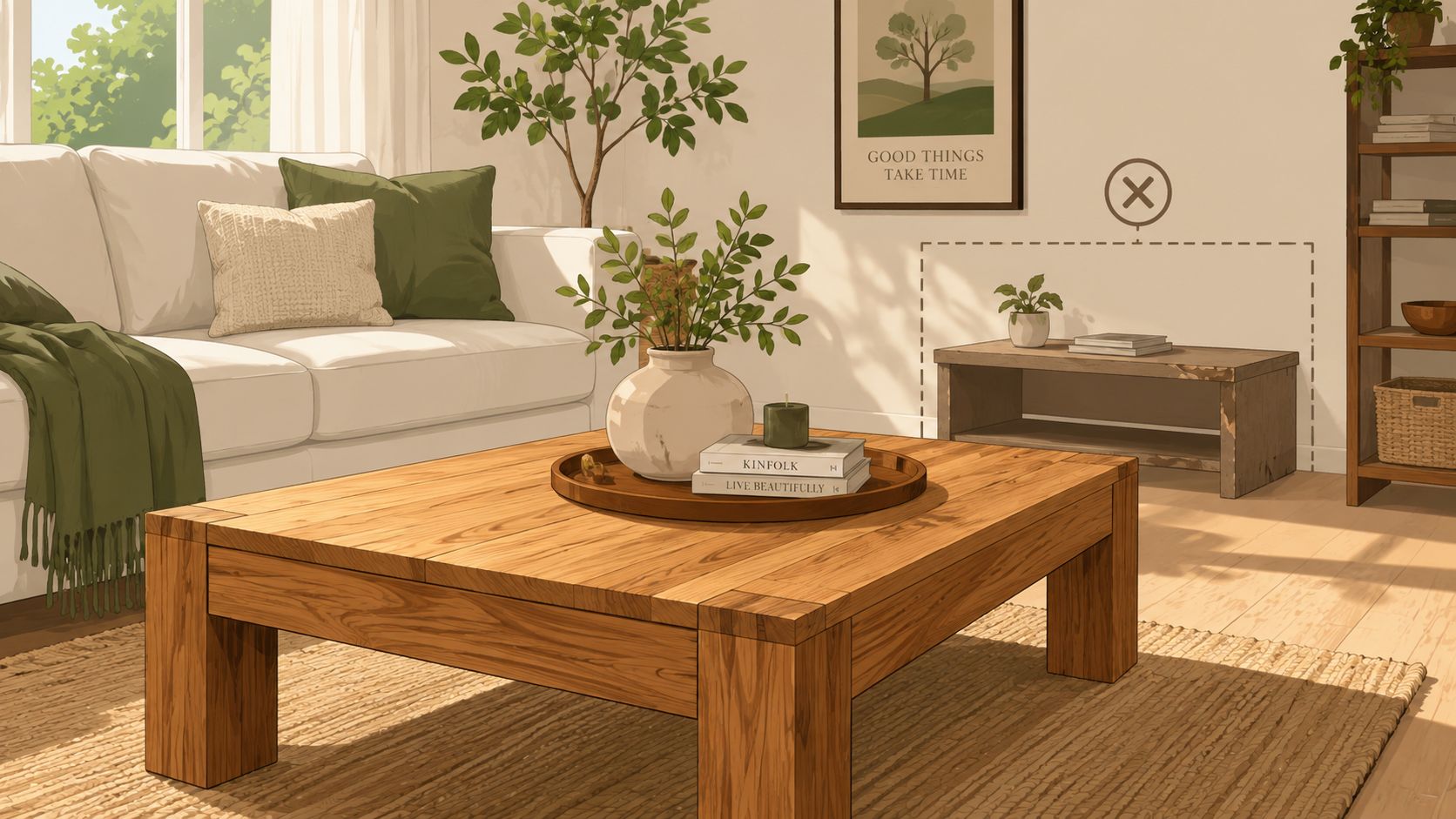
Solid wood furniture is made from lumber cut from a tree, then shaped and joined into a finished piece. The visible structure and the working material are the same thing. That matters because the material carries depth all the way through, not just at the surface.
A simple test of understanding helps. If a tabletop is lightly scratched, a solid wood top still reveals wood beneath the finish. The material and the appearance remain aligned. That's why solid wood has such strong appeal in heirloom quality furniture.
By contrast, veneer, MDF, and particleboard are different categories altogether. Veneer uses a thin layer of wood over another substrate. MDF and particleboard are engineered panels. They can have useful applications, but they don't offer the same repair path, tactile authenticity, or artisanal presence.
How it differs from look-alike construction
The confusion often begins with appearance. A veneered cabinet can look polished in a showroom. An MDF console can carry a wood-look finish from across the room. The difference appears over time, and especially at stress points.
A quick comparison makes the distinction easier:
| Construction type | What it is | Best-known strength | Common limitation |
|---|---|---|---|
| Solid wood | Real lumber throughout key components | Repairability and timeless craftsmanship | Responds to room conditions if poorly built |
| Veneer | Thin wood face over a core | Visual consistency | Edge damage is harder to disguise |
| MDF or particleboard | Compressed fibre or particles with binders | Lower cost and uniformity | Weaker long-term resilience in demanding use |
For buyers trying to understand how furniture is designed, built, tracked, and refined across its lifespan, Product lifecycle management in furniture offers useful background on the systems behind modern production decisions.
Why buyers still favour it
The market still treats solid wood as the premium benchmark. In the North American wooden furniture market, the solid wood segment held the dominant position in 2024, capturing 42.3% of total market share, reflecting strong preference for durability and premium aesthetic appeal, according to Market Data Forecast's North America wooden furniture analysis.
Solid wood asks for a higher level of discernment at the time of purchase, then rewards it for years.
For homeowners searching for Luxury furniture Niagara, the appeal is rarely about trend alone. It's about depth, touch, joinery, and the quiet assurance that a piece was built to stay.
A Curated Palette of Hardwoods
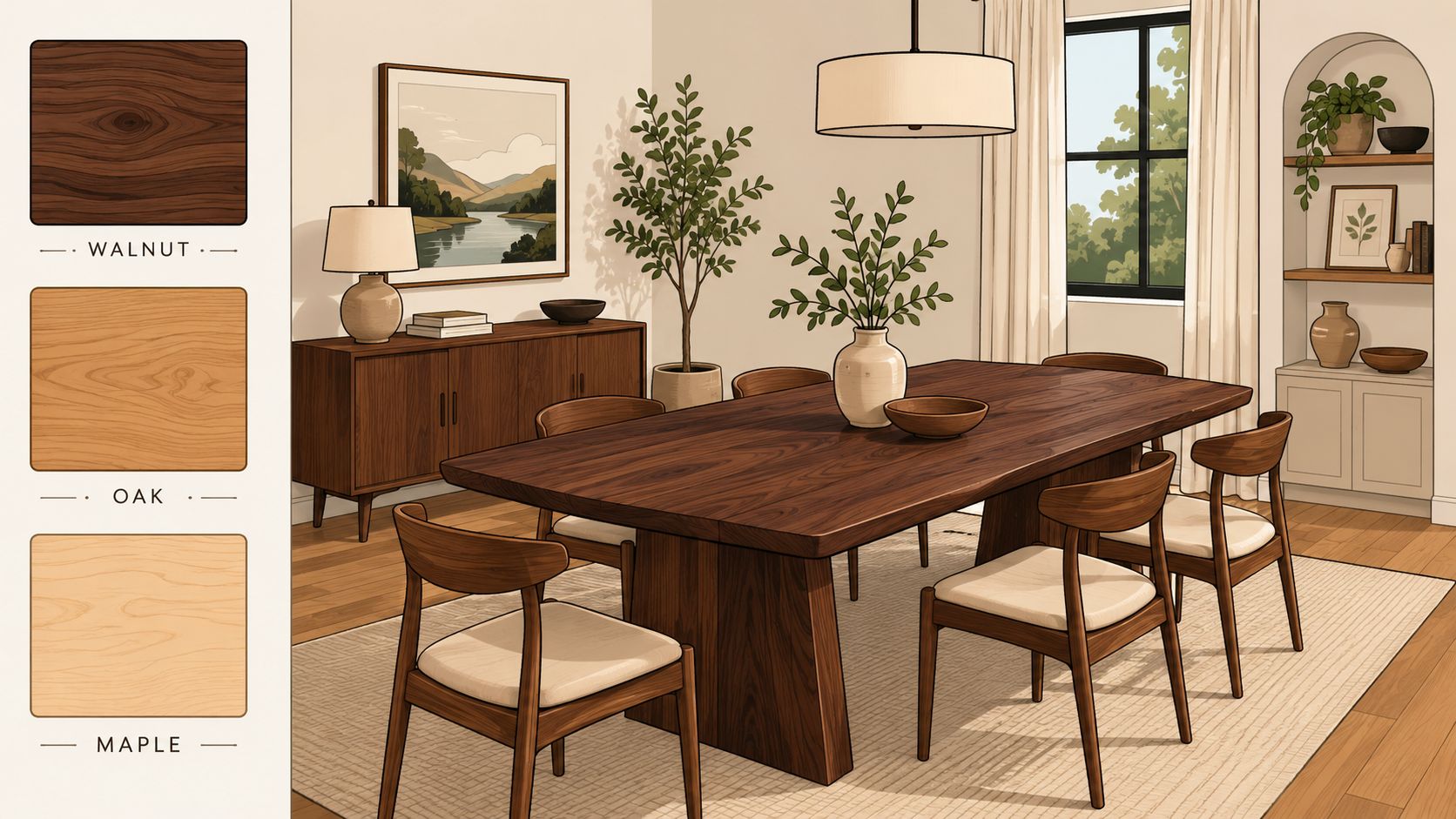
Wood species shape a room long before accessories do. Grain, undertone, density, and the way a board accepts stain all influence whether a piece reads formal, relaxed, sculptural, or architectural.
A helpful reference for buyers weighing material character and longevity is this hardwood guide for furniture selection. The right wood isn't only about hardness. It's about visual rhythm and how the furniture will live in the space.
Oak and maple for structure and clarity
Oak has presence. Its grain is more pronounced than many other hardwoods, which gives it a grounded, recognisable personality. In traditional rooms, that texture can feel firmly rooted. In cleaner interiors, oak can also read crisp and architectural when the finish is restrained.
Oak tends to suit:
- Dining rooms with daily use where visual sturdiness feels appropriate
- Cabinetry and storage pieces that benefit from visible grain movement
- Homes with mixed eras because it pairs well with both heritage and contemporary elements
Maple offers a different expression. Its grain is subtler, and its appearance is often smoother and more controlled. That makes it a favourite for design-forward spaces where the silhouette should lead and the wood should support rather than dominate.
Maple is often a strong fit for:
- Bedroom furniture where a calmer grain helps the room feel restful
- Modern interiors that favour cleaner visual lines
- Pieces with lighter finishes where clarity matters more than dramatic contrast
Cherry and walnut for warmth and depth
Cherry has a refined warmth that feels elegant without becoming ornate. It's often chosen for spaces that value softness, depth, and a more curated atmosphere. Cherry works beautifully in rooms that rely on layered neutrals, traditional detailing, or a collected look that matures over time.
Walnut is often the most commanding of the four. Its rich tone and fluid grain give furniture immediate visual gravitas. A walnut dining table or desk doesn't need much decoration around it. The wood itself brings composition to the room.
A room with walnut rarely needs more weight. It needs balance.
A quick aesthetic comparison helps clarify the mood each species brings:
| Hardwood | Visual character | Best suited to | Overall mood |
|---|---|---|---|
| Oak | Defined grain, robust texture | Dining, storage, statement pieces | Grounded and enduring |
| Maple | Fine grain, cleaner surface | Bedrooms, modern rooms, tailored casegoods | Light and disciplined |
| Cherry | Warm tone, refined depth | Traditional and transitional spaces | Graceful and cultivated |
| Walnut | Dark richness, expressive grain | Dining, office, focal-point furniture | Sophisticated and dramatic |
How to choose the right wood for the room
The strongest selections usually come from three practical questions.
- How much visual activity should the piece carry. A bold grain can anchor a sparse room. In a layered room, a calmer wood may create better harmony.
- What kind of wear will it face. Dining tables, desks, and coffee tables benefit from species and finishes that suit daily contact.
- What other materials are nearby. Stone, metal, leather, linen, and hand-knotted wool all change how a wood tone reads.
For those exploring Custom furniture Southern Ontario, the wood species should never be treated as an afterthought. It's one of the most important design decisions in the room.
The Art of Timeless Craftsmanship and Joinery
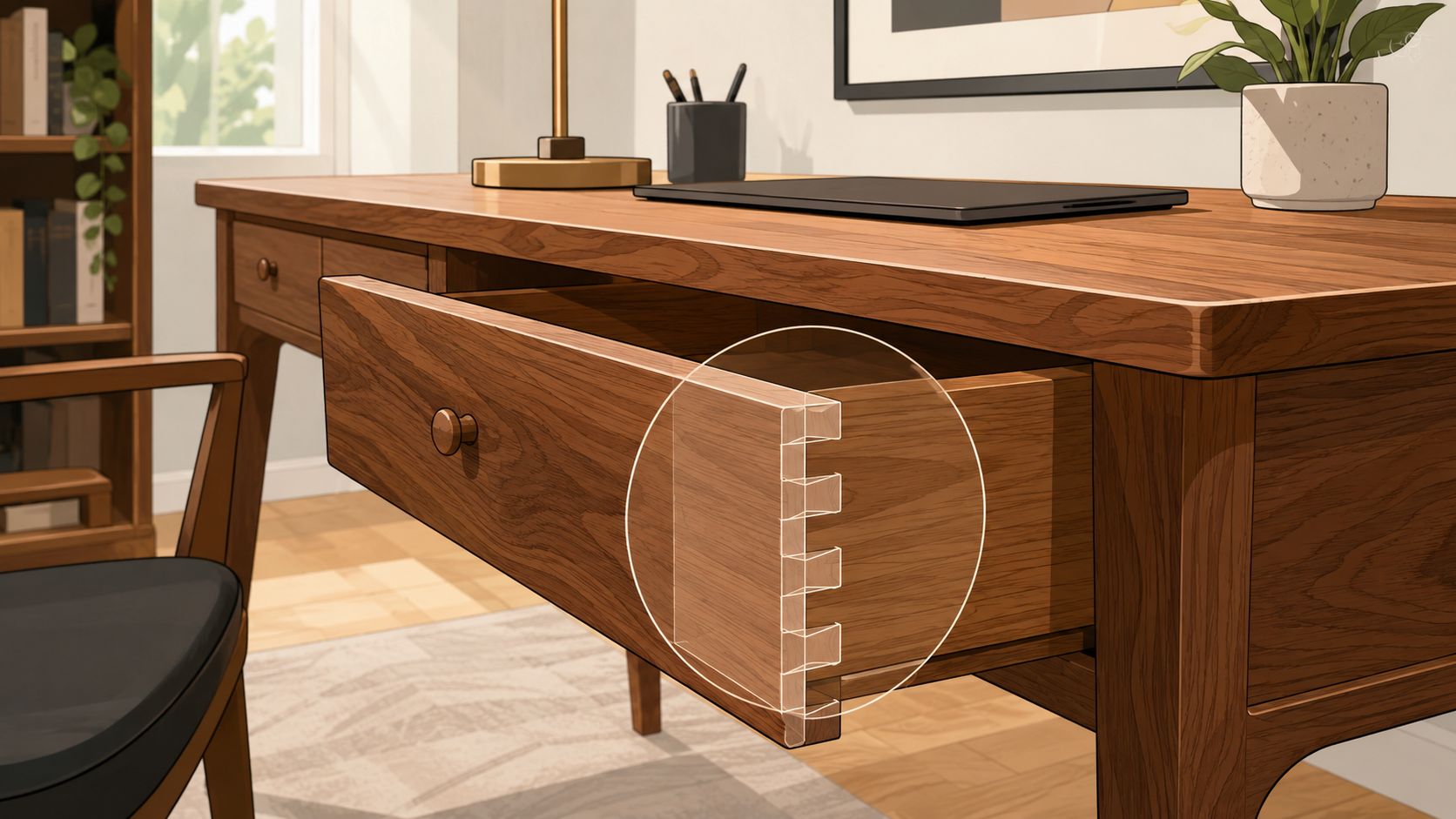
The true quality of solid wood furniture often hides where buyers forget to look. Under the tabletop. Inside the drawer. At the back corner of a cabinet. That's where timeless craftsmanship shows itself.
Those details matter more than ornate carving or a fashionable finish. A beautifully stained piece with weak construction is still weak. A simpler piece with excellent joinery can serve for generations.
For buyers interested in how enduring table construction comes together in practice, custom dining room table craftsmanship offers a useful point of reference.
Joinery that deserves a closer look
The best-known joinery methods aren't decorative tricks. They're structural logic.
Dovetail joints are commonly used in drawers. The interlocking shape resists pull-apart stress, which is exactly what a drawer experiences over years of opening and closing. When dovetails are cleanly cut and well aligned, they signal care in both construction and fit.
Mortise and tenon joinery joins one piece with a projecting tenon into another piece with a carved recess. It's a classic solution for chairs, tables, and frames because it creates strength where movement and load meet.
Finger joints can also be valuable when executed well. They increase glue surface and create a strong bond in the right application. Their merit depends on placement, fit, and the overall integrity of the piece.
What weak construction looks like
Poor construction usually announces itself in quieter ways than buyers expect. The warning signs aren't dramatic. They're cumulative.
- Drawer action that feels rough suggests poor alignment or weak internal fitting.
- Visible gaps at joints often point to imprecision before the piece has even lived in a home.
- A reliance on exposed fasteners in structural areas can indicate shortcuts where stronger joinery should carry the load.
- Thin backs, bottoms, or supports often reveal where durability was traded away.
Workshop note: Turn the piece around. Lift the drawer. Open the door. The hidden side usually tells the truth first.
Brands known for artisanal standards, including Stickley, continue to hold respect. Not because of branding alone, but because disciplined joinery and proportion remain visible in the finished work. That's the difference between a piece that merely occupies space and one that earns heirloom status.
Finishes Longevity and Lifelong Care
A finish does two jobs at once. It protects the wood, and it shapes how the wood is perceived. The same table can feel relaxed, formal, velvety, crisp, or richly luminous depending on the finish placed over it.
The right care routine doesn't need to be complicated. It needs to be consistent. This practical guide to protecting wood furniture from scratches and stains is useful for homeowners who want straightforward maintenance habits rather than guesswork.
Choosing the right finish for real life
Oil finishes tend to highlight grain and give wood a more natural, close-to-the-material appearance. They suit buyers who appreciate a tactile, artisanal surface and don't mind periodic refreshment.
Lacquered finishes generally offer a more sealed surface and a more polished look. They often suit dining tables, casegoods, and family spaces where easier wipe-down care matters.
Wax finishes create softness and depth, especially on traditional forms, but they ask for a gentler ownership style. They're lovely, though not always ideal for every high-traffic setting.
A practical way to consider this is:
| Finish type | Visual effect | Everyday reality |
|---|---|---|
| Oil | Natural, warm, close to the grain | May need more attentive renewal |
| Lacquer | Smooth, refined, more sealed | Easier for active households |
| Wax | Soft lustre, heritage character | Best for gentler use and regular care |
Simple habits that protect heirloom quality
Caring for solid wood furniture is mostly about avoiding avoidable stress.
- Use stable placement. Keep pieces away from harsh direct sun, heating vents, and damp problem areas.
- Clean gently. A soft dry or lightly damp cloth usually does more good than aggressive sprays.
- Protect the surface during daily use. Mats, coasters, and felt pads prevent the small damage that accumulates.
- Address problems early. A minor finish issue is easier to manage than a neglected one.
Furniture lasts longest in homes that treat care as part of living, not as emergency repair.
Styling Wood in a Complete Room Concept

A single wood piece can be beautiful on its own, but the room succeeds when that piece is part of a complete room concept. The strongest interiors treat furniture, rugs, lighting, upholstery, and negative space as one composed conversation.
That's especially true with solid wood. Because wood brings grain, tone, and visual weight, it often acts as the room's anchor. A walnut dining table can steady a contemporary space. A cherry sideboard can warm a quieter traditional room. A pale maple bed can introduce calm to a layered primary suite.
Wood as the anchor of the room
The role of wood changes depending on what surrounds it.
In a modern interior, a solid wood table often adds needed warmth against cleaner lines, stone surfaces, and restrained palettes. In a more classic room, wood can become the thread that ties upholstery, drapery, and architectural trim together.
For homeowners seeking Interior design services St. Catharines, the most useful shift is moving away from isolated shopping. A chair, table, or cabinet should be chosen in relation to floor covering, wall tone, circulation, and scale.
Art for your Floor and the power of contrast
One of the most effective ways to style solid wood is from the ground up. Critelli has been described by industry historians as a “fine rug market”, and treats globally sourced, hand-knotted artisanal rugs as “Art for your Floor” within complete room design concepts, with specialists guiding colour palette and character integration, as described on Critelli's About Us page.
That philosophy is sound design practice. A hand-knotted rug can soften the visual mass of a substantial dining table, introduce colour without clutter, and establish the room's tone before accessories ever enter.
For readers exploring a more regional or character-driven decorating language, Ecuadane's guide to western styling offers useful visual cues on layering natural texture, pattern, and warmth.
A practical source of inspiration for combining seating and table forms in a cohesive setting is this dining table, chair, and bench collection.
Designer's Insight
Designer's Insight
Pair a bold solid wood dining table with a quieter hand-knotted wool rug, then repeat the wood tone only once elsewhere in the room. That restraint keeps the space design-forward instead of heavy.
For buyers searching Hand-knotted rugs Ontario, the best rug rarely matches the furniture exactly. It balances it. That's what gives a room poise.
Your Guide to Investing in Heirloom Furniture
Buying heirloom quality furniture requires a different mindset from ordinary furniture shopping. The question isn't whether a piece looks finished on delivery day. The question is whether it will still justify its place in the home years from now.
That decision becomes easier when the inspection process is disciplined.
What to inspect before saying yes
Start with the structure, not the styling. Surface beauty is easy to stage. Integrity takes a little more attention.
- Check the wood story. Ask which components are solid wood, which are secondary materials, and where each is used.
- Open and handle everything. Drawers, doors, leaves, and extension mechanisms should feel composed and deliberate.
- Read the proportions. Good furniture has balance. Nothing should feel top-heavy, flimsy, or visually unresolved.
- Study the underside and back. Makers reveal their standards where most shoppers don't look.
- Ask about custom options. Size, finish, and wood selection often determine whether a piece feels merely suitable or genuinely bespoke.
Why local expertise matters
Southern Ontario has unusual strength in this category. The region's secondary manufacturing sector for solid wood products employed 26,115 people, generated $5.3 billion in sales, and used 9.3 million cubic metres of wood fibre in 2017, according to Natural Resources Canada's report on Southern Ontario's solid wood manufacturing sector.
That scale matters because it reflects a deep bench of skill, supply-chain familiarity, and material knowledge. For homeowners considering Custom furniture Southern Ontario, it supports the case for working with makers and specialists who understand how quality wood furniture is built, finished, and serviced.
Delivery is part of the investment
The purchase isn't complete when the invoice is signed. Fine furniture still has to travel safely, enter the home properly, and be placed with care. That's why white-glove delivery matters. A smooth transition from showroom to home protects the finish, the joinery, and the ownership experience itself.
For older or especially delicate pieces, homeowners may also find value in reviewing guidance on vetting professional antique movers. The principles are similar. Handling, wrapping, carrying, and placement all affect whether furniture arrives in the same condition in which it left.
Buyers in the Greater Niagara, Hamilton, and Toronto markets should also think beyond transport. Confirm room access, stair clearance, elevator requirements, floor protection, and final placement before delivery day. Well-organised service feels invisible. That's exactly the point.
A final buying framework helps keep the decision clear:
| Question | Strong answer |
|---|---|
| Will it age well | The material and finish can accept life without losing dignity |
| Can it be maintained | Routine care is realistic, and repair is possible |
| Does it fit the room concept | It supports a fully styled interior, not just a vacant corner |
| Is the service equal to the product | Delivery, placement, and guidance match the level of the piece |
Solid wood furniture rewards patience. Chosen well, it becomes one of the few purchases in a home that gains meaning with time.
Experience heirloom quality and timeless craftsmanship with Critelli Furniture. Experience the craftsmanship in person at our King Street Showroom. Book your complimentary design consultation today. Visit the Rug Market to find your room's foundation.