
Top Grain vs Full Grain Leather: Your Ultimate Guide

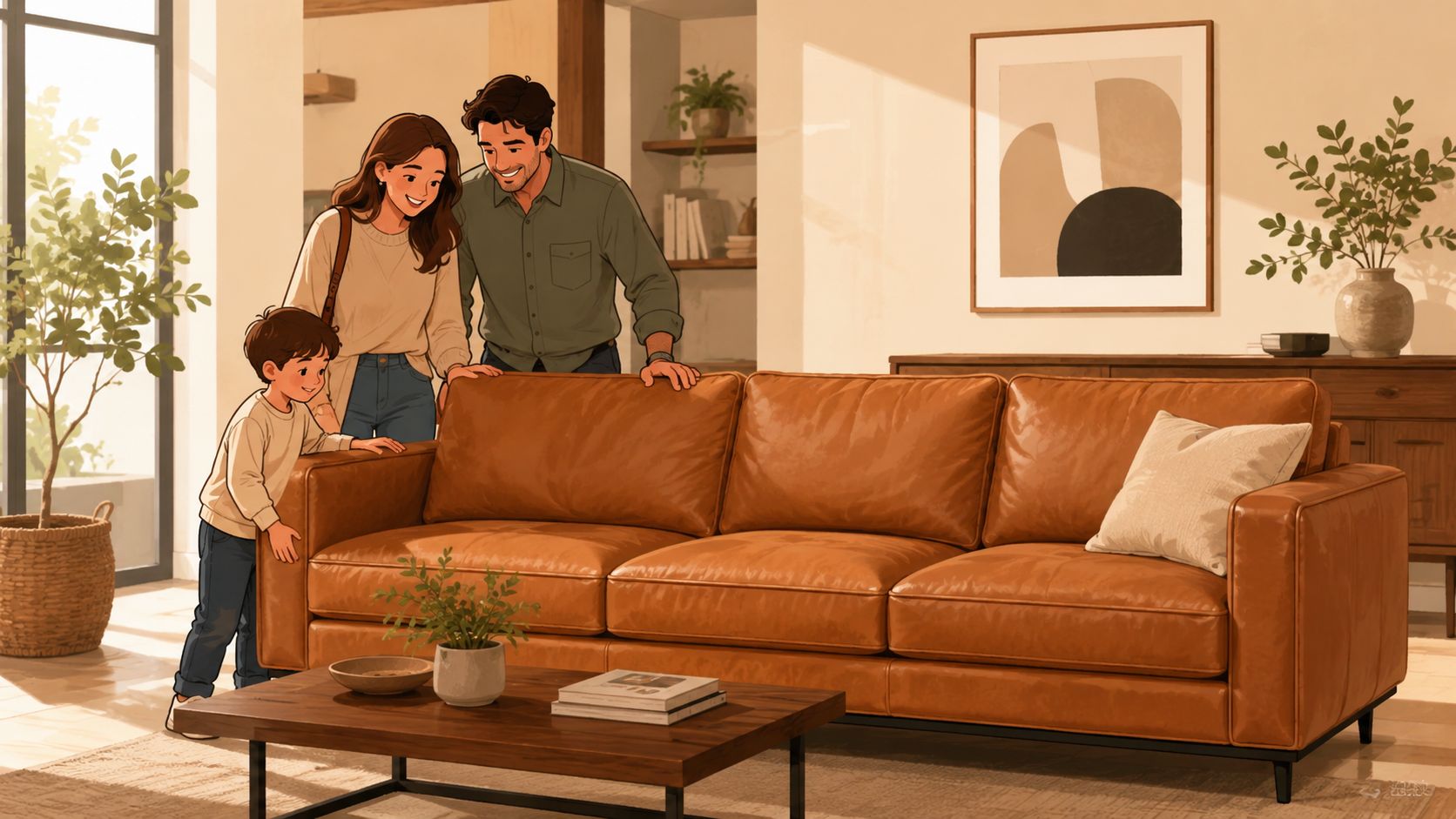
A leather sofa often enters a home during a meaningful moment. A family has moved into the house they plan to keep. A couple is replacing the temporary pieces that carried them through earlier years. A room is finally being furnished with intention, not urgency.
That's when the question of top grain vs full grain stops being technical and becomes personal. The choice affects how a sofa feels on a winter evening, how it looks after years of daily use, and whether it becomes part of the family's story or another piece to replace later. In homes across Southern Ontario, that distinction matters.
Choosing Your Forever Furniture an Introduction to Leather
A well-made leather sofa does more than fill a space. It anchors conversation, absorbs the rhythms of daily life, and records the years through use. For homeowners choosing furnishings for a forever home, leather often becomes the natural focal point because it carries both visual depth and practical resilience.
That decision deserves experienced guidance. Critelli Furniture was founded in 1914 by Joseph Critelli and his son Thomas H. Critelli at the corner of Ormond and Albert Streets in Thorold, Ontario, establishing a family-run legacy that has spanned over 110 years in Southern Ontario. A century-old business sees the same pattern repeatedly. Clients rarely regret investing in better materials when a piece is meant to stay.
Why this choice feels so consequential
Leather isn't a single category. The differences in processing change the way a chair ages, the way a sectional responds to everyday wear, and the way colour and texture settle into a room over time. Homeowners comparing premium upholstery often land on two options: full grain and top grain.
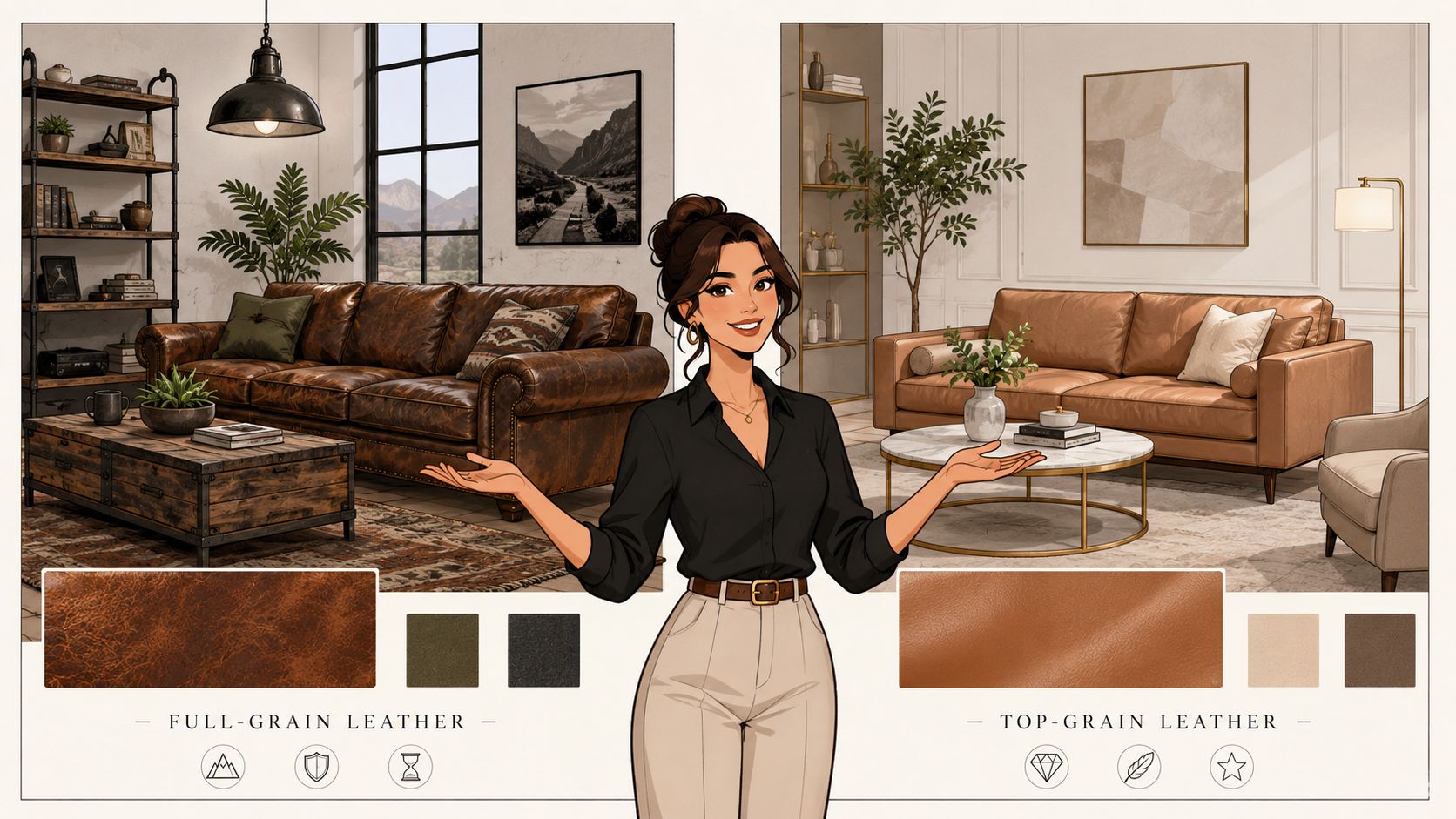
Both come from the top layer of the hide. Both can look elegant in a design-forward interior. Yet they serve different priorities.
- Full grain leather preserves the original outer surface of the hide.
- Top grain leather is refined to create a more uniform appearance.
- The right answer depends on whether the room calls for natural character, visual consistency, or a balance of both.
For anyone weighing upholstery materials in a broader room plan, this deeper guide to upholstery materials and how they perform in real homes offers helpful context before narrowing the decision.
Furniture that lasts doesn't begin with colour alone. It begins with material honesty.
An heirloom begins with the material
A family sofa is rarely judged on the day it arrives. It's judged years later, when the seat still feels inviting, the arms still look handsome, and the room still feels composed around it. That's why top grain vs full grain should be considered as an investment decision, not just a finish selection.
In luxury furniture Niagara clients often want a piece that feels refined immediately. Many also want timeless craftsmanship that deepens with age. Those goals can align, but only when the leather is chosen with clear expectations.
The Unblemished Original Understanding Full Grain Leather
Full grain leather is the hide in its most honest form. The outer grain remains intact. There's no sanding, no buffing, and no correction to erase the natural surface.
That untouched structure is the reason full grain carries such a strong reputation in heirloom quality furniture. The fibres closest to the exterior stay in place, and the natural markings remain visible. A healed scar, a subtle crease, or a variation in grain isn't damage. It's proof that the material hasn't been cosmetically flattened into uniformity.
What makes full grain distinct
The modern term has an interesting history. Historically, the term “full grain” emerged as a specific designation only when tanneries began explicitly distinguishing leather that had undergone no alteration to its outer grain from processed alternatives, with the distinction becoming standardized in the early 20th century. That nuance matters because it reminds buyers that full grain isn't a separate substance. It's a subset of top-layer leather left in its original condition.
For furniture, that translates into a few practical realities.
- Natural variation stays visible. No two panels look exactly alike.
- The surface feels more organic. Pores and subtle texture remain part of the finish.
- The leather develops patina. Use, light, and time tend to enrich the appearance rather than flatten it.
Homeowners exploring a full-grain leather chair designed for lasting character often notice that the appeal isn't just visual. It's emotional. The piece feels less manufactured and more artisanal.
What works well with full grain
Full grain is often the right choice when the furniture is expected to become more beautiful through use. It suits rooms that welcome material depth, visible authenticity, and a collected rather than overly polished feel.
It performs especially well in:
- Primary living spaces where seating is used every day
- Statement recliners chosen for long-term enjoyment
- Libraries and dens where richness and patina add atmosphere
- Homes with a layered interior concept built around wood, wool, metal, and natural stone
Practical rule: If a homeowner wants the leather to tell the truth about time, full grain is usually the stronger answer.
Where some buyers hesitate
Full grain isn't for everyone. Those natural markings that designers prize can unsettle buyers who want every panel to match precisely. In very highly specific designs, especially where a flawless finish is the priority, the irregularity can feel less controlled than desired.
That doesn't make it less luxurious. It makes it more individual. In a complete room concept, full grain works best when the rest of the palette supports that authenticity rather than competing with it.
The Polished Performer Defining Top Grain Leather
Top grain leather begins with the same desirable upper layer of the hide, but the surface is mechanically refined. That sanding process removes outer imperfections and creates a cleaner, more consistent appearance from panel to panel.
For many interiors, that polish is exactly the point. A room with crisp architecture, a tightly edited palette, and a more contemporary posture may benefit from leather that looks composed from the start rather than visibly organic.
What the process changes
The trade-off is structural as well as visual. Top-grain leather undergoes a mechanical sanding process that removes the outermost imperfections, resulting in a material that is slightly thinner, typically with a 10 to 15% reduction in surface density, and more uniform in colour but possesses reduced durability and a “plasticky” visual finish compared to full-grain's natural pore structure.
That single sentence explains most of the top grain vs full grain debate. Refinement improves consistency. It also removes part of the hide's strongest original surface.
For the buyer, that means top grain often offers:
- A more even finish
- Greater visual uniformity across cushions and arms
- A cleaner fit for sleek, modern rooms
- Less of the evolving patina many people associate with old-world leather
A well-scaled leather swivel chair in a refined top grain finish can be an excellent example of this balance. The silhouette stays crisp, and the upholstery reads as polished rather than rugged.
Where top grain excels
Top grain makes sense when the room needs discipline. In formal sitting areas, condos with cleaner lines, or projects where colour consistency matters, it often supports the design better than a highly expressive hide would.
It also appeals to buyers who prefer the look of leather but don't necessarily want every mark and tonal shift on display.
What it doesn't do as well
Top grain generally isn't the ideal choice when the goal is a visibly evolving heirloom. It can still be a premium and beautiful upholstery option, but it doesn't usually offer the same long-term narrative in the surface.
A leather can be elegant because it is consistent, or elegant because it is authentic. Top grain leans toward consistency.
That distinction is the heart of the decision. Neither material belongs in every room. The best results come from matching the leather's character to the life the furniture will live.
A Side-by-Side Comparison for Your Home
Some decisions are easier when they're stripped of marketing language. In practical terms, top grain vs full grain comes down to four questions. How long should the piece last, what should it look like as it ages, how should it feel in daily use, and what kind of value matters most to the household.
The table below gives the quick answer first.
Full Grain vs. Top Grain Leather at a Glance
| Attribute | Full Grain Leather | Top Grain Leather |
|---|---|---|
| Durability | Retains the original outer grain structure for stronger long-term performance | Sanded surface has reduced durability compared with full grain |
| Appearance | Shows natural markings, pores, and variation | More uniform in colour and finish |
| Ageing | Develops a distinctive patina over time | Ages more evenly, with less patina character |
| Texture | More natural and organic to the touch | Smoother, more controlled surface |
| Design fit | Ideal for artisanal, layered, timeless interiors | Ideal for cleaner, polished, design-forward spaces |
| Value perspective | Strong choice for heirloom quality and long-term ownership | Strong choice for immediate visual consistency |
Durability and lifespan
For long-term furniture, this is the most important difference. Full-grain leather extends the product lifespan of furniture by approximately 50% compared to top-grain leather, with properly maintained full-grain pieces often lasting 40+ years. That's the clearest numerical argument for full grain as an heirloom material.
A household that wants one excellent sofa instead of a cycle of replacements should take that seriously. In a busy family room, a custom leather sofa built for everyday living benefits from material that remains structurally strong over time.
Appearance and patina
When choosing between them, preference matters more than prestige. Full grain shows more of the hide's original life and gains character through use. Top grain arrives looking more even and refined.
Neither look is automatically better. The question is whether the room should feel curated in a softly artisanal way or edited with more visual precision.
- Choose full grain if variation, patina, and material honesty are part of the appeal.
- Choose top grain if the room depends on cleaner consistency.
Feel and comfort
Both can feel luxurious, but they communicate differently. Full grain often has a more natural hand and visual depth. Top grain tends to feel more controlled and visually smoother.
In seating that will be used for hours at a time, touch matters as much as colour. Leather should support the atmosphere of the room, not just match the paint.
Designer's Insight
Our designers suggest pairing a rich full-grain leather sofa with a neutral hand-knotted wool rug to balance the room's energy. In Hand-knotted rugs Ontario homes, that combination creates a grounded foundation that lets the leather's texture read as intentional rather than heavy. It's one of the strongest ways to build a complete room concept, especially when rugs are treated as Art for your Floor rather than an afterthought.
Overall value
Value isn't only about upfront spending. It's about how well the piece serves the home over time. Full grain often wins on longevity and ageing. Top grain often wins on visual control and a more uniform finish.
For buyers in Custom furniture Southern Ontario projects, the strongest results come from asking one honest question. Is this piece meant to look pristine, or is it meant to become beloved?
Curating Your Space Leather in Application
The best leather choice changes with the room, the household, and the role of the furniture. A material that feels perfect on a statement recliner may not be the smartest answer for a formal accent chair. Good design comes from fit, not absolutism.
When full grain makes the most sense
A heavily used family sofa is often the clearest case for full grain. The room sees children, guests, long evenings, and constant use. In that setting, the leather's ability to gain beauty with wear becomes part of the pleasure.
A premium recliner is another strong candidate. In homes furnished with timeless craftsmanship, an heirloom chair should soften into the room rather than age out of it. Full grain often complements iconic silhouettes and more expressive woods because it shares that same artisanal character.
It also performs beautifully in spaces built around texture.
- A den with walnut or oak casegoods benefits from full grain's visible depth.
- A collected living room feels more layered when the leather carries natural variation.
- A heritage-inspired interior often looks more authentic with a hide that isn't overly corrected.
Where top grain earns its place
Top grain is often the right answer in rooms that call for restraint. A formal living area, a sleek condo, or an entertaining space designed around a precise colour story may need the smoother consistency top grain delivers.
That's especially true when upholstery needs to work unobtrusively with other statement elements, such as dramatic lighting, architectural millwork, or a bold rug. In those rooms, the leather shouldn't compete with the broader composition.
A polished armchair, a bespoke sectional, or a clean-lined bench can all benefit from top grain when the visual goal is controlled elegance.
In a well-designed room, the leather should support the architecture of the space, not distract from it.
The complete room concept matters
The strongest interiors don't select leather in isolation. They balance upholstery with flooring, rugs, lighting, wall colour, wood tone, and circulation. That's why Interior design services St. Catharines clients often get better outcomes when the upholstery decision is made within the entire room plan.
Critelli's Interior Design Studio provides complimentary in-home consultations and professional space planning for clients in Southern Ontario, utilizing expert layouts to optimize flow and function while navigating an extensive library of fabrics, leathers, and finishes for bespoke customization. That approach reflects how design really works. A sofa isn't just a sofa. It's part of a visual and practical system.
Rugs as the room's foundation
Leather feels different depending on what surrounds it. A richly grained sofa over a quiet hand-knotted rug feels grounded and warm. A smoother leather over a graphic rug feels sharper and more contemporary.
That's why the Rug Market deserves real attention in any leather conversation. Hand-knotted rugs Ontario homeowners choose often set the tone for everything above them. They are, in every meaningful sense, Art for your Floor.
Caring for Your Investment and Next Steps
Fine leather rewards calm, consistent care. It doesn't need aggressive treatment. It needs respect for the material.
Simple habits that protect leather well
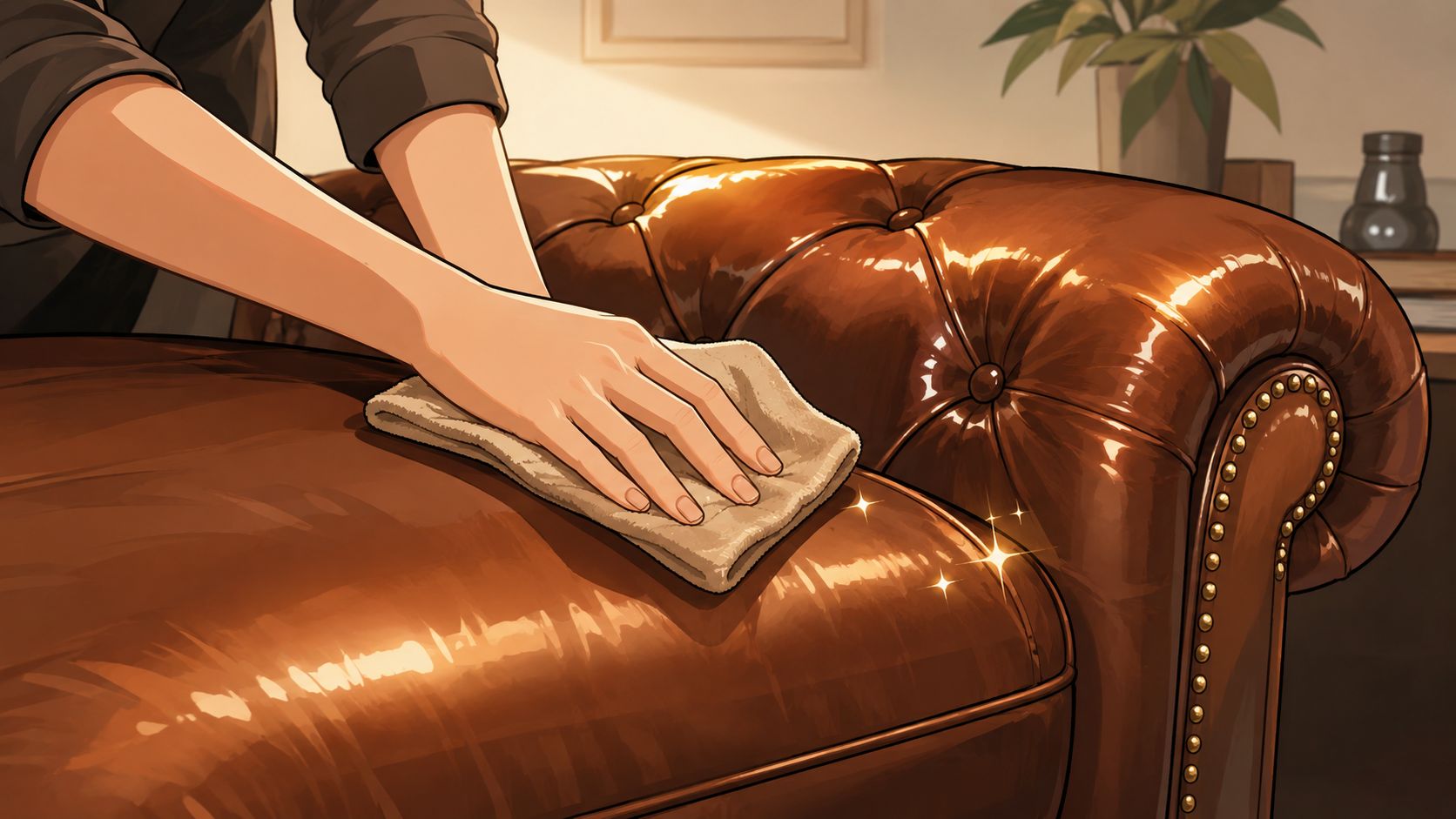
Most long-term problems begin with neglect or over-cleaning. Both full grain and top grain benefit from a gentle routine.
- Dust regularly with a soft, dry cloth so grit doesn't sit on the surface.
- Blot spills promptly rather than rubbing them deeper into the finish.
- Keep furniture away from harsh heat and direct sun where possible.
- Use leather-specific care products only when they suit the manufacturer's guidance.
For homeowners who want a practical reference on day-to-day cleaning, this guide on how to maintain your leather sofa offers a useful overview. For more detailed upholstery guidance, this resource on how to care for leather furniture is worth keeping on hand.
Care should match the finish
Full grain usually benefits from a lighter touch. Owners want to preserve the natural surface and let the patina develop naturally. Top grain, with its more refined finish, often responds well to gentle upkeep that maintains its cleaner presentation.
Neither material improves with shortcuts. Household sprays, stiff brushes, and soaked cloths do more harm than good.
Leather ages best when the owner treats maintenance as preservation, not restoration.
A seamless path from showroom to home
A premium purchase should feel composed from first conversation to final placement. The business operates two distinct showrooms in St. Catharines: Critelli Furniture on King Street (126 King Street, ON L2R 3J1) and Critelli Modern on St. Paul Street, offering a curated selection of luxury furniture and hand-knotted rugs across contemporary and traditional styles. For buyers across the Greater Niagara, Hamilton, and Toronto markets, that matters.
So does delivery. White-glove service protects the experience. It ensures the transition from showroom to home feels effortless, with the furniture placed properly and the room left ready to enjoy.
The best leather choice is rarely the one with the flashiest label. It's the one that suits the home's architecture, the family's habits, and the years ahead. That is what turns a purchase into a lasting part of the house.
Experience the craftsmanship in person at Critelli Furniture and visit the King Street Showroom to explore a curated selection of luxury furniture Niagara homeowners return to for timeless craftsmanship and bespoke design. Book your complimentary design consultation today for a complete room concept shaped by Interior design services St. Catharines clients trust, and visit the Rug Market to find your room's foundation through hand-knotted, artisanal pieces selected with white-glove care.