
Custom Leather Upholstery: Southern Ontario Design Studio


A beautiful leather sofa can look strangely disconnected once it arrives home. The colour may be right, yet the scale feels heavy, the rug doesn't ground the seating, and winter heating leaves the hide feeling less supple than it did in the showroom. That's why custom leather upholstery deserves to be treated as a design investment, not a simple furniture purchase.
For Southern Ontario homeowners, the right decision combines heirloom quality, leather expertise, room planning, and practical climate care. A bespoke piece should suit the architecture, the people using it, and the conditions that will shape its appearance over time. In the Greater Niagara, Hamilton, and Toronto markets, a curated selection and thoughtful installation can make the difference between a room that is merely furnished and one that feels authored.
The Art of Bespoke Leather Selection
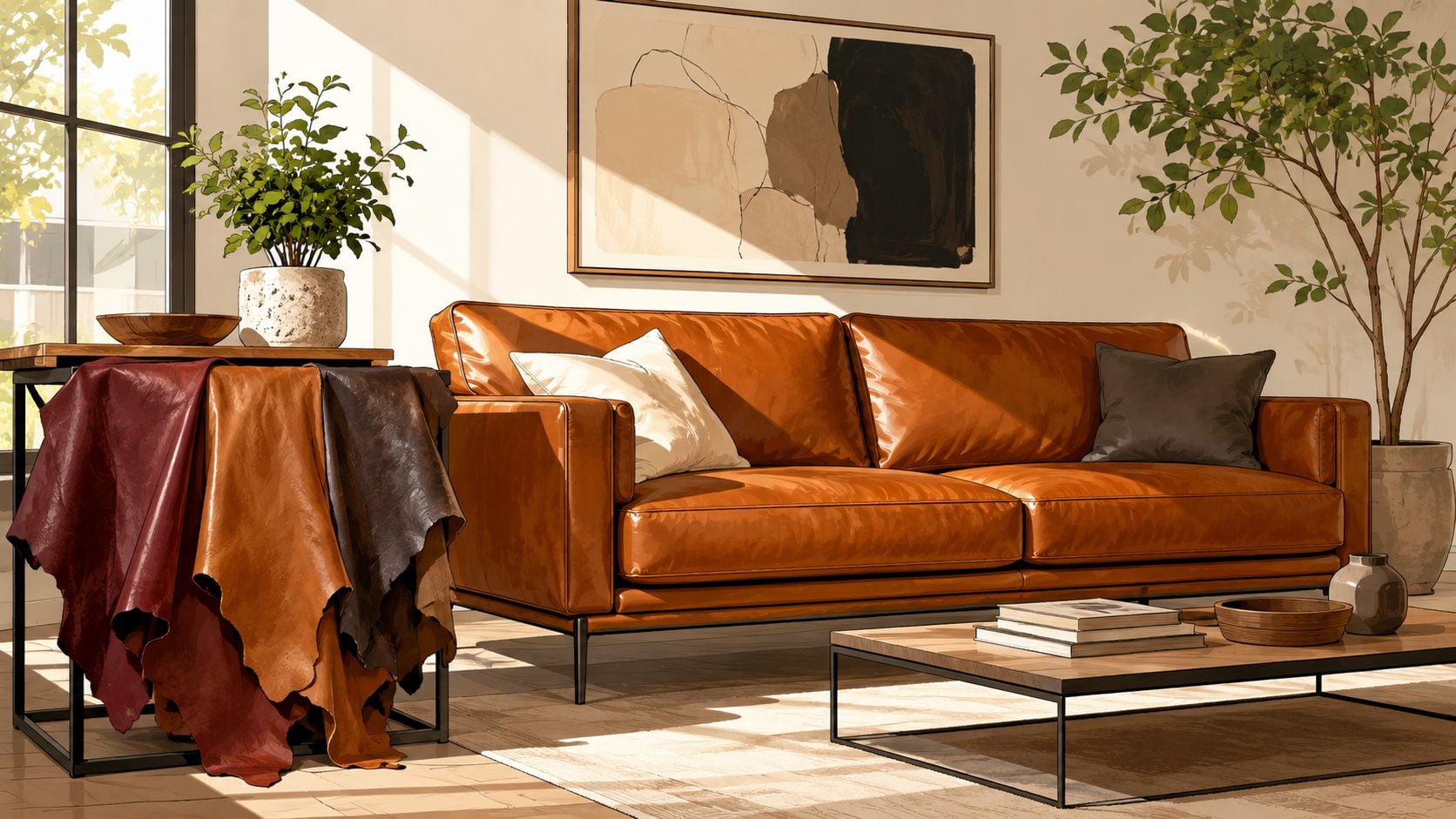
A homeowner often begins with a familiar request: a refined sofa in a warm tan, a deeper seat, and enough presence to anchor a living room without overwhelming it. The request sounds straightforward until the conversation turns to grain, finish, seam placement, cushion construction, light exposure, and the rug beneath it. That's where custom leather upholstery becomes a form of curated selection, rather than a catalogue exercise.
Leather carries visual information that fabric can't replicate in quite the same way. Natural grain, subtle variation, edge detailing, and the way a hide catches daylight all influence the character of a room. A smooth, evenly finished leather can create a calm, refined impression. A more expressive hide can bring warmth and movement to restrained architecture. Neither is automatically superior. The right choice depends on whether the room calls for quiet refinement or a stronger artisanal statement.
Selection starts with the room
A design-forward consultation considers the entire setting before a hide is chosen. The designer studies the room's natural light, wall colour, flooring, circulation, and existing wood tones. A large sectional may need a quieter grain so the room remains composed, while a compact chair can carry a richer finish or more pronounced surface character.
Colour should be assessed in context. A swatch that looks understated under showroom lighting may appear warmer beside oak flooring or cooler near a north-facing window. The same leather can also read differently against a pale rug than it does against a patterned one. Sampling beside the intended rug, paint, and hardware is essential.
Southern Ontario has a particularly strong relationship with leather craftsmanship. California's leather-working history shows how regional tanning infrastructure supported shoes, saddles, clothing, and furniture applications. The A.K. Salz tannery first put hides into tan vats in 1861, only 11 years after California became the 31st state, while a Napa tannery founded in 1869 later reached a maximum capacity of about 1,400 sides per day of upper leather in 1926. By the 1870s, Santa Cruz County reportedly produced half of all saddle leather made in the state. The Napa tannery history illustrates how skilled labour and hide processing can create the foundation for bespoke leather goods.
Why custom matters
A custom order allows the seating to respond to the client rather than forcing the room to accommodate a fixed object. Dimensions, cushion comfort, leather colour, stitching, and finish can work together as one composition. For clients seeking custom furniture in Southern Ontario, that level of control is valuable because the piece becomes part of the home's architectural language.
The best leather upholstery doesn't announce itself through novelty. It earns attention through proportion, tactile quality, and restraint. A well-made frame, carefully aligned panels, and considered cushion design will continue to look relevant as the room evolves.
For an accessible explanation of material choices, Critelli's guide to leather types for furniture can help clients arrive at the showroom with more informed questions. The final decision, however, should happen beside physical samples and within a complete room concept.
Understanding Leather Grades and Construction
Leather grade affects appearance, touch, maintenance, and how visibly the material changes with use. It shouldn't be treated as a simple ladder where the highest-sounding term automatically suits every household. A busy family room, a formal sitting room, and a reading chair each place different demands on the hide.
Full grain preserves character
Full grain leather retains the natural surface of the hide. Marks, variation, and grain remain visible, which gives the material depth and an authentic, organic quality. Over time, full grain can develop a richer patina, making it particularly appealing for clients who want a piece that records its life rather than remaining visually static.
That character requires acceptance of variation. A natural hide won't look perfectly uniform from panel to panel, and that isn't a defect. It's part of the material's identity. Full grain is often the right choice when tactile richness and visual authenticity matter more than a completely consistent surface.
Top grain leather has the outer surface refined to create a more even appearance. It can still provide a premium feel, while offering a controlled look that works beautifully in finished interiors. For clients who prefer cleaner colour distribution and a polished finish, top grain can be the more practical aesthetic choice.
A useful technical overview of these distinctions is available in Grainmark Leather's leather guide. It gives shoppers a helpful vocabulary before they compare samples in person.
Aniline rewards careful placement
Aniline leather is valued for its soft hand and visible natural surface. Because the finish is comparatively restrained, the hide's markings and tonal variation remain part of the design. That makes aniline especially compelling in a quiet room where the upholstery is intended to function almost like a natural material installation.
The trade-off is exposure. Strong sunlight, careless cleaning, and poorly controlled indoor conditions can alter the surface more readily than a heavily protected finish. Aniline belongs in a home where placement and maintenance are taken seriously, not in a forgotten corner beside a heat source.
Protected leather uses additional surface treatment to provide a more uniform appearance and increased resistance to everyday marks. It can be an excellent choice for active rooms, especially when the client wants luxury without constant anxiety. The finish may reduce some of the raw visual variation found in aniline or full grain leather, but it can support a more forgiving daily experience.
Designer's Insight: A bold Hancock & Moore leather needs a composed foundation. Pairing it with a neutral hand-knotted wool rug from the Critelli Rug Market lets the hide remain expressive while the room stays balanced. The rug becomes Art for Your Floor, not an afterthought.
Construction matters as much as grade. Panel layout should respect the hide's natural direction, seams should align with the form, and cushioning should support the intended posture. A beautiful leather cannot compensate for a weak frame or careless tailoring. Clients comparing materials can also review the guidance on top grain versus full grain leather before selecting a finish.
Your Journey Through the Critelli Design Studio
The strongest custom upholstery projects begin with a conversation, not a colour card. A client may arrive knowing that a room feels dated, but not knowing whether the core issue is scale, circulation, lighting, or upholstery. A professional design process turns that uncertainty into a sequence of useful decisions.
Start with the showroom conversation
The first step is a complimentary consultation at the King Street Showroom. The client brings photographs, floor plans, measurements, or a clear description of how the room needs to function. The designer listens for practical details, such as whether the seating must support long evenings, frequent guests, or a quieter reading routine.
This is the right moment to discuss leather. The designer can explain how a finish will respond to daylight, whether a selected colour will compete with existing woodwork, and how the upholstery should relate to nearby pieces. Critelli's collaborative design process places that exchange at the centre of the project.
Build the complete room concept
A sofa shouldn't be selected in isolation. The design team develops a complete room concept that considers seating, tables, lighting, rugs, artwork, and circulation together. Professional space planning helps determine whether the proposed furniture leaves comfortable pathways and whether the room's visual weight is distributed properly.
A Southern Ontario studio describes a 2-hour consultation that includes walking through the space, discussing colour, style, function, and flow, then sketching a floor plan to help the client begin. That example reflects the practical value of consultative design. The work isn't limited to choosing attractive objects. It gives the room structure.
The process may include:
Define the room's role: Establish how the space is used, who uses it, and what comfort means in that setting.
Test scale and layout: Review dimensions, seating relationships, sightlines, and movement before placing an order.
Edit the materials: Compare leather, fabric, wood, metal, and rug samples beside the home's existing finishes.
Resolve the details: Confirm cushion preferences, stitching, finishes, and any custom sizing before production.
Critelli's design services extend across St. Catharines and the broader Niagara region, with relevance to homeowners near Hamilton and Toronto. For clients searching for interior design services in St. Catharines, the advantage lies in having design decisions coordinated rather than made as disconnected purchases.
Navigating Southern Ontario Indoor Climates
The most expensive leather can age poorly if the room works against it. Southern Ontario homes move through heated winters, humid summers, and changing ventilation patterns. Those conditions affect leather gradually, often before the owner recognises the source of surface dryness, stiffness, or biological growth.
Canadian conservation guidance recommends stable indoor humidity for leather. Relative humidity above 65% increases mould risk, while conditions below 30% require extra handling precautions because leather can lose moisture and become more brittle. The same guidance identifies an ideal range of approximately 45% to 55% relative humidity for stable conditions. The Canadian Conservation Institute's leather-care guidance provides the technical foundation for this approach.
Placement is part of upholstery care
A leather sofa shouldn't sit directly beside a heating register. Warm, dry air can accelerate moisture loss across the surface, especially during winter. Direct sunlight can also shift colour and place additional stress on the finish, while air-conditioning vents may create localised temperature and humidity changes.
Avoid positioning upholstered seating:
Beside heating registers: Keep the hide away from concentrated warm airflow.
Against damp exterior walls: Basements, lakeside rooms, and poorly ventilated corners can create a more humid microclimate.
Under strong direct sunlight: Use window treatments or adjust the layout to reduce prolonged exposure.
Near humidifiers: Moisture may collect unevenly around the furniture and raise mould risk.
The goal isn't to create a museum environment. It's to prevent avoidable extremes and seasonal swings from shortening the visual life of the piece. A room with steady ventilation and sensible placement gives leather a better chance to develop the patina that makes it feel personal.
Practical rule: The best leather choice depends on the home's humidity, sunlight, ventilation, and daily use, not only on the hide's price or label.
Care should remain simple and consistent. Dust the surface gently, address spills promptly, and follow the manufacturer's recommendations for conditioning and cleaning. Critelli's leather furniture care guidance offers a useful reference for owners who want to preserve the finish without over-treating it.
This climate-aware approach is especially important across the Greater Niagara and Hamilton markets, where a room's proximity to exterior walls, basements, and changing seasonal conditions can influence how upholstery ages. A design consultation should include placement advice from the beginning, not after the first signs of stress appear.
The Economics of Restoration and Custom Orders
Replacing a cherished leather piece isn't always the most intelligent choice. A strong frame, comfortable proportions, and family history can justify restoration, while a weakened structure or unsuitable design may make a new commission more sensible. The decision should follow an inspection, not an emotional reaction to one damaged panel.
Ontario-focused pricing pages place leather couch repair between about $120 and $600. Broader upholstery repair pricing in Ontario can range from roughly $249 to $454 on average, while chair reupholstery in Canada averages about $851. Ottawa examples extend from $300 to $1,000 or more. These figures come from Ontario leather and upholstery repair pricing information, and they demonstrate why a single headline price can't answer every restoration question.
Compare the decision properly
| Feature | Heirloom Restoration | Bespoke Commission |
|---|---|---|
| Existing character | Preserves familiar proportions, patina, and sentimental value | Creates a new expression tailored to the present home |
| Scope | May involve cleaning, panel replacement, cushion work, or structural repairs | Can address dimensions, comfort, leather, stitching, and finish from the outset |
| Cost logic | Often sensible when damage is local and the frame remains sound | More appropriate when damage is extensive or the original design no longer suits the room |
| Design control | Limited by the existing form | Allows a complete room concept and coordinated material selection |
| Inspection need | Essential before deciding which sections can be saved | Essential for confirming dimensions, use, and construction requirements |
Restoration suits the right kind of damage
Minor damage is often repairable at a fraction of replacement cost. A qualified upholsterer can assess scratches, seam failures, worn panels, cushion breakdown, and frame condition. Partial restoration may preserve the strongest parts of the piece while correcting the areas that receive the most wear.
Full replacement becomes more compelling when multiple sections have failed, the frame has lost integrity, or the proportions no longer work in the room. A client should also consider whether the leather grade and finish suit the household's climate and routine. Restoring an unsuitable material may postpone, rather than solve, the underlying problem.
A new commission can draw from a curated selection of luxury furniture brands such as Stickley and Stressless, while custom upholstery allows the client to specify a more personal direction. The question isn't whether restoration is cheaper in every situation. The question is whether the existing piece still has the structure, comfort, and design value to deserve another chapter.
The White-Glove Delivery Experience
Custom upholstery isn't complete when the order leaves the showroom. The final room depends on careful handling, accurate placement, and a delivery process that respects the finish, the floor, and the surrounding architecture.
White-glove delivery generally means scheduled in-home delivery to a room of choice, unpacking, assembly when required, and removal and disposal of packaging. It doesn't automatically include every installation service. One Canadian service description specifically excludes lighting or artwork installation, which is a useful reminder to confirm the scope before delivery day. A broader explanation of the service model appears in this guide to white-glove delivery.
The last metres matter
The delivery team should inspect the piece, protect the home, assemble components correctly, and position the furniture according to the approved layout. That final placement protects the design intent established during consultation. It also gives the client an opportunity to review the room as a finished composition, with the leather, rug, lighting, and pathways working together.
For readers comparing service standards, this explanation of white-glove service in Boston offers a useful description of what professional in-home handling can include. The principle applies equally to a custom leather sofa arriving in St. Catharines, a sectional delivered near Hamilton, or a coordinated room installation serving the Toronto market.
Critelli Furniture's family-run legacy dates to 1914, linking its present-day design service to a long-standing commitment to considered living. That heritage matters because custom upholstery requires continuity. The client needs guidance at selection, clarity during ordering, practical advice about climate, and care at final placement. Heirloom quality is built through all four.
A complete room may begin with leather, but the foundation often comes from the rug. The Critelli Rug Market treats rugs as Art for Your Floor, with hand-knotted options that establish colour, scale, and atmosphere before the seating is positioned. For homeowners seeking hand-knotted rugs in Ontario, that foundation can make the difference between a leather piece that dominates and one that belongs.
Critelli Furniture offers curated leather upholstery, complete room planning, artisanal rugs, and white-glove delivery for homes across Southern Ontario. Experience the craftsmanship in person at the King Street Showroom, book a complimentary design consultation today, and visit Critelli Furniture to begin a bespoke room concept built for lasting comfort.