

Modern Lighting Fixtures Toronto: Expert Design


A Toronto home rarely suffers from a lack of furniture. It suffers from a lack of light that knows what the room is trying to become. A condo living room feels flat after sunset. A heritage dining room has a handsome table and no real atmosphere above it. A renovated kitchen looks current in daylight, then harsh and fragmented at night.
That's usually the moment a homeowner starts searching for modern lighting fixtures in Toronto and realises the category is far more complicated than it looks. Style is only half the job. Ceiling height, wiring conditions, dimming behaviour, glare, and the relationship between lighting and furnishings decide whether a room feels composed or merely illuminated.
For Southern Ontario clients, that decision benefits from guidance grounded in place and history. Since 1914, Critelli's family-run design legacy has helped homeowners across Niagara, Hamilton, and Toronto shape rooms with a longer view. Lighting isn't treated as an isolated purchase. It belongs to a complete room concept, one that considers architecture, upholstery, rugs, sightlines, and how a home is lived in. Clients seeking that kind of support often begin with Toronto interior design services, where the conversation starts with the room rather than the fixture.
The broader market reflects that measured approach. Canada's lighting-fixture manufacturing market grew at a steady 1.4% CAGR from 2020 to 2025, according to IBISWorld's lighting fixture manufacturing market size coverage. That isn't a boom market. It's a mature one, shaped by replacement, refinement, and design-led upgrades. That suits Toronto homes perfectly. The right fixture doesn't chase novelty. It sharpens the room already taking shape.
Table of Contents
- Illuminating Your Vision for a Toronto Home
- Decoding Modern Lighting Styles for Today
- A Curated Guide to Fixture Types and Placement
- Technical Lighting Details for Toronto Residences
- Your Vision Realized The Critelli Design Studio
- From Showroom Selection to White-Glove Installation
Illuminating Your Vision for a Toronto Home
A well-lit Toronto home doesn't merely look brighter. It feels resolved. The entry has presence. The dining room gains ceremony. The bedroom softens at the edges. Good lighting edits a space as effectively as a fine rug or a custom-fitted sofa.
That matters in this city because Toronto homes ask for different solutions. A glassy condo demands restraint and precision. An older house needs sensitivity to plaster ceilings, established millwork, and electrical realities that don't forgive impulsive fixture swaps. In both cases, modern lighting works best when it respects the architecture already there.
A striking fixture can anchor a room. The wrong one can expose every compromise around it.
The strongest lighting plans also support how people move through the home. Overhead illumination alone won't do that. A room needs hierarchy. It needs focal points. It needs quieter pools of light and one decisive gesture where the eye should land.
Three priorities usually separate a polished result from a disappointing one:
- Match the fixture to the architecture: Low ceilings call for discipline. Formal rooms can hold more presence.
- Let furnishing scale lead: A generous dining table or sectional can carry a larger pendant or chandelier. A compact condo can't.
- Aim for continuity: The foyer, kitchen, living area, and bedroom should feel related, not sourced from four different houses.
Toronto buyers don't need more options. They need better judgement. That's where timeless design principles still matter most.
Decoding Modern Lighting Styles for Today
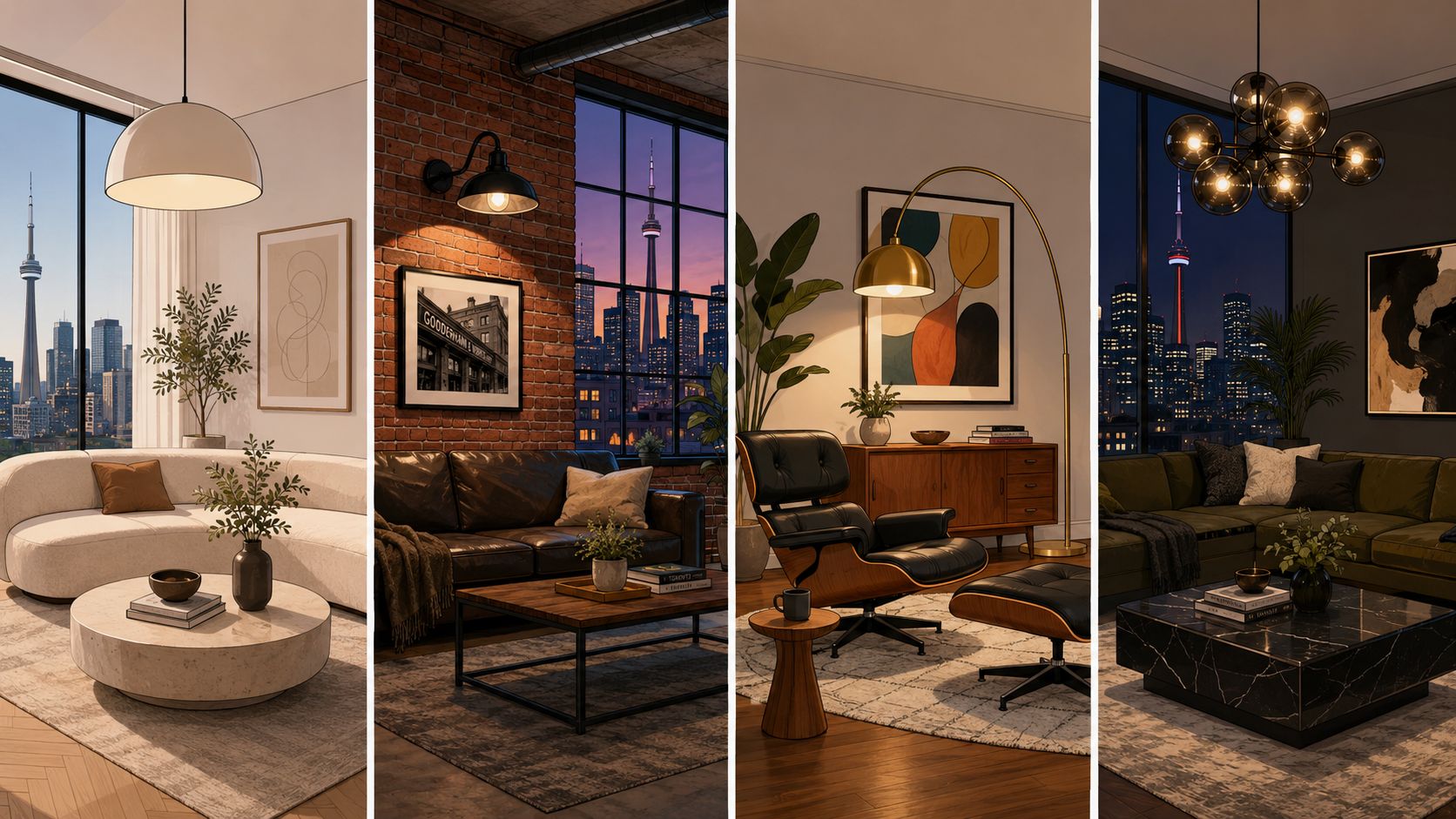
Toronto's current direction is clear. Standard Shop's Toronto lighting trend review points to smart LED lighting, modern minimalist fixtures, and eco-friendly lighting, while also noting the rise of large pendants, sculptural chandeliers, and artistic ceiling installations. That combination makes sense in an urban market. People want efficiency and clean lines, but they also want one memorable element that keeps a room from feeling anonymous.
Minimalist and architectural
Minimalist lighting is often misunderstood. It isn't plain. It's disciplined.
This style relies on crisp geometry, slim profiles, matte finishes, and an absence of visual clutter. It suits downtown condos, contemporary kitchens, and living spaces where cabinetry, art, or skyline views should take the lead. A narrow linear pendant over an island, a restrained semi-flush fixture in a hallway, or a simple globe sconce beside millwork all fall into this category.
For homeowners trying to bridge old and new, minimalist lighting also pairs well with layered interiors. That's especially true in homes leaning between classic and contemporary. A deeper explanation of that balance appears in Critelli's guide to transitional style interior design.
Mid-century and organic modern
This family of fixtures adds warmth without becoming fussy. Think softened silhouettes, opal glass, walnut or brass accents, and forms that feel human rather than mechanical. These fixtures belong in dining rooms, bedrooms, and reading corners where the goal is comfort with character.
Organic modern goes a step further. It introduces texture, hand-finished surfaces, woven elements, or shapes inspired by nature. In a Toronto home with stone, linen, oak, or plaster, that softness can be the difference between refined and cold.
For rooms where function is more exacting, especially bathrooms, style still has to work with moisture, task lighting, and mirror placement. Homeowners sorting through those details may find DLG Electrical bathroom lighting expertise useful as a practical companion to broader design decisions.
Sculptural and artisanal
Some rooms need a statement. Not everywhere. Not all at once. But one room almost always benefits from a fixture that acts as functional art.
Sculptural chandeliers, asymmetric pendants, hand-worked metal, and artisanal glass earn their place. In Toronto, these pieces work particularly well in condo dining areas, double-height entries, and principal bedrooms that need a focal point beyond the bed itself.
Practical rule: If the fixture is dramatic, the surrounding materials should become quieter and more tailored.
The best modern lighting fixtures in Toronto aren't chosen by trend label alone. They're chosen by the kind of room they're meant to complete. Minimalist for control. Mid-century for warmth. Sculptural for emphasis. Artisanal for soul.
A Curated Guide to Fixture Types and Placement
Most lighting mistakes begin with a single question. What fixture should go here? The better question is what job the fixture needs to do. A chandelier creates presence. A sconce shapes perimeter light. A lamp adds intimacy. Once the function is clear, placement becomes far easier.
Think in layers, not singles
A well-designed room rarely depends on one central ceiling fixture. That approach creates brightness, but not atmosphere. Rooms need layered light, with each source doing different work.
- Ambient light: The general illumination that lets the room function.
- Task light: Directed light for reading, cooking, grooming, or working.
- Accent light: Focused light that adds depth, highlights art, or draws attention to architectural detail.
This is why a dining room with only a chandelier can still feel unfinished, and why a living room often improves dramatically once sconces or table lamps are introduced. Homeowners considering ceiling modifications or supplementary downlighting often benefit from a technical overview such as this ultimate guide to recessed lighting, particularly before committing to placement.
Designer's Insight: The quickest way to make a room feel expensive is to stop relying on one overhead fixture. A layered scheme creates shadow, texture, and calm. It also makes furniture, rugs, and art read more clearly.
For clients assessing fixture scale and ceiling options, ceiling pendant lights often become part of the conversation because pendants can either unobtrusively complement a room or completely dominate it. The distinction is usually scale, not style.
Modern Fixture Application Guide
| Fixture Type | Primary Function | Ideal Rooms | Designer's Tip |
|---|---|---|---|
| Chandelier | Visual anchor and ambient light | Dining rooms, entries, principal bedrooms | Choose one when the room needs ceremony. Keep the surrounding furnishings edited. |
| Pendant | Focused illumination with decorative presence | Kitchen islands, breakfast areas, stair voids, bedside zones | In smaller Toronto spaces, fewer, better-scaled pendants usually look more composed than a crowded cluster. |
| Flush mount or semi-flush | General light where clearance matters | Condos, hallways, bedrooms, low-ceiling rooms | This is often the smartest choice, not the compromise, when headroom is tight. |
| Wall sconce | Accent, perimeter, and mood lighting | Hallways, bathrooms, bedrooms, living rooms | Use sconces to soften walls and reduce reliance on ceiling glare. |
| Floor lamp | Task and ambient support | Living rooms, reading corners, bedrooms | A floor lamp can solve a dark corner without opening ceilings or moving wiring. |
| Table lamp | Intimacy and layered glow | Consoles, side tables, bedside tables, study areas | Lamps are essential for evening atmosphere. They make a room feel occupied and finished. |
Two placement errors deserve a blunt warning.
First, oversized fixtures in low ceilings don't look luxurious. They look careless. Second, decorative pendants that fail to cast useful light create frustration within days, no matter how handsome they appear in a showroom.
A stronger approach is to decide what the room is lacking. Presence, softness, task performance, or visual rhythm. Then the fixture type becomes obvious.
Technical Lighting Details for Toronto Residences
A beautiful fixture that flickers, buzzes, glares, or hangs too low isn't beautiful for long. Toronto homes expose technical mistakes quickly because the housing stock is mixed. Some properties are sleek and new. Others come with old junction boxes, low ceilings, awkward room proportions, or renovation limits that don't show up in style-driven inspiration images.
What matters most in real rooms
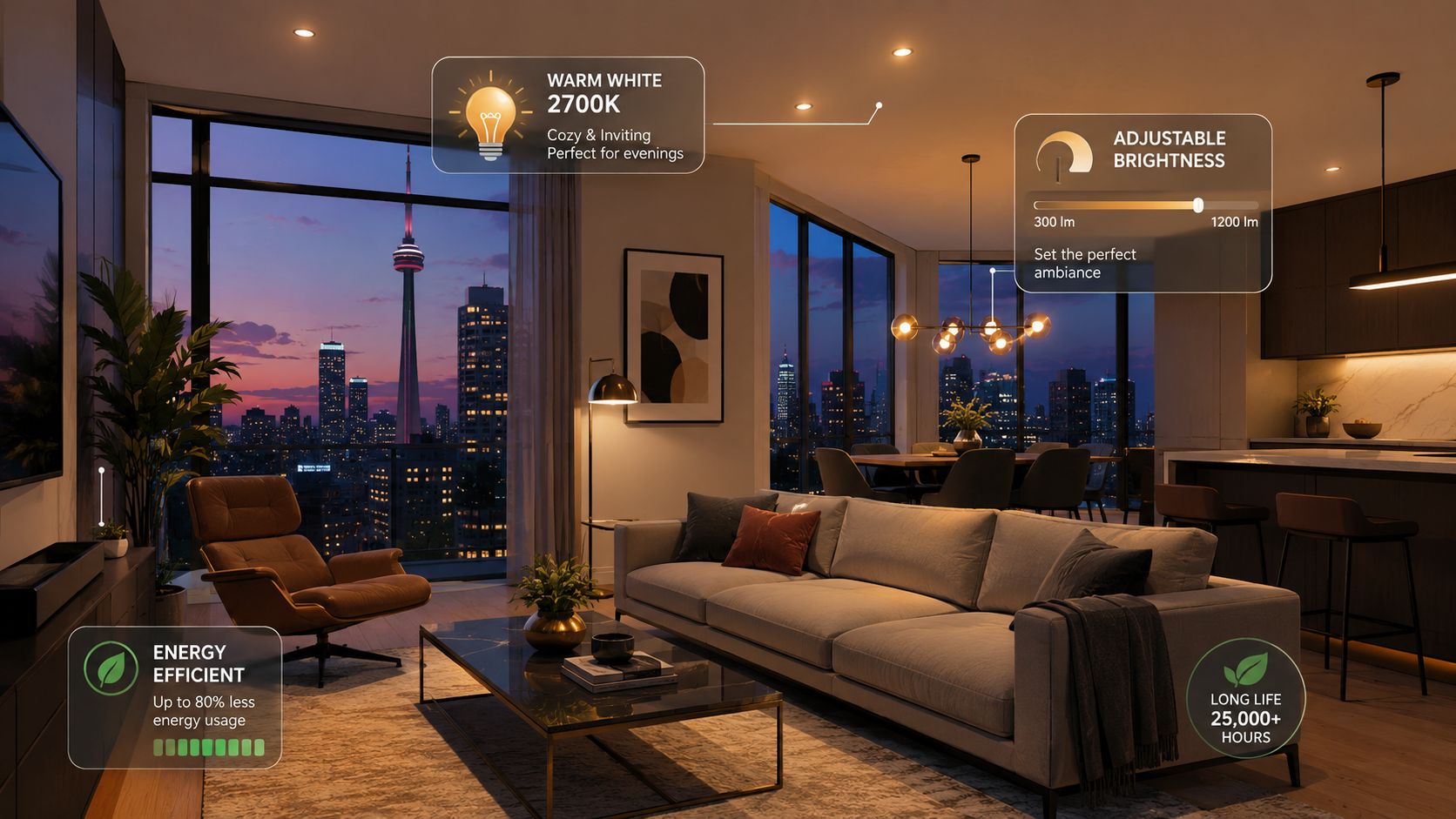
For design-led buyers in Ontario, the conversation has moved beyond appearance. Questions around high CRI, warm-dim performance, and dimmer compatibility now matter more because they determine how flattering and comfortable the room feels over time, as noted in Designlines' discussion of lighting stores in Toronto.
That shift is exactly right. Three details deserve close attention:
- Colour temperature: Warm light generally feels more inviting in living spaces and bedrooms. Cooler light can feel clinical if used carelessly.
- Colour rendering: High CRI helps fabrics, wood finishes, artwork, and skin tones appear truer and richer.
- Dimming behaviour: Not all LEDs dim gracefully. Some step, some buzz, some shift colour poorly.
A fixture with an integrated LED isn't automatically a problem. But it needs scrutiny. If the light quality is poor, the whole room suffers, especially in homes with layered textiles, painted millwork, and carefully chosen finishes.
Toronto constraints that should guide the choice
Toronto homeowners face practical constraints that most style roundups ignore. LightForm Shop's discussion of Toronto housing realities highlights the issue clearly. Statistics Canada reported that the Toronto CMA had 49.9% apartments in 2021, and many older neighbourhoods still include homes with low clearance and pre-modern electrical conditions. In practical terms, the best fixture is often the one that preserves headroom and limits retrofit complexity.
That's why flush mounts and semi-flush fixtures deserve more respect than they get. In many condos, they're the correct answer. In older homes, wall sconces and portable lighting can also reduce the need for invasive ceiling work.
A few technical points should also stay on the selection list:
- Check the junction and canopy fit: Older ceiling boxes and medallions don't always cooperate with contemporary fixture plates.
- Confirm dimmer compatibility early: This should happen before installation, not after the electrician leaves.
- Use the room's surfaces as a guide: Glossy finishes reflect glare. Deep matte finishes absorb light and may need more layering.
For clients exploring a broader range of contemporary ceiling lighting, the useful filter isn't trend or finish first. It's compatibility with the room's architecture, sightlines, and electrical reality.
Warm, even, glare-controlled light will age better than a dramatic fixture with poor performance.
Your Vision Realized The Critelli Design Studio
A lighting purchase becomes much easier once it stops being treated as a one-off object. The room already contains its own clues. The rug establishes the palette. Upholstery sets visual weight. Casegoods define lines and rhythm. Art calls for emphasis or restraint. The right fixture responds to that whole composition.
A complete room concept changes the outcome
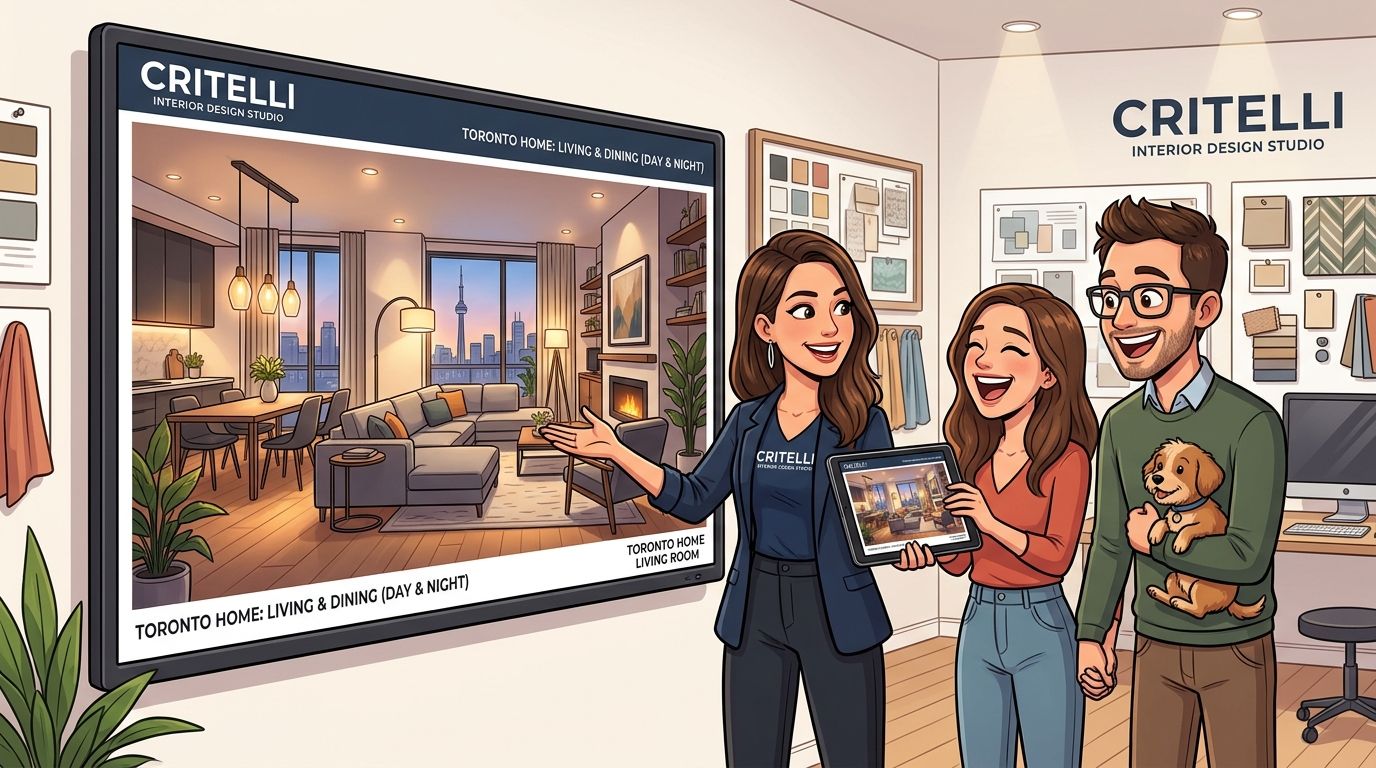
The value of a design studio approach becomes clear. Instead of selecting a pendant in isolation, the process considers proportion, architecture, material harmony, and how the room will feel both day and night. That's a sharper method for clients furnishing homes across Southern Ontario, including the Toronto market, where one project may involve condo efficiency and another may require sensitivity to a century home.
The conversation has also become more technical. Buyers aren't only asking what looks modern. They're asking whether the LED quality is flattering, whether the dimming is smooth, and whether the atmosphere will feel calm in the evening. Those are the right questions, and many retailers still don't answer them with enough care.
A useful comparison comes from adjacent design disciplines. Even outside Canada, thoughtful firms frame consultation as a way to avoid expensive missteps and clarify a home's direction before purchases begin. That logic is echoed in this piece of Houston home design advice, which underscores why professional guidance matters when many decisions need to work together.
Where rugs and lighting meet
The most composed rooms usually start from the floor and rise upward. That's why the Rug Market matters. Hand-knotted rugs act as Art for your Floor, setting tone, texture, and colour relationships that lighting should support rather than overpower.
A sculptural chandelier over a room with a densely patterned heirloom rug can be magnificent, but only if the shapes speak to one another. A minimalist fixture above a quiet wool rug can create needed tension. This is the difference between decorated and curated.
For those weighing options, Critelli Furniture offers lighting as part of a broader interior furnishing context, which is useful when the goal is a coordinated room rather than a standalone fixture purchase.
From Showroom Selection to White-Glove Installation
The final stage of a lighting decision is where many otherwise good projects lose their polish. A fixture is ordered without revisiting scale. Finish is chosen without considering surrounding hardware. Installation day arrives, and the room still feels unresolved. That isn't a design failure alone. It's often a process failure.
Choose for longevity, not impulse
Modern lighting fixtures in Toronto should be chosen with a long horizon. Trend-led novelty fades quickly. Timeless craftsmanship, clean proportions, and good light quality don't.
For homes with an exterior or architectural lighting component, municipal guidance matters as much as style. Toronto's recommendations favour downward-directed, full-cutoff fixtures and specify up to 3000K in residential and mixed-use residential areas, while also stressing reduced glare and spill light in neighbourhood settings, according to the City of Toronto's bird-effective lighting guidelines. That should shape exterior fixture selection from the start, not as an afterthought.
A sensible buying checklist is short:
- Prioritise performance: A fixture must cast light beautifully, not merely look attractive unlit.
- Respect permanence: Hardwired lighting is part of the architecture. It should age gracefully.
- Coordinate finishes: Metals, woods, textiles, and flooring need a deliberate relationship.
The final step still matters
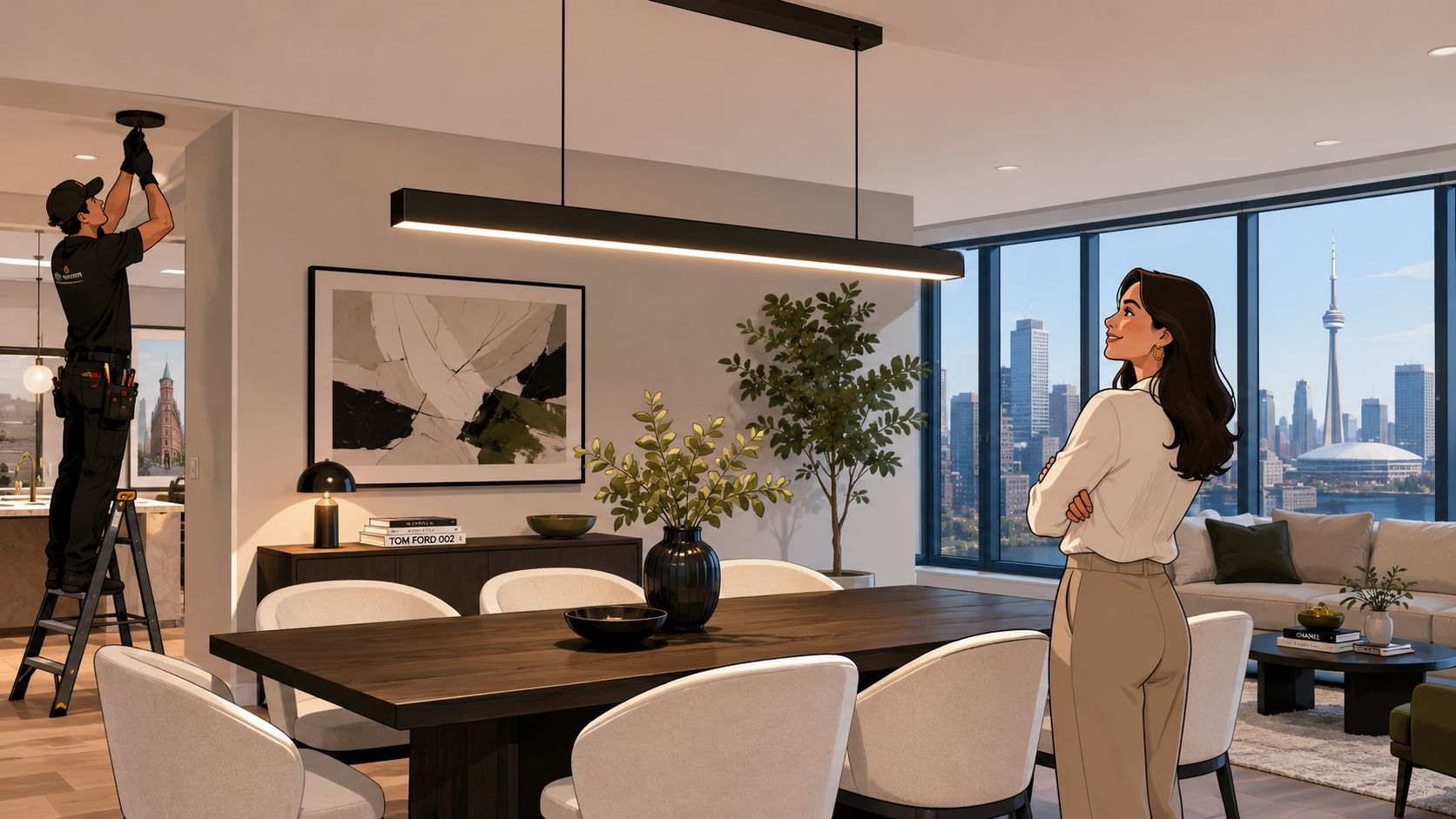
Delivery and installation support aren't glamorous topics, but they affect the experience more than generally acknowledged. A carefully selected fixture still needs proper handling, inspection, assembly, and placement within the room's broader design scheme.
That's why a White-Glove delivery service matters. It closes the gap between showroom decision and lived reality. For clients in the Greater Niagara, Hamilton, and Toronto markets, that kind of service protects the integrity of an artisanal piece and reduces the friction that often follows a major home purchase.
The most satisfying rooms don't feel assembled. They feel resolved. Lighting is central to that result. When chosen with discipline and installed with care, it gives a home its final coherence.
For homeowners seeking a more considered approach to modern lighting, Critelli Furniture offers a path grounded in heritage, complete room thinking, and smooth service across Southern Ontario. Experience the craftsmanship in person at the King Street Showroom, visit the Rug Market to find your room's foundation, or book your complimentary design consultation today.