

Outdoor Chair Ottoman: A Buyer’s Guide to Timeless Comfort

A familiar scene plays out across Southern Ontario every summer. The chair is comfortable enough, the garden is in bloom, the evening light is perfect, and yet the body never fully settles. Feet hover on the edge of the stone, knees sit at the wrong angle, and the patio still feels like a collection of pieces rather than a room.
That's where an outdoor chair ottoman proves its worth. The right one doesn't behave like an afterthought. It completes the posture, calms the composition, and turns a simple seat into a place to linger.
For households shaping a more intentional life at home, that decision is well timed. Canadian buying patterns have shifted toward home-centred leisure and greater investment in outdoor rooms, making the ottoman a well-established part of the outdoor comfort set rather than a niche extra, as noted in this Canadian outdoor living overview. That change is easy to see across the Greater Niagara, Hamilton, and Toronto markets, where patios, balconies, and covered terraces are being furnished with the same care once reserved for formal interiors.
Table of Contents
- Elevating Your Outdoor Sanctuary
- Choosing a Foundation for Lasting Quality
- Perfect Proportions for Ergonomic Comfort
- The Art of Pairing and Outdoor Styling
- Preserving Your Investment with Seasonal Care
- The Critelli Experience From Customization to Home
Elevating Your Outdoor Sanctuary
An outdoor sanctuary should feel settled, not improvised. A chair on its own can offer a place to sit, but a chair with a well-chosen ottoman offers a place to exhale. That difference matters more than most homeowners expect.
Since 1914, a family-run heritage has shaped the way furnishing decisions are approached at home. Pieces are judged by staying power, proportion, and how well they support daily living over time. That's exactly how an outdoor chair ottoman should be selected. Not as a seasonal novelty, but as part of a lasting outdoor composition.
A comfort piece that completes the room
A refined patio works the same way a refined sitting room does. Every element should support the next. The chair anchors the body, the ottoman extends comfort, the side table resolves convenience, and the surrounding materials tie everything together. Without that final layer, the arrangement often feels unfinished.
A patio becomes persuasive when it stops reading as furniture on a slab and starts reading as an outdoor room.
That's why the most successful selections begin with the full setting. Sightlines from the kitchen, the architecture of the back façade, and the circulation around planters or doors all matter. Homeowners looking for broader essential outdoor furniture pieces often realise the ottoman is the element that softens the whole arrangement and makes longer lounging possible.
Why this matters now
The shift toward more thoughtful outdoor living isn't theoretical. It shows up in how households use their homes, host guests, and prioritise comfort close to home. A curated patio now serves as morning retreat, weekend reading corner, and evening entertaining zone.
Practical planning helps. For readers shaping the larger setting around their seating, these expert tips for outdoor living design offer a useful companion perspective on layout, function, and flow.
The strongest outdoor spaces don't chase trends. They build a consistent atmosphere. A well-scaled outdoor chair ottoman belongs in that atmosphere because it adds ease, visual balance, and a stronger sense of completion.
Choosing a Foundation for Lasting Quality
Southern Ontario is unforgiving to poorly made outdoor furniture. Warm sun, damp shoulder seasons, heavy moisture, and repeated freeze-thaw conditions expose weak construction quickly. If an ottoman is going to earn its place, material quality can't be decorative language. It has to be visible in the build.
Materials that earn their place
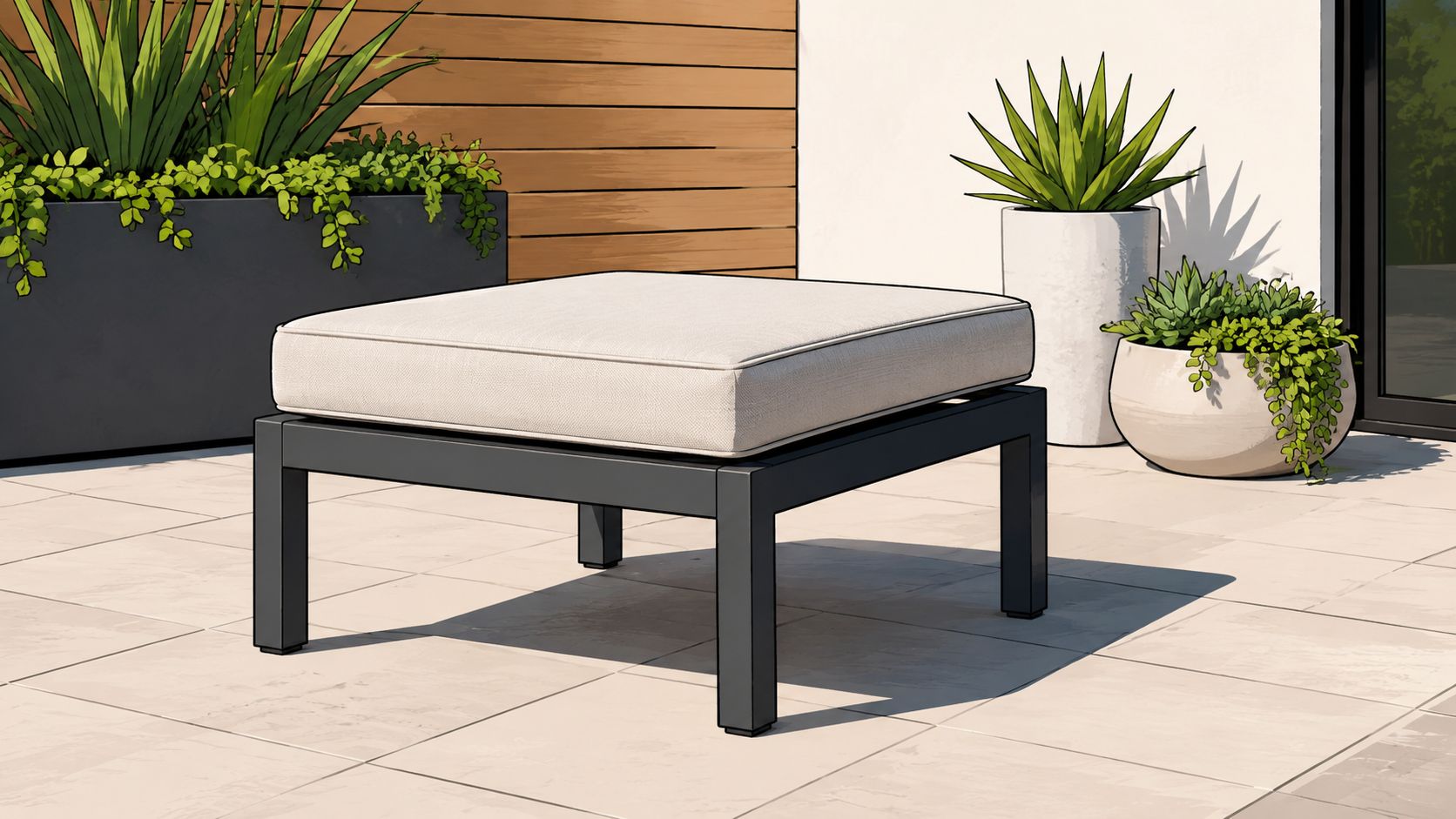
For Canadian conditions, the most dependable construction includes handwoven all-weather wicker, rust-resistant stainless steel legs, and high-strength aluminum alloy frames, a combination that helps reduce corrosion risk and structural creep in wet, freeze-thaw environments according to this outdoor chair and ottoman construction reference.
That matters because an ottoman is rarely just a footrest. People sit on it sideways while talking. Children perch on it. A tray lands on top during gatherings. It becomes a secondary load-bearing piece, which means weak frames, untreated steel, and flimsy joinery fail faster than buyers expect.
A sound hierarchy for materials looks like this:
- Powder-coated aluminum: A sensible choice for clients who want lower maintenance and a cleaner, more sleek profile.
- All-weather wicker over a strong metal frame: Useful when the design calls for texture and a softer visual presence.
- Stainless hardware: Non-negotiable. Hardware hidden inside the frame still determines how the piece ages.
- Performance cushion construction: The covering matters, but so does what sits inside it when moisture and temperature swings begin testing the seams.
What to inspect before buying
Most product pages spend too much time on silhouette and not enough on engineering. A proper inspection should be blunt and practical.
| Element | What to look for | Why it matters |
|---|---|---|
| Frame | Rigid feel with no twisting | Prevents wobble and preserves comfort |
| Hardware | Stainless or similarly rust-resistant components | Reduces corrosion in damp conditions |
| Finish | Even powder coating without thin spots | Protects exposed metal over time |
| Weave | Tight, consistent, and secure | Helps the form hold up through use |
| Cushion fit | Tailored and stable, not loose and collapsing | Keeps the piece looking composed |
Practical rule: If the ottoman feels light but unstable, it isn't refined. If it feels light and controlled, the frame has likely been designed properly.
Material decisions also affect the floor beneath the furniture. On stone or tile terraces, weight distribution and foot design matter because hard surfaces make rocking and uneven pressure more noticeable. For homeowners planning the surface as carefully as the furniture, this natural stone outdoor tiles guide is a useful reference for the larger patio envelope.
Timeless craftsmanship outdoors starts with restraint. Better materials, cleaner construction, and the discipline to ignore flashy finishes will nearly always age more gracefully than trend-driven alternatives.
Perfect Proportions for Ergonomic Comfort
Late July in Southern Ontario, the air is warm, the stone terrace is still holding heat, and you finally sit down with a drink. If your ottoman is too high, too shallow, or too far from the chair, the whole arrangement fails in minutes. Good outdoor comfort is precise.
An ottoman should follow the posture of the chair and the shape of the space around it. In a well-composed outdoor room, it supports the body, keeps circulation clear, and helps the seating area feel settled rather than scattered.
Height first, style second
Start with the chair's seat height and recline. A relaxed Adirondack-style chair needs a lower, more forgiving ottoman than a structured lounge chair with a more upright sit. Get that relationship wrong and the knees lift awkwardly, the calves lose support, and the body starts adjusting instead of resting.
One outdoor product example is listed at 15.75 inches wide, 19.75 inches deep, and 12.5 inches high with a 264 lb weight capacity in this outdoor ottoman product listing. On a compact balcony, that scale may be sensible. In a deeper lounge setting, it can read and feel undersized.
Width matters as much as height. If the ottoman is too narrow for the chair, the pairing looks temporary and the leg support feels skimpy. A fuller lounge arrangement with a broader footprint usually gives better support through the calves and hamstrings, especially during long evenings outdoors.
Use these checks before you order:
- Match the chair's angle. Deep recline calls for a lower ottoman. A more upright chair can take a slightly taller one.
- Support the full lower leg. The calves should rest naturally, without pushing the knees too high or leaving the heels searching for balance.
- Judge the footprint as part of the seating zone. The ottoman should relate to the chair's width and to the open floor around it.
- Measure the actual patio, not just the furniture. This guide to measuring furniture for your space is useful for checking clearances, door swings, and real walking paths.
Small spaces need disciplined scale
Toronto balconies, Niagara terraces, and sheltered back patios across Southern Ontario benefit from restraint. Snow storage, wet spring surfaces, and tighter urban footprints all demand cleaner planning. A bulky ottoman that looks acceptable in a showroom can crowd a narrow deck the moment planters, side tables, and winter cover storage enter the picture.
On a compact patio, a tuck-under ottoman often works better because it protects circulation and keeps the seating group visually calm.
That is how you get a true outdoor room concept. The ottoman should complete the chair, respect the architecture, and preserve enough open space for the area to feel gracious. If it interrupts movement or makes the chair look adrift, the proportions are wrong.
The Art of Pairing and Outdoor Styling
The strongest outdoor arrangements are composed the way fine interiors are composed. They rely on scale, repetition, texture, and a clear focal point. An ottoman has a larger visual role than many buyers expect, which is exactly why it deserves design attention.
Treat the patio as a room
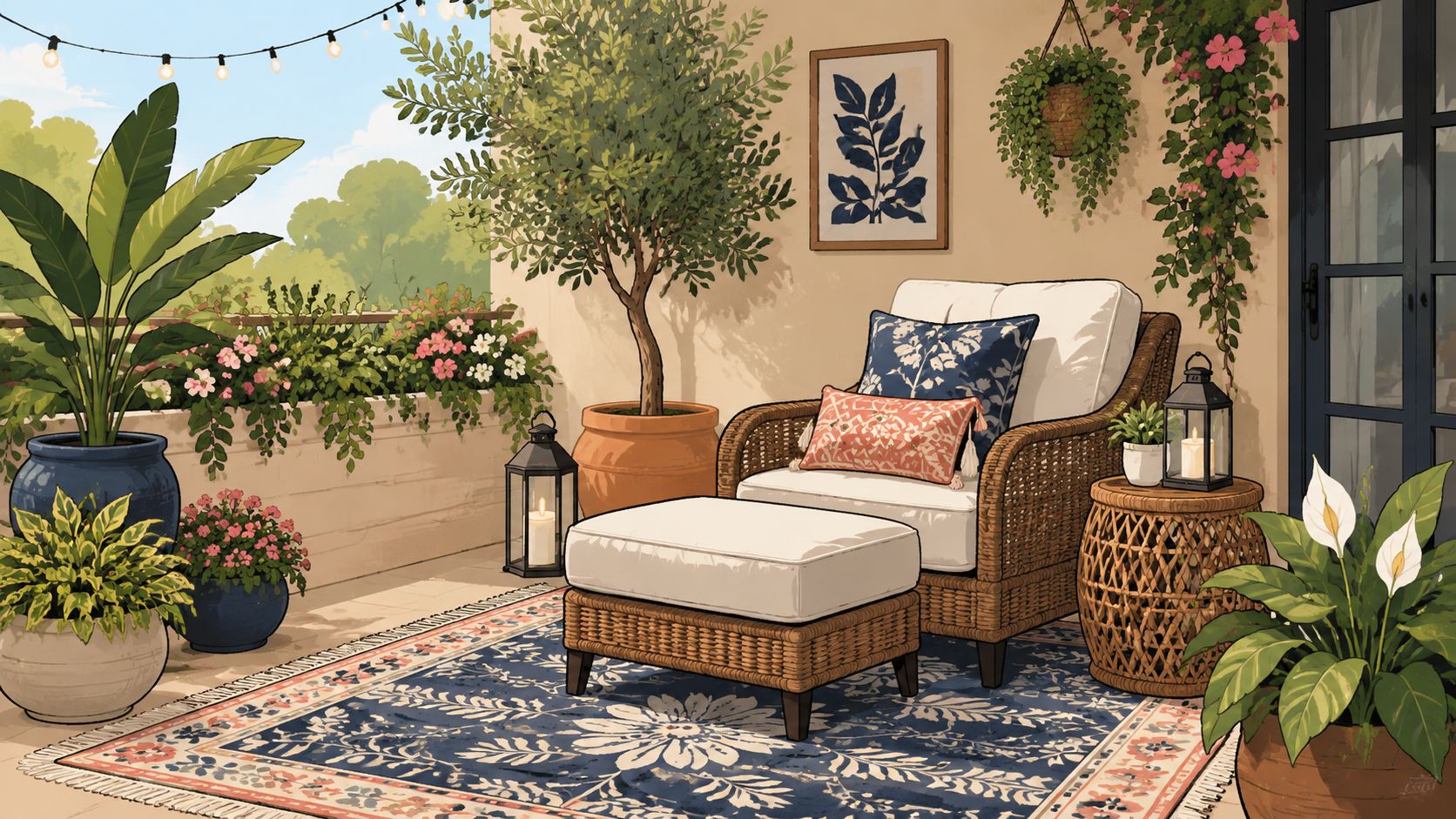
A patio shouldn't be furnished as a checklist. It should be composed as a complete room concept. That means the chair and ottoman need to relate not only to one another, but also to the flooring, planters, textiles, and nearby architecture.
For many homes, the best route is tonal consistency. A woven ottoman that echoes nearby dining chairs, or a custom-upholstered footrest that picks up the trim colour of the exterior, creates quiet cohesion. It looks settled because the eye can follow a logic.
The design studio mindset is essential. The ottoman isn't merely attached to a chair. It supports the mood of the entire zone. Indoors, that same thinking often begins from the floor up. In a well-designed interior, rugs act as Art for your Floor, establishing the room's palette and rhythm. Outdoor rooms benefit from the same discipline, whether that comes through woven texture, performance textiles, or a patterned ground layer beneath the seating.
When contrast works better than matching
Matching sets are safe, but they aren't always the most interesting. In a neutral arrangement, a contrasting ottoman can carry the personality of the whole composition. That contrast can come from weave, shape, colour temperature, or leg detail.
Designer's Insight
In a restrained seating arrangement, an ottoman is often the smartest place to introduce character. A textured weave, a deeper cushion tone, or a slightly different silhouette adds depth without disturbing the calm of the larger palette.
There's also a practical styling argument for choosing carefully. In compact outdoor spaces, the question isn't style alone. It's whether the piece justifies the floor area it occupies. Market offerings often leave buyers to sort that out on their own, even though the concern is proportional layout and whether a tuck-under or separate footrest better protects circulation clearance, as reflected in this outdoor lounge chair ottoman category view.
For readers exploring broader styling directions and formats, this collection of ottomans in Canada is helpful for comparing visual approaches.
A good pairing should accomplish three things at once:
- Complete the silhouette: The chair shouldn't look abruptly cut off.
- Add texture: Outdoor spaces need tactile variation or they fall flat.
- Support versatility: The ottoman should still read beautifully when not in active use.
The outdoor chair ottoman earns its place when it strengthens the composition even before anyone puts their feet up.
Preserving Your Investment with Seasonal Care
Outdoor furniture in Southern Ontario doesn't fail only in storms or snow. It often fails in the in-between seasons, when moisture lingers, temperatures swing, and coverings trap what they should be shedding. Seasonal care has to be deliberate.

Guidance on outdoor pieces often stops at the phrase “weather-resistant,” but that doesn't answer the Southern Ontario question. Freeze-thaw cycles, shoulder-season moisture, and winter storage conditions determine how cushions, wicker, foam, and finishes hold up, as outlined in this weatherproofing discussion for outdoor ottomans.
A practical Southern Ontario care rhythm
The best care routine is simple and repeatable.
- Spring reset: Wipe down frames, inspect hardware, and check woven sections for movement or separation.
- Summer maintenance: Keep cushions dry when possible and brush away debris before it grinds into fabric.
- Autumn preparation: Clean thoroughly before storage or covering. Dirt left in seams becomes more stubborn after months of moisture.
- Winter discipline: Don't leave cushions exposed and don't wrap furniture so tightly that trapped condensation becomes the bigger threat.
A breathable cover is usually wiser than an airtight one. The goal is protection with airflow, not plastic-like enclosure.
What winter storage should actually do
Winter storage should preserve structure, not merely hide furniture until May. Cushions belong in a dry, stable environment. Frames should be clean before being covered. If the ottoman has wood elements, seasonal care of those surfaces matters as much as the fabric and metal. This guide to protecting outdoor wood furniture is useful for households with mixed-material collections.
Some homeowners also refresh older painted outdoor pieces rather than replacing them outright. For painted surfaces that need attention, this overview of durable outdoor furniture paint offers practical direction on coatings and preparation.
Store soft goods for dryness first, convenience second. A cushion that's easy to stash but stays damp is being stored badly.
Heirloom quality outdoors doesn't come from neglect-proof design. It comes from good design paired with sensible seasonal habits.
The Critelli Experience From Customization to Home
Selecting an outdoor chair ottoman should feel like part of a larger design conversation, not a detached product search. The difference shows in the finished space. A piece chosen in isolation may function, but a piece chosen within the full context of the home usually looks calmer, fits better, and ages more gracefully.

Design support changes the outcome
That's where a design-led process has real value. In a professional studio setting, the ottoman is evaluated against the chair, the surrounding upholstery, exterior finishes, circulation needs, and the architecture of the property itself. The goal isn't merely to choose a handsome object. It's to produce a room with internal logic.
Critelli Furniture offers that through a design studio approach centred on room planning, bespoke customization, and a more complete furnishing perspective. For clients considering a custom order, this guide to getting started with custom furniture is a practical first step.
Several decisions improve dramatically when they're made in that context:
- Fabric and finish selection: Outdoor materials need to work with the home's palette, not compete with it.
- Scale management: An ottoman may be generous on paper and still feel wrong once paired with existing seating.
- Full-room coordination: Dining, lounging, lighting, and accessories should speak the same language.
- Long-term value: Bespoke choices tend to outlast impulse buys because they are grounded in the home itself.
For many households, the most overlooked part of this process is the transition from showroom to site.
Delivery should finish the room properly
White-glove delivery isn't an indulgence. It protects the investment and preserves the design intent. Outdoor furnishings can be awkward to manoeuvre through gates, around landscaping, and onto finished surfaces. Professional placement avoids preventable scuffs, misassembly, and the common mistake of settling for “close enough” once the piece arrives.
That level of care matters across the Greater Niagara, Hamilton, and Toronto markets, where homes range from compact urban terraces to larger properties with developed outdoor spaces. The final placement should respect sightlines, conversation zones, and clearance around the seating group. Packaging should disappear. The room should feel ready.
A heritage firm earns trust by staying involved through the entire process. Not just at the point of selection, but at the point where the outdoor room comes together and begins to be lived in.
The result is more than convenience. It's coherence. The ottoman fits the chair, the chair belongs to the patio, and the patio finally feels like an extension of the home rather than a seasonal afterthought.
For homeowners shaping a more refined outdoor retreat in Southern Ontario, Critelli Furniture offers a thoughtful path from selection to placement. Experience the craftsmanship in person at the King Street Showroom, book your complimentary design consultation today, or visit the Rug Market to find your room's foundation.