
U Shaped Sectional Couch: A Complete 2026 Guide

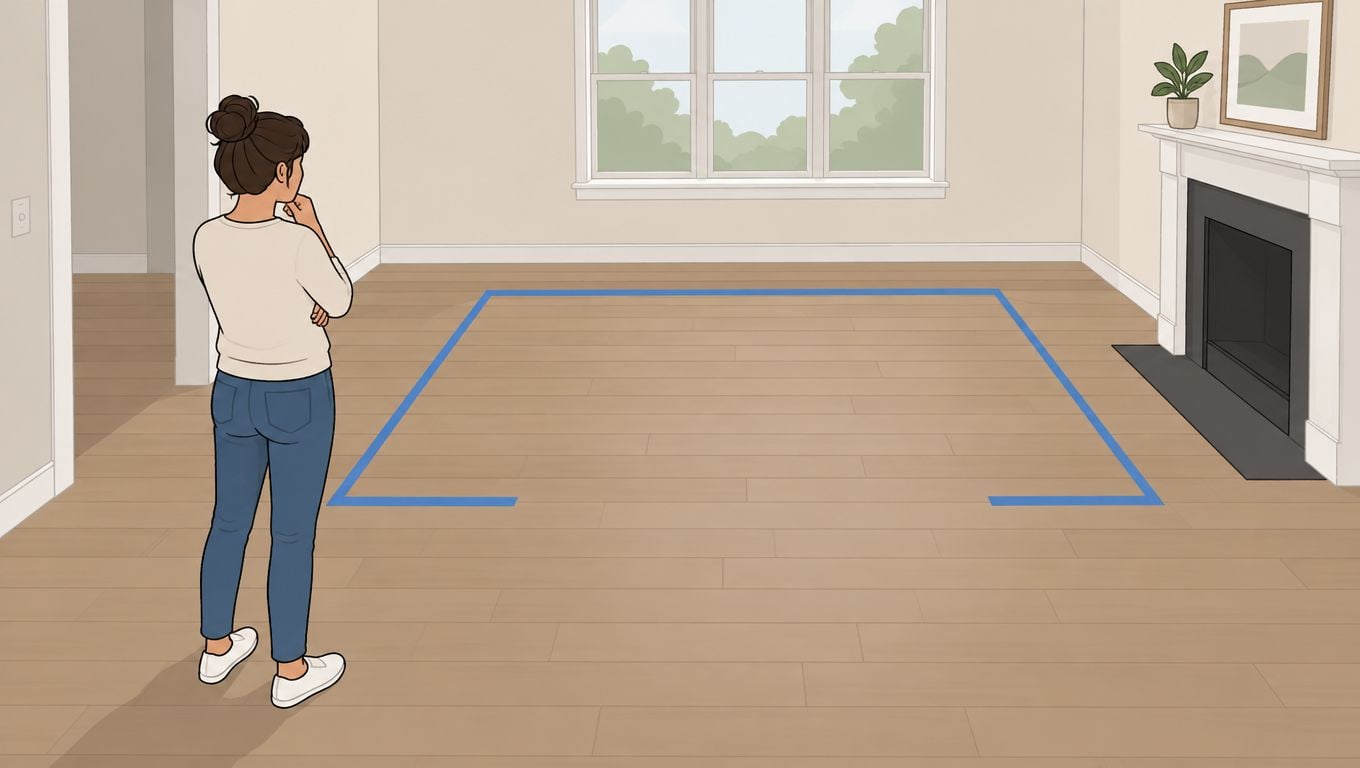
A homeowner stands in an empty living room with painter's tape marking a generous horseshoe on the floor. The outline looks promising until the path to the hallway narrows, the media unit crowds one arm, and the coffee table leaves nowhere comfortable to walk. That moment captures the central decision behind a U-shaped sectional couch. It is not just a question of how many people the sofa can seat. It's a question of whether the shape earns its footprint.
The right choice begins with the room, not the swatches. Doorways, windows, exits, rugs, side tables, upholstery, delivery access, and future flexibility all matter before an order is placed. A well-chosen sectional can become the centre of a complete room concept, with heirloom quality and timeless craftsmanship supporting the way a Southern Ontario household lives.
The Living Room Moment That Starts the Search
The taped outline usually reveals more than a showroom photograph ever can. One homeowner may discover that the open end of the U faces the kitchen and blocks the natural route between cooking and dining. Another may find that the back corner reaches a radiator, while a third realises that the sectional looks generous on paper but leaves the television too close to the seating area.
That exercise brings useful calm. The question is no longer, “Which large sofa looks impressive?” It becomes, “Which configuration lets this room function beautifully every day?”
The tape test comes before the fabric test
The outline should include the full external footprint, not only the seat cushions. Arms, corner modules, backs, reclining mechanisms, and the clearance required for reclining all change how the room feels. The central opening also needs to be marked, because it becomes part of the usable circulation and the relationship between the sofa, table, and television.
A considered plan answers practical questions early:
- Where will people enter and leave? The main route should remain clear rather than forcing household members to walk around the sectional.
- What does the room need to do? A family room, entertaining space, media room, and open-plan living area may need different levels of enclosure and flexibility.
- Can the pieces arrive? Hallway turns, stairwells, lift access, and door clearances matter as much as the finished room.
- What completes the composition? A rug, coffee table, lighting, art, and occasional tables should be considered before the sectional dominates the room.
Designer's principle: A sectional earns its size only when the room remains easy to enter, use, clean, and rearrange.
Critelli's family-run practice brings that planning mindset into a broader design conversation. The aim is a curated selection that supports the whole interior, whether the project calls for luxury furniture in Niagara, interior design services in St. Catharines, or custom furniture across Southern Ontario. The strongest purchase often begins with fewer assumptions and a more honest drawing on the floor.
What a U Shaped Sectional Couch Actually Is
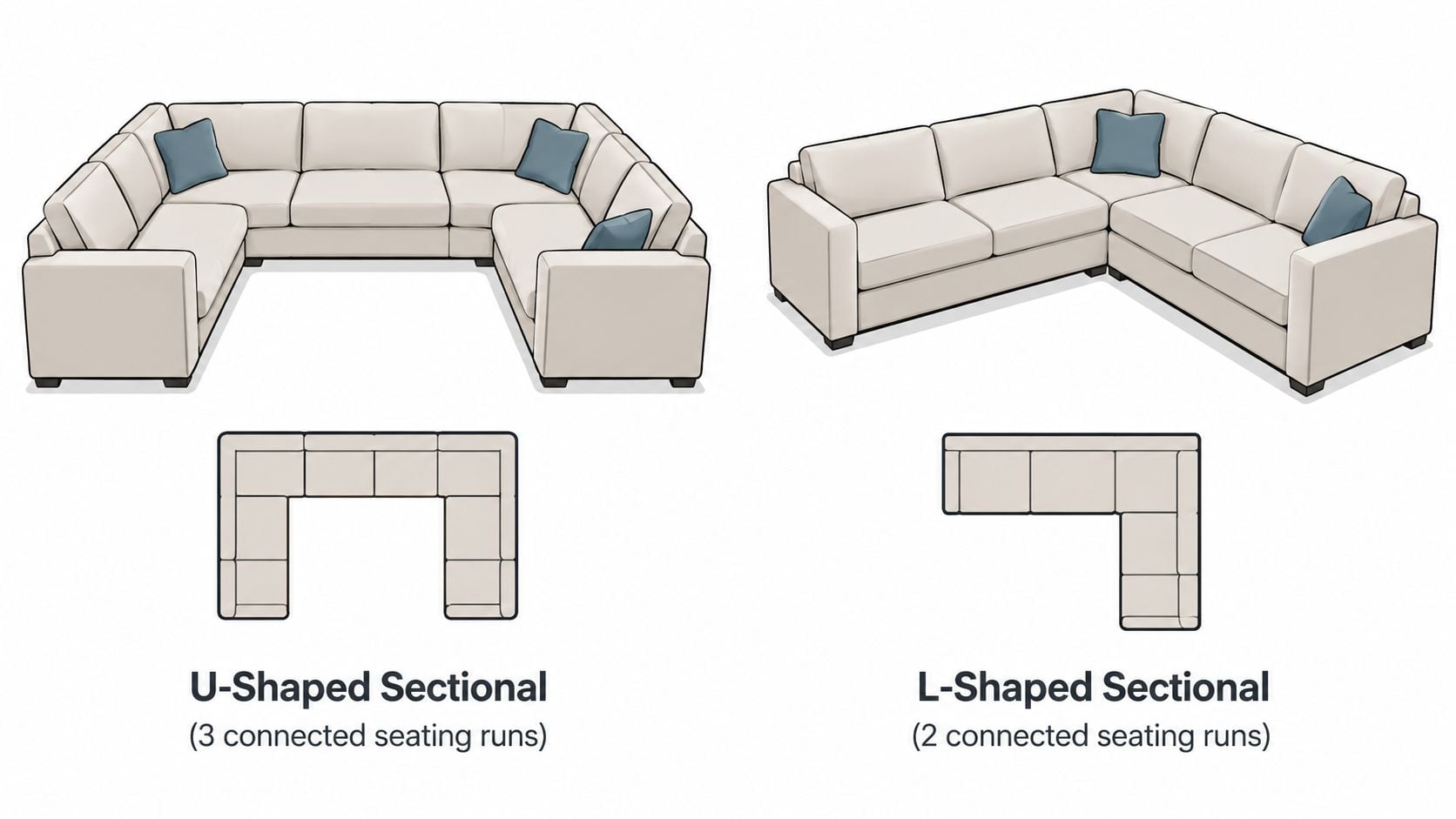
A U-shaped sectional couch has three connected seating runs that form a U or horseshoe. The two side runs turn inward from a longer back run, creating an enclosed conversation area rather than a straight sofa with one extended end.
That distinction matters because each silhouette creates a different social arrangement. An L-shaped sectional turns one corner and leaves the other side open. A chaise sectional extends one end for lounging without creating a second return. A curved sofa bends the seating line but doesn't necessarily create the defined interior opening of a U.
The conversation pit in a contemporary room
The U is best understood as a modern conversation pit. People sit along three sides and can generally see one another without turning across a long room. The configuration can establish a living zone within an open-plan interior, but it also creates stronger boundaries than a sofa paired with separate chairs.
A fixed U is built to remain in one arrangement. It can feel composed and substantial, but it offers little room to respond to a move or a changed floor plan. A modular U uses separate seats, corner pieces, and sometimes an ottoman that connect into the horseshoe. Those pieces can potentially be separated later, provided the construction and connectors support that use.
Vocabulary that prevents an expensive misunderstanding
A showroom conversation becomes much clearer when the buyer identifies the intended structure:
- True fixed U: A unified composition with a set footprint and a strong architectural presence.
- Modular U: Multiple upholstered units arranged in a U, offering more options for delivery and future layouts.
- Reclining U: A sectional with moving footrests, reclining backs, or power headrests. It needs additional operating clearance.
- Sleeper U: A configuration that includes a bed mechanism. It requires careful attention to opening space and access.
- Curved sofa with chaise: A softer outline that may look similar in photographs but doesn't create the same enclosed seating arrangement.
The phrase “U-shaped” doesn't always describe a single object. It may describe three pieces arranged together, which affects cleaning, moving, repairs, and future reconfiguration. A design-forward retailer should be able to explain exactly which components are included, how they connect, and whether additions such as consoles or built-in cup holders can be specified.
Sizing and Room Layout That Works
A sectional can fit the measurements on a product page and still make the room fail. A piece listed as nine feet wide also needs space for its wings, arms, internal opening, coffee table, circulation, door swings, and the route to the exit. Plan the whole footprint, not the headline width.
Begin with a scaled rectangle of the room. Mark windows, radiators, vents, built-in cabinetry, media units, door swings, and the route to adjacent rooms. Draw the u shaped sectional couch using its full external dimensions, then add operating clearance for reclining seats or other moving parts. In Southern Ontario homes, delivery access deserves the same attention. Measure the entry door, hall turns, stair width, and any tight landing before ordering.
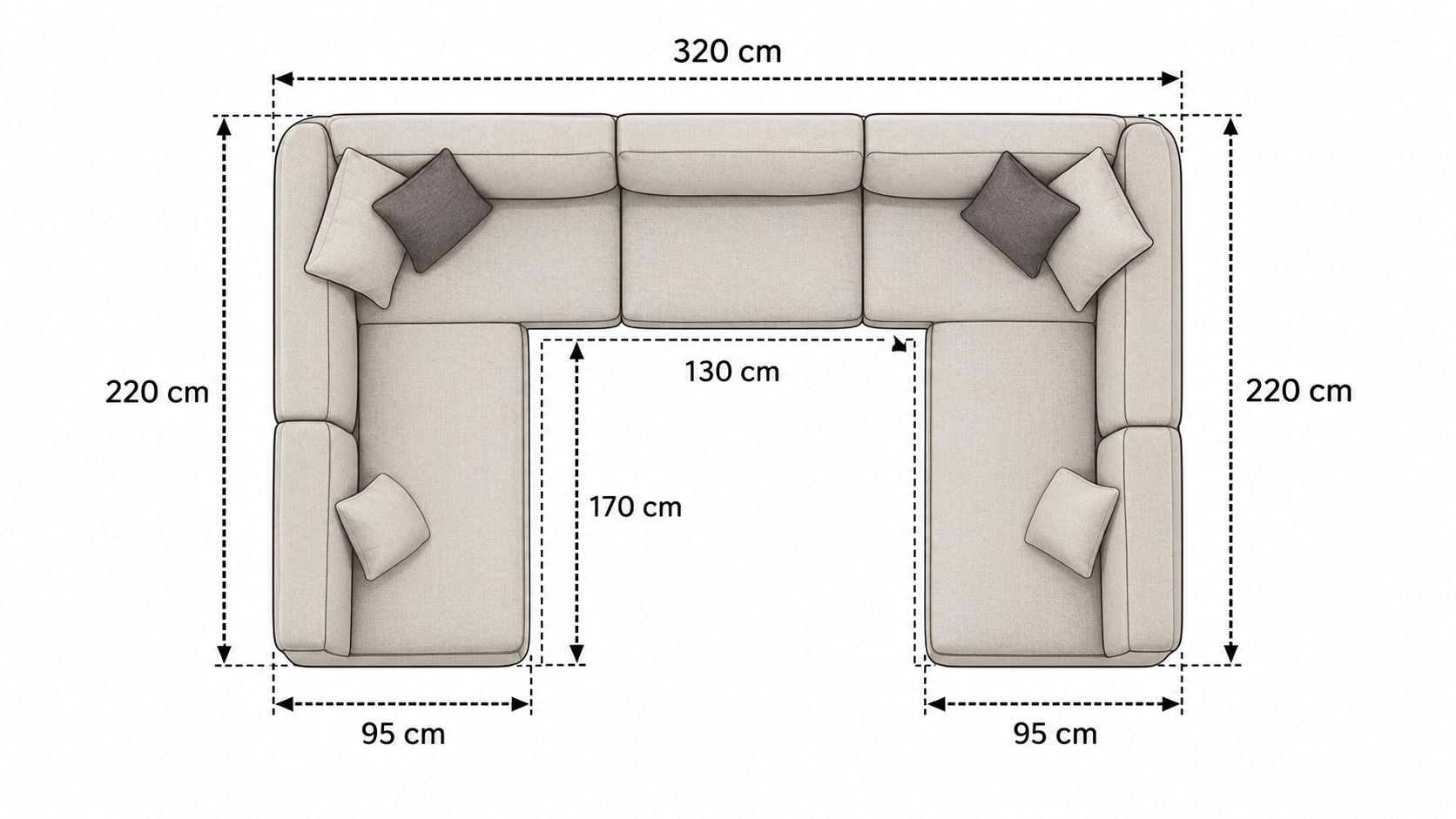
Measure the space inside the U
The central opening is working space. It must hold the coffee table or ottoman, give people access to the seats, and keep movement comfortable. A thick arm, deep corner module, or powered footrest can reduce that clearance quickly, so draw each part rather than estimating from a photograph.
Seat depth and arm height change both physical comfort and visual scale. Deep seats support lounging but push the coffee table farther into the room. High backs suit a screen-focused arrangement while limiting views across an open plan. Lower profiles preserve sightlines, though they may offer less support for some households.
Use the floor plan to answer four practical questions:
- Can a person pass behind the back corners? Keep that route open wherever it serves another part of the room.
- Does the open end create a pinch point? Check the gap between the sectional, coffee table, console, and nearby wall.
- Can every seat reach a surface? Place side tables and a proportionate coffee table so drinks do not end up on the floor.
- Does the furniture compromise the exit route? Keep a direct path from occupied seating to the room exit.
California's building-code guidance describes aisles and aisle accessways as unobstructed routes from occupied areas containing furnishings and similar equipment. It does not set residential furniture dimensions, but the planning principle applies: furniture must protect movement toward an exit. Review the California means of egress provisions when planning a sectional in a California home.
Test the room as it will be used
In an open-plan Southern Ontario home, the sectional often sits between living, dining, and kitchen zones. Its arms and back corners must support circulation across the entire arrangement, not only the seating area. Leave room for people carrying dishes, opening doors, and moving between zones.
A screen-focused room also needs a clear decision about viewing and conversation. The explanation of media room vs home theater helps clarify whether the U should face a screen, frame conversation, or serve both purposes.
For difficult rooms, use a taped footprint before purchase and book Critelli's interior design and space-planning service for a complete plan. A century-old, family-run design practice can assess the furniture route, circulation, proportions, and visual balance before the sectional earns its footprint.
Configurations Worth Comparing Side by Side
A U-shaped sectional shouldn't be selected as a single category. Four configurations can create four very different living experiences, even when their silhouettes look similar in photographs.
A fixed U suits a room that has a stable purpose and enough space to support a permanent arrangement. A modular U makes more sense for households expecting a move, a renovation, changing entertaining needs, or a future conversion to an L-shape or separate chairs. A reclining U prioritises personal comfort and viewing, while a sleeper U introduces overnight function at the cost of extra mechanism and operating space.
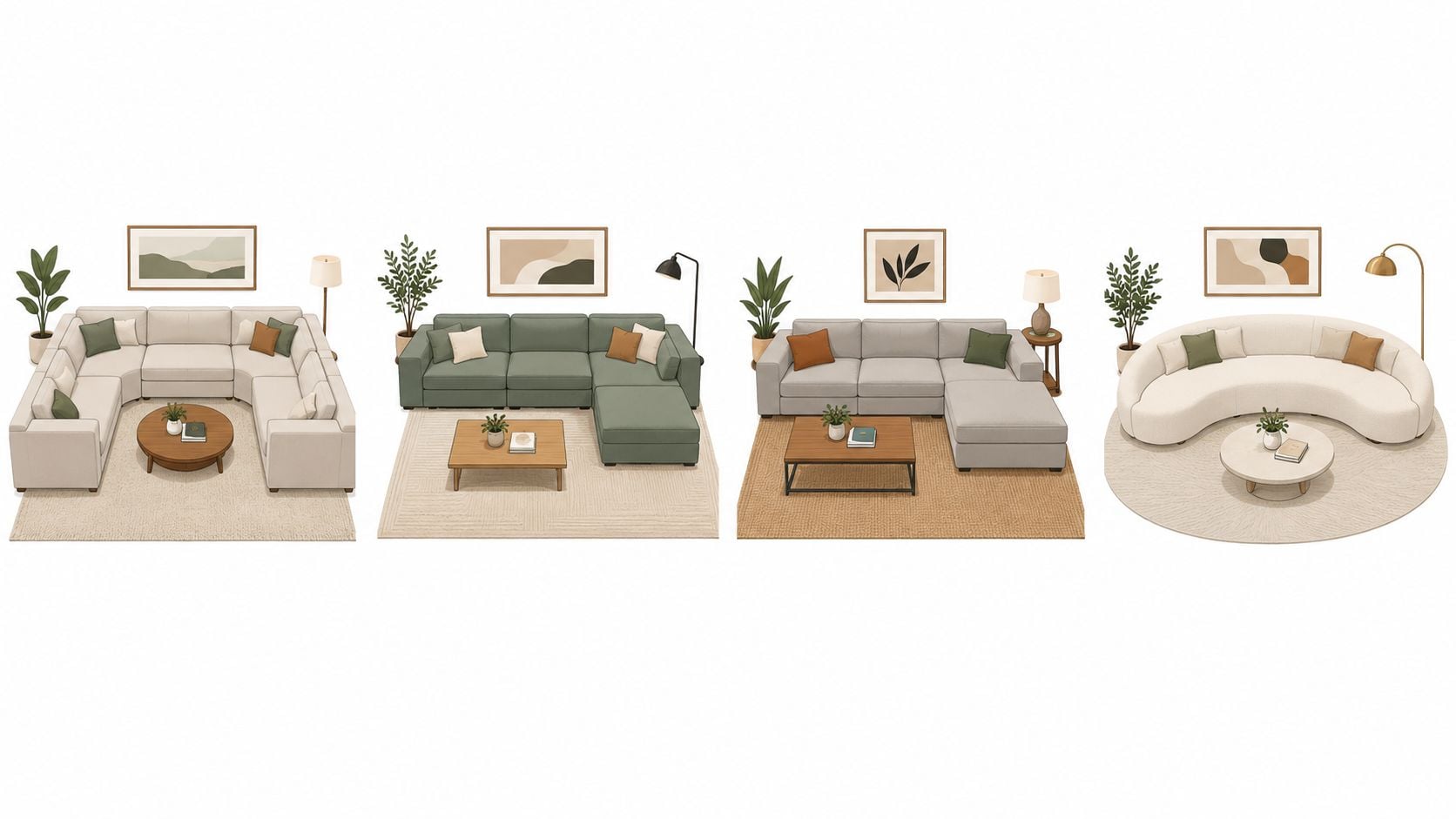
U Shaped Sectional Configurations at a Glance
| Configuration | Best Room Type | Flexibility | Maintenance |
|---|---|---|---|
| Fixed U | A dedicated family room or large living room with a stable layout | Limited, because the seating runs stay in one arrangement | Fewer joins, but access behind and beneath the full piece may be difficult |
| Modular U | An adaptable open-plan room, a home likely to change, or a difficult delivery route | Stronger, because sections can separate or form another layout | Easier access between pieces, though connectors and joins need attention |
| Reclining U | A media room where individual viewing comfort takes priority | Moderate, with added limits from mechanisms and operating clearance | Mechanisms require careful use, cleaning, and service access |
| Sleeper U | A room that must accommodate overnight guests | Moderate, but the bed mechanism needs a clear opening | More moving parts and a larger surface to maintain |
The decision should also include the coffee table or ottoman. A fixed U can make a large central table feel trapped. A modular arrangement may allow the centre to open when guests arrive. A reclining model needs the table positioned so footrests can operate without collision. A sleeper configuration needs enough room for the bed to open without blocking the principal route.
A modular sectional is not automatically superior. Connectors must hold the pieces securely, upholstery seams should align attractively, and the separated units should remain comfortable as individual seats. Buyers comparing construction and layout options can review Critelli's modular sectional sofa selection before choosing a permanent U.
The most useful showroom question is simple: “How would this arrangement behave if the room changed?” If the answer depends entirely on keeping every piece in place, the fixed silhouette should be chosen deliberately, not by default.
Style and Upholstery Choices That Age Well
Upholstery determines how the sectional feels every day and how it develops over time. The visual decision is important, but hand-feel, maintenance, light exposure, household routines, and the dryness of heated Canadian interiors deserve equal attention.
Full-grain leather offers a tactile surface that can develop patina. It suits a room where the material itself should become part of the design language, especially in a deep tobacco, warm saddle, or restrained neutral. Leather also benefits from the discipline of regular care and from keeping sharp objects, heat sources, and unsuitable cleaning products away from the surface.
Performance fabric can be a sensible choice for active households that need a softer, more forgiving upholstery option. Traditional woven fabric offers considerable colour and texture, with patterns and subtle variations that can make a large sectional feel less monolithic. Neither category replaces good construction or attentive care.
Choose the silhouette before the statement colour
A neutral sectional is often the stronger long-term decision when the architecture, flooring, or artwork already carries visual weight. A deeper colour can work beautifully when the surrounding room remains edited and a hand-knotted rug provides a considered foundation rather than competing pattern.
Hancock & Moore and Century are useful benchmarks when buyers want to compare leather craft, tailoring, seam placement, and the relationship between material and frame. The important question isn't whether a fabric is fashionable. It's whether the upholstery supports the room's intended character and the household's habits.
The guide to selecting sofa fabrics can help narrow the conversation before a showroom visit. Samples should be viewed in the room's natural and evening light, placed beside the flooring and rug, and handled rather than judged from a small screen image.
Material rule: Select upholstery for the life of the room, then select colour for the architecture around it.
A strong U-shaped sectional should feel artisanal without becoming precious. Clean lines, restrained piping, supportive cushions, and a colour that can accept future art and accessories usually age more gracefully than an oversized trend detail.
Building the Room Around the Sectional
A U-shaped sectional is never an isolated purchase. Its broad outline establishes the conversation zone, so every other element should reinforce that zone rather than fight it.
A rug usually provides the most effective starting point. Critelli's Rug Market launched in 2014 as part of the company's centennial expansion and features authentic hand-knotted silk and wool rugs sourced from recognised weaving regions worldwide, giving the phrase “Art for Your Floor” a concrete basis in its inventory, as described by the Greater Niagara Chamber of Commerce feature on the company's history.
Let the rug establish the room's scale
A large hand-knotted rug can anchor the front legs of the sectional, define the conversation area, and establish the room's colour palette. It also gives the upholstery a visual setting, preventing the sofa from appearing to float as a single heavy object on hardwood.
Rug selection should account for the U's internal opening, not only the outer arms. A pattern that disappears beneath the seats may need enough scale and contrast to remain legible in the centre. Those working through size, orientation, and furniture placement can use these area rug selection tips as a practical planning reference.
Finish the centre with restraint
The coffee table should sit comfortably within the opening without turning the middle into an obstacle course. Rounded corners can soften a strong horseshoe shape, while an upholstered ottoman offers flexible seating and a place to rest feet. Side tables should remain reachable from the end seats, especially where the sectional's arms prevent easy access to the centre.
Lighting belongs at seated eye level as well as overhead. Floor lamps, table lamps, and carefully placed wall lighting add warmth without making the sectional the only focal point. Art above the back can draw the eye upward and keep a substantial sofa from visually lowering the room.
A complete-room checklist includes:
- Foundation: A hand-knotted rug sized for the seating zone.
- Centre: A coffee table or ottoman that respects the opening.
- Reach: Side tables positioned for the outer seats.
- Atmosphere: Layered lighting that works after daylight fades.
- Vertical balance: Art or architectural detail above the sectional.
- Practical finish: A media unit, storage, and accessories that don't obstruct movement.
The guidance on rug placement with a sectional helps connect the sofa's footprint to the room's foundation. That is the difference between filling a room and composing one.
Living With a U Shaped Sectional Year After Year
A sectional looks its best when the household treats maintenance as part of ownership rather than an emergency response. Cushions should be fluffed and, where the construction allows, rotated so wear doesn't concentrate in one favourite seat. Fabric surfaces benefit from the correct upholstery attachment, while leather requires a soft approach that removes dust without abrading the finish.
Spills need prompt attention. Blotting is safer than rubbing, and household cleaners shouldn't be applied to an unfamiliar textile or leather finish without checking the care instructions. Large upholstery surfaces magnify small mistakes, so professional advice is sensible when a stain, odour, or repair exceeds routine care.
Design for access, not just arrival
The most serviceable U is often the one that can separate. Modular pieces can make deep cleaning, moving, and future room changes more manageable. They can also allow seating to shift away from exterior walls or windows when the household needs a different arrangement.
That flexibility matters during wildfire smoke events in California. A large upholstered sectional has extensive fabric, filling, and multiple cushions that can absorb smoke and make cleaning more complex. A 2025 Los Angeles Fire Health study found that indoor VOC levels remained higher than outdoor levels during later monitoring phases, likely because smoke-impacted soft materials, including fabrics and furniture, continued releasing VOCs, as reported in its Los Angeles Fire Health data brief.
Visual cleanliness doesn't prove that VOCs or smoke contamination have been removed. California Air Resources Board guidance recommends keeping exterior openings closed during wildfire conditions and notes that lower-emitting furnishings and airing new furniture outdoors as long as possible can support indoor air quality. A smoke-exposed sectional should be isolated and professionally assessed before a homeowner decides whether cleaning, reupholstery, replacement, or continued use is appropriate. HEPA filtration and activated-carbon filtration address different parts of the indoor-air problem and should be selected with professional guidance rather than treated as a guaranteed cure.
For ordinary ownership questions, the leather furniture care guide offers a useful starting point. White-glove delivery then completes the practical side of the purchase. In a St. Catharines, Greater Niagara, Hamilton, or Toronto-area home, the service should include inspection, assembly where required, precise placement, and removal of packaging. That smooth transition matters because a U-shaped sectional is difficult to manoeuvre once it is inside the room.
Why a Considered U Shaped Sectional Earns Its Place
The right U-shaped sectional is an heirloom-quality decision, not a race toward the largest seating count. It should support conversation, preserve circulation, accept a beautiful rug, and remain serviceable when the room or household changes.
Critelli Furniture was founded in 1914 by Joseph Critelli and his son Thomas. The business later established a St. Catharines location in the 1930s, moved to its permanent King Street home in 1961, and remains family-run with fourth- and fifth-generation owners, according to the company's history of Critelli Furniture. That heritage gives a major seating purchase useful context. Timeless craftsmanship is easier to recognise when the people guiding the choice understand furniture as part of a long domestic tradition.
Designer's Insight: A bold Hancock & Moore leather can bring depth and character to the U, while a neutral hand-knotted wool rug keeps the room composed and lets the leather's patina lead.
The best next step is a complimentary in-home or in-showroom consultation, with the taped footprint, door measurements, and room photographs ready for review. The design team can test the sectional against the actual architecture before fabric, configuration, and delivery details are finalised.
Critelli Furniture offers a curated selection of sectional seating, custom upholstery guidance, interior design services, hand-knotted rugs, and white-glove delivery for homes across Southern Ontario. To test a U-shaped sectional against the room's real proportions, visit Critelli Furniture and book a complimentary design consultation today.