

Chair and a Half: The Ultimate Seating Guide


A living room can feel almost complete, yet still lack the one seat that makes the space inviting. A conventional accent chair may look elegant but leave little room to curl up, while a loveseat can consume valuable floor area and impose a two-person arrangement. The chair and a half resolves that tension with a broader, more generous seat that supports reading, resting, conversation, and everyday retreat.
For Southern Ontario homeowners, this isn't merely a style decision. Width, depth, posture, upholstery, rug placement, doorway access, and delivery all determine whether the piece feels like an heirloom or an oversized obstacle. A well-chosen chair and a half belongs within a complete room concept, with the visual authority of a focal chair and the comfort of a compact lounge.
Redefining the Chair and a Half for Modern Living
A homeowner in St. Catharines may want a reading corner beside a window, but the room also needs to accommodate guests, a side table, and a clear path through the space. The usual choices create compromises. A slim accent chair serves the formal arrangement but doesn't offer a deep, cocoon-like posture. A sofa provides generous seating but can overwhelm a smaller room or make the corner feel generic.
The chair and a half occupies the more intelligent middle ground. It offers more personal space than an accent chair without committing the room to the full footprint of a sofa. One person can sit comfortably with a book, blanket, or pet, while two people can share the seat for a short conversation. That flexibility gives the piece a meaningful role in modern homes where one room often serves several purposes.
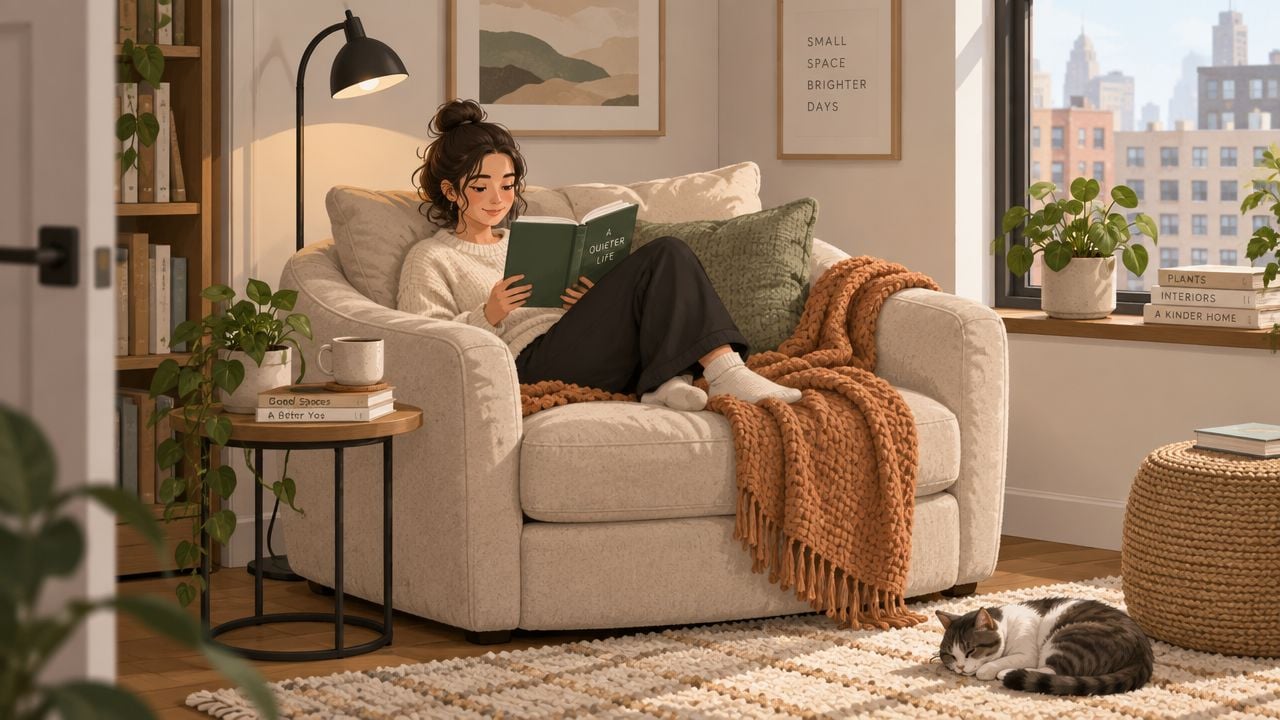
A single seat with a larger ambition
Canadian homes increasingly favour softer, comfort-first furnishings, rounded forms, earthy colour palettes, and pieces that feel relaxed rather than ceremonial. Canadian trend coverage describes a renewed interest in cocoon-like furniture, local craftsmanship, sustainable making, and adaptable rooms in its discussion of Canadian furniture styles. The chair and a half fits this sensibility naturally.
Its strength comes from flexible utility. It can define a reading nook, soften a formal sitting room, provide a nap spot in a family room, or create a pet-friendly lounge position without requiring a full sectional. That makes it especially persuasive for households that want comfort without sacrificing visual discipline.
The compromise that feels intentional
A chair and a half shouldn't look like a chair that has just been enlarged. The best examples use proportion, arm scale, cushion construction, and upholstery to create a coherent silhouette. A leather version can bring library character to a room, while a softly upholstered piece can create a more relaxed retreat.
A curated selection matters. A design-forward room gives the chair a supporting cast, including lighting, a side table, textiles, and a rug with enough presence to anchor the arrangement. The result feels deliberate, not like an extra seat placed wherever space remained.
Mastering Dimensions and Spatial Planning
The most important buying decision is not the label. It's the measurement. Canadian retail listings place many chair-and-a-half products roughly between 48 and 58 inches wide and 39 and 46 inches deep, with examples including 48 inches wide by 44 inches deep, 49 by 46, 50.5 by 40, and 58 by 39 as shown in Canadian product listings.
That range is substantial. A 48-inch-wide model may suit a reading corner that cannot accommodate a loveseat, while a 58-inch version needs to be treated as a major furnishing. Depth creates a second challenge. A 46-inch-deep chair extends 7 inches farther forward than a 39-inch-deep model, which can alter circulation and legroom in a smaller Southern Ontario living room based on the same Canadian dimension comparison.
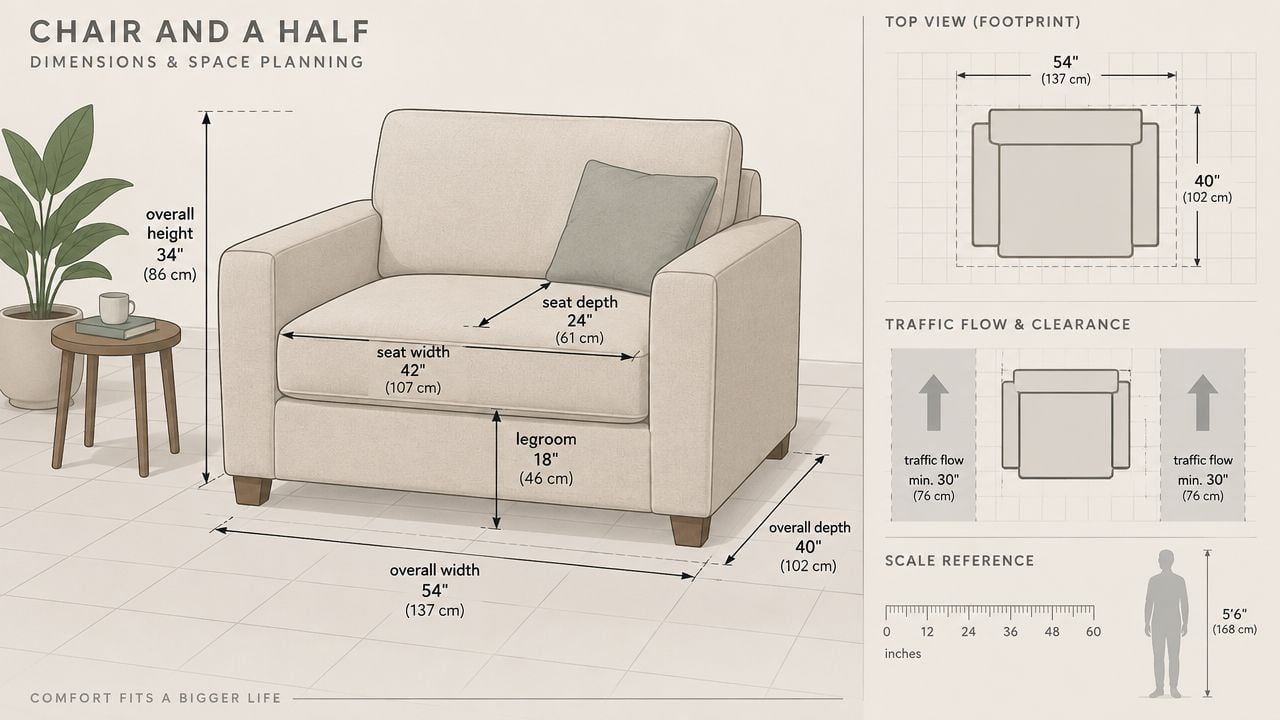
Width is not the same as usable seat space
Overall width includes the arms, and broad arms can reduce the actual sitting area. Buyers should request the inside seat width, not just the outside measurement. That distinction matters when the intended use includes two people, a large dog, or a person who prefers to sit cross-legged.
Depth also changes the chair's character. A shallower seat encourages upright reading and conversation. A deeper seat supports a relaxed, curled posture, but it can force shorter users to perch forward if the cushion doesn't support the back of the legs correctly.
Before visiting a showroom, homeowners should measure:
- The wall or zone: Record the available width, including the clearance needed for a side table or lamp.
- The forward projection: Mark the full depth on the floor with painter's tape, then walk the intended route past it.
- The usable opening: Check doorways, stair turns, lift dimensions, and tight hallways rather than measuring only the room.
- The visual balance: Note nearby windows, radiators, vents, and architectural trim that can make a large chair feel crowded.
Ergonomics should decide the final depth
Ontario ergonomics guidance from OHCOW recommends leaving a fist or at least two fingers between the front edge of the seat and the back of the knees. If that space isn't available, the seat is too deep and should be adjusted or replaced according to OHCOW's office ergonomics reference guide. The same guidance identifies seat height as equally important, since feet should rest comfortably on the floor or a footrest.
Designer's Insight: A generous chair should support relaxed living, not force the sitter into a permanent slouch. Test the seat with the back against the cushion, feet supported, and knees free from pressure.
For a practical measuring method before a showroom visit, homeowners can review this seat depth measurement guide. It helps translate a product listing into a decision based on body fit, circulation, and the room's actual proportions.
Comparing Seating Options for Your Space
A chair and a half, loveseat, and standard recliner each solve a different furnishing problem. The right choice depends on whether the room needs shared seating, a dedicated relaxation posture, or the smallest possible footprint.
| Seating Type | Typical Width | Primary Use Case | Spatial Footprint |
|---|---|---|---|
| Chair and a half | Roughly 48 to 58 inches wide | One-person lounging, reading, naps, or occasional shared seating | Wider than an accent chair, often more compact than a loveseat |
| Loveseat | Varies by design | Regular two-person seating and conversational arrangements | Requires a longer wall or broader furniture zone |
| Standard recliner | Varies by design | Dedicated individual relaxation with leg elevation | May need additional clearance behind or in front for reclining |
The chair and a half is the strongest choice when one person needs room to settle in but the room doesn't justify a sofa. A loveseat wins when two people regularly sit together and the arrangement should read as shared seating. A standard recliner is more specialised, particularly when leg elevation and a defined relaxation posture matter more than flexible placement.
Match the seat to the household
A reader who wants a window-side retreat should prioritise seat depth, arm comfort, and the ability to place a lamp nearby. A couple seeking occasional shared seating should compare inside width and cushion structure, rather than assuming every wide chair can comfortably hold two adults.
A family room may benefit from a chair and a half as the seat that breaks up a sofa-led arrangement. A formal sitting room may need a narrower profile with more upright support. Buyers who require a full leg-rest function should evaluate a recliner instead of trying to make an oversized stationary chair perform a task it wasn't designed to do.
Let posture guide the decision
The broadest seat isn't automatically the most comfortable. As the ergonomic guidance above establishes, the sitter needs proper support beneath the feet and sufficient space between the seat edge and the knees. Cushion softness, back angle, arm height, and seat height all influence whether the chair feels restorative or merely spacious.
For rooms where a chaise-like posture is desired but a full chaise would dominate the layout, a chair and a half can provide a more disciplined alternative. For households that need predictable two-person use, a carefully selected loveseat and chaise arrangement may serve the room more effectively.
Styling and Placement Strategies
A chair and a half should anchor a room, not sit apart from it. The strongest placement begins with the room's purpose. In a reading corner, the chair should face natural light or a dedicated floor lamp. In a conversation area, it should turn slightly toward the sofa rather than face the television in isolation.
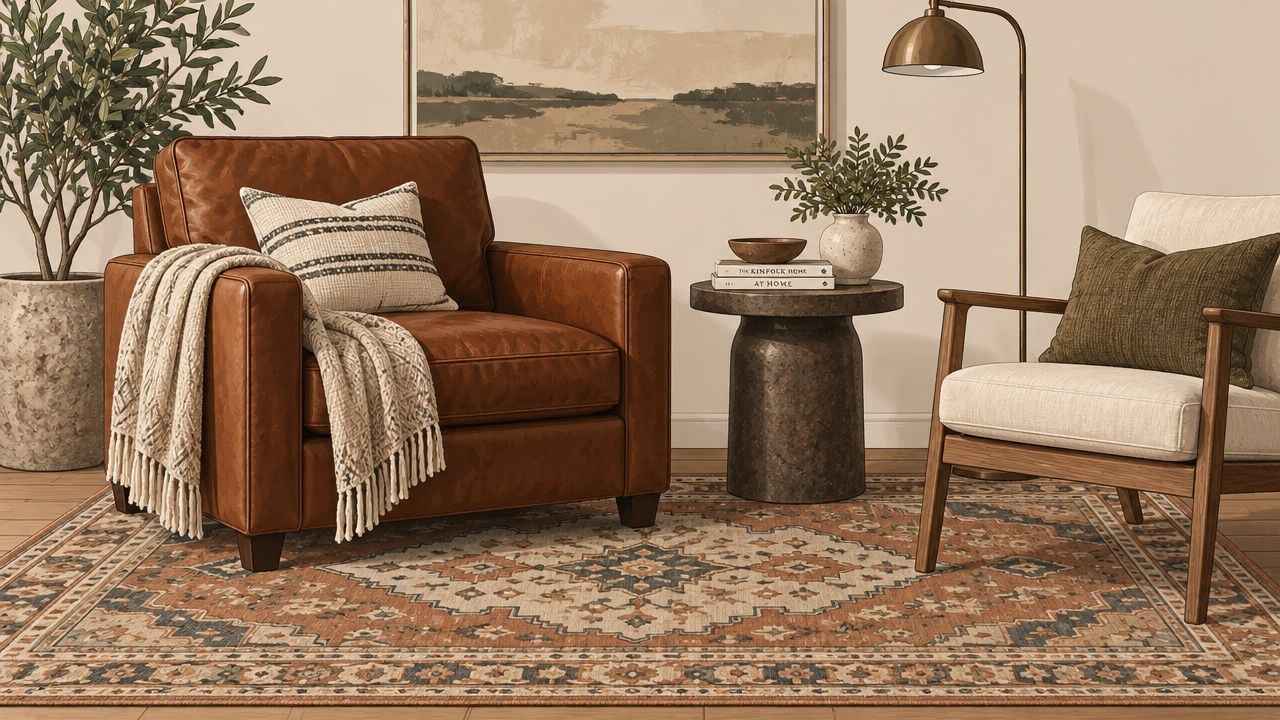
Start with the rug
The Rug Market treats rugs as “Art for Your Floor”, and that principle is particularly useful with a substantial chair. A hand-knotted rug gives the seating group a visual boundary, establishes the palette, and prevents the chair from appearing to float at the room's edge. For shoppers seeking hand-knotted rugs in Ontario, the rug should be selected as part of the furniture composition, not as an afterthought.
A chair and a half can sit fully on the rug in a compact arrangement, or its front legs can rest on the rug when the room calls for a lighter footprint. The correct choice depends on the rug's scale, the surrounding seating, and the desired degree of formality.
Build contrast with restraint
A bold Hancock & Moore leather chair can become the room's distinctive focal point when paired with a neutral hand-knotted wool rug, a softly textured throw, and a side table in warm timber. The contrast works because the leather supplies visual authority while the rug and textiles temper its formality.
An upholstered chair in an earthy tone can take the opposite role. In that case, a patterned rug, sculptural lamp, or darker wood table can give the corner enough definition. The goal is not matching every surface. It's creating a relationship between texture, colour, scale, and use.
A chair and a half needs breathing room around its arms and depth. Crowding it with accessories makes a generous piece look cumbersome.
For a broader treatment of proportions, sightlines, and paired seating, the seating arrangement ideas provide a useful planning reference. A complete room concept should also account for lighting height, table reach, artwork, and the position of other major furnishings.
Photograph the room as a finished composition
Lifestyle imagery should show the chair in a fully styled room, with the rug, lighting, tables, and neighbouring seating visible. For retailers and design professionals developing that kind of presentation, this resource on furniture image creation for sellers offers context on building more complete product visuals.
The same principle applies to homeowners. A phone photograph of the proposed corner can reveal whether the chair's arms block a window, whether the rug ends awkwardly, or whether the room needs a smaller companion table. Good styling begins with seeing the entire composition.
The Value of Bespoke Customization
Off-the-shelf sizing often forces a buyer to choose between a chair that fits the room and a chair that fits the body. The category itself shows why. Canadian listings vary from about 44.5 inches to 58 inches wide, a range that makes room planning difficult without clear information about seat width, seat depth, and access as reflected in Canadian chair-and-a-half listings.
Custom furniture in Southern Ontario addresses that mismatch directly. Made-to-order upholstery can allow the client to specify a more appropriate seat width, choose a depth that supports the intended posture, and select a fabric or leather suited to the room's architecture. It can also align the chair's scale with existing pieces, so the result feels collected rather than improvised.
Custom means more than choosing a colour
A serious specification considers the sitter and the setting together. A shorter user may need a shallower seat, while a taller user may require more depth and a different seat height. Arm width affects usable seating area, cushion density changes the sit, and the leg profile influences whether the piece reads as traditional, transitional, or contemporary.
Leather introduces another level of consideration. Grain, finish, colour, and hand feel all affect how the chair relates to wood, metal, textiles, and natural light. A client exploring custom leather upholstery should assess the leather as part of the room's full material story, not as a separate upgrade.
Heritage supports the investment
Critelli Furniture is a family-run showroom founded in 1914, with a century-old legacy of curating furnishings for Southern Ontario homes. Its collection includes heritage-minded names such as Stickley, Stressless, Hancock & Moore, and Century, alongside Canadian-made craftsmanship.
That history matters because bespoke furniture requires patient selection. The client isn't just choosing a larger chair. They're commissioning a piece whose proportions, upholstery, finish, and construction should remain convincing as the room evolves. Heirloom quality comes from this alignment of materials, making, and long-term use.
A custom chair and a half can therefore become more than a comfortable seat. It can be the piece that establishes a reading room's character, balances a family room's architecture, or gives a heritage home a modern layer without losing its sense of permanence.
Ensuring a Seamless In-Home Experience
A chair can be perfectly specified and still disappoint if the final delivery is treated as a curbside transaction. Large upholstered furniture needs careful handling from the moment it leaves the showroom until it reaches its intended position. The professional standard is white-glove delivery, with the service designed around the room rather than the front door.
Ontario delivery references commonly define white-glove service as room-of-choice placement, unpacking, assembly, and packaging removal as described in an Ontario white-glove delivery service. Another Ontario logistics provider describes room-of-choice placement, unpacking, wiping the furniture clean, and packaging removal, with assembly available upon request in its white-glove service description.
What premium delivery should include
A detailed Ontario delivery policy describes a process that includes order confirmation, an estimated delivery date by email, a delivery-time call one day before arrival, and a final call within an hour of arrival. It also specifies a two-person team, indoor carrying, unpacking, and removal or recycling of packaging in its delivery workflow.
Those details protect the design intent. The team can place the chair where the floor plan requires it, assemble components when included, inspect the upholstery, and leave the room ready for styling. That is particularly important for a deep chair that must be moved through narrow entrances or positioned precisely on a rug.
Planning the route before the purchase
The delivery route deserves the same attention as the furniture layout. Door widths, staircases, elevator access, turns, and building rules should be reviewed before the order is finalised. Retail teams and logistics planners can also consult this guide to optimizing delivery routes for broader operational context.
Critelli's white-glove service supports the transition from showroom to home across the Greater Niagara, Hamilton, and Toronto markets through professional placement and packaging removal as outlined in its white-glove furniture delivery service. The best result is more than a chair arriving safely. It's a finished corner that feels composed, comfortable, and ready to live in.
Critelli Furniture helps Southern Ontario homeowners select chair-and-a-half seating through a curated selection, custom upholstery guidance, complete room concepts, and white-glove placement. Visit Critelli Furniture to experience the craftsmanship in person at the King Street Showroom, or book a complimentary design consultation today.