
Loveseat and Chaise: Your Ultimate Comfort Guide

You’re often choosing between two very human needs that seem to compete with each other. You want a living room that invites connection, but you also want a place where one person can properly stretch out at the end of a long day. That tension is exactly where a well-chosen loveseat and chaise earns its place.
In homes across Niagara, Hamilton, and Toronto, I see this decision arise in very different settings. In a narrow heritage bungalow, the piece has to solve circulation. In a newer condo, it has to soften a boxy footprint without sacrificing floor area. In a family room, it may need to shift from conversation seating to evening lounging with no effort at all. The right configuration does that subtly. It doesn’t dominate the room. It makes the room work.
Beyond the Sofa The Allure of the Loveseat and Chaise
The appeal of a loveseat and chaise isn’t only visual. It’s behavioural. A standard sofa asks everyone to sit the same way. A loveseat paired with a chaise gives a room more range. Two people can sit close for conversation, and one person can still recline without pulling in an ottoman or improvising with extra cushions.
That flexibility is part of a much longer furniture story. The loveseat began in the late 17th century as an oversized double-chair shaped by dress and posture, then evolved into a more romantic seating form by the 19th century. By 1914, when our St. Catharines roots began, loveseats represented approximately 15% of upholstered seating imports in Southern Ontario, with many pieces sourced from UK craftsmen adapting traditional forms for local interiors, as noted in this history of the loveseat.
That heritage still matters because the piece has always sat at the intersection of practicality and intimacy. It has never been just filler furniture.
Why this form still works
A loveseat and chaise suits the way people use their homes now:
- For condensed footprints a chaise gives lounge comfort without requiring the width of a larger sectional.
- For layered rooms the smaller scale leaves more freedom for side tables, occasional chairs, and lighting.
- For design-forward spaces the extended line of the chaise introduces a sculptural shape that feels more considered than a plain two-seat sofa.
A successful seating plan should support both stillness and movement. If a room only looks good when no one is using it, the plan has failed.
In historic Niagara-on-the-Lake homes, this combination can feel refined and period-aware without becoming overly formal. In contemporary Toronto condos, it reads cleaner and lighter than many bulky sectionals. The common thread is proportion.
The homeowners who get this choice right usually stop shopping by category and start thinking in terms of lifestyle. That’s where a more complete room concept changes the conversation. If you’re weighing forms and scale, this sofa buying guide for your living room is a useful place to compare how different silhouettes live in real spaces.
The Foundation of Good Design Measuring Your Space
Most furniture mistakes happen before any fabric is chosen. They happen with a tape measure, at the front door, or at the turn in a stairwell.
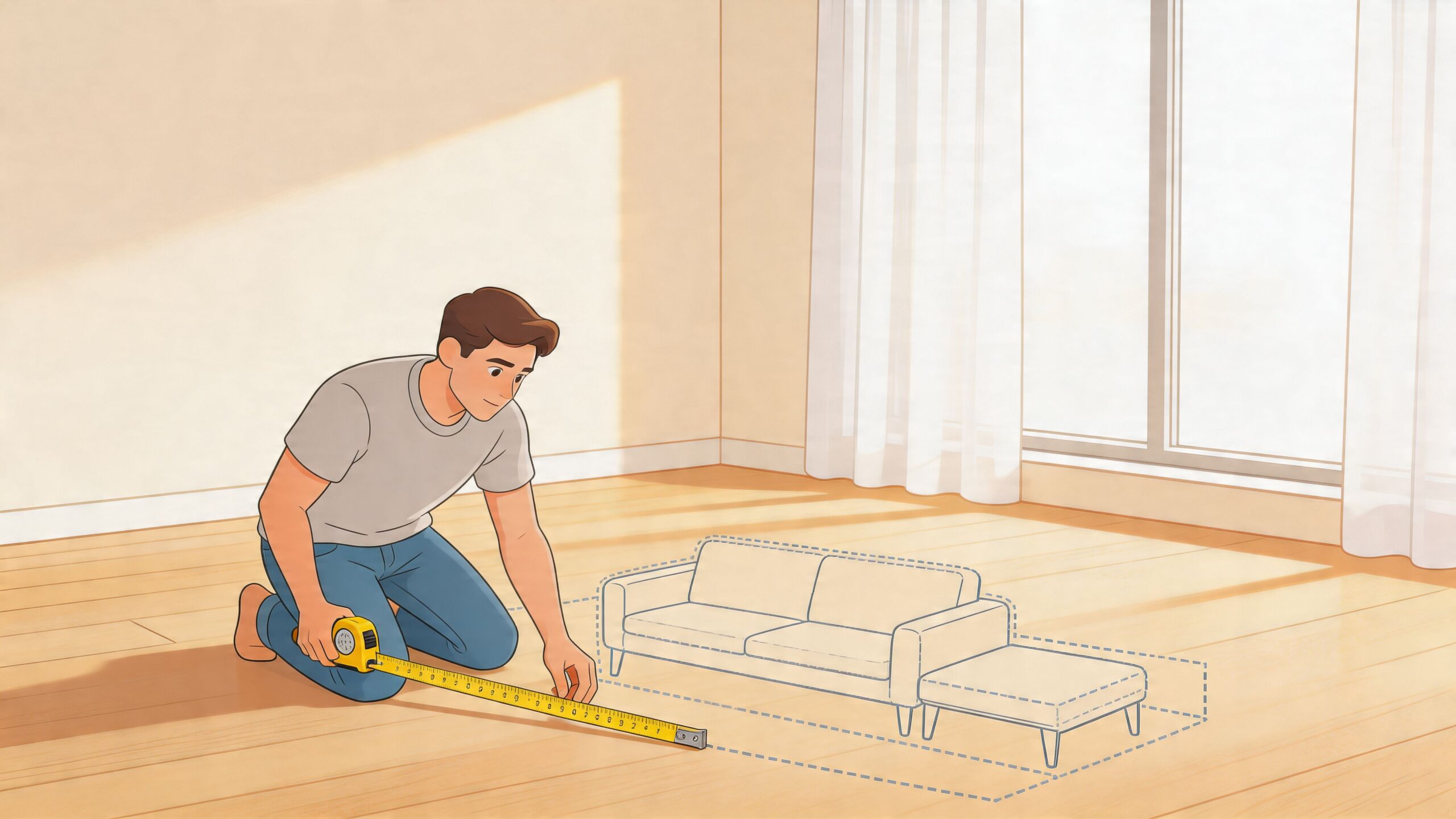
A loveseat and chaise may look modest in a showroom, but dimensions behave differently once walls, baseboards, radiators, outlets, and traffic paths enter the picture. In-home consultations using laser measurers are critical because standard loveseat widths run from 52 to 72 inches, and you should preserve 24 to 36 inches of clearance for movement around the piece. A further issue is access. Underestimating doorways accounts for a 32% return rate in the GTA, according to this guide to loveseat dimensions and fit.
Measure the room, then measure the route
Homeowners often focus on the wall where the piece will sit. Professionals measure the full journey.
Use this sequence:
- Start with the room envelope. Record wall lengths, window placement, floor vents, trim depth, and the swing of every nearby door.
- Map the traffic paths. Mark where people naturally move from entry to kitchen, hallway, or patio door.
- Check the delivery route. Measure doorways, hallway widths, stair landings, ceiling drops, and corners.
- Note fixed interruptions. Fireplace hearths, low sills, radiators, and built-ins often matter more than total square footage.
A paper floor plan helps, but painter’s tape on the floor is even better. It shows whether the chaise extension supports the room or blocks it.
Practical rule: Don’t measure only the furniture footprint. Measure the negative space around it. That breathing room is what makes the room feel calm.
Use a full-room lens
A loveseat and chaise shouldn’t be measured in isolation. It belongs to a complete room concept that includes lighting, rug scale, side tables, and sightlines. In smaller homes or condo living rooms, the seating plan works best when every adjacent element earns its place. For readers refining compact rooms, these tips for designing in small spaces are helpful because they connect furniture decisions with light and spatial balance.
A simple checklist can prevent most fit problems:
| Checkpoint | What to confirm |
|---|---|
| Width | Does the loveseat sit comfortably within the wall or floated zone? |
| Chaise side | Will left-arm or right-arm orientation support circulation? |
| Clearance | Is there enough room to walk without turning sideways? |
| Entry route | Can each component get through the home cleanly? |
If you want a more precise process before ordering, this furniture measuring resource outlines the same disciplined approach our design teams use when planning around real architecture rather than idealised floor plans.
Curating Your Layout Popular Room Configurations
Placement changes the character of a loveseat and chaise more than one might anticipate. The same piece can read like a compact sectional, a lounging corner, or an elegant room divider depending on orientation.

In Southern Ontario’s older housing stock, standard advice often falls apart because rooms aren’t as predictable as showroom vignettes. In heritage homes with narrow doorways and irregular layouts, angling a loveseat-chaise instead of pushing it flush to the wall can increase usable space by 15 to 20% in compact Niagara bungalows and address a problem reported by 62% of local homeowners who struggle with furniture fit, according to this regional chaise sofa layout guide.
The open-concept anchor
This is one of the strongest layouts for newer homes and renovated main floors. The chaise projects gently into the room and defines the living area without building a hard barrier between zones.
It works well when you need:
- A visual boundary between living and dining areas
- A softer room division than a console or shelving unit
- A seating arrangement that still feels connected to the kitchen
The mistake here is over-centering the furniture on the television and ignoring the room edge it creates. A better plan aligns the chaise with circulation first, then adjusts the media angle.
The corner retreat
A corner placement can feel obvious, but it isn’t always lazy design. In the right room, it concentrates comfort and leaves the centre of the room available for movement, occasional seating, or a larger rug field.
This layout tends to work when:
- the room has one dominant focal wall
- natural light enters from the side rather than directly behind the seating
- you want the chaise to become the preferred reading or resting spot
Designer’s Insight
Angle the chaise slightly toward natural light rather than squarely into it. You’ll gain brightness for reading without creating the hard glare that often reflects onto a television screen.
The conversation hub
A loveseat and chaise can also support a more social plan. Instead of treating it as the entire seating story, use it as one side of a balanced arrangement with a pair of chairs or a refined sofa opposite.
This approach is especially effective in larger rooms that risk feeling underfurnished. It also makes the chaise feel intentional rather than incidental.
A few material choices can reinforce that arrangement. If you’re rethinking the entire envelope of the room, including the floor surface, these ideas for stunning living room tiles offer useful visual direction for clients who prefer a cleaner architectural base under softer upholstery and rugs.
The window-side lounge
This layout suits homes with a garden view, a tree-lined street, or a bright corner that deserves more than a side chair. The chaise runs parallel to the window or turns toward it, creating a deliberate lounging zone.
What doesn’t work is forcing symmetry where the architecture doesn’t support it. Windows, fireplaces, and passageways rarely line up perfectly in older homes. Better rooms accept that and compose around it.
For homeowners refining room flow before they commit, this living room furniture arrangement guide is helpful for comparing balanced, asymmetrical, and floating layouts.
Pairing Style and Substance Choosing Fabrics and Finishes
Once the layout is settled, material selection forms the personality of the room, allowing a loveseat and chaise to move from merely functional to personal.
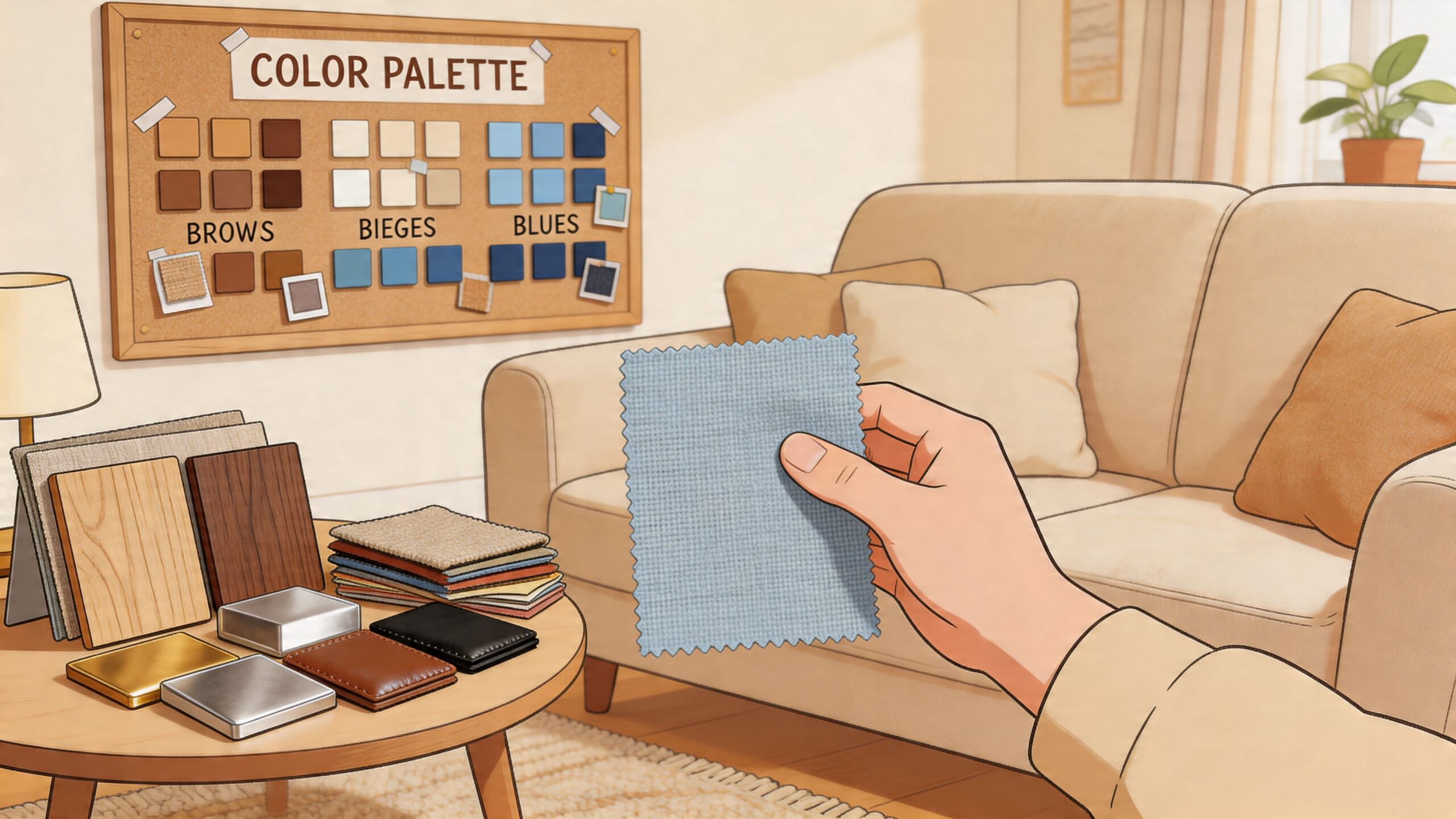
A good upholstery choice should answer three questions at once. How does it feel under the hand? How will it age? And how will it behave in your home, not in a showroom under controlled lighting?
Leather, fabric, and the room they belong to
Artisanal leather from makers such as Hancock & Moore brings gravity and patina. It’s often the right answer for clients who want depth, character, and a piece that gains presence as it wears in. Leather can also sharpen the silhouette of a loveseat and chaise, which is useful when the room needs definition.
Performance fabric asks for a different kind of respect. In busy family homes, it often makes more sense than a delicate weave because it supports daily use without looking precious. The best choices still feel refined, not utilitarian.
Here’s the trade-off in plain terms:
| Material direction | Often works best when | Main consideration |
|---|---|---|
| Leather | You want heirloom quality and visible character | Surface markings become part of the story |
| Textured fabric | You want softness and visual warmth | Texture can hold more visual weight |
| Performance fabric | You need practicality with a refined look | Not every performance textile has the same hand |
Build from the floor up
The smartest rooms rarely begin with the sofa colour. They begin with the floor plane. A hand-knotted rug acts as art for your floor and gives the room its tonal discipline. Once that foundation is set, the upholstery decision becomes easier because you’re choosing in relation to something grounded rather than selecting fabric in a vacuum.
A neutral loveseat and chaise over a richly patterned wool rug can feel layered and collected. A bolder leather over a quieter field creates a cleaner architectural effect.
Pair a saturated leather with a quieter rug when you want the seating to carry the room. Reverse that balance when the rug is the statement piece.
Climate matters more than people think
Southern Ontario asks more from upholstery than many homeowners realise. Seasonal shifts, humidity, sunlight, and heating cycles all affect how furniture ages. For that reason, material engineering matters as much as colour. Frames with polyether backrests and high-resiliency latex foam tested to 100,000 flex cycles offer more dependable long-term support, and hydrophobic treatments can reduce moisture absorption by 35%, according to this furniture construction reference on materials and durability.
That’s where bespoke selection becomes valuable. One option available to homeowners exploring custom seating in the region is Critelli Furniture’s upholstery materials guide, which helps compare textures, finishes, and practical wear characteristics across different upholstery categories.
The Ergonomics of Elegance Function and Comfort
A loveseat and chaise should look composed when no one is using it. It should feel even better when someone is living in it for hours.
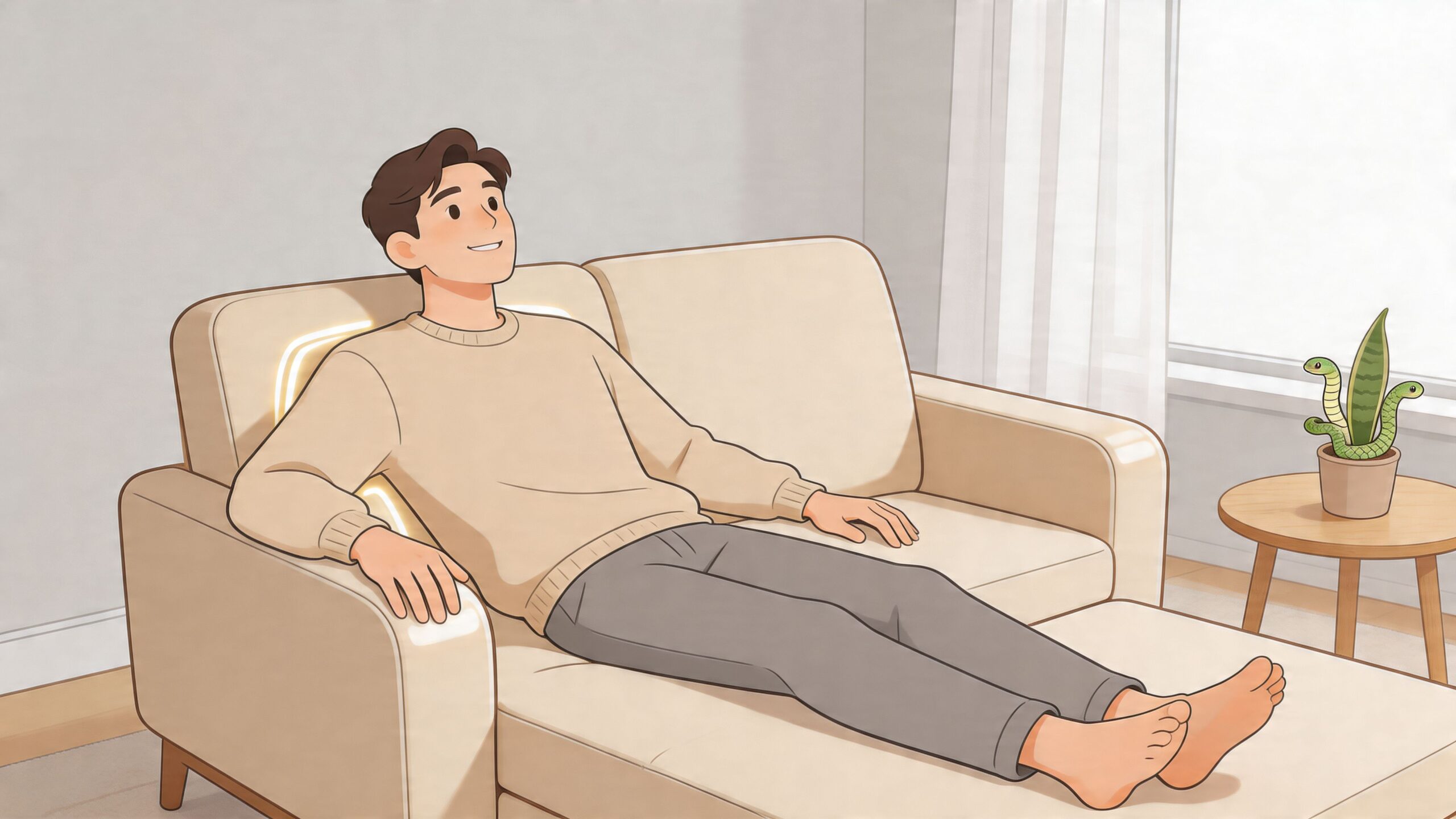
Comfort isn’t one thing. It’s the interaction of seat depth, pitch, cushion resilience, back support, and the height of the chaise relative to the rest of the frame. Many pieces feel impressive for five minutes and disappointing after an evening of reading, working, or watching a film.
Deep lounge or upright sit
The first choice is posture. Some homeowners want a more formal sit with easier entry and stronger support through the lower back. Others want a deeper seat that invites curling up sideways with a throw.
Neither is universally correct. The question is how the furniture will be used most often.
- For reading and conversation a more upright seat often feels cleaner and easier on the body.
- For long lounging a deeper chaise section can be more satisfying.
- For mixed use medium-firm support usually gives the best balance between polish and softness.
The work-from-chaise reality
Living rooms now carry more functions than they used to. In Southern Ontario, there has been a 28% rise in home office integrations, and multi-functional seating has become more relevant as a result. Custom modular loveseat-chaise configurations are particularly useful for creating floating pods in open-concept rooms, and this setup has been shown to reduce perceived clutter by 25% in typical 12 x 16 ft rooms, according to this video discussion of modular loveseat-chaise setups and home office use.
That shift explains why ergonomic brands such as Stressless resonate with so many clients. Refined support no longer belongs only in a recliner or dedicated office chair. People want that same physical ease in the main living space.
If you’re going to answer emails, read, nap, and host from the same seat, don’t choose a silhouette on looks alone. Test how the back, neck, and legs feel after time, not just on first contact.
What works and what doesn’t
What works is honest alignment between body and furniture. What doesn’t work is buying for one imagined use and living with another.
A low, dramatic profile can look beautiful but feel tiring if you prefer upright support. An oversized chaise can seem luxurious but become awkward if no one in the household lounges in that manner. The most elegant pieces aren’t those with the most dramatic lines. They’re the ones that continue to feel right after the novelty has passed.
The White-Glove Promise From Showroom to Sanctuary
A luxury furniture purchase shouldn’t end at the invoice. It should end with a room that feels finished, calm, and ready to live in.
That’s why white-glove service matters so much with a loveseat and chaise. These pieces often involve orientation decisions, modular assembly, careful placement, and close coordination with rugs, lighting, and surrounding furniture. A careless drop-off can undo weeks of thoughtful planning in minutes.
What proper delivery should include
A full-service installation is more than carrying furniture through the door. It should include:
- Careful inspection so finishes, seams, and components are checked before placement
- Professional assembly when the chaise or sectional elements arrive in separate pieces
- Precise positioning according to the room plan, not wherever there happens to be open floor
- Packaging removal so the home is left clean rather than half-finished
That level of handling matters even more in older homes around St. Catharines and the Niagara region, where tight entries, turns, and staircase conditions can complicate an otherwise straightforward delivery.
Why service is part of the design
Furniture doesn’t become part of the home when it enters the house. It becomes part of the home when it sits correctly in the room, at the right angle, in relation to the rug, the light, and the path people take through the space.
That final stage is where design intent is either protected or lost.
For homeowners who want that installation step handled professionally, this furniture assembly service overview outlines what proper setup should look like from arrival through final placement. It’s especially relevant for clients furnishing homes across the Greater Niagara, Hamilton, and Toronto markets, where layouts vary dramatically from one property type to the next.
A room with timeless craftsmanship should arrive with the same level of care it was chosen with. That’s the standard worth expecting.
If you’re considering a loveseat and chaise for your home, Critelli Furniture offers a thoughtful starting point for homeowners who want a complete room concept rather than a standalone piece. Experience the craftsmanship in person at our King Street Showroom, book your complimentary design consultation today, and visit the Rug Market to find your room’s foundation.