
Tapis Rugs & Carpets: The Art Beneath Your Feet

When you begin to design a room, where do you start? Most people think of a paint colour or a significant piece of furniture, like a sofa. But here is a secret from our century of design experience: the most impactful and timeless rooms are built from the ground up. The art beneath your feet is what truly anchors a space and sets the stage for a complete room concept.
Finding The Soul of Your Room
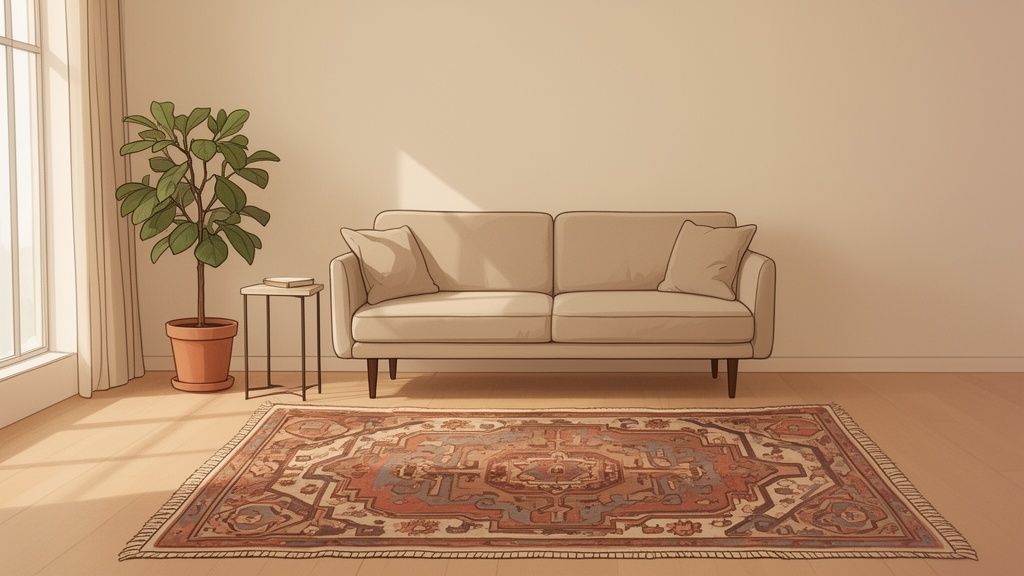
At Critelli Furniture, we don't see tapis rugs and carpets as simple accessories. We see them as the soul of a space. For the generations of homeowners we’ve worked with from Niagara to Toronto, the design process often begins right here, at our Rug Market. It's a philosophy we call "Art for your Floor," and it completely changes how you approach creating a beautiful room.
This guide is built on our family's legacy of helping clients make timeless, heirloom-quality investments in their homes, a tradition we started back in 1914. We’ll walk you through why choosing the right rug is the most important first step in creating a space that feels intentional, curated, and uniquely yours.
The Foundation of a Complete Room Concept
Think of a beautiful rug as the blueprint for your room's entire story. Its colours, patterns, and textures will guide your choices for everything that follows, from the fabric on a Stickley sofa to the wood finish on a nightstand. When you start with the rug, you ensure every piece in the room works together in harmony.
This design-forward approach helps you:
- Establish a Colour Palette: You can pull accent colours for pillows, throws, and artwork directly from the rug’s design. It’s the key to a perfectly coordinated room.
- Define the Room's Mood: A bold, geometric rug can create a dynamic, modern feel. A softly-hued, hand-knotted piece, on the other hand, lends a sense of calm, timeless craftsmanship.
- Anchor Your Furniture: A properly sized rug connects all your furniture, creating a unified and inviting seating area instead of a collection of floating pieces.
Designer’s Insight: Our designers always suggest choosing your rug before your main furniture. It is much easier to find a fabric that complements a one-of-a-kind, artisanal rug than it is to find the perfect rug to match a sofa you have already purchased. This keeps your "Art for your Floor" as the star of the show.
A Curated Experience in Southern Ontario
When you begin to see a rug as a piece of art, the selection process changes. It is no longer just a shopping trip; it becomes a creative act. You begin to consider the story, the craftsmanship, and the heritage woven into every single fibre.
To truly appreciate the feel of the different textures and see the true vibrancy of the colours—things a photograph can never fully capture—we invite you to explore our curated selection of area carpets available near the Hamilton, Ontario region.
This is the core of what we do in our Design Studio. We help you build a complete vision for your home, starting with that foundational piece of art for your floor. Let us help you find the piece that your home's story will be built upon.
The Story Woven into Every Knot
To truly appreciate a fine rug, you must understand its story. These are not just decorative pieces; they are artifacts of history and culture, woven thread by thread with incredible artisanal dedication. The journey of a hand-knotted rug is a story that spans millennia, starting as a basic necessity and evolving into a treasured symbol of prestige and art.
The history of these tapis and carpets goes back thousands of years. The very first weavings were created by nomadic peoples who needed something to insulate their tents from the cold ground, prized for simple warmth and durability. Over centuries, these practical objects became canvases for culture, with weavers embedding tribal symbols and family histories directly into their patterns.
This evolution from craft to high art found its ultimate expression in Persia. While the earliest example ever discovered—the Pazyryk Carpet, from the 5th century BC—shows a surprising level of technical skill, it was in later periods that the Persian rug truly became legendary. It grew from a cottage industry into a revered art form, sought after by royalty and collectors across the world.
From Royal Courts to Global Assets
The real turning point came during the Safavid period. When Shah Abbas established court manufactories in the early 17th century, he ushered in a new era of luxury. Workshops began creating magnificent pieces using the finest silk, sometimes even weaving with gold and silver thread. These weren't just floor coverings anymore; they were powerful statements of wealth and sophisticated taste.
This rich history is exactly why hand-knotted rugs are considered heirloom quality. When homeowners in Southern Ontario, from Niagara to the GTA, choose one of these pieces, they aren't just buying decor. They are becoming custodians of a tradition.
The incredible value of this legacy was put on full display when a mid-17th-century 'Vase Carpet' from Southeast Persia sold for a record $9.6 million at auction. It’s a stunning reminder that these pieces are both functional art and a sound financial asset. You can explore the fascinating complete history of these Persian carpets to learn more about their journey.
The Legacy in Your Living Room
When you choose a hand-knotted rug at Critelli’s Rug Market, you’re connecting with this profound heritage. Each piece tells a story—of the weaver who spent months tying every single knot, of the region that inspired its unique colours and motifs, and of the centuries of artistry that perfected the technique. This is what we mean by "Art for your Floor."
A hand-knotted rug carries the soul of its maker and the history of its culture. Unlike a machine-made item, its subtle imperfections are signs of authenticity and humanity, giving it a character and depth that cannot be replicated. It's a piece of history that warms a home.
Understanding this story completely changes your perspective. A rug is no longer just another item in a room; it becomes the room's narrative foundation. The intricate patterns and rich dyes become a source of inspiration for the entire space, guiding your choices for furniture, fabrics, and finishes.
This is the expertise our Design Studio brings to every project, ensuring your choice is not just beautiful, but deeply meaningful. The timeless craftsmanship in these artisanal pieces ensures they will last for generations, gathering memories and becoming part of your own family's story. It's an investment in beauty, history, and the art of living well.
To experience this history firsthand, we invite you to our King Street Showroom to feel the textures and see the artistry for yourself.
Understanding Your Rug’s Construction and Fibres
Choosing the perfect rug—what we call "Art for your Floor"—is about more than just selecting a beautiful pattern. To appreciate the difference between a simple floor covering and an heirloom-quality investment, it helps to understand how they’re made and what they’re made of. This knowledge provides confidence, ensuring the piece you choose fits not just your aesthetic, but your entire lifestyle.
The world of rug making is full of incredible artistry, with each technique creating a distinct texture, durability, and character. How a rug is constructed is the single biggest factor in how it will feel and how long it will last.
The Art of Hand-Knotted Rugs
A hand-knotted rug is the absolute pinnacle of timeless craftsmanship. These aren’t just manufactured; they're brought to life by skilled artisans who tie every single knot of wool or silk onto a loom's vertical threads. It's a slow, painstaking process that can take months, or even years, for just one rug.
Each knot is tied by hand, building a dense and unbelievably durable pile. This method creates a flexible, resilient textile, and you’ll notice the fringe is actually part of the rug’s core structure—not just sewn on at the end. A hand-knotted piece is a true work of art, full of tiny, human variations that prove its authenticity. This is why they’re considered heirlooms, capable of lasting for generations.
Hand-Tufted and Flatweave Constructions
Hand-tufted rugs are made very differently. A "tufting gun" is used to punch yarn through a canvas that has a design stenciled on it. This is a much faster process. After the tufting is done, a latex glue is applied to the back to hold the yarns in place, and then a final fabric backing is added for stability. They offer a plush feel and a huge variety of designs at a more accessible price, but they do not have the same longevity as their hand-knotted cousins.
Flatweave rugs, like kilims and dhurries, are completely different again—they have no pile at all. They are woven on a loom, more like a tapestry, which results in a thin, lightweight, and often reversible rug. Their sturdy construction makes them fantastic for high-traffic areas, and their geometric patterns bring a textural look that feels both modern and timeless.
Designer’s Insight: Our designers often suggest matching the rug’s construction to the room’s function. A durable, hand-knotted wool rug is a superb choice for a busy family room, as it will gracefully handle daily life. For a quieter, more formal space like a study or sitting room, the delicate lustre of a silk-blend flatweave can introduce a sophisticated, design-forward element.
To help you see the differences at a glance, here’s a quick comparison of the three main construction methods.
A Comparison of Rug Construction Methods
This table breaks down the key attributes of Hand-Knotted, Hand-Tufted, and Flatweave rugs to help you make an informed choice for your home.
| Attribute | Hand-Knotted | Hand-Tufted | Flatweave |
|---|---|---|---|
| Durability | Highest; heirloom quality | Moderate; lifespan is limited | High; very durable for traffic |
| Construction | Individual knots tied by hand | Yarn punched through a backing | Woven on a loom, no pile |
| Backing | Woven foundation is visible | Requires a glued fabric backing | Same pattern front and back |
| Fringe | Integral part of the rug | Often glued or sewn on | Can be integral or added |
| Lifespan | 50+ years, often much longer | 5-10 years | 20+ years |
| Cost | Highest investment | Most affordable | Mid-range |
Each construction method offers its own set of benefits. Your lifestyle, budget, and the specific room you're decorating will guide you to the perfect choice.
The Character of Natural Fibres
The material a rug is made from is just as important as how it’s put together. Natural fibres like wool and silk have been used for centuries and remain the superior choice for luxury rugs.
- Wool: Known for its incredible resilience and softness, wool is the go-to fibre for high-quality tapis. It has a natural lanolin coating that makes it inherently stain-resistant and durable. Wool fibres also have a natural "memory," so they bounce back from crushing—that's why wool rugs stay beautiful even in the busiest rooms of the house.
- Silk: Famous for its unbelievable softness, ability to hold fine detail, and luminous sheen. Silk is often used for accents in wool rugs or for creating exquisite, all-silk statement pieces. While it's more delicate than wool, its ability to hold vibrant dyes and its luxurious feel are second to none, making it perfect for low-traffic areas where you want to make an impact.
Think of it this way: just as you’d carefully select the right upholstery for a sofa, choosing the right fibre for your rug is a critical part of the design process. You can even explore our guide on upholstery materials to see how these principles carry over.
The way we see rugs has changed dramatically over time, evolving from a simple craft to a global commodity.
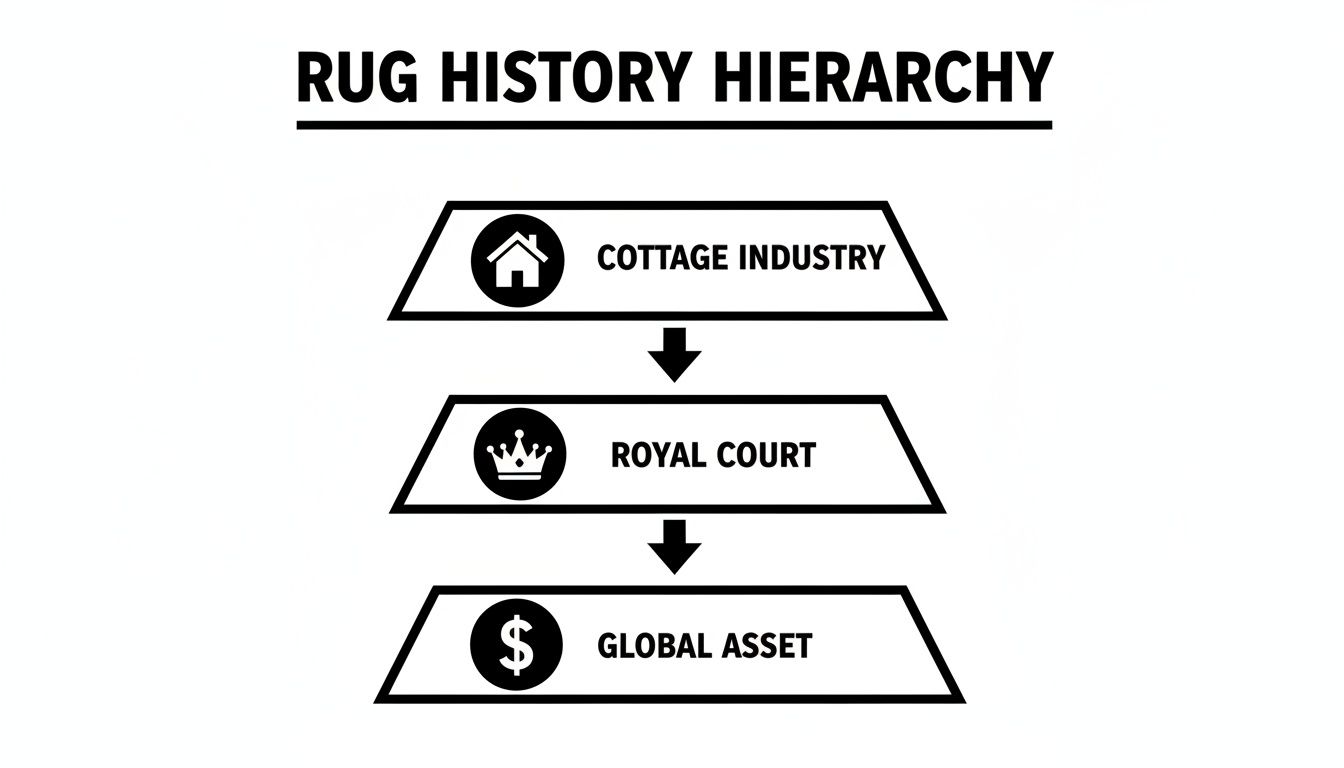
This evolution from "Cottage Industry" to "Royal Court" to "Global Asset" shows how tapis have journeyed from purely functional objects to symbols of status and valuable investments.
The Industrial Revolution completely changed carpet production, starting with the first U.S. carpet mill in 1791 and accelerating with Erastus Bigelow's power loom in 1838. The shift has been profound. In 1950, woven carpets made up 90% of the market. Today, over 90% are tufted. This huge difference really highlights the distinction between mass-produced floor coverings and the less than 2% of woven products that include the artisanal, hand-knotted pieces so prized by collectors.
A beautiful rug is art for your floor, but its real magic happens when you get the size and placement just right. Even the most stunning, hand-knotted piece can look out of place if it’s too small or positioned awkwardly. This is where a designer’s eye makes all the difference, turning a gorgeous object into the very anchor of your room.
At our Design Studio, we know that placement isn’t just a final touch—it’s the secret to creating balance and flow. Getting the scale right ensures your rug complements the room’s architecture instead of fighting against it.
The Foundational Rules for Living Rooms
The living room is the heart of the home, and the rug’s job is to pull the seating area together into a warm, inviting space. The most common mistake we see is a rug that’s too small, which leaves furniture looking like it's floating aimlessly.
There are three go-to approaches for living room placement:
- All Legs On: For a truly unified and generous feel, select a rug large enough for all your furniture legs to sit on it completely. This is a fantastic look for larger spaces, as it clearly carves out the conversational zone.
- Front Legs On: This is probably the most popular and flexible method. You simply place the front legs of your sofa and chairs onto the rug, which connects all the pieces visually while still showing off some of your beautiful flooring.
- No Legs On (Coffee Table Only): This works best in smaller rooms or if you’re featuring a particularly bold, artistic rug. The rug acts as a centrepiece, with only the coffee table placed on top.
Designer’s Insight: To achieve that polished, high-end look, you need to give your rug some breathing room. We always recommend leaving a border of about 18 inches of bare floor around the rug. This frames it perfectly, much like a mat on a piece of art, and has the added benefit of making the room feel larger.
Perfect Placement in the Dining Room
In the dining room, function and form go hand in hand. There’s one simple, non-negotiable rule: all dining chairs, even when pulled away from the table, must stay entirely on the rug.
This small detail prevents guests from catching the chair legs on the rug's edge—a snag that’s both a tripping hazard and a design faux pas. To get this right, measure your dining table and add at least 24 inches of rug on every side.
Creating a Sanctuary in the Bedroom
Your bedroom is a personal retreat, and the right rug can instantly dial up the feeling of comfort and luxury. How you place it depends on your room size and how much of that gorgeous rug pattern you want to see every day.
These are our favourite layouts for the bedroom:
- Under the Bed (Perpendicular): This is the classic approach. The rug is placed horizontally under the bed, extending out on both sides and at the foot. It gives you a wonderfully soft surface to step onto when you get out of bed.
- Two-Thirds Coverage: Here, you position the rug under the bottom two-thirds of the bed. This leaves the floor by your nightstands bare but frames the bed beautifully, allowing more of the rug's design to shine.
- Runners on Each Side: If you have a smaller room or want to show off stunning hardwood floors, placing a stylish runner on each side of the bed is an elegant choice. You get that soft landing spot without overwhelming the space.
Getting these sizing and placement details right is a huge step toward a professionally curated home. For more in-depth advice, take a look at our guide on how to arrange furniture in a living room to pull your entire design together.
Bringing Your Vision to Life with Styling and Layering
Once you’ve mastered the rules of sizing and placement, the real creativity begins. This is the styling stage—the most expressive part of the design journey, where you get to let your personality shine. Think of your new tapis rug as more than just a floor covering; it's the "Art for your Floor," the heart of your room's story.
A truly confident and curated room doesn’t just happen. It’s built around a central idea, and your rug is the perfect anchor. It has all the colour, texture, and character you need to build a complete, cohesive design from the ground up.
Building Your Palette from the Ground Up
The most beautifully designed rooms don’t pull their colours out of thin air. They pull them directly from an incredible artisanal rug. Take a close look at your hand-knotted piece. You’ll see the main colours, of course, but you'll also discover a whole family of quieter, complementary shades woven into the design. These are your cues.
- Primary Hues: The dominant colours in your rug are perfect for the big statements, like a feature wall or the rich upholstery on a substantial Hancock & Moore sofa.
- Secondary Accents: Pull out those less obvious shades for smaller furniture pieces, your drapery, or a set of accent chairs.
- Tertiary Pops: See those tiny, bright flecks of colour? Use them for decorative pillows, a cozy throw, or pieces of art. It creates a rhythm that makes the entire room feel intentional.
This approach makes every piece in the room feel connected. The result is a space that feels layered and rich, not just decorated. Keeping an eye on the top interior design trends for 2026 can also give you fresh ideas for how to apply these colours in a modern way.
Designer’s Insight: We always tell our clients to take a high-quality photo of their rug when they go shopping for accessories. It’s a simple trick that ensures a perfect match, helping you connect the deep burgundy in a Stickley leather chair to the softest ivory in a silk-blend throw. It’s how you create a seamless visual story.
The Art of Layering for Texture and Definition
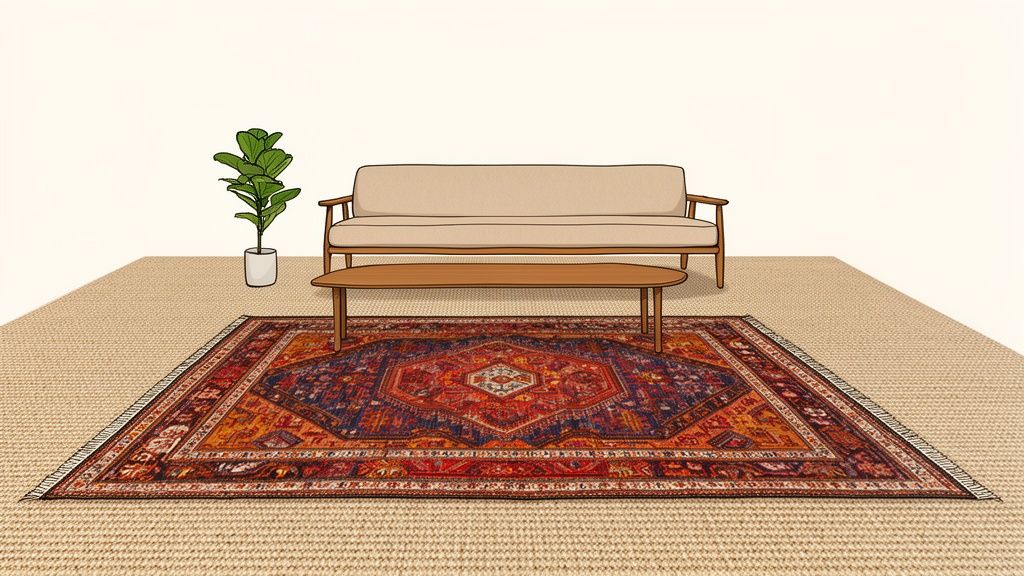
Layering rugs is one of our favourite styling secrets. It’s a technique that adds incredible depth and texture, making a room feel both luxurious and genuinely lived-in. The trick is to create a deliberate and pleasing contrast between the base and top layers.
For instance, start with a large, neutral rug made of a natural fibre like jute or sisal. This will ground the entire seating area and define the space. Then, place a smaller, more vibrant and patterned artisanal rug right on top. This second rug becomes the focal point, anchoring a coffee table or a specific conversation area.
This is an especially powerful technique for the open-concept homes we see so often across the Niagara region and the GTA. Layering helps you create distinct "zones" without putting up walls. It’s a bespoke move that feels confident and design-forward, showing a real understanding of how to play with texture and form. For more on this, our guide on how to work with patterns in your room's design has some fantastic complementary tips.
The end result is a room that feels complete and thoughtfully put together. From the colour story to the layered textures, your rug truly becomes the heart of your home—proving that great style always starts from the ground up.
The Critelli Advantage: A Seamless Design Experience
Choosing the perfect rug is a major decision, but it's really just the first step in creating a space that feels like home. At Critelli, we believe the entire process—from your first spark of inspiration to the final placement of your furniture—should be a seamless and genuinely enjoyable experience.
This commitment is built on more than a century of trust, a family legacy that began right here in 1914. When you walk into our St. Catharines furniture store, you’re not just another customer. You're our guest, and we’re dedicated to helping you bring your vision to life.
The Rug Market: Where Your Vision Begins
Think of our Rug Market as the starting point—where we feature incredible pieces we call "Art for your Floor." Our curated selection features artisanal, heirloom-quality rugs that are beautiful enough to serve as the foundation for an entire room's design.
Here, you can feel the deep history of rug making. This is an ancient art, stretching back thousands of years. The oldest known example, the Pazyryk Carpet from around 500 BC, has a knot density that’s impressive even today. This rich history, from simple woven reeds to the intricate masterpieces perfected by Persian weavers, represents the culture and story you are bringing into your home. Each piece tells a timeless story, and you can learn more about the fascinating history of rugs and carpets here.
Guidance from Our Design Studio
Once you've found that perfect foundational piece, our Design Studio team is ready to step in. We offer complimentary consultations to help build a complete room concept around your chosen rug. Whether you’re in Niagara, Hamilton, or the surrounding areas, we can even provide in-home consultations to make sure every element works in perfect harmony with your space.
Our designers help you with:
- Building a Cohesive Palette: We pull colours and textures directly from your rug to guide selections for furniture, whether it’s a classic piece from Stickley or a comfortable recliner from Stressless.
- Developing a Complete Room: We see the bigger picture, helping you envision how a bespoke sofa or custom dining set will complete the room’s narrative.
- Ensuring Perfect Balance: Our expertise ensures your final space feels intentional, pulled-together, and deeply personal.
Designer’s Insight: The most successful rooms begin with a clear point of view. When you start with the rug, you establish an anchor for the whole design. This makes all the other decisions—for fabrics, finishes, and furniture—feel intuitive and effortless. It’s a design-forward approach that is the heart of what we do.
White-Glove Delivery to Your Doorstep
The experience culminates with our signature White-Glove Delivery. This is the final, essential step where we bring our showroom-level care directly into your home. Our professional team doesn’t just drop off boxes; they place your new rug and furnishings exactly according to our design plan, ensuring the transition from our showroom to your home is absolutely flawless.
This complete, end-to-end service is what truly sets Critelli apart. We invite you to book your complimentary design consultation today and experience the difference over a century of care can make.
Your Rug Questions Answered
Choosing a high-quality rug is a major decision, and it’s only natural to have a few questions. As curators of fine home furnishings for over a century, we've guided countless homeowners through this exact process. Here are some of the most common questions we hear in our King Street Showroom.
What Is the Difference Between a Persian and an Oriental Rug?
While people often use these terms interchangeably, they actually have very specific meanings. "Oriental rug" is a wide-ranging term for any hand-knotted rug made anywhere in Asia. A "Persian rug," on the other hand, comes specifically from modern-day Iran.
So, while every Persian rug is an Oriental rug, not all Oriental rugs are Persian. Our specialists at Critelli’s Rug Market can walk you through the rich history and distinct motifs of each origin, helping you find a piece of artisanal history that truly speaks to you.
Is a Hand-Knotted Rug Worth the Investment?
Without a doubt. A hand-knotted rug is the very definition of "Art for your Floor." Each one is a unique work of art, a testament to timeless craftsmanship that can take months—or even years—to create.
Unlike their machine-made counterparts, these heirloom-quality pieces often appreciate in value and possess a durability that can last for generations. It’s an investment in beauty and heritage that becomes the very soul of a room—a core philosophy behind our Design Studio services.
How Do I Care for My Hand-Knotted Wool Rug?
A quality hand-knotted wool rug is surprisingly resilient. The most important thing is regular vacuuming, but always make sure the beater bar is turned off. If a spill happens, blot it immediately with a clean, dry cloth. Never rub, as that will only push the liquid deeper into the fibres.
We also recommend a professional cleaning every 3-5 years to keep its colours vibrant. For homes with kids or pets, choosing the perfect pet-friendly rug can offer some fantastic additional advice. With the right care, your rug is something you can pass down through your family.
At Critelli Furniture, we believe a fine rug is the soul of a well-designed home. Visit the Rug Market to find your room's foundation.