

Best Mattresses for Side Sleepers a Curated Guide 2026


A side sleeper usually knows the problem before knowing the cause. The shoulder feels pinched by morning. One hip aches before the first cup of coffee. Sometimes the body shifts all night, searching for a position that should feel natural but never quite does.
That discomfort often comes from using a mattress built for no one in particular. Side sleeping asks more from a mattress than a simple soft-or-firm label can answer. It needs cushioning in very specific places and support that remains steady beneath them. For many homeowners, that choice also sits inside a larger question. How should the bedroom feel, function, and restore at the end of a long day?
Table of Contents
- A Curated Approach to Restful Sleep
- The Science of Side Sleeper Comfort
- Matching Firmness and Materials to Your Body
- The Art of Testing a New Mattress
- Designing a Complete Sleep Sanctuary
- The Final Details and Our White-Glove Promise
A Curated Approach to Restful Sleep
Why side sleeping deserves special attention
The search for the best mattresses for side sleepers often begins after weeks, sometimes months, of interrupted rest. A homeowner replaces pillows, adjusts the thermostat, or blames stress, yet the true issue remains under the sheets. A mattress that feels acceptable for a few minutes can still create too much pressure at the shoulder and hip over the course of a full night.
That's one reason side-sleeper guidance matters so much in Canada. According to a summary citing research published in Sleep Health, 54% of adults in Canada usually sleep on their side, making it the most common sleep position in the country. This is not a niche problem. It is the dominant comfort question in many bedrooms across Southern Ontario.
For a family-run business with roots going back to 1914, that kind of pattern isn't just a statistic. It reflects what generations of clients have brought into the showroom. They aren't asking for a mattress in the abstract. They're asking for relief, better alignment, and a bedroom that supports the way they live.
A mattress should meet the body where it rests most heavily, not force the body to adapt night after night.
A bedroom should support the whole routine of rest
Good sleep isn't created by a mattress alone. Evening light, room temperature, noise, and pre-sleep habits all shape the quality of rest. For readers refining the broader sleep routine around a better bed, MedEq Fitness shares practical guidance on increasing deep sleep, and it pairs well with the design perspective of creating a calmer, more restorative bedroom.
The most useful mattress advice also respects the room around it. In a design-forward home, the bed isn't an isolated purchase. It anchors a complete room concept. The frame, textiles, lighting, rug, and layout all contribute to whether the space feels composed or unsettled.
That point often gets lost in standard mattress roundups. They focus on specifications and skip the lived experience of the room itself. A beautifully planned bedroom does more than look refined. It helps the body settle sooner, move less, and wake more gently.
The Science of Side Sleeper Comfort
Pressure relief is the first requirement
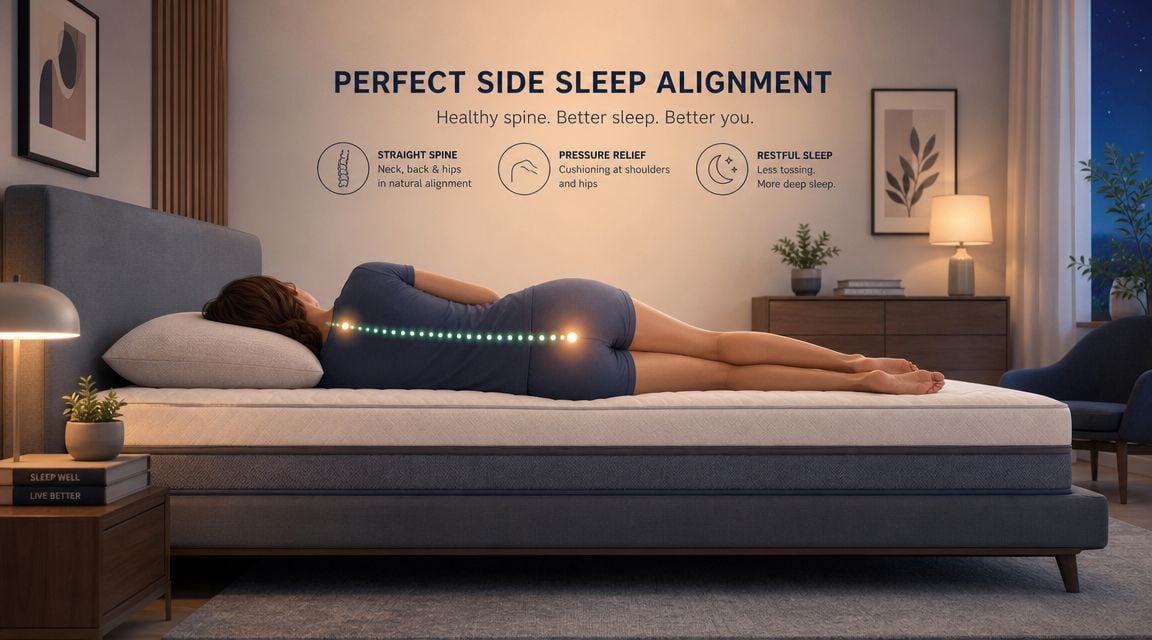
Side sleeping concentrates body weight into the shoulder and hip. A mattress has to cushion those points enough to reduce pressure, yet hold the rest of the body in a steady line. If the surface is too hard, the sleeper often wakes with numbness, soreness, or a tight lower back. If it gives too much, the body drops out of position and the same discomfort appears for a different reason.
That balance shapes more than comfort. It also influences how the whole bed should be planned within the room.
A side sleeper usually needs enough depth in the comfort layers for the shoulder to settle without forcing the neck upward. That affects pillow height, headboard proportion, and even whether a low-profile platform or a taller upholstered bed will support the posture and look the room is aiming for. In a well-designed bedroom, the mattress is not an isolated technical choice. It sets the working height and feel of the entire bed.
For readers who are also sorting out whether discomfort may be connected to daytime strain or existing soreness, MEDISTIK's back pain relief guide offers helpful context on pain management alongside mattress selection.
Alignment matters as much as softness
Softness alone does not solve side-sleeper discomfort. The spine should stay as level as possible from neck to lower back. If the hips sink well below the shoulders, or the waist hangs without support, muscles keep working through the night instead of releasing.
In the showroom, I look for a simple visual cue. When someone lies on their side, the body should appear straight rather than curved at the middle. That is often why medium to medium-firm comfort works well for many side sleepers. It has enough give at the surface, with enough structure underneath to keep the torso from bowing.
The same principle applies to the rest of the room. A mattress that holds alignment properly should be paired with a pillow that fills the space between shoulder and neck, and with a bed frame that supports the mattress evenly across its full span. Good design is practical first. It should look composed, but it also has to let every layer of the bed do its job.
For shoppers comparing how body shape affects mattress feel, this guide to choosing the right mattress for your body type adds another practical layer.
Contouring should feel supportive, not restrictive
Contouring should relieve pressure without trapping the body. A side sleeper needs enough response for the shoulder and hip to settle in, but not so much sink that turning over becomes effortful or the waist loses support.
Practical rule: If the shoulder feels pushed up toward the neck, the mattress is too firm. If the midsection drops and the body folds inward, it is too soft.
The best contouring has a quiet, settled feel. The body relaxes into the surface, the joints are cushioned, and movement still feels easy. That is often the difference between a mattress that feels pleasant for five minutes and one that still supports the room, the body, and the nightly routine years later.
Matching Firmness and Materials to Your Body
Firmness should follow body weight
One of the biggest mistakes in mattress shopping is treating firmness as universal. It isn't. The same mattress can feel quite different depending on how much weight settles into its comfort layers.
A more useful framework comes from expert side-sleeper guidance that recommends a weight-based firmness range. For side sleepers, the guidance suggests roughly 4 to 7 firmness for those under 130 lb, 5 to 7 for 130 to 230 lb, and 6.5 to 8 for those over 300 lb. That range reflects a simple truth. Lighter bodies often need more surface softness to experience contouring, while heavier bodies usually need a stronger support core to avoid excessive sink.
That's especially helpful for couples, where one partner may describe a mattress as forgiving and the other may call the same mattress uncomfortably firm.
How materials change the feel
Material choice shapes how firmness is experienced.
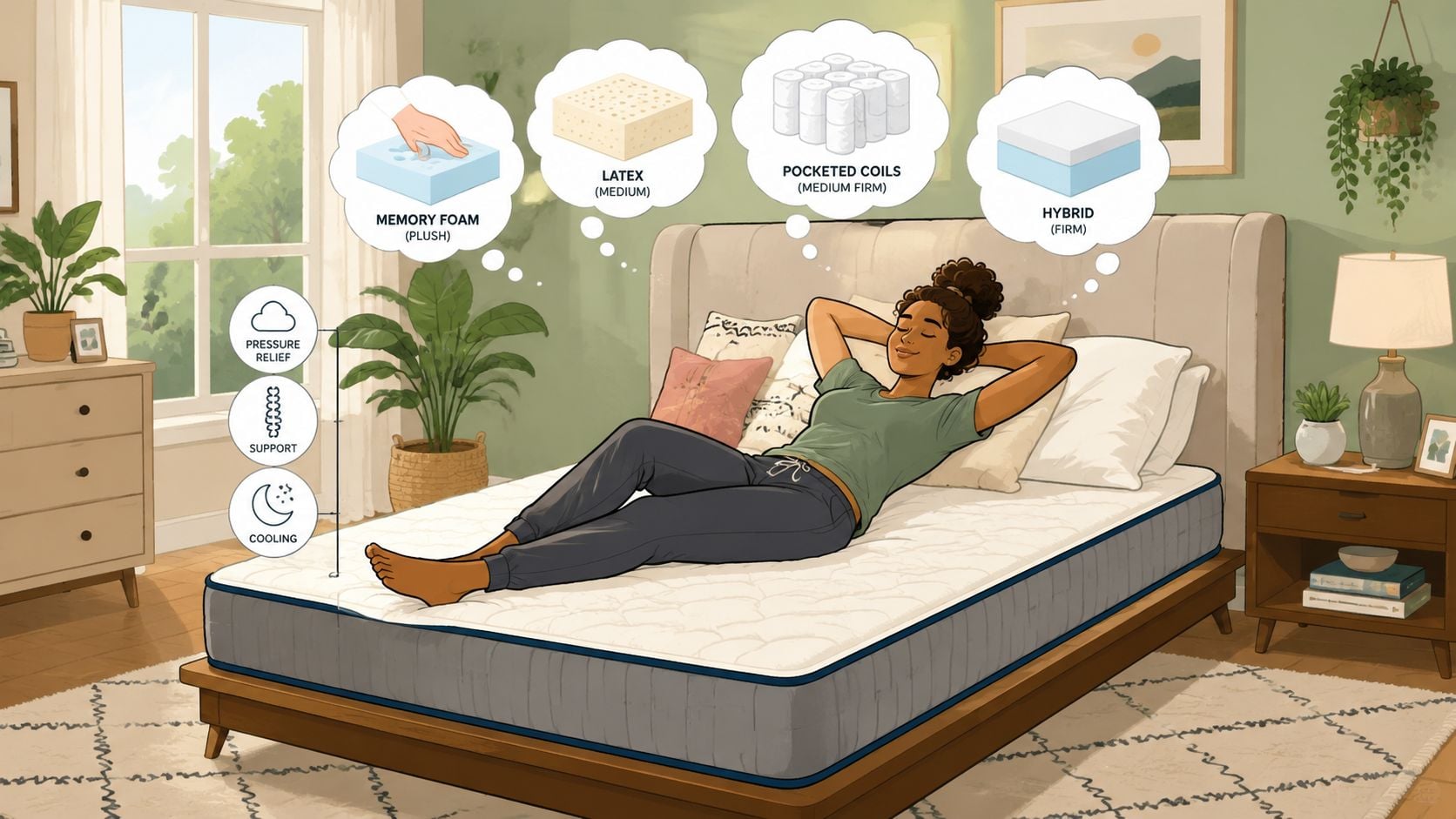
| Material type | What often works for side sleepers | Common trade-off |
|---|---|---|
| Memory foam | Close contouring and strong pressure relief around shoulders and hips | Some sleepers dislike the deeper, slower-response feel |
| Latex | Buoyant support with gentler contouring and an easier turn | Can feel firmer than expected if the comfort layer is too shallow |
| Hybrid | A blend of cushioning near the top and support from below | Feel varies widely depending on how much comfort material sits over the core |
Memory foam tends to suit side sleepers who want the mattress to mould more closely to the body. It can be especially appealing when pressure points are the main complaint.
Latex usually appeals to those who want resilience rather than a deep cradle. It offers comfort with a more lifted sensation. That can be an elegant solution in a primary bedroom where durability and ease of movement matter.
Hybrids often sit in the middle. They give side sleepers some contouring without the fully enveloping sensation of dense foam. For many households, that combination feels easiest to live with over time.
A practical way to narrow the field
A well-curated decision process usually works better than chasing trends. Start with body weight, then add the dominant comfort complaint, then consider the room itself.
- If shoulder pressure is the main issue, lean toward a mattress with a more responsive comfort layer that lets the upper body settle in.
- If hip sag is the complaint, move toward stronger underlying support, even if the surface still feels cushioned.
- If the sleeper changes position often, a buoyant surface can make movement easier than a slower, deeper contour.
Southern Ontario adds one more nuance that rarely gets enough attention. Seasonal temperature swings can change how some foams feel. In a colder bedroom, the same mattress may feel firmer. In a warmer room, it may feel more yielding. That doesn't make one material better than another, but it does mean a mattress should be chosen with the specific home environment in mind.
Magniflex, for example, is often part of the conversation when shoppers want artisanal materials and a refined feel, but the broader principle matters more than any label. The best mattresses for side sleepers are the ones that match body weight, pressure pattern, and room conditions without forcing a compromise in comfort.
For a sleeping-position lens on that decision, this guide to choosing the right mattress for your sleeping style can help narrow the options.
The Art of Testing a New Mattress
How to test properly in a showroom
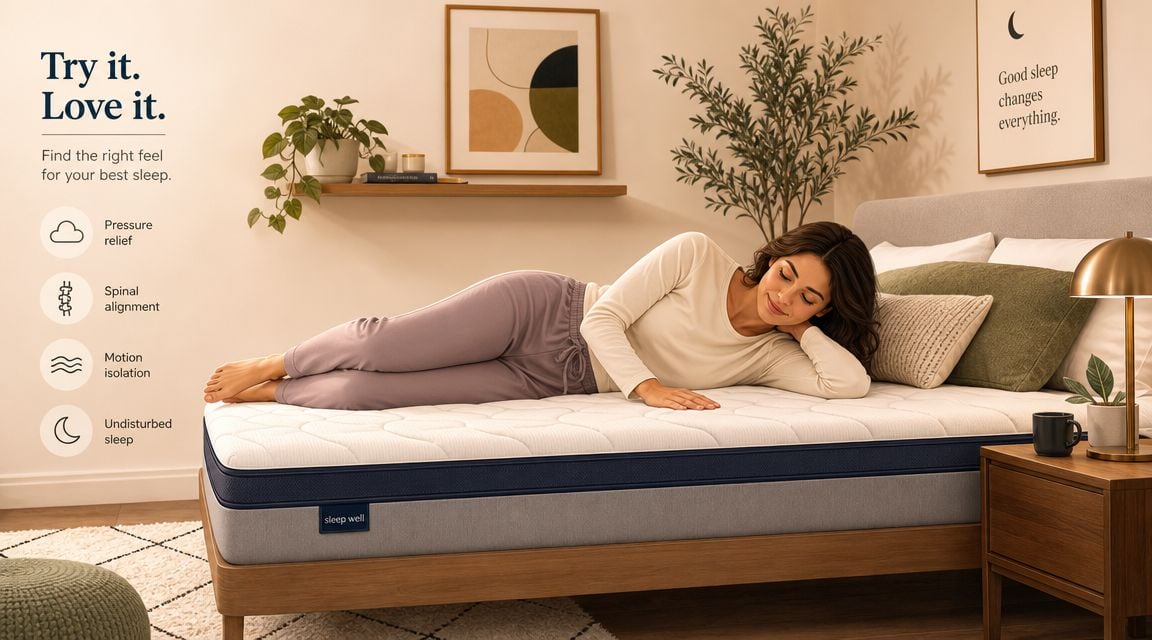
People often test a mattress too quickly. They sit on the edge, bounce once, lie down for a moment, then decide it's either soft or firm. That method misses what a side sleeper needs to feel.
A better showroom routine is slower and more deliberate.
- Wear familiar clothing. Restrictive clothing changes how the body settles and distracts from pressure points.
- Lie in the actual sleep position. Testing on the back doesn't reveal what happens at the shoulder and hip.
- Stay long enough to notice pressure. Initial softness can be misleading. Compression usually declares itself after a few quiet minutes.
- Check the shoulder first. If it feels pushed upward, the top layers aren't yielding enough.
- Notice the waist. A side sleeper shouldn't feel a gap so large that the torso seems unsupported.
The body often recognises the wrong mattress before the mind does. Tingling, guarded shoulders, and the urge to shift are all useful signals.
Edge support also matters more than many shoppers expect. A mattress should feel stable when sitting to dress or when sleeping near the side, particularly in smaller rooms where every usable inch counts.
For a more complete pre-purchase checklist, these tips for buying a new mattress are worth reviewing before a showroom visit.
What to notice during the first weeks at home
The first nights on a new mattress rarely tell the whole story. The body may need time to adjust, particularly if the previous mattress had already sagged or forced poor alignment. What matters is the pattern that emerges.
A useful home assessment looks like this:
- Morning shoulder comfort should improve, not worsen.
- Hip pressure should feel reduced, not merely moved elsewhere.
- Turning at night should feel natural rather than laboured.
- Overall restfulness should become steadier as the body adapts.
One practical option in this category is Critelli Furniture, which offers mattress guidance tied to sleep position and in-store testing rather than relying on a generic firmness label alone. That kind of hands-on evaluation often helps shoppers separate surface comfort from lasting support.
If the mattress still produces the same pressure pattern after an adjustment period, something is off. Usually it means the sleeper chose comfort layers that were too shallow, or a support core that was too firm or too yielding for the body.
Designing a Complete Sleep Sanctuary

A side sleeper can choose the right mattress and still wake up feeling slightly off if the room around the bed is working against it. I see this often in well-furnished homes. The mattress is sound, but the pillow is too flat, the foundation is too rigid, or the bed has been placed in a way that makes the room feel cramped rather than calm.
The bed should support the body and settle the room at the same time.
For side sleepers, that broader view matters. The shoulder needs room to sink. The neck needs to stay level. The frame and support system beneath the mattress need to hold it properly so the comfort layers behave as intended. A mattress topper can help in some cases, though it should be used to fine-tune a good mattress, not rescue a poor one.
As noted earlier, many side sleepers do well with a medium-firm feel because it balances pressure relief with support. In a bedroom, the same principle applies. A restful room benefits from softness in the right places and structure where it counts.
Designer's Insight
Designer's Insight
The bed anchors the room much the way a fine rug steadies the floor plan. One shapes physical comfort. The other shapes visual comfort. Together, they create quiet.
A complete bedroom concept brings those pieces into alignment. Upholstered beds soften sound and add warmth. Night tables should sit at a practical height to the mattress so the room feels easy to use. Rugs give the feet a gentler landing on cold mornings and help the bed feel grounded within the space. Window treatments matter too. A beautiful mattress loses some of its value in a room that lets in harsh early light or never feels private.
Good bedroom design also protects the function of the mattress. A frame with proper center support helps preserve the feel of the sleep surface over time. Clear walking space around the bed makes daily use more comfortable, especially in primary suites where two people may keep different schedules. Scale matters. A thick, generously cushioned mattress paired with a low, delicate frame can feel visually and physically mismatched.
Readers looking for a broader perspective on calm, texture, and intentional bedroom styling may enjoy Ecuadane bedroom design insights, which fit naturally with a more thoughtful approach to rest.
In homes across St. Catharines and throughout the Greater Niagara, Hamilton, and Toronto areas, the strongest rooms are rarely built around a single purchase. They are layered carefully. The mattress sits at the centre, but it should relate to the bed, the rug, the lighting, the window coverings, and the amount of open space left around it.
Some households also benefit from an adjustable base, particularly when reading in bed, easing pressure, or accommodating changing comfort needs over time. For that option, the benefits of an adjustable base for comfort and well-being are worth reviewing before finalizing the room.
The Final Details and Our White-Glove Promise
What side sleepers should prioritise
The strongest mattress decisions are usually the simplest. For side sleepers, the priorities are clear. The mattress should cushion the shoulder and hip, support the waist and midsection, and keep the spine from falling out of line. Material matters, but only in service of those outcomes.
A softer surface isn't automatically better. A firmer core isn't automatically worse. The best choice is the one that matches body weight, pressure pattern, movement preference, and the feel of the actual bedroom.
The last step matters as much as the first
A premium mattress is part comfort investment and part design decision. It deserves proper handling from showroom to home. White-glove service makes that final stage far easier, especially when the bedroom includes a carefully chosen bed, rug, and surrounding furnishings that need to remain pristine during delivery and placement.
For households furnishing a primary suite with heirloom quality pieces, the transition into the home should feel smooth and organised. White-glove delivery helps protect that experience with professional placement, setup, and a more polished handoff.
The difference is felt most clearly after the truck leaves. The room is intact. The bed is properly placed. The process feels complete rather than interrupted.
To explore a mattress as part of a fully considered bedroom, Critelli Furniture offers a thoughtful path from selection to placement. Experience the craftsmanship in person at the King Street Showroom, book your complimentary design consultation today, or visit the Rug Market to find your room's foundation.