CRITELLI'S SUMMER SALE | UP TO 70% OFF



Side Sleeper Mattress: Comfort in St. Catharines

A great many shoppers begin the search for a side sleeper mattress the same way. They wake with a tender shoulder, a tight hip, or a neck that never quite settled overnight, then assume the answer is “something softer.” In practice, that's only half right. A mattress for side sleeping has to cushion, but it also has to hold the body in quiet alignment so the spine doesn't curve out of position while the sleeper sinks in.
That's why the mattress belongs in a larger conversation about the bedroom itself. In a well-composed home, the bed isn't an isolated health product. It's the centrepiece of a private sanctuary, one that should feel as considered as the living room, as restful as the palette, and as enduring as the furnishings chosen to surround it. For a family-run house founded in 1914, that perspective comes naturally. Sleep comfort is part science, part craftsmanship, and part design discipline.
Table of Contents
- The Art of Aligned Sleep A Foundation for Well-Being
- Understanding the Science of Side Sleeping
- Curating Your Comfort Firmness and Materials
- The Complete Room Concept Beyond the Mattress
- An Heirloom Investment Tips for Testing and Buying
- Common Questions on Side Sleeper Mattresses
The Art of Aligned Sleep A Foundation for Well-Being
A side sleeper often recognises the problem before getting out of bed. One shoulder feels compressed. The hip seems to have carried too much weight through the night. The mattress may still look handsome, but the body tells a different story.
That experience is common because side sleeping itself is common. Research cited by Nolah Mattress notes that 74 percent of adults typically sleep on their side in its guide for side sleepers. That single fact changes the way a bedroom should be furnished. The most common sleep posture deserves more than a generic mattress and a hopeful guess.
A mattress is part of daily architecture
In a thoughtfully designed home, the bed functions much like a well-made sofa or a finely proportioned dining chair. It supports the body, yes, but it also shapes the rhythm of everyday life. A side sleeper mattress has to do its work quietly, every night, without demanding that the sleeper adapt to it.
That's where a heritage approach matters. A family business that has served Southern Ontario since 1914 tends to view furnishings through the lens of longevity, comfort, and fit. The mattress isn't a temporary fix. It's part of a lasting bedroom composition, one chosen with the same care given to casegoods, lighting, textiles, and scale.
A beautiful bedroom that doesn't support sleep has missed its purpose.
What side sleepers usually need
Most side sleepers aren't searching for softness alone. They're searching for relief at the shoulder and hip, with enough underlying support that the waist and lower back don't drift out of line. That's a more refined requirement than many showrooms acknowledge.
For readers refining the full sleep environment, natural and restful sleep techniques for better sleep offer useful context beyond the mattress itself.
- Morning soreness at the shoulder often points to a surface that isn't cushioning enough.
- A pinched or aching lower back can suggest the mattress is letting the midsection fall too far.
- Restless turning often means the sleeper never found a balanced resting position.
The right choice should feel composed rather than dramatic. It should welcome the body, support it, and disappear into the experience of sleep.
Understanding the Science of Side Sleeping
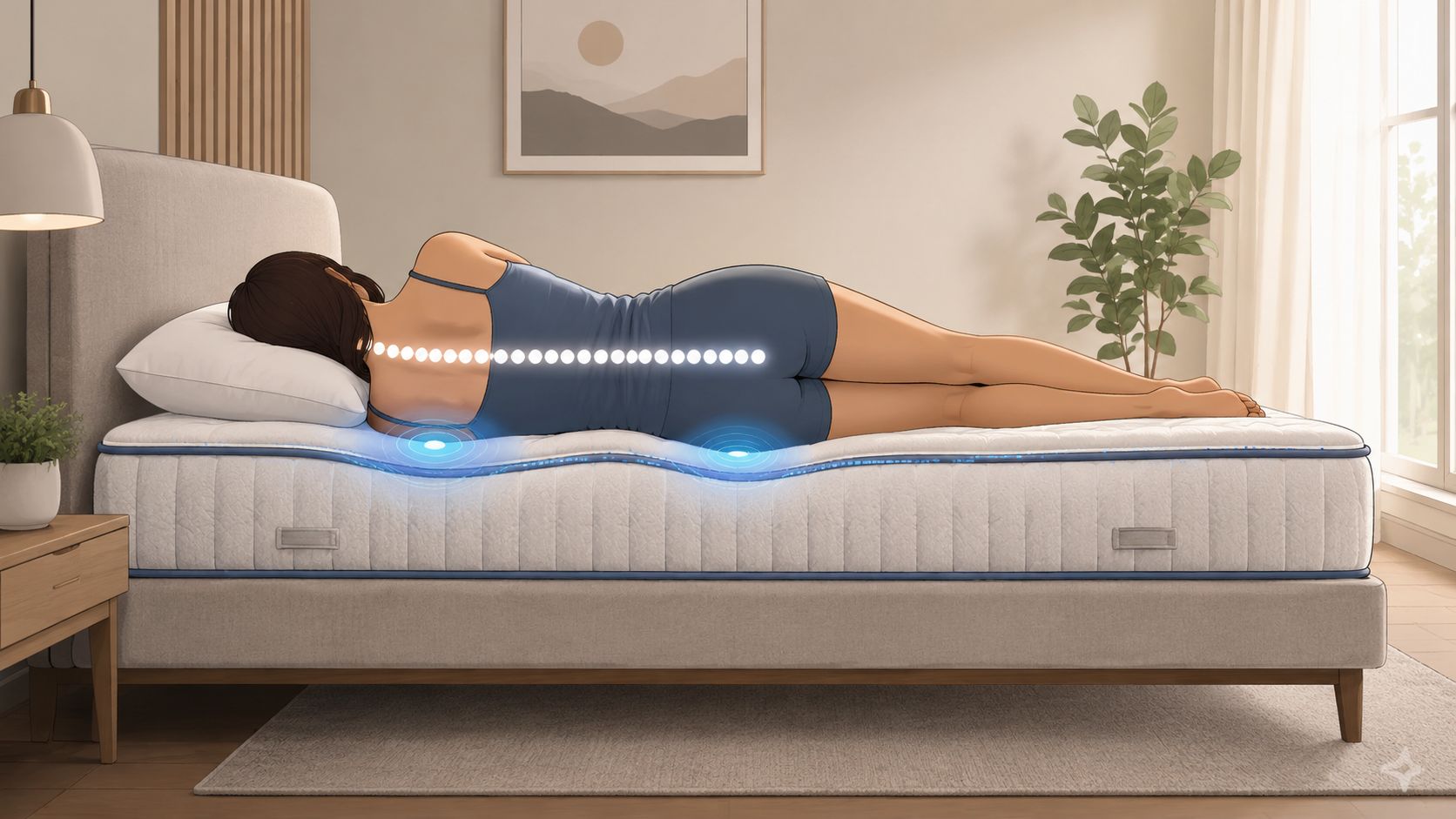
A side sleeper mattress succeeds when it does two things at once. It reduces pressure where the body presses hardest into the bed, and it keeps the spine from bending into an awkward line.
That combination sounds simple, but it's a careful balancing act. Too much pushback and the shoulder bears the burden. Too much sink and the torso drops unevenly.
Pressure relief is about surface contact
Sleep guidance from Sleep Foundation explains that side-sleeper comfort depends on the mattress's ability to distribute load across a larger surface area at the shoulder and pelvic girdle, which is why adaptive foam or hybrid comfort layers are commonly recommended in its side sleeper mattress guidance. In plain terms, the mattress should spread weight rather than concentrating it at two sharp points.
A useful way to think about it is this. The mattress should feel like a supportive handshake inside a soft glove. The surface receives the curves of the body, but the deeper structure still steadies what it's holding.
Alignment matters more than plushness alone
A straight, neutral line from head through lower back is the goal for most side sleepers. When the shoulder and hip settle in just enough, the spine remains level. When one area sinks too far, the line bends.
A shopper can often feel the difference quickly:
- Proper alignment tends to feel calm and even, with no sharp pressure at the upper shoulder.
- Too firm a mattress can feel as if the body is resting on top of the bed instead of in it.
- Too soft a mattress may feel pleasant for a moment, then unstable as the waist loses support.
Practical rule: If the mattress feels soft but the body feels twisted, it isn't the right kind of comfort.
Why materials matter to side sleepers
Side sleeping places very specific demands on the comfort layers. They need enough adaptability to cushion curves, but they also need enough resistance to prevent excessive flexion or extension through the spine. That's why material choice isn't a decorative extra. It's part of the mattress's engineering.
For readers comparing sleep-position guidance more broadly, how to choose the right mattress for your sleeping style provides a helpful framework.
A good side sleeper mattress usually performs well in three practical areas:
- Contour. The shoulder and hip should settle without feeling trapped.
- Support depth. The sleeper shouldn't feel as though the torso is folding inward.
- Ease of movement. Turning from one side to the other should feel controlled, not laboured.
That trade-off between pressure relief and structure is what separates a merely soft mattress from one that effectively supports side sleeping.
Curating Your Comfort Firmness and Materials
Choosing a side sleeper mattress becomes much easier once firmness and material are treated as connected decisions rather than separate features. One determines how much the body settles. The other shapes how that settling feels.
Many side sleepers make the mistake of chasing the plushest surface in the showroom. That can feel luxurious for a few minutes, but long-term comfort depends on whether the mattress keeps the body supported after the initial softness gives way.
How firmness changes the feel
For side sleepers, the most useful target is usually medium-soft to medium-firm, around 4 to 6 on a 1 to 10 firmness scale, according to guidance on side sleeper firmness. The reason is practical. That range tends to let the shoulders and hips compress the comfort layer enough to reduce pressure without letting the waist fall out of alignment. The same guidance notes that mattresses around or above 6.5 to 7 are generally more appropriate only for sleepers above roughly 230 lb.
That doesn't mean every side sleeper should buy the same feel. It means most should begin in that middle band, then adjust based on body build and how much they engage the mattress.
- Lighter side sleepers often need more surface give so the shoulder and hip can settle into the bed rather than resting on top of it.
- Average-weight side sleepers usually do well in the core medium-soft to medium-firm range when the comfort layers are adaptive.
- Heavier side sleepers, especially those near or above the weight point noted above, often need more support depth so the bed doesn't flatten under the torso.
Choosing between the main mattress materials
Material changes not only the support profile, but the character of the comfort. Some sleepers want a close contour. Others want a more buoyant response.
Magniflex is one example of a design-forward mattress line often considered by shoppers who value refined construction and premium sleep materials, especially when the goal is to balance contour with a polished, heirloom-quality bedroom setting.
| Mattress Material Characteristics for Side Sleepers | Pressure Relief | Responsiveness | Best For Side Sleepers Who… |
|---|---|---|---|
| Memory foam | Strong contouring around shoulders and hips | Lower, with a more cradled feel | want close body-conforming comfort and reduced pressure concentration |
| Latex | Gentle contouring with a more buoyant surface | Higher, easier to move on | prefer pressure relief without a deep sink-in sensation |
| Hybrid | Balanced cushioning with deeper structural support | Moderate to high, depending on build | want contouring near the surface with steadier support underneath |
Each material carries trade-offs.
Memory foam often appeals to side sleepers who feel pronounced pressure at the shoulder and hip. It tends to cradle curves well, but some sleepers dislike the slower response when turning.
Latex usually feels more lifted. It can be an excellent fit for a sleeper who wants comfort and resilience rather than a deep hug from the mattress.
Hybrids sit in the middle. They often combine adaptive comfort layers with a more supportive core, which is why many side sleepers find them easier to live with over time. For a closer look at that construction, this overview of what a hybrid mattress is is useful.
The wrong mattress doesn't always feel wrong immediately. Often it reveals itself after an hour on one side, or after several mornings in a row.
Pillow fit matters here too. A mattress that finally relieves shoulder pressure can still leave the jaw and neck strained if the pillow height is off. For readers dealing with that overlap, this guide to find your best pillow for jaw pain adds practical context.
A well-curated choice should feel coherent from top to bottom. Surface comfort, support depth, and responsiveness should all point in the same direction.
The Complete Room Concept Beyond the Mattress
A well-chosen mattress solves only part of the problem. A side sleeper's comfort is completed by the surrounding elements of the room, many of which influence alignment, ease, and the emotional tone of rest.
That's why the bedroom should be approached as a complete room concept rather than a collection of separate purchases. The mattress is central, but it performs best when the pillow, bedding layers, bed height, lighting, and floor covering are working in harmony.
Where support continues after the mattress
The pillow is usually the first place to look after the mattress itself. For side sleepers, neck alignment depends on filling the space between head and mattress without forcing the chin up or letting it drop. If the mattress has generous cushioning, the pillow requirement may differ from what worked on a firmer bed.
A topper can help, but only in specific cases. It's useful when the support core of a mattress still feels sound and the sleeper needs a slight refinement at the surface. It won't correct a mattress that already sags or throws the spine out of line.
There's also the matter of edge support and room use. In a thoughtfully organised bedroom, the bed often doubles as a reading perch, a place to put on shoes, or a quiet seat at day's end. A mattress that collapses at the perimeter can make the whole room feel less composed.
- Pillows should complete the alignment the mattress begins.
- Toppers should fine-tune comfort, not rescue a failing mattress.
- Stable edges make the bed easier to use and the room more functional.
For readers refining the entire sleep setting, designing a relaxing bedroom offers strong guidance on atmosphere, materials, and calm visual balance.
Designer's Insight
Designer's Insight
In a design-forward bedroom, the rug often does more than soften footsteps. It quiets the room visually, warms the architecture, and gives the bed a sense of placement. A hand-knotted wool rug from the Rug Market can act as true art for your floor, grounding the bed and nightstands so the mattress feels integrated into the sanctuary rather than dropped into it.
Interior design services in St. Catharines are particularly valuable. The best bedrooms aren't assembled by category. They're composed through proportion, texture, circulation, and mood. For homeowners across Greater Niagara, Hamilton, and Toronto, that kind of curation turns a mattress purchase into a more lasting decision about how the room should live.
A bespoke bedroom feels restful before anyone lies down. That's the quiet power of timeless craftsmanship and a curated selection chosen as one whole environment.
An Heirloom Investment Tips for Testing and Buying
A side sleeper mattress shouldn't be bought the way one buys a spare lamp or a decorative accent. It's closer to an investment piece, one that affects comfort every night and influences how the entire bedroom functions.
That's one reason in-person testing still matters. Specifications can narrow the field, but they can't tell a shopper how a mattress receives the shoulder, whether the hip settles evenly, or how easy it is to roll and rise from the edge.

How to test properly in a showroom
A useful showroom test is slower than generally expected. The shopper should lie in a true side-sleeping posture, not merely sit on the edge or recline briefly on the back. The shoulder should feel cushioned, the waist supported, and the neck naturally level with the chosen pillow.
A practical testing routine often includes:
- Stay in position long enough to let the comfort layers respond.
- Check the shoulder first because pressure usually shows there quickly.
- Notice the transition when turning from one side to the other.
- Sit and stand from the edge to judge stability and ease.
For Southern Ontario shoppers travelling from St. Catharines, the Niagara region, Hamilton, or even the Toronto market, an in-person visit often clarifies in minutes what online comparison cannot. These mattress buying tips offer a sound preparation checklist before stepping into the showroom.
Special considerations for older adults
Older side sleepers often need a more nuanced recommendation. According to AARP's expert-tested review, for many older adults, a medium-firm hybrid or foam mattress with a plush comfort layer is a safer recommendation because it balances cushioning and support, and mattresses in the soft-to-medium-firm range of about 4 to 6.5 out of 10 are often most comfortable for side sleepers with joint pain. The same guidance also notes that easier mobility when getting out of bed is a critical factor, as explained in its review of mattresses for side sleepers.
That combination matters for shoppers dealing with arthritis, chronic shoulder tenderness, hip sensitivity, or general stiffness in the morning. A mattress may feel comfortable while lying still, yet still be wrong if it makes turning or rising feel difficult.
The best mattress for an older side sleeper often isn't the softest one. It's the one that cushions the joints while still allowing confident movement.
White-glove delivery also matters more than many buyers expect. A premium mattress is easier to enjoy when the transition from showroom to home is smooth, the placement is precise, and the room is left ready to use. That continuity is part of what makes the purchase feel considered rather than transactional.
Common Questions on Side Sleeper Mattresses
Does a side sleeper mattress need to feel plush
Not necessarily. Side sleepers usually need pressure relief, but plushness alone isn't the goal. The better question is whether the mattress allows the shoulder and hip to settle while keeping the torso supported. A mattress can feel inviting at the surface and still be too soft underneath.
What if partners sleep differently
A balanced mattress often works well for mixed-preference couples when it offers enough cushioning for the side sleeper without becoming unstable for the other partner. In some cases, the answer lies in a more carefully selected pillow setup or a support system that reduces motion and preserves edge integrity.
Can a topper fix the wrong mattress
Sometimes, but only in a narrow sense. A topper can refine surface comfort when the support below is still sound. It can't correct a mattress that already lets the spine drift out of alignment or causes the sleeper to sink too much.
What kind of bed base works best
A premium mattress should rest on a stable, supportive foundation that matches the manufacturer's requirements. The base matters because even an excellent mattress can perform poorly when placed on an unsupportive frame or slatted system with too much give.
How does a shopper know a mattress is worth the investment
The signs are usually tangible. The materials feel considered. The support is consistent. The finishing is refined. The mattress works within the broader bedroom rather than fighting it. Heirloom quality in sleep products doesn't mean ornate styling. It means thoughtful construction, lasting comfort, and a sense that the piece belongs in a timeless home.
Is in-store testing still worth it
Yes. For side sleepers especially, comfort depends on subtle details that are difficult to judge from a product description alone. Pressure at the shoulder, support under the waist, and ease of turning are all easier to assess in person.
For homeowners building a more restful and design-led bedroom, Critelli Furniture offers a curated perspective rooted in timeless craftsmanship, complete room planning, and attentive service. Experience the craftsmanship in person at our King Street Showroom. Book your complimentary design consultation today. Visit the Rug Market to find your room's foundation.