CRITELLI'S SUMMER SALE | UP TO 70% OFF



What Is Modern Furniture Design: Origins & Key Features

A couple stood in front of a low walnut sideboard and asked a familiar question: was it modern, or just current? The answer changed how they saw the whole room, from the quiet geometry of the piece itself to the rug beneath it and the space left around it.
A Legacy of Timeless Design
In Southern Ontario, conversations about furniture often begin with style, but the wiser ones begin with staying power. A room can look current for a season, yet only a carefully chosen interior continues to feel right year after year. That is why the history behind a design matters as much as its silhouette.
Critelli Furniture was founded in 1914 and has operated as a family-run business for 112 years, a legacy that has helped anchor trust across the region, as noted by the Greater Niagara Chamber of Commerce profile on Critelli's milestone. Over that time, households in Niagara, Hamilton, and Toronto have changed dramatically, but the underlying question has stayed the same: which pieces deserve a place in a home for decades, not months?
Why legacy matters in modern design
Modern furniture is often described as sleek or simple. That is accurate, but incomplete. Simplicity only becomes beautiful when it rests on proportion, materials, and craftsmanship. Without those qualities, a clean-lined piece can feel flat rather than refined.
That distinction becomes clearer when a family business has watched design movements rise, fade, and return in new forms. The result is a more careful eye for what lasts. A helpful example appears in this discussion of the elements of a modern home, where the focus shifts from surface trend to the full relationship between furniture, space, and lifestyle.
A well-made modern room never feels empty. It feels edited.
The Southern Ontario perspective
That perspective matters locally. Urban living, evolving family routines, and the desire for homes that support both comfort and function have pushed many homeowners toward cleaner, more purposeful interiors.
In the Canadian home décor market, Modern style rose from 19% in 2018 to 29% in 2020, according to Canadian home décor market data. The appeal is easy to understand. Modern design offers visual calm without giving up practicality, which makes it especially relevant in homes where every piece needs to earn its place.
The Philosophical Roots of Modernism
Modern furniture design began as a rejection. Designers turned away from heavy ornament, excessive carving, and formal pieces that signalled status more than usefulness. They wanted furniture that served daily life practically.
That shift was philosophical before it was visual. The guiding belief was simple: a chair should first work well as a chair. Its beauty should come from its form, balance, and construction, not from decoration applied afterwards. This is the spirit behind the familiar idea that form follows function.
A response to ornament
Earlier furniture traditions often celebrated embellishment. Modernism stepped in and asked a tougher question. If a line, curve, or joint doesn't improve the object, why is it there?
That question changed everything:
- Structure became visible. Frames, legs, and supports were treated as part of the beauty.
- Function took priority. Storage pieces became more efficient. Seating became more ergonomic.
- Production mattered. Designers explored ways to create good design for more people, not only for elite households.
The result was furniture that felt lighter, clearer, and more democratic.
The core idea behind the style
Modernism isn't plain for the sake of being plain. It removes distraction so that proportion, comfort, and material can take centre stage. A well-designed dining chair, for example, doesn't need carved flourishes if the angle of the back, the scale of the seat, and the joinery are resolved beautifully.
A useful way to understand modernism is to think of it as a discipline of restraint. Every detail is intentional. Nothing is random. Nothing is there merely to fill space.
Practical rule: If a piece looks better every time unnecessary detail is removed, it is moving closer to modern design.
Why it still feels relevant
Modern design continues to resonate because homes still need the same things. People want rooms that are comfortable, calm, and adaptable. They want furniture that doesn't crowd a space visually. They also want pieces that can live beside art, rugs, books, and architecture without competing with them.
That is especially true in city homes and renovated properties where square footage, sightlines, and versatility matter. A modern sofa with a disciplined profile can make a room feel more open. A clean-lined table can support daily meals, remote work, or entertaining without looking overdesigned.
Modernism also carries an ethical dimension. It asks designers and buyers alike to value usefulness, honesty, and longevity. Those principles still feel fresh because they answer a very current frustration with disposable interiors.
The philosophy in plain language
For readers asking what is modern furniture design, the clearest answer is this: it is furniture shaped by purpose, stripped of excess, and refined until its utility and beauty become the same thing.
That is why authentic modern pieces often feel calm rather than loud. They don't beg for attention. They hold it subtly.
Hallmarks of Modern Furniture Design
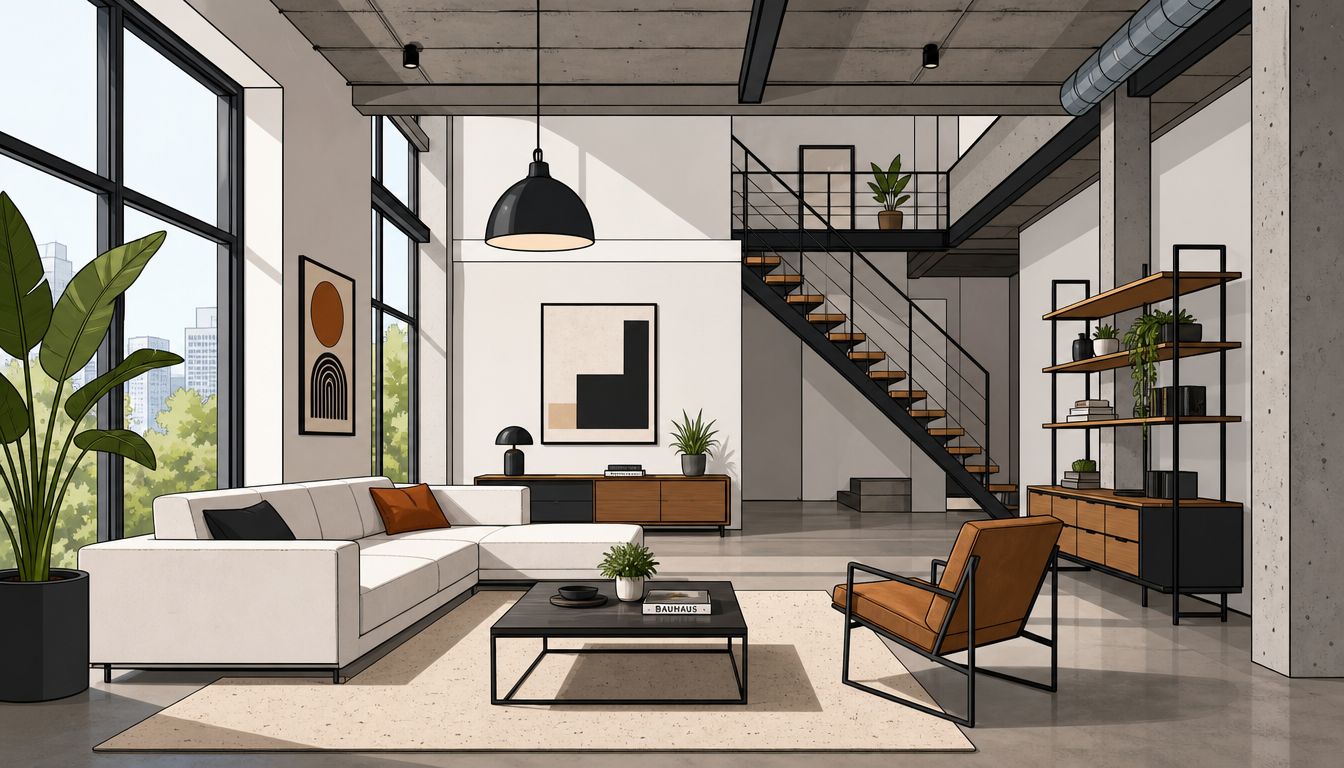
The easiest way to recognise modern furniture is to look for discipline. The line is cleaner. The shape is clearer. The piece seems resolved, as though every angle was considered and nothing extra survived the editing process.
Clean lines and clear silhouettes
Modern furniture favours outlines that are easy to read. That might mean a sofa with a long horizontal profile, a bed with an unfussy headboard, or a sideboard with flat-front cabinetry and discreet hardware. Curves appear too, but they are controlled curves, not decorative swirls.
The effect is visual calm. A room feels organised because each piece has a legible shape.
Three cues often help identify the style:
- Unbroken edges that guide the eye smoothly across the piece
- Balanced proportions that make furniture feel neither bulky nor fragile
- Minimal ornament so the form itself does the talking
Geometry and negative space
Modern design leans on geometry. Rectangles, circles, soft arcs, and disciplined angles all appear frequently. A coffee table may read as a simple oval. A lounge chair may combine a curved shell with a slender metal base. A media unit may rely almost entirely on long horizontal planes.
Just as important is what surrounds the piece. Modern furniture benefits from breathing room.
Designer's Insight
Leave visible floor area around a strong modern piece. Negative space helps its sculptural profile register properly. A chair with elegant arms loses impact when crowded by too many small tables or accessories.
This is one reason modern interiors can feel spacious even when the room itself isn't large.
Honest materials
A modern piece usually allows its material to look like itself. Wood shows grain. Metal reads as metal. Glass appears light and purposeful. Upholstery tends to support the shape instead of disguising it.
Readers who appreciate Nordic restraint may also enjoy this perspective on adapting Scandinavian style for Adelaide homes, where simplicity, light, and material honesty are handled with similar care.
For those exploring heritage-inflected modern forms, modern mid-century furniture in Canada offers a useful visual reference point.
A quick identification guide
| Feature | What it looks like | What it achieves |
|---|---|---|
| Line | Straight, low, or gently curved profiles | Calm, order, visual clarity |
| Shape | Geometric forms | Structure and balance |
| Detail | Little to no applied ornament | Focus on proportion |
| Scale | Measured and efficient | Better flow in the room |
| Presence | Light, edited, intentional | Sophisticated simplicity |
A modern piece doesn't need to be stark. It needs to be precise.
Artisanal Materials and Timeless Craftsmanship
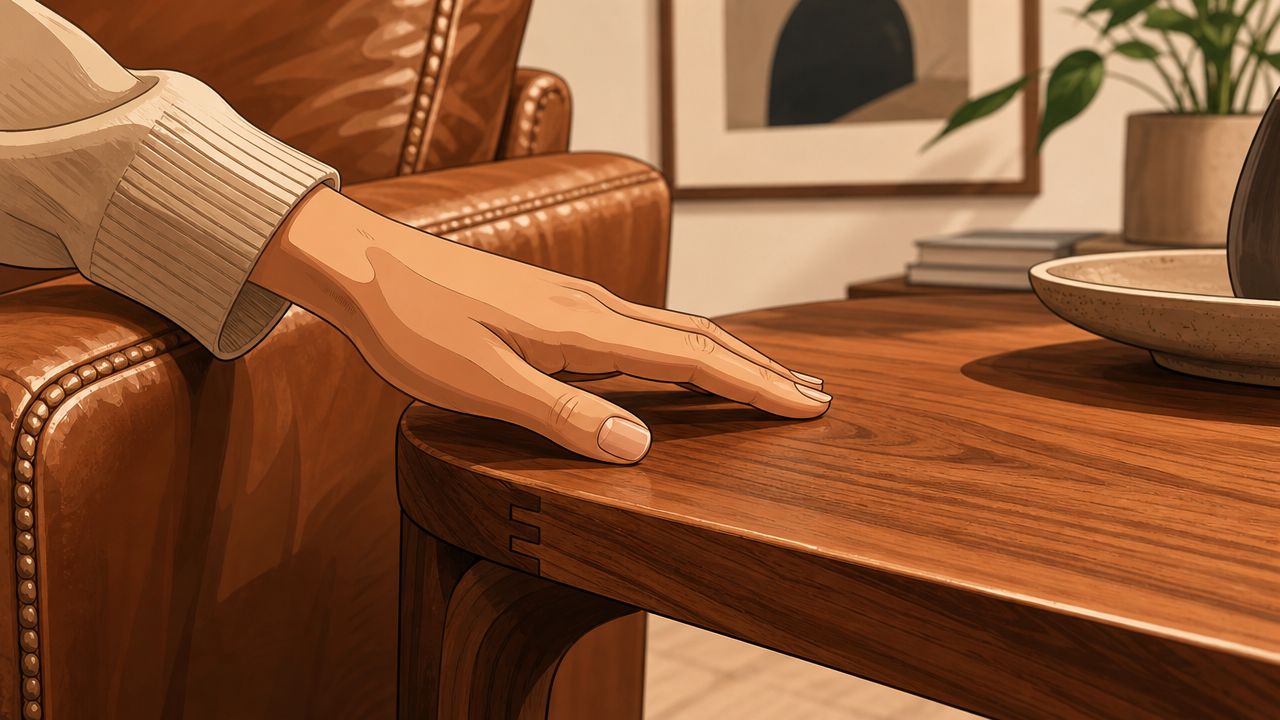
Modern furniture is often mistaken for a style defined only by shape. In truth, shape is only half the story. Once ornament is removed, materials and construction become impossible to hide. That is where quality reveals itself.
Why materials matter more in modern design
A carved traditional cabinet can distract the eye from mediocre timber. A modern cabinet can't. If the grain looks lifeless, the edge feels clumsy, or the finish appears synthetic, the viewer notices immediately.
That is why the strongest modern pieces rely on a restrained but rich palette:
- Wood brings warmth and visual depth
- Metal gives lightness, strength, and crisp structure
- Leather and textiles soften the geometry
- Glass introduces openness and reflection
This balance is what keeps modern rooms from feeling severe. The forms may be disciplined, but the materials add soul.
Craftsmanship is the ornament
In a well-made modern table, the joinery becomes the decoration. In a refined lounge chair, the tailoring becomes the visual event. In a beautifully finished case piece, the grain match and tactile surface carry the whole design.
That is why heirloom quality matters so much in this category. A simple form asks more of the maker, not less. There is nowhere to hide uneven seams, poor proportions, or weak finishing.
The quieter the design, the louder the craftsmanship has to speak.
This is also where trusted names such as Stickley and Stressless earn their reputation. Their appeal isn't based on novelty. It rests on the way materials, comfort, and construction come together in a lasting way.
The modern shift toward responsible materials
In Canada, the definition of modern design has also expanded beyond appearance. It now includes material accountability. According to Ontario furniture trend guidance on 2026 sustainability benchmarks, modern furniture design in the Canadian market is technically defined by the integration of FSC-certified wood, recycled metal, and Low-VOC finishes to meet projected 2026 sustainability benchmarks.
That matters because contemporary buyers aren't only asking whether a piece looks refined. They are also asking what it is made of, how it was finished, and whether it supports a healthier indoor environment.
Readers interested in craft at the material level may appreciate this look at timeless porcelain carving craft, which shows how restraint and precision transform a surface into something enduring.
What to inspect before choosing a piece
A buyer doesn't need a workshop background to spot quality. A few close observations usually tell the story.
- Look at the edges. Clean, confident edges suggest care. Thick, awkward profiles often signal compromise.
- Study the finish. A good finish should enhance the material, not smother it.
- Touch the surfaces. Modern design is visual, but it should also feel resolved in the hand.
- Check the tailoring. On upholstered pieces, seams, tension, and cushioning should support the silhouette.
- Notice the underside and back. Quality often shows most clearly where shortcuts are easiest.
For readers considering the bedroom, modern bed design is a useful category to evaluate through this lens. The bed's form may seem simple, but its finish, joinery, and proportion determine whether it feels bespoke or merely basic.
Modern vs Contemporary Design Explained
Many shoppers often get tripped up when distinguishing these terms. They use modern and contemporary as though they mean the same thing. They don't.
The distinction isn't academic. It affects how a room comes together, how pieces relate to one another, and whether the final result feels coherent or confused.
Modern is a period. Contemporary is a present moment.
Modern refers to a recognised design movement rooted in the early to mid-20th century. It carries a clear philosophy and a relatively stable visual language: functional forms, minimal ornament, and disciplined use of materials.
Contemporary means current. It changes with the moment. It may borrow from modernism, but it can also include softer curves, trend-driven finishes, mixed influences, or dramatic statement forms that don't belong to historic modern design.
Here is the simplest way to separate them:
| Term | Meaning | Stability |
|---|---|---|
| Modern | A defined historical design language | Relatively consistent |
| Contemporary | What is current right now | Always changing |
Why the confusion matters
The confusion is widespread. Sixty-eight per cent of Canadian homeowners in Ontario express uncertainty about the distinction between modern and contemporary, according to Ontario consumer insight on modern versus contemporary confusion.
That uncertainty shows up in real homes. Someone buys a sharply lined walnut sideboard because it feels modern, then pairs it with trend-heavy seating and highly decorative lighting. None of the individual choices is necessarily wrong, but the room loses its internal logic.
A cohesive room depends on shared principles, not just pieces that looked appealing one by one.
A practical way to choose
When evaluating a piece, it helps to ask one question: is this rooted in a design philosophy, or is it reflecting the current market's taste?
If the answer is philosophy, the piece likely belongs to modern design. If the answer is trend, it is likely contemporary. Both can be beautiful. The key is knowing which language is being spoken.
For readers who enjoy styles that intentionally challenge modernist rules, postmodern furniture design offers a helpful contrast. It shows how dramatically furniture changes once strict restraint is no longer the governing principle.
Incorporating Modern Design into Your Home
A modern room shouldn't feel cold, and it doesn't need to feel spare. The most successful spaces balance clarity with comfort. They honour line and proportion, but they also welcome texture, softness, and daily living.
That balance is easiest to achieve when the room is approached as a whole rather than as a series of isolated purchases.
Start with the foundation
Many well-composed rooms begin from the ground up. A rug often sets the emotional tone before a single chair is chosen. In design terms, this is why the idea of Art for your Floor is so powerful. A hand-knotted rug establishes colour, scale, rhythm, and mood all at once.
For homeowners searching for Hand-knotted rugs Ontario, this approach helps prevent a common mistake. They don't choose the rug to fill a leftover gap. They choose it to anchor the complete room concept.
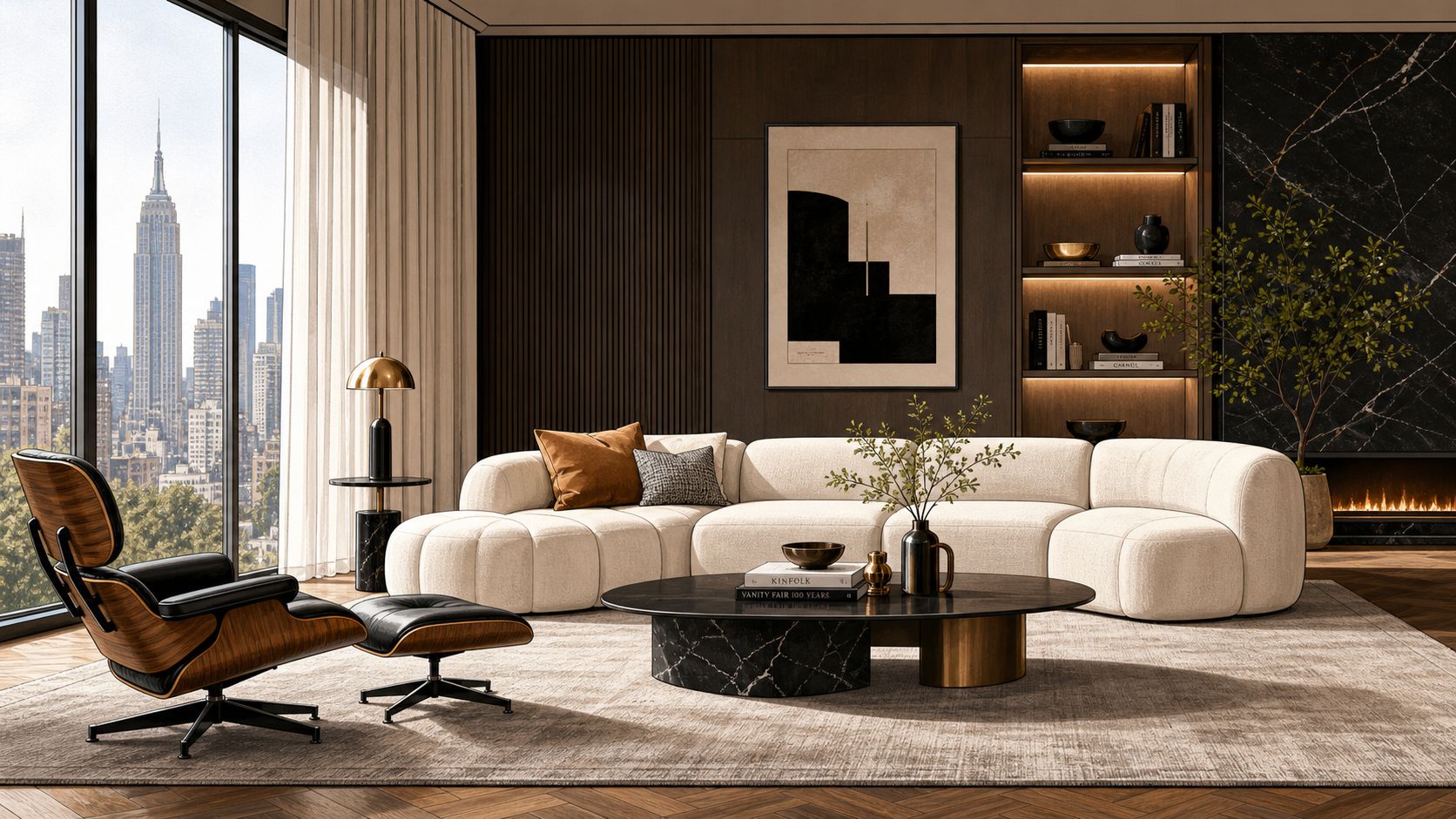
From there, furniture decisions become easier. A low modern sofa, a sculptural chair, and a clean-lined table can all take cues from the rug's colour story and texture.
Build the room in layers
Modern interiors work best when the major forms are edited and the supporting layers bring warmth.
A practical sequence looks like this:
- Set the floor plan with the main seating and circulation in mind.
- Choose one primary surface language, such as warm wood with matte metal.
- Add a dominant textile element, usually the rug.
- Introduce softer materials through upholstery, cushions, window treatments, or bedding.
- Limit decorative objects so the architecture and furniture can breathe.
Professional planning offers significant value. Critelli offers complimentary in-home interior design consultations and professional space planning, with a Southern Ontario design team working through layouts, fabrics, leathers, and finishes for bespoke customization, as outlined in the provided business context for design services.
The complete room concept in practice
The strongest interiors don't treat a sofa as a standalone trophy. They consider the relationship between seating, lighting, rugs, art, and movement through the room. That full composition is what gives a home polish.
For those exploring Interior design services St. Catharines or Custom furniture Southern Ontario, a complete room concept is often the difference between a room that looks assembled and one that feels curated.
Readers interested in reflective surfaces and visual lightness may also find useful ideas in this article on discovering luxurious glass options for homes. Glass can support a modern scheme beautifully when it is used to open sightlines rather than add fuss.
Designer's Insight
Pair one bold modern statement piece with softer texture around it. A strong leather chair, for example, often feels more inviting beside a neutral wool rug, a tactile throw, and softly filtered light.
Adapting the style to Southern Ontario homes
Modern design isn't reserved for glass towers. It can sit comfortably inside a historic Niagara house, a family home in Hamilton, or a refined condo with city views. The key is to respond to the architecture rather than fight it.
- In older homes keep original details visible, then use modern furniture to create contrast.
- In new builds add tactile materials so the room doesn't feel too hard-edged.
- In compact spaces favour fewer pieces with stronger form instead of many small items.
That is often why Luxury furniture Niagara has such appeal for homeowners who want rooms that feel more luxurious without becoming overdone. Modern design, handled well, creates calm through selectivity.
Investing in Authentic Modern Furniture
Buying modern furniture well means looking past the outline. Many pieces can imitate the look. Far fewer deliver the substance. The difference appears in comfort, durability, material integrity, and how the piece ages in a real home.
What authentic quality looks like
An authentic modern piece doesn't rely on visual tricks. It feels considered from every angle. Drawers move properly. Doors align cleanly. Upholstery supports the body rather than just the photograph. Finishes feel deep and intentional.
Brands such as Stickley, Stressless, Hancock & Moore, Century, and Magniflex are often associated with this level of attention because they are known for materials and construction, not for chasing novelty alone.
A useful buyer's checklist includes:
- Construction first. Check joinery, stability, tailoring, and hardware.
- Material honesty. Confirm that wood, leather, and metal feel genuine and well finished.
- Comfort over appearance. A modern chair still has to support the body beautifully.
- Customization options. Bespoke choices in fabric, leather, wood tone, or scale add long-term value.
- Proportion in the room. The right piece suits the architecture and circulation.
Provenance and confidence
Modern pieces are especially vulnerable to imitation because their forms can seem deceptively simple. That is why provenance, maker reputation, and retail guidance matter.
A buyer is not merely purchasing a chair or table. The buyer is choosing whether that object will still feel relevant, sturdy, and graceful years from now. In this category, heirloom quality is less about nostalgia and more about disciplined longevity.
Protecting the investment from showroom to home
Delivery matters more than many people expect. Fine furniture can be compromised by rough handling, hasty assembly, or poor placement even when the piece itself is exceptional.
Critelli's White-Glove Delivery service covers the Greater Niagara, Hamilton, and Toronto markets, with teams handling inspection, assembly, placement, and packaging removal. For readers unfamiliar with the service standard, what white-glove delivery means explains why this level of care protects both the furniture and the experience.
Good furniture deserves a calm arrival. The final placement is part of the design, not an afterthought.
For anyone investing in premium furniture, that transition from showroom to home should feel smooth. The best service leaves the room ready to be lived in.
Frequently Asked Questions about Modern Furniture
Is modern furniture design always minimalist
Not always. Modern design values restraint, but restraint isn't the same as austerity. A modern room can include rich timber, layered textiles, sculptural lighting, and art. What it avoids is unnecessary decoration that doesn't serve the whole.
Can modern furniture work in a traditional house
Yes. In fact, the contrast often feels elegant. A clean-lined sofa or precisely designed dining table can sharpen a room with original millwork or older architectural details. The tension between old structure and modern furniture often creates balance rather than conflict.
Does modern furniture have to be neutral in colour
No. Many modern interiors use restrained palettes, but colour can absolutely belong. The key is control. Colour tends to appear in considered ways, through upholstery, artwork, or a rug, rather than through many competing statements at once.
What makes a modern piece feel warm instead of stark
Warmth usually comes from materials and layering. Wood grain, leather, wool, linen, and thoughtful lighting all soften the geometry. Rooms feel cold when every surface is hard and every line is severe. They feel welcoming when texture is given equal importance.
Is mid-century the same as modern
Mid-century modern is one important expression within the broader modern tradition. It shares modernism's focus on function, clean form, and honest materials, but it reflects a particular period and aesthetic vocabulary within that larger movement.
How can a homeowner start without redesigning everything
Start with one anchor piece and one grounding textile element. A well-proportioned sofa, lounge chair, or dining table paired with a substantial rug often changes the room immediately. From there, edit what doesn't belong rather than replacing everything at once.
Why do some modern rooms feel timeless while others date quickly
Timeless rooms are built on proportion, craftsmanship, and cohesion. Dated rooms usually lean too heavily on momentary finishes or trend-led shapes. The most enduring interiors choose design-forward pieces with enough character to hold interest and enough discipline to age well.
For homeowners seeking heirloom quality, a curated selection, and an effortless white-glove experience, Critelli Furniture offers a rare blend of timeless craftsmanship and design-forward service in Southern Ontario. Experience the craftsmanship in person at our King Street Showroom. Book your complimentary design consultation today. Visit the Rug Market to find your room's foundation.