CRITELLI'S SUMMER SALE | UP TO 70% OFF



The Definitive Coffee Table Size Guide for Your Home


A living room can be beautifully furnished and still feel unresolved. The sofa suits the architecture. The rug has presence. The lighting is warm. Yet the centre of the room feels slightly uncertain, as though one piece never quite joined the conversation.
Very often, that piece is the coffee table.
A table that is too short can look stranded. One that sits too high interrupts sightlines and everyday comfort. One that is too deep can make the room feel tight before anyone even sits down. A strong coffee table size guide doesn't begin with style alone. It begins with proportion, movement, and how people live in the room.
That's where a heritage perspective helps. In a family-run furniture tradition dating back to 1914, proportion has never been treated as decoration. It has always been part of timeless craftsmanship. The most successful rooms aren't assembled piece by piece in isolation. They are curated as a complete room concept, where the sofa, rug, table, and circulation all support one another.
Even households already thinking carefully about scale often benefit from practical measuring references in other parts of the home. For textiles, for example, That Blanket Co's size chart is a useful reminder that comfort and proportion always work best when dimensions are considered before the final purchase.
From Almost Right to Absolutely Perfect
The difference between “almost right” and perfectly finished is usually measured in inches. That's why coffee table sizing deserves more care than many homeowners first expect.
A coffee table sits at the visual and functional heart of the seating area. It needs to support conversation, hold daily objects gracefully, and preserve an organised sense of flow. In design-forward interiors across the Greater Niagara, Hamilton, and Toronto markets, that balance matters as much as the table's material or finish.
Why the room can feel slightly off
Most sizing mistakes fall into three categories:
- The table is visually disconnected because it's too small for the sofa.
- The room feels cramped because circulation was ignored.
- The table is awkward to use because its height doesn't relate properly to the seat.
Each of those problems can make an otherwise lovely room feel less refined. That's why an educated approach matters more than trend chasing.
A coffee table shouldn't feel like an accessory added at the end. It should feel like the piece that helps the seating area make sense.
A complete room concept always wins
The strongest interiors treat the coffee table as part of a larger composition. The rug sets the stage. The seating creates structure. The table becomes the bridge between them. That complete room concept is what gives a space its collected, heirloom quality.
When considering Luxury furniture Niagara, Interior design services St. Catharines, or Custom furniture Southern Ontario, the key question isn't merely, “What table looks best?” It's, “What size allows the entire room to breathe?”
The Three Golden Rules of Coffee Table Sizing
A well-sized coffee table makes the whole seating area feel composed. The sofa, rug, and walking space begin to relate to one another properly, almost like each piece has finally found its place in the conversation.
Rule one, get the height right
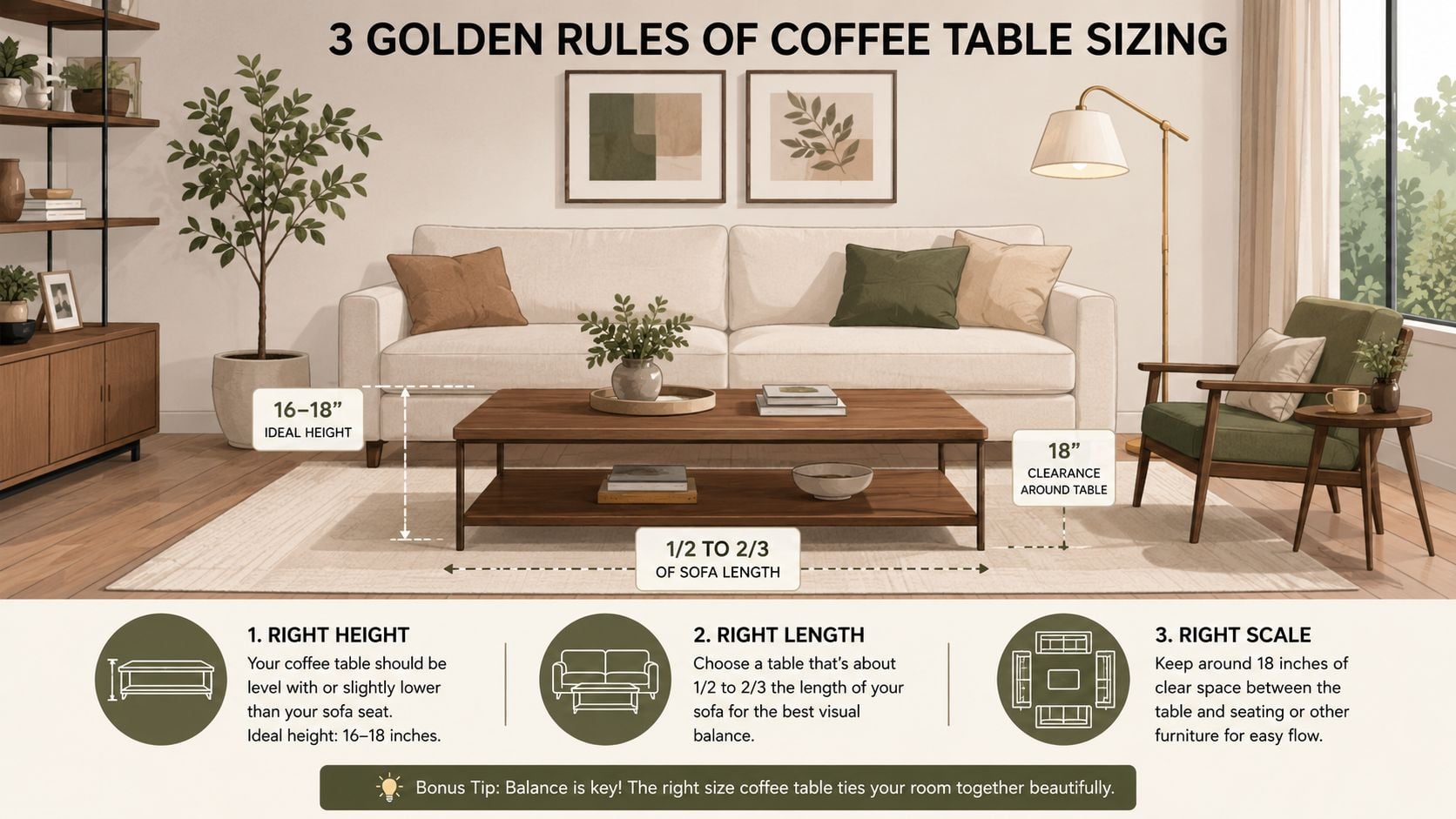
Height is the first measure I check because it affects comfort more quickly than any other dimension. A coffee table should sit slightly lower than the sofa seat. A widely accepted guideline is 1 to 2 inches shorter than the compressed seat cushion height, which often places many tables in the 16 to 18 inch range, according to this coffee table height guide.
The phrase compressed seat cushion height causes confusion for many homeowners. Measure the seat where someone sits, after the cushion gives a little under weight. That number reflects daily use far better than measuring a perfectly fluffed cushion from across the room.
Why it works
- Comfort: Reaching for a drink or book feels natural.
- Sightlines: The table supports the room instead of interrupting it.
- Use: Trays, candles, and reading materials sit at a practical level.
A table that is too tall can feel like a barrier in the middle of the seating group. One that is too low may look refined in a photograph yet become awkward every evening.
Rule two, follow the two-thirds principle
Length determines whether the coffee table feels connected to the sofa or stranded in front of it. A reliable rule is to choose a table that is about two-thirds of the sofa's total length.
For a 90-inch sofa, that works out to a coffee table around 60 inches long.
| Sofa length | Ideal table length |
|---|---|
| 90 inches | 60 inches |
This proportion works because it gives the table enough presence to anchor the seating area without swallowing it. In a complete room concept, that balance helps the table speak to the sofa and sit comfortably within the rug's boundaries, rather than reading as a separate object dropped into the middle of the room.
If you are measuring before a showroom visit, this guide on how to measure furniture correctly can help you check sofa length, seat height, and surrounding dimensions with confidence.
Rule three, protect the clearance
The final rule is about breathing room. Leave enough space between the sofa and the coffee table for easy reach and easy movement. In practice, a gap of about a foot to a foot and a half usually feels comfortable in daily living.
This is often the detail that decides whether a room feels gracious or cramped. The table may be beautiful, and the proportion may be right, but a clearance that is too tight makes the seating area harder to use.
Designer's Insight
Good proportion rarely announces itself loudly. It creates calm. When the height relates to the seat, the length relates to the sofa, and the clearance supports movement, the coffee table becomes the quiet center that helps the whole room work.
Even outside interiors, people understand the appeal of proportion. The phrase on this show your Brooklyn pride shirt lands for the same reason these rules do. Size shapes how something feels.
Choosing the Right Shape for Your Seating Layout
Once size is established, shape becomes the next decision. Shape changes how people move, where they reach, and how the room feels at a glance. The right answer depends less on trend and more on the seating plan.
Rectangular tables for classic sofa arrangements
A rectangular table usually suits a standard straight sofa best. It mirrors the sofa's direction, reinforces order, and provides a generous surface without making the room feel confused.
This shape often works especially well when the room has one main visual axis, such as a fireplace wall or television wall. The arrangement feels settled because the lines speak the same language.
Round tables for softer traffic flow
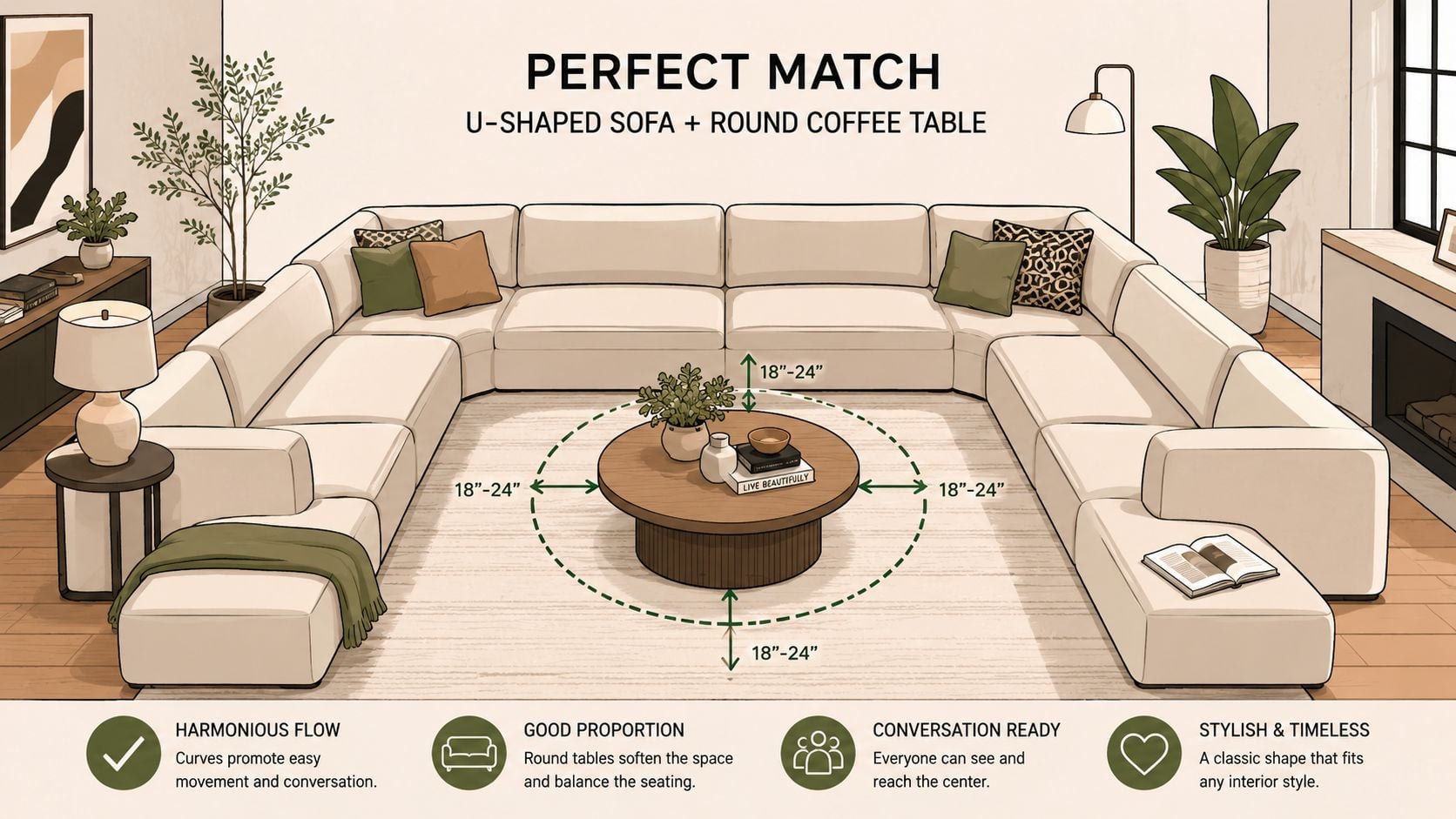
A round table is often the most graceful answer for sectionals, chaise layouts, or homes where circulation passes close to the seating group. Without corners, the room feels easier to move through.
This is also why round forms are popular in family spaces and tighter urban rooms. The shape softens the layout without sacrificing function.
Sharp corners ask more of a room. Rounded edges give movement a little more generosity.
Square tables for balanced conversation zones
A square table shines when seating faces inward from multiple sides. Two sofas opposite each other or a broad sectional arrangement can benefit from that equal access. The table feels centred because everyone relates to it in a similar way.
The caution is scale. A square table that is too large can become heavy very quickly, especially if the room already contains substantial upholstery.
For households that need flexibility, nesting tables in Canada offer a practical alternative. They preserve the visual simplicity of a smaller footprint while allowing extra surface area when guests arrive or when the room's needs shift.
Keep shape and use connected
The table's shape should support the way the room is used:
- For one main sofa: rectangular often feels most natural.
- For an L-shaped sectional: round can improve movement and accessibility.
- For more symmetrical seating: square can strengthen the conversation area.
As noted earlier, height still needs to stay disciplined. The working rule remains that the table should sit 1 to 2 inches shorter than the compressed sofa seat, typically in the 16 to 18 inch range, so seated use feels comfortable and natural.
The Art of Placement and Room Flow
You settle into the sofa, set your cup down comfortably, then someone needs to pass between the table and the chair. Suddenly a well-sized table feels wrong in the room. Placement works that way. A coffee table can suit the sofa beautifully and still interrupt the way the whole space lives.
That is why this part of the guide is less about repeating measurements and more about handling conflict. In real homes, the coffee table sits at the centre of a conversation between seating, circulation, and daily habits. The right position should support all three.
When good proportions compete with easy movement
The usual sofa-to-table clearance can clash with the need for a comfortable passage through the room. In a broad living room, those goals often cooperate. In a narrower room, they start to compete.
Start by asking a simple question. What causes more frustration in daily use: reaching a little farther for a drink, or asking family and guests to squeeze past the table every time they cross the room?
In many layouts, circulation deserves priority. People feel a pinched pathway immediately. A coffee table that sits slightly farther from the sofa is often easier to live with than one that blocks the natural route through the space.
How to set priorities without losing balance
A room works like a well-run household. Everyone needs their place, but the pathways between them matter just as much. The coffee table should never behave like an obstacle placed in the middle of the family conversation.
A clear order helps:
- Protect the main path through the room. If walking around the table feels awkward or forces a detour, the table is too large or too deep for the plan.
- Keep the table aligned with the primary seat. The person who uses the sofa most should still be able to reach the surface with ease.
- Adjust visual weight before giving up on function. An open base, slimmer top, or glass surface can make the centre feel lighter while preserving usable area.
- Choose flexible forms in tight rooms. A pair of smaller tables, a nesting arrangement, or an ottoman with a tray can serve the room better than one heavy block in the middle.
For a wider look at how pathways and seating should work together, see this guide on how to arrange furniture in a living room.
Small changes can restore the whole room
This is often the turning point in a design consultation. Clients assume the room needs a much smaller table, when the underlying issue is position, bulk, or shape. Shift the table a few inches, reduce the visual mass, or break one large surface into two smaller ones, and the room starts to breathe again.
That is the complete room concept at work. The coffee table is not an isolated object to be dropped into an empty spot. It is the heart of the seating group, answering the sofa, respecting the walkway, and leaving enough openness for the room to feel gracious.
For rooms that benefit from lighter, more sculptural supporting pieces, you can also explore Astro West décor for inspiration on accent tables that ease pressure on the centre of the layout.
Practical rule
If two placement goals compete, protect comfortable movement first, then refine reach and surface area around that decision.
That approach serves compact city rooms particularly well, but it also improves larger spaces. Good flow always feels intentional, and intention is what turns a room from almost right to settled and inviting.
Grounding Your Space The Coffee Table and Rug Connection
A coffee table never stands alone visually. It sits on a field of colour, texture, and pattern that either anchors the seating group or leaves it feeling adrift. That is why the rug should be treated as Art for your Floor, not as an afterthought.
Why the rug changes the table
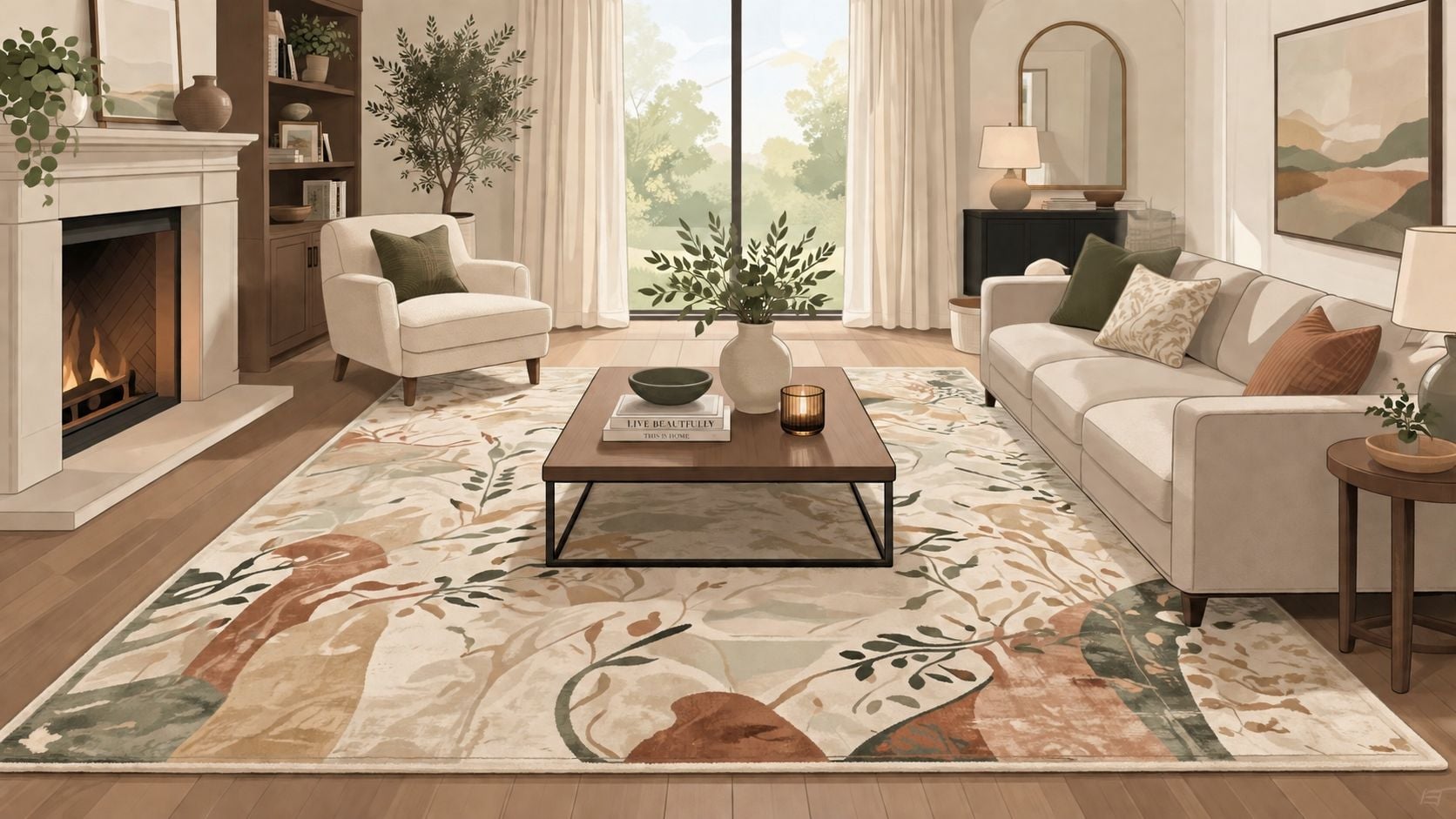
A well-scaled rug gives the coffee table context. It creates a visual room within the room and tells the eye where the conversation area begins and ends. Without that foundation, even an artisanal table can look disconnected.
This is especially true in layered interiors where upholstery, wood finishes, and accent lighting all need a common base note.
Two polished ways to style the relationship
There are two dependable approaches:
- Fully grounded: the coffee table sits comfortably on the rug, with the arrangement feeling centred and settled.
- Lightly transitional: the table still relates clearly to the rug, but the effect is slightly airier and more relaxed.
The right choice depends on the room's mood. More traditional interiors often favour a grounded presentation. Cleaner modern spaces sometimes benefit from a lighter touch.
A beautiful rug does more than soften the floor. It gives the table a reason to belong.
Think of the room as one composition
The most harmonious result comes from selecting the rug and coffee table together, not in separate shopping trips with separate logic. Colour, scale, and texture need to speak to each other.
That is why rug planning belongs inside a complete room concept. A practical starting point is this guide to rug size for a living room, which helps homeowners understand how the seating area and its centre table should sit within one unified arrangement.
For readers searching for Hand-knotted rugs Ontario, this connection matters even more. A hand-knotted rug isn't background material. It is part of the room's authorship.
Achieving Perfection with Bespoke Solutions
A room can follow every standard guideline and still feel slightly off.
That usually happens when the coffee table is being asked to solve a room with unusual proportions, custom seating, or several competing functions at once. In those cases, a ready-made size may be close, but close is not the same as resolved. The best rooms feel calm because each piece relates properly to the others, and the coffee table often carries that relationship at the centre.

The case for custom proportion
Standard sizing rules give you a reliable starting point. Bespoke work gives you precision when the room asks for more.
A low-profile sofa, a deep sectional, or a living room with a tight passage behind one arm can shift the right answer by a few inches, and a few inches are often what separate a table that merely fits from one that feels made for the room. That difference matters because the coffee table does not live alone. It sits in active conversation with the sofa, the rug, the chairs, and the walking paths around them.
Custom proportion is often the clearest answer in rooms with bay windows, fireplaces that pull the seating off-centre, or heritage homes where walls and openings do not follow standard builder dimensions.
Why a design studio matters
A good design studio studies the full composition before recommending a table. That includes the sofa's scale, the rug's footprint, the sightlines across the room, and how people move through the space day to day.
The process is part measurement, part judgement.
A large square table may look balanced on paper, yet feel heavy once the rug pattern, chair arms, and traffic pattern are considered together. A narrower custom piece can restore breathing room without making the seating group feel scattered. Homeowners exploring custom furniture makers often find that the finest bespoke pieces are persuasive in a quiet way. They make the whole room read more clearly.
From selection to placement
Placement still finishes the job. Even a beautifully made table can feel misplaced if it arrives without careful installation and final adjustment within the seating area.
That is why a white-glove approach matters. The table is positioned in relation to the sofa, checked against the rug, and tuned to the room's natural movement so the arrangement feels smooth and intentional rather than newly dropped into place.
For clients across Southern Ontario, that level of care often turns one furniture decision into a room that feels complete, settled, and ready to live in.
For those ready to refine the heart of the living room with timeless craftsmanship, a curated selection, and thoughtful guidance, Critelli Furniture offers a natural next step. Experience the craftsmanship in person at our King Street Showroom. Book your complimentary design consultation today. Visit the Rug Market to find your room's foundation.