
Ergonomic Recliner Chair: A Curated Buyer’s Guide


After a long day, the wrong recliner feels obvious in about five minutes. The seat looks generous, the upholstery feels soft, and then the small frustrations begin, the lower back slides, the neck cranes forward, and the legs never quite settle. A well-chosen ergonomic recliner chair solves that familiar disappointment with support that lasts, not just softness that flatters the first sit.
For a home that values heirloom quality, the difference matters. A recliner should belong in a curated selection of pieces that support the room, the body, and the way daily life unfolds. That is where design-forward construction, measured fit, and timeless craftsmanship earn their place.
Why Most Recliners Disappoint and What Sets Ergonomic Models Apart
Ergonomic recliners distinguish themselves by treating posture as the first design constraint. Seat depth, back angle, lumbar placement, and head support all have to work together before the chair earns a place in a serious home. If those elements are off, the chair may look inviting, but it will never feel right for more than a short stretch.
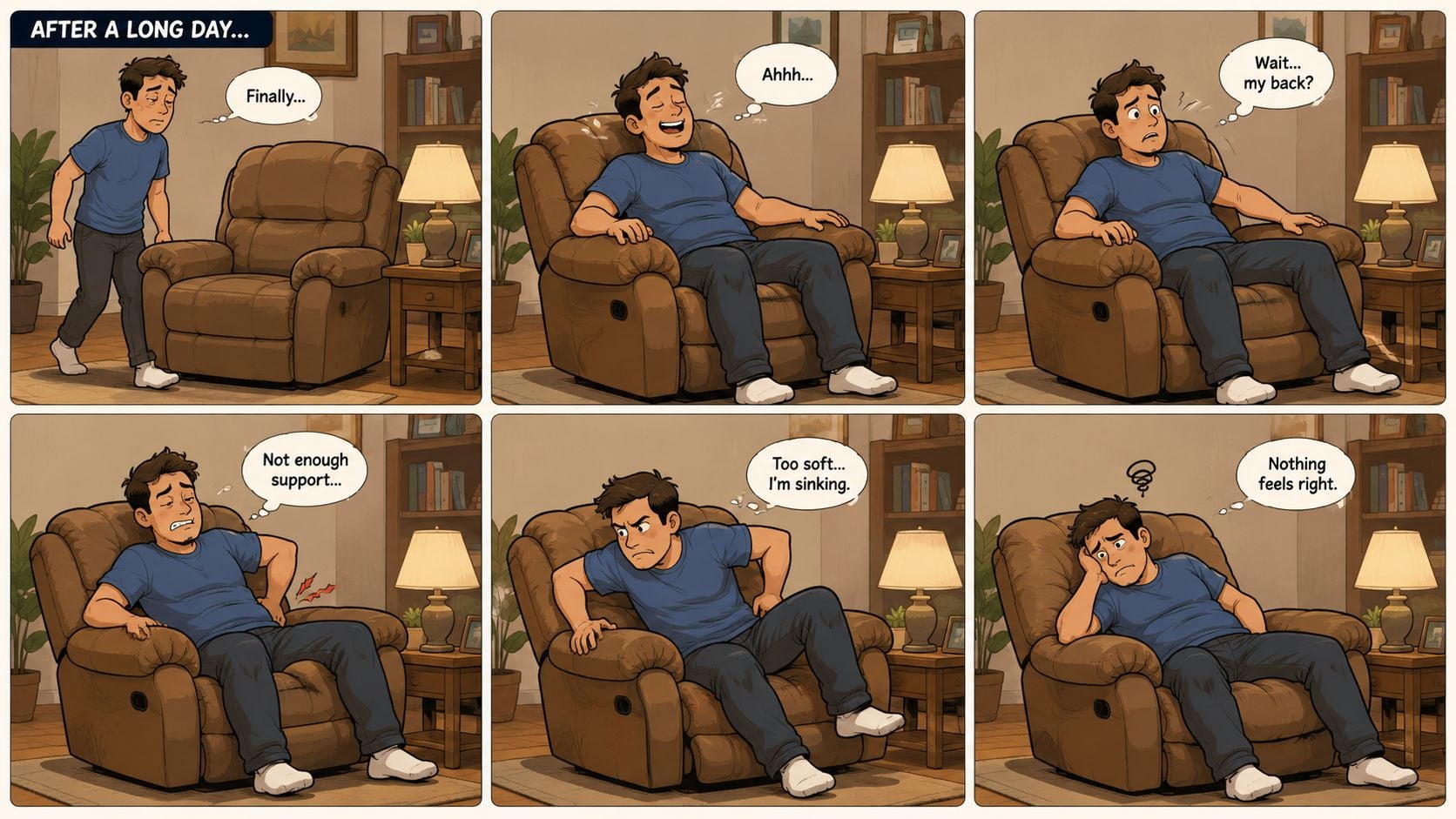
A client settles into a plush recliner after dinner, leans back, and enjoys the first few minutes. Then the seat starts to feel too deep, the headrest lands in the wrong place, and the comfort disappears into constant adjusting. That pattern is common because many standard recliners are built to look inviting first and support the body second.
The modern ergonomic recliner chair came from a more serious design lineage. In the late 1920s, Michigan cousins Edwin Shoemaker and Edward Knabush developed the modern reclining chair with a hinged seat and back, turning older reclining furniture into a practical home chair. In 1947, Shoemaker patented a retractable footrest activated by a handle, and that feature became standard on recliner chairs, marking the shift toward the modern form still familiar in North American living rooms (history of recliners).
Comfort that holds up
Traditional recliners often win on first impression and fail in sustained use. Their cushioning can feel generous, yet the body still slides, the shoulders hunch, and the neck ends up doing work the chair should handle. Ergonomic models correct that by combining support geometry with firmer structure, so the chair keeps holding the body in a usable position after the novelty fades.
The best versions also reveal the difference between comfort and treatment. A premium recliner can reduce strain, support better alignment, and make sitting more tolerable. It will not cure pain on its own, and it should not be sold as a medical fix. That is the honest standard, and it is the one worth paying attention to.
For readers comparing seating with better posture support, Critelli's guide to best chairs for posture sits naturally beside the recliner search.
Practical rule: If a chair only feels good when fully sunk into it, it is probably working against the body somewhere else.
That is why an ergonomic recliner belongs in a home that values both beauty and function. The right piece gives you shape, support, and lasting comfort in one object, with craftsmanship that feels worthy of the room.
The Science Behind Reclined Posture and Lasting Comfort
A good recliner earns its place by working with the body, not just by feeling soft on first contact. Cornell's ergonomics guidance identifies a back-rest angle of about 110° to 130° as a strong comfort range, and it notes that reclined postures reduce lumbar disc pressure and back muscle activity compared with more upright sitting (Cornell ergonomics guidance). That angle matters because the spine is not built to stay locked in one position for hours.
The wider sitting picture makes the case even clearer. Cornell's material points out that Americans spend long stretches of the workday seated, which is why a chair for prolonged use has to do more than look inviting. It needs to distribute load, support the lower back, and keep strain from settling into the hips, shoulders, and neck.
Support geometry beats shallow softness
Cushioning alone never solves the problem. A deep seat can feel generous while still letting the pelvis tip, the shoulders round, and the head drift forward. The stronger chair uses angle, lumbar support, and a properly set headrest to keep the body organised without demanding constant correction from the sitter.
A recliner should reduce effort, not create a new posture job.
That is the practical logic behind reclined support. The body should settle into the chair, with weight spread across the frame instead of pinned into one tired point.
For readers curious about reclining positions in a different setting, the benefits of zero gravity massage article offers a useful way to think about how leg elevation and weight distribution influence comfort. The point stays the same, good reclined support lets the chair share the load with the body, rather than trapping it.
Critelli's Embody Chair by Herman Miller belongs in the same conversation about posture-first seating. Different room, different use, same principle, good furniture should respond to the body's mechanics instead of fighting them.
Critical Measurements and Adjustments for a Perfect Fit
Fit decides whether a recliner becomes a daily favourite or a beautiful mistake. The first number to check is seat pan depth, because the seat should leave slight knee clearance at the front edge instead of pressing the sitter into the back of the knees. For a fixed chair, the seat pan depth should be no greater than 16.9 inches (43 cm), or adjustable through a 16.9-inch range if it moves (seat geometry guidance).
Seat height matters just as much. The guidance calls for at least 15 to 22 inches (38 to 56 cm) of seat-height adjustment, which helps preserve thigh support without compressing the back of the knees and can reduce pressure-related circulation issues during longer sitting periods (seat geometry guidance). A recliner that misses this range may still look substantial, but it will force the body to compensate. Good craftsmanship should support the sitter cleanly, not make them work around the chair.
What to test in the showroom
A proper showroom test should be slow and exact. Sit all the way back, then check whether the thighs are supported without the seat cutting into the knees. Next, raise and lower the chair if the model allows it, because the right height should make standing up feel controlled, not strained. The best chairs reveal their quality in these small details, not in a first impression from across the room.
- Check the seat edge: There should be a clean gap behind the knees, not pressure at the front of the thighs.
- Set the feet naturally: The feet should land in a stable position without the user sliding forward.
- Test the rise: Standing should feel steady through the arms and legs, not like a small struggle.
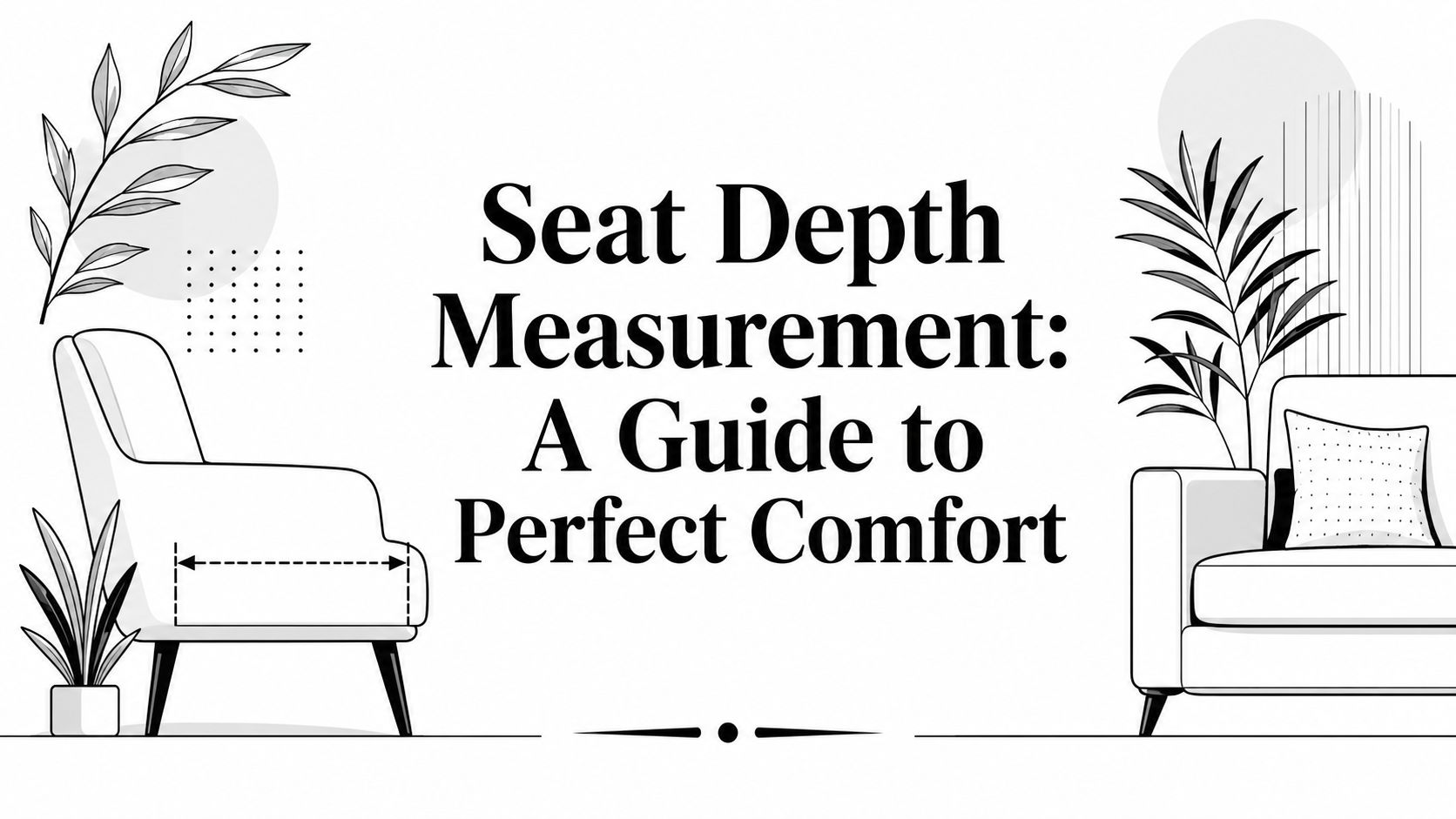
Critelli's seat depth measurement guide walks through these body-contact dimensions in detail, showing how to match a chair to the sitter rather than forcing the sitter to adapt. Bespoke options matter here because a chair can match the sitter instead of asking the sitter to adapt to the chair.
Standard Recliners Versus Ergonomic Models
Ergonomic recliners often begin with a different core. High-density foam cores with graduated firmness zones, firmer support through the lumbar area, and a frame tuned to hold shape give the chair a more disciplined feel than the uniform plush padding found in many standard models. That difference is not just technical, it changes how the chair behaves after long use and how reliably it supports the body day after day.
| Feature | Standard Recliner | Ergonomic Recliner |
|---|---|---|
| Frame feel | Often built around soft padding and a simple frame | Solid frame construction with steadier support and less flex |
| Cushioning | Uniform plush fill that can compress unevenly | High-density foam cores, sometimes with graduated firmness zones |
| Recline mechanism | Basic mechanism with few position choices | More precise motion, often with power controls or finer adjustments |
| Seat geometry | One-size-fits-most proportions | Better seat depth, seat height, and back angle for a closer fit |
| Customization | Limited fabric and finish choices | More room for upholstery, finish, and control options |
| Long-term value | Can soften, sag, and look tired sooner | Built to hold structure, comfort, and appearance over time |
The mechanism matters just as much as the padding. A standard chair often relies on a simpler recline path, while a more refined model may use power controls or a better-tuned manual action, which is why power recliner vs manual is a useful reference before you choose. Premium construction also changes the materials you feel every time you sit down. Solid wood elements, well-finished joinery, and quality leather or upholstery give the chair weight, stability, and a more permanent presence in the room.
What premium construction changes
Premium construction changes how the chair holds up in daily use. Seams stay straighter, the mechanism feels more controlled, and the recliner keeps its shape instead of starting to sag or wobble at the stress points. That is the advantage of heirloom-grade work; it preserves comfort without making the piece look tired after regular use.
The case for a better chair is straightforward. A recliner that will be used every evening should be built to a higher standard than a chair chosen only because it felt soft during one showroom visit.
The Case for Heirloom Quality and Bespoke Customization
Furniture becomes more interesting when it reflects the room and the owner at the same time. That is why heirloom quality matters so much in a recliner, the piece has to carry its comfort while still looking intentional beside the rest of the interior. Critelli's 1914 heritage and family-run service model support that philosophy, because a century of editing collections tends to sharpen taste rather than dilute it.
The strongest custom pieces don't shout. They hold their own through proportion, material, and finish. A hand-finished leather can feel entirely different from a standard upholstery choice, and a chosen fabric weave can either settle into a palette or clash with it. The value of bespoke customization is that it lets the recliner participate in the room instead of dominating it.
For clients seeking a more composed result, Critelli's heirloom quality furniture page sits naturally within this conversation. The same mindset extends to Stickley and Century, where timeless craftsmanship and restraint do more work than ornament ever could.
White-glove service as part of the design
White-glove delivery matters because the chair is only finished when it lands correctly in the home. A recliner needs the right clearance, the right visual weight, and the right relationship to the surrounding seating, especially in a complete room concept. That is where in-home consultation and professional placement become part of the value, not an add-on.
Good furniture is never just purchased. It's placed, balanced, and allowed to belong.
This is also where the Design Studio approach earns its keep. A recliner can be specified as one piece, but it should be considered inside a broader composition, especially when the room also needs a reading chair, a rug, or a new layout for conversation.
Matching Recliner Features to Your Lifestyle and Space
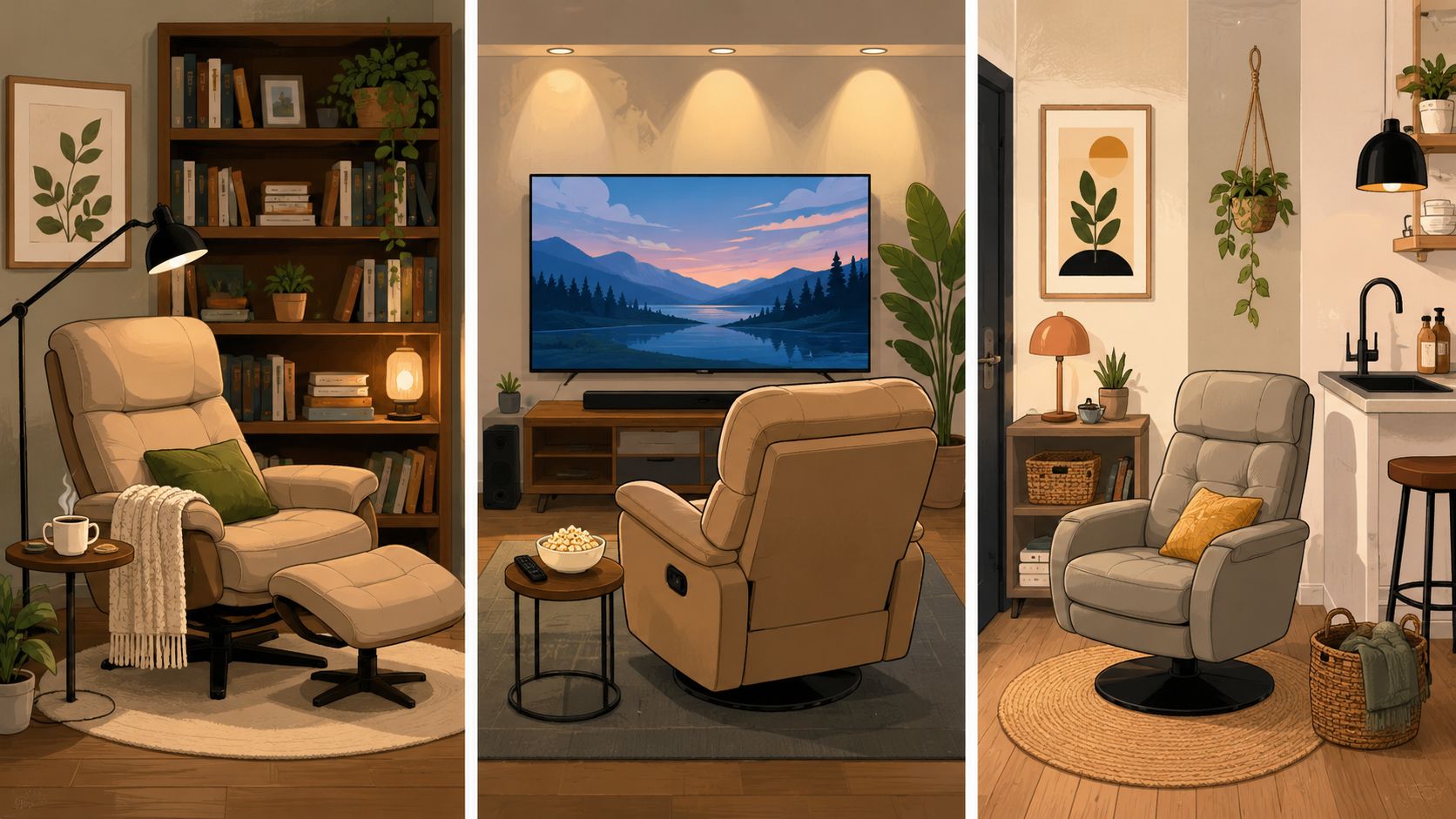
A recliner for reading should behave differently from one chosen for movie nights. In a quiet corner, a supportive backrest and a well-set headrest matter more than visual bulk, because the body stays still longer while the mind moves from page to page. In a television area, a smoother recline and a more open leg position usually matter more, since the chair needs to support longer stretches of seated relaxation.
Small spaces demand discipline. A compact footprint, discreet controls, and a thoughtful swivel base can keep the chair useful without crowding circulation paths. Formal living rooms call for a more refined silhouette, where the recliner feels suitable enough to sit with a sofa, side table, and lighting plan without announcing itself as the only object in the room.
Build the room around the chair
A recliner rarely works alone. A hand-knotted rug anchors the seating area, and the Rug Market's idea of “art for your floor” is exactly right for rooms that need colour, texture, and proportion to feel finished. For anyone exploring covers and protection in a practical way, The Sofa Cover Crafter's guide is a helpful reference for thinking through wear, maintenance, and everyday use.
Designer's Insight: A bold leather recliner looks richer when it sits on a neutral rug with layered texture. The contrast keeps the room from feeling heavy and lets the chair read as curated, not dominant.
Critelli's interior design services in St. Catharines also make sense here, especially for clients balancing comfort with a polished room plan. The best result comes from matching the recliner to the architecture, not just the floor plan.
What Ergonomic Recliners Can and Cannot Do for Back Pain
The most common mistake is asking a recliner to behave like treatment. An ergonomic recliner chair can improve comfort, reduce pressure, and make long sitting sessions easier to tolerate, but it is not a cure for back pain. Research on ergonomic seating is clearer on comfort and discomfort than it is on pain, and findings on pain reduction are mixed across studies (research review).
That distinction matters because many showroom conversations blur relief, support, and clinical outcome into one promise. A chair with lumbar support, adjustable recline, and better seat geometry can help the user sit more naturally, yet it cannot replace medical care when pain is persistent or worsening. The honest position is more useful, the chair can improve the sitting experience, but it does not solve every source of pain.
Older adults need more than softness
The fit question becomes even more important for older adults and mobility-limited users. Research on seating in aged care identifies the angle of the seat and backrest and the presence of armrests as major physical-fit factors, and ergonomic guidance also stresses adjustable seat height and supportive recline geometry for posture changes (seating in aged care). That means a chair's real job is not just comfort, it's helping the sitter get in, settle, and stand up with less strain.
The right chair should make rising feel controlled, not precarious.
This is why a premium recliner should be judged by what it realistically does. It can support better sitting, it can ease daily discomfort, and it can make recovery moments more comfortable, but it should never be sold as a substitute for clinical treatment or a medical solution.
Integrating Your Recliner into a Complete Room Concept
A recliner looks strongest when it belongs to a whole room idea. That means the chair, the rug, the lighting, and the occasional table all need to work together so the eye moves naturally through the space. Critelli's Rug Market belongs at the start of that process, because art for your floor sets the tone before the first chair is even chosen.
A good room also needs restraint. Pair the recliner with a side table at the right height, a lamp that softens evening use, and textiles that echo either the leather tone or the fabric weave. That kind of coordination makes the recliner feel settled, which is exactly what a premium seating piece should do.
Critelli's complimentary design consultations and professional space planning services are useful for that exact reason, especially across the Greater Niagara, Hamilton, and Toronto markets. For clients who want the room to feel edited rather than assembled, a calm and coherent plan always wins.
Critelli Furniture curates seating, rugs, and room plans that treat comfort as part of design, not a separate decision. For anyone comparing an ergonomic recliner chair with the rest of a living space, the right next step is to see the materials, proportions, and finishes together. Visit Critelli Furniture to explore the collection and book a complimentary design consultation, then experience the craftsmanship in person at the King Street Showroom.