CRITELLI'S SUMMER SALE | UP TO 70% OFF



Tulip Dining Table Guide for Timeless Modern Homes


A chair catches on a table leg as a guest sits down. Another chair has to angle away from the wall, narrowing the passage through an open-concept dining area. In a Southern Ontario condo or a compact St. Catharines home, those small frustrations can make an otherwise beautiful room feel poorly organised.
A tulip dining table approaches the problem differently. Its single pedestal replaces the familiar forest of four corner legs, giving the room cleaner sightlines and allowing chairs to tuck more completely beneath the top. The result is both sculptural and practical, a design-forward piece that can anchor a complete room concept rather than fill an empty dining space.
This guide considers the table as a long-term furnishing choice. Its history, materials, engineering, proportions, chair pairings, rug placement, daily care, and resale considerations all matter. That measured approach reflects the heritage perspective of a family-run furniture house serving the Greater Niagara, Hamilton, and Toronto markets, where heirloom quality, comfort, and timeless craftsmanship need to work together.
Introduction to the Tulip Dining Table and Why It Endures
A round or oval pedestal table can make a dining room feel calmer because the eye no longer has to take in four separate legs. The effect becomes especially valuable when a dining area shares space with a kitchen or living room. Chairs can move around the perimeter more easily, while the central form remains visually quiet.
The design also changes how people gather. Without corner legs dictating where each person sits, diners can adjust their positions naturally. A child can pull a chair closer, a host can add visual symmetry to the setting, and the room can retain a sense of openness even when it's fully furnished.
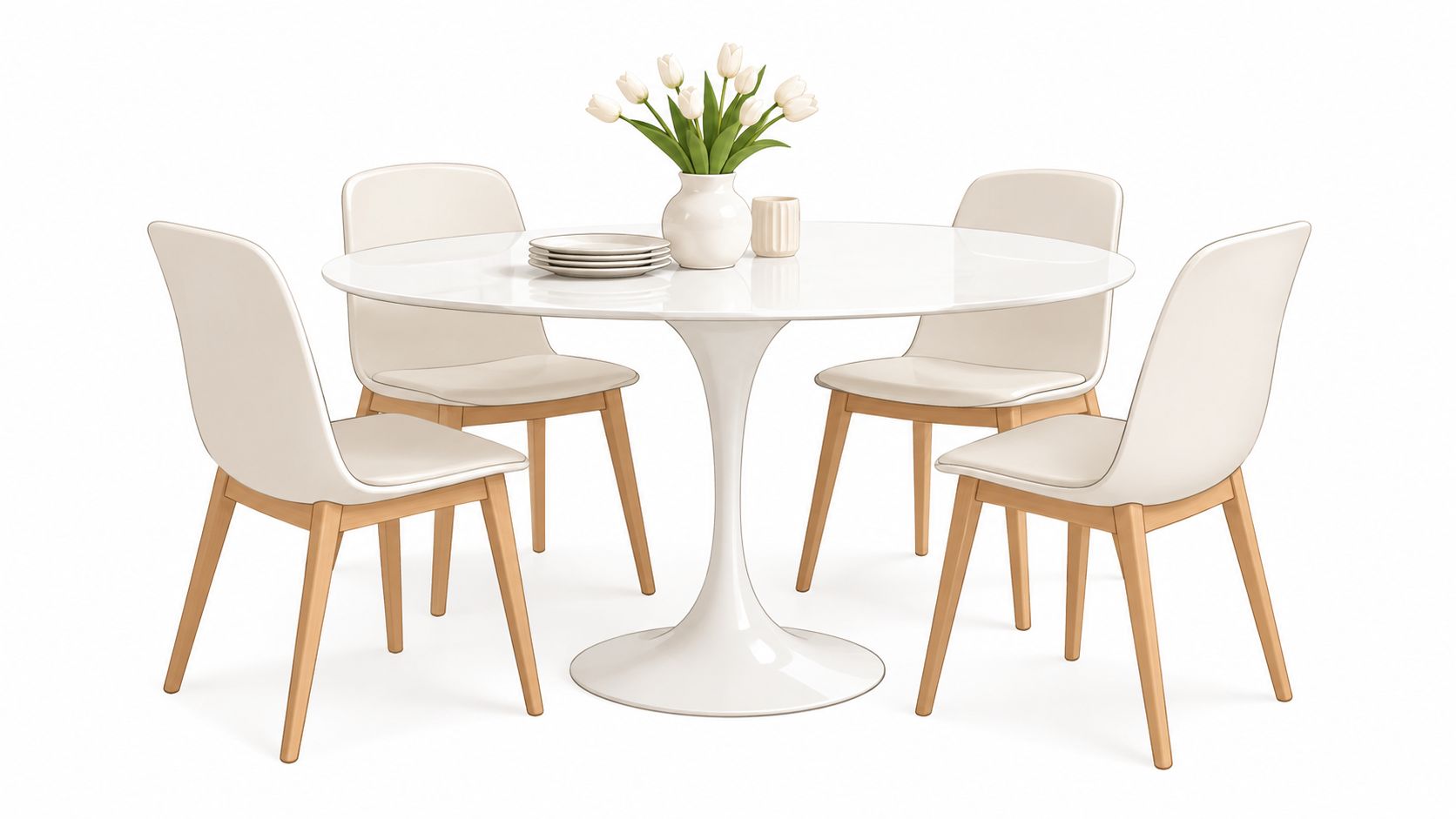
A sculptural answer to everyday clutter
The table's appeal comes from the balance between presence and restraint. A well-proportioned top provides a generous social surface, while the base reads almost like a piece of sculpture. White, stone, wood-look, and darker finishes can each shift the mood, but the underlying silhouette remains recognisable.
For readers comparing options, the round white dining table collection offers a useful reference point for considering how a pale pedestal form interacts with flooring, upholstery, and natural light. The decision shouldn't begin with colour alone. It should begin with the room's circulation, the number of people who usually dine there, and the atmosphere the furniture needs to create.
Why the form still feels current
Eero Saarinen's mid-century solution remains relevant because it answered a practical design problem, not merely a decorative brief. Contemporary homes still need furniture that supports conversation, movement, and flexible use. The table's enduring character comes from that combination of visual clarity and physical function.
A tulip table also suits an edited interior. It can sit comfortably beside warm timber, refined upholstery, artisanal ceramics, or a richly patterned rug. Rather than forcing the entire room into a single period, it gives the scheme a disciplined centre.
The Story Behind the Iconic Pedestal Design
A dining table must do more than hold plates. In a compact Ontario condo, its base also shapes how people pull out chairs, pass behind one another, and share the room. That practical question sits at the heart of Finnish-American architect and furniture designer Eero Saarinen's mid-century design.
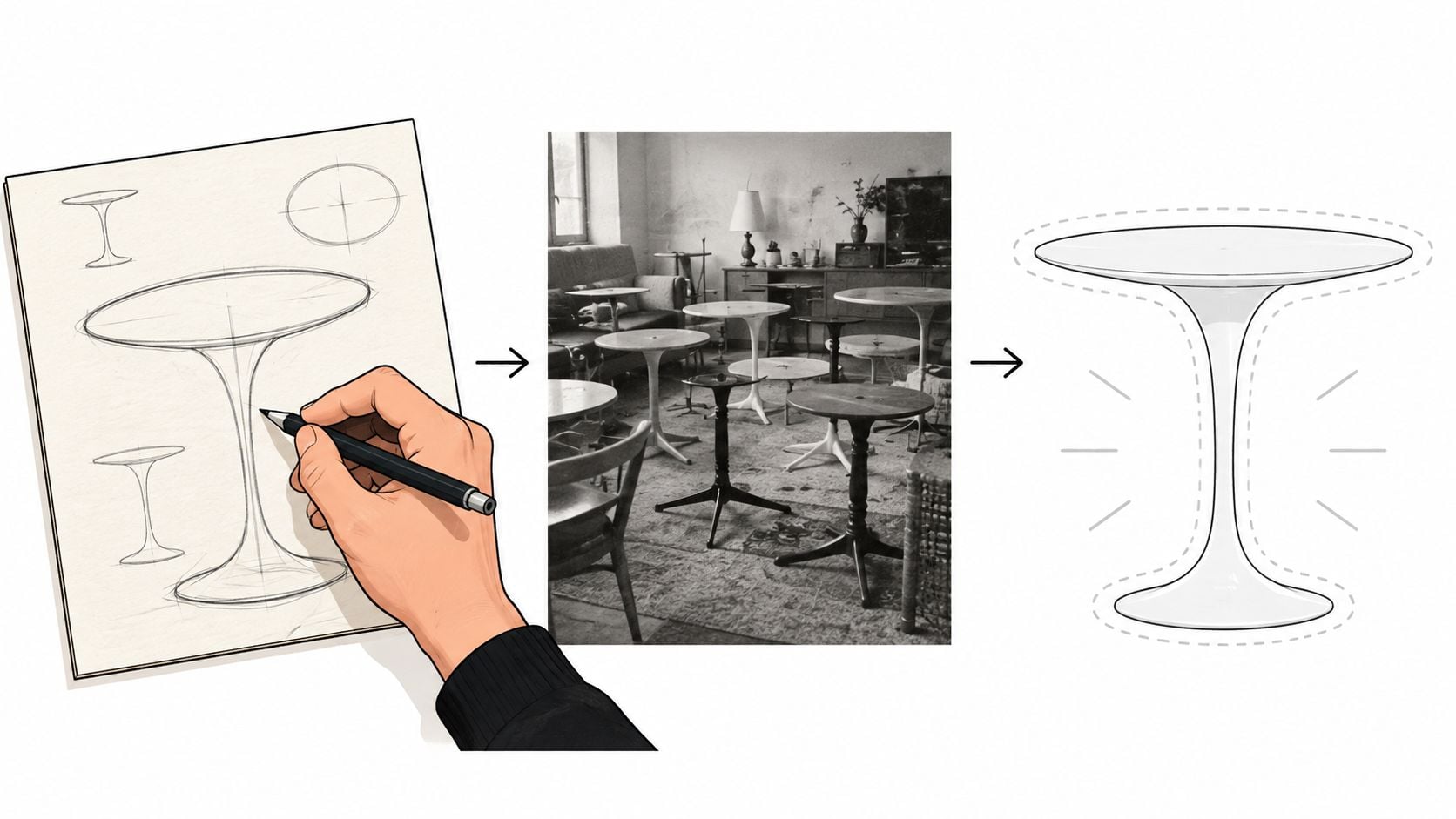
Saarinen developed the tulip dining table to remove the visual and physical clutter created by four-legged furniture. The result was a single pedestal with a clear relationship between tabletop, seating, and floor. The design story is documented in this account of the Tulip table's development.
The Pedestal Group entered production in the late 1950s and has remained in continuous production since. The table therefore belongs to a wider design family, rather than standing alone as an isolated icon.
From prototype to production
The single-base structure lets chairs tuck fully beneath the tabletop. It clears the area where chair legs, knees, and feet compete for room, much like replacing a crowded bundle of branches with one strong trunk. That change helped establish the modern pedestal-table format still used in contemporary interiors.
Functional milestone: The pedestal is both a visual decision and a circulation tool. It protects legroom and makes movement around the dining surface easier to plan.
This is why the table works best as the anchor of a complete room concept. Its pedestal establishes the centre, while the surrounding chairs, lighting, and rug determine how comfortably that centre functions. In an Ontario condo, clear circulation can matter as much as the table's sculptural outline.
Why heritage matters in a contemporary home
Southern Ontario interiors can draw on mid-century restraint without becoming period rooms. The tulip form introduces history through proportion and engineering, then leaves enough visual space for contemporary architecture, warm timber, custom upholstery, or collected ceramics.
A rug can act as the room's foundation, defining the dining zone before decoration is layered in. A floral still life or a small arrangement of tulips can echo the table's name and soften its smooth geometry. Readers drawn to botanical imagery may find a considered counterpoint among these original tulip paintings.
The broader principles behind this approach are explained in what modern furniture design means. That context helps clarify whether a tulip table should support a modern, transitional, or eclectic room, and how Critelli's heritage-focused curation can connect the table to the rest of the interior.
Materials Finishes and Engineering That Define Quality
The silhouette gets attention first, but the materials determine how the table behaves over time. A designer reads the top and pedestal as a partnership. The surface affects care, visual weight, and moving risk, while the base controls stability and the way the table meets the floor.
Reading the tabletop
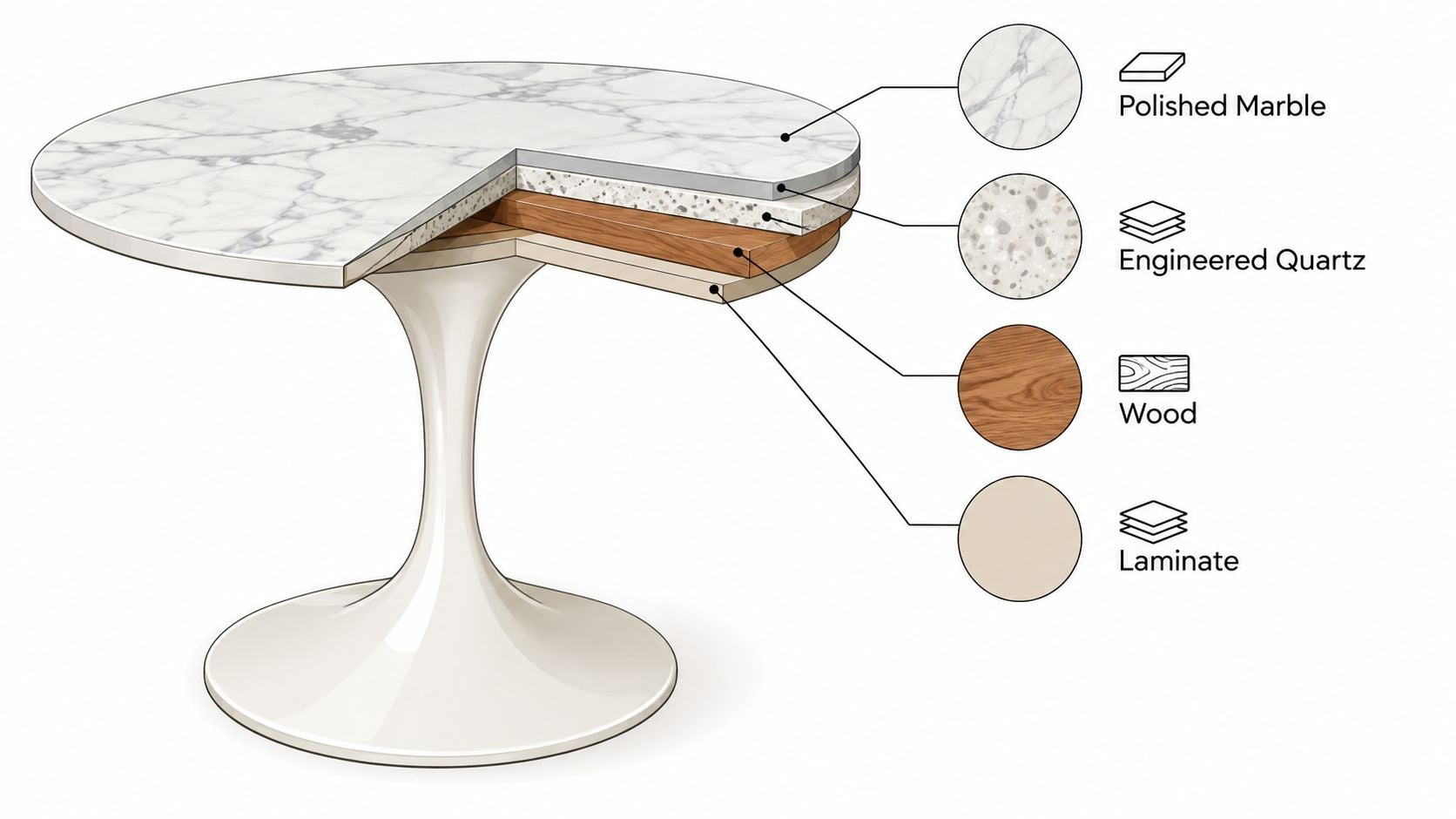
Marble offers natural veining and an architectural appearance. It also demands an informed care routine because spills, heat, and acidic substances can affect the surface. Quartz can provide a stone-like look with a practical, consistent finish, though its substantial weight still matters when a table must be transported or moved within a home.
Laminate is often selected for approachable maintenance and a clean visual effect. Wood veneer brings warmth and grain without the same visual density as a solid slab. None of these materials is automatically superior. The right choice depends on whether the household prioritises expressive natural variation, everyday resilience, lightness of appearance, or simpler upkeep.
The sustainable furniture materials guide can help buyers ask more informed questions about construction and finish rather than judging quality from colour alone.
Understanding the pedestal
Pedestals may be formed from cast aluminium, fibreglass, or other engineered materials, then finished in painted, polished, or textured treatments. The important question is how the base distributes weight and how carefully it meets the floor.
A single pedestal concentrates load into one central support instead of spreading it across four corners. That geometry makes proper levelling especially important. Canadian fixed-height work surfaces are commonly specified at 730 ± 25 mm, or 28.7 ± 1.0 inches, while accessible dining surfaces are often required to sit between 710 mm and 865 mm, or 28 inches to 34 inches, above the finished floor. These ergonomic bands are set out in the Canadian workspace technical specifications.
What quality feels like in person
Canadian procurement specifications also require table products and components to meet CAN/CGSB-44.227. Some institutional specifications call for full-panel support with at least 25 mm of vertical levelling adjustment, a detail that helps address uneven floors. The Ontario procurement addendum provides that technical reference.
A showroom inspection should include more than a glance at the finish:
- Test the base: Apply gentle pressure at the edge and observe whether the table settles or rocks.
- Inspect the underside: Look for clean construction, secure fittings, and a support system that feels proportionate to the top.
- Check the edge: A refined edge should feel intentional and comfortable against the forearm.
- Ask about maintenance: The salesperson should be able to explain suitable cleaning methods for the specific material.
Sizing Seating Capacity and Space Planning for Real Homes
A round table can look perfectly proportioned in a showroom and still crowd a condo dining area. Begin with the tabletop, then account for chair depth, pull-out space, and the walking route around the complete setting. In an Ontario condo, those extra centimetres often determine whether the room feels calm or congested.
Plan for about 90 cm of clearance between the table and nearby walls, furniture, or circulation routes. This space allows diners to pull out a chair and lets others pass behind them. Use it as a planning guide, not a promise that every arrangement will fit, because chair arms, sideboards, islands, and doorways change the usable footprint.
A room-fit guide
The table below shows how to apply that clearance principle. Since chair dimensions vary, treat each description as a starting point for measuring your own room.
| Table Diameter | Seats Comfortably | Minimum Room Size with 90cm Clearance |
|---|---|---|
| Compact round top | Small household or intimate meals | Measure the tabletop, chair depth, and a full 90 cm movement zone on every side |
| Medium round top | Everyday family dining | Allow the tabletop diameter plus 180 cm across the room |
| Large round top | Larger gatherings | Allow the tabletop diameter plus 180 cm across the room, with additional room for chair depth and circulation pinch points |
The pedestal changes how the room is experienced. Like a clear central column in a gallery, it keeps the corners visually open and gives chairs more flexibility than four separate table legs. It does not remove the need for space behind each seated guest.
Measure the lived room
Mark the proposed tabletop on the floor with painter's tape. Place the actual chairs around it, then pull each one back as someone would when sitting down. Walk the route behind the chairs. This test exposes bottlenecks near a sideboard, kitchen island, doorway, or wall before the table arrives.
For a more detailed starting point, the round dining table dimensions guide can help organise measurements before a showroom visit. Record the room's narrowest passage as well as its overall width. A generous-looking open plan can still feel tight where circulation pinches.
Planning rule: Measure the room as people use it, not as an empty rectangle. Chair pull-out and walking routes decide whether the table feels generous or cramped.
A tulip table should anchor a complete room concept, not occupy space in isolation. Choose the diameter only after considering chairs, lighting, and the rug that will define the dining zone. A slightly smaller top with easy movement often gives an Ontario condo greater comfort than a larger one that leaves every route obstructed.
How to Style Your Tulip Table with Chairs and Rugs
A tulip dining table becomes convincing when the rest of the room responds to its shape. Matching every curve can make the arrangement feel overly rehearsed, while too much contrast can make the pedestal look disconnected. The strongest rooms usually combine one shared quality, such as colour, material, or visual softness, with a deliberate point of difference.
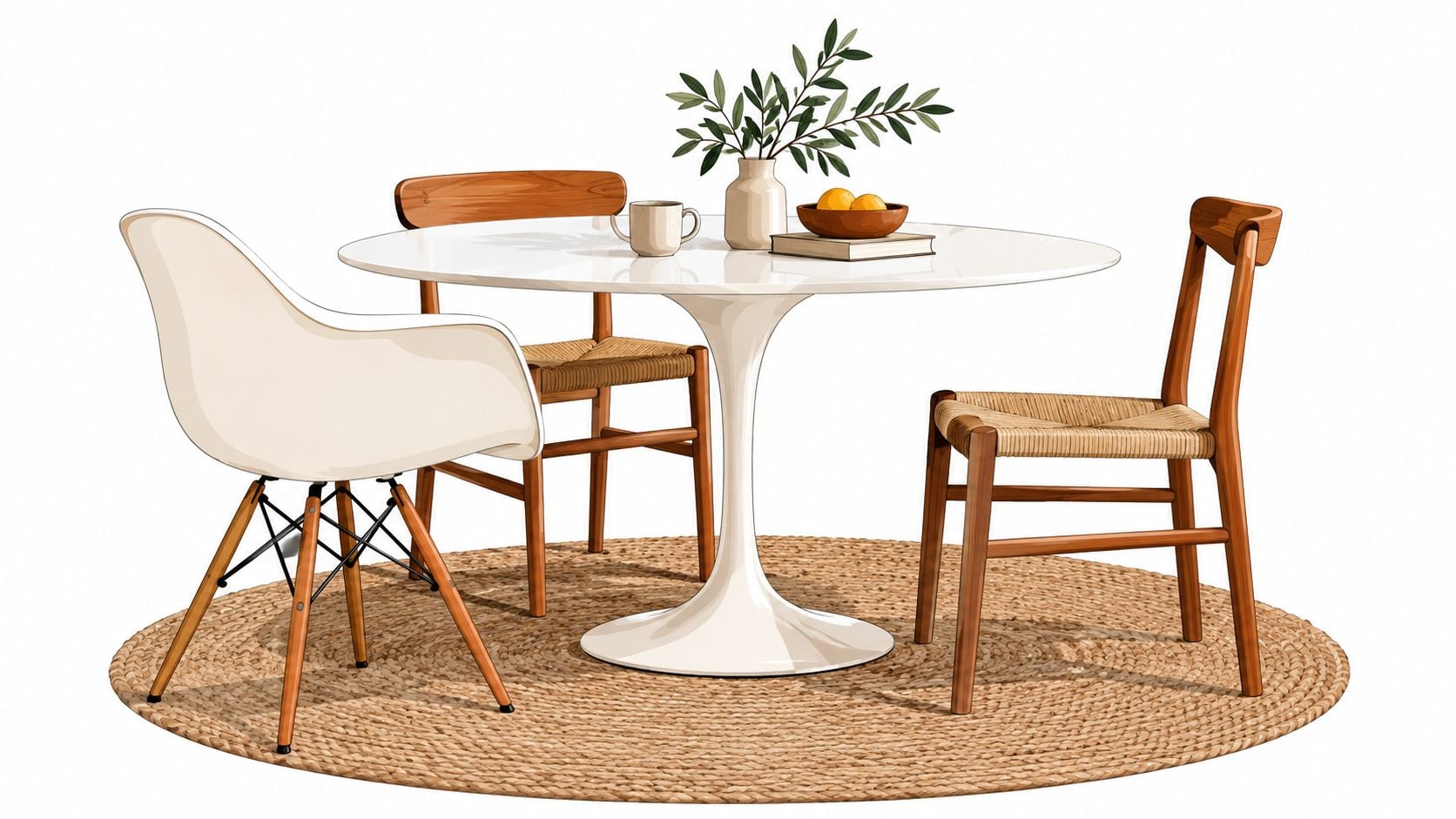
Begin with the chairs
Saarinen-style chairs create a unified mid-century language, especially when the upholstery echoes the tabletop or base. Upholstered side chairs introduce comfort and can soften a hard stone top. Wood chairs add warmth and make the room feel more connected to traditional architecture.
A mixed-chair arrangement can work when the table remains the visual anchor. For example, matching end chairs with simpler side chairs can give a dining room a collected character without making the setting appear accidental. The dining table, chair, and bench collection provides useful combinations for comparing these relationships.
Treat the rug as art for your floor
The rug should support the whole arrangement, not merely sit beneath the pedestal. A round rug can echo the tabletop and reinforce the central composition. A square or softly patterned rug can create contrast, particularly in a room with strong architectural lines.
A hand-knotted rug offers texture and visual depth beneath a clean table form. Low or moderate pile generally makes chair movement easier, while a dense surface can bring warmth to stone or painted finishes. The rug should extend beyond the chairs when they're pulled back from the table, so the furniture doesn't appear to balance precariously at its edges.
The Critelli Rug Market treats rugs as “Art for Your Floor”, a useful way to think about the foundation of a complete room concept. Colour, scale, and pattern should be selected alongside the table and chairs, not as an afterthought.
Designer's Insight: Pair a bold Hancock & Moore leather chair with a neutral hand-knotted wool rug to balance the room's energy. The leather supplies character, while the rug gives the pedestal a quiet, grounded setting.
Build the room as a composition
Lighting should illuminate faces without competing with the table's silhouette. A restrained pendant can reinforce the centre, while artwork or a sideboard can introduce vertical interest around the low horizontal arrangement.
Lifestyle imagery is most useful when it shows the table in a fully styled room, with chairs, rugs, lighting, and accessories working together. That complete-room perspective reflects the Design Studio approach, where style, lifestyle needs, functional requirements, budgets, timelines, drawings, furniture, area rugs, artwork, and accessories are considered together through interior design consultations.
Pros Cons and Common Misconceptions for Everyday Living
A tulip dining table can clarify a room, yet its pedestal is not a universal solution. For busy households, the right choice depends on how people move, host, clean, and expect to live with the piece over time. The table should anchor the room concept, not stand apart from it.
The advantages
The strongest benefit is uninterrupted legroom. Chairs can tuck beneath the top without meeting corner supports, which makes conversation easier and keeps sightlines open. In an Ontario condo or open-plan home, that central footprint can help the dining area feel less crowded than a conventional rectangular table.
Its historical design language offers lasting flexibility. The silhouette feels current beside contemporary upholstery, while its mid-century character can sit comfortably with vintage furniture and heritage architecture. That balance makes the table a useful foundation for a curated room, rather than a short-lived decorative theme.
The trade-offs
A single pedestal may wobble on an uneven floor or when its levelling system is poorly adjusted. Stability testing matters more with stone or quartz tops because the concentrated load places greater demands on the base. Heavier materials also make delivery, moving, and future floor-plan changes more demanding.
Capacity requires an honest look at hosting habits. A fixed round top supports an intimate, shared conversation, but it may offer less flexibility than a rectangular table designed to accept leaves. Households that regularly host larger gatherings should compare everyday comfort with occasional seating needs before deciding.
Three assumptions to question
- “All tulip tables are identical.” Top thickness, edge treatment, pedestal construction, finish quality, and levelling hardware can change both comfort and performance.
- “A stone top is maintenance-free.” Stone still needs suitable cleaning and protection from careless use.
- “The pedestal makes every room feel larger.” It removes corner obstruction, but the tabletop and chairs still require genuine circulation space.
Resale listings in Ontario regularly show tulip tables seating 6 to 8 people, although condition and provenance influence value. That activity suggests an established secondhand interest, not a guaranteed return. Material, proportions, construction, finish, and local demand all shape the longer-term decision. A well-chosen table earns its place first through daily function, then through the character it contributes to the complete room.
Care Maintenance and Buying with Confidence at Critelli Modern
A tulip dining table works best when the room is considered as one composition. Start with the top's care needs, then coordinate the pedestal, chairs, lighting, and rug so daily use feels natural rather than tightly arranged.
Stone surfaces should be wiped promptly after spills and protected from harsh substances. Wood veneer benefits from gentle cleaning and limited moisture, while painted and laminate finishes call for a soft cloth and non-abrasive products. The base also deserves regular attention. Check for movement after installation or relocation. If the table rocks, proper levelling or professional adjustment is safer than improvised padding that may weaken the base.
A considered buying checklist
- Confirm proportions: View the top, pedestal, chairs, and rug together. The table should anchor the room without crowding circulation.
- Inspect construction: Examine the underside, joins, edge, finish, and contact points.
- Discuss customisation: Ask about available materials, colours, dimensions, and upholstery coordination.
- Consider future moves: Stone tops and heavy bases require careful handling, planning, and suitable delivery.
- Review the room concept: Account for lighting, artwork, storage, and the rug before finalising the table.
Critelli Furniture traces its family-run history to 1914. A family archive profile records the opening of its first retail store in Thorold that year, followed by a move toward fine furniture and expansion in St. Catharines, as described in this heritage account.
That heritage informs a curated assortment of contemporary and traditional makers carried by Critelli. Critelli Modern on St. Paul Street offers a setting for contemporary forms, while the King Street showroom supports a broader furnishing conversation. The Rug Market supplies the room's foundation with hand-knotted, artisanal rugs selected as Art for Your Floor. A rug establishes the visual boundaries of the dining area, much like a frame gives a piece of furniture its setting.
White-glove service should include more than leaving a package at the door. Premium delivery can coordinate the installation of furnishings, area rugs, artwork, and accessories, as described through coordinated furnishing installation. For a tulip dining table, this support can simplify the move from showroom to Ontario home, especially when a stone top, delicate finish, or carefully aligned rug is involved.
Experience the craftsmanship in person at our King Street Showroom, where a tulip dining table can be considered as part of a complete room concept. Critelli Furniture offers curated furnishings, design guidance, the Rug Market, and white-glove delivery for homes across St. Catharines and Southern Ontario. Book your complimentary design consultation today, and visit the Rug Market to find your room's foundation.