
Seat Depth Measurement: A Guide to Perfect Comfort

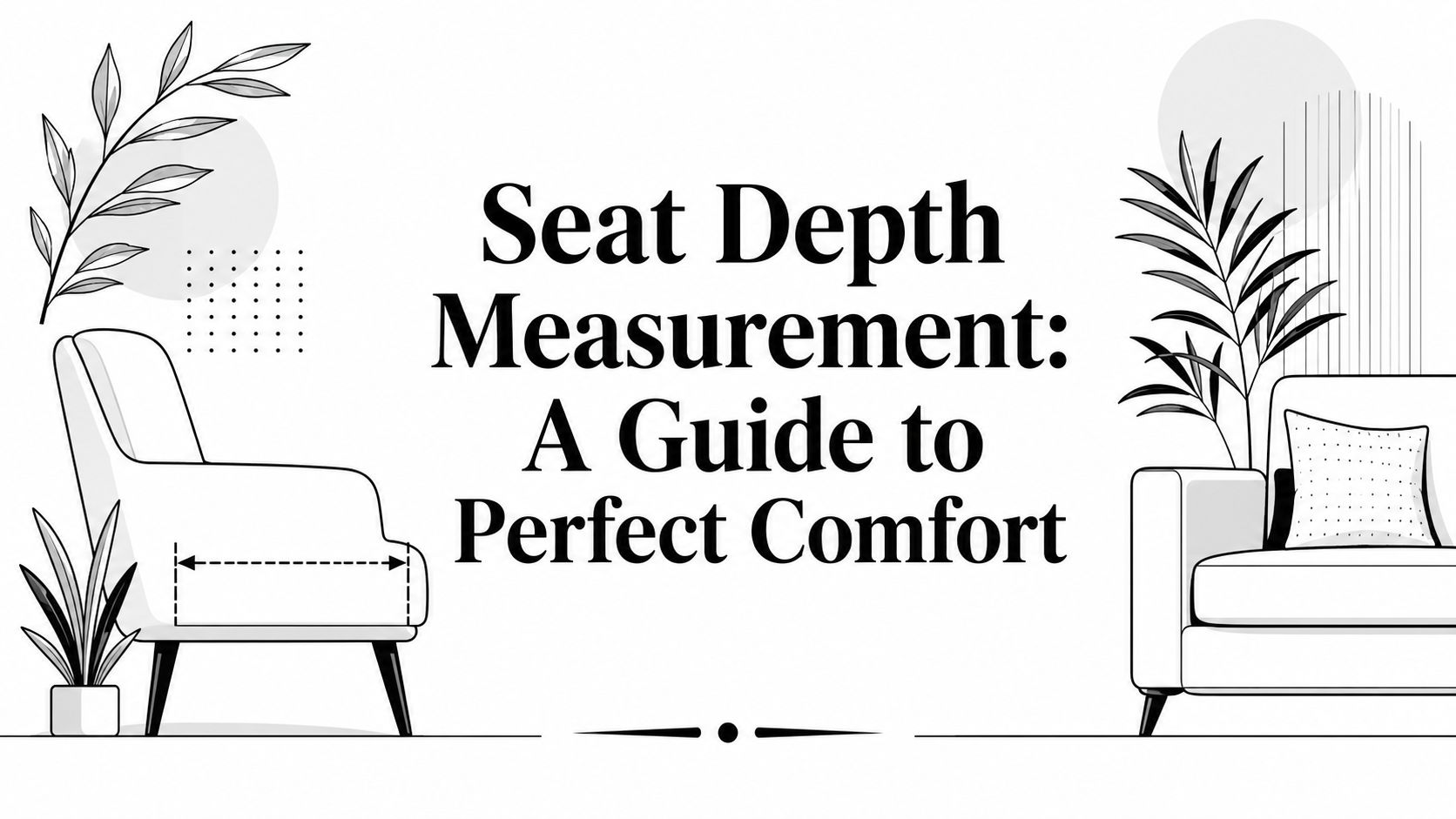
A beautiful chair can disappoint within minutes. The room looks right, the silhouette is elegant, the upholstery is exquisite, and yet the body starts negotiating. Feet tuck under. The lower back drifts forward. The edge of the cushion presses too close to the knee, or the seat ends too soon and leaves the thighs unsupported.
That discomfort often comes down to one overlooked dimension: seat depth measurement. For anyone furnishing a principal living room, a dining space, or a reading corner meant to last for years, this isn't a minor technical detail. It's part of the difference between furniture that merely photographs well and furniture that lives well.
The Unseen Element of Timeless Comfort
A room can be impeccably composed and still fail the body. That happens often with seating chosen by appearance alone. A sofa may seem luxuriously generous until it proves too deep for upright conversation, or a lounge chair may appear refined but feel shallow after half an hour with a book.
Seat depth is where aesthetics and ergonomics meet. It governs whether the sitter can use the back support properly, whether the thighs are supported, and whether circulation remains unimpeded. That's why seasoned designers treat this measurement as part of the architecture of comfort, not as a line buried in a product description.
Why this matters more in a high-value purchase
In Canada, the luxury furniture market generated USD 613.7 million in revenue in 2024 and is projected to reach USD 797.4 million by 2030, signalling stronger investment in bespoke interiors and high-end seating choices (Canadian luxury furniture market outlook). When clients are investing at that level, fit matters as much as finish.
A discerning buyer doesn't want furniture that has to be tolerated. The expectation is heirloom quality, and heirloom quality includes proportion, support, and long-term ease of use. That's especially true in design-forward homes where a chair or sofa must serve both daily life and the complete room concept.
A seat that fits properly almost disappears. The body relaxes because it no longer has to compensate.
The measurement that changes the whole room
Seat depth influences more than comfort in isolation. It affects how a person sits in relation to a coffee table, whether a rug placement feels balanced, and how a conversation area functions. In a well-curated interior, each piece supports the others.
That's why seating should be viewed in context, not as a standalone purchase. A refined lounge space depends on proportion across the entire arrangement, from upholstery to lighting to the grounding role of the rug. For readers considering a more supportive accent seat or reclined seating profile, this collection of living room lounge chairs offers a useful sense of how silhouette and depth work together.
A century-old, family-run design philosophy has always understood this. Furniture isn't only selected for how it looks on the showroom floor. It's chosen for how it receives the body, anchors the room, and continues to feel right years later.
The Art of Accurate Seat Depth Measurement
Proper seat depth measurement starts with the body, then moves to the furniture. Many people reverse that order. They read the spec tag first, then try to make themselves fit the piece. That rarely ends well.
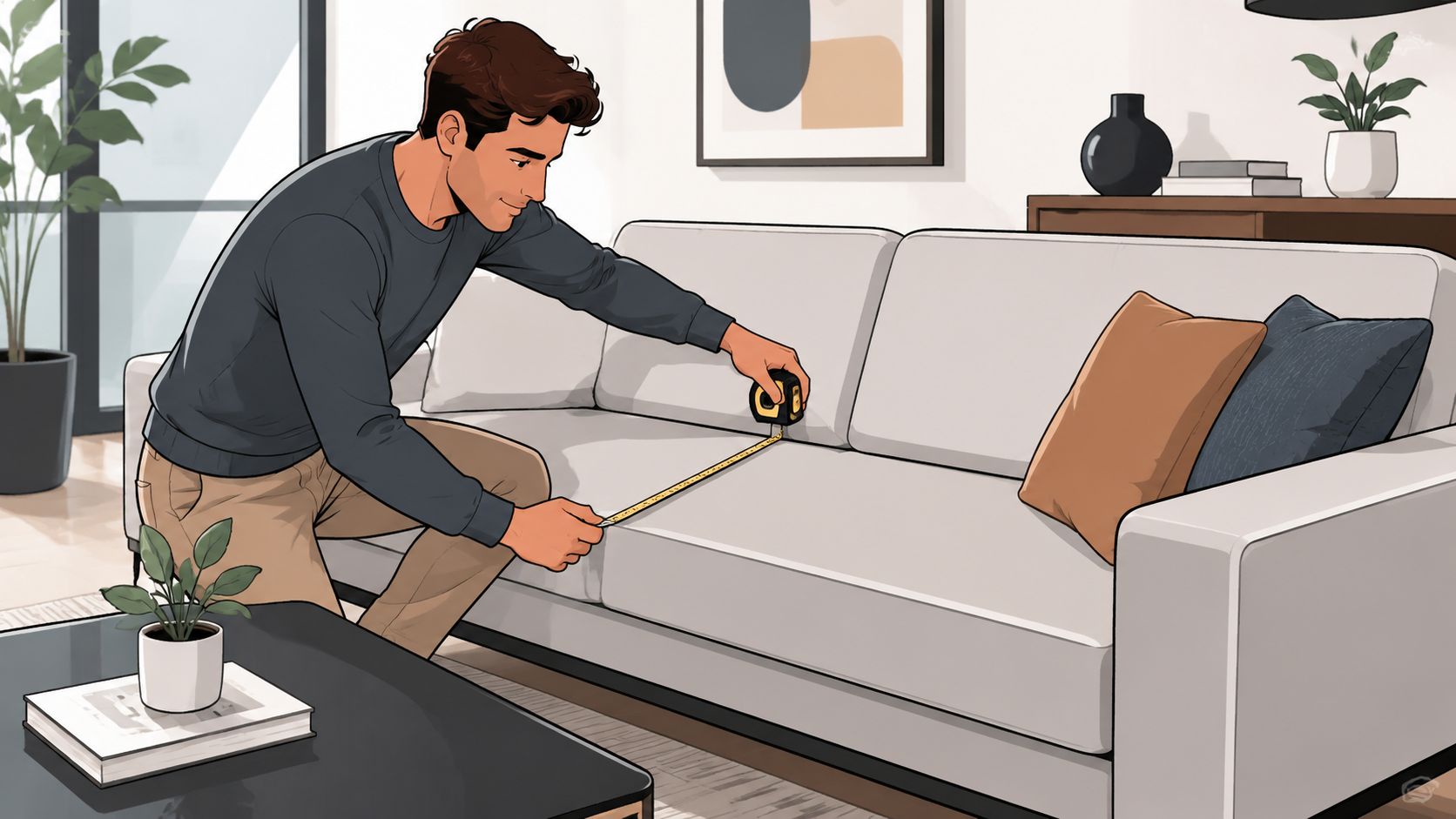
Measure the body before the chair
Research drawing on Cornell University ergonomics guidance indicates that a seat depth adjustment range of 14 to 18.5 inches is generally needed to accommodate most adults, and that the ideal fit leaves 2 to 3 fingers of space between the seat edge and the back of the knee to avoid pressure on the popliteal area (Cornell-based seat depth guidance).
That finger rule is practical because it translates technical fit into something immediate. If there's less space, the seat is likely too deep. If there's much more, the seat may be too shallow to support the thighs properly.
A straightforward way to assess personal fit:
- Sit fully back so the pelvis reaches the back support.
- Place both feet flat on the floor.
- Check the gap between the front edge of the seat and the back of the knee.
- Aim for 2 to 3 fingers of clearance.
Practical rule: The body should meet the back support without the seat edge pressing into the knee crease.
Measure the furniture where the body actually sits
Many online buyers make an avoidable error: the correct measurement isn't always taken from the visible outer frame. It should reflect the usable sitting depth.
For a firm dining chair or exposed wood seat, the tape measure usually runs cleanly from the front edge of the seat to the backrest plane. For a sofa or upholstered lounge chair, the measure should run from the front edge of the seat cushion to the point where the back cushion contacts the sitter.
That distinction matters because plush upholstery can make a seat look deeper than it feels, or shorter than it appears from the side profile.
Firm seat versus cushion seat
Different furniture types demand slightly different handling.
- Dining chairs: Measure the solid or upholstered sitting surface directly. These pieces are meant for upright posture and shorter sittings.
- Lounge chairs: Focus on the compressed sitting area, not just the decorative profile.
- Sofas with loose back cushions: Measure to the front face of the back cushion where the spine will rest, not to the rear frame hidden behind it.
For readers assessing dimensions before ordering, this guide on how to measure furniture is a useful companion to in-room planning.
Seat depth measurement sounds simple. In practice, it requires precision about where support begins and where the body ends. That's the difference between a numerical spec and a genuinely bespoke fit.
Recommended Seat Depths for Your Home
Seat depth should always follow function. A dining chair designed for upright meals and conversation won't share the same proportions as a sofa intended for evening lounging. Problems begin when buyers apply one preferred feeling to every category of seating.
For Canadian consumers, a comfortable dining chair typically falls within 16 to 18 inches of seat depth, while sofas generally average 21 to 24 inches. For individuals over 6 feet tall, sofa depths of 23 to 24 inches tend to feel most comfortable.
Recommended seat depth by furniture type and user height
| Furniture Type | User Height (Under 5'4") | User Height (5'4" – 5'10") | User Height (Over 5'10") |
|---|---|---|---|
| Dining Chair | 16–18 inches | 16–18 inches | 16–18 inches |
| Lounge Chair | Shallower profiles often suit this range best | Medium depths usually offer balanced support | Deeper lounge profiles often feel more proportionate |
| Sofa | 21–24 inches, with careful testing for back support | 21–24 inches | 23–24 inches |
These ranges are starting points, not commandments. Cushion density, back angle, and whether the seat is used for formal sitting or relaxed lounging will change how depth is perceived.
How to read the table properly
A taller person may enjoy a deeper sofa and still dislike a deep lounge chair if the back pitch is too relaxed. A shorter person may prefer a standard sofa depth when paired with a supportive back cushion. That's why dimensions should be read alongside posture and intended use.
Buyers sorting through broad-format seating can benefit from comparing oversized deep sofa models to understand how extra depth changes both comfort and room scale. The key is to balance generous seating with everyday support.
For rooms that need a more customized footprint, loveseat and chaise options often solve the common tension between visual elegance and practical fit.
Testing the Fit Beyond the Numbers
A tape measure gives a baseline. It doesn't tell the whole story. The decisive test happens when a person sits, settles, and stays still long enough for the chair to reveal itself.
That matters even more with upholstered seating. Soft cushions change shape under load, and the body shifts once full weight settles into the seat.
Clinical seating guidance advises measuring seat depth only when the person is fully loaded into the chair. That accounts for cushion compression and pelvic shift, which can reduce usable seat depth by 1 to 2 inches on soft furnishings (loaded seating measurement guidance).
What to notice in the showroom
A proper sit test shouldn't be rushed. The sitter should settle into the chair as they would at home, not perch on the front edge for a few seconds.
Look for these signals:
- Back contact: The lower back should meet the support naturally.
- Knee clearance: The front edge shouldn't crowd the back of the knee.
- Thigh support: The upper leg should feel supported without forcing the body forward.
- Foot placement: Feet should rest comfortably rather than searching for balance.
The best chair often feels less dramatic than expected. It simply feels resolved.
Recliners and task seating behave differently
A recliner, especially an ergonomic model such as Stressless, distributes the body in a different posture than a formal sofa. It may accommodate a deeper feel because the leg and back support work together. A task chair changes the equation again, since upright work demands a more exact relationship between pelvis, knees, and floor.
That's why broad assumptions can mislead. A client who dislikes a deep fixed sofa may still find a supportive recliner very comfortable. Someone shopping for a study or home office may need a very different standard altogether. Testing purpose-built seating, including a modern office task chair, becomes instructive.
Designer's Insight
Pair a sculptural leather chair with a quiet hand-knotted wool rug so the seating feels grounded rather than visually heavy. In a complete room concept, comfort works best when scale, texture, and placement are composed together.
This is also where interior design services in St. Catharines add real value. Seat depth isn't an isolated metric. It shapes circulation around the room, the right table height, the rug size underfoot, and the final balance of a fully styled interior. The most successful spaces across Greater Niagara, Hamilton, and Toronto don't rely on guesswork. They're curated with the body in mind.
Common Measurement Pitfalls and Solutions
Most seat depth problems don't come from bad taste. They come from small measuring mistakes that create large comfort issues later.
The most frequent error is simple: people measure the wrong part of the furniture. Another common problem is assuming the body is symmetrical enough that one quick leg measurement will do.
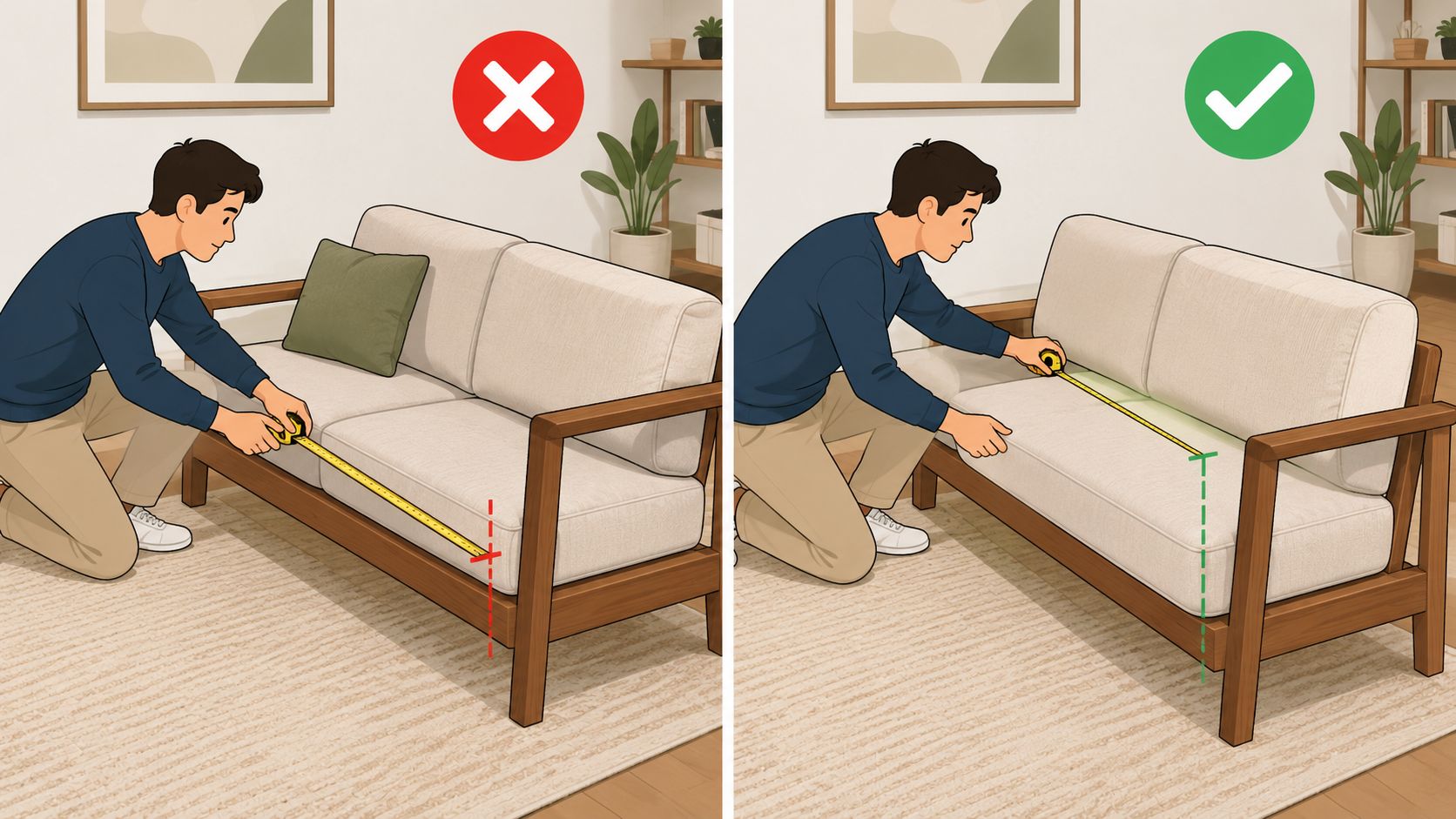
Research in spinal injury care notes that a common mistake is measuring from the furniture frame instead of the front of the back cushion, and that leg-length discrepancies affect over 30% of clients, meaning a one-leg measurement can create meaningful postural problems (seat depth errors and leg-length discrepancy guidance).
Mistake one, measuring the frame instead of the sitting zone
A sofa can have a substantial rear frame, thick loose pillows, or decorative boxing that doesn't belong in the usable depth. Measuring to the outer edge of the frame often produces a number that looks generous on paper but feels wrong in use.
The solution is straightforward. Measure from the front edge of the seat to the place where the back cushion supports the body. That is the dimension the sitter experiences.
Mistake two, ignoring cushion construction
A separate back pillow can steal sitting room. A soft seat cushion can compress in ways that change effective depth. A structured bench cushion may feel very different from a cloud-soft loose-seat design, even when the listed depth appears similar.
Use this checklist when reviewing a piece:
- Check the back cushion thickness: Loose backs often reduce usable depth.
- Sit for more than a moment: Compression changes the fit.
- Notice posture drift: If the body slides forward, the seat may not be supporting properly.
Small correction, major result: One inch in the wrong place can turn a refined sofa into a tiring one.
Mistake three, measuring only one leg
A bespoke approach accounts for asymmetry. If one leg differs in length, even slightly, the wrong seat depth can encourage twisting, uneven pressure, or unstable posture. Measuring both sides is the more careful practice.
For buyers studying specification sheets before ordering, this article on how to read furniture product descriptions and buy with confidence helps separate decorative dimensions from functional ones.
Attention to these details is what transforms custom furniture in Southern Ontario from beautiful to truly liveable. It also explains why seasoned designers insist that numbers must be interpreted, not merely collected.
Discovering Your Perfect Fit at Critelli
Seat depth measurement sounds technical, but its purpose is deeply human. It helps a chair welcome the body properly. It allows a sofa to support conversation, reading, rest, and daily life without subtle strain. It turns furniture selection into a matter of lasting well-being, not short-term impression.
That philosophy has guided a family-run firm since 1914. Over a century of experience teaches the same lesson repeatedly. Timeless craftsmanship isn't only about joinery, leather, or finish. It's also about proportion, posture, and how a piece performs in real life.
Where fit becomes part of the whole room
The best interiors are built as a complete room concept. Seating relates to table height, traffic flow, lighting, and the foundation underfoot. In many rooms, Art for your Floor sets the composition first, especially when hand-knotted rugs Ontario homeowners choose become the visual anchor for the rest of the scheme.
That's why thoughtful design services matter. A chair that fits the body but overwhelms the room isn't the right answer. Neither is a stylish sofa that leaves its owners shifting position all evening. A curated selection, bespoke guidance, and design-forward planning produce a result that feels resolved from every angle.
The final measure is how it arrives and lives
Selecting the right piece is only part of the experience. Placement matters. Scale matters. The transition from showroom to home matters. White-glove delivery protects the investment and ensures the room is set correctly from the first day, with the sort of care that suits artisanal furnishings and timeless craftsmanship.
For clients across Greater Niagara, Hamilton, and Toronto, that level of service turns a furniture purchase into an effortless design process.
Experience refined comfort with Critelli Furniture, where heirloom quality, bespoke guidance, and white-glove service come together. Experience the craftsmanship in person at our King Street Showroom. Book your complimentary design consultation today. Visit the Rug Market to find your room's foundation.