
Ceiling Lamp Dining Room Guide: Expert Tips 2026


A dining room can look finished at first glance, then feel wrong the moment the ceiling lamp goes up. The table is centred, the chairs are in place, and the fixture still hangs too low, throws glare across the finish, or looks undersized from every seat. That's the trap most homeowners in Southern Ontario run into, and it's why a ceiling lamp dining room choice should be treated as a room decision, not a decorative errand.
Critelli's design philosophy fits that reality. A lamp above the table is part of a complete room concept, alongside the rug, the table, the chairs, and the way the room receives natural light. In a century-run family business, that is the only serious way to approach it, because the wrong light makes even excellent furniture feel uncoordinated.
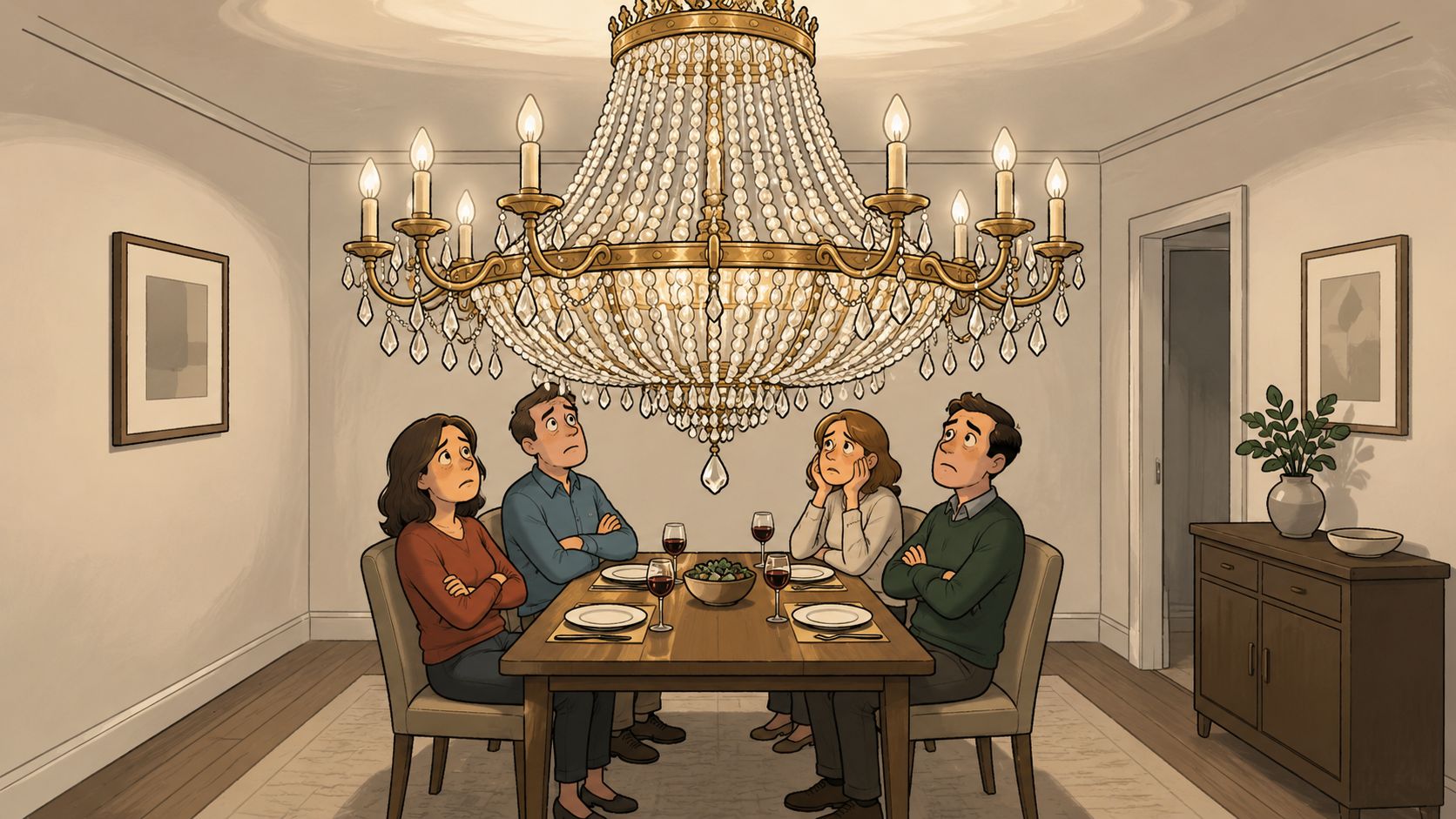
For a typical 100-square-foot dining room, the commonly cited target is 30–40 lumens per square foot, which works out to roughly 3,000–4,000 lumens from a centred chandelier or flush-mount fixture (City Lights SF). That number matters because it tells a homeowner whether the fixture will serve as the room's ambient source, or just sit there looking handsome while the table stays dim.
Critelli's dining room lighting guide belongs in that conversation because good lighting is never just about the pendant itself. It's about whether the fixture supports the table, the seating, and the mood that follows long after the showroom visit ends.
Why the Right Ceiling Lamp Changes the Whole Dining Room
The mistake is easy to recognise. A homeowner falls in love with a fixture in a showroom, brings it home, and only then notices that the scale is off, the light is too stark, or the pendant feels like it belongs to a different house. In a dining room, that one object sits at eye level from every seated guest, so any mismatch becomes obvious fast.
A dining fixture also sets the room's emotional temperature. A heavier chandelier can make a space feel formal and composed, while a cleaner pendant can keep a room relaxed and modern. The wrong choice doesn't just look awkward, it changes how people read the table, the chairs, and the whole space around them.
The lamp is the anchor, not the afterthought
A good ceiling lamp does more than brighten the table. It frames the room's central gesture, which is the meal, the conversation, and the gathering itself. That is why a ceiling lamp dining room selection should be made alongside the furniture, not after it.
The most useful benchmark is simple, 3,000–4,000 lumens for a typical room of about 100 square feet (City Lights SF). That range gives enough light for plates, glassware, and faces without forcing the room into kitchen brightness.
Practical rule: if the fixture looks beautiful but creates glare when someone sits down, it is the wrong fixture.
That is also why Critelli treats lighting as part of a room's overall composition. The ceiling lamp, the rug, and the table should read as one calm arrangement, not three unrelated purchases.
The Four Ceiling Lamp Styles That Actually Work Over a Table
Not every fixture family belongs over a dining table. Some are too theatrical for small rooms, some disappear into larger spaces, and some solve one problem while creating another. The right choice comes down to ceiling height, table shape, and how much visual weight the room can carry.
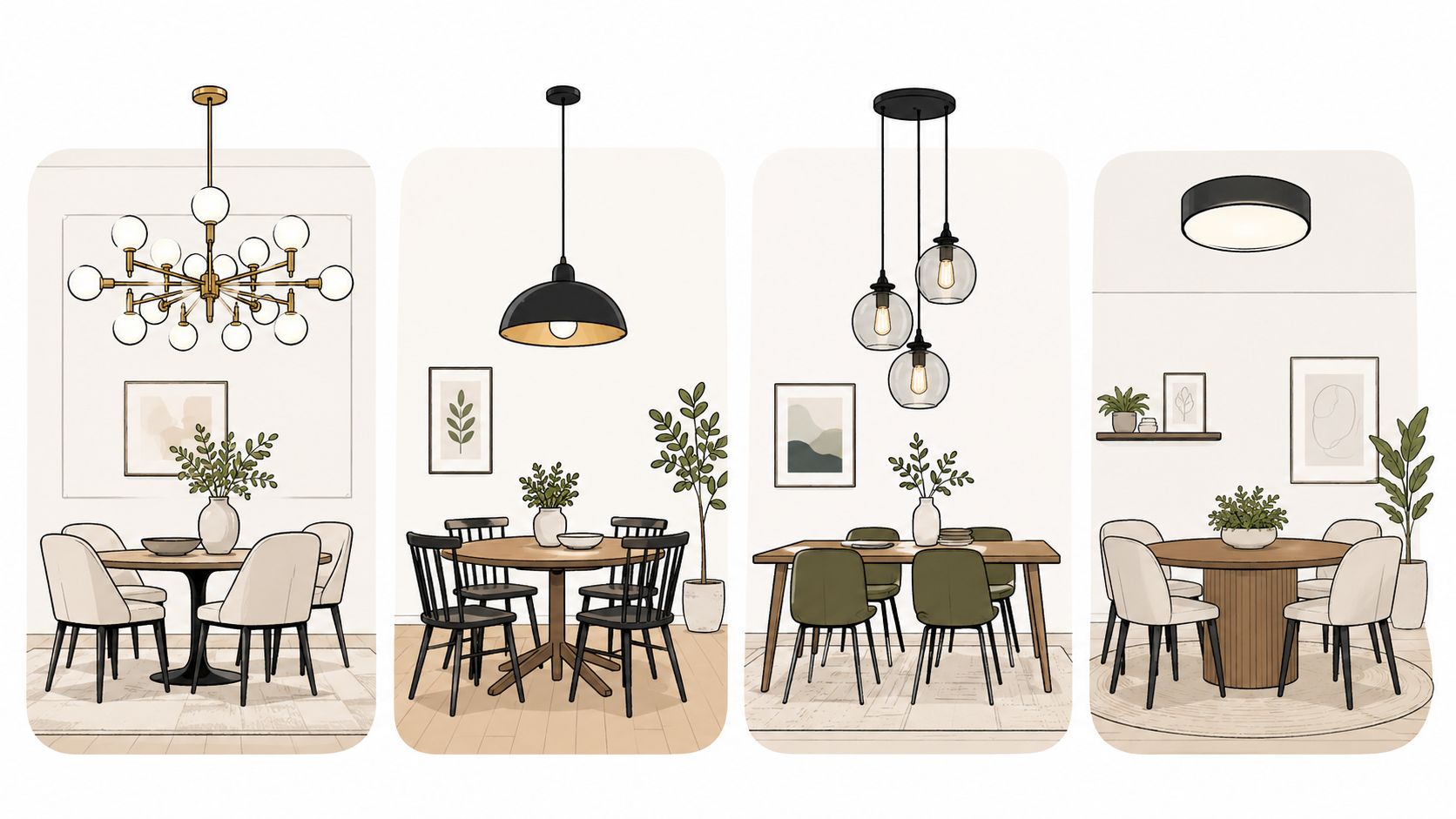
Statement chandeliers
A statement chandelier works best when the room has enough presence to support it. It suits a more formal dining room, especially one with a centred table and enough breathing room around it. The risk is obvious, though, because in a smaller room it can dominate the furniture and make the table feel crowded.
Single pendants and clustered pendants
Single pendants are clean, direct, and often the easiest answer for an everyday dining area. Clustered pendants add rhythm and can help spread light more evenly, but they need careful spacing or they start to look busy. Critelli's pendant lighting page makes sense for homes where the fixture should feel sculptural without becoming fussy (Critelli pendant lights).
Flush and semi-flush mounts
Lower ceilings call for restraint. Flush and semi-flush fixtures keep sightlines open and avoid the feeling that the lamp is hanging in the way. They can feel flatter than a pendant or chandelier, but in a compact room that discipline is often the right move.
Linear fixtures
Linear fixtures are the natural fit for rectangular tables and longer layouts. They spread light along the dining surface instead of concentrating it in the centre, which makes them especially practical in open-plan homes. The catch is proportion, because a linear piece that is too short looks timid and one that is too large can overwhelm the tabletop.
Designer's insight: the fixture should match the table's shape, not the room's empty volume alone. If the table is long and the lamp is round, the room often looks slightly off even before the lights are switched on.
Sizing and Hanging Height Rules You Should Never Skip
The two measurements that separate a polished install from a bad one are height and diameter. Ignore either, and even a beautiful fixture will look wrong. Get them right, and the room usually settles into place immediately.
The basic hanging rule is straightforward. For an 8-foot ceiling, place the bottom of the fixture about 30 to 36 inches above the tabletop, and add about 3 inches of drop for every extra foot of ceiling height (Parrot Uncle). That keeps the lamp low enough to feel connected to the table, but high enough to preserve sightlines.
The other rule is diameter. A widely used guideline says the fixture should measure about one-half to two-thirds the width of the table (Kylie M Interiors). A 42-inch-wide table therefore points to a fixture about 21–28 inches across, which is a strong starting point for proportion.
Dining Room Ceiling Lamp Sizing at a Glance
| Table Width | Fixture Diameter | Hanging Height (8 ft ceiling) | Hanging Height (9–10 ft ceiling) |
|---|---|---|---|
| 36 inches | 18–24 inches | 30–36 inches above tabletop | 33–42 inches above tabletop |
| 42 inches | 21–28 inches | 30–36 inches above tabletop | 33–42 inches above tabletop |
| 48 inches | 24–32 inches | 30–36 inches above tabletop | 33–42 inches above tabletop |
The room-length-plus-width formula is a useful secondary check, not a replacement for table-based sizing. It helps when the dining room is oddly proportioned or the table is unusually long. For vaulted ceilings, the answer is not to improvise with a random chain length, it's to use the proper downrod or sloped ceiling hardware so the fixture hangs correctly rather than awkwardly.
Critelli's pendant guidance is useful here because it reinforces the same principle designers follow in finished homes, proportion first, then style. That is the order that keeps a dining room looking intentional.
Light Output, Colour Temperature, and Dimming Made Simple
Brightness alone does not make a dining room feel good. The room needs enough output to see the food clearly, but not so much that the table starts to feel clinical. That is why the 3,000–4,000 lumen benchmark matters, especially when the fixture is the primary overhead source.
Canadian buyers should also pay attention to wiring and bulb compatibility. Indoor dining fixtures sold for the North American market typically use 120V AC hardwired installation with E26 sockets and up to 60W maximum bulb wattage in a single-pendant format, while imported decorative fixtures often specify 220–240V and are not direct drop-in options (Target product listing). That matters in Canadian homes, because the wrong electrical spec creates unnecessary installation trouble.
Choose warm light, not work light
Dining rooms should flatter food and faces, so a warmer colour temperature is the right move. Cooler light belongs in kitchens and task areas where precision matters more than mood. A dining fixture that feels pleasant at breakfast should still feel composed at dinner, and that is exactly where dimming earns its keep.
Designer's rule: if the room can't dim, it can't truly function as a dining room.
LEDs also make practical sense for a hardwired ceiling fixture. Hydro One notes that LED lighting uses 75% less energy and lasts more than 25,000 hours, and Toronto guidance says dimming and directing light only where needed materially reduces energy use (Hydro One). That's the kind of efficiency that matters when the fixture is expected to stay in place for years.
Critelli's contemporary ceiling lighting guidance fits neatly into this logic because the right lamp is not just about appearance. It is about giving the room flexible light that can shift from casual weekday meals to more formal entertaining without changing the fixture itself.
Matching the Fixture to Your Dining Furniture and Rug
A dining room only feels finished when the lamp, table, chairs, and rug work as one composition. They do not need to match exactly. They need to share the same visual language, so the room reads as deliberate rather than assembled piecemeal. A ceiling lamp with the wrong material or shape can make even good furniture feel out of place.
Start with the rug. A hand-knotted rug gives the table a proper base, softens the hard edges around the seating area, and sets the tone for everything above it. In that setting, a brass or aged-iron pendant usually looks right, because the metal brings warmth without fighting the texture underfoot. A sleek lacquered table calls for cleaner geometry overhead, while a reclaimed-wood farmhouse table can carry something more artisanal and sculptural.
Designer's Insight
Pair a bold Hancock & Moore dining chair with a neutral hand-knotted wool rug and the room calms down instantly. That quiet base lets a statement chandelier read as intentional instead of noisy.
That is the detail many homeowners miss. The rug is not an afterthought once the lamp is chosen. It is the foundation, the Art for your Floor moment that gives the rest of the room something solid to sit on. Critelli's rug-first approach makes sense because a ceiling lamp works better when the floor plan already feels grounded.
Sizing still matters here. The fixture's diameter should be roughly one-half to two-thirds the width of the table, as noted by Kylie M Interiors. That proportion works best when the rug extends beyond the table far enough to frame the chairs cleanly.
Installation Realities in Canadian Homes
The fixture may look simple in the catalogue, but installation is where the work begins. A ceiling lamp needs a proper junction box, the correct electrical supply, and hardware that matches the ceiling height and roof angle. If any of those are wrong, the room feels off and the install becomes harder than it should be.
In Canadian homes, the wiring has to match the fixture before you buy it. Imported pieces often arrive with voltage requirements that do not suit local wiring, and that problem is easiest to avoid at the spec-check stage. A dining light also needs the right socket type, the right bulb limits, and a hardwired setup that suits the room, not a quick workaround.
For sloped or vaulted ceilings, use the proper adapter or downrod setup. That keeps the lamp centred over the table instead of letting it drift visually across the room. It also preserves the straight, deliberate line a dining fixture needs, especially in rooms where the table is doing the heavy visual lifting.
A licensed electrician should handle the wiring and any question about load or voltage. The finish work, assembly, exact placement, and packaging removal belong to a white-glove crew when that service is available.
That practical judgment matters in homes where the dining room sits beside other updates. If the kitchen or nearby millwork is being refreshed, a service such as refinishing cabinets in Toronto can bring the hard finishes into the same visual register as the new dining light. A room reads better when the cabinet tone, table finish, and ceiling lamp all belong to the same story.
Why a Design Consultation Beats a Solo Fixture Purchase
A ceiling lamp is easiest to buy badly when it's purchased alone. A design consultation solves that by placing the table, rug, chairs, and fixture in one frame, which is how the room will be seen. Critelli's family-run history since 1914, along with its presence in the Greater Niagara, Hamilton, and Toronto markets, gives that process the kind of continuity most households need.

A good consultation does more than point to a pretty fixture. It reads the room's natural light, selects finishes that work with the table and chairs, and uses the Rug Market to establish the foundation first. It also opens access to a curated selection across Stickley, Stressless, Hancock & Moore, and Century, which keeps the room cohesive instead of pieced together.
Critelli's consultation overview is worth looking at because it shows how the studio thinks about a whole room, not a single object. That is the right mindset for dining spaces, especially when the fixture needs to look elegant by day and feel warm at night.
A thoughtful dining room starts with the right ceiling lamp, but it ends with the room around it, the rug, the table, and the chairs all speaking the same language. Visit Critelli Furniture to experience the craftsmanship in person at the King Street Showroom, book your complimentary design consultation today, and visit the Rug Market to find your room's foundation.