
Interior Design for Small Spaces: A Timeless Guide

A beautiful small home often begins with a compromise. The new condo in Hamilton has the right light but a tighter living room than expected. The down-sized house in Niagara feels gracious at first glance, then awkward once real furniture enters the picture. The Toronto pied-à-terre is elegant on paper, yet daily life quickly reveals the pinch points. A dining chair blocks a walkway. A sofa floats without purpose. Storage arrives, but comfort disappears.
That's where most small-space advice goes wrong. It obsesses over making a room look bigger and forgets to make it live better.
For homeowners who care about lasting quality, interior design for small spaces should never be reduced to mirrors, pale paint, and flimsy multi-use pieces. A compact home needs discipline, proportion, and a complete room concept. It needs furniture that earns its place. It needs zoning that supports real life. It needs finishes and furnishings with enough character to feel collected rather than cramped.
That standard comes more easily when design decisions are guided by experience. Since 1914, a family-run approach has shaped how refined rooms come together, especially in homes where every inch matters. Small rooms don't ask for less ambition. They ask for better judgement. Readers who want a broader primer on different types of interior design may find it useful before refining a direction for their own space, and those weighing visual strategies can also explore guidance on how to make a small room feel big.
Table of Contents
- An Introduction to Elevated Small Space Living
- The Foundation of Professional Space Planning
- Mastering Furniture Scale and Placement
- The Power of Multifunctional and Bespoke Furnishings
- Using Colour Light and Art for Your Floor
- The Seamless Transition from Showroom to Home
An Introduction to Elevated Small Space Living
Small-space living has become a permanent part of life in desirable markets. In California, for example, the pressure behind compact design is significant. The state's median home price was about $827,500 in 2024, the homeownership rate was 55.9% in the 2023 ACS, and there were roughly 5.0 million renter households in the 2023 ACS, all of which helps explain why space-efficient layouts matter so much in apartments, condos, and ADUs, as noted in this California housing and small-space design overview.
That same practical mindset resonates across Southern Ontario. In Greater Niagara, Hamilton, and Toronto, many homeowners aren't chasing excess square footage. They're trying to make a smaller footprint feel settled, polished, and easy to live in every day. The answer isn't more furniture. It's better furniture, placed with purpose.
Small rooms deserve grown-up design
A compact room shouldn't feel temporary. It shouldn't read like a holding pattern until a larger house comes along. The strongest small interiors feel composed because they're edited well. They hold fewer things, but the things they do hold have weight, comfort, and timeless craftsmanship.
Small spaces reveal every mistake quickly. They also reward every smart decision.
That's why a heritage approach matters. A family-run design perspective, shaped over generations, tends to favour pieces with staying power over disposable fixes. It also respects the room as a whole. A chair isn't chosen in isolation. A rug isn't an afterthought. Lighting, layout, and proportion are considered together so the space feels calm rather than crowded.
Livability comes before tricks
Plenty of rooms photograph well and live badly. The sofa is too shallow to lounge in. The table is too small to use properly. The storage bench solves one problem and creates two more. A design-forward room has to do more than flatter the camera.
For that reason, refined small-space living starts with one clear principle: livability beats illusion. If a room feels easy to move through, supports daily routines, and includes a few heirloom quality pieces with real presence, it will feel more generous than a room filled with undersized compromises.
The Foundation of Professional Space Planning
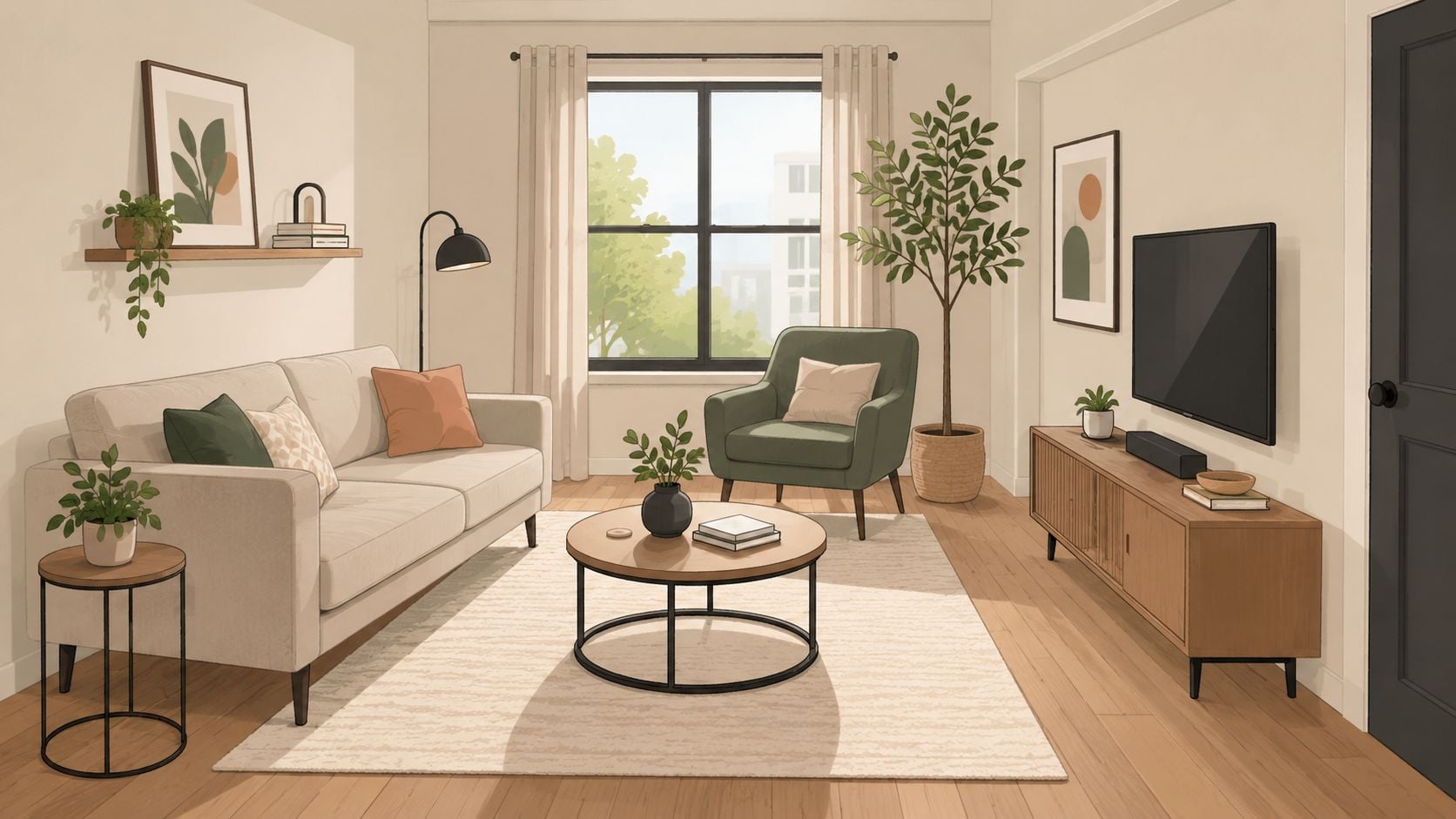
Most small rooms fail before a single piece is delivered. They fail at the planning stage. Someone buys a sofa because the upholstery is lovely, then discovers the arm blocks the doorway. A desk fits on paper, but not once the chair is pulled out. In compact rooms, errors aren't minor. They shape daily life.
A disciplined process matters here. Professional workflows consistently begin with programming the room's functions and measuring all fixed elements before finalizing furniture scale and circulation paths, because layout mistakes in small spaces are difficult and costly to correct, according to this guidance on the essential steps in interior design.
Start with function, not furniture
The first question isn't, “What style suits the room?” It's, “What must this room do well every day?”
A compact living area may need to handle lounging, reading, occasional dining, and remote work. A guest room may also serve as an office. A condo kitchen may need stronger planning than a sprawling suburban one, which is why practical examples like Aureli Construction's kitchen remodels can be useful for homeowners thinking through function before finishes.
A sound planning brief usually includes:
- Primary use: The one function the room can't fail at.
- Secondary tasks: Reading, hosting, working, eating, or storing specific items.
- Daily traffic: Who passes through, and how often.
- Comfort priorities: Deep seating, task lighting, a surface for drinks, or concealed storage.
Measure the room that actually exists
Good design depends on real dimensions, not assumptions. In a compact room, every fixed element matters. Doors need swing clearance. Windows affect where taller case goods can sit. Outlets determine lamp placement. Ceiling height influences whether vertical storage will help or overwhelm.
Practical rule: Measure walls, openings, window trim, outlet locations, ceiling height, and any awkward returns or vents before discussing furniture sizes.
This is where a design studio earns its place. A complete room concept begins with careful documentation, then translates that information into a workable plan. Rather than filling a room piece by piece, the room is organised as a whole. Homeowners looking for that starting point can review how to begin the interior design process for a room, then book your complimentary design consultation today to refine layout, scale, and function before making a purchase.
Mastering Furniture Scale and Placement
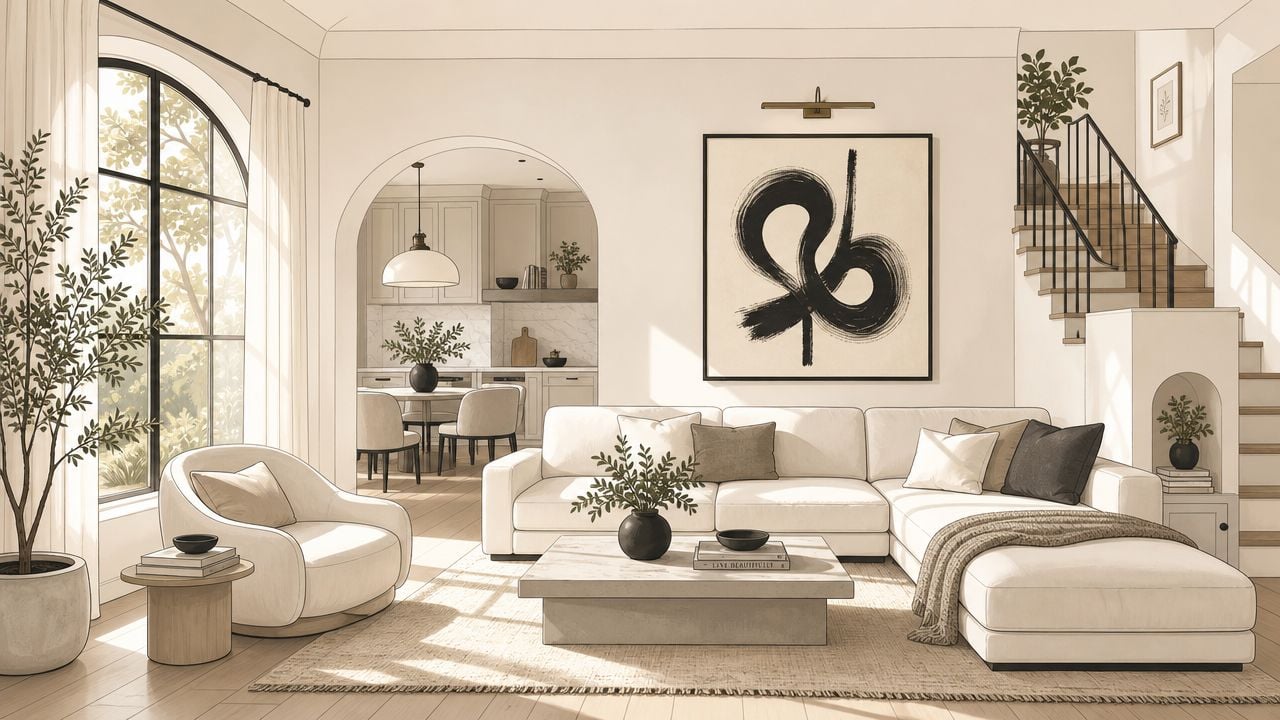
The most persistent myth in small-space decorating is simple and wrong: buy smaller furniture.
That advice creates rooms full of apologetic pieces. The sofa looks timid. The chairs feel temporary. The rug sits adrift under furniture that never quite relates to one another. Nothing anchors the room, so the space feels busier and less resolved.
Why small furniture often makes a room worse
Expert designers stress that true livability in small spaces comes from real circulation and appropriate furniture scale, and that a common mistake is defaulting to undersized pieces when a few larger, well-chosen investment pieces often create a more functional and visually coherent room, as discussed in this feature on small-space design ideas.
That principle changes everything. The goal isn't tiny furniture. The goal is correctly proportioned furniture.
A well-scaled sofa with clean lines can do more for a condo living room than a loveseat paired with two fussy accent chairs. A substantial rug can calm a room that feels fragmented. One proper lounge chair can offer more comfort and more visual order than a pair of dainty chairs nobody wants to sit in.
For readers comparing general dimensions before shopping, practical guides on choosing small home seating can be helpful. The better lesson, though, is to evaluate proportion in relation to the room, not in isolation.
Place the largest piece first
The strongest layouts begin with the anchor piece. Usually, that's the main sofa, bed, dining table, or storage cabinet. Once that item is placed properly, the rest of the room can be built around clear movement paths and sensible spacing.
A simple placement test works well:
| Decision point | What to check |
|---|---|
| Anchor position | Does the main piece support the room's primary function? |
| Passage width | Can people move naturally without turning sideways or weaving? |
| Sightline | Does the arrangement feel composed when entering the room? |
| Light access | Is daylight blocked by unnecessary height or bulk? |
A room feels larger when people can move through it comfortably. That matters more than whether every item is visually slight.
Homeowners often benefit from seeing a few layout options before committing. That's where thoughtful planning and living room furniture arrangement guidance become especially useful, particularly when one investment piece needs to carry the room.
Designer's Insight
Designer's Insight
Select the primary seating first. A design-forward sofa with clean lines and raised legs can feel substantial and airy at the same time, giving the room visual confidence without choking circulation.
This is also where heirloom quality matters. In a small room, every major piece gets noticed. There's nowhere for poor proportions, weak materials, or trend-driven shapes to hide. Better to own fewer pieces of timeless craftsmanship than to crowd the room with furniture that never quite fits.
The Power of Multifunctional and Bespoke Furnishings

Multifunctional furniture has a reputation problem. Too much of it looks clever in a catalogue and clumsy in a home. Hinges show. Proportions suffer. Comfort gets sacrificed for novelty. That's not a reason to avoid versatility. It's a reason to demand better versions of it.
Choose pieces that work twice as hard
The right multifunctional piece doesn't announce itself. It solves a problem elegantly.
Consider choices such as:
- A console that serves as a desk: Slim enough for a passage wall, generous enough for a laptop and proper lamp.
- An ottoman with concealed storage: Useful for blankets, media accessories, or children's toys without adding visual clutter.
- A bed with integrated drawers: Particularly effective when a separate dresser would crowd the room. Options such as beds with storage drawers show how practical function can remain visually composed.
- A compact recliner with refined proportions: Comfort matters in smaller rooms too. Ergonomic seating from collections such as Stressless can support long-term use without asking for oversized bulk.
When bespoke is the smarter choice
Off-the-shelf pieces often fail for one simple reason. Real homes aren't built to standard assumptions. There's a window that sits too low, a radiator in the wrong place, a wall return that steals depth, or a narrow opening that limits what can pass through.
That's when bespoke thinking becomes practical, not indulgent.
The smartest custom piece isn't the fanciest one. It's the one that solves a difficult room cleanly and permanently.
A made-to-order banquette can create dining where no dining room exists. A shallower cabinet can preserve circulation in a narrow hall. A carefully specified chair can deliver full comfort without excess footprint. For homeowners seeking custom furniture in Southern Ontario, this approach often makes more sense than forcing standard pieces into an irregular room.
One factual example belongs here. Critelli Furniture offers customizable pieces and a design studio process that can help match dimensions, finishes, and functions to the realities of compact homes. In small-space work, that kind of specification matters because compromise tends to show immediately.
Using Colour Light and Art for Your Floor
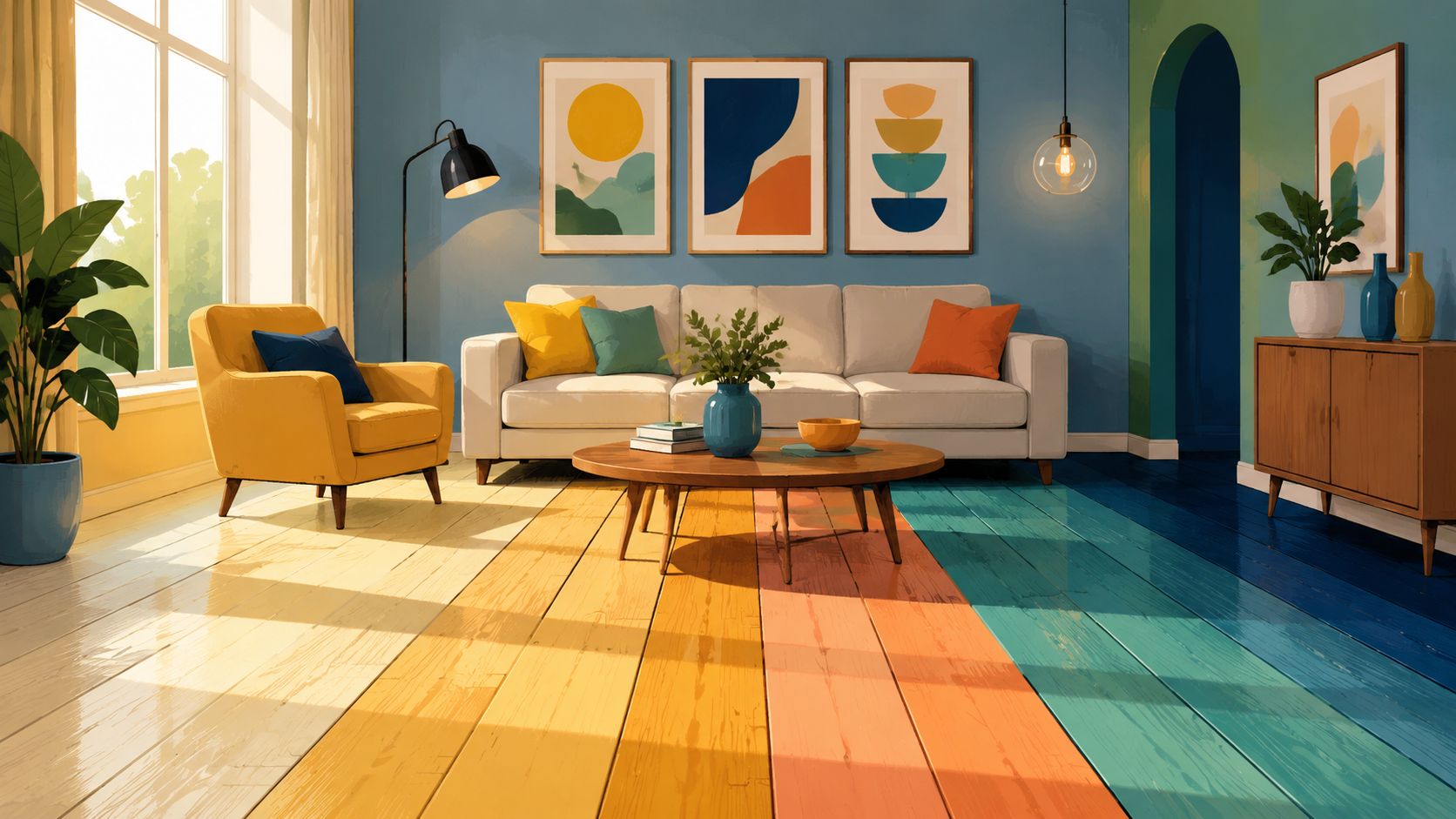
A small room doesn't need to be pale, sparse, or cautious. It needs discipline. Colour, lighting, and rugs shape that discipline far more effectively than random storage accessories ever will.
Colour should support the mood, not flatten it
Light neutrals can create openness, especially when a room lacks natural brightness. But washed-out rooms often feel unfinished. A compact space can also carry richer tones beautifully when the palette is controlled and the furnishings have enough substance to support it.
A good rule is to choose one dominant mood and commit to it. Soft stone, warm ivory, and muted greige create calm. Deep olive, ink, rust, or aubergine can make a small room feel enveloping and elegant. What matters is consistency. Too many disconnected colours break a room into fragments.
Layered light creates depth
One ceiling fixture rarely finishes a room well. Compact spaces benefit from layered lighting because it creates depth and supports multiple functions without visual clutter.
A practical lighting mix often includes:
- Ambient light: Overhead illumination for general visibility.
- Task light: A reading lamp beside seating or a focused lamp at a desk.
- Accent light: A picture light, wall sconce, or soft lamp that adds warmth in the evening.
Good lighting lets one room perform several roles without forcing all of them under the same glare.
A rug creates the room
The most overlooked element in interior design for small spaces is often the rug. It isn't decoration at the end. It's the foundation at the beginning. In a well-planned room, the rug defines the conversation area, gives furniture a common language, and helps establish visual zoning.
That zoning matters. Recent design guidance highlights that effective small-space design often prioritizes visual zoning over solely adding more storage, using elements like hand-knotted rugs, strategic lighting, or furniture placement to create distinct areas for living, dining, and work so a compact home feels larger and more functional, as explored in this discussion of small-space zoning strategies.
For homeowners shopping hand-knotted rugs in Ontario, this is the moment to think beyond pattern alone. A rug should do at least three jobs:
| Rug decision | Why it matters |
|---|---|
| Scale | A rug that's too small makes the room feel disconnected |
| Palette | It can unify upholstery, case goods, and art |
| Zoning role | It helps define living, dining, or work areas without adding walls |
The Rug Market approach treats rugs as Art for your Floor, which is exactly right for compact homes. A strong rug can anchor the room, soften acoustics, and create order where square footage is limited. Visit the Rug Market to find your room's foundation.
The Seamless Transition from Showroom to Home
The final phase of a small-space project is where many good plans lose their polish. A room can be measured carefully, specified thoughtfully, and furnished beautifully, then undermined by rushed delivery, careless assembly, or placement that ignores the original layout.
That last step deserves more respect.
The last decisions matter
Compact rooms don't offer much tolerance for improvisation. A cabinet installed two inches off can throw off a passage. A rug positioned poorly can collapse the seating zone. A bed assembled without regard for drawer clearance can make storage harder to use, not easier.
Smaller finishing choices matter as well:
- Final storage additions: Baskets, trays, or boxes should support the room, not become the room.
- Precise placement: Side tables need usable reach. Lamps need the right height. Chairs need enough space to pull out comfortably.
- Visual editing: If the room feels crowded after installation, the answer is usually subtraction.
Delivery should protect the design
This is why white-glove service belongs in the conversation about design, not just logistics. The transition from showroom to home should include inspection, assembly, placement, and removal of packaging, all handled with care for the home and respect for the plan. Homeowners in the Greater Niagara, Hamilton, and Toronto markets often benefit most from this level of coordination because it protects the original design intent all the way to completion. Readers comparing service details can review furniture assembly services near home as part of that decision.
A century-old legacy carries weight here. Since 1914, family-run service has meant more than offering fine furnishings. It has meant seeing the process through properly. That standard still matters. Especially in smaller homes, where every piece is visible, every inch counts, and every decision either supports the room or disrupts it.
The best small spaces don't feel deprived. They feel deliberate. They use heirloom quality pieces, strong zoning, thoughtful lighting, and proper scale to create ease. They favour timeless craftsmanship over gimmicks. They respect how people live.
Experience the craftsmanship in person at our King Street Showroom. For personalized guidance on interior design services in St. Catharines, luxury furniture in Niagara, or custom furniture in Southern Ontario, book your complimentary design consultation today. If the room still needs its visual anchor, visit the Rug Market to find your room's foundation.