
Crates for Storage as Timeless Home Decor

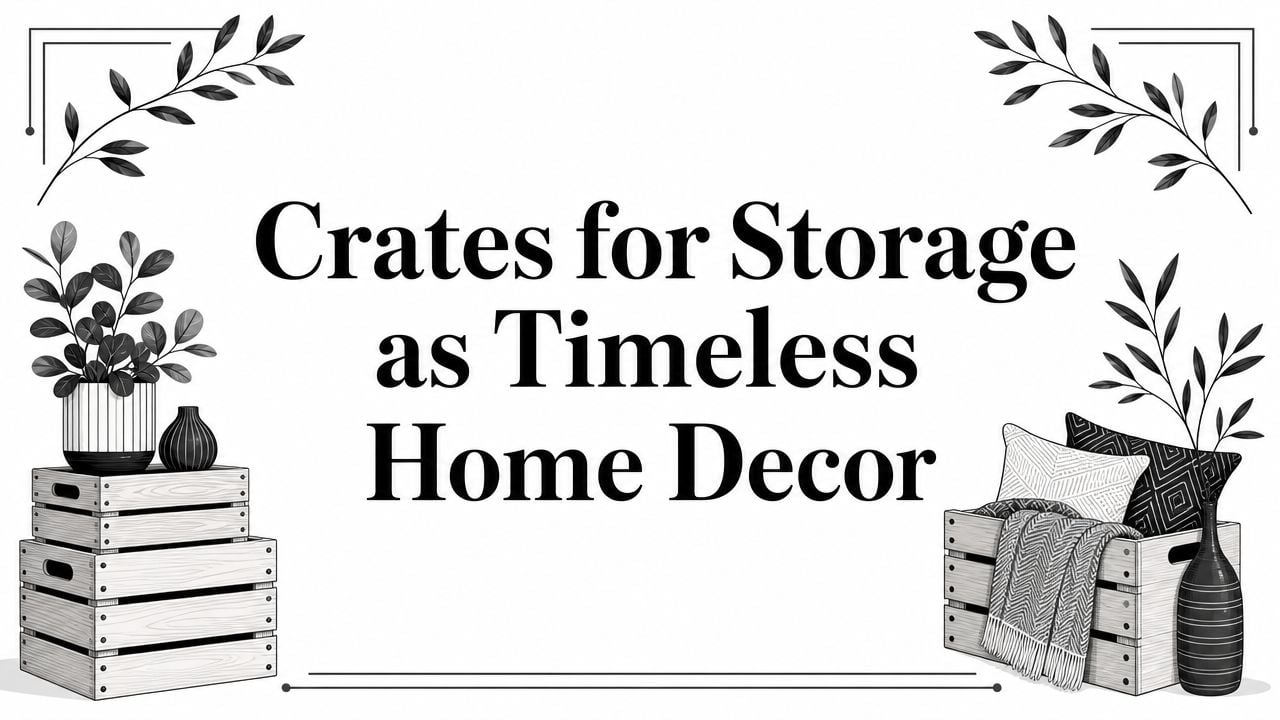
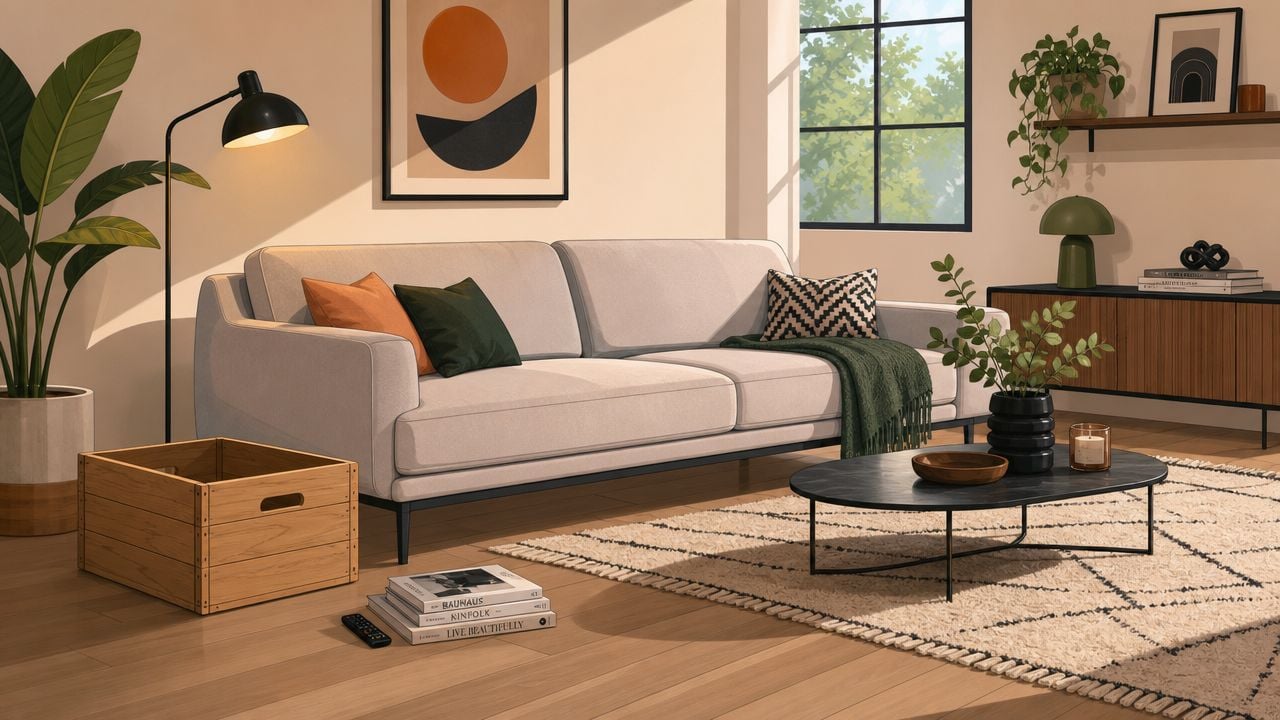
A well-designed room often falls apart at the exact moment storage enters the conversation. The sofa is right. The rug grounds the space. The lighting is considered. Then a stack of necessities appears, and the usual answer is a plastic bin that looks as if it belongs in a utility closet, not a carefully composed home.
That's the mistake. Storage doesn't need to disappear to be successful. In a design-led interior, it should contribute. The right crate can hold throws, children's books, records, winter accessories, or work papers while adding texture, structure, and a sense of history. It can read as accent furniture rather than household compromise.
For design-conscious households across Southern Ontario, especially in compact homes and multi-unit living, this distinction matters. A visible storage piece has to earn its place. It has to feel intentional, not temporary. That's why crates for storage deserve a more thoughtful conversation than they usually get.
Homes with lasting character are rarely built from one-off solutions. They're composed. That outlook has shaped family-run design houses for generations, and it's part of the reason a heritage-minded approach to furnishing still feels so relevant today. Since 1914, that philosophy has informed the way rooms are curated at Critelli, where utility and beauty belong in the same sentence.
Table of Contents
- The Elegant Dilemma of Modern Storage
- A Typology of Design-Forward Crates
- Selecting Crates with a Curator's Eye
- Styling Ideas for Integrated Storage
- Preserving Beauty Maintenance and Longevity
- Bringing Your Curated Vision Home
The Elegant Dilemma of Modern Storage
A gracious living room can absorb many things. It can carry a deep upholstery piece, a sculptural lamp, a generous hand-knotted rug, and layers of books and art. What it won't forgive is lazy storage. A bright bin shoved beside a console table announces itself immediately, and not in a good way.
Why visible storage feels harder now
The challenge is sharper in dense urban living. In Ontario, where a large share of households live in apartments or other multi-unit dwellings, visible storage becomes a design issue because the solution has to be compact and visually appealing, as noted in this discussion of how to choose the best plastic crate. In smaller homes, there isn't always a spare room where the less attractive things can hide.
That's why design-conscious homeowners keep searching for ways to blend order with atmosphere. Practical guidance on mastering smart home organization can help frame the larger strategy, but the object itself still matters. A room doesn't become elegant through planning alone. It becomes elegant through the pieces chosen to carry daily life.
Why the crate deserves a second look
A good crate solves a problem that a generic box never will. It offers form. It has edge definition, visual weight, and material presence. In the right finish, it can sit beside a chair, under a bench, or at the end of a bed and look deliberate.
Storage should support the room's character. If it looks apologetic, it's the wrong piece.
The crate is especially effective because it lives comfortably between furniture and accessory. It can be open and casual, or refined and architectural. It can introduce warm timber, darkened metal, or woven texture. It can also stack, which gives it a quiet advantage in tighter homes where every vertical inch matters.
For households trying to reduce the constant visual noise of daily life, the goal isn't merely to put things away. It's to give them a dignified place. Practical advice on solving clutter issues with smarter room planning helps, but a significant shift happens when storage is treated as part of the room's composition rather than an afterthought.
A Typology of Design-Forward Crates
Not every crate belongs indoors. Some are strictly utilitarian and should remain in the garage, mudroom, or storage locker. The crates worth bringing into a living room, study, or bedroom have material richness and clear proportions. They look chosen.
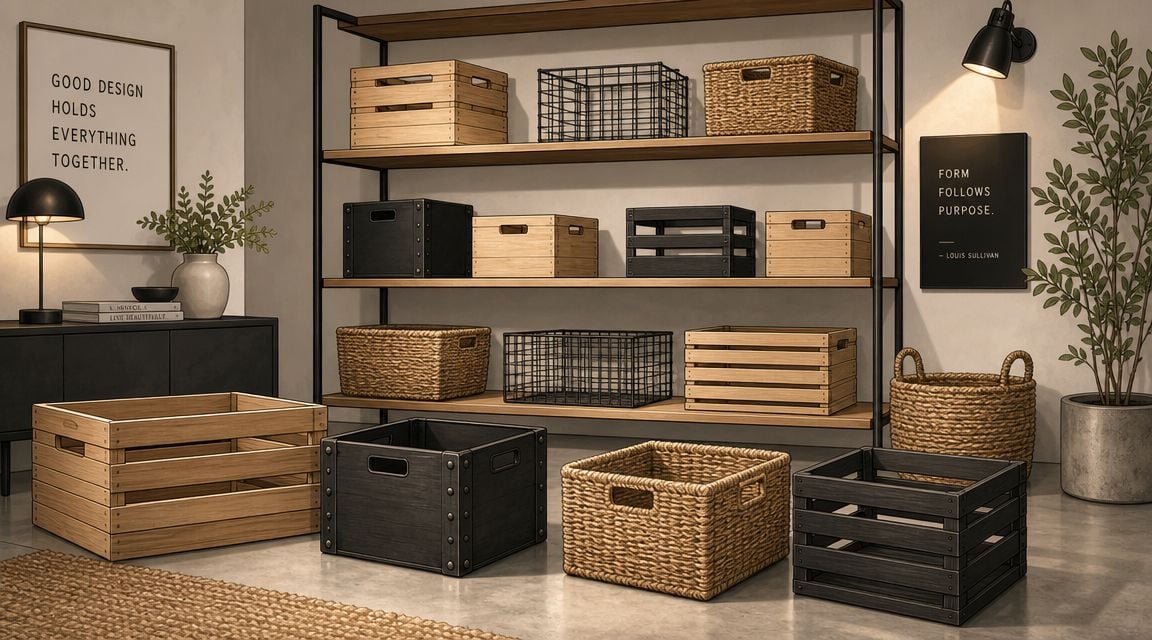
Wood, metal, and woven forms
Wooden crates carry the strongest sense of heritage. The wooden crate dates back to 18th-century Europe, and by the early modern period the form was already established as a standard way to transport and store heavy goods, according to the U.S. EPA's context on containers and packaging materials. That history matters because it explains why the form still feels so natural in interiors. It was built around durability from the beginning.
Metal crates suit rooms that need sharper lines. They work well in structured interiors with stone, glass, or darker woods because they add discipline. Used well, they don't feel industrial. They feel crisp.
Woven or fibre-based crate forms soften a room. They're useful where a wooden piece would feel too heavy, particularly in bedrooms, light-filled sitting rooms, or homes with a quieter palette. They're less architectural than wood, but often more relaxed.
Crate Material Selection Guide
| Material | Aesthetic Profile | Best Paired With | Best For |
|---|---|---|---|
| Wood | Warm, heritage-driven, tactile | Leather seating, wool rugs, solid wood tables | Living rooms, studies, bedrooms |
| Metal | Clean, structured, tailored | Stone tops, glass, contemporary upholstery | Entryways, offices, modern interiors |
| Woven fibre | Soft, casual, textural | Linen, light oak, quiet neutral palettes | Bedrooms, family rooms, open shelving |
A crate also has to relate to the room around it. A heavily grained timber piece will feel disconnected in a glossy, minimal setting. A powder-coated metal crate will feel severe in a room built around antiques and soft textiles.
For anyone considering built-in solutions around freestanding storage, wall-to-wall shelving ideas for tailored organisation can clarify whether crates should act as accent pieces, modular inserts, or a quieter supporting layer.
Form matters as much as material
Three form choices make the biggest difference.
- Open-top crates suit frequently used items. Throws, magazines, and children's books are easier to reach, and the visual message is casual but controlled.
- Lidded crates work better where visual calm matters. They're stronger choices in formal sitting rooms, bedrooms, and entry halls where one wants less object noise.
- Stackable modular crates help in compact homes because they create vertical storage without resorting to bulky case goods.
Practical rule: If the crate will remain in sight every day, choose the one that improves the room when it's empty, not only when it's full.
That's the standard worth keeping. If a crate has no aesthetic value on its own, it doesn't belong in a refined interior.
Selecting Crates with a Curator's Eye
The right crate isn't selected the way one picks a household bin. It's chosen the way one selects an occasional table, a bench, or a small cabinet. Function matters, but proportion, finish, and construction matter just as much.
Start with use, not appearance
A crate for spare cushions needs different qualities than one for office files or children's toys. Soft goods can live happily in an open vessel. Heavier or sharper items need more structure and more stable handling.
The most useful discipline is to ask three questions first:
- What will it hold. Dense contents demand stronger walls and a more stable base.
- How often will it be opened. Daily-use storage should never feel cumbersome.
- Will it be moved. If the answer is yes, handles, weight, and grip become design issues, not minor details.
For reusable plastic crate formats, available models show how much capacity can change handling. One folding polypropylene crate is rated at 65 L (17.17 gal) with dimensions of 21.5 in × 12.5 in × 15.26 in, while another utility model is listed at 30.6 qt, according to these commercial crate specifications. A larger crate can reduce trip count, but if filled with dense contents, it can become awkward fast.
Construction details that signal heirloom quality
For wood, construction is where quality becomes visible. Professional crating specifications for high-value contents call for 1/2-inch exterior-grade AC fir plywood reinforced with 1×4 solid battens, with 3/4-inch plywood used for heavier loads. Those specifications also call for joints reinforced with both glue and nails to improve resistance to racking under handling and vibration, as outlined in these professional crate construction details.
That standard translates beautifully into the home. A crate with real structure feels composed in the hand. It doesn't wobble, rack, or telegraph weakness.
- Look for thickness in side panels and bases. Thin material rarely ages well.
- Check joinery at corners and battens. Reinforced corners are a sign of seriousness.
- Notice the base. A crate that sits squarely and moves safely is far more useful than one built only to look rustic.
For homeowners comparing wood tones and species before adding a storage piece, this guide to choosing hardwood for longevity and style helps align the crate with the rest of the room's millwork and furniture.
Scale, placement, and room planning
A crate should support the complete room concept, not interrupt it. In a proper design plan, it relates to the chair height beside it, the shelf opening above it, or the console length it sits beneath.
A crate that's too small looks accidental. A crate that's too large turns storage into theatre.
This is where professional room planning earns its keep. Interior design services in St. Catharines and across Southern Ontario often focus on large furnishings first, but small storage pieces are what keep a room livable. One practical example is the Oxford Storage Cabinet, an enclosed storage piece with four framed doors and an open bracket base. It serves a different role than a crate, yet it illustrates the same principle. Storage works best when it's integrated into the room's architecture, not appended at the end.
Styling Ideas for Integrated Storage
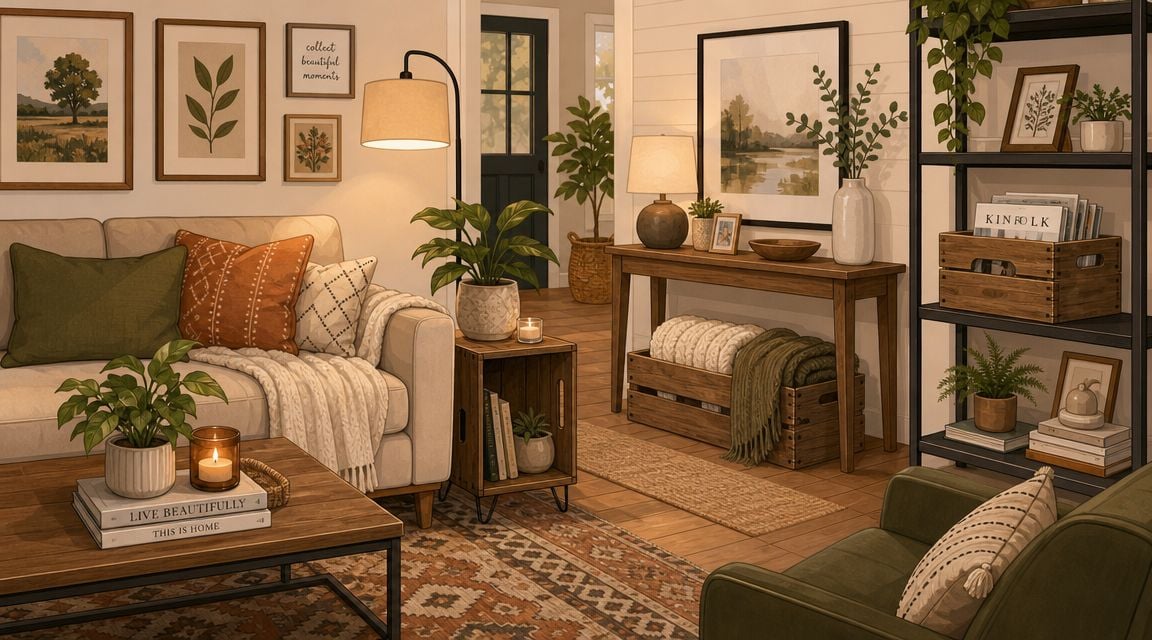
Crates for storage succeed when they behave like intentional furnishing. They should never look as if they've been parked temporarily while a “real” solution is still pending.
Use crates as furniture, not filler
A strong wooden crate beside a lounge chair can replace a side table if styled properly. Add a small lamp, a book, and one sculptural object, then keep the lower cavity for folded throws. The room gains storage without announcing it.
Under a console in an entry, a row of matching crates creates order for seasonal accessories, dog leads, or children's everyday items. The key is repetition. Matching forms create rhythm, while random bins create noise.
In a study or family room, stacked crates can form an informal bookcase. This works best when the arrangement is disciplined. Keep the stacking low, maintain consistent spacing, and edit what's displayed.
- Bedside use works in relaxed bedrooms where a closed nightstand would feel too formal.
- Bench-end placement is useful in open-plan rooms where one needs flexible storage with visual substance.
- Shelf inserts help open shelving feel more organized by hiding the less beautiful contents.
For anyone refining a display wall or bookcase arrangement, shelf styling ideas that balance storage and decoration are especially helpful.
Designer's Insight
Designer's Insight
A crate should answer to the rug before it answers to the sofa. If the room's foundation is soft and tonal, choose storage with warmth and restraint. If the rug has stronger pattern or graphic contrast, a simpler crate shape will keep the room composed.
That's why the Rug Market matters so much in a storage conversation. Art for your floor sets the room's rhythm, and every visible storage element should respect it. A hand-knotted rug with subtle movement can support a richly grained wooden crate beautifully. A busier pattern often benefits from cleaner lines and quieter finishes.
Create rhythm instead of clutter
The most elegant rooms use crates in groups or with clear purpose. One crate can look lonely. Three can look intentional, provided they share a material language.
A few combinations consistently work:
- Pair wood with leather and wool for a collected, heritage-minded scheme.
- Use darker metal with stone and structured upholstery in a more architectural room.
- Bring woven crates into pale rooms that need storage without visual heaviness.
A crate should also carry only what deserves visibility. If the contents are chaotic, the object becomes clutter no matter how attractive it is. Curated storage means editing first, storing second.
Preserving Beauty Maintenance and Longevity
A well-made crate can last for years, but only if it's treated like furniture. That means regular care, sensible placement, and an honest understanding of where the piece will live.
Care by material
Wood requires the most stewardship and rewards it generously. Dust it with a soft cloth, keep spills brief, and avoid allowing moisture to sit on the surface. If the crate has a sealed finish, it will tolerate daily life far better than unfinished rustic wood.
Metal benefits from restraint. It doesn't need heavy treatment, but it does need to stay clean and dry. Dirt caught in corners and joints dulls the look quickly.
Woven materials should be kept away from prolonged dampness and rough abrasion. They suit dry interior spaces, not hard-working utility zones.
Treat the crate the way one would treat a side table. Once it enters the living space, it's no longer just storage.
For wood in particular, practical furniture care for preventing scratches and stains is worth following, especially in family homes where surfaces are used hard.
What Southern Ontario homes require
Ontario's seasonal swings make material choice more important than many buyers realise. Guidance on climate-related storage considerations notes that, in basements or cottages, materials such as polypropylene or properly sealed wood are worth prioritising because they resist moisture more effectively in damp conditions, as discussed in this overview of storage material considerations for changing conditions.
That has clear implications.
- Basements call for caution. Even beautiful wood can suffer if it isn't properly sealed.
- Cottages demand practicality as much as style because seasonal closure changes the environment.
- Garages and transitional spaces are often better suited to tougher, less delicate crate materials.
The wrong material in the wrong location will age badly. The right one develops character.
Bringing Your Curated Vision Home
The appeal of crates for storage isn't that they hide things. Plenty of objects can do that. Their value is that they can hold daily life while participating in the room's beauty.
Storage that belongs in the room
A thoughtfully chosen crate can warm a reading corner, organise an entry, soften an office, or make open shelving more liveable. It can also do something rarer. It can make function feel cultivated.
That's why this decision belongs inside a broader furnishing plan. The strongest interiors are never assembled one emergency purchase at a time. They're built through a complete room concept, where every practical need is answered in a way that supports the architecture, the palette, and the mood of the home.
For homeowners in Greater Niagara, Hamilton, and Toronto, that level of coordination matters even more when space is limited and every visible object carries weight.
From concept to placement
Critelli's long family legacy, beginning in 1914, still matters because a mature home doesn't come together by accident. It takes trained judgement, an edited eye, and service that continues beyond the showroom floor. That's where design guidance and White-Glove Delivery become part of the same story. One shapes the decision. The other ensures the piece arrives and is placed exactly where it belongs.
For households looking at storage as part of a broader redesign, interior design services for Toronto-area homes can help resolve layout, scale, finish, and flow before the wrong object enters the room.
A crate may be modest in size, but it isn't a minor decision. In a composed interior, every visible piece contributes either calm or confusion. The right one does more than organise. It completes.
Critelli Furniture helps homeowners across Southern Ontario create rooms where beauty and utility live together. Experience the craftsmanship in person at our King Street Showroom. Book your complimentary design consultation today. And for rooms built from the floor up, visit the Rug Market to find your room's foundation at Critelli Furniture.