CRITELLI'S SUMMER SALE | UP TO 70% OFF



Dining Table Chair Bench Styling Guide 2026

A dining room rarely serves one purpose now. It hosts weekday breakfasts, late homework, holiday meals, quiet laptop hours, and the kind of evening gathering that drifts well past dessert. That's exactly why so many homeowners pause at the same decision. Should the table feel formal and fully chaired, or relaxed and more flexible?
A well-planned dining table chair bench arrangement solves that tension beautifully. It gives a room structure without stiffness, and it often makes better use of space than an all-chair layout. For households across Southern Ontario, that balance matters. The dining room has become a working room, a social room, and a family room all at once.
Table of Contents
- The New Heart of the Home A Dining Bench and Chairs
- Mastering Measurements for Perfect Dining Seating
- Creating a Cohesive Look with Chairs and a Bench
- Balancing Comfort Durability and Daily Use
- The Art of Customization and Bespoke Dining
- Bringing Your Vision Home with Critelli
The New Heart of the Home A Dining Bench and Chairs
A bench on one side of the table and chairs on the other often appears to be a style decision. In practice, it's a lifestyle decision. It softens the formality of a dining set while still preserving the composed look that a well-appointed room needs.

For many households, the attraction is immediate. A bench allows children to gather more casually, lets guests shift more easily during entertaining, and can tuck neatly under the table when the room needs to feel open. Chairs, meanwhile, keep the composition grounded and give the arrangement visual rhythm.
A traditional room doesn't have to feel rigid
The appeal of this combination also sits within a much longer design story. The evolution toward today's dining ergonomics has been centuries in the making. Early dining tables before 1600 were often 86.5 cm (34 inches) high, gradually standardising to the modern 76 cm (30 inches) during the Stuart period 1603–1714, a shift that codified the proportions for chairs and benches used today, as noted in this history of modern wooden chair and table proportions.
That history still shows up in how a room feels. A dining setting works best when proportion is calm, not exaggerated. The bench-and-chair arrangement respects that principle while making the room more liveable.
A dining room should look composed when no one is in it, and feel effortless once everyone sits down.
Why the mix works in design-forward homes
A bench introduces a slightly architectural line. It can make a substantial wood table feel lighter, especially when paired with chairs that have sculptural backs, upholstered seats, or refined frames at the ends. It's one of the simplest ways to make a dining room look curated instead of purchased as a single set.
That's why homeowners often begin by browsing indoor benches for the dining room before they've finalised the full room. The bench often becomes the pivot point. Once its scale, silhouette, and material are chosen correctly, the chairs, rug, and lighting can follow with more confidence.
Since 1914, a family-run heritage brand has helped furnish homes across Southern Ontario by treating furniture as part of everyday living rather than isolated objects. That perspective matters here. A dining bench isn't just extra seating. It's part of how a room welcomes people, supports use, and expresses timeless craftsmanship without becoming overly formal.
Mastering Measurements for Perfect Dining Seating
Beautiful dining seating fails quickly when the measurements are wrong. The most common mistake isn't fabric, finish, or style. It's buying a bench that looks appropriate from the front but feels cramped once someone sits at the table.
Start with the underside, not the tabletop
The essential measurement is 25–30 cm (10–12 in) of clearance between the top of the seat and the underside of the tabletop or apron. Standard dining tables are typically 71–76 cm (28–30 in) high, while dining chair seat heights commonly sit at 40.6–50.8 cm (16–20 in), which is why the underside measurement matters more than the top surface when planning legroom, as outlined in this standard dining table height guide.
If a table has a thick apron, that detail can encroach on knee space. A bench that seems correct on paper may still sit too high in real use. Careful measuring protects both comfort and appearance.
For homeowners refining a room with a custom table or mixed seating, this is also where Critelli's dining table height guide can help frame the right proportions before an order is placed.
Dining Seating Measurement Cheat Sheet
| Measurement | Recommended Dimension (Imperial) | Recommended Dimension (Metric) |
|---|---|---|
| Standard dining table height | 28–30 in | 71–76 cm |
| Typical dining seat height | 16–20 in | 40.6–50.8 cm |
| Ideal seat-to-table underside clearance | 10–12 in | 25–30 cm |
| Typical bench seat height | 18–20 in | qualitative equivalent varies by maker |
| Typical bench depth | 14–17 in | qualitative equivalent varies by maker |
| Typical bench length | 42–80 in | qualitative equivalent varies by maker |
| Planning width per person | About 24 in | 61 cm |
| Rear clearance for circulation | At least 36 in | qualitative equivalent varies by room |
Designer's Insight
Designer's Insight
With a pedestal table, the main concern is usually seat height and knee clearance. With a legged table, the bench must also be slightly shorter than the inside leg span and generally needs about 2 in of extra clearance from the legs so it can tuck in cleanly without catching on entry or exit, as explained in this dining bench sizing guide.
Smaller urban homes make these details more important, not less. In markets across Greater Niagara, Hamilton, and Toronto, there's often little tolerance for a bench that drifts too far into circulation or forces awkward movement around the room. A bench should simplify the layout, not complicate it.
A practical measuring sequence keeps decisions clear:
- Measure floor to underside. Ignore the tabletop top surface at first. The knees only care about the lowest obstruction.
- Measure inside leg span. If the table has legs, this number determines the usable bench length.
- Confirm circulation. Leave enough room behind the seating so diners can move without scraping walls or cabinetry.
- Plan by real capacity. Use the width-per-person guideline instead of trying to maximise seat count.
For larger tables or entertaining layouts, shape also affects seating logic. Readers considering a round table for bigger gatherings may find this MODERN LYFE 10 person table guide useful for understanding how table form changes seating flow.
What works in a showroom doesn't always work once a room is fully furnished. Measurements should be taken with sideboards, wall clearances, radiator projections, and traffic paths in mind. That's the difference between a room that merely fits furniture and one that feels organised.
Creating a Cohesive Look with Chairs and a Bench
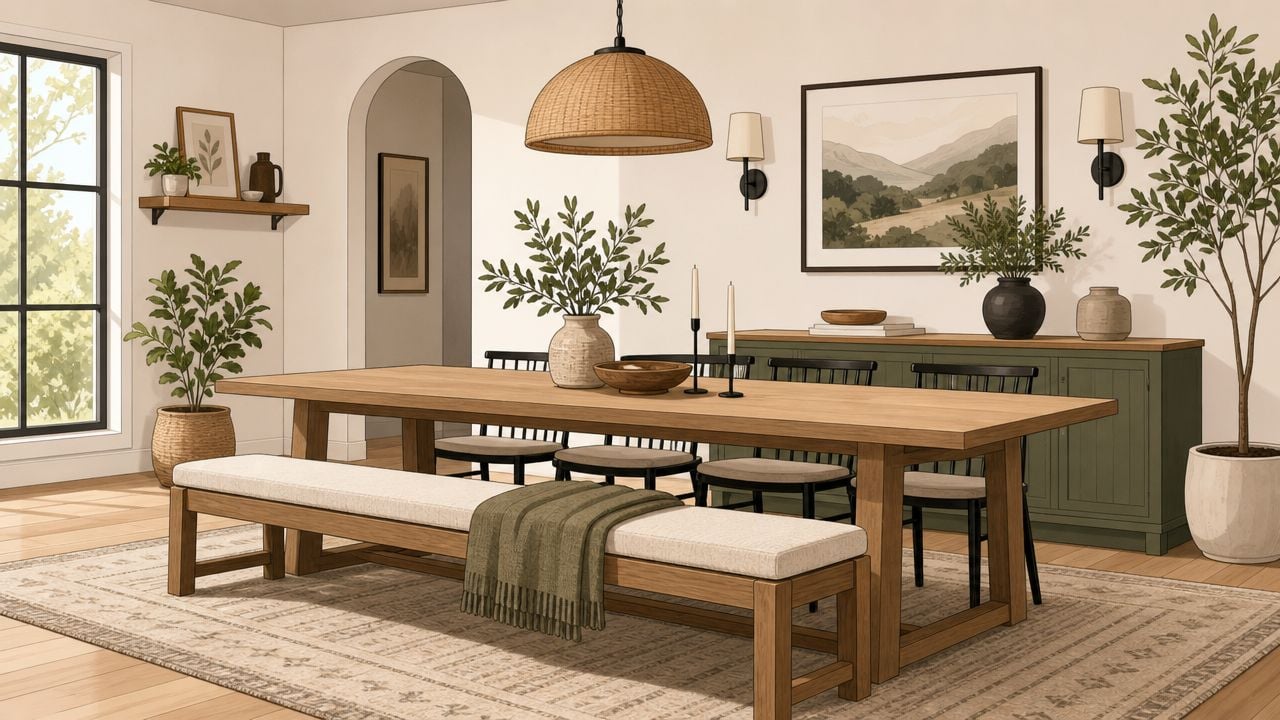
A strong dining room doesn't require a matching suite. In fact, the most memorable rooms often avoid it. A dining table chair bench arrangement feels more resolved when each piece relates to the others through proportion, tone, and material, rather than strict sameness.
Harmony matters more than matching
A wood bench paired with fully upholstered side chairs can create a beautiful tension. The bench supplies visual weight and architectural calm. Upholstered chairs add softness, comfort, and a refined finish. Likewise, a sleek bench can sit comfortably beside traditional dining chairs if the timber tones, seat heights, and overall scale stay in conversation.
This approach is especially useful in Southern Ontario homes where space planning has to work harder. In Canada's 2021 Census, the average dwelling was 944 square feet, which makes efficient layouts and circulation around dining furniture a practical concern as much as an aesthetic one, as referenced in this discussion of mixing dining table chairs.
A room with modest square footage benefits from visual restraint. Too many heavy chairs can crowd the perimeter. A bench often reduces that visual clutter while still keeping the composition complete.
Here are combinations that usually age well:
- Wood bench with upholstered chairs. This gives the room texture and makes everyday dining feel warmer.
- Upholstered bench with wood chairs. This works well when the table itself is substantial and needs a softer counterpoint.
- Traditional chairs with a cleaner-lined bench. Good for transitional interiors that want a fresher silhouette without abandoning classic character.
- Black or dark-framed chairs with a lighter bench. Effective when the room needs contrast and definition.
Build the room from the floor up
The most polished dining rooms are rarely solved by seating alone. They are built as a complete room concept. Chairs, bench, table, lighting, art, and storage all need to share a language.
That's where a design studio approach becomes valuable. The seating decision should be weighed against sightlines, flooring, natural light, and adjoining spaces, not treated as a standalone purchase. In practical terms, a bench may be right for the table but wrong for the room if it interrupts a passageway or leaves the composition feeling one-sided.
Practical rule: If the table, chairs, and bench all compete for attention, the room feels restless. Let one element lead and let the others support it.
The rug is often what resolves that tension. In a considered interior, Art for your Floor isn't an accessory. It's the foundation. A hand-knotted rug grounds the table, softens acoustics, and visually ties mixed seating together so the arrangement reads as intentional rather than assembled over time.
Homeowners exploring dining seating options often begin with dining chairs in Canada and then realise the room needs one more layer to feel finished. That layer is often underfoot. In design-forward spaces, the rug is what turns several attractive pieces into a coherent room.
Balancing Comfort Durability and Daily Use
The right dining seating must survive real life. It should also remain comfortable through an ordinary week, not just look convincing in a staged room. That's where the trade-offs become more nuanced.
What works for everyday family use
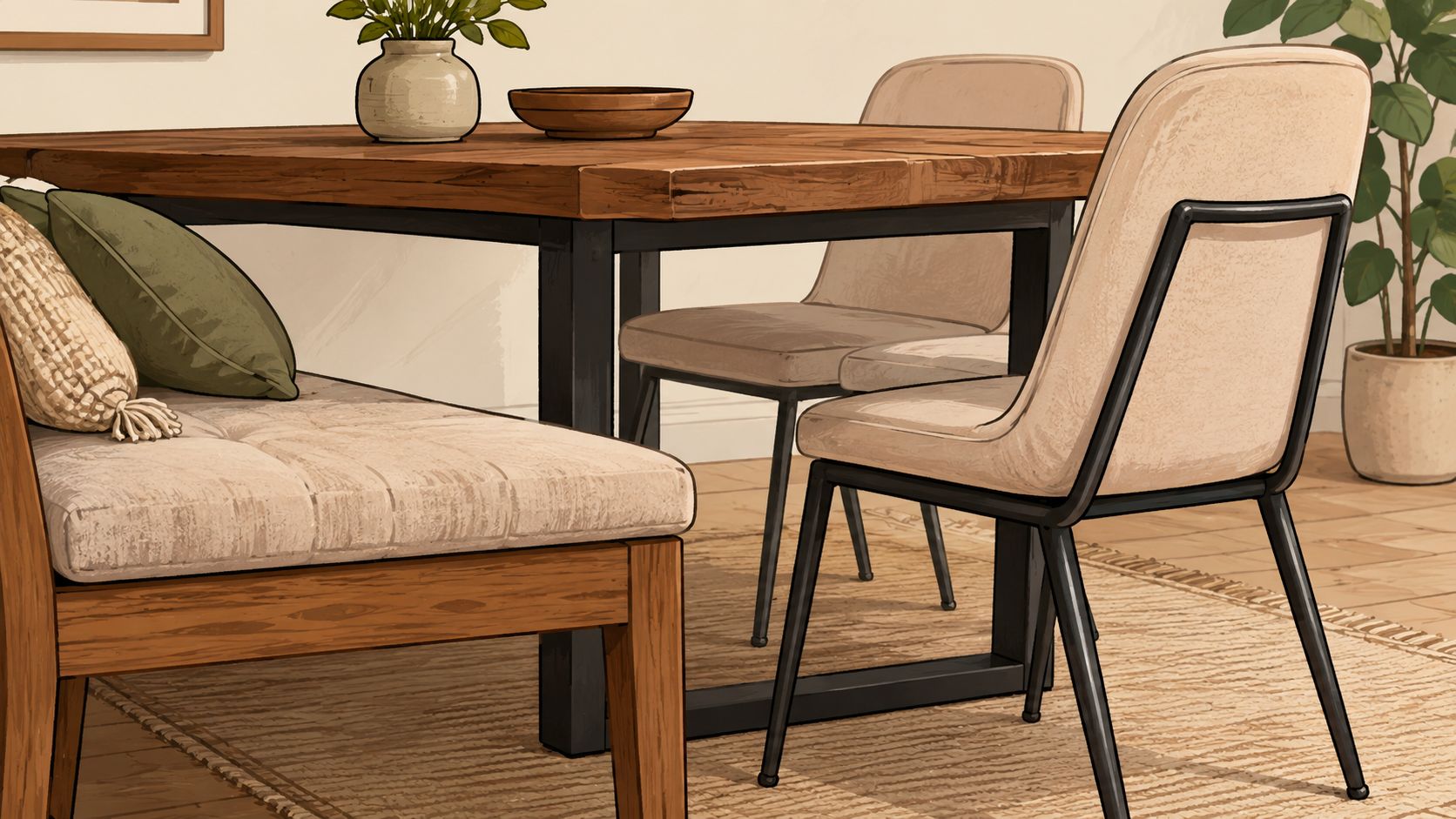
A backless bench is often excellent for shorter meals, casual family use, and flexible entertaining. It can also be the cleanest visual answer in a compact room. But comfort changes when meals stretch longer or when the household includes children, older adults, or anyone who prefers more support.
Ergonomics are essential for long-term comfort, especially for families. Benches typically offer less individualised back support than chairs, so their practicality depends on daily habits and who uses them most often, as described in this guide to chairs versus benches for dining seating.
That doesn't make benches a compromise. It means the right bench depends on the room's actual life.
A useful decision lens looks like this:
- For everyday family meals. A bench can work beautifully if meals are relaxed but not especially long, and if ease of movement matters.
- For extended dinners. Chairs usually carry more comfort over time because each diner has defined support.
- For mixed-age households. A bench with upholstery or a supportive back can bridge the gap better than a hard backless seat.
- For frequent entertaining. A bench adds flexibility and can make last-minute seating easier.
The most elegant choice is the one the household will still enjoy after the novelty of the look has passed.
Material choices that age well
Material selection should follow use, not the other way around. Solid wood benches bring timeless craftsmanship and often age with grace, especially when the room already has strong architectural character. Upholstered benches add softness and a more refined profile, but they ask for thoughtful fabric choices in active households. Metal details can sharpen the silhouette, though they usually work best as accents rather than the dominant material in a warm dining setting.
For upholstery decisions, this guide to upholstery materials is a practical reference when balancing appearance with maintenance.
The same durability logic appears in other furnishing categories as well. For readers comparing how material weight, finish, and exposure affect longevity, this overview of durable cast iron outdoor furniture offers a useful parallel in how durable materials behave over time, even though the setting is outdoors rather than in the dining room.
A few durable combinations tend to hold up well in daily interiors:
- Wood seat bench with upholstered end chairs. Lower maintenance on the side that sees the most movement.
- Fully upholstered bench in a quieter dining room. Better for comfort-driven spaces used for longer meals.
- Mixed wood and leather seating. A refined choice when the room calls for depth and patina rather than a lighter casual feel.
The best dining rooms don't force one seat type to do everything. They assign each seat a role. The bench offers flexibility. The chairs provide individual comfort. Together, they create a room that feels both welcoming and enduring.
The Art of Customization and Bespoke Dining
The difference between a room that works and one that feels personal often comes down to customization. Standard sizing and standard finishes can get close. Bespoke decisions are what make the room feel settled.
Why bespoke changes the outcome
A dining bench is one of the clearest examples of why custom furniture matters. The ideal length may need to respond to table legs. The seat may need a specific fabric because the room opens to a sunlit kitchen. The wood finish may need to sit between existing flooring and a dining table rather than match either one exactly.
Those are not small refinements. They are what turn a functional purchase into heirloom quality furniture that belongs to the home.
A bespoke process usually improves several details at once:
- Dimensions. The bench can be proportioned to the exact table and room.
- Comfort level. Seat construction, upholstery, and profile can reflect how the household dines.
- Material language. Wood tones, leather, and textiles can connect the dining area to adjacent rooms.
- Longevity of style. A well-chosen finish is less likely to feel generic or temporary.
A complete room concept feels intentional
The strongest custom results come from treating the dining area as part of a broader interior. That's where interior design services in St. Catharines become especially relevant for homeowners across Niagara, Hamilton, and Toronto. A designer can see where a bench should echo a sideboard, where a chair fabric should quiet the room, or where the table needs a more restrained silhouette because the rug already carries the pattern.
For clients exploring custom furniture in Southern Ontario, customized dining table options provide a starting point for shaping the room around how it will be used.
A heritage design house can support this process with access to artisanal makers, broad finish libraries, bespoke upholstery, and a more complete room perspective. Within that framework, Critelli Furniture offers consultation, customization guidance, and product categories that support a table-and-bench dining arrangement as part of a coordinated interior rather than an isolated furniture order.
A bespoke dining room doesn't announce itself through excess. It feels calm because every decision has been resolved.
That's luxury. Not more options for the sake of options, but the confidence to choose the right ones and carry them through with timeless craftsmanship.
Bringing Your Vision Home with Critelli
A successful dining table chair bench arrangement depends on a sequence of good decisions. Proportion comes first. Then comfort. Then the visual relationship between materials, silhouettes, and the room itself. When those choices are made carefully, the result feels natural rather than staged.
From showroom decisions to placement at home
The final stage matters more than many homeowners expect. Fine furniture can lose part of its impact if delivery is rushed, assembly is careless, or placement is left unfinished. A premium experience should carry the same level of care from selection to installation.
That's why white-glove delivery remains such an important part of the process for homes across Greater Niagara, Hamilton, and Toronto. Professional teams handle inspection, assembly, and placement so the furniture arrives as intended and the room feels complete on day one.
This is especially important with mixed seating. A bench may need exact positioning to clear table legs properly. Chairs may need to be spaced to preserve symmetry and movement. Rugs may need to sit precisely under the full grouping so the room feels grounded rather than shifted off axis.
What makes the process feel complete
A design-led purchase should reduce uncertainty, not create more of it. The most satisfying projects usually share a few characteristics:
- The room is planned as a whole. Seating, table, rug, and circulation are considered together.
- Customization solves real problems. Size, finish, and upholstery respond to the architecture and the household.
- Delivery protects the design. Placement, inspection, and finishing details are handled with care.
The appeal of a dining bench and chairs isn't just that it looks current. It's that it offers a refined answer to how people live now. It can make a room more generous, more flexible, and more composed, all at once.
For homeowners seeking Luxury furniture Niagara, Interior design services St. Catharines, Custom furniture Southern Ontario, and Hand-knotted rugs Ontario, Critelli Furniture offers a design-led path from first measurements to final placement. Experience the craftsmanship in person at our King Street Showroom. Book your complimentary design consultation today. Visit the Rug Market to find your room's foundation.