
The Rug Rules Every Homeowner Needs to Follow

A living room can contain beautiful furniture, thoughtful lighting, and carefully chosen colour, yet still feel strangely unfinished. Often, the missing element is not another chair or a new artwork. It's the rug. When the rug is too small, poorly placed, or visually disconnected from the furnishings, the room loses its centre and the furniture appears to float.
Rug rules offer a practical way to restore that sense of balance. They help homeowners in St. Catharines, the Greater Niagara region, Hamilton, and Toronto make decisions based on proportion, circulation, material, and longevity. A well-chosen rug becomes more than a floor covering. It becomes the first piece of art for the floor, the foundation for a complete room concept, and a quiet expression of personal style.
The Foundation of Timeless Interior Design
A homeowner may arrange a generous sofa, two chairs near the fireplace, and a clear space for the coffee table. If the rug stops short of the seating area, however, the composition loses its footing. The furniture gathers too tightly at the centre, while the rug reads as a separate island instead of the architectural base for conversation.
Scale creates that sense of order. A rug does not need to dominate the room through a loud pattern. It needs to relate convincingly to the seating, tables, lighting, and surrounding architecture. Like a foundation beneath a house, it may remain quiet, but every later decision depends on where it begins and how it holds the room together.
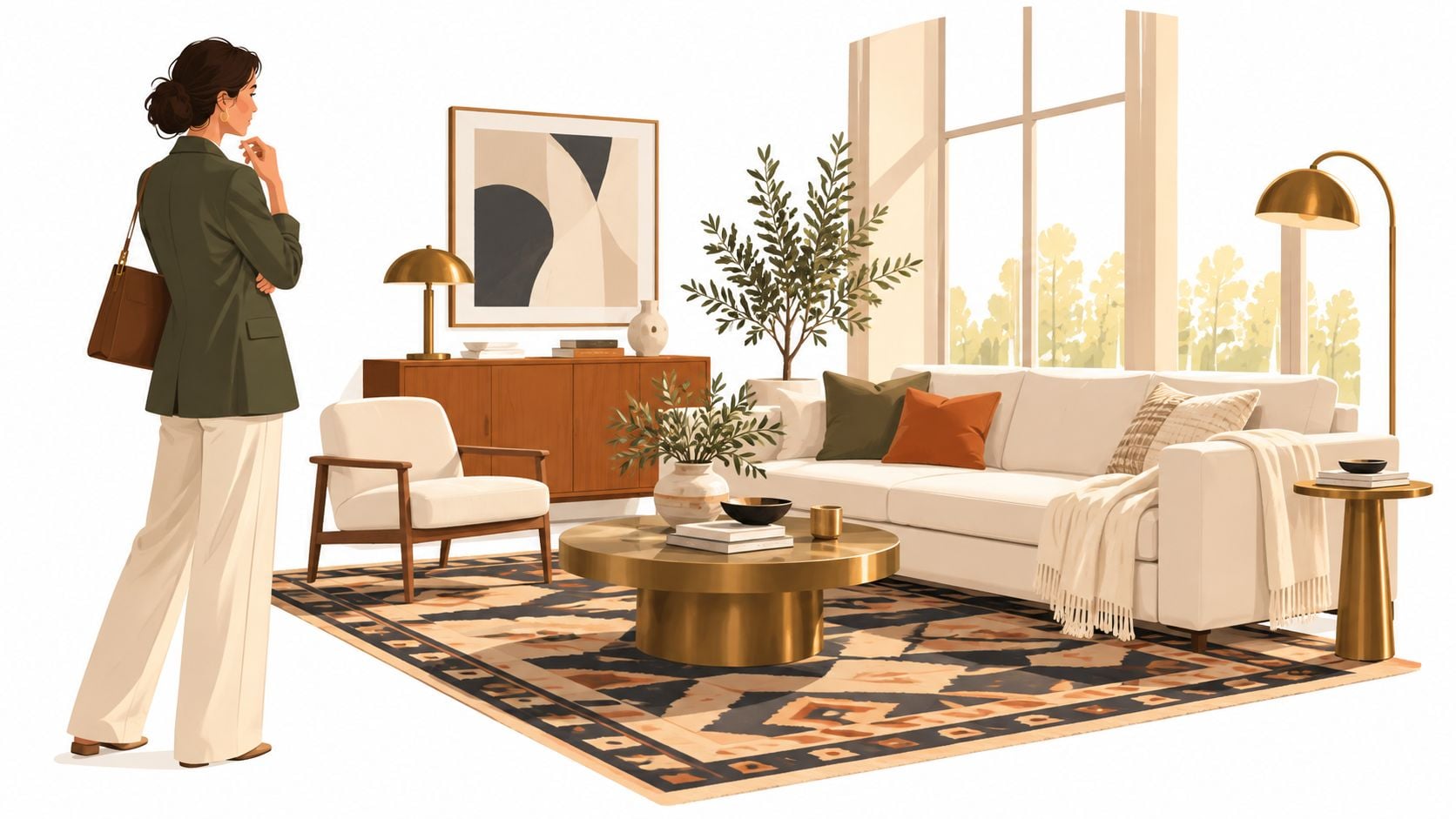
A room begins from the floor upward
Timeless interiors usually develop through a sequence rather than around one dramatic object. The rug sets an early layer of colour, texture, and movement. Furniture can then respond to its character, creating a room that feels composed instead of crowded with competing statements.
This method works in a heritage home in Niagara and in a contemporary condominium near Hamilton. Traditional architecture may suit a restrained border and gentle variation that suggests age. An open-plan modern room may call for a sculptural pattern or a quiet natural texture. Either way, the rug influences how the room feels underfoot and how its furnishings relate.
The family-run St. Catharines furniture house behind this design tradition was founded in 1914 by Joseph Critelli and his young son Thomas. It remains family-owned, with fourth-generation owner Joe Critelli and fifth-generation owner Julia involved today. That continuity reflects the patience required to curate materials that can live well in a home over time.
Designer's Insight: Repeat a rug's character in one other element, such as a cushion, artwork, timber tone, or leather finish. The link should be subtle. Exact matching can make a room appear ordered by a catalogue rather than collected through experience.
The art of the supporting layer
A rug is also art for the floor, but its role reaches beyond visual interest. It connects hard surfaces with softer furnishings, giving polished wood, stone, or concrete a warmer presence. A hand-knotted wool design can support an expressive chair without competing with it, while a decorative pattern can give structure to a restrained furniture arrangement.
The surrounding textiles should contribute to that conversation without copying the rug. For example, home décor cashmere blankets can echo its warmth and tactility while introducing a different scale or surface. This layered approach creates an heirloom quality interior, one that feels gathered over time rather than purchased in a single afternoon.
Choose the rug before final furniture decisions whenever possible. It establishes the room's visual grammar, clarifies the intended composition, and gives each later selection a natural place within it.
Essential Rug Size Guidelines for Living Spaces
A rug can make a room feel settled or strangely unfinished. The difference often appears in a few inches: a sofa that sits partly outside the composition, a dining chair that catches at the edge, or a border so narrow that the rug seems to have been dropped into place. Begin with a tape measure and treat the rug as the room's foundation, much like a plan that gives every later furnishing a position.
Living rooms need a visual frame
Canadian guidance commonly centres on 8×10 ft and 9×12 ft sizes for living rooms. It also recommends leaving 18 to 24 inches of bare floor around the perimeter, while allowing 48 inches in each direction beyond a dining table for chair movement, as outlined in Canadian guidance for choosing an area rug.
An 8×10 ft rug is the most common living-room choice in that guidance because it often lets the front legs of a sofa and chairs rest on the rug without making the room feel crowded. The rug then acts like a frame around a painting, gathering the seating while leaving a visible margin of floor.
Before ordering, mark the proposed dimensions with painter's tape. Walk through the room, open nearby doors, and check the routes between seating, entrances, and tables. In an Ontario home, also note floor vents and areas exposed to winter grit or damp footwear. A rug should support daily life without obstructing airflow or creating a difficult cleaning edge.
Choose the furniture-leg arrangement deliberately:
- Front legs only: The sofa and chairs place their front legs on the rug, while the back legs remain on the surrounding floor. This gives the seating area a lighter appearance and can preserve more visible flooring in a compact room.
- All legs on the rug: The sofa, chairs, coffee table, and occasional tables sit within the rug's boundary. The result is a formal, unified composition that suits a generous room and furniture grouping.
- Coffee table only: Use this arrangement only when the rug nearly reaches the seating. A wide gap between the rug and sofa can make the piece appear undersized and disconnect the table from the conversation area.
The furniture leg rule for rugs helps distinguish these placements. Homeowners can also use the Critelli Furniture rug size calculator to test proportions before visiting a showroom.
Dining rooms require clearance for movement
Dining rugs must accommodate the table and the chairs in use, not only the table when every chair is pushed in. The rug should extend far enough that a pulled-out chair remains fully supported. Otherwise, its front legs may sit on the rug while its back legs drop onto bare flooring, creating an awkward rocking motion and interrupting the room's visual order.
A low or moderate pile is usually more practical beneath a dining table. Chairs can move with less resistance, crumbs are easier to remove, and the surface is simpler to maintain through Ontario's seasonal changes.
Measure the furniture, not only the room
The room's overall dimensions provide context, but the furniture footprint determines the rug's useful size. A large dining table in a compact room may require a careful balance between chair clearance and walking space. A sectional sofa may need a wider rug than a standard sofa, even when both rooms have similar floor areas.
Measure the furniture, mark the proposed boundary, and test every path around it. The right rug rule is the one that supports movement, proportion, and cleaning, not merely a catalogue dimension.
Mastering Rug Placement and Layering
A rug can divide an open-plan room without building a wall. In a Great Niagara or St. Catharines home with a combined living, dining, and kitchen area, placement tells the eye where one activity ends and another begins. The challenge is to create distinct zones while preserving a coherent visual rhythm.
A single large rug offers the clearest solution. It can gather the sofa, chairs, and coffee table into one generous arrangement, particularly when the room has strong architectural features that already provide definition. This approach feels calm and formal, and it reduces the number of competing boundaries across the floor.
Layering creates a more collected effect. A larger, quiet base rug defines the general zone, while a smaller patterned rug introduces emphasis beneath a coffee table or seating group. The two pieces should differ in texture or scale, but they still need a relationship in colour and proportion.
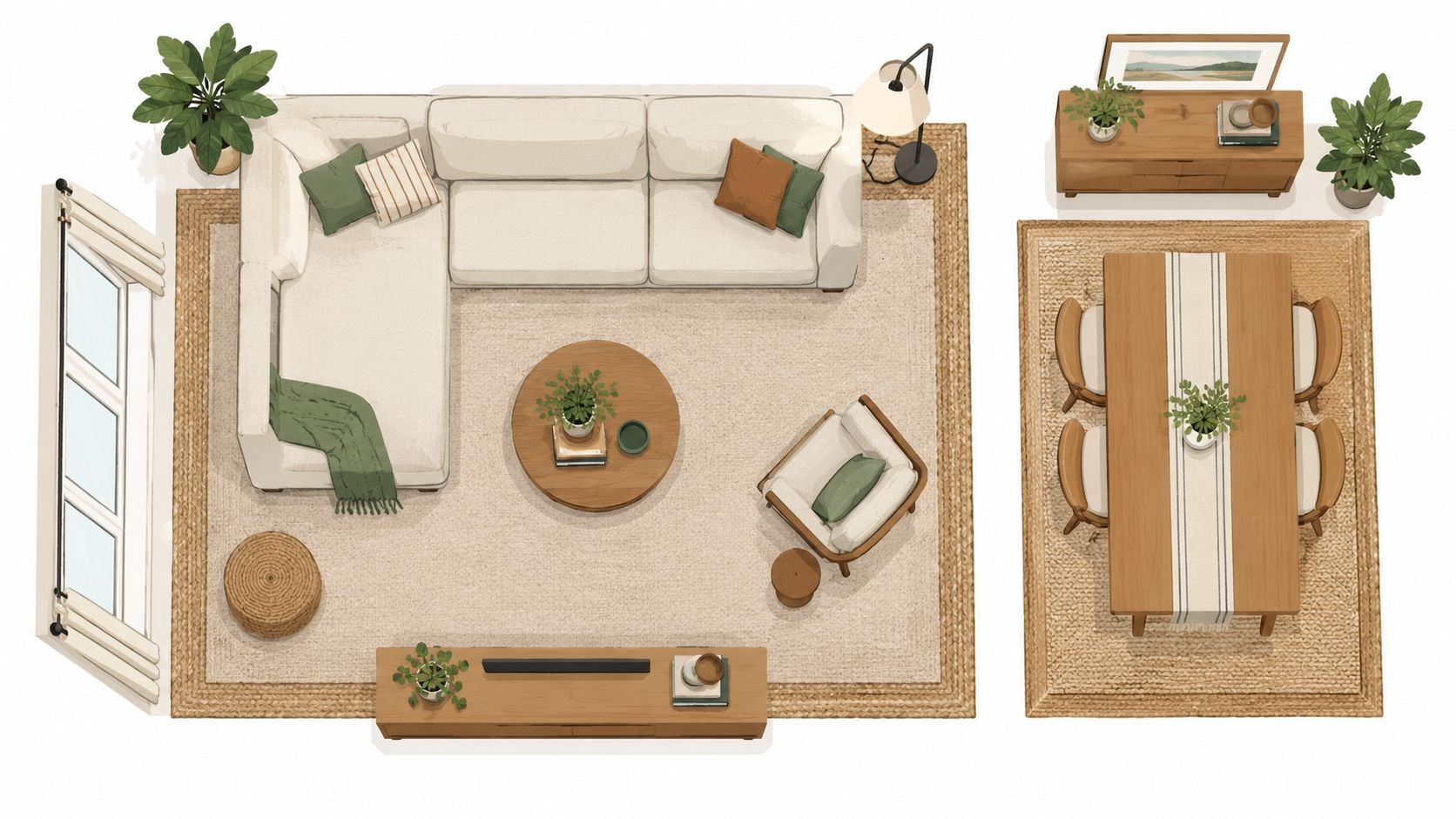
Single-piece placement versus layered composition
A single rug is usually preferable when:
- The room has strong pattern already: A fireplace surround, patterned upholstery, or expressive artwork may need a quieter floor.
- The furniture is substantial: A large sectional or broad leather seating group often benefits from one stable visual foundation.
- Circulation is tight: Fewer edges reduce the chance of catching a toe or interrupting a walkway.
Layering can be effective when:
- A smaller rug has exceptional character: A vintage or hand-knotted piece can become a focal point without carrying the entire room.
- The open plan needs additional zoning: A base rug can establish the living area, while the upper rug defines the conversation zone.
- The furniture needs tonal balance: A neutral hand-knotted wool base can temper the visual weight of a bold Hancock & Moore leather piece.
The larger rug should remain relatively restrained if the smaller rug carries strong colour or pattern. A natural, textural base can give the upper piece room to breathe. The layered arrangement should also be tested for height, especially near doors and furniture with low clearances.
Flow matters as much as focal point
The rug's edges should respect the room's principal routes. A walkway between the living and dining areas must remain obvious, and the rug should not create a visual stop directly in front of a frequently used doorway.
For open-plan homes, the area rug placement guide provides a useful reference for aligning furniture and defining zones. The most successful placement usually follows the architecture rather than fighting it. A rug can reinforce a window axis, echo the direction of a hallway, or bring symmetry to an asymmetrical fireplace.
The aim isn't perfect uniformity. It's a curated selection of forms that allows the eye to travel naturally from one part of the home to the next.
The Value of Artisanal Hand-Knotted Rugs
A homeowner furnishing a new room often chooses the sofa first, then searches for a rug to fit around it. A hand-knotted rug reverses that order. It can serve as the room's foundational artwork, establishing colour, texture, and proportion before the furniture completes the composition.
A mass-produced floor covering may offer comfort and pattern, while an artisanal hand-knotted rug builds its character through construction. Individual knots hold the design in place, allowing nuanced pattern, tonal variation, and a surface with visual depth. The result has the irregularity of something made by hand rather than the exact repetition of a printed or rapidly manufactured covering.
Construction becomes character
Over time, the fibres settle and respond to the room around them. Subtle changes in sheen and texture reveal how sunlight and daily movement meet the pile. Like timber that gains patina, the rug can become more connected to the home as it ages.
Its durability still depends on the fibre, knotting, pile, placement, and care routine. Hand-knotted does not mean indestructible. It means the rug has a structure that can often be maintained and, when necessary, refurbished instead of discarded at the first sign of wear.
That distinction changes the purchase. The homeowner is choosing for the present room, but also for a future furniture arrangement, a different home, or a later generation. Craftsmanship gives the piece a longer design life.
The rug as a room's first palette
The Rug Market philosophy treats a rug as the starting point for a room's colour palette and character. A quiet pattern can establish the foundation for bespoke upholstery, while a more expressive design can guide the selection of wood tones, metals, and textiles.
In a design-forward Southern Ontario home, the rug also shapes views between adjoining rooms, softens sound, and gives furniture a coherent setting. It works like an architectural datum, a steady visual line from which the rest of the room can be measured.
Homeowners exploring hand-knotted rugs for an heirloom interior should inspect the reverse, construction density and consistency, fibre, pile height, and care requirements. These details reveal more than a trend-driven label.
Canadian retailers and specifiers must account for product safety as well. Textile floor coverings, including rugs, mats, and carpeting, fall within the federal Hazardous Products Act framework. Products that do not meet the flammability test may use an alternate labelling route for lesser fire-hazard products, as explained in Health Canada's guidance for carpets and textile floor coverings.
Quality means thoughtful construction, appropriate use, and care that lets the rug remain part of the home for years.
Maintaining Rug Quality in Ontario Seasons
A January entryway shows why Ontario rugs need seasonal care. Road salt and damp footwear arrive in winter, pollen and outdoor residue follow in spring, and indoor humidity shifts as heating and cooling change. Natural fibres and rug backing respond to these conditions. A sound maintenance routine follows the home's environment rather than treating every month alike.
The first rule is gentle consistency. Critelli's Rug Market specialists recommend slow vacuuming with low suction, avoiding power heads on delicate pile, rotating furniture periodically, limiting direct sunlight, and blotting spills immediately. These practices also align with the Canadian Conservation Institute's carpet and rug care guidance. Regular, careful attention preserves the rug's surface much like measured upkeep preserves a fine wood floor.
Winter care starts at the threshold
Salt and grit act like fine abrasive particles. Foot traffic presses them deeper into the pile, where they can wear fibres over time. A well-positioned entry mat, dry footwear before entering the main living area, and prompt removal of visible residue create a practical Ontario routine.
Vacuuming should match the rug's construction. Low suction and a slow pace lift debris without pulling unnecessarily at the fibres. Power heads may be too forceful for delicate or raised surfaces, especially on rugs with pronounced pile or older construction. If the surface feels fragile, choose the gentler setting and observe how the fibres respond.
Furniture placement also affects long-term condition. Heavy chairs, tables, and sofas can leave permanent indentations when they remain still for extended periods. Move them carefully and periodically so pressure is distributed and the rug retains its intended surface.
Moisture demands a fast response
A spill requires absorption, not vigorous rubbing. Press a clean, absorbent cloth against the affected area to lift moisture from the surface and reduce the chance of liquid reaching the foundation. Persistent dampness presents a larger concern than a temporary mark, since trapped moisture can contribute to odour, mildew, or backing damage.
Keep rugs away from persistent leaks, surfaces that block air movement, and places where they remain damp after cleaning. Professional cleaning can provide a more thorough reset than household vacuuming, particularly because removable rugs can be taken away, cleaned properly, and dried under controlled conditions.
Seasonal care can remain understated
Sunlight gradually alters colour when the same portion of a rug remains exposed. Reposition furniture or the rug when practical, and use window treatments to reduce direct exposure without darkening the entire room.
Construction affects care as well. Homeowners choosing between hand-tufted and hand-knotted rugs should understand maintenance before installation. Guidance on hand-tufted area rugs and their use in the home can support that discussion. The right rug is the one whose material, placement, and care requirements suit the household, allowing its pattern to remain the room's foundational art through every Ontario season.
Experience the Craftsmanship in Person
A rug reveals its character in a room, not on a screen. Natural light changes colour, pile, and texture, while furniture and viewing distance alter the sense of scale. A quiet pattern may gain depth beside timber and leather. A bold design may feel balanced once it sits beneath a complete seating arrangement.
A showroom visit makes rug selection part of the room's architecture. The design team can assess the home's proportions, existing furnishings, walking routes, and sightlines to adjacent rooms. This guidance supports homeowners looking for luxury furniture Niagara, Interior design services St. Catharines, Custom furniture Southern Ontario, or Hand-knotted rugs Ontario.
A complete room concept
The rug should be chosen with the wider furnishing plan, because it often establishes the room's first layer of colour and rhythm. It can set a palette for a dining room, soften the profile of contemporary seating, or give a handcrafted leather chair a grounded setting. Selecting it alongside the other pieces creates a more coherent interior than adding a floor covering after every major purchase.
Ontario homes vary widely, from established Niagara heritage properties to new family residences, urban condominiums, and open-plan homes. Each setting calls for a different approach to scale, proportion, and placement. Broader Ontario population and dwelling data offers context for the range of residential environments, while the room itself remains the proper guide for the final decision.

The final transition into the home
White-glove delivery protects the design decision after purchase. Critelli's service brings the item into the appropriate room, unboxes or uncrates it, places or lightly assembles it, and removes the packaging. This careful process reflects Canadian white-glove delivery guidance while keeping the focus on protecting the home and its furnishings.
The service matters most for large furniture and delicate floor coverings. The team can coordinate arrival, protect nearby surfaces during placement, and help confirm that the final arrangement follows the intended proportions. For clients across the Greater Niagara, Hamilton, and Toronto markets, the journey from the King Street Showroom to the home can remain considered from selection through installation.
A rug should leave the showroom with a clear purpose. It should anchor furniture, respect the architecture, support everyday movement, and contribute to a palette that can mature gracefully. That is the difference between buying a floor covering and selecting the room's foundational art.
A complimentary design consultation can help homeowners measure the room, review placement, and develop a furnishing concept shaped by heirloom quality and lasting craftsmanship. Visit the rug store in Hamilton to compare textures and proportions in person.
Critelli Furniture offers artisanal rugs, custom furniture, and design guidance for homes across Southern Ontario. Homeowners can visit Critelli Furniture at the King Street Showroom, book a complimentary design consultation, and explore the Rug Market as the foundation of a timeless room.