CRITELLI'S SUMMER SALE | UP TO 70% OFF



Nesting Side Tables Styling and Buying Guide for Home

A living room can change character several times in one day. In the morning, a laptop needs a stable perch beside the sofa. By evening, guests need somewhere to set down a drink, while the room still has to feel open, calm, and beautifully organised. A single accent table may serve one of those moments, but nesting side tables can support all of them without permanently occupying every inch of floor space.
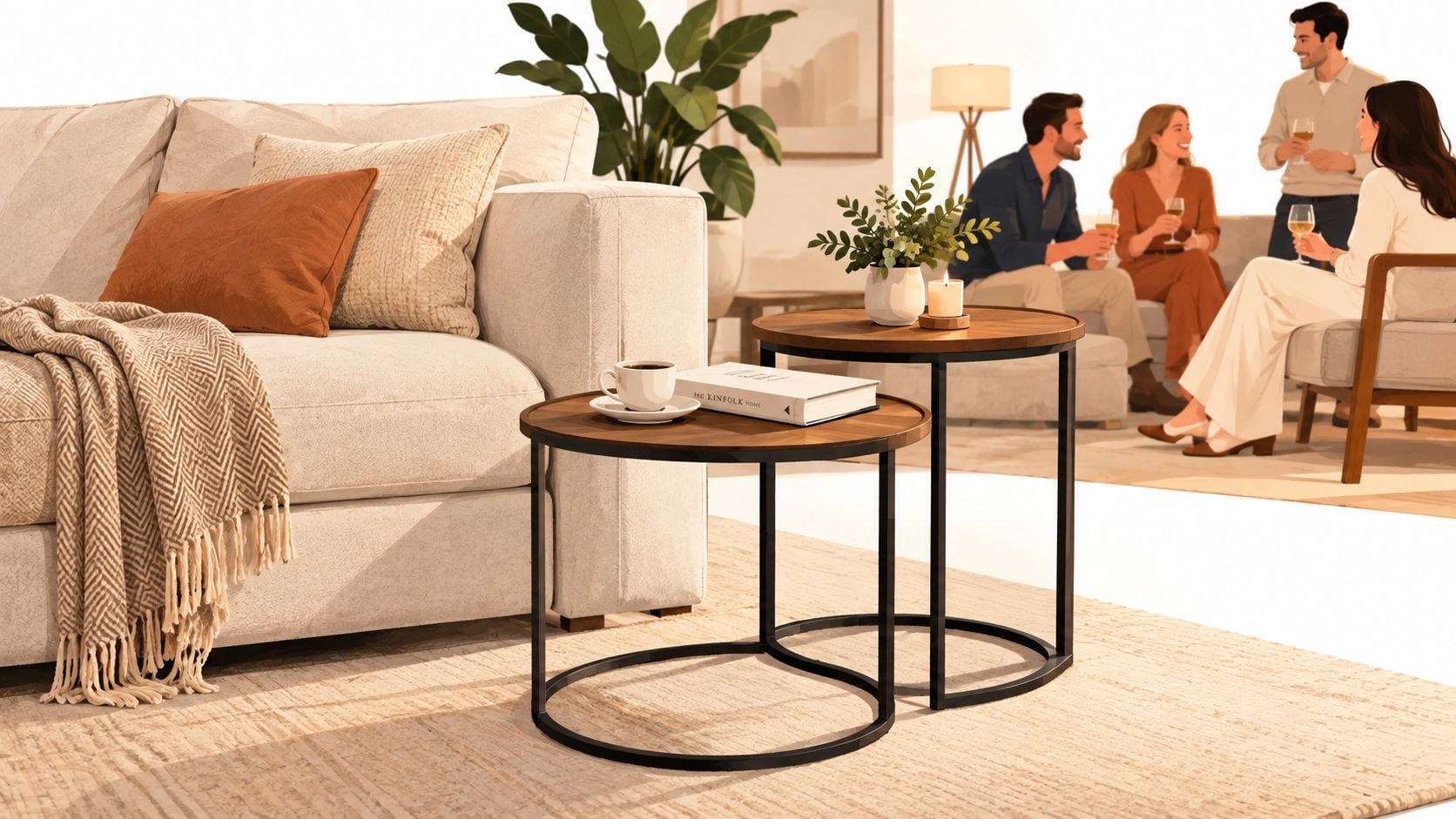
For design-conscious homes across Southern Ontario, the appeal is practical and architectural. A nesting set behaves like a small room system. The tables can sit together as a layered composition, separate when company arrives, or move beside different seats as the room's purpose changes. That flexibility suits compact condominiums, open-plan homes, reading corners, and professionally furnished living rooms alike.
Canada's broader tables eCommerce market is projected to reach US$486.1 million in 2025 and US$657.2 million by 2029, implying a 7.8% CAGR from 2025 to 2029. Tables represent 18.4% of Canada's Home & Living eCommerce market, while Ontario held 41.37% of national market share in 2025, according to Canada tables market data. Those figures establish the commercial setting, but the more meaningful question for a homeowner is simpler: does a nesting set make daily life more graceful?
Critelli Furniture approaches that question through a family-run design tradition established in 1914. Serving the Greater Niagara, Hamilton, and Toronto markets, its showrooms and design services treat occasional tables as part of a complete room concept, alongside seating, lighting, upholstery, and rugs. The result is a more considered path from first measurement to final placement. Readers can use the guide as a practical reference, then experience the craftsmanship in person at the King Street Showroom.
Introduction to Nesting Side Tables and Flexible Living
A compact solution with several roles
Nesting side tables are usually made as a coordinated pair or group, with each table scaled to slide beneath another. Their value comes from the relationship between the pieces, not just the appearance of one table. Together, they create visual layering. Apart, they provide separate surfaces beside a sofa, lounge chair, guest seat, or bed.
That distinction matters in Southern Ontario homes where rooms often need to perform more than one function. A den may serve as a quiet office during the day and a reading room at night. A condominium living area may need to accommodate a conversation group, a television, and occasional entertaining without looking crowded. A nesting set gives the household another arrangement without demanding another permanent footprint.
The room should remain composed
A well-chosen set doesn't announce itself as a storage trick. It should read as heirloom quality furniture, with proportions, materials, and finish details that belong to the room. The smaller table may carry a lamp or a book while the larger table holds refreshments. When separated, the two pieces can create balance across the seating area.
A curated selection makes a difference. A table that works beside a sofa may feel too formal beside a deep casual sectional. A dark wood finish may echo a cabinet or flooring, while a stone top can repeat the quiet veining of a fireplace surround. These choices turn a flexible object into part of the home's visual language.
A guide for practical decisions
The strongest purchase begins with use rather than impulse. Readers should consider the seats the tables will serve, the clearance needed for movement, the height of nearby arms, and the materials that can withstand daily habits. They should also ask whether the smaller table is useful when separated, rather than treating it as a decorative afterthought.
Critelli's family-run heritage, design studio perspective, and white-glove service offer a natural framework for that decision. The tables are selected alongside the rest of the room, then placed with attention to proportion and flow. For a busy professional, that process replaces guesswork with a calm sequence of practical choices.
How Nesting Side Tables Work and Why They Matter
Think of the set as a small collection
A nesting set works much like a curated art collection. Each piece has its own presence, yet the group is designed to be displayed together. The larger table establishes the principal surface. The smaller table slides beneath it, preserving floor area while adding a second level and a subtle sense of movement.
The mechanics are straightforward:
- Different footprints: Each table has a smaller surface than the one above or beside it, allowing the pieces to overlap.
- Related heights: The tables use graduated heights so one can pass beneath another without awkward contact.
- Independent use: Each piece should remain stable when pulled out and used alone.
- Balanced construction: The base must support the surface without making the smaller table feel fragile.
The quality of the design appears in the details. Sliding should feel smooth, the edges shouldn't catch upholstery, and the bases should remain steady when a table is moved. A set that only looks good when perfectly nested has missed the central purpose of the format.
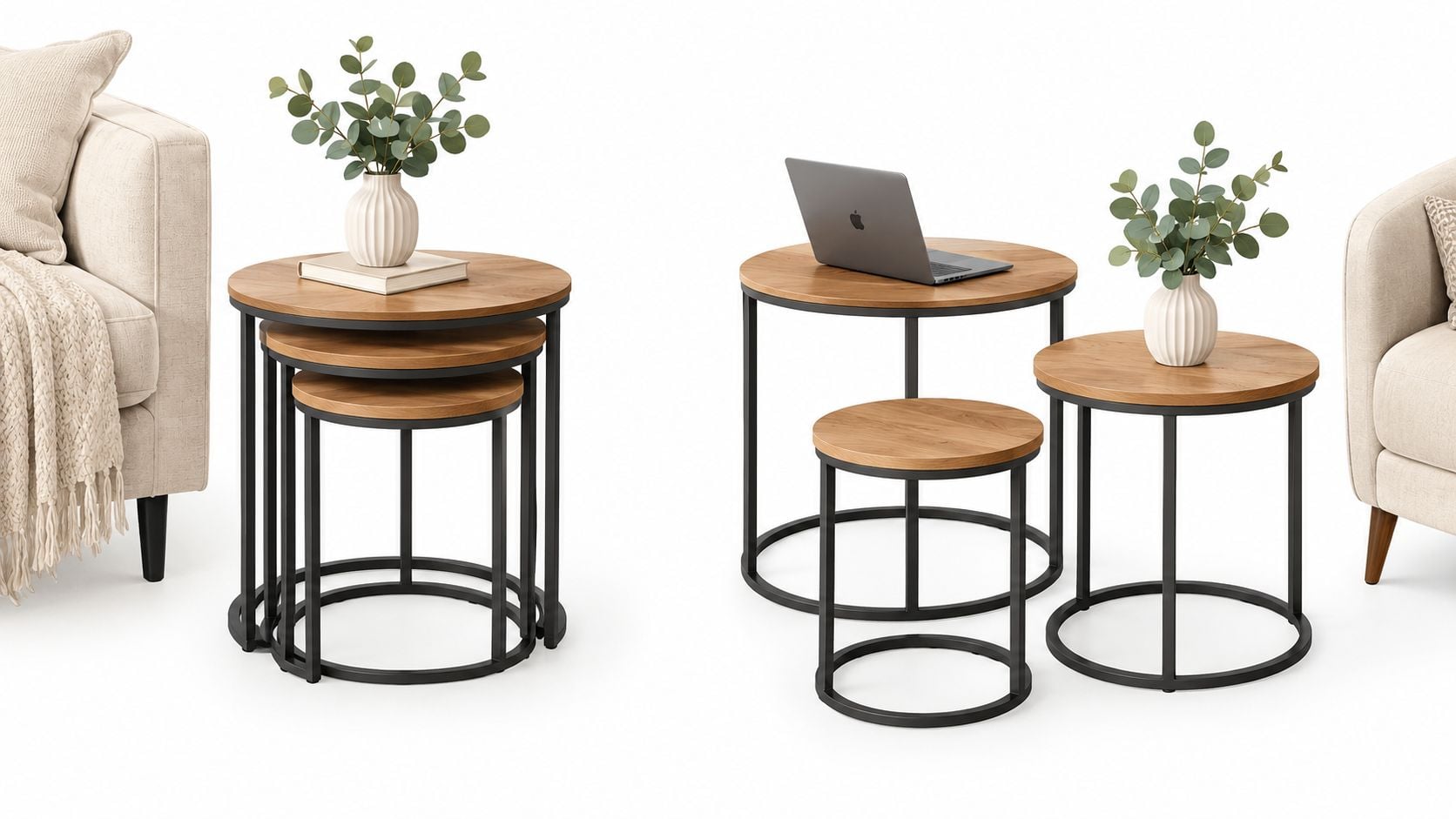
Height is part of the design
Canadian federal workspace technical specifications place side-table surface height between 356 mm and 533 mm, or 14 in. to 21 in., above the finished floor, and require a base that is wide and/or weighted enough to prevent tipping, as reflected in the technical product information for nesting tables. Residential furniture isn't automatically governed by that workspace specification, but the range offers useful design context.
A practical home test is to compare the top surface with the seat and arm of the furniture nearby. A table should allow a person to place down a cup without reaching awkwardly. The smaller piece deserves the same scrutiny, especially if it will hold a laptop, lamp, or glass.
Practical rule: A nesting set earns its place when every table remains useful after separation, not only attractive when tucked together.
For compact-room planning, homeowners can also explore modular furniture for small spaces as part of a broader flexible layout. Nesting tables work particularly well when other furnishings also support more than one arrangement.
Styles Materials and Finishes That Define Heirloom Quality
Material determines more than colour. It affects how a table feels beside upholstery, how it responds to daily use, and whether the piece develops character over time. A design-forward nesting set should therefore be assessed from several angles, including structure, maintenance, visual weight, and compatibility with the complete room concept.
Canada's furniture market provides substantial room for niche formats. One outlook places national furniture revenue at US$25,418.7 million in 2022 and projects US$40,568.0 million by 2030, with roughly 6% CAGR expected from 2023 to 2030. Specialty furniture stores accounted for 33.46% of Canada's home furniture market share in 2025, according to Canada furniture market outlook data. That context supports a careful search for artisanal occasional furniture rather than a purely utilitarian purchase.
Wood brings warmth and continuity
Solid wood offers tactile warmth and a visual connection to floors, case goods, and architectural millwork. Carefully made joinery, shaped edges, and a well-applied finish can give a pair the quiet authority associated with timeless craftsmanship. Wood also suits transitional and casual traditional rooms, particularly when paired with substantial upholstery such as Hancock & Moore leather.
The finish deserves close attention. A lighter tone can keep a compact room airy, while a deeper stain can anchor pale seating and a neutral wall palette. Homeowners should ask about cleaning requirements, protection from standing moisture, and how the finish is expected to age. More detail on material selection appears in the solid wood furniture collection.
Metal and glass keep the silhouette light
Metal bases can introduce a crisp architectural line, especially in black, bronze, or aged metallic finishes. Glass tops reduce visual mass and can work well where a room already contains strong upholstery, patterned rugs, or a sculptural light fixture. This combination suits contemporary homes, but it benefits from deliberate styling because fingerprints and surface marks can be more visible.
Metal and glass also create contrast against tactile fabrics. A smooth top beside a textured chair or a woven rug gives the composition depth without adding another bulky shape. The trade-off is that these surfaces may ask for more frequent attention in busy households.
Stone and mixed materials create a focal point
Marble and other stone surfaces bring natural variation and a sense of permanence. Veining can connect a table to a fireplace, kitchen surface, or decorative object, although the surface should be treated with care and protected from spills according to the maker's guidance. Mixed-material tables, such as wood with stone or metal with timber, offer an especially bespoke appearance because they combine warmth with structure.
Designer's Insight: A bold table finish often settles more gracefully beside a neutral hand-knotted wool rug and a rich Hancock & Moore leather chair. The rug provides a quiet foundation, allowing the table's grain, stone movement, or metalwork to remain intentional rather than competing with every other surface.
Sizing Proportion and Placement for Every Room
The right size is the one that supports the surrounding furniture without interrupting movement. Start with the seat that will use the table most often, then consider whether the set must serve a second chair, a recliner, or a nearby work position. A beautiful table becomes inconvenient if a person must twist around an armrest or brush against it while walking through the room.
The federal workspace reference range of 356 mm to 533 mm, or 14 in. to 21 in., offers a useful starting point for surface height, while the required wide or weighted base reinforces the importance of stability, as documented in the earlier technical reference. In a home, the final choice should also relate to sofa cushions, chair arms, lamp proportions, and the reach of the person using the table.
A quick-reference planning table
| Setting | Recommended Height and Footprint | Placement Tip |
|---|---|---|
| Living room sofa | Surface close to the sofa arm, with a footprint that leaves the main walkway open | Keep the larger table beside the primary seat and pull the smaller one toward guests when needed |
| Recliner or lounge chair | Choose a height that can be reached without leaning over the arm | Test the fully open recline path before final placement |
| Bedroom | Use a compact surface suited to the mattress and bedside reach | Leave enough room for drawers, doors, and walking circulation |
| Home office or den | Select a stable surface for a drink, notebook, or laptop accessory | Place the smaller table where it can move without catching the desk chair |
| Compact reading corner | Favour a visually lighter base and modest footprint | Nest the pieces when the chair is not in use, then separate them for reading |
Placement should follow movement
A set beside a Stressless recliner needs special care because the chair may extend or swivel. The table should sit outside the moving path, close enough for comfortable reach but not so close that the arm or footrest strikes it. The same principle applies beside a sofa with a deep seat. Measuring the furniture in its active position is more reliable than planning from a static floor plan.
For farmhouse-inspired rooms, the rustic farmhouse side tables guide offers a useful visual reference for combining relaxed materials with practical occasional furniture. The lesson applies beyond that style: the table should echo the room's character while preserving a clear route through it.
Critelli's interior design space planning service can help resolve difficult relationships between seating, tables, rugs, and circulation. A professional placement plan is particularly valuable when a room includes multiple conversation zones or furniture with moving parts.
Styling Your Nesting Tables as Part of a Complete Room Concept
A nesting set looks most convincing when it belongs to a larger composition. The table shouldn't be styled as an isolated product on an empty floor. It should sit within a room where the seating, rug, lighting, artwork, and accessories share a considered relationship.
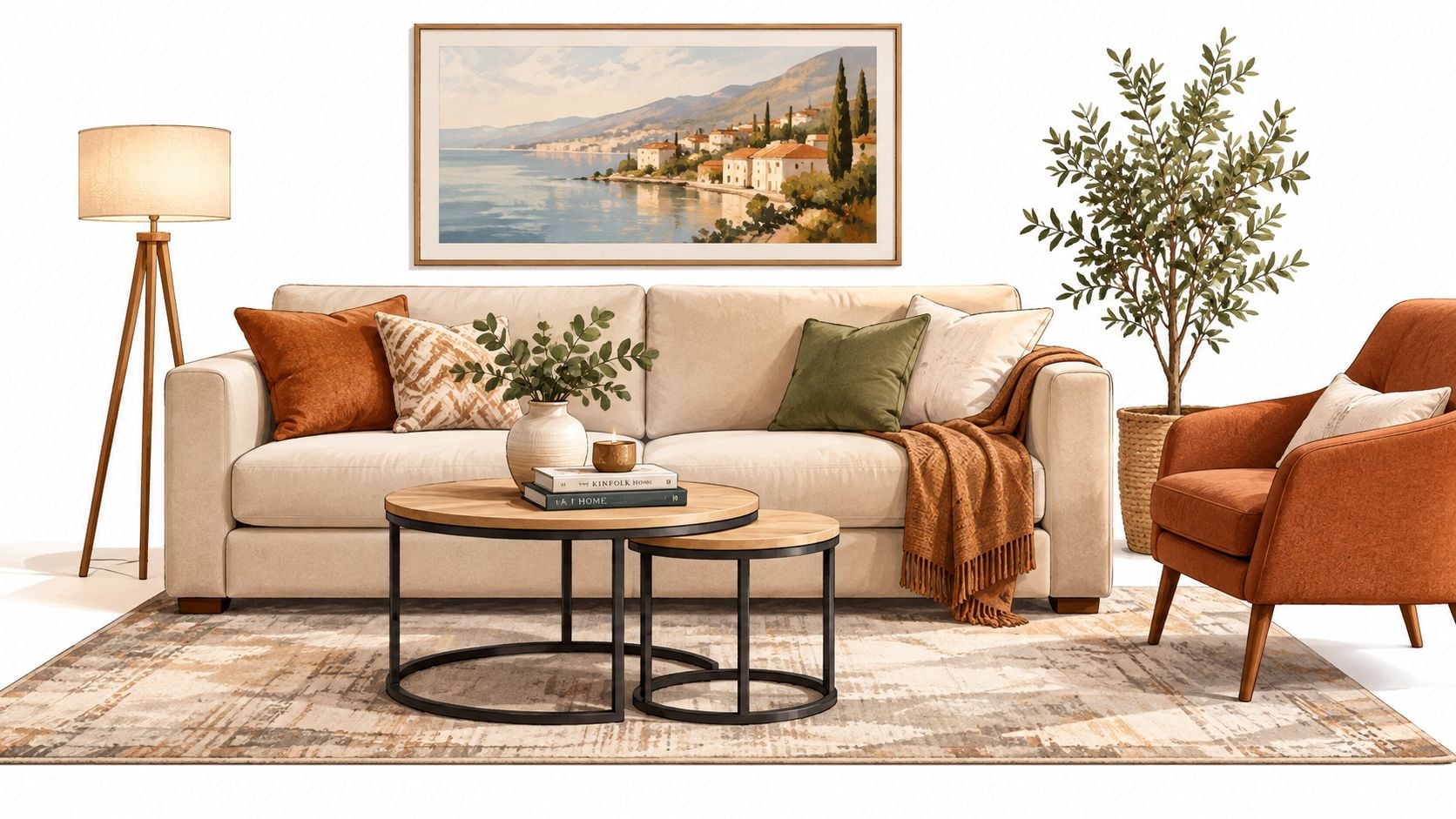
Begin with the rug
Critelli's Rug Market treats rugs as Art for Your Floor, and that principle is especially useful here. A rug establishes the visual territory of the seating group. It can connect a cream sofa to a darker wood table, soften the geometry of metal, or introduce a restrained pattern beneath quiet upholstery.
Homeowners considering hand-knotted rugs Ontario should think about the table base as well as the surface. Felt pads beneath the feet help protect the rug and make small adjustments easier. The area rug placement guide can help determine how the rug should relate to the sofa, chairs, and tables.
Use accessories with restraint
The larger table might carry a shallow tray, a lamp, or a small arrangement of books. The smaller table could hold a single object, a glass, or a small bowl. When both tables are separated, repeating one material across the pair, such as wood, metal, or ceramic, keeps the room coherent.
A successful arrangement usually includes variation in height and texture. Books provide horizontal layering. A lamp introduces vertical presence. Greenery adds softness. The tray creates order and makes it easy to clear the surface before entertaining.
Three room concepts
Modern: Pair a clean-lined set with a pale sofa, sculptural lighting, and a rug with quiet tonal variation. Keep accessories spare so the silhouette remains visible.
Transitional: Combine a warm wood set with tailored seating, a patterned hand-knotted rug, and aged metal accents. A traditional lamp can soften the table's contemporary flexibility.
Casual traditional: Choose a substantial finish, relaxed upholstery, woven storage, and botanical details. Separate the tables during gatherings, then nest them afterward to restore a calm arrangement.
The commercial context makes the premium question relevant. Canada's tables eCommerce market is projected to reach US$486.1 million in 2025 and US$657.2 million by 2029, implying 7.8% CAGR, while Canada's broader home furniture market is estimated at US$9.40 billion in 2026 and Ontario represented 41.37% of 2025 sales, according to Canadian home furniture market analysis. For a Southern Ontario homeowner, value rests not only in the number of surfaces, but in how naturally the set works within the complete room.
Design principle: Lifestyle imagery should show the table in a fully styled room, because proportion, rug scale, upholstery, and lighting reveal more than a product image ever can.
A complimentary consultation can bring those relationships into focus. Homeowners seeking luxury furniture Niagara or interior design services St. Catharines can book a complimentary design consultation today and discuss the room as a whole.
When to Choose Nesting Tables Versus Other Occasional Tables
Nesting side tables are not automatically the right choice. Their strength is adaptability, so they make the most sense when a room changes use or when one footprint must serve several seats. A single accent table may be preferable when one chair has a fixed position and the homeowner wants a strong sculptural statement.
A stool offers a soft, informal perch and can double as a footrest, but it may not provide a firm surface for drinks or electronics. A C-table can slide over a sofa seat and bring a surface closer to the user, although its shape may be less suitable for shared entertaining. A movable cart provides generous capacity but usually has a stronger visual presence and may require more storage consideration.
A practical decision matrix
| Need | Nesting set | Single accent table | Stool or ottoman | C-table |
|---|---|---|---|---|
| Several guests need surfaces | Strong choice | Limited | Requires a separate tray | Useful for individual seats |
| Very small footprint | Strong choice when nested | Depends on size | Often compact | Usually compact |
| Laptop beside a sofa | Suitable if stable and well sized | Suitable in one position | Less reliable as a work surface | Often convenient |
| Decorative focal point | Works through layered design | Strongest single statement | Adds softness | More functional than decorative |
| Frequent room changes | Excellent | Limited | Good, but surface function varies | Good for one user |
Market data indicates a shift toward multi-functional, space-saving formats such as nesting tables, C-tables, and hybrids as smaller apartments and densification influence replacement choices. The same source reports that nesting configurations are outpacing standard rectangular designs in Canada, as described in Canadian small side table market analysis.
The premium must solve a real problem
A premium nesting set earns consideration when it replaces several compromises. It can offer two coordinated surfaces, a smaller stored footprint, and a more finished appearance than a mismatched single table and movable stool. It may not be worthwhile when the second table will never leave its nested position or when the room only needs one dependable surface.
Critelli Modern on St. Paul Street presents a setting for exploring bespoke and design-forward occasional furniture alongside a broader room vision. The decision should remain grounded in daily use, proportion, and construction rather than novelty.
Care Maintenance and Bringing Your Selection Home With Confidence
Heirloom quality depends on thoughtful care. Wood benefits from regular dusting with a soft cloth and finish-appropriate treatment. Stone should be protected from prolonged moisture and spills, while glass responds best to gentle cleaning that won't scratch the surface. Metal finishes should be wiped rather than aggressively polished unless the maker specifically recommends polishing.
Small maintenance habits protect both the table and the room around it:
- Check the bases: Confirm that feet remain level and that the smaller table slides cleanly beneath the larger one.
- Protect the rug: Use suitable felt pads beneath each contact point, especially over hand-knotted rugs Ontario homeowners have selected as long-term foundations.
- Manage accessories: Use trays under objects that may spill, and avoid placing hot items directly on unprotected surfaces.
- Watch the arrangement: Reassess placement when furniture moves, particularly beside reclining or swivelling seating.
White-glove service completes the experience between showroom and home. Ontario and Canadian furniture-delivery operators commonly define it as more than a doorstep drop-off. The workflow can include scheduled appointment coordination, in-home placement, unpacking, assembly, and removal of packaging, as outlined in white-glove furniture delivery information.
Critelli's white-glove furniture delivery service is designed around that smooth transition. Serving the Greater Niagara, Hamilton, and Toronto markets, the service helps ensure that a nesting set arrives assembled, positioned, and considered in relation to the room. Flexible financing and a Low Price Guarantee can also support a carefully planned purchase without reducing attention to quality.
Critelli Furniture offers a curated selection of nesting side tables, complete-room planning, artisanal rugs, custom furniture Southern Ontario, and white-glove placement for homes across the region. Visit Critelli Furniture to arrange a consultation, experience the craftsmanship in person at the King Street Showroom, and visit the Rug Market to find your room's foundation.