
10 Home Interior Design Ideas for Timeless Rooms


A homeowner can own a beautiful sofa, a well-made dining table, and several carefully chosen accessories, yet still feel that the rooms lack cohesion. The problem is rarely a shortage of attractive objects. More often, the pieces don't respond to the room's natural light, scale, movement, texture, or history.
The strongest home interior design ideas begin with how a room needs to live. Rugs establish direction, furniture defines conversation and comfort, lighting shapes atmosphere, and material quality determines whether a room feels settled or temporary. In Ontario, where renovation and home-improvement decisions remain a significant part of household planning, design choices increasingly need to support both daily life and long-term value. Canadian renovation data places painting, repairs, bathroom work, and flooring among the most common improvements, making thoughtful interior planning relevant even when a full renovation isn't on the agenda.
Critelli Furniture brings that practical, collected approach to homes across Greater Niagara, Hamilton, and Toronto. The family-run company, founded in 1914, combines a Design Studio for complete room concepts with a Rug Market built around the philosophy of “Art for Your Floor.” The result is a design process that treats furniture, rugs, consultation, and white-glove delivery as parts of one finished room.
The following ideas are organised room by room and investment by investment, with implementation steps, budget-minded trade-offs, Designer's Insight callouts, and lifestyle imagery to make each decision easier to apply. For homeowners considering architectural surfaces as part of a larger scheme, a marble floor gallery can also provide useful visual reference for how flooring affects colour, reflection, and furniture scale.
1. Layered Rugs as the Foundation of Room Design
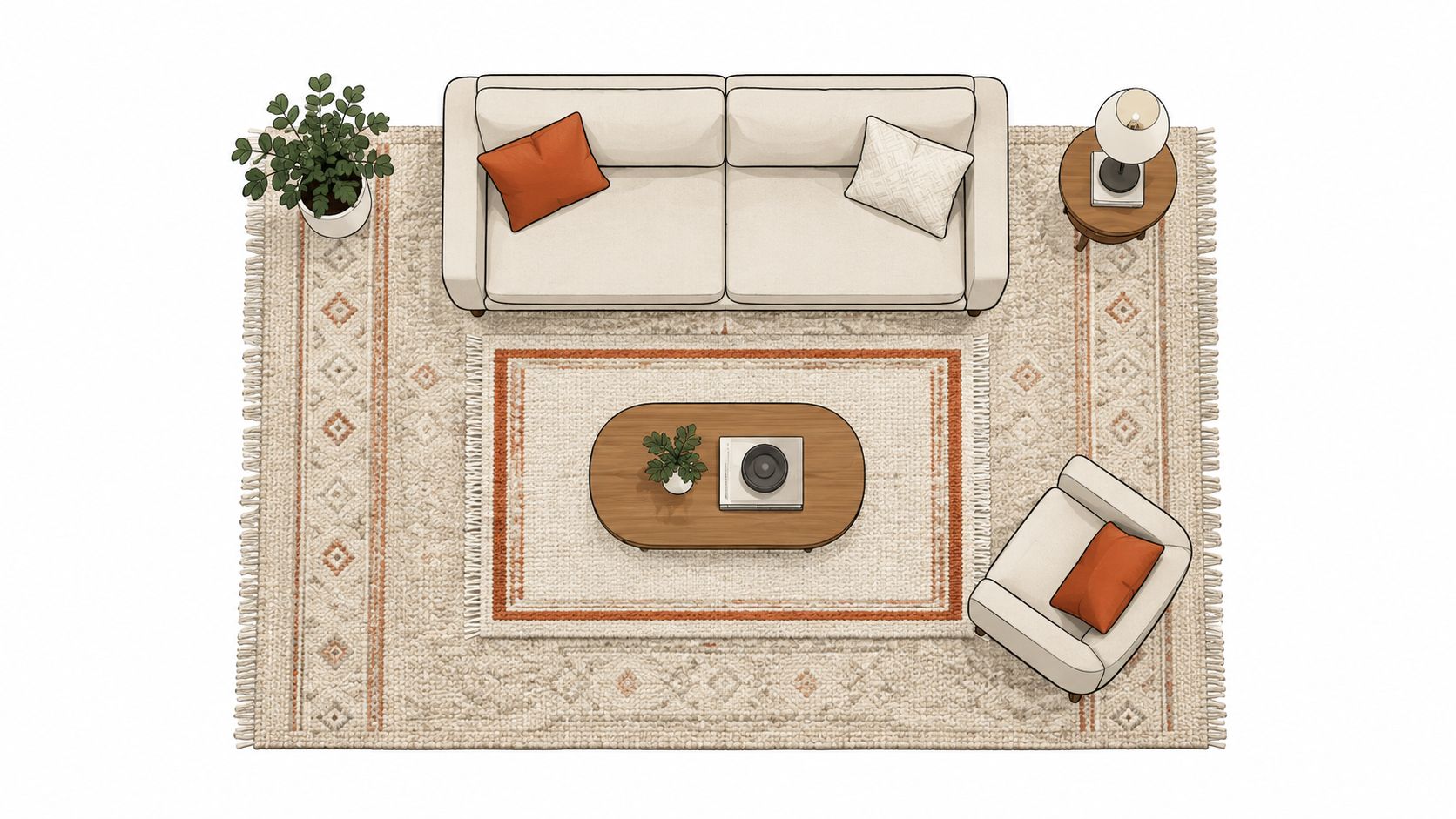
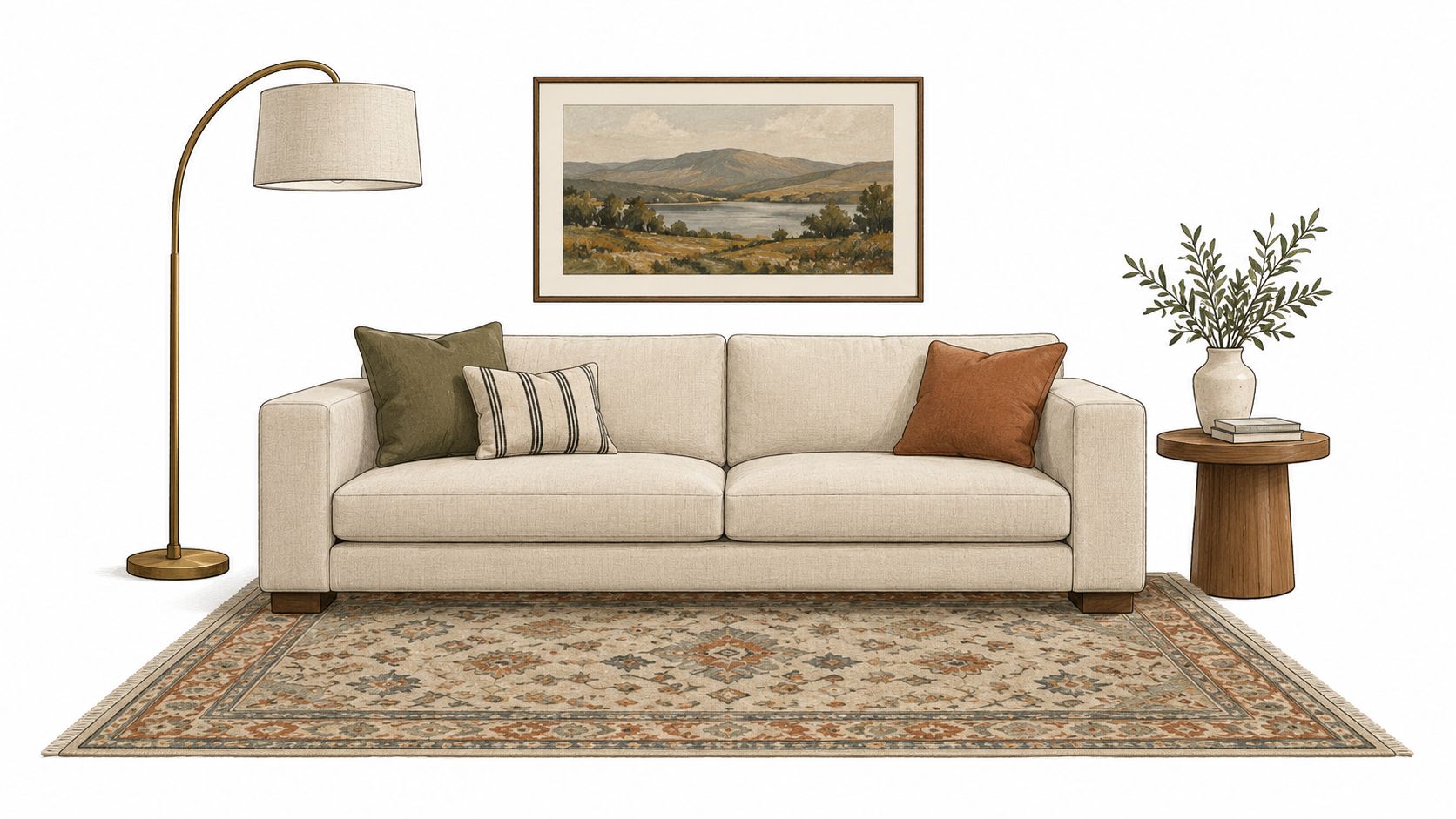
A room often becomes easier to design once the rug has been chosen first. A hand-knotted rug does more than soften a floor. Its colour, texture, pattern, and artisanal character can establish the palette for upholstery, wood, wall treatments, and accessories.
Critelli's Rug Market treats rugs as Art for Your Floor, with hand-knotted pieces sourced from global makers using heritage techniques. That perspective is valuable because a rug can connect otherwise different furniture styles. A neutral hand-knotted wool rug, for example, can anchor a bold Hancock & Moore leather sofa while allowing Stickley wood pieces to echo its warmer undertones.
The alternative is to buy the rug last, after every major piece has already been selected. That approach often produces a room that feels assembled rather than composed. For placement guidance, the area rug placement guide can help homeowners assess proportions before committing to a final arrangement.
Build the palette from the floor upward
A contemporary geometric rug can establish colour direction in an open-concept room, while Stressless recliners in coordinating leather keep the seating comfortable without introducing visual noise. In a traditional setting, a restrained pattern can provide depth beneath a more expressive sofa or dining set.
Useful decisions include:
- Echo dominant colours: Select upholstery and wood tones that repeat, rather than compete with, the rug's main shades.
- Layer for function: A smaller rug in a high-traffic zone can add visual depth and protect the larger composition.
- Prioritise the underlay: Professional padding improves comfort, stability, and longevity.
- Assess natural light: A rug that appears subdued in a showroom may read much warmer or cooler beside a south-facing window.
Designer's Insight: A bold leather sofa needs visual rest beneath it. A neutral hand-knotted wool rug can balance the room's energy while preserving the sofa as a focal point.
2. Bespoke Customisation Through the Design Studio
Standard furniture can solve a practical need, but bespoke furniture can solve the specific problem of a room. The difference appears in proportion, material, finish, and how naturally the piece responds to the architecture around it.
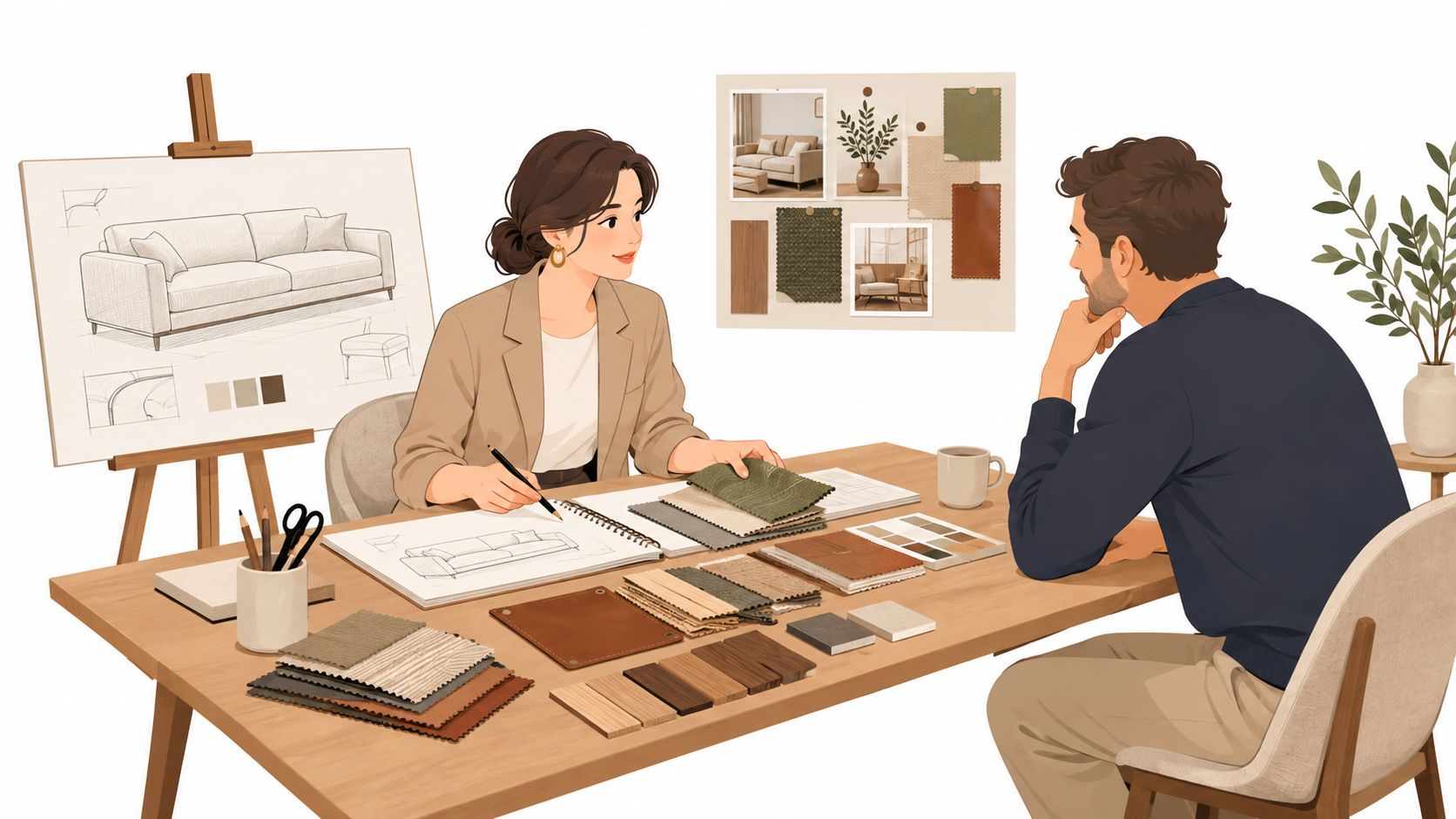
Critelli's Interior Design Studio supports a collaborative process involving fabrics, leathers, finishes, and wood tones. An in-home consultation can be especially useful when windows, existing flooring, or architectural details make showroom samples difficult to judge. Instead of treating a sofa or bed as an isolated purchase, the Design Studio develops a complete room concept around the homeowner's lifestyle.
A Hancock & Moore leather sofa might be configured with carefully selected hides and contrast stitching, then paired with Stickley accent tables in a finish chosen to complement the room's existing woodwork. In a bedroom, a custom upholstered bed, bespoke nightstands, and coordinated case goods can respond to the quality of morning light rather than merely match a catalogue image.
Reserve custom choices for long-term pieces
The best place to spend on customisation is usually furniture with a long functional life. Sofas, bed frames, and dining tables deserve more attention than temporary accessories. Foundational pieces benefit from neutral leathers, natural wood tones, and durable upholstery, while expressive colour can be introduced through cushions, throws, and smaller textiles.
Homeowners should bring paint samples, existing textiles, floor plans, and architectural photographs to design meetings. Colour should also be reviewed at different times of day, because a fabric that looks balanced under showroom lighting can change considerably in a home.
For specialised upholstery decisions, custom leather upholstery offers a useful starting point. A complimentary consultation at the King Street Showroom or St. Paul Street location can then translate the room's requirements into a more precise selection.
3. Complete Room Concepts and Design-Forward Styling
A room feels considered when every major element supports the same purpose. Furniture should relate to flooring, lighting, wall colour, circulation, and the way people use the space.
A design-forward living room might begin with a cognac Hancock & Moore sectional, a hand-knotted earth-toned wool rug, and Stickley heritage tables. Warm ambient lighting and neutral walls then give the room a calm envelope. The result isn't a showroom arrangement because each item performs a role, from defining seating to supporting conversation and evening comfort.
The same logic works in a bedroom. A custom upholstered bed can establish the room's softness, while a hand-knotted rug picks up the duvet's geometric rhythm. Stressless seating, placed where it can be used rather than hidden as an accessory, adds function without weakening the room's visual discipline.
Plan the room as a composition
Start with the rug, then consider how people enter, sit, read, dine, or move through the space. Overfilling a room with beautiful furniture still creates poor design if passageways become narrow or key sightlines disappear.
- Define the function: Decide whether the room is primarily for conversation, television, reading, entertaining, or rest.
- Layer lighting: Combine overhead, task, and ambient sources so the room doesn't rely on a single harsh fixture.
- Keep the base restrained: A neutral foundation makes it easier to refresh personality through textiles and accessories.
- Use a mood board: Include existing pieces, flooring, paint, fabrics, and new furniture together.
Critelli's King Street Showroom presents integrated display rooms where homeowners can evaluate furniture as part of a complete concept. Seeing a fully styled room helps reveal relationships that are difficult to judge from individual product photographs.
4. White-Glove Delivery and a Seamless Transition Home
The design result isn't complete when the order is placed. A large sectional, custom bed, or delicate hand-knotted rug still needs to arrive, be assembled, positioned, and checked without damaging the room or interrupting the design plan.
White-glove delivery treats that final stage as part of the service. Professional teams can inspect pieces, manage assembly, position furniture according to the agreed layout, test mechanical components, and remove packaging. That attention matters in a St. Catharines residence where a leather sectional needs precise alignment with a rug, or in a larger home where several rooms must be coordinated on the same visit.
Critelli serves the Greater Niagara, Hamilton, and Toronto markets, extending the showroom experience into the home. The service is particularly valuable when custom upholstery, recliners, bedroom furniture, and floor coverings need to work together rather than arrive as disconnected deliveries.
Protect the design intent
The most effective delivery appointments begin with clear preparation. The homeowner and design team should agree on placement before the truck arrives, especially where windows, doors, fireplaces, and traffic paths limit the options.
- Clear the route: Remove obstacles and protect existing furnishings before delivery.
- Confirm the layout: Keep the floor plan or placement notes available for the delivery team.
- Inspect the details: Check upholstery, finishes, stitching, hardware, and moving parts.
- Request a walkthrough: Confirm that each piece sits correctly and functions as intended.
- Discuss timing early: Regional delivery schedules should be arranged during the purchase consultation.
The white-glove furniture delivery service turns installation into a controlled design handoff. Instead of leaving the homeowner with boxes, tools, and uncertainty, the room can be prepared for immediate use.
5. Heritage Craftsmanship and Heirloom-Quality Investment
An heirloom-quality room doesn't require every item to be antique. It requires the homeowner to distinguish between pieces that carry the room and pieces that can change with taste.
Foundational furniture should be judged by construction, comfort, materials, finish, and repairability. Stickley represents a heritage approach to wood furniture, while Hancock & Moore is associated with carefully made leather seating. A well-selected dining table can become more meaningful as it absorbs the marks of family meals, and a quality leather sofa can develop a richer patina over time.
That doesn't mean every premium piece is automatically the right investment. A beautiful table that overwhelms the dining area is still a poor choice, and a sofa selected only for trend appeal may become difficult to live with. Heirloom quality works best when it is matched to the room's scale and the family's habits.
Spend on the pieces that work hardest
- Choose enduring foundations: Beds, sofas, and dining tables usually justify the closest attention.
- Use timeless finishes: Natural wood tones and adaptable leather colours can support changing textiles.
- Learn the maker's story: Provenance helps homeowners understand why construction and materials matter.
- Plan maintenance: Upholstery cleaning, leather conditioning, and wood care preserve performance.
- Mix old and new: Authenticated vintage pieces can give a newly furnished room a collected identity.
Practical rule: A room feels personal when quality pieces have room to breathe and some objects carry a history beyond the current decorating cycle.
Critelli's family-run heritage, founded in 1914, gives its curation a continuity that suits this approach. Homeowners can examine joinery, wood grain, leather grain, and mechanical function in person rather than relying on a photograph. The heirloom-quality furniture collection offers a useful reference for selecting pieces intended to stay in the home.
6. Ergonomic Luxury and Functional Comfort
Comfort should be designed into the room, not added as an afterthought. A recliner that supports the body but looks out of place can weaken the composition, while a visually elegant chair that doesn't support long periods of sitting will eventually go unused.
Stressless seating shows how ergonomic function can become part of a design-forward room. A Stressless Wing recliner in cognac leather can sit beside a hand-knotted rug and Stickley tables as a deliberate focal point, rather than being pushed into an overlooked corner. A Stressless Skyline sectional can also coordinate multiple seating zones while supporting different postures and activities.
The trade-off is that comfort is personal. A chair that feels ideal to one homeowner may not suit another person's height, movement, or preferred sitting position. No catalogue description can replace proper testing.
Test the furniture as it will be used
Spend time in several positions. Recline fully, return upright, check head and lumbar support, and assess whether the footrest and arm height feel natural. Mechanical features should be demonstrated rather than assumed.
Leather offers a more structured feel and develops character with use, while quality fabric can add warmth and tactile softness. Neither material is universally superior. The decision should reflect pets, children, maintenance preferences, room temperature, and the broader palette.
Ergonomic seating also deserves a visible position within the room concept. When a chair is carefully selected, its proportions, stitching, and finish can contribute to the room's identity. Critelli's showroom experience allows homeowners to test Stressless models and coordinate upholstery with rugs, case goods, lighting, and other seating.
7. Sustainable Material Selection and Responsible Sourcing
Responsible design begins with buying less often and choosing pieces that can remain useful. A durable table, repairable sofa, or hand-knotted wool rug can support a longer furnishing cycle than a succession of short-lived replacements.
Natural materials can also give a room a more settled character. Wood, wool, linen, leather, and natural fibres introduce variation that manufactured uniformity often lacks. Their environmental value depends on sourcing and construction, so homeowners should ask specific questions rather than treating a material label as proof of responsibility.
A Stickley dining table made with responsibly sourced wood, a Hancock & Moore sofa in durable upholstery, and an artisanal hand-knotted wool rug can form a coherent, long-lasting dining or living scheme. A hand-cut stone accent, such as the natural sandstone slice from Utah, can add geological texture without requiring a full decorative overhaul.
Ask what supports longevity
- Review material origins: Ask where wood, fibres, leather, and filling materials come from.
- Assess repairability: Replaceable components and serviceable construction extend usefulness.
- Choose appropriate durability: High-use seating needs materials suited to daily wear.
- Maintain carefully: Professional cleaning and conditioning can extend the life of natural materials.
- Consider vintage: Authenticated vintage furniture can add character while reducing demand for new production.
Sustainability also involves restraint. A room packed with objects, even responsibly made objects, can become difficult to maintain and visually restless. A curated selection of artisanal pieces creates stronger impact and gives each material enough space to be appreciated.
A design consultation can help align material choices with lifestyle, maintenance expectations, and budget. The most responsible choice is usually the one that the household will continue to use, care for, and value.
8. Natural Light Optimisation and Spatial Flow Planning
Natural light changes the way every finish appears. A leather sofa can look honeyed in afternoon sun and more subdued in the morning, while a rug's quiet undertones may become prominent beside a bright window.
Furniture placement should respond to both light and movement. In a north-facing bedroom, warm-toned Stickley wood and cognac Hancock & Moore leather can counter a cooler atmosphere, especially when paired with a hand-knotted rug in earth tones. In an open-concept living area, transparent-base tables and carefully layered rugs can define zones without blocking sightlines.
A room can be attractive and still be difficult to use if the furniture interrupts doors, windows, or habitual movement. Space planning prevents that mistake before custom pieces are ordered.
Test decisions in the actual room
Photograph the room in morning, afternoon, and evening light. Place paint cards and fabric swatches near windows, beside existing flooring, and next to the furniture that will remain. Window coverings should also be assessed because they can soften, filter, or intensify the light.
- Measure first: Record walls, openings, ceiling height, and the location of vents and radiators.
- Mark movement: Identify the natural routes between entrances, seating, storage, and adjoining rooms.
- Protect sightlines: Avoid placing tall pieces where they obstruct windows or architectural features.
- Study seasonal change: Winter sun angles can create a different effect from summer light.
- Plan zones: Use rugs and furniture groupings to separate activities in open layouts.
Light should be assessed beside the actual materials, not remembered from a showroom visit.
Critelli's in-home consultations can connect measurements, light conditions, architecture, and furniture scale. Space planning is especially useful for homeowners seeking Interior design services in St. Catharines or furnishing larger homes across Southern Ontario.
9. Flexible Financing and Accessible Luxury Investment Models
Premium furniture often works best when acquired in stages. A homeowner may need a sofa, bed, or dining table immediately, while rugs, accent tables, lighting, and accessories can follow as the room develops.
A thoughtful financing conversation can protect the design rather than encourage compromise. The important question isn't how to obtain more pieces. It's how to direct available resources toward the items that will carry the room for years, while keeping the total commitment transparent and manageable.
A young family might prioritise a Hancock & Moore sectional, then add complementary tables and textiles as the room evolves. Another homeowner may plan a complete bedroom concept with a custom bed, Stressless seating, a Magniflex mattress, and a hand-knotted rug through a staged purchasing approach. The appropriate sequence depends on the household's budget, timing, and priorities.
Use a hierarchy of investment
Foundational pieces should generally receive the strongest allocation because replacing them later can disrupt the room's proportions and palette. Refreshable items, including cushions, throws, and smaller accessories, offer more flexibility for seasonal or stylistic change.
Homeowners should ask for a complete cost outline that includes customisation, delivery, installation, and financing terms. Promotional periods and trade access should be discussed directly with the showroom team, since eligibility and conditions can vary.
The furniture financing options in Canada provide a starting point for that conversation. A complimentary consultation at Critelli's King Street or St. Paul Street showroom can help organise the room into phases without losing the complete-room vision.
Investment-minded approach: Buy the piece that determines the room's quality first, then build outward with items that support its colour, comfort, and function.
Accessible luxury should still be responsible luxury. A payment structure is useful only when the household understands the full terms and can maintain the commitment without financial strain.
10. Curated Collections by Design Philosophy and Lifestyle
Furniture selection becomes clearer when it begins with a way of living rather than a product category. A homeowner who prefers restrained lines, open space, and minimal ornament will need a different starting point from someone drawn to traditional warmth, layered textiles, and visible craftsmanship.
Critelli organises its offerings through specialty perspectives including Contemporary, Uptown, New, and Casual Traditional. This curation helps shoppers compare pieces according to a design philosophy, rather than whether an item is labelled as a sofa, chair, or table. It also makes it easier to combine collections deliberately, such as pairing contemporary seating with heritage wood or adding an artisanal rug to a more edited room.
A lifestyle-led approach should still account for practical use. A formal sitting room may tolerate delicate finishes, while a family room needs resilient upholstery and easy movement. A reading corner benefits from ergonomic seating and focused light, while an entertaining space may need flexible groupings and durable surfaces.
Let personal history guide the final layer
The strongest rooms rarely look as though they were purchased in one afternoon. They include pieces connected to travel, family, craft, art, or local memory. A statement object can work when its scale and colour relate to the rug and furniture, rather than appearing as an unrelated accent. Guidance on choosing a meaningful focal artwork, such as these statement Southeast Asian art selection tips, can support that process.
Begin by identifying the desired atmosphere, then test furniture for comfort, proportion, and finish. The result should feel curated, not coordinated to the point of sameness. A home has greater depth when its rooms share materials and sensibilities while retaining distinct purposes.
10-Point Home Interior Design Comparison
| Item | Implementation complexity | Resource requirements | Expected outcomes | Ideal use cases | Key advantages |
|---|---|---|---|---|---|
| Layered Rugs as the Foundation of Room Design | Low–Moderate: select and place primary rug(s) | Moderate budget for hand-knotted rugs; professional padding/installation | Strong color/pattern foundation; unified room palette | Defining zones in open plans; establishing room aesthetic | Visual cohesion; acoustic warmth; investment potential |
| Bespoke Customization Through the Design Studio | High: consultations, approvals, production cycles | High budget; designer time; longer lead times; artisan makers | Truly unique, site-specific furniture that fits architecture | Homes with unique proportions or client-specific needs | Personalization; superior fit; heirloom quality |
| Complete Room Concepts and Design Forward Styling | High: coordinates many elements and vendors | High budget; extensive design planning and sourcing | Cohesive, magazine-quality rooms optimized for flow | Full-room renovations; staged showrooms; cohesive refreshes | Integrated aesthetic; optimized function; reduced decision fatigue |
| White-Glove Delivery and Seamless Transition Services | Low–Moderate: scheduling and on-site coordination | Service fees; available trained delivery teams; scheduling | Showroom-ready installation; damage-free delivery and setup | Large/heavy items; complex assemblies; high-value purchases | Convenience; protection of home and goods; professional finish |
| Heritage Craftsmanship and Heirloom Quality Investment | Moderate–High: careful sourcing and occasional restoration | High upfront cost; specialist maintenance and care | Durable, long-lived pieces that can appreciate and be restored | Long-term households; collectors; investment-focused buyers | Longevity; repairability; developing patina and provenance |
| Ergonomic Luxury and Functional Comfort Design | Moderate: fittings and feature familiarization | Premium pricing; possible servicing for mechanical parts | Improved posture, comfort and wellness; design-forward seating | Home offices; people needing ergonomic support; primary seating | Evidence-based support; integrated aesthetics; wellness benefits |
| Sustainable Material Selection and Responsible Sourcing | Moderate: vetting suppliers and certifications | Potential premium cost; documentation (FSC, low‑VOC) | Lower lifecycle impact; better indoor air quality; longer use | Eco-conscious buyers; families with sensitivities; long-term owners | Environmental responsibility; material transparency; durability |
| Natural Light Optimization and Spatial Flow Planning | Moderate–High: in-home light studies and space planning | Designer time; in-home consultations; possible layout changes | Finishes and placements that perform well in real conditions | Rooms with challenging light; remodels; site-specific design | Maximized natural light; improved traffic flow; accurate color performance |
| Flexible Financing and Accessible Luxury Investment Models | Low–Moderate: credit checks and payment setup | Credit qualification; administrative time; potential interest costs | Easier access to premium pieces via phased payments | Budget-conscious buyers wanting heirloom-quality items | Affordability; phased acquisition; wider accessibility to premium brands |
| Curated Collections by Interior Design Philosophy and Lifestyle Application | Low: browse by curated themes | Low resource needs; clear category navigation | Faster discovery of coherent styles; guided selections | Shoppers seeking an aesthetic starting point; non-designers | Simplified navigation; consistent aesthetic groups; clearer communication with designers |
Let Every Room Tell the Same Story
The most successful home interior design ideas don't depend on a single dramatic purchase. They depend on a sequence of decisions that reinforce one another. A rug establishes the room's foundation, natural light clarifies colour and finish, furniture scale protects movement, and lighting gives the composition an atmosphere that changes with the day.
From there, homeowners can choose where to place their strongest investments. A bespoke sofa, a well-made bed, or a heritage dining table may serve as the room's anchor. Textiles, accessories, and artwork can then add personality without forcing the entire scheme to change whenever taste evolves. This approach supports both aesthetic confidence and practical budgeting.
Canadian renovation behaviour reinforces the value of that considered process. The RBC Financial Group Home Renovation Study found that 39% of Ontario homeowners were planning renovations in the next twelve months, while 40% expected to be most likely to spend $10,000 or more on home renovations over the following two years. The same study found that 59% of homeowners across its sample planned renovations or home improvements within two years, with flooring and painting among the common projects. The study summary helps explain why space planning, flooring, rugs, furnishings, and colour decisions often need to be considered together.
Cost planning still matters. Statistics Canada's Residential Renovation Price Index recorded renovation-cost increases of 0.3% in the first quarter of 2025 and 0.9% in the second quarter of 2025 nationally, while Ontario recorded a quarterly decline of 0.3% in the first quarter of 2025. The renovation price data supports keeping a contingency in the plan even when regional conditions appear somewhat more favourable.
Critelli Furniture's family-run heritage, founded in 1914, gives homeowners a longstanding Southern Ontario design resource. Its Design Studio treats furniture as part of a complete room concept, its Rug Market positions hand-knotted rugs as Art for Your Floor, and its white-glove service carries the plan from showroom to final placement across Greater Niagara, Hamilton, and Toronto.
A complimentary consultation can bring together room photographs, measurements, existing materials, light conditions, lifestyle needs, and investment priorities. That process is particularly useful for homeowners comparing Luxury furniture in Niagara, seeking Custom furniture in Southern Ontario, or looking for Hand-knotted rugs in Ontario that will shape an entire room rather than fill an empty floor.
Experience the craftsmanship in person at our King Street Showroom. Book your complimentary design consultation today. Visit the Rug Market to find your room's foundation.
Critelli Furniture offers a curated selection of heirloom-quality furniture, bespoke upholstery, artisanal rugs, ergonomic seating, and complete-room design guidance for Southern Ontario homes. Visit Critelli Furniture to begin planning a room that reflects its architecture, supports daily life, and feels collected over time.