
Bar Height Table and Chairs Guide for Stylish Homes

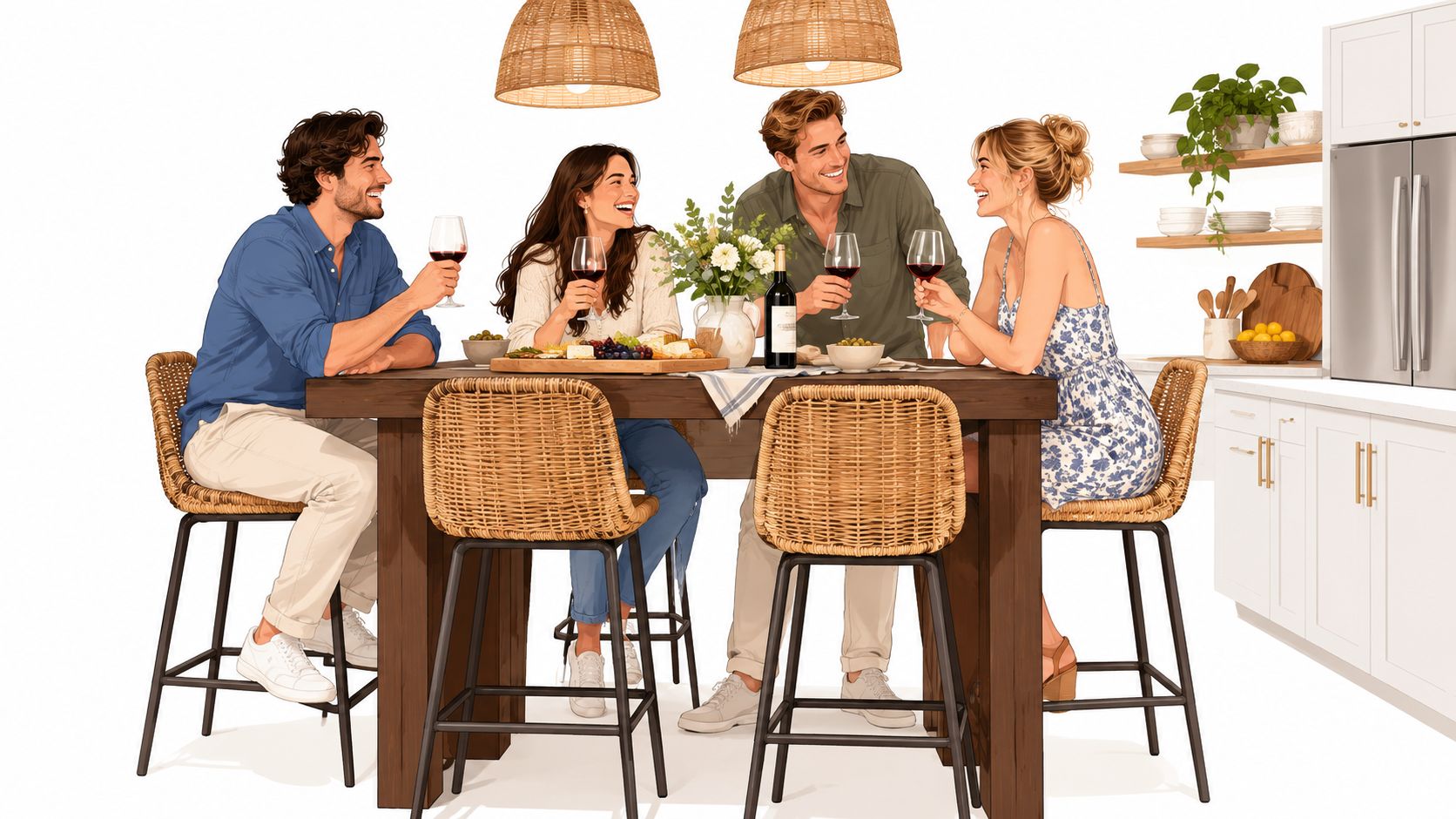
A Southern Ontario homeowner often reaches the same moment. Guests are coming on Saturday, the kitchen island already does too much, and the dining room feels slightly too formal for the way people gather. The conversation always migrates to the higher surface anyway, where drinks rest easily, elbows settle naturally, and the room feels animated.
That shift in posture is why bar height table and chairs hold such appeal. They don't fill a corner. They change how a room hosts, how sightlines move across an open plan, and how a meal feels from the first coffee to the last late-evening glass.
For households balancing entertaining, compact footprints, and design ambition, bar height can feel wonderfully architectural. It adds presence without asking for a full renovation. It can also go wrong quickly when the proportions are off, the stools are chosen for appearance alone, or the surrounding finishes fight the furniture instead of supporting it.
Since 1914, a family-run furniture house in St. Catharines has helped homeowners think past the isolated piece and towards the complete room concept. That heritage matters here because raised seating asks for more than taste. It asks for judgment about comfort, circulation, scale, and longevity.
In many homes, the decision begins with one practical question and becomes several more refined ones. Will this be used for weeknight meals, working on a laptop, and entertaining all in the same spot? Will a taller table suit the room's ceiling height and nearby cabinetry? Will the wood finish sit comfortably with existing floors, especially when owners are already considering grey floor refinishing advice to brighten an older interior?
A useful starting point is this concise look at reasons to consider bar-height dining. The larger design conversation, though, is about choosing a height that serves real life and still feels rooted in timeless craftsmanship.
Introduction to Elevated Living with Bar Height Seating
Why the room feels different at bar height
A standard dining table invites a settled meal. A bar-height setting creates a more social rhythm. People perch, turn, linger, and rejoin the conversation more fluidly. In an open-concept home, that higher plane can also help define a dining zone without adding a wall, screen, or bulky storage piece.
That's why so many design-forward spaces use raised seating as a visual hinge between kitchen, family room, and entertaining area. The table becomes a gathering point, but it also becomes part of the architecture of the room.
Bar height works best when the furniture feels intentional from every angle, not when it looks like a last-minute substitute for a dining set.
Why this choice deserves more than a quick measurement
Many shoppers start with style and only later ask whether the seats are comfortable, whether guests can sit through dessert, or whether the room will still feel easy to move through on a weekday morning. That sequence usually creates disappointment. Height has to be resolved first, then silhouette, then finish, then the supporting layers around it.
For busy households across Greater Niagara, Hamilton, and the Toronto market, the most successful rooms treat bar height table and chairs as part of a curated selection of elements. Lighting, rug scale, floor tone, adjacent cabinetry, and delivery logistics all matter. The result should feel cohesive, bespoke, and lived in rather than staged.
What Bar Height Really Means for Comfort and Scale
The measurements that define bar height
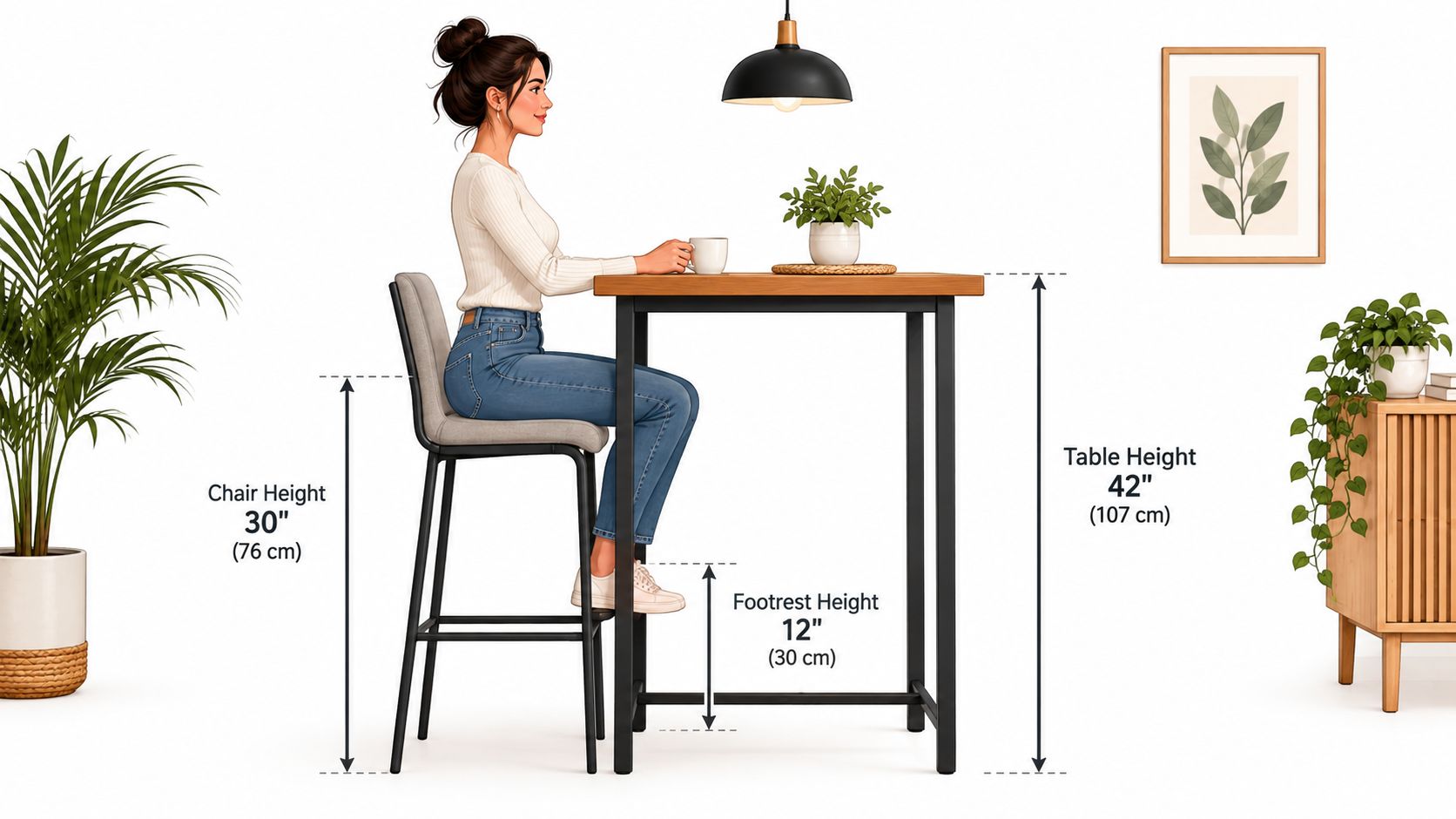
Bar height has a standard range, but comfort starts with proportion, not with a label on a showroom tag. In Canadian retail sizing, a bar-height table usually sits around 40 to 42 inches high, and the matching stool seat usually falls around 28 to 30 inches high.
Those numbers are the starting point.
What matters in daily life is how the whole arrangement works once someone sits down with a coffee, a laptop, or a full dinner plate. A bar-height set asks more from the room than a standard dining set does. It changes sightlines, posture, and how much visual weight the furniture carries across an open-concept main floor.
For many Greater Niagara homes, that means bar height should be chosen as a room decision first and a product decision second. At Critelli's Design Studio, the right set is often considered alongside rug scale, traffic flow, and the finishes already living in the kitchen and family room, because a raised table reads almost like a small architectural feature.
The clearance that makes sitting comfortable
The simplest way to judge comfort is to measure from the floor to the underside of the table, then subtract about 10 to 12 inches to find the target seat height.
That gap is what lets knees fit naturally and shoulders relax. If the seat sits too close to the underside, guests feel pinched through the thighs and start shifting after a few minutes. If the gap is too large, the tabletop feels high and slightly disconnected, especially during a meal.
The underside matters more than the top surface. Aprons, supports, and thicker tops can steal legroom, which is why two tables with the same overall height can feel quite different once you sit at them.
Why scale changes the feeling of the room
Bar height brings more vertical presence into a space. In a room with modest ceiling height or tight circulation, that added height can make the furniture feel busy. In a broad, open-plan kitchen and dining area, it can help mark a gathering zone without building a wall or adding another cabinet.
That shift in scale also changes what the eye notices.
At standard dining height, much of the chair sits below the tabletop line. At bar height, stool backs, footrests, stretchers, wood grain, and metal details stay in view. A rushed purchase can look temporary. A well-chosen set feels collected and lasting, especially when the finish, upholstery, and surrounding rug have been considered together.
This is one reason heirloom style matters here. A bar-height set is not just higher dining furniture. It becomes part of the room's composition, much the way a well-scaled sideboard or antique cabinet does.
A quick fit check before purchasing
A simple check at home can prevent an expensive mismatch:
- Measure from the floor to the underside of the table where knees will sit.
- Subtract 10 to 12 inches to estimate the right seat height.
- Confirm the stool has a footrest placed where the feet can settle comfortably.
- Check the stool width and spacing so the set does not crowd the room.
- Sit with the posture of a real meal, not a quick showroom perch.
That last point matters. Ten comfortable minutes is different from an evening of conversation.
For households furnishing a full room rather than filling a corner, bar height works best when comfort, footprint, and finish are resolved together. That is where design guidance, rug selection through Rug Market, and white-glove planning become useful, because the right dimensions should also feel grounded in the character of the home.
How Bar Height Compares to Counter and Standard Dining
A few inches can change the whole room.
In a showroom, bar height and counter height often look close enough to swap without much thought. At home, those inches shape how people sit, how the table reads across an open plan, and whether the room feels like a relaxed family hub or a more social perch for coffee, wine, and conversation.
Bar Height vs Counter Height vs Standard Dining at a Glance
| Height Category | Table Height | Paired Seat Height | Best For |
|---|---|---|---|
| Bar Height | 40 to 42 inches | 28 to 30 inches | Entertaining zones, pub tables, visually defining open layouts |
| Counter Height | 34 to 36 inches | 24 to 26 inches | Casual meals, island seating, mixed everyday use |
| Standard Dining | Lower than counter and bar height | Lower than counter and bar height | Longer meals, formal dining, broad accessibility |
The easiest way to read this table is to treat each height as a different room posture. Standard dining invites people to settle in. Counter height keeps things casual and versatile. Bar height creates a more perched, social experience, which is why it often works so well in kitchens, great rooms, and open-concept homes across Greater Niagara.
For shoppers comparing raised-height options, counter-height table collections help make the shift in scale easier to visualize.
Where bar height works best
Bar height suits households that want the table to do more than host meals. It acts almost like an architectural marker. In an open room, the taller profile helps define one zone from another without adding a wall or a heavy case piece.
That can be especially useful in homes where the kitchen, breakfast area, and family room all share sightlines. A bar-height set takes up a modest footprint, yet it still gives the room a clear centre of gravity. In that sense, choosing bar height is less about chasing a dimension and more about choosing how the room should behave.
A well-chosen bar-height set can also feel surprisingly refined. In the right proportions, it brings some of the easy sociability of a favourite bistro while still belonging to a heritage-minded interior. At Critelli, that decision often connects back to the full room. Finish, upholstery, surrounding art, and the rug underfoot all need to support the added height so the space feels composed rather than improvised.
Designer's Insight
In an open room, a bar-height set usually carries more visual presence than a standard dining suite with a similar footprint. Slimmer legs, lighter fabrics, and a rug with a quieter pattern often keep that extra height from feeling top-heavy.
Where counter or standard dining may fit better
Counter height often suits the busiest homes because it lands in a comfortable middle ground. It is easier for everyday sitting, easier for mixed-age households, and often better for spaces that move from breakfast to homework to evening takeout without much ceremony.
Standard dining still has the broadest comfort range for long meals and multigenerational use. For some families, that lower height feels easier and more natural, especially if grandparents visit often or the table regularly hosts lingering dinners.
Ergonomic guidance generally favors good seating geometry over a single magic number. The practical question is simple. Will the people using this table want to perch, or will they want to settle?
Comfort and access deserve a deliberate decision
Bar height sits noticeably higher than standard dining, so entry, exit, and foot support matter more. For older adults, shorter users, or anyone with mobility concerns, that does not rule it out. It does mean the stool needs to be chosen with more care.
Look for a seat that feels stable, a footrest that lands in the right place, and enough space to get in and out without twisting awkwardly. White-glove planning matters here because the right answer is rarely just the table height alone. It is the full pairing of table, stool, rug, circulation space, and the way the room is lived in.
Curated Styles and Materials for Every Interior
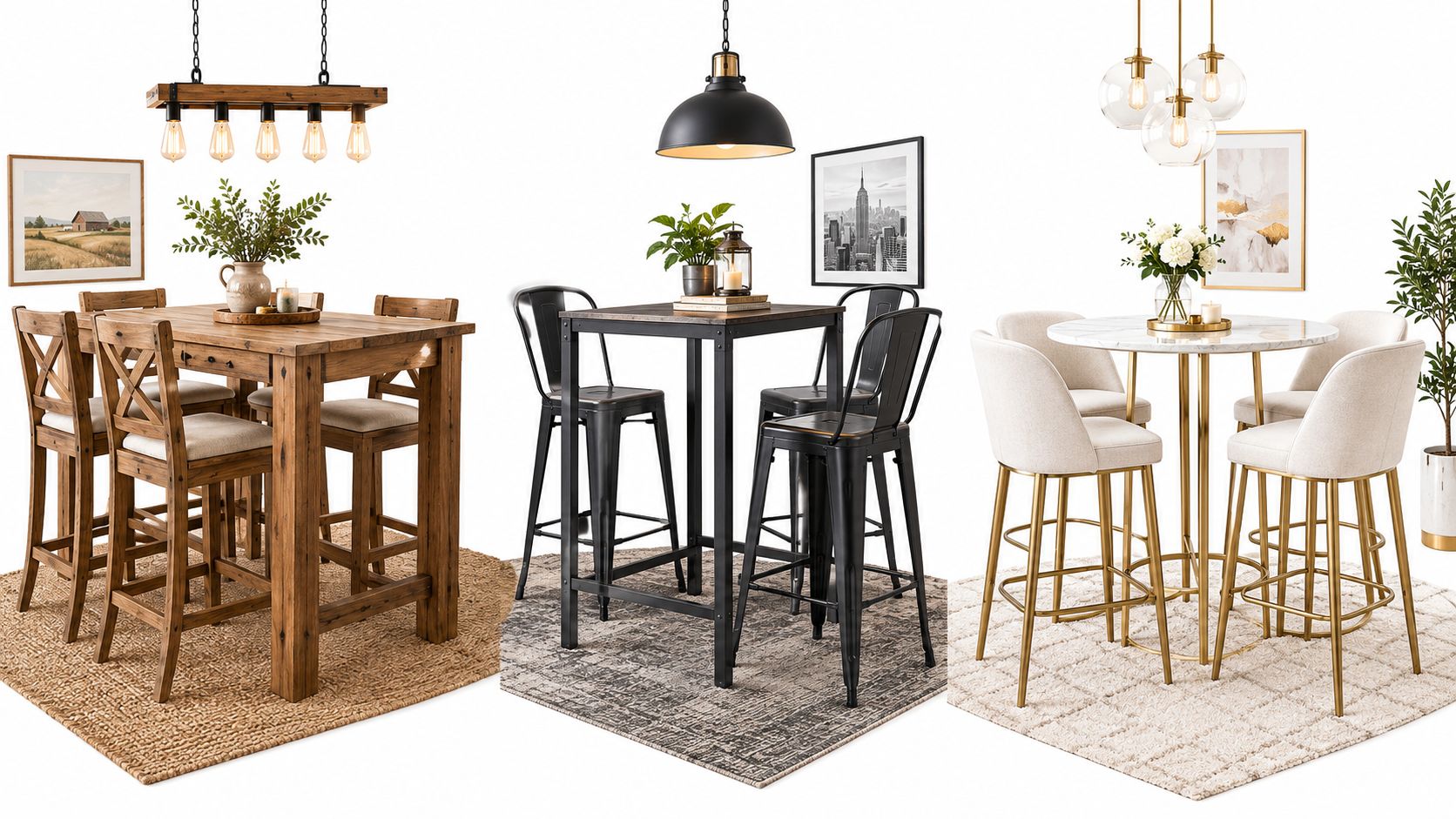
Style carries more visual weight at bar height. Because the table and seating sit higher in the room, you notice the base, the footrest, the seat shape, and even the way finishes reflect lamplight across the evening. The result is closer to planning a small furnished zone than picking a table and adding stools later.
That shift matters in heritage homes across Greater Niagara. A raised-height set should belong to the room the way a well-chosen sideboard or rug belongs to it, with the right sense of age, proportion, and presence.
Casual Traditional
For classic interiors, solid wood usually gives bar height its best footing. Oak feels steady and familiar. Walnut brings depth and a slightly dressier character. Cherry softens beautifully over time, which suits homeowners who want a piece that grows richer with use rather than looking perfect only on delivery day.
The stool style should support that mood. Ladder-back forms, turned details, and gently upholstered seats keep the composition hospitable instead of stark. In a farmhouse, Georgian, or old Niagara home with mouldings and warm floors, those details help the taller silhouette feel settled.
Heirloom quality shows up in the quiet parts. Joinery that looks intentional. A finish with depth rather than glare. A footrest that feels integrated into the design, not added as an afterthought.
Modern and tailored
Contemporary rooms often benefit from contrast, but the contrast should feel curated, not busy. A wood top with a slim metal base keeps warmth near eye level while lightening the footprint below. A stone-look surface paired with upholstered stools brings polish without turning the room cold. A pedestal table can also work well where you want a cleaner outline and easier movement around the base.
A few pairings tend to read especially well:
- Warm wood with dark metal: Balances softness and structure.
- Slim upholstery with simple frames: Adds comfort without visual bulk.
- Matte finishes with one reflective note: Helps pendant lighting and hardware feel connected.
Restraint keeps the room composed. If the stools have a sculptural shape, a quieter tabletop often makes the whole set feel more lasting.
Materials should answer the way the room is used
A bar height setting near the kitchen often handles more than evening drinks. It may catch morning coffee, opened mail, laptops, charcuterie boards, and a neighbour who stays for an extra half hour. Materials should be chosen with that real life in mind.
Wood with visible grain tends to forgive daily wear gracefully. Leather and performance upholstery are practical for homes that entertain often or need easier cleanup. In sunrooms or spaces near patio doors, stable finishes and easy-care surfaces matter because temperature shifts and frequent traffic can be harder on furniture over time.
Homeowners weighing longevity and lower-impact options can review guidance on sustainable furniture materials to connect surface choices with long-term durability.
A good stool behaves more like visible architecture than a casual accessory. Its lines stay in view even when the table is empty, so every material choice affects the room all day, not only at mealtime.
Interior character and curation
Collections differ in the language they speak. Some emphasise wood character and joinery. Others bring more softness through leather, upholstery, or refined shaping. The goal is not to chase a label. The goal is to choose a material story that fits the house, the rug underfoot, and the pace of daily living.
That is why bar height works best as a complete room concept decision. At Critelli, the Design Studio, Rug Market, and white-glove service help turn that taller table into a coherent setting for Greater Niagara homes, one where footprint, finish, and heirloom character feel resolved together.
Matching Seats Layout and the Art for Your Floor
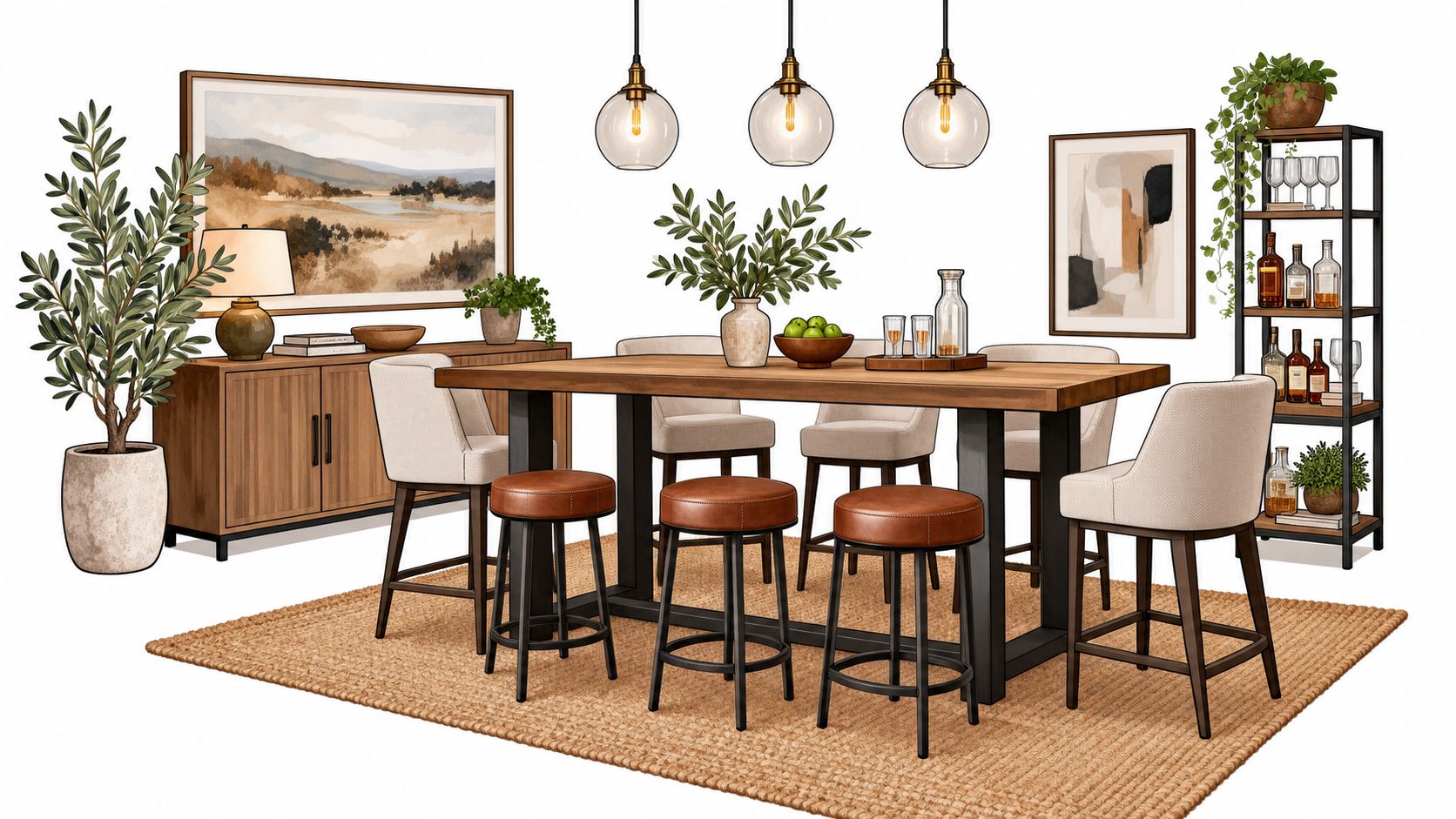
A bar-height set changes how a room behaves. Guests sit higher, sightlines shift, and the area around the table has to work harder because every pull-out stool affects circulation. In a Southern Ontario home, that can mean the difference between a breakfast corner that feels collected and one that feels slightly cramped every single day.
Choosing the right seat profile
Seat shape sets the tone before anyone sits down. Backless stools keep the view open and tuck in neatly, which helps in tighter footprints. Low-back stools add support while still preserving a lighter profile. Fully upholstered bar chairs feel more like true dining seats, which suits households that use the table for longer meals, homework, or evening conversation.
A simple way to sort the options is by how long people will stay seated and how much room the chairs need once occupied.
- Backless stools: Best for compact spaces and easy tuck-under storage.
- Low-back seats: A good middle ground for comfort and visual openness.
- Upholstered bar chairs: Strongest choice for longer sitting and a more settled dining feel.
- Swivel seats: Helpful in social spaces, provided the base feels stable and the turn is controlled.
Footrests matter just as much as the seat itself. At this height, legs need a natural place to land. Without that support, even a beautiful stool can feel tiring surprisingly quickly.
Layout has to respect movement
Good layout starts with the lived path through the room. Someone carries pasta from the kitchen. A child slides off a stool to grab a schoolbag. Two guests need to pass behind seated family members without bumping chair backs. Those are the moments that reveal whether the arrangement fits the house.
Older Niagara homes often have narrower passages and more defined rooms. Newer builds may offer openness but still need clear walking lanes around an island or dining zone. A slim stool on a spec sheet can feel much broader once a person sits, leans back, and pushes away from the table.
Seats should be easy to enter from the side and easy to leave without brushing walls, cabinetry, or the next chair over.
The floor plan under the set
The rug should solve a practical problem first. Choose one large enough that stools remain on the rug when pulled back, with roughly 24 inches of coverage beyond the table on each side. That extra border keeps the room from feeling clipped and helps the set read as a complete composition rather than a tall table placed on a patch of textile. For a clearer sizing method, see this guide to dining room rug dimensions.
The complete room concept in practice
Bar height becomes a room decision rather than a furniture decision. Pendant placement, nearby storage, floor tone, and the visual weight of the stools all need to agree. The goal is comfort, but also continuity. In heritage homes and updated properties across Greater Niagara, that often means balancing the table's taller posture with pieces around it that keep the room grounded and calm.
At Critelli, that broader view often comes together through the Design Studio, the Rug Market, and white-glove delivery that accounts for the home itself, not just the product. A classic wood table with stools may suit one house. Another may call for a quieter seat profile, more turning room, and a rug pattern that softens the stronger vertical lines of raised seating.
Designer's Insight
A rich leather stool paired with a restrained wool rug often creates the right balance. The seat brings character and depth. The quieter rug lets the raised seating remain the focal point without making the room feel hard.
Caring for Heirloom Quality Bar Height Furniture
A taller dining set lives under more scrutiny. Fingerprints show sooner on the rail, scuffs collect at the footrest, and the tabletop becomes a landing place for keys, coffee cups, serving boards, and school papers. Good care doesn't need to be fussy, but it does need to be consistent.
Material care that respects the piece
Wood benefits from simple routines. Dust with a soft cloth, wipe spills promptly, and avoid letting moisture sit along joints or edges. Metal frames should be kept clean and dry, especially near entry doors or seasonal entertaining areas where damp footwear and condensation appear more often.
Leather seats reward regular attention. Gentle cleaning and conditioning help preserve suppleness, while sharp hardware on denim or handbags can mark the surface over time. Performance fabrics still benefit from prompt blotting and routine vacuuming, even when they're chosen for resilience.
Daily habits shape long-term beauty
The most durable pieces still respond to use patterns. A bar stool rung used as a shoe rest will age differently than one treated carefully. Stone or stone-look tops still need sensible protection from staining foods, rough ceramics, or dragged objects.
A few habits make a remarkable difference:
- Lift rather than drag: Stool joints and floor finishes both benefit.
- Rotate seats when possible: Wear distributes more evenly.
- Use felt protection thoughtfully: Especially where stools meet hardwood or tile.
- Keep sunlight in mind: Strong exposure can shift wood tone and textile colour over time.
Indoor-outdoor adjacent use needs extra discipline
Some bar-height sets sit near patios, covered balconies, or seasonal entertaining zones. Those spaces ask for a little more vigilance. Pollen, moisture, and temperature changes create different wear than an interior dining room does.
Heirloom quality doesn't mean fragile. It means the piece deserves care that honours its artisanal construction and allows a patina to develop gracefully instead of carelessly.
Choosing Your Set and Experiencing White Glove Service
A bar height set often looks right in the showroom long before it proves itself at home. Then real life steps in. The pendant hangs lower than expected, the stools sit tighter to the island than they did in your mind, and the path to the patio suddenly feels narrower.
That is why choosing a set works best as a room decision, not a table-and-stool decision.
At Critelli, the strongest selections usually come from viewing bar height through three lenses at once. How the room needs to function. How the piece should sit within the home's scale. How the materials and silhouette will age alongside the rest of the interior, from cabinetry to the rug underfoot.
A practical way to choose with confidence
Before visiting the showroom, gather a few details you can bring to the conversation. A phone snapshot of the room is helpful. So are a few measurements that answer the questions a floor sample cannot answer on its own.
- How will the set be used most often? Casual breakfasts, evening cocktails, homework, laptop work, or frequent entertaining.
- Who needs to be comfortable there? Adults, teens, older family members, or a regular mix of guests.
- What sits nearby? Cabinetry, an island, a banquette, a fireplace sightline, or a main traffic path.
- What do you want the room to feel like? Architectural, warm and traditional, or light and relaxed.
- What are your key measurements? Floor-to-underside clearance, wall-to-table distance, and the width of any walkway around the set.
Those last measurements matter more than many homeowners expect. A bar height set works like a tall cabinet or a piano. Its height changes how the whole room is read, so the surrounding space has to support it.
Service should support the design decision
Once the right set is chosen, handling delivery well protects both the furniture and the plan for the room. Critelli's white-glove furniture delivery service includes room-of-choice placement, assembly, and packaging removal across Greater Niagara, Hamilton, and Toronto.
That level of care is especially helpful with bar height furniture. Taller tables can be awkward through stair turns and tighter entries. Stool assembly needs to feel firm and level. Final placement also affects sightlines, chair pull-back space, and how comfortably the set relates to nearby millwork or an area rug.
Design support adds clarity
For many Greater Niagara homeowners, the best result comes from pairing product selection with design guidance. A stool seat can look perfect on its own and still feel too heavy beside slim cabinetry. A beautiful wood finish can miss the mark if it fights the undertone in the floor. The right rug can soften the vertical lines of a bar height arrangement and help it feel settled rather than perched.
Critelli's Design Studio and Rug Market help connect those choices so the room reads as one composition. That is the difference between buying furniture by dimension and furnishing with intention.
For homeowners refining an entertaining space, a breakfast area, or a compact open-plan dining zone, Critelli Furniture offers a curated selection of bar height table and chairs, interior design services in St. Catharines, hand-knotted rugs in Ontario, and white-glove delivery across the Greater Niagara, Hamilton, and Toronto markets. Experience the craftsmanship in person at our King Street Showroom, book your complimentary design consultation today, and visit the Rug Market to find your room's foundation.