CRITELLI'S SUMMER SALE | UP TO 70% OFF



Which Stressless Chair Is Most Comfortable for You


A showroom visit can create a deceptively simple impression. One Stressless chair feels wonderfully soft, another seems to cradle the shoulders more completely, and a third reclines with such ease that the choice appears obvious. Yet after a long evening of reading, television, or conversation, the chair that felt most luxurious at first may not be the one that best supports the body.
The answer to which Stressless chair is most comfortable depends on fit, posture, adjustment range, cushioning, and the room around it. A premium recliner isn't comfortable merely because it has more features. It becomes comfortable when its dimensions meet the user's body and its shape works naturally within the living space.
Introduction Why Comfort Feels Different for Everyone
Two people can sit in the same chair and have entirely different reactions. A taller person may need more neck support and leg length, while a shorter person may feel that the same seat pushes the knees too high or leaves the headrest in the wrong position. Someone who reads upright has different requirements from someone who reclines fully for evening rest.
Stressless has a particularly substantial design history behind that distinction. The brand launched its first recliner in 1971 and says it has sold more than 10 million Stressless seats since then, giving the collection more than five decades of documented market history through its Canadian history overview. The Royal model followed in 1981, and Stressless expanded into sofas in 1993. Those milestones suggest an evolving design language, not a single comfort formula that suits every person.
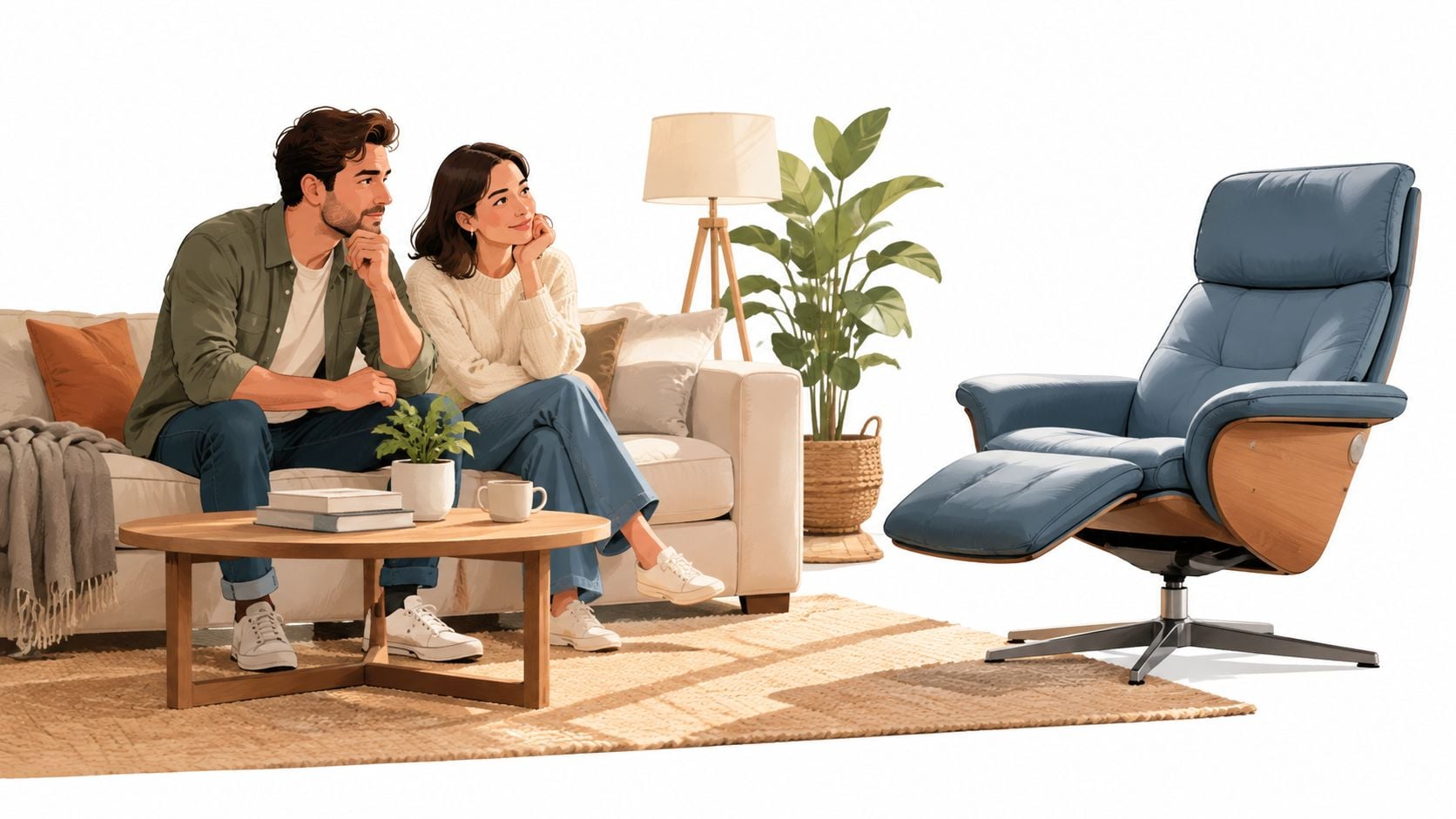
The most comfortable chair is the right match
A buyer comparing a Reno with an Adam, or a Mayfair with a Magic, shouldn't begin with the most expensive-looking option. The better starting point is a practical question: what does the body need during the hours the chair will be used?
A chair for daily reading needs stable lumbar support, a headrest that meets the neck naturally, and a recline movement that doesn't disturb the shoulders. A chair for deep relaxation may favour a more generous cushion, fuller neck support, and motorised positioning. A chair in a compact condominium must also respect circulation paths, sightlines, and the scale of nearby furnishings.
The useful rule: a chair that feels pleasant for a brief showroom sit may still be wrong for extended use if its seat depth, height, or head support doesn't suit the user.
For Southern Ontario homeowners, the decision also belongs within a broader design context. A recliner should relate to the sofa, lighting, rug, and traffic flow rather than appear as an isolated mechanical object. That is where a curated selection and experienced fitting process matter. The strongest choice isn't necessarily the plushest or most technologically advanced model. It's the one that supports the body, complements the room, and remains inviting through everyday use.
What Makes a Stressless Chair Comfortable
Long-term comfort comes from several elements working together. Four deserve attention before any model comparison.
Ergonomic support and posture
The chair should support the natural line of the spine without forcing the sitter into a rigid pose. The lumbar area needs contact, the shoulders should relax, and the headrest should meet the head rather than push it forward. Stressless seating is designed to move with the body, but the movement only feels effective when the chair's size and proportions suit the user.
Canadian guidance offers a useful framework for this assessment. The Canadian Centre for Occupational Health and Safety advises that chair selection should meet the user's needs before final purchase, while a Canadian federal seating brochure notes that about 75% of work in industrialised countries is performed while seated in its Canadian seating guidance. The point applies beyond office seating. Regularly used recliners also need sound posture support.
Cushioning and foam
Cushioning should feel welcoming without allowing the pelvis to sink into an unsupported position. Softness creates an immediate impression of luxury, but resilient foam and layered padding determine whether the chair continues to feel balanced during longer sitting periods.
The Stressless Reno is a strong benchmark for buyers who prefer a generously padded experience. Its Canadian product listing highlights an over-padded foam build, making it a natural candidate for someone who wants a fuller, enveloping seat in the Reno collection.
Adjustability and recline mechanics
A smooth recline should follow the body rather than interrupt it. Manual systems can offer an intuitive, quiet transition, while motorised positioning suits users who want precise control over the back, legs, or head support.
The critical test isn't the number of mechanisms. It's whether the chair lets the body change position without losing support. Arms should remain comfortable, the lower back shouldn't gap away from the cushion, and the head should stay aligned as the back moves.
Leather, fabric, and visual balance
Upholstery changes both tactile experience and the chair's relationship with the room. Leather offers a clean, design-forward appearance and can make a substantial recliner feel more architectural. Fabric tends to introduce visual softness and a warmer, quieter presence.
Designer's Insight: upholstery should answer the room's existing energy. A richly coloured leather chair can become a composed focal point when paired with a restrained rug and calm surrounding upholstery, while a textured fabric can soften a room with strong architectural lines.
For a more detailed look at selecting supportive seating, the ergonomic recliner chair guide provides a useful reference point. The central principle remains consistent: fit outweighs feature count.
Detailed Comparison of the Most Comfortable Stressless Models
The right model depends on how your body meets the chair and how the chair occupies the room. Reno favours plush, adaptable support. Adam provides the deepest motorised relaxation. Mayfair, Magic, and View each serve a different balance of posture, proportion, and visual presence.
Reno for plush, adaptable neck support
Reno is the clearest recommendation for buyers who want substantial cushioning with meaningful adjustability. Its neck support adjusts by up to 10 cm, giving taller users and reclined readers more scope to place support beneath the head and neck, as specified in the Canadian Reno listing. The over-padded foam construction reinforces its softer, enveloping character.
Reno suits a reading room, generous living room, or open-plan setting where the chair can carry visual weight. Its fuller proportions need breathing room, so pair it with a substantial side table or a carefully scaled rug rather than crowding it into a narrow corner.
Adam for full-body unloading
Adam is the strongest choice for maximum recline-based comfort. Its motorised zero-gravity position raises the legs above the heart, while the adjustable headrest can lengthen by up to 6 cm on the Canadian Adam product page. Together, these adjustments create a pronounced sense of whole-body release rather than a gentle lounge position.
The motorised format suits anyone who wants controlled changes to leg, back, and head positioning. Adam belongs in a media room, recovery area, or primary living space where deep reclining is the chair's central role.
Mayfair for classic softness
Mayfair fits buyers who prefer a softer, more traditional expression. Its appeal comes from a familiar reading or conversation-chair character, refined proportions, and a silhouette that does not dominate the room.
Choose it beside classic casegoods, warm wood, or a traditional sofa. The chair reads as considered furniture rather than a technical object, making it a strong option when comfort must blend with an established interior scheme.
Magic for generous relaxation
Magic suits users who want a more expansive feeling through the seat and back. It earns a place in rooms where relaxation matters more than a compact footprint, especially when the chair will support long evenings instead of occasional seating.
Give Magic enough surrounding space to preserve its visual balance. Its comfort works best when the room allows the chair to function as a destination, not as an extra seat squeezed between larger pieces.
View for a lighter design statement
View takes a more contemporary direction. It suits rooms that need recliner comfort without a heavily traditional appearance, particularly where clean lines, open sightlines, and a design-forward setting matter as much as cushioning.
For model exploration and current collection context, the Stressless recliners collection provides a useful starting point. Treat the collection as a shortlist, then test the chair in person. The strongest match is the model whose seat, head support, and recline path stay aligned with your body.
Stressless Comfort Comparison by Support and Adjustability
| Model | Signature Comfort Feature | Best For | Adjustability Highlight |
|---|---|---|---|
| Reno | Over-padded foam and generous neck support | Plush everyday lounging and taller users | Neck support adjusts by up to 10 cm |
| Adam | Motorised zero-gravity positioning | Full-body relaxation and circulation-focused reclining | Headrest lengthens by up to 6 cm |
| Mayfair | Classic, soft seating character | Reading, conversation, and traditional rooms | Recline and support should be tested in the user's preferred size |
| Magic | Expansive relaxation feel | Larger rooms and extended evening use | Compare seat depth, back support, and recline feel in person |
| View | Contemporary visual presence | Design-forward rooms and open sightlines | Test head, lumbar, and recline alignment directly |
Finding Your Perfect Fit by Body Type and Posture
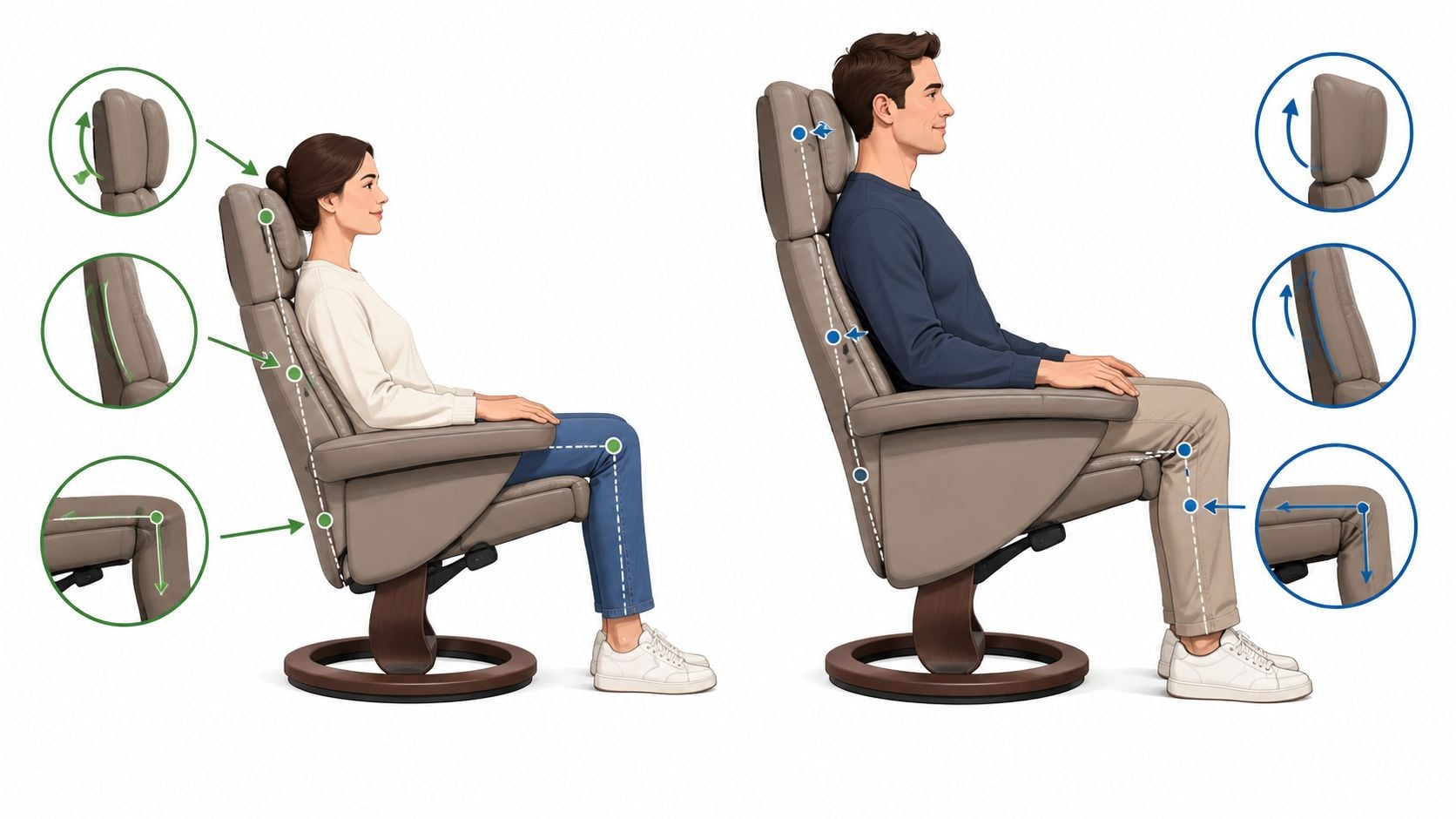
A chair should fit your body before it matches your colour scheme or base finish. Even refined upholstery and extensive adjustment cannot compensate for a seat height or depth that misaligns the knees, pelvis, and head.
Canadian seating guidance places seat height within 380 to 520 mm, a narrower range than some United States standards, as outlined in the Canadian ergonomic seating review. This range does not identify one universally correct chair. It shows why you should test available Stressless sizes instead of assuming a medium will suit every body.
Shorter users need clean contact
Shorter users should look for feet that rest securely, knees that remain comfortably positioned, and a headrest that meets the head without rising too high. If the lower back loses contact with the cushion, the seat may be too deep, even when the upholstery feels soft.
The seat-depth measurement guide explains why the distance between the seat edge and back support deserves close attention. A properly fitted chair lets the user sit fully back while preserving comfortable space behind the knees.
Taller users need length and neck support
Taller users generally need more leg length, a higher back, and greater neck-support adjustment. Reno deserves particular attention because its neck support can adjust by up to 10 cm, as noted earlier. Adam belongs on the shortlist for users who want motorised reclining and a headrest that can extend by up to 6 cm.
Posture habits shape the decision
A forward, upright reader needs steady lumbar contact and a headrest that does not push the chin downward. A relaxed sitter who reclines may prioritise the movement between upright and reclined positions, leg elevation, and freedom around the shoulders. Anyone sensitive around the lower back should check whether the chair supports the pelvis without creating pressure at the lumbar curve.
Practical rule: choose the size that keeps the feet, pelvis, shoulders, and head supported in the positions the user adopts.
Room scale completes the decision. A larger chair can suit an open living area, while a visually restrained model preserves circulation in a compact sitting room. The showroom fitting should assess both body alignment and the chair's relationship to the intended space. Comfort is a body-fit decision shaped by the room, not a contest to collect the most features.
How to Test Comfort in the Showroom Like a Designer
A showroom visit should be organised, not rushed. At Critelli's King Street Showroom, a buyer can compare models, sizes, upholstery, and bases with a clear sequence that separates first impressions from lasting support.
Begin with the neutral position
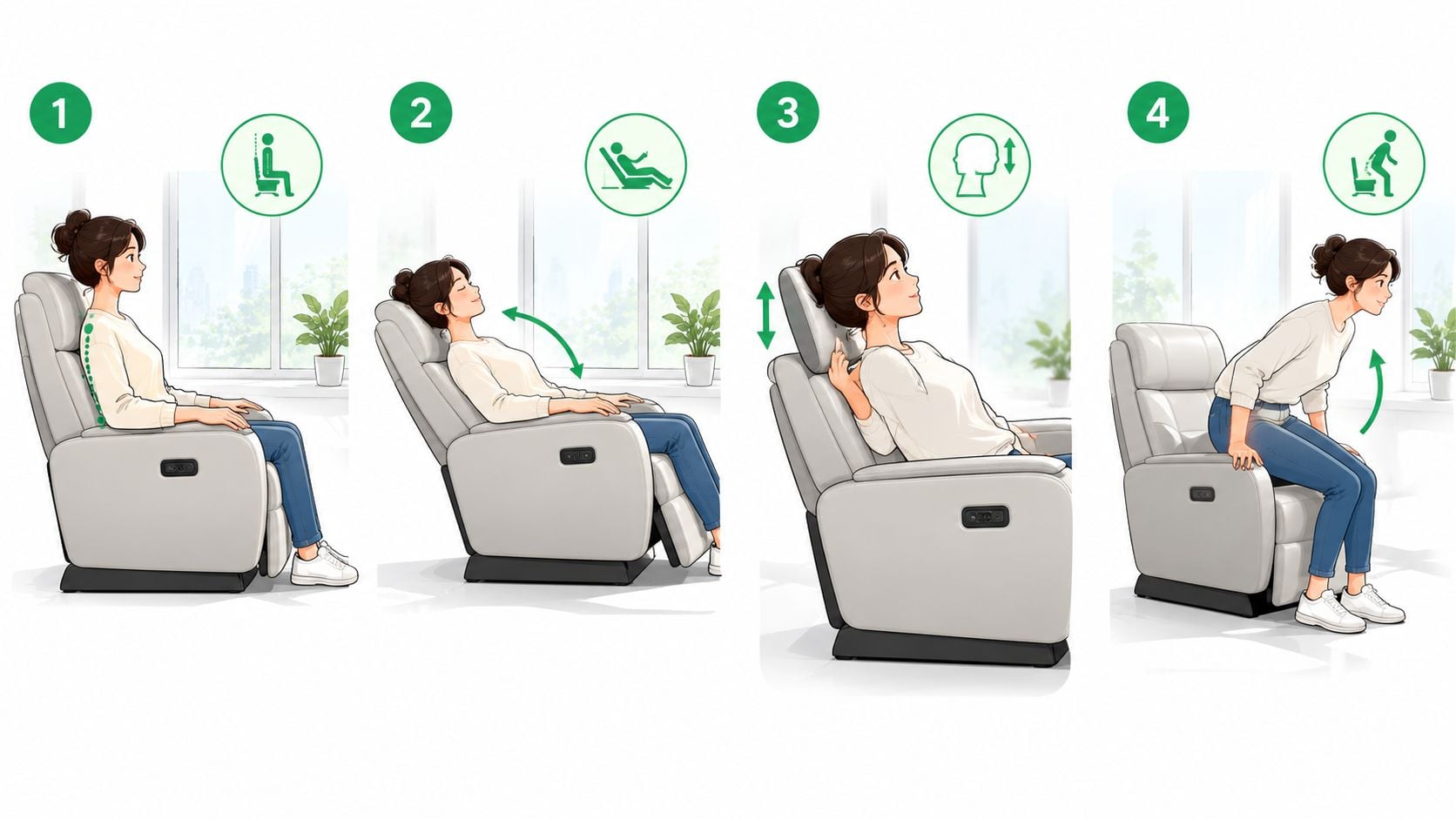
Sit fully back without adjusting anything. Both feet should feel stable, the pelvis should settle naturally, and the lower back should have consistent contact. Check whether the shoulders can relax without reaching for the armrests.
The first moments reveal pressure points and proportion. They don't reveal everything. A chair may feel soft immediately but become tiring if the head, lumbar area, or knees lose alignment as the body settles.
Test the entire movement
Move slowly from upright to reclined and back again. Notice whether the transition feels fluid, whether the head remains supported, and whether the lumbar contact changes in a distracting way. With a motorised model, test each adjustment independently before combining positions.
Compare the same movement in more than one size or base. A different base can alter the chair's visual stance and the way it occupies the floor, while size changes how the body meets the support zones.
Sit long enough to notice the difference
After the first impression, remain seated. A useful test includes reading, looking forward, and reclining without conversation distracting from the body's response. The chair should feel supportive rather than demanding attention.
Use a simple note-taking system. Record pressure at the knees, contact at the lumbar area, headrest position, ease of entry, and the amount of floor space required when reclined. This makes comparisons more reliable than memory alone.
Test the chair in the room context
A recliner's scale becomes clearer beside a sofa, table, lamp, or rug. A hand-knotted rug can help reveal whether the chair feels grounded or visually oversized, especially in an open living room.
Designer's Insight: rugs are art for your floor, but they also establish scale. A chair that looks imposing on bare flooring may feel perfectly composed once its base, ottoman, and surrounding furniture sit within a considered rug layout.
For buyers considering the wider room, the interior design consultation guide explains how space planning can support decisions beyond the chair itself. The strongest showroom visit tests comfort and composition together.
Which Stressless Chair Suits Your Lifestyle Best
The best model changes with the ritual it supports. A chair for quiet reading should feel composed in an upright position, while a chair for evening recovery should make reclining effortless and supportive.
For reading and television
Reno is the leading choice for readers and television viewers who prefer generous cushioning and adaptable neck support. Its fuller padding creates a welcoming seat, while the adjustable neck area can help the chair accommodate different users. Mayfair is a compelling alternative for a more classic room, particularly when the chair needs to coordinate with traditional wood and upholstery.
View suits a contemporary setting where a recliner should maintain a lighter visual presence. It can work well near a low table and directional lighting, provided the chair has enough surrounding space to recline comfortably.
For extended sitting and home office breaks
Extended sitting demands more than softness. The chair should let the user change position without losing contact at the back and head, and the seat should support a balanced posture rather than encourage slumping.
Magic belongs on the shortlist for users who prefer a broad, relaxed feel. A more compact model may suit occasional breaks in a work area where floor space is limited. The right decision comes from testing the chair in the posture it will serve, not from judging the silhouette alone.
For circulation-focused relaxation
Adam is the clear recommendation for buyers who want a motorised zero-gravity position and raised legs. Its configuration suits a dedicated relaxation zone where full-body unloading is the central purpose. It also deserves attention when manual movement feels inconvenient or when precise recline control matters.
For compact and open-plan rooms
In a compact room, the recliner should preserve pathways and avoid competing with the sofa. A wall-hugger recliner can be considered where placement depth is a concern, but the chair still needs to be tested for full movement and entry comfort.
Open-plan rooms can carry a larger, more expressive chair, especially when a rug defines the seating area. In either setting, the chair should contribute to a complete room concept, with lighting, tables, upholstery, and floor art working as a unified composition.
Experience Heirloom Comfort With Critelli Furniture
The comfort decision becomes more meaningful when it receives the same care as the rest of the room. Critelli's Furniture was founded in 1914 by Joseph Critelli and his young son Thomas in Thorold, Ontario, creating a 110-year legacy and a verifiable family-run origin story as documented by the Greater Niagara Chamber of Commerce. That heritage supports a measured approach to premium furniture, where heirloom quality, timeless craftsmanship, and daily usefulness belong together.
The Design Studio treats a recliner as part of a larger composition. Space planning, upholstery selection, colour relationships, lighting, and placement can turn a technically comfortable chair into a design-forward anchor. For clients seeking custom furniture in Southern Ontario, that broader perspective matters as much as the chair's internal mechanics.
Building the room from the floor upward
Critelli's Rug Market presents rugs as Art for Your Floor, not as an afterthought. Its public collection identifies hand-knotted rugs made by Nepalese weavers using wool from Himalayan Highland sheep, a specific artisanal detail that gives the category material and cultural depth on the Rug Market page. The right rug can establish the seating zone, balance the chair's scale, and connect leather or fabric to the room's wider palette.
White-Glove Delivery completes the process. Premium furniture service can include in-home design consultation, space planning, delivery, set-up, and styling, creating a managed transition from showroom selection to final placement as described in Canadian full-service design practice. For homeowners across Greater Niagara, Hamilton, and Toronto, that service helps protect the intention behind the room.
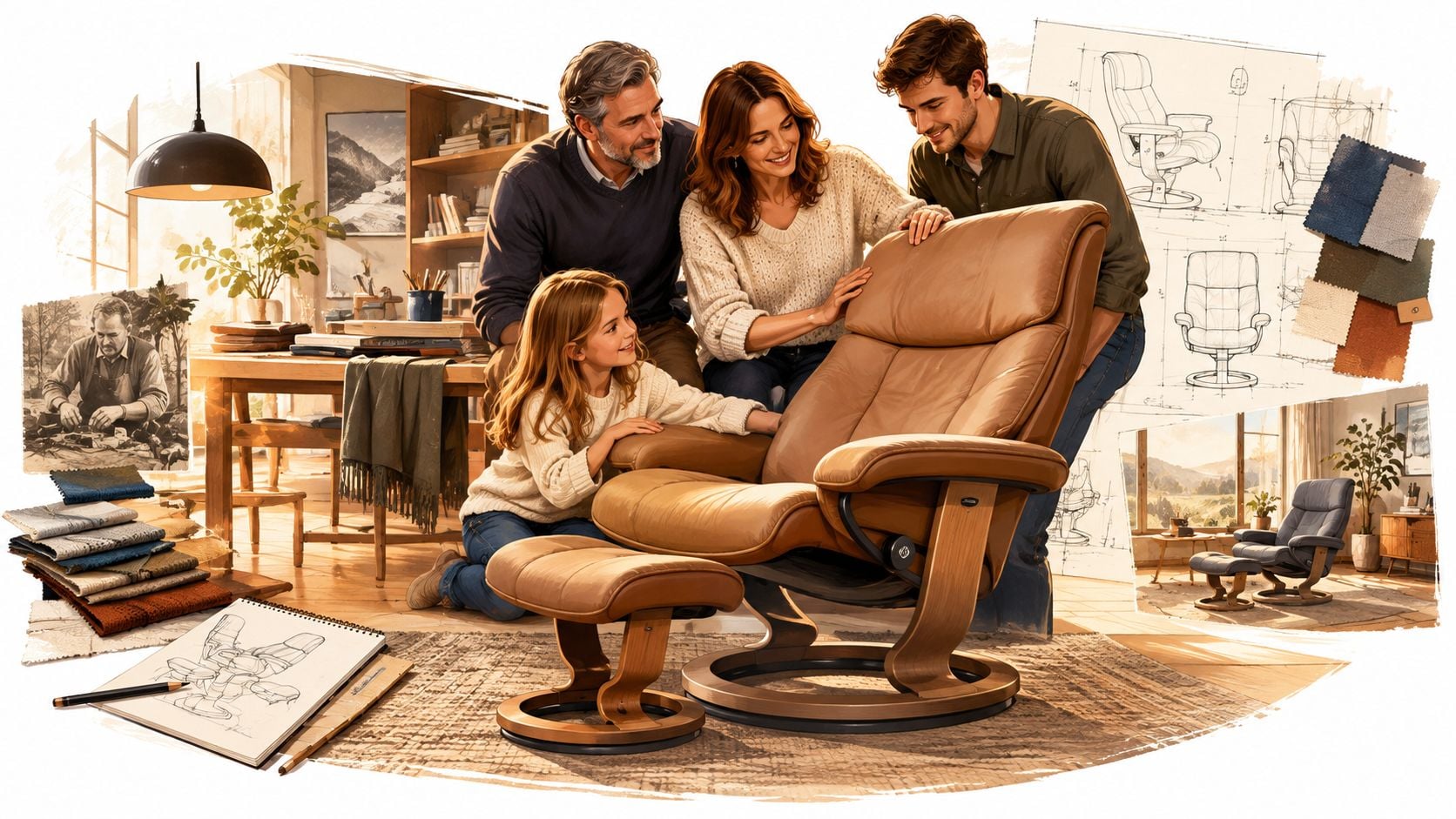
The most comfortable Stressless chair is the one that fits the body, supports the user's daily habits, and belongs naturally in the home. Reno is the strongest plush-support recommendation, Adam is the decisive choice for motorised zero-gravity relaxation, and Mayfair, Magic, and View each earn consideration when room character and sitting habits point in their direction.
Experience the craftsmanship in person at the King Street Showroom, where a curated selection of Stressless seating, artisanal rugs, and design-forward furnishings can be tested together. Book your complimentary design consultation today with Critelli Furniture to shape a comfortable, bespoke room that transitions from showroom to home.