
Elevate Your Home with Heritage Lifestyle Home Furnishings


A walnut sideboard once sat in my grandparents’ dining room, polished before every holiday meal and nicked softly by decades of use. No one in the family valued it because it was perfect. We valued it because it held memory, workmanship, and a sense of continuity.
That’s the heart of heritage lifestyle home furnishings. They aren’t just traditional-looking pieces. They’re the objects that help a home feel rooted, intentional, and lived in.
An Introduction to Living with Legacy
A well-lived home often begins with one object that refuses to feel disposable. It might be a table that still bears the faint ring from a grandparent’s teacup, or a chest whose drawers slide with the quiet weight of real wood. Pieces like these do more than fill a room. They set a standard for everything chosen after them.
That is the spirit behind heritage lifestyle home furnishings. The idea reaches beyond style and into philosophy. It asks you to furnish a home the way a family builds a library, adding what deserves to stay, passing over what only satisfies a moment, and choosing things that reflect your values as clearly as your taste.
The change can feel subtle at first. Then it starts shaping every decision. You notice how a chair sits, how a finish will wear, whether a cabinet was built to be repaired, and whether a piece carries enough character to belong to your story five, ten, or twenty years from now. Design becomes less about replacing things and more about forming continuity.
That is why partnership matters.
Critelli Furniture, founded in 1914 in St. Catharines, has long served clients who want more than a showroom transaction. A heritage-minded home usually comes together through conversation, editing, customization, and patient selection. The role of a trusted design partner is to help translate memory, architecture, family habits, and long-term goals into rooms that feel coherent from the start and richer with time.
Sometimes living with legacy starts with preservation before purchase. Original materials often carry the emotional weight that gives a home its centre of gravity. If your house has features worth saving, this guide on how to restore old wood floors offers useful context for keeping age, texture, and history intact rather than sanding them away.
A heritage approach also works best when traditional design is understood as adaptable, not frozen. The essay on how the traditional home still fits modern life shows that classic interiors can support present-day routines without losing depth or dignity.
Heritage is a way of choosing. It gives a home memory, structure, and the kind of beauty that grows more convincing with use.
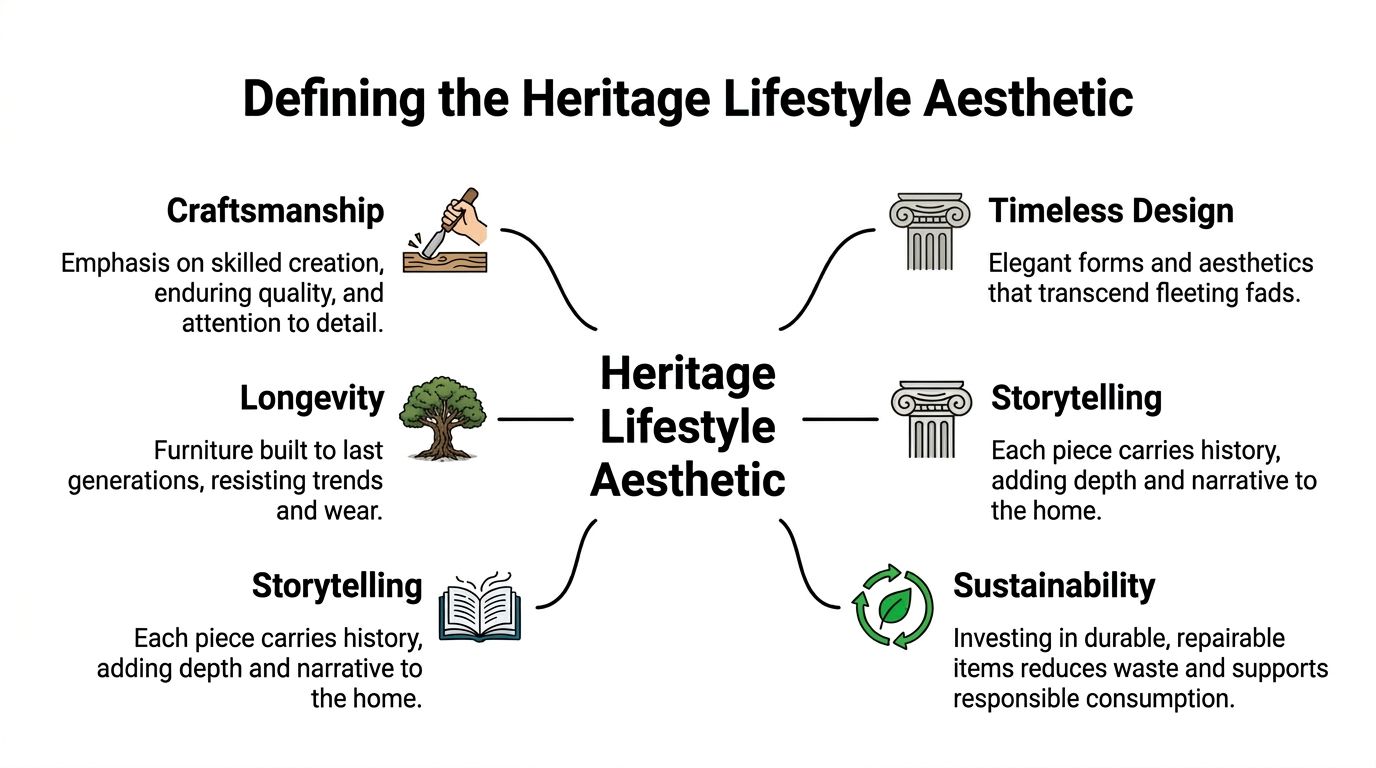
Defining the Heritage Lifestyle Aesthetic
The heritage lifestyle aesthetic rests on a few clear values. Craftsmanship, longevity, authenticity, and storytelling sit at the centre. If one of those is missing, the room may still be attractive, but it won’t carry the same sense of permanence.
What it looks like in practice
Heritage rooms usually feel layered rather than matched. You may see a structured sofa beside an older occasional table, hand-knotted rugs beneath cleaner-lined seating, or a formal wood case piece balanced by relaxed linen upholstery.
The visual language is often:
- Warm rather than stark. Wood tones, natural fibres, leather, wool, and finishes that soften with age.
- Collected rather than coordinated. Pieces relate to one another without looking purchased as a set.
- Refined but comfortable. Good scale, strong silhouettes, and rooms people want to sit in.
- Personal rather than generic. Art, books, inherited objects, and furnishings chosen for meaning.
A useful comparison is leather. A hand-finished leather club chair tends to develop patina, variation, and softness over time. A mass-produced imitation often does the opposite. It peels, flattens, and announces its age in the least graceful way possible. Heritage design favours materials that age with dignity.
Why it feels different from fast furniture
Fast furniture is built around immediacy. It solves a short-term need. Heritage furnishings answer a longer question. Can this piece move with you, adapt to different rooms, and still feel relevant after years of family life?
That difference also affects how you plan the room. You don’t start with colour trends alone. You start with anchors. A proper dining table. A sofa with presence. A rug that gives the architecture weight. Window treatments matter too, especially in older homes where proportion, trim, and natural light need a gentler hand. Homeowners working through that balance may find this article on custom window treatments for historic homes useful for thinking through tradition and modernity together.
Some homes need less decorating and more editing. Remove the forgettable pieces, and the meaningful ones start to speak.
The emotional palette of a heritage home
A heritage interior should feel settled. Not stiff. Not themed. Settled.
That often means embracing a few qualities at once:
| Quality | What it means in the room |
|---|---|
| Depth | Layers of texture, finish, and history |
| Restraint | Fewer pieces, chosen with more care |
| Continuity | Rooms relate to one another without repeating themselves |
| Usefulness | Furniture still serves the life being lived today |
When readers get stuck here, it’s usually because they think “heritage” means reproducing another era exactly. It doesn’t. It means choosing furnishings with enough integrity that they can carry both memory and modern life.
Hallmarks of Heirloom Quality Furnishings
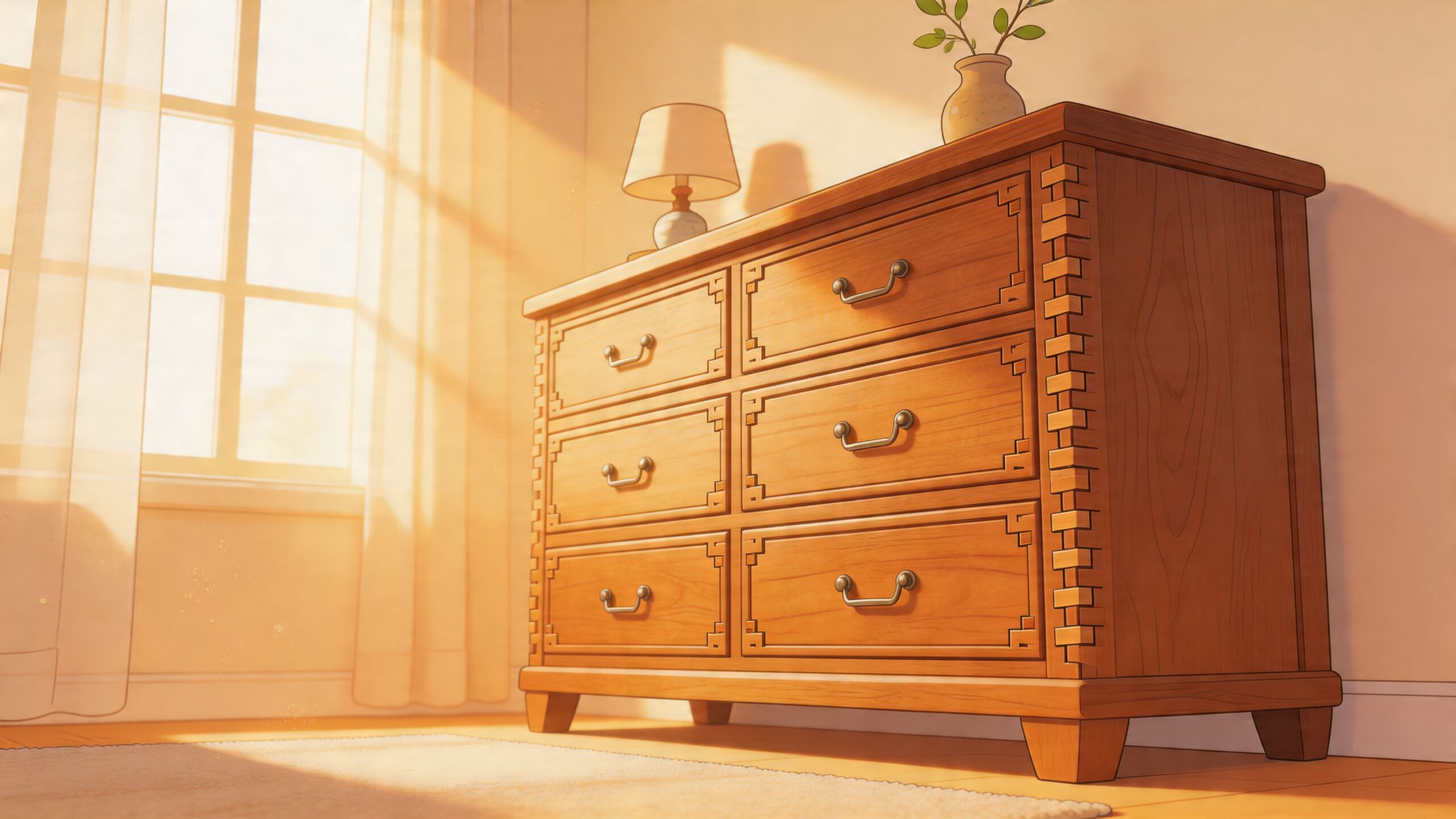
A heritage home asks more of furniture than simple usefulness. Each piece has to carry daily life with grace, then keep doing that year after year, through moves, repairs, celebrations, and ordinary mornings. That is what heirloom quality means in practice. It is furniture made with enough honesty in its materials and enough skill in its construction to remain worthy of your home and your story.
Start with materials you can trust
Materials set the character of a piece the way ingredients shape a good meal. Better inputs do not guarantee good craftsmanship, but poor ones almost always limit the result.
Solid hardwood, full-grain leather, wool, linen, and natural stone tend to age with more dignity than many synthetic substitutes. They gather patina rather than just wear. A walnut chest may soften in colour over time. A leather chair may show use at the arms and cushion in a way that feels personal, not tired. Those changes matter in a heritage interior because the home is meant to reflect life lived, not life staged.
Wood deserves special attention. Species, grain pattern, hardness, and finish all affect how a piece will look in ten or twenty years. Oak, cherry, and walnut remain trusted choices because they balance strength with beauty and respond well to repair and refinishing. For a clearer explanation of species and long-term performance, this guide to choosing the right hardwood for longevity and style is worth reading.
Construction reveals the truth
The hidden parts of furniture often tell the clearest story. Open the drawer fully. Run your hand under the table edge. Look at the back panel, the underside, the corners, and the joints. A well-made piece usually remains disciplined where casual shoppers rarely look.
Several details tend to separate furniture that lasts from furniture that only looks substantial on a showroom floor:
- Dovetail drawers resist pulling apart because the joinery locks the sides together.
- Mortise-and-tenon joints give tables and chairs better long-term strength where stress is concentrated.
- Corner blocks and reinforced frames help upholstered seating keep its shape through repeated use.
- Solid wood interiors or furniture-grade plywood in the right places usually perform better than thin panels or stapled substitutes.
- Repairable finishes and replaceable parts make the piece maintainable, which is one of the clearest signs of lasting value.
This is one reason discerning buyers often return to makers such as Stickley. The appeal is not decoration alone. It is the discipline in the frame, the fit of the joints, and the confidence that the piece can be serviced instead of discarded.
A simple test helps here. If a chair looks weighty but shifts under you, or a table appears solid but wobbles when touched, believe what your hands are telling you.
Climate and care shape longevity
Even excellent furniture remains responsive to its environment because wood still exchanges moisture with the air. The Forest Products Laboratory of the U.S. Department of Agriculture explains that wood changes dimension as its moisture content rises and falls, which is why seasonal humidity can affect fit, movement, and surface condition in solid wood furnishings. In practical terms, quality furniture lasts longer when it is stored, displayed, delivered, and installed with care.
That point matters in older homes, where original millwork, heating patterns, and drafts can create uneven conditions from room to room. A dresser placed against an exterior wall may behave differently from one set in a climate-controlled interior hall. Tabletops near strong sun can dry and fade more quickly. Dining chairs in a damp breakfast room may loosen sooner than those in a more stable part of the house.
This is also where partnership matters. A heritage lifestyle is not built by purchasing isolated objects and hoping they all age well together. It takes guidance on materials, placement, finish choices, and delivery conditions. Critelli's high-touch approach helps clients make those decisions with the whole house in mind, so the philosophy of legacy is carried through in the practical details.
If you are preserving continuity between furnishings and the home itself, the same care applies underfoot. Homeowners balancing new investments with original character may find this guide on how to restore old hardwood floors useful.
A quick collector’s checklist
Use this checklist in the showroom or during a home consultation:
| What to inspect | What you want to see |
|---|---|
| Drawers | Smooth action, tight joinery, solid feel |
| Table bases | Stable stance, no wobble, well-fitted joints |
| Upholstery | Tailored seams, quality deck construction, balanced cushions |
| Finish | Depth, consistency, and a surface that can age well |
| Scale | Proper proportion for both room and use |
Perfection is not the goal. Integrity is.
Small variations in grain, hand-applied finish, or stitching can signal real workmanship rather than factory sameness. What matters is whether the piece is sound, serviceable, and meaningful enough to keep. In a heritage home, that is the true standard.
Curating Your Home Room by Room
A heritage home comes together through relationships between pieces. One room sets the tone for the next. Materials repeat softly. Shapes echo without becoming predictable. The result feels coherent, but never overdesigned.
The living room as the emotional centre
Most homes declare their values in the living room, a space where a heritage mindset often begins with one anchoring piece, perhaps a Hancock & Moore leather sofa, a substantial wood cocktail table, or a well-proportioned pair of reading chairs.
From there, the room needs a foundation. That’s where Art for your Floor becomes more than a phrase. A hand-knotted rug often determines the room’s temperature, rhythm, and sense of finish. It can quiet a bold leather silhouette, connect wood tones, and give the seating arrangement a visual boundary.
Arrangement matters as much as selection. If you’re shaping a room with conversation, traffic flow, and scale in mind, this guide on how to arrange furniture in a living room offers practical help.
A simple composition for balance
Try building the room in this order:
- Start low and grounded with the rug.
- Add your primary seating with the strongest silhouette.
- Introduce wood through a table or case piece.
- Layer lighting and textiles for softness.
- Finish with objects that have biography, not just decorative function.
Designer’s Insight
Our designers suggest pairing a bold Hancock & Moore leather with a neutral hand-knotted wool rug to balance the room’s energy. The leather brings structure and character. The rug keeps the composition calm and livable.
The dining room as a place of ritual
A heritage dining room isn’t built around occasion alone. It should serve the ordinary Tuesday supper as gracefully as a holiday gathering.
The table deserves the most attention. Look for generous proportions, convincing joinery, and enough visual weight to hold the room. Dining chairs should relate to the table without disappearing into it. If the wood tones are similar, use upholstery, seat shape, or leg detail to create distinction.
A sideboard or cabinet often completes the room. This is one of the easiest places to introduce storage with presence. It also creates a visual bridge between utility and ceremony, which is part of what heritage interiors do so well.
The bedroom as a private retreat
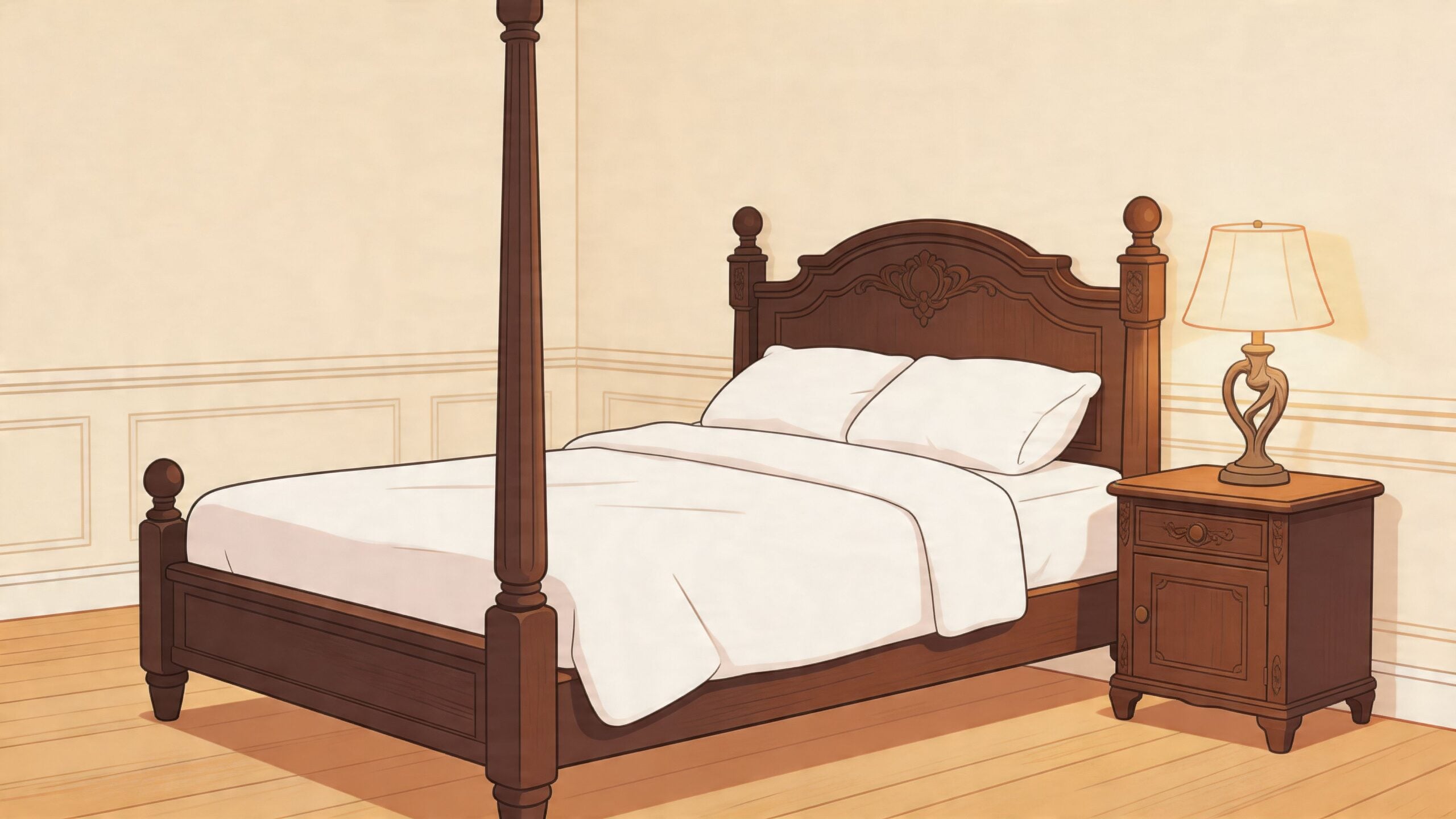
Bedrooms often get reduced to a mattress, a bedframe, and an afterthought chair. A heritage approach treats the room more carefully. The bed sets the architecture. The bedside tables establish rhythm. A bench, chest, or reclining chair gives the room function beyond sleep.
Stressless seating can work beautifully in a bedroom sitting corner because ergonomic comfort doesn’t have to look clinical. In a heritage-minded room, a well-scaled recliner beside a reading lamp and a small table can create a private refuge within the larger space.
A four-poster or wood-framed bed also changes the emotional tone of the room. It creates vertical presence and gives soft goods something substantial to play against.
The study, hall, and quiet corners
Not every meaningful room is large. Some of the most memorable heritage moments happen in transition spaces and working rooms.
Consider:
- An entry hall with a console, framed art, and one distinguished lamp.
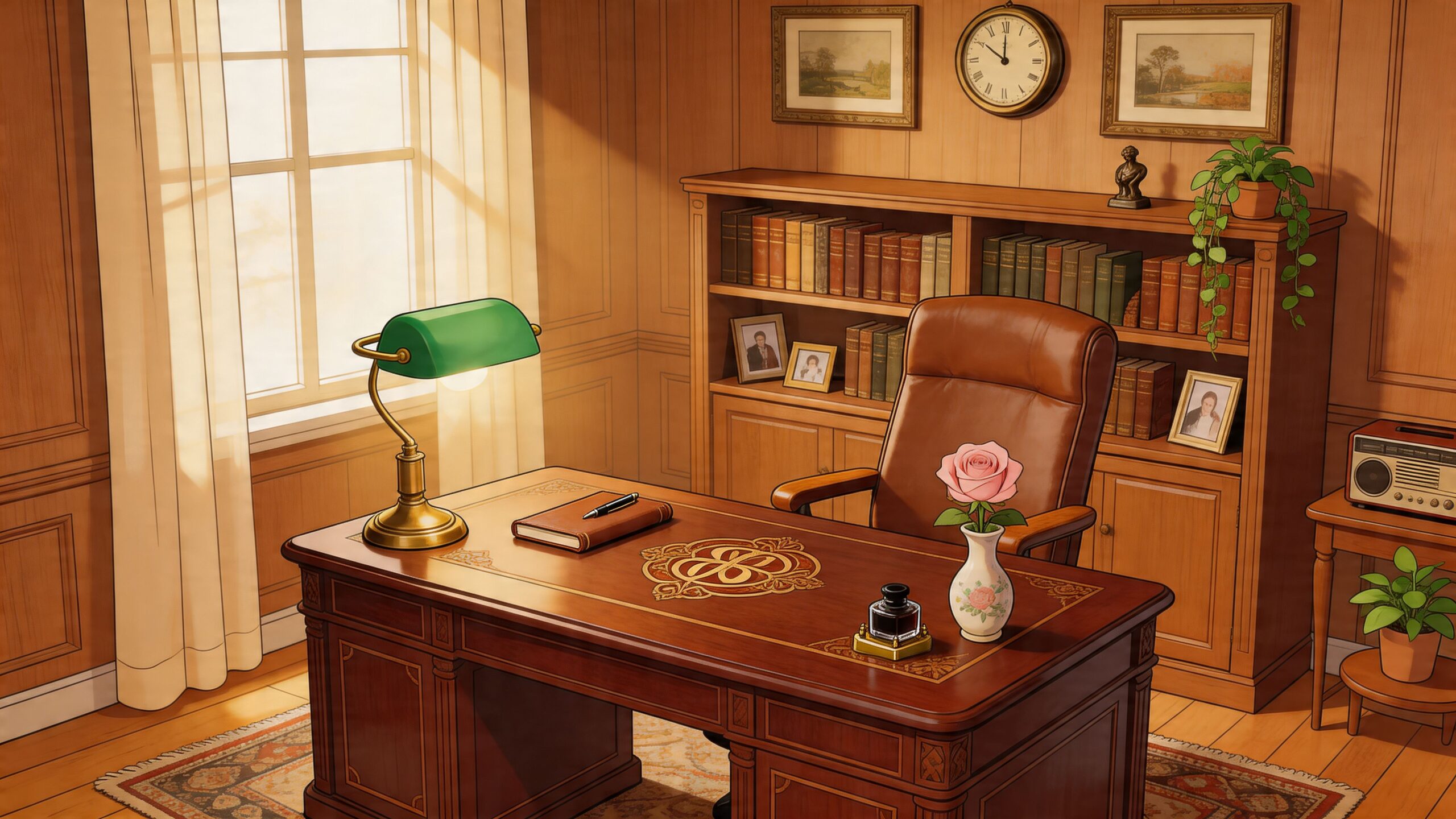
- A study centred around a proper desk and an upholstered chair that invites time.
- A landing or alcove with a small bookcase, antique table, or woven runner.
- A guest room that feels composed, not left over.
These smaller settings are often where storytelling becomes most visible. A framed map. A ceramic bowl collected on a trip. A chest inherited from family. Heritage lifestyle home furnishings do their best work when they allow those objects to feel at home, rather than crowded out by trend pieces.
The Art of Sourcing and Bespoke Customization
A heritage home rarely comes together by accident. It is shaped the way a good library is shaped, one careful choice at a time, with each addition belonging to the whole. Sourcing matters because the goal is not merely to buy furniture. The goal is to build continuity between your values, your architecture, and the life your household lives.
That is why custom and made-to-order pieces hold such appeal for heritage-minded homeowners. They allow a room to respond to real conditions. An older house may call for a narrower sofa. A dining room may need a specific wood tone so a new table sits comfortably beside original trim. A reading chair may need a higher back, firmer support, or a leather finish that grows richer with use.
In other words, customization solves practical problems and protects the story of the room.
The key is knowing which decisions carry the most weight. A change in scale can restore visual balance. A change in upholstery can affect comfort, colour, and durability all at once. A change in finish can help a new piece feel settled, as if it belongs to the house rather than visiting it.
| Decision area | Why it matters |
|---|---|
| Scale | Keeps the piece in proportion with the room and architecture |
| Upholstery | Shapes comfort, colour balance, and long-term wear |
| Finish | Helps new furnishings live naturally with older materials |
| Function | Supports the way the room is used day after day |
A heritage interior also asks a larger question. Does this piece make sense on its own, and does it make sense with everything around it? That distinction matters. Many expensive rooms fail because each object was chosen in isolation. The home ends up with strong individual pieces but no conversation between them.
A complete room concept prevents that problem. Rug, case goods, lighting, wood tones, and upholstery need to be considered together, much the way ingredients in a good meal are judged by how they work in combination, not one by one.
Critelli Furniture reflects that approach through its custom order planning process, which helps clients make custom order selections and work through the practical decisions that shape a room beyond the catalogue image. The value of that kind of partnership is clear. Heritage living is a philosophy before it is a purchase, and translating that philosophy into dimensions, materials, and finishes usually goes better with experienced guidance.
A bespoke room does not need to look grand to feel lasting. It feels resolved because proportion, material, and purpose are working together.
Before committing to a custom piece, pause over a few questions that often separate a wise purchase from an expensive detour:
- How will this material age? Some surfaces develop character with use. Others show damage quickly.
- Can the piece be repaired or serviced later? Longevity depends on what can be maintained.
- Does the scale respect the room’s architecture? A larger piece can easily overpower an older home.
- What job is this piece doing in the room? Anchor, storage, accent, and transition pieces call for different choices.
The strongest custom projects are rarely driven by novelty. They are guided by fit. Fit with the house, fit with the household, and fit with the story you want your home to keep telling over time.
From Showroom to Sanctuary with White-Glove Service
A heritage home can lose its composure in the last hour. A well-chosen cabinet scraped on a narrow stair, a dining table assembled unevenly, or a room left full of cartons can undo months of careful decision-making. Experienced homeowners know that delivery is part of the design process because the piece is still becoming part of the home.
White-glove service protects that final step. In premium furnishings, it usually includes inspection before placement, careful transport, in-room setup, assembly when needed, and removal of packaging. That level of care matters because heirloom-quality pieces are often heavy, finely finished, and unforgiving of rushed handling. One careless turn at a doorway can mark wood, loosen a joint, or damage plaster.
Critelli extends that process beyond the showroom by serving clients across Niagara, Hamilton, and Toronto with delivery and setup that respect both the furniture and the house receiving it. That support fits the heritage lifestyle philosophy as a whole. The goal is not only to purchase a lasting piece, but to bring it into daily life with dignity, accuracy, and as little disruption as possible.
The difference is easy to feel. A chair placed at the correct angle, a case piece leveled on an older floor, or a bed assembled properly the first time allows the room to settle into itself at once. The home feels considered, not half-finished.
What a careful delivery process should include
A strong delivery process works like installation in a gallery. The object matters, but so do spacing, setting, and presentation. Look for service that includes:
- Pre-delivery review so dimensions, entry points, stair clearance, and placement plans are confirmed before the truck arrives.
- Protected handling in transit to reduce wear on finishes, upholstery, and moving parts.
- In-room placement and assembly so each piece is positioned and built with attention to function and proportion.
- Packaging removal and basic reset so the room is ready to live in, not waiting for cleanup.
If you are comparing providers, this guide to furniture assembly services near me offers a practical standard for what professional setup should cover.
For a heritage-minded homeowner, white-glove service is not an extra flourish. It is the final act of stewardship. Critelli’s role here is partnership. The showroom helps define the vision, and the delivery team helps carry that vision carefully into the rooms where family life will unfold.
Conclusion Your Living Legacy
A meaningful home doesn’t come from filling rooms quickly. It comes from choosing with patience, understanding quality, and allowing your furnishings to reflect your values as clearly as your taste.
That’s why heritage lifestyle home furnishings continue to matter. They connect beauty with use, permanence with personality, and craftsmanship with memory. A room built this way doesn’t need to chase relevance. It already has depth.
Some pieces will be inherited. Others you’ll choose for the first time with future generations in mind. Both belong in a legacy home. What matters is the standard you apply to them. Is it well made? Does it suit the architecture? Will it still feel honest and gracious after years of living?
Homes with that kind of substance rarely happen by accident. They’re curated with care, layered over time, and finished with attention from floor to fabric to final placement.
If you’re ready to shape a home with heirloom quality, timeless craftsmanship, and a complete room concept, explore Critelli Furniture. You can experience the craftsmanship in person at the King Street Showroom, visit the Rug Market to find your room’s foundation, or book your complimentary design consultation today.