CRITELLI'S SUMMER SALE | UP TO 70% OFF



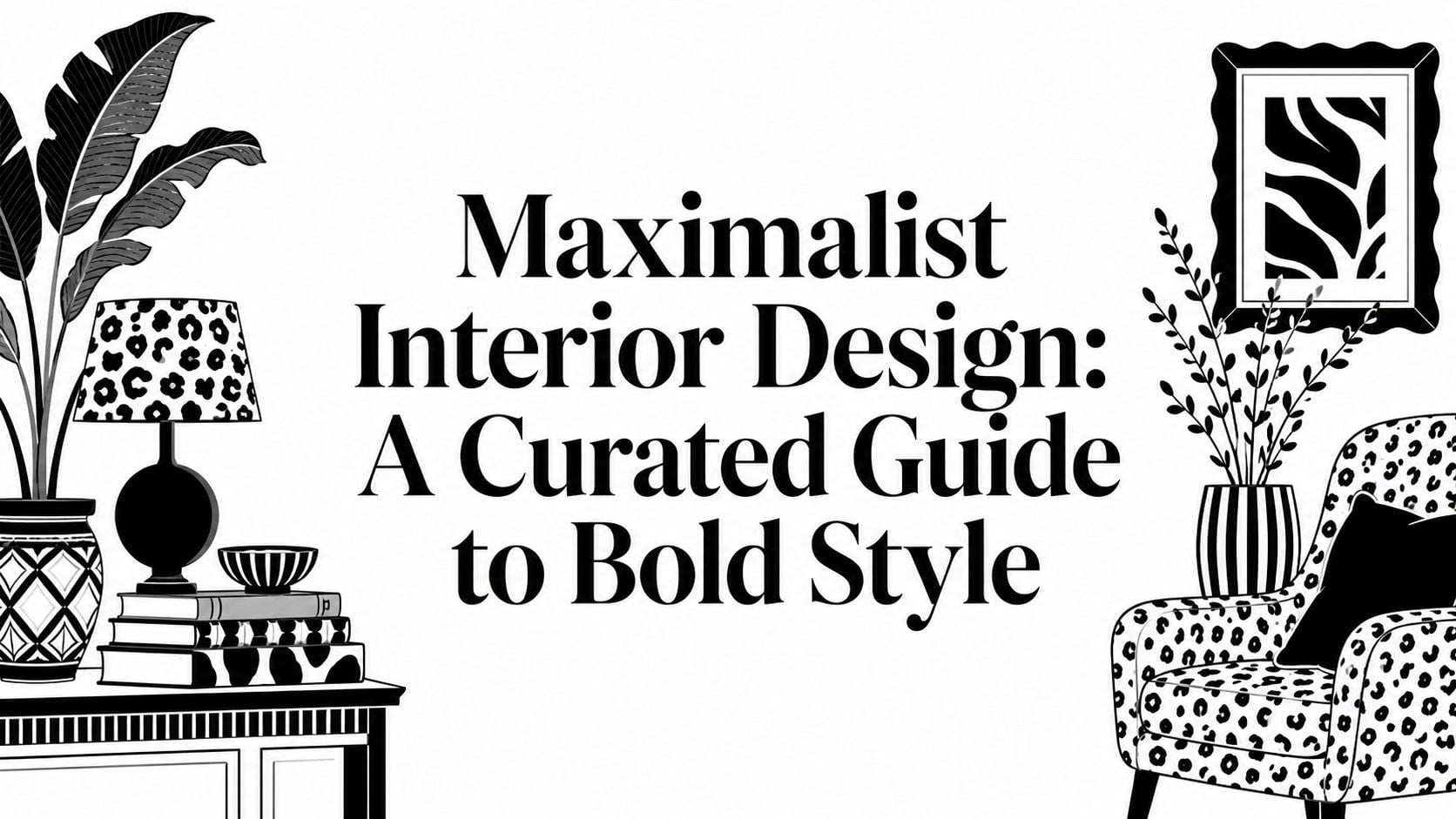
Maximalist Interior Design: A Curated Guide to Bold Style

A patterned rug was unrolled in a quiet sitting room, and the entire space changed. The walls hadn't moved, the windows were the same, yet suddenly every chair, lamp, and artwork had a story to answer to.
That's the true beginning of maximalist interior design. Not noise, not clutter, but a room that finally knows what it wants to say.
Embracing the Art of More
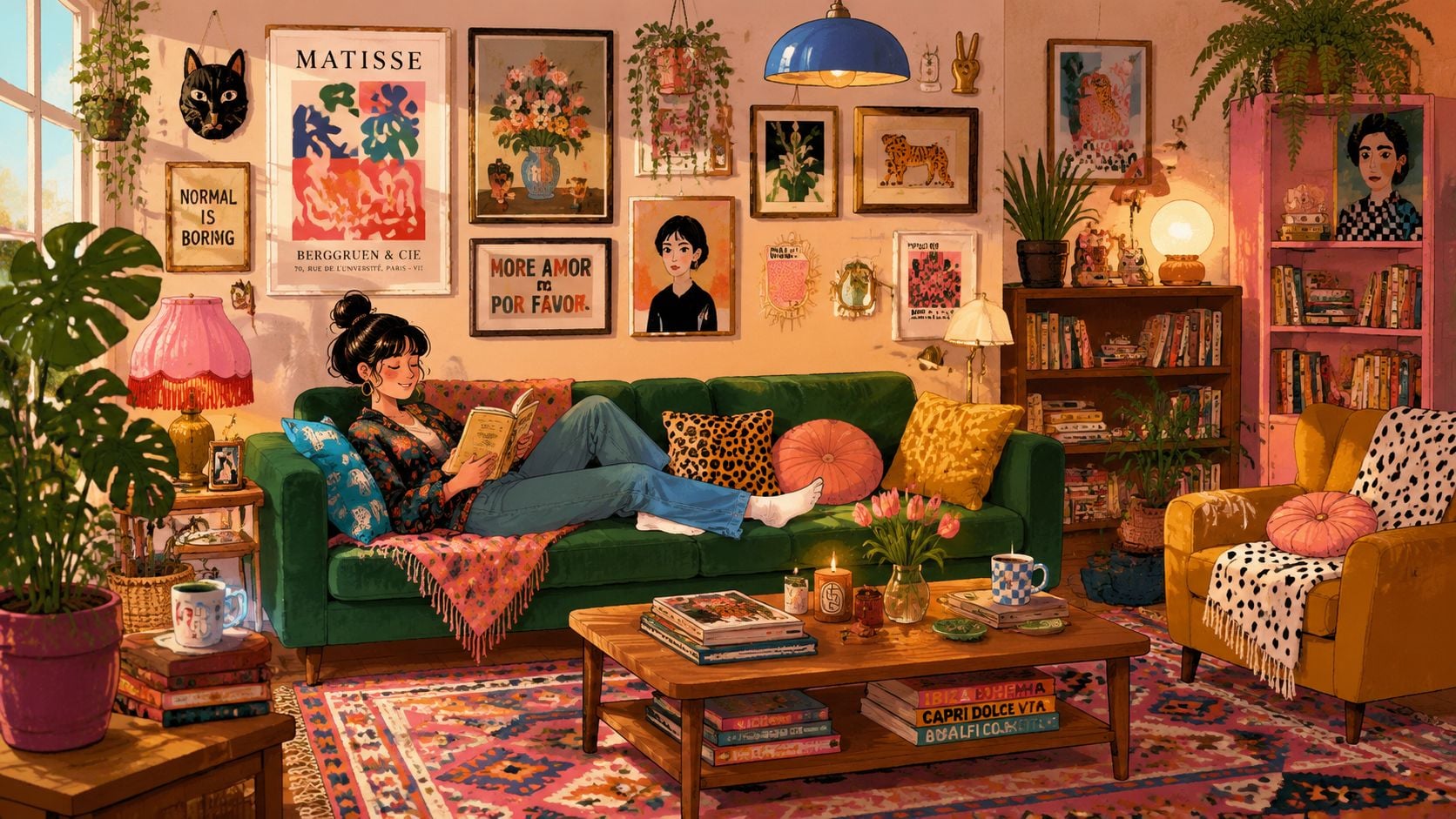
Maximalist interior design is often misunderstood because people confuse abundance with disorder. They aren't the same thing. A well-composed maximalist room is edited with as much care as a minimalist one. The difference is that it uses richness rather than restraint to create beauty.
At its heart, maximalism is a design language of personality. It makes space for collected books, inherited furniture, layered textiles, expressive colour, and objects that carry memory. The room feels full because life is full. That fullness only works when every element has a reason to be there.
Why maximalism feels timely again
Many homeowners want rooms that feel lived-in, expressive, and distinctly personal. That shift shows up in the market itself. Real estate listings that explicitly mentioned “maximalist” increased by 54.8% between 2024 and 2025, a sign that bolder, more individual interiors are gaining traction in how homes are presented and perceived (Yahoo shopping home decor coverage).
That doesn't mean every room should become visually dense. It means more people are valuing character over blank perfection. A maximalist home can still be elegant, calm, and organised. It replaces emptiness with intention.
Curated excess, not accumulation
The phrase that helps most readers understand maximalism is this: curated excess. More pattern, more colour, more texture, more collected objects, but all arranged with discipline.
A room begins to feel chaotic when it lacks hierarchy. If every object shouts, nothing can be heard. A successful maximalist interior gives the eye a path to follow. One area leads to another. A bold sofa might answer a dramatic rug. A gallery wall might be balanced by a quieter case piece. Plants, books, ceramics, and lighting then soften the composition rather than crowd it.
Practical rule: Maximalism works best when the room feels collected over time, even if it was planned all at once.
Natural elements often help bring balance to richly layered rooms. For readers exploring how living greenery can add sculptural calm to decorative interiors, this guide to bonsai and home aesthetics offers thoughtful ideas.
Why heritage matters in bold design
Bold rooms require confidence, but they also require judgement. That's where heritage in design becomes valuable. Critelli Furniture was founded in 1914 in Thorold, Ontario, and has operated as a family-run business for over 110 years, a legacy that reflects the long view required for timeless interiors rather than disposable trends (GNCC coverage of the company's 110-year milestone).
That multigenerational perspective matters in maximalism because this style depends on pieces with presence. Heirloom quality furniture, artisanal finishes, and rooms planned around longevity always read more gracefully than trend-driven excess.
For homeowners drawn to saturated colour, jewel tone colour palettes for layered interiors can be a strong starting point. Deep greens, sapphires, burgundies, and ochres often give maximalist rooms their sense of depth and maturity.
The Five Core Principles of Maximalism
Maximalist interior design isn't random. It follows a set of compositional principles that make a layered room feel intentional rather than overloaded. Once those principles are clear, bold decorating becomes much less intimidating.
Colour should lead, not merely decorate
In many maximalist rooms, colour is the first organising force. It tells the eye what belongs together. A room might begin with a deep botanical green, a burnished ochre, or a rich plum, then build outward into related tones and contrast notes.
The mistake isn't using bold colour. The mistake is using bold colour without a plan. A strong palette needs repetition across the room, perhaps in upholstery, drapery, art, and accessories, so the space feels composed instead of scattered.
Pattern needs conversation
Patterns work when they relate to one another in scale or colour, not when they compete blindly. A large floral, a medium stripe, and a smaller geometric can coexist beautifully if they share tonal harmony.
Readers who want a practical foundation for mixing prints can explore how to work with patterns in designing a room. The key is to think of pattern as layered dialogue. One motif sets the mood, another adds rhythm, and a third sharpens the edges.
A room can hold many patterns if each one knows its role.
Texture gives the room its soul
A maximalist room without texture often feels flat, no matter how many objects it contains. Texture creates depth. Velvet softens polished wood. Brass warms painted surfaces. Wool, linen, glass, and stone keep the eye engaged without relying on constant colour shifts.
Timeless craftsmanship is paramount. Heavily layered rooms need materials that age well. Surface quality becomes even more important when the room invites close looking.
Mix eras with discipline
One of maximalism's great strengths is its freedom to combine influences. A traditional cabinet can sit comfortably near a more contemporary chair. A classic rug can support modern art. An heirloom chest can make a crisp room feel grounded.
The goal isn't novelty for its own sake. It's tension with harmony. Rooms become memorable when they avoid looking purchased in one moment from one point of view.
Display with hierarchy
Collections are central to maximalist interior design, but display isn't the same as storage. Objects need spacing, rhythm, and visual leadership. Some pieces should dominate. Others should support.
Interior design guidance on maximalist rooms notes that successful spaces usually rely on only 1 to 2 wow-worthy pieces as the dominant elements, with the remaining 90% of accessories layered to create balance. That same guidance warns that ignoring this focal balance can lead to a 58% drop in perceived spatial harmony (Architectural Digest on maximalist interiors).
Maximalism vs. Minimalism at a Glance
| Principle | Maximalism (Curated Excess) | Minimalism (Intentional Lack) |
|---|---|---|
| Colour | Saturated, layered, expressive | Restrained, edited, quiet |
| Pattern | Mixed and repeated with intention | Used sparingly or omitted |
| Texture | Dense, tactile, varied | Controlled, subtle, calm |
| Furnishings | Collected, contrasting, story-driven | Reduced, essential, spare |
| Display | Personal objects are part of the design | Objects are limited and selective |
Designer's Insight: Pair one dramatic upholstery piece with a quieter hand-knotted rug and let smaller accessories echo the room's colours. That balance gives energy without visual strain.
What confuses many homeowners is the fear that adding more will automatically make a room feel smaller. In practice, a layered room often feels more complete because the eye has structure to follow. Scale, editing, and placement matter far more than simple item count.
Sourcing Your Foundational Pieces
The most convincing maximalist rooms don't begin with accessories. They begin with foundation. When the large pieces are right, layering becomes easier, more coherent, and far more elegant.
Start with art for your floor
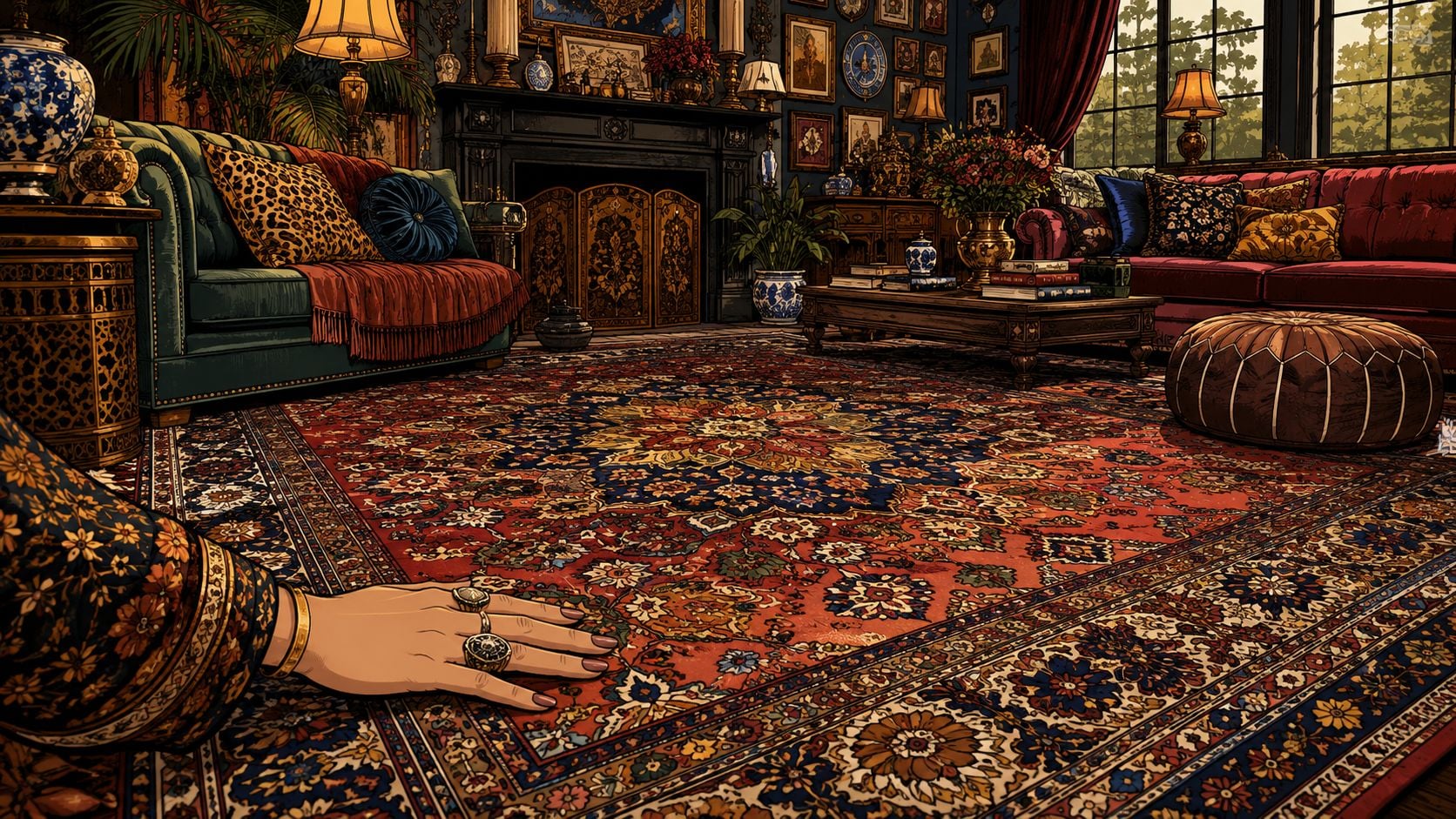
A rug is often the most intelligent first decision in a maximalist room. It sits under every major piece, pulls colours into relationship, and establishes whether the room will feel formal, relaxed, historic, or design-forward. That's why rugs are best understood as Art for your Floor.
A hand-knotted rug does more than fill square footage. It introduces pattern, age, craftsmanship, and movement in one gesture. In a richly layered interior, that underfoot composition often becomes the anchor that keeps everything else from drifting apart.
Invest where the eye rests longest
Once the floor is grounded, the next decisions should focus on the pieces that carry visual and physical weight in the room.
- Seating with presence: A sofa or lounge chair in a generous fabric, expressive silhouette, or rich colour can carry the room's personality.
- Case goods with integrity: Cabinets, sideboards, and tables should offer structure, not filler. Good joinery and proportion matter more than ornament alone.
- Lighting with character: Lamps and pendants should shape mood as much as provide illumination.
A maximalist room built from poor foundations often looks tired very quickly. A room built from heirloom quality pieces can absorb changing textiles and collected objects for years without losing coherence.
For readers weighing quality, construction, and longevity, heirloom-quality furniture for lasting interiors is a useful reference point.
Why craftsmanship matters more in maximalism
Minimal spaces can sometimes hide weak materials because there's so little competing for attention. Maximalist spaces can't. They invite close looking. The hand of the maker matters. The finish matters. The way a fabric drapes matters.
Rooms with many layers need fewer disposable pieces.
That's why artisanal and bespoke choices suit maximalism so well. A hand-finished cabinet, a custom upholstered frame, or a carefully woven rug doesn't merely occupy space. It steadies the entire composition.
Buy with the full room in mind
Foundational buying should answer three questions before a single accessory is chosen:
What anchors the palette
Usually the rug, artwork, or one statement upholstery fabric.What carries the room's weight
The major seating and storage pieces that define function and proportion.What deserves to stay for years
The pieces with enough timeless craftsmanship to support future layers.
Many homeowners go wrong. They collect accents first because accents feel easier. Yet maximalism becomes far more refined when the room begins with durable structure and a curated selection of substantial pieces.
Building a Complete Maximalist Room Concept
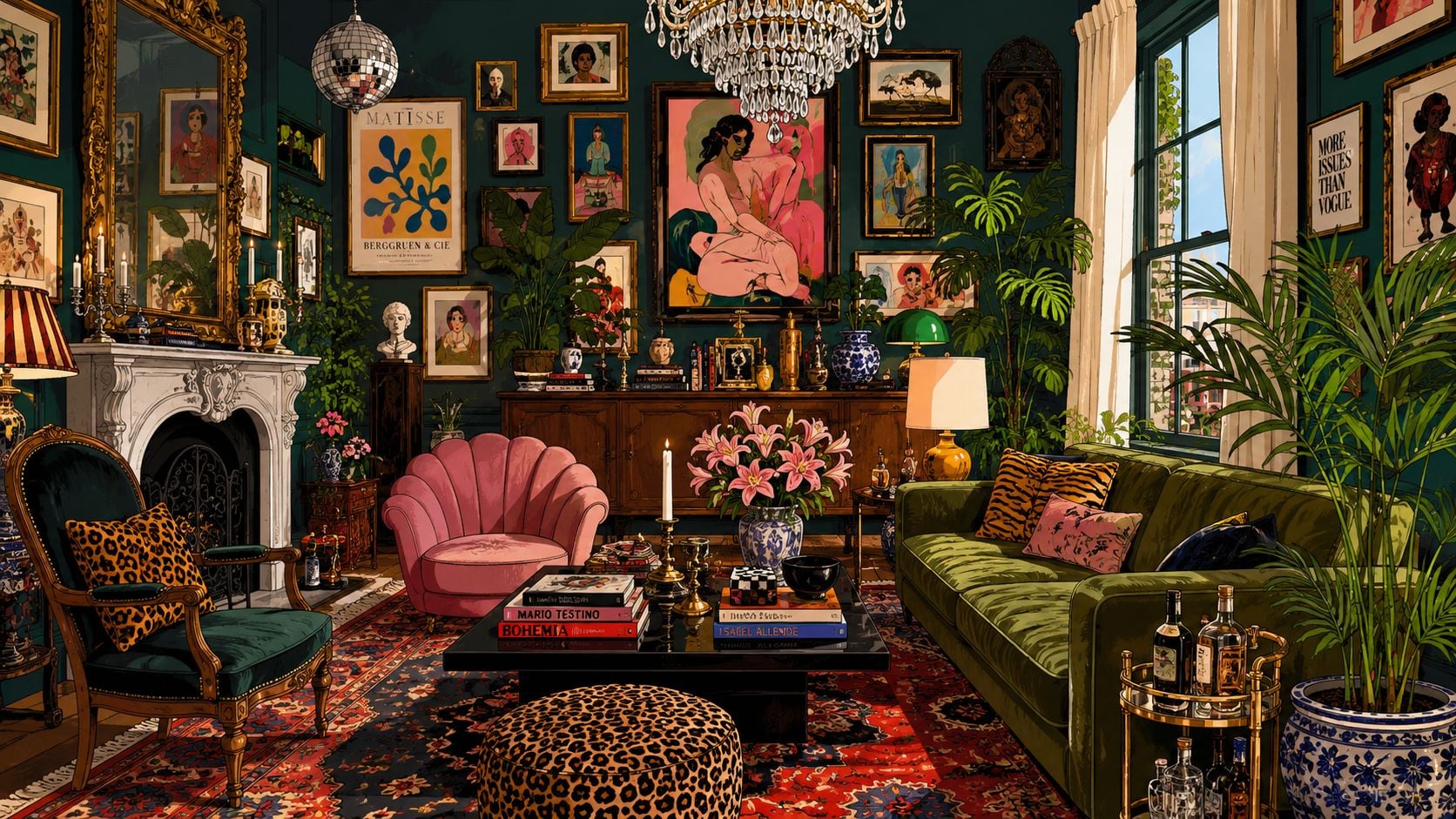
A complete room concept starts on the floor and rises in layers. Consider a living room with tall windows, a fireplace, and enough natural light to support richer colour. The room doesn't need to be oversized to feel generous. It needs a plan.
Begin with the rug and wall tone
A patterned rug sets the room's language. Perhaps it introduces moss, rust, indigo, and ivory. Rather than matching every surface to it, the walls can take one of its quieter colours. That choice gives the room atmosphere without forcing every piece to compete.
From there, upholstery can answer the rug rather than mimic it. A velvet sofa in a related tone, a pair of patterned chairs, and a wood coffee table with visual weight can create the first layer of conversation.
Add contrast through shape and history
A room becomes memorable when every piece doesn't come from the same visual family. A structured sofa can live beside a sculptural chair. A traditional lamp base can stand under a more contemporary shade. Art can bridge generations by echoing the palette while shifting the style.
This is the practical value of a complete room concept. The room is composed as a whole, not assembled item by item. Each new decision is tested against everything already in place.
For homeowners studying the mechanics of strong composition, how to create an eye-catching room offers useful guidance on focal points and visual flow.
Finish with personal layers
Once the major pieces are in place, the room can hold the more intimate gestures that make maximalism sing.
- Books and objects: Grouped by colour, material, or theme, rather than scattered.
- Art and mirrors: Layered where they strengthen vertical rhythm and reflect light.
- Textiles: Cushions, throws, and window treatments that repeat key tones.
- Botanical elements: Greenery that softens edges and adds life.
A specialised area like a bar, library nook, or cellar-adjacent lounge can also be folded into this same logic. For readers shaping a more personalized entertaining space, the Ultimate wine cellar guide offers useful perspective on integrating storage, atmosphere, and lifestyle.
Why showroom range supports room planning
A room concept is easier to realise when multiple design languages can be considered together. The company operates two distinct showrooms in St. Catharines, Critelli Furniture at 126 King Street and Critelli Modern at 169 St. Paul Street, enabling a complete room concept by offering curated selections across contemporary, traditional, and modern design styles within a single regional destination (about the St. Catharines showrooms).
That matters because maximalism often lives in the mix. It rarely belongs to only one style category. Rooms with depth usually borrow from several.
Curating with Confidence in Southern Ontario
Maximalist interior design lands differently depending on where it lives. A Victorian house in Niagara, a stone home near Hamilton, and a contemporary Toronto condo each ask for a different kind of layering. The principles stay steady. The expression changes.
Regional taste supports bolder interiors
Southern Ontario is especially well positioned for design-led living. Ontario hosts 53% of Canada's interior design professionals, which reinforces the province's place as a leading market for high-profile design movements, including maximalism (interior design statistics in Canada).
That concentration of design culture has practical consequences. Homeowners in the Greater Niagara, Hamilton, and Toronto markets are surrounded by stronger visual references, more comfort with custom work, and a greater appetite for curated homes rather than generic ones.
Adapt the style to the architecture
The most successful maximalist rooms respond to the building they inhabit.
- In historic homes: Lean into mouldings, original millwork, fireplaces, and older proportions. These homes often welcome layered rugs, darker woods, and collected art naturally.
- In newer builds: Introduce depth through textiles, wall colour, and statement lighting so the space doesn't feel flat.
- In condos: Keep the palette disciplined and let fewer, stronger pieces do the work. Vertical display becomes especially important.
Custom furniture Southern Ontario homeowners choose can make a decisive difference. Proportion matters. Scale matters. A bespoke approach prevents the room from feeling either underfurnished or overfilled.
The final layer is service
Busy professionals often understand the look they want but don't want the process to become burdensome. That's why delivery and installation shouldn't be treated as an afterthought. A carefully built room can lose its polish when placement, assembly, and final editing are rushed.
White-glove service protects the integrity of the design. It carries the room from showroom planning to in-home reality without making the homeowner manage every detail alone. For anyone exploring refined, custom-made furnishings in the region, custom furniture makers serving Southern Ontario can provide a helpful starting point.
A sophisticated room doesn't end with the purchase. It ends when every piece is placed exactly where it belongs.
That standard matters whether someone is searching for luxury furniture Niagara, interior design services St. Catharines, or hand-knotted rugs Ontario collectors seek out for lasting value. In a maximalist home, confidence comes from curation, and curation depends on both good taste and good execution.
Your Maximalist Design Checklist
Maximalism becomes approachable when it's broken into decisions. A homeowner doesn't need to do everything at once. The room only needs a clear point of view and the discipline to support it.
What to keep in mind
- Choose one anchor first: Start with the rug, the art, or a statement upholstery piece that can define the room's palette and mood.
- Build with heirloom quality: Large pieces should offer timeless craftsmanship, not short-term novelty.
- Use colour with commitment: Repeating strong tones through the room creates cohesion.
- Layer pattern thoughtfully: Mix scale and motif, but keep some visual relationship between them.
- Mix eras on purpose: Contrast creates character when proportion and palette stay in balance.
- Let a few pieces lead: Not every object should compete for attention.
- Display, don't crowd: Collections look refined when grouped and edited.
- Respect the architecture: Historic homes, newer builds, and condos each need a different expression of abundance.
- Think in full-room terms: A complete room concept always feels more polished than a series of isolated purchases.
- Protect the finish: White-glove handling, placement, and installation help preserve the final result.
Why this style has staying power
The appeal of maximalism isn't only visual. It answers a deeper desire for homes that feel personal and richly lived in. That's part of why the language of the market has shifted. Property listings mentioning “maximalist” rose by 54.8% between 2024 and 2025, reflecting stronger interest in vibrant, character-filled environments (Yahoo's coverage of the design shift).
A well-made maximalist room doesn't ask for more objects. It asks for better ones, placed with greater care.
Homeowners who want to explore the look in a refined way should keep the process simple. Begin with one foundational piece. Add colour and pattern in layers. Choose a curated selection over accumulation. Let the room reveal itself gradually.
For homeowners seeking luxury furniture in Niagara, interior design services in St. Catharines, custom furniture in Southern Ontario, or hand-knotted rugs in Ontario, Critelli Furniture offers a design-forward destination shaped by heritage and service. Experience the craftsmanship in person at our King Street Showroom. Visit the Rug Market to find your room's foundation. Book your complimentary design consultation today.