
Texture in Interior Design: A Layering Guide

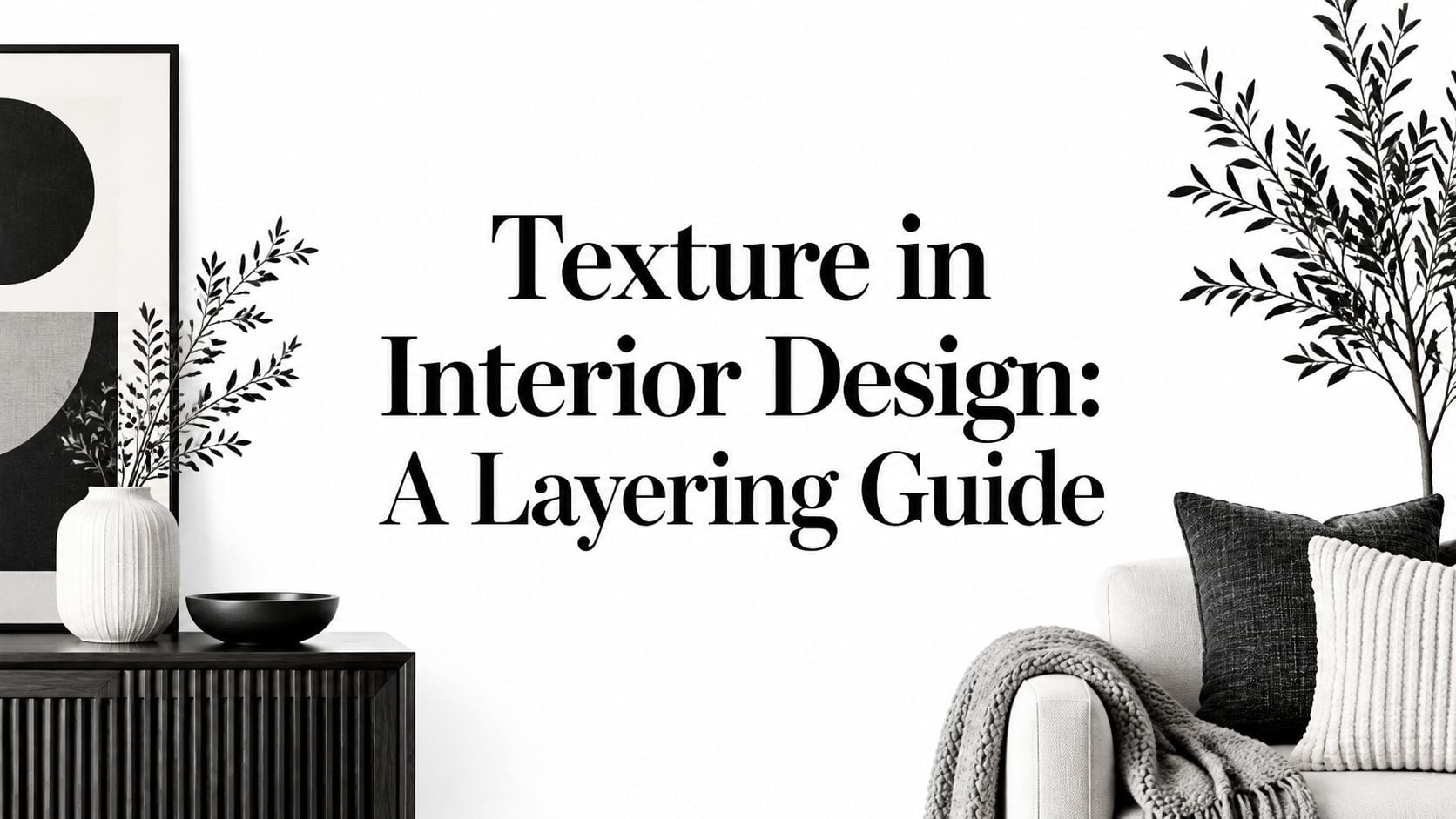
You can stand in two living rooms with the same floor plan, the same paint colour, and the same window placement, then feel two completely different atmospheres. One reads flat and forgettable. The other feels collected, warm, and expensive, with every surface helping the room breathe.
That difference usually starts with texture in interior design. Texture changes how a room catches light, how large it feels, and how comfortable it seems at first glance. In Southern Ontario homes, where winter light can be unforgiving and older housing stock often mixes old finishes with new ones, texture becomes more than styling. It becomes part of how a room works.
Why Texture Transforms a Room Beyond Colour and Layout
A room can be carefully arranged and still feel incomplete if every surface speaks in the same voice. Smooth walls, glossy tables, and sleek upholstery can give the space a clean outline, but they rarely give it depth. Add a wool rug underfoot, a wood console with visible grain, or linen drapery that catches the light differently at every fold, and the room starts to feel collected instead of bare.
Texture matters because it changes how people read a room before they sit down or touch a thing. Scholars began formally studying tactile qualities in interior environments in the late 20th century, as research on touch-based interiors showed that surfaces shape sensory experience, not decoration alone, as noted in Hands at Home? Textures, Tactility and Touch in Interior Design. In real Canadian homes, that insight carries extra weight. Winter light can be flat and unforgiving, older houses often mix new finishes with inherited ones, and rooms need materials that soften glare while keeping the space comfortable to live in.
The room that feels flat versus the room that feels gathered
A flat room usually asks the eye to process the same finish again and again. A gathered room gives the eye small pauses. One chair may be smooth leather, the rug may be hand-knotted, and the side table may be matte wood, so the room no longer reads as one hard plane.
Designer's insight: A room does not always need more objects. It often needs more surface contrast.
That contrast also changes spatial perception. A room with only reflective finishes can feel sharper and more exposed, while layered materials absorb and break up light, which makes the space feel calmer and often more intimate. In a compact condo near Hamilton or a family room in St. Catharines, that difference can affect how large the room seems and how relaxed people feel in it.
Texture is easiest to understand when you see it in a finished room rather than in isolation. Upholstery, rugs, wood, and lighting all influence one another, and a surface that looks flat in a product image may read very differently once it sits beside softer or rougher materials. A styled photograph can show that relationship clearly, which is why from Jimmy Clemmons Photographer is a useful reference for seeing how texture changes under careful lighting.
For homeowners shaping a palette, Critelli's earth tone colour palettes offer a useful starting point because earthy tones and tactile materials usually support each other. That combination can help a room feel steady and timeless, especially when the goal is comfort that lasts beyond trends.
Understanding Tactile and Visual Texture in Design
The easiest way to understand texture is to separate what the hand can feel from what the eye can see. Tactile texture is physical. It has relief, ridges, softness, or grain. Visual texture is the impression of texture, created by pattern, colour variation, sheen, and the way light breaks across a surface.
A nubby bouclé sofa is tactile texture. A marble-look porcelain tile may only seem tactile until the hand reaches it, which makes it a visual texture if the relief is simulated. Both belong in the same room, but they do different jobs. One invites touch. The other creates depth without always adding physical roughness.
Natural and manufactured surfaces work differently
Natural materials such as wood grain, stone, and wool feel grounded because the surface variation is part of the material itself. Manufactured finishes, such as lacquer or polished metal, usually do the opposite. They sharpen edges, bounce light, and make the room feel more controlled.
That's why a curated selection usually blends both. A room made only of tactile surfaces can feel heavy. A room made only of smooth finishes can feel cold. The balance is what creates a sense of heirloom quality and calm.
For homeowners comparing upholstery options, Critelli's guide to upholstery materials is a practical complement to this distinction because upholstery is where tactile decisions become everyday decisions. A sofa's hand, a chair's finish, and a rug's pile all change how the room is experienced when someone sits down, not just when someone walks through.
A nearby custom finish can change the whole mood of a room too. For readers in York Region or nearby, custom finishes for Newmarket homes is a helpful example of how surface treatment can shift the feel of walls without changing a room's layout.
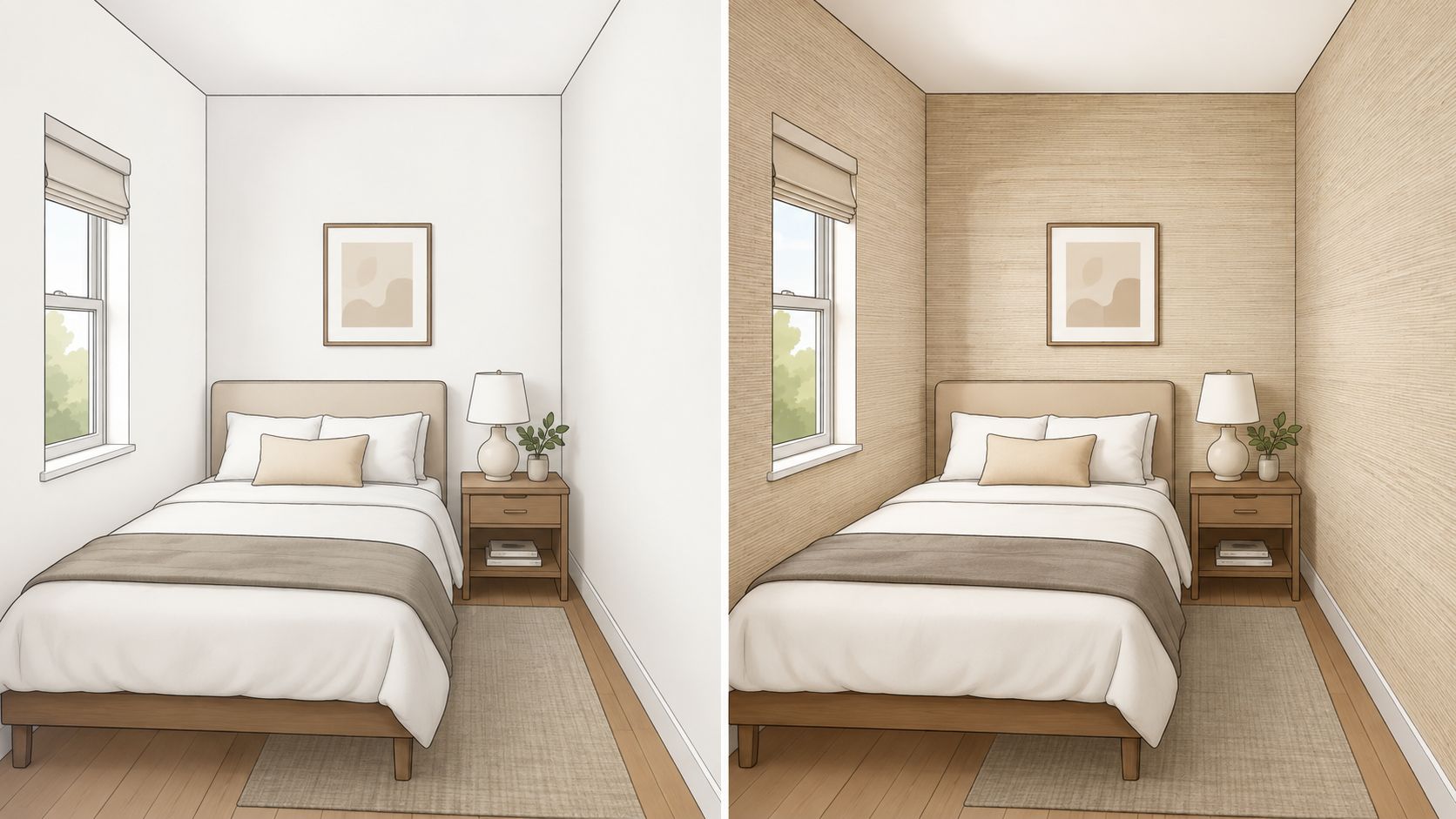
Practical rule: Use visual texture to add interest, then use tactile texture to add comfort. A room usually needs both.
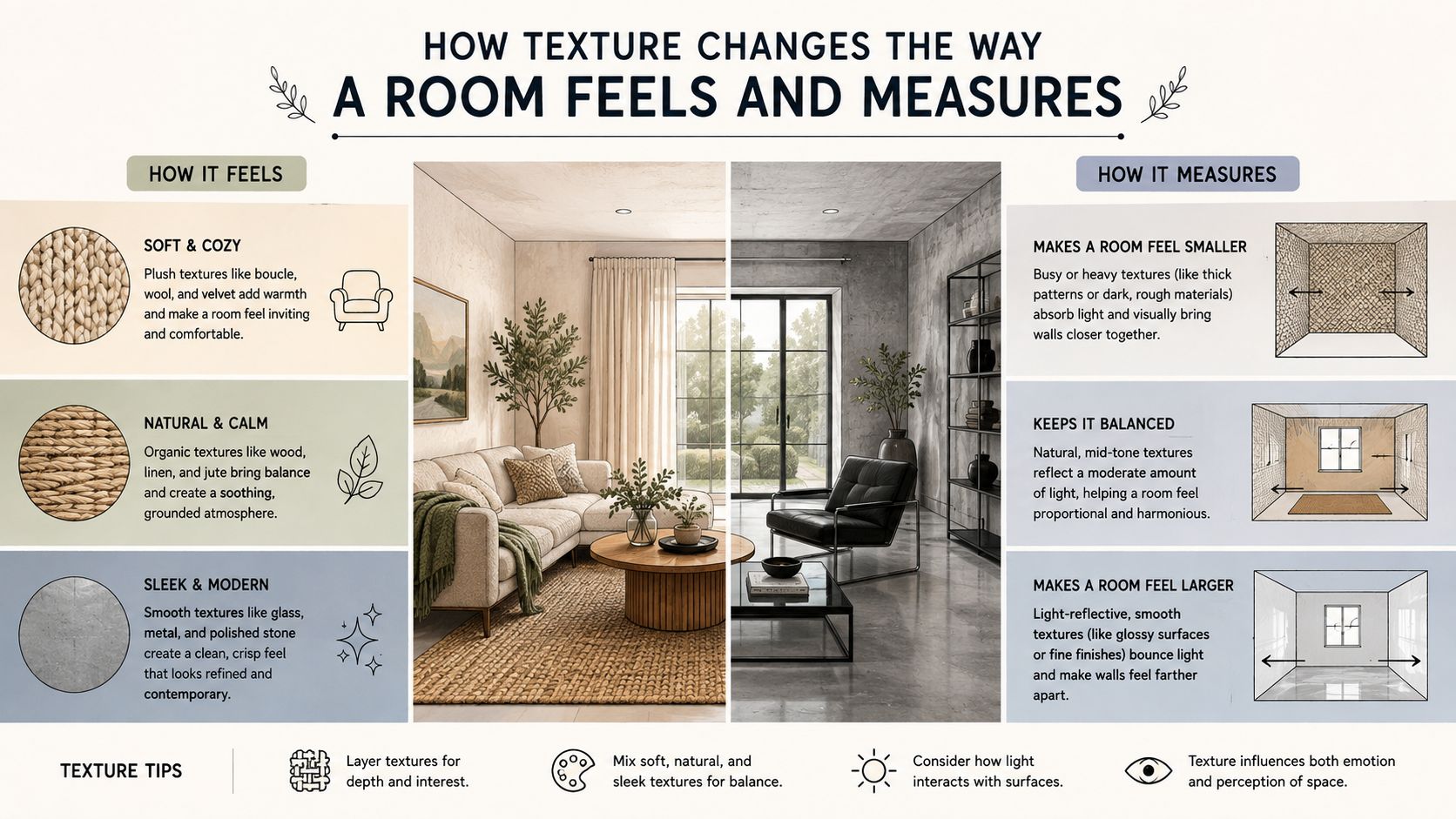
How Texture Changes the Way a Room Feels and Measures
Texture does more than shift mood. It changes how a room reads in the body and in the mind. In a controlled comparison of wall materials, textured walls were perceived as less spacious than similarly sized rooms with untextured walls, and the effect changed with both material type and viewing distance. The same study found that white walls were judged as more spacious than the textured alternatives, while among the textured samples, wood walls were perceived as the narrowest and linen walls were perceived as the most spacious, according to the source material, the 2020 wall-material study on perceptual spaciousness.
That matters in compact Southern Ontario homes, where a condo living room, a heritage hallway, or a basement family room can feel tight before furniture even enters the picture. Texture becomes part of the plan from the start, because it can make a room feel more enclosed, more open, or more settled.
A useful counterintuitive lesson from wall finishes
A built-environment study reported that people can judge textural quality even without visual cues, and that semi-rough wall finishes were judged as more spacious than smooth or rough finishes, as noted in the Frontiers study on perceptual spaciousness. That matters because it shows there is no simple formula where more texture always makes a room feel smaller. Texture type, surface density, and where the wall sits in your field of view all change the result.
A peer-reviewed study on indoor perceptual spaciousness also treated wall texture as an objective surface variable alongside roughness, reflectivity, texture depth, and texture density, which confirms that these are measurable design factors, not just style preferences, as shown in PMC7312763.
For a premium residential project, the designer still has to decide whether the room should feel intimate or open. A moody den may welcome a richer, enclosing surface. A narrow corridor may call for restraint. The same material can soften a room or compress it, depending on where it is used and how much of the wall it covers.
The 2026 Indian texture-preference research adds another layer to that thinking. It found that people showed meaningful preferences for specific surface qualities rather than treating all finishes as interchangeable, as recorded in the 2026 material texture preferences paper. That reinforces a simple point. Texture is not background noise. It shapes what people notice, prefer, and remember in a room.
In Canadian homes, those choices have extra weight because climate and light already change how surfaces read. A tactile finish can make a room feel warmer and more grounded in winter, while a flatter surface can keep a small space from feeling visually crowded. A designer is not just choosing a look, but setting how the room will be experienced every day.
For a practical example of how surface treatment and room atmosphere work together, modern lighting fixtures for Toronto homes show how light and finish need to be planned as one conversation.
The Role of Light in Revealing or Softening Texture
Texture and light are inseparable. A rough wall under low, directional light suddenly shows every ridge and valley. The same wall under diffuse ceiling light can appear almost flat. Interior guidance on texture explains that tactile texture comes from actual surface relief while visual texture comes from the appearance of texture under light, and that rough or bumpy surfaces become more pronounced under raking light, then soften under diffuse light, as outlined in Texture in Interior Design.
That is why lighting should never be selected after the finishes are already fixed. The two decisions belong together.
Match the light to the material
A stone fireplace, for example, benefits from directional sconces because the shadows bring out the relief of the masonry. A silk or low-pile rug, by contrast, usually wants softer ambient light so it can glow without hard shadow lines. The material stays elegant, but it doesn't become harsh.
Canadian homes create a particular challenge here. Long winters and limited natural light can flatten walls and make richer materials look dull if the lighting is too overhead and too uniform. In those conditions, the room needs layers of light, not one large source trying to do everything.
Directional light reveals texture. Soft ambient light calms it. Good rooms usually need both.
For homes that need a more customized fixture plan, Critelli's modern lighting fixtures in Toronto gives a useful example of how lighting can be considered as part of the room's overall material story. The primary design mistake isn't choosing the wrong rug or chair first. It's choosing finishes without testing how they behave when the light changes from morning to evening.
A designer walking through a home should always look at the room in more than one condition. Daylight, lamp light, and evening light all alter texture differently. A woven shade may feel quiet at noon and richly layered at night. A plaster wall may feel smooth in the morning and sculpted by dusk.
Layering Textures Room by Room with Purpose
A room feels more settled when its textures are introduced in a clear order. Start with one grounding surface, then let the other materials answer it. In a living room, that often begins with a hand-knotted rug from the Rug Market, because the floor sets the visual tempo for everything above it. A premium leather recliner can then bring in a smoother, more refined note beside the rug's fibre-rich surface, which keeps the room from feeling overly soft or visually repetitive.
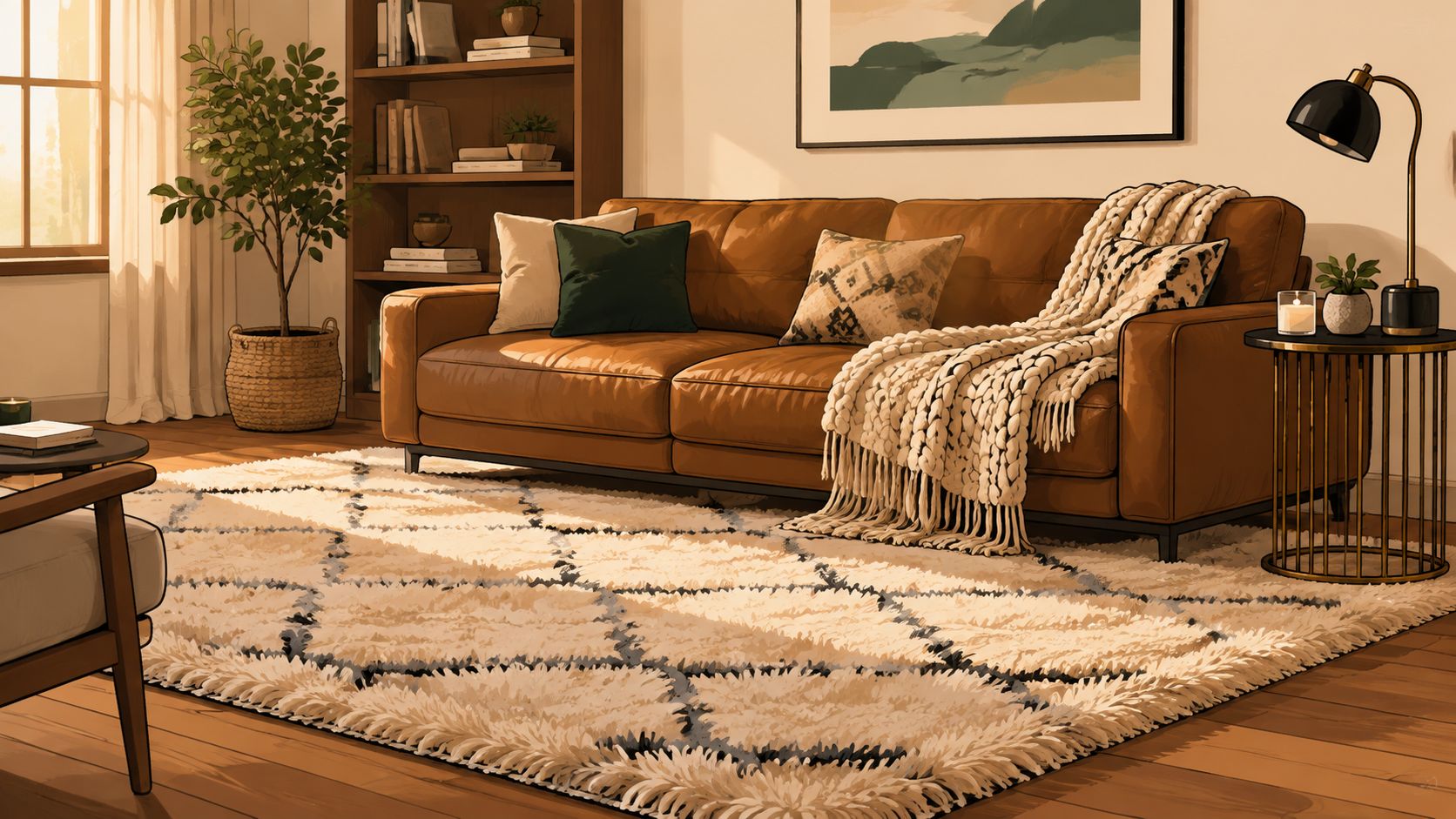
That mix works because each material behaves differently under light and touch. Wool absorbs, leather smooths, wood steadies. In a Canadian living room, where winter light can be thin and indirect, those differences help the room feel warmer and more dimensional instead of flat.
Four rooms, four different texture jobs
- Bedroom. Linen bedding keeps the bed visually light, then a chunky knit throw adds a more relaxed hand, while a velvet-upholstered headboard gives the room a richer focal point. The result feels soft without becoming flat, which matters in a room meant to slow the pace of the day.
- Dining room. A heritage-style solid wood table brings weight and memory to the centre of the room, woven seat chairs add texture at the edge of the setting, and a hammered metal pendant introduces a small reflective note overhead. The contrast helps the space feel composed without turning formal.
- Entryway. Natural stone handles high traffic with ease, and a textured runner softens the first step in from the door. Durability matters most here because the room has to look composed every day, not just on weekends.
- Living area. A layered rug story works best when the floor becomes the foundation. A custom shape or border can subtly frame a seating arrangement, which is why custom area rugs with borders can be especially effective in rooms that need definition without clutter. It gives the eye a boundary to read, the same way a frame helps a painting feel finished.
Smooth beside rough, matte beside sheen, heavy beside light. Those pairings shape how large a room feels and how settled it seems, because the eye reads contrast as order.
The same logic applies across the home. A handcrafted rug can set the tone for the whole main floor, while carefully chosen finishes help each room feel tuned to its use and its light. In that sense, texture is not a final decorative layer. It is part of the room's structure from the start.
Common Texture Mistakes That Undermine Your Design
The most common mistake is overmixing without a plan. A room can hold many textures, but if they all compete at the same volume, the eye has nowhere to rest. A better room usually has one dominant texture family and a few supporting contrasts that reinforce it.
Another error is relying only on visual texture. A wall covering may look interesting, but if every chair, rug, and drapery panel feels smooth, the room can still seem lifeless. The reverse happens too. Too many tactile surfaces without any sheen can make a room feel heavy and visually dense.
Five mistakes worth auditing
- No unifying palette. A room with leather, brass, woven fibre, and patterned fabric can work, but only if the colours belong together.
- Ignoring seasonal light. Winter can make a finish feel harsher or flatter than it does in summer.
- Choosing texture that fights the architecture. Highly decorative wallpaper can feel out of place beside strong trim or heritage millwork.
- Mismatched scale. A large-pattern rug and a small, busy upholstery print can cancel each other out.
- Treating texture as an afterthought. When it comes in last, it often reads as decoration instead of structure.
The post-minimalist shift becomes useful here. Many Canadian homes are moving away from blank, anonymous surfaces and toward rooms with more personality, but that doesn't mean every surface should shout. For resale, restraint usually serves better in permanent finishes. For a personal home meant to be enjoyed daily, richer layering can feel more rewarding, especially when the furniture is selected for longevity and the finishes are chosen with the room's architecture in mind.
Critelli's design studio works as a complete room concept rather than a series of separate purchases, and that's the right lens for texture decisions as well. A complimentary consultation at the King Street showroom gives homeowners a chance to compare finishes in a setting where scale, comfort, and light all matter at once.
Bringing Timeless Texture Into Your Home
The simplest formula is the most useful. Start with a grounding texture, often a rug. Add contrast through upholstery, window treatments, and a few carefully chosen surfaces. Let light reveal the materials rather than flatten them. Then step back and ask whether the room feels intimate, open, or balanced.
Texture has been studied for decades, and that long history matters because it confirms what good interiors already prove. The right surfaces change how a room feels before anyone sits down. They also help older homes, condos, and family rooms feel more intentional without adding visual clutter.
For families and collectors who want heirloom quality, Critelli's heirloom quality furniture approach, along with its century-old family-run legacy, offers a clear example of how texture can be treated as part of timeless craftsmanship rather than a passing trend. Its white-glove delivery service also matters in the Greater Niagara, Hamilton, and Toronto markets, because the final placement of furniture is part of the room's polish.
Experience the craftsmanship in person at our King Street Showroom, where the Rug Market and design studio can help turn a material idea into a complete room concept. Book your complimentary design consultation today, and let Critelli Furniture help shape a home that feels as good as it looks.
Visit Critelli Furniture to explore hand-knotted rugs, custom furniture, and design services that bring texture, comfort, and spatial balance into your home. If the room needs a stronger foundation, a more refined finish, or a clearer sense of warmth, the right selection is ready to be made in person.