
Slipcover for Leather Sofa: 2026 Guide


You bought the leather sofa because it felt right the moment you sat down. The hand, the scent, the way it grounded the room. Years later, it still does that, but now there’s a new question. How do you protect it from everyday living without making it look temporary, bulky, or apologetic?
That’s where a slipcover for leather sofa becomes far more interesting than one might initially think. In a well-designed home, a slipcover isn’t just a shield. It’s a layer of curation. It can soften a room, sharpen a palette, introduce texture, and preserve an heirloom-quality piece so it continues to earn its place.
The Timeless Allure of Leather and The Modern Dilemma
Leather has always carried a certain assurance. It ages with dignity, suits both traditional and contemporary rooms, and pairs beautifully with wood, stone, metal, and wool. In Southern Ontario homes, especially across St. Catharines, Niagara, Hamilton, and into the Toronto market, it remains a frequent choice for clients who want timeless craftsmanship and day-to-day durability.
That said, leather is still a surface that experiences everyday life. Pets climb onto it. Children sprawl across it. Winter dryness and summer humidity both leave their mark. A beautiful sofa can be both resilient and vulnerable at once.
Why protection matters more than many homeowners realise
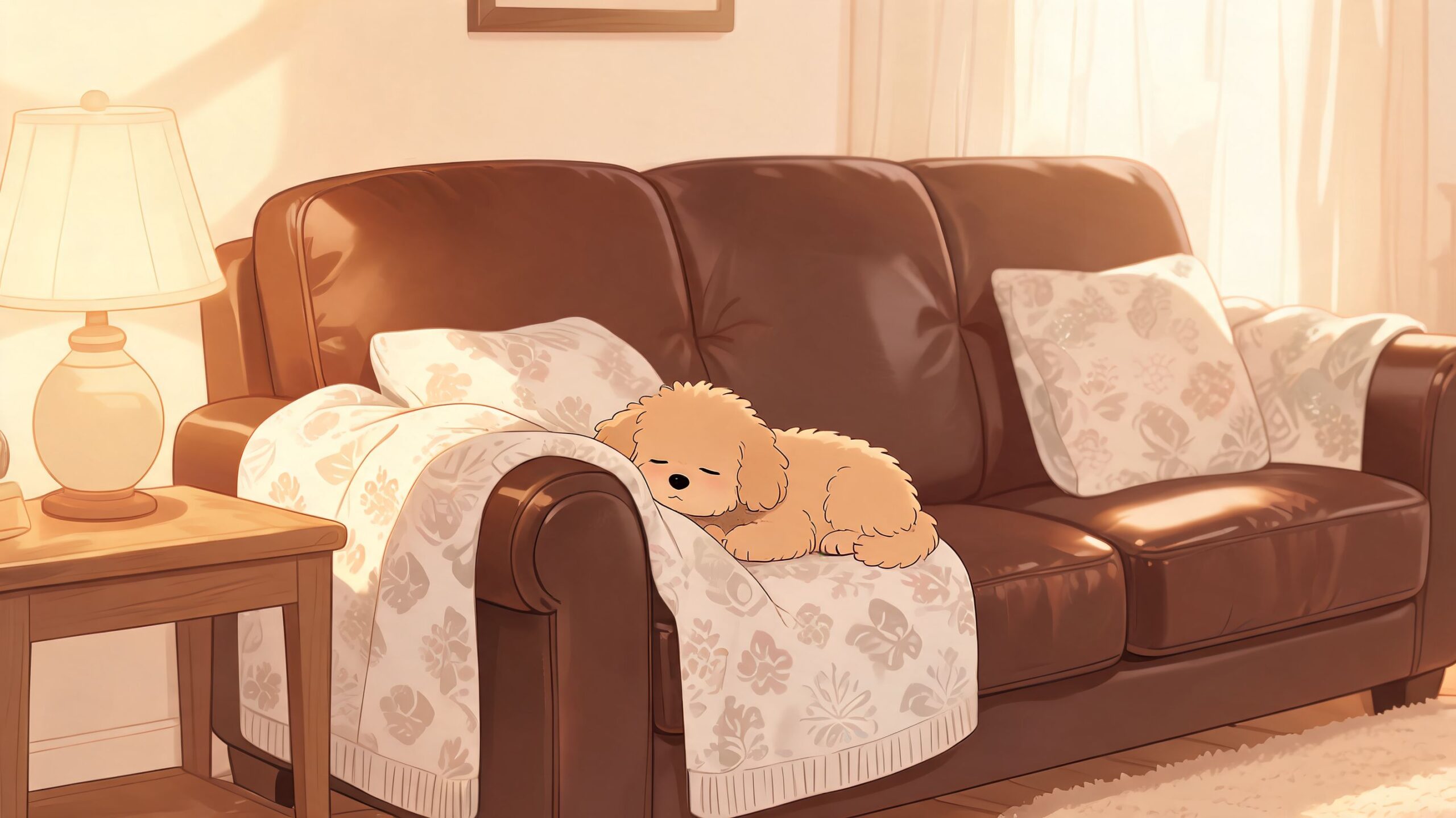
Leather sofas represent a major part of the premium upholstery conversation. In one industry-based discussion of leather protection, internal data cited for Southern Ontario noted that over 60% of clients who purchased custom-fitted slipcovers extended sofa longevity by an average of 5 to 7 years (best slipcovers for leather couches). That’s a meaningful distinction for anyone who sees furniture as a long-term investment rather than a short-cycle purchase.
For a heritage furniture house founded in 1914, that mindset matters. Pieces aren’t chosen for a season. They’re chosen to anchor family life, evolve with the room, and remain relevant through changing tastes. A slipcover supports that philosophy. It preserves what you love while giving you freedom to refresh the setting around it.
Leather deserves the same thoughtful stewardship you’d give a hand-knotted rug, a solid walnut dining table, or a tailored window treatment.
A slipcover also changes the emotional relationship people have with a leather piece. Once a sofa feels “too precious,” people stop relaxing around it. They hover with drinks. They worry about pet claws. They avoid light-coloured clothing after conditioning treatments. The room becomes cautious.
The design opportunity hidden inside the problem
A well-chosen cover removes that tension. It can warm up a cool, masculine leather silhouette. It can introduce softness into a room with many hard finishes. It can even shift a sofa from formal to casual, or from rustic to more urban, without replacing the underlying frame.
If you’re exploring broader ideas for a room refresh, this guide for refreshing your living space offers useful inspiration on how protective layers can also support a more cohesive interior direction.
Think of the slipcover not as a disguise, but as a seasonal or stylistic garment. The leather remains the substance. The cover becomes the edit.
Choosing Your Palette and Texture The Best Fabrics
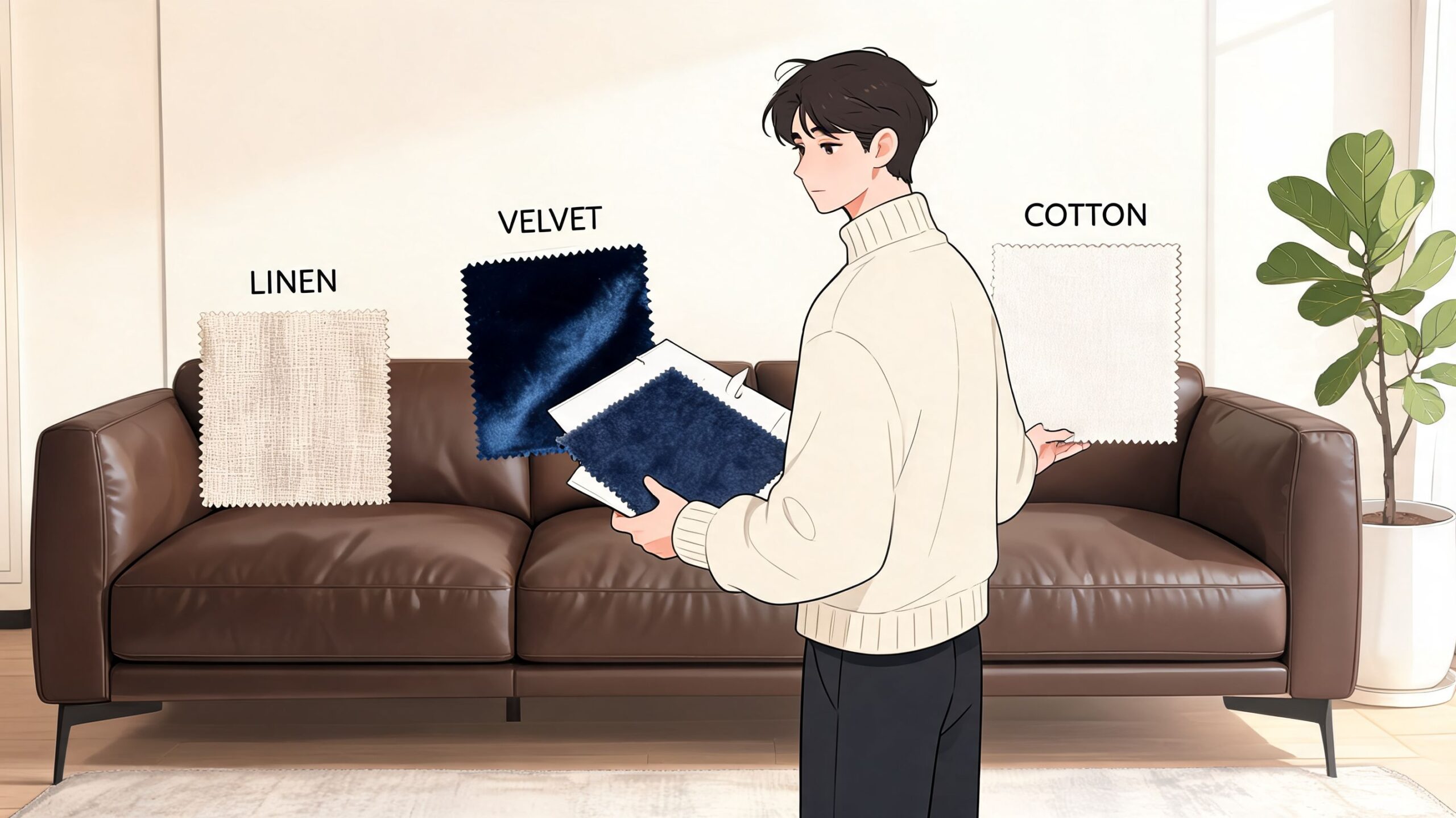
The fabric choice determines whether a slipcover looks considered or merely convenient. On leather, that decision matters even more because the base surface is smooth, slightly reflective, and often visually weighty. The wrong textile slides, wrinkles, or looks disconnected from the sofa’s architecture.
The right one does three things at once. It grips, it drapes, and it contributes to the room’s material story.
Which fabrics work best on leather
For homes in St. Catharines and similar humid summer conditions, one material stands out on technical grounds. Tightly woven polyester twill at 400gsm absorbs 50% less moisture than cotton duck, which helps prevent mildew and helps the cover hold its shape on a non-porous leather surface (durable and resistant slipcovers that protect your leather sofa).
That fact supports a broader design conclusion. A slipcover for leather sofa should never be chosen by colour alone. Texture and performance have to work together.
Here’s how I generally frame the options:
- Polyester twill works well in active family rooms. It has a crisp hand, holds line nicely, and doesn’t become limp in humid conditions.
- Micro-suede suits clients who want a more luxurious, tactile finish. It softens the visual edge of leather and often feels more intentional than a generic stretch cover.
- Canvas or heavy cotton blends can be beautiful in structured, formal settings, especially if the room has a relaxed architectural envelope and lower daily wear.
- Faux-leather protective covers make sense in highly practical environments where spill resistance matters more than softness or drape.
Matching fabric to the room, not just the sofa
A dark leather frame often benefits from contrast. If the room feels visually heavy, a stone, flax, mushroom, or warm ivory slipcover can open it up. If the space already has pale walls and bleached flooring, a tobacco-toned or mineral grey cover can create needed depth.
Many homeowners get stuck. They think in isolated swatches rather than complete room concept. The sofa doesn’t sit alone. It lives with drapery, flooring, art, millwork, and often a rug that subtly influences the whole palette.
Practical rule: If the leather sofa is your room’s strongest visual weight, choose a slipcover fabric that either balances that weight with texture or lightens it with colour. Don’t try to do both dramatically at once.
For anyone comparing performance and feel across upholstery categories, this overview of upholstery materials is a helpful starting point.
A few design-led combinations that work
| Room mood | Slipcover fabric direction | Why it works |
|---|---|---|
| Collected and traditional | Heavy twill or canvas in warm neutral tones | It respects the structure of classic leather silhouettes |
| Modern and softened | Micro-suede in muted taupe, olive, or charcoal | It adds warmth without looking fussy |
| Casual family space | Washable polyester twill | It supports frequent use and keeps its shape |
| Condo formal living room | Smooth tailored blend with clean seams | It feels polished and design-forward |
A slipcover should feel like it belongs to the original furnishing plan. If it looks like an afterthought, the room will too.
Ready-Made vs Bespoke A Question of Fit and Finish
Not every sofa needs the same solution. Some homeowners want immediate protection. Others want a refined finish that reads almost like reupholstery. The distinction matters, because leather exposes every shortcut. Loose fabric, poor corner definition, and excess fullness are far more obvious on a structured leather frame than on a soft upholstered sofa.
For that reason, the debate isn’t really about whether one option is good and the other is bad. It’s about standards.
Where ready-made covers do make sense
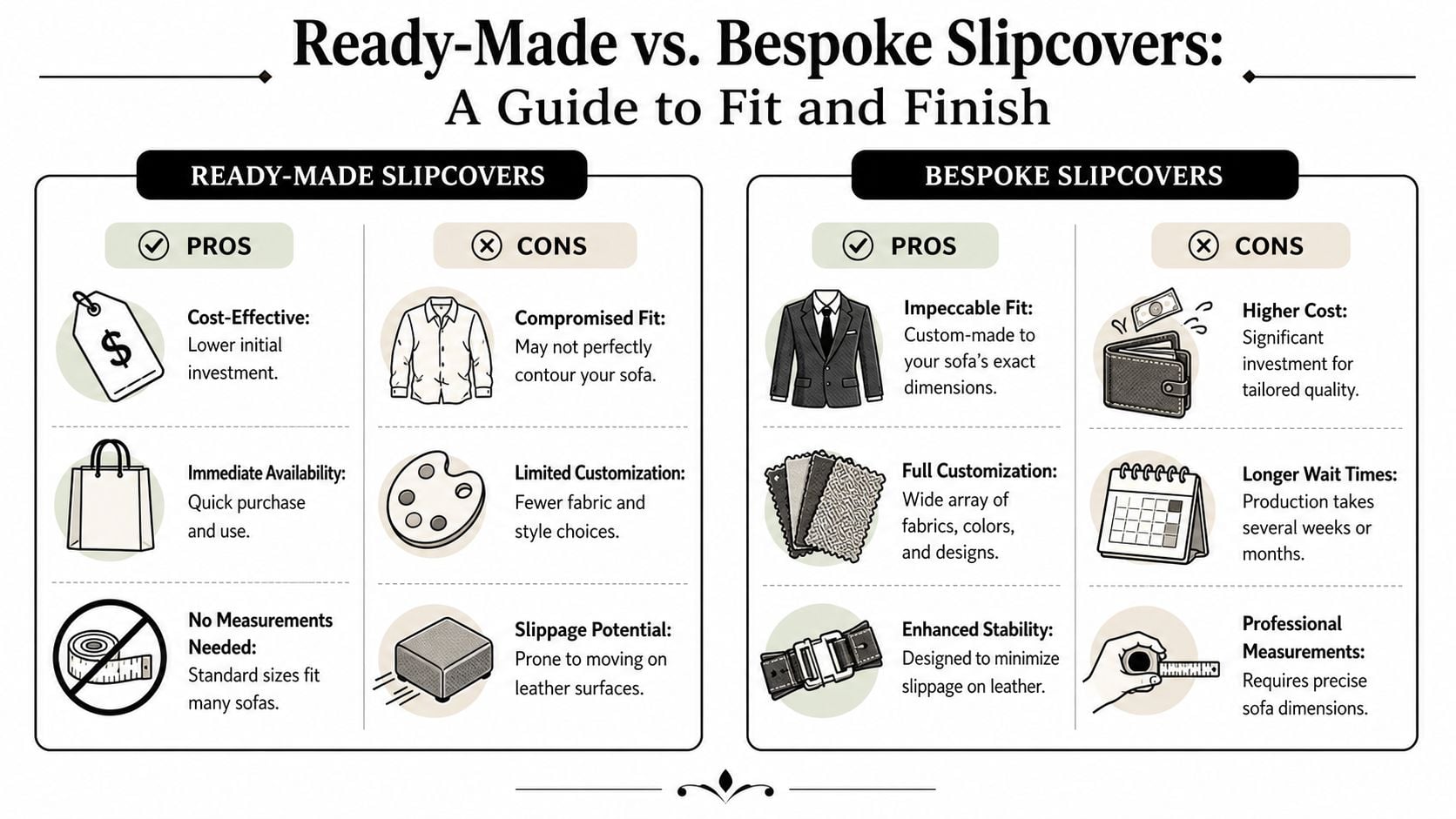
A ready-made slipcover can be useful if your goals are temporary. Perhaps you need interim protection during a renovation, want to manage pet access, or need a practical layer while deciding on a longer-term room plan.
The advantages are obvious:
- Fast access when you need immediate use
- Lower commitment if you’re still testing colours or textures
- Simple replacement if your needs are strictly practical
But on leather, ready-made options often reveal their limits quickly. They may pool at the arms, ride up on the seat, or distort the sofa’s silhouette. If your piece has sculpted arms, attached cushions, reclining components, or a distinct profile from makers such as Stickley or Stressless, a generic cover rarely honours the form.
Why bespoke changes the result
A bespoke slipcover treats the sofa as architecture. It accounts for pitch, arm depth, seat profile, back height, cushion break, and how the fabric should fall when the piece is being used. That difference is visible the moment you enter the room.
Bespoke also supports a more design-forward result because you can choose details deliberately:
- seam placement that flatters the frame
- skirted or unskirted treatment depending on the room
- piping or no piping
- washable lining or understructure where needed
- textile choices that relate to adjacent rugs, drapery, and accent chairs
For readers weighing custom seating options more broadly, this look at custom couches in Toronto gives a useful sense of how personalized furniture decisions shape the final room.
The finish tells the story
In heritage interiors, the most elegant rooms often rely on restraint. Nothing shouts for attention, but everything fits. That’s why bespoke slipcovers feel so much more convincing on quality leather pieces. They preserve the proportions, maintain dignity, and avoid the “covered up” look that makes a sofa appear diminished.
If your leather piece is part of a serious furnishing plan, bespoke usually aligns better with the standards that brought that sofa into your home in the first place.
The Art of the Impeccable Fit and Installation
Most complaints about a slipcover for leather sofa come down to one issue. Movement. People assume the fabric is wrong, when installation is usually the problem.
Leather has a low-friction surface, so covers need help staying where you put them. According to guidance on fitting covers for leather seating, a thin silicone-gripped underlay can increase grip by 300 to 500%, and proper tucking with foam sticks in crevices can virtually eliminate movement (best slipcovers for leather sofas).
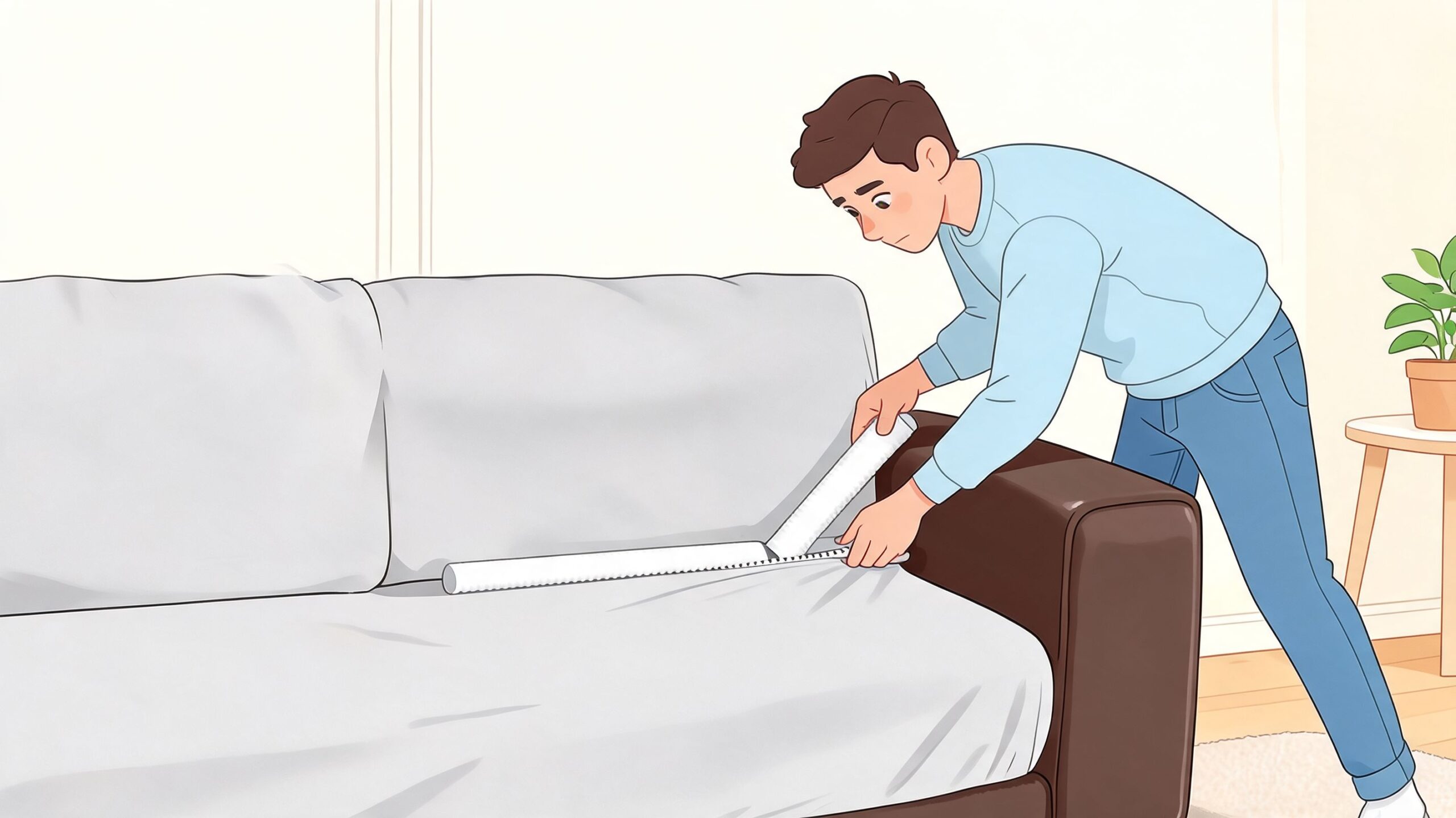
A reliable installation sequence
If you want the cover to look composed rather than improvised, follow a clean order:
Prepare the leather surface
Wipe it so dust and residue don’t interfere with grip. The surface should be clean and dry.Place a silicone-gripped underlay
Add it to the seat and back areas where most shifting happens.Centre the cover by its seams
Don’t start pulling randomly from one arm. Align the cover’s structure to the sofa’s structure.Use tuck-and-tension
Work fabric into the creases steadily so tension distributes evenly across the whole piece.Anchor with foam sticks
Insert them into cushion gaps and crevices to hold line and reduce migration.
Where people go wrong
Most poor results come from rushing. They pull the front taut, leave excess at the back, then wonder why the seat drifts after one evening. Or they choose a stretchy universal cover and expect it to behave like custom upholstery.
A better approach is to think like a workroom. Every panel needs alignment, every tuck needs purpose, and every visible fold should look intentional.
If you’ve ever wondered why a professional fitting looks calmer, it’s because the installer manages tension across the whole sofa rather than trying to “fix” one section at a time.
For readers interested in the craftsmanship side of custom fabrication, this ultimate guide to leather sewing offers helpful context on why working around leather and heavy materials demands precision.
And if the sofa is especially complex, such as a sectional, recliner, or power-motion piece, professional setup is often the wiser route. This overview of furniture assembly services near me is useful for understanding the kind of white-glove attention that often makes the difference between “good enough” and beautifully finished.
Styling Your Renewed Sofa Within Your Space
Once the fit is resolved, the slipcover becomes a design tool. The conversation then gets far more interesting than maintenance alone. A newly covered leather sofa can shift the atmosphere of the whole room, especially if the original leather felt too dark, too formal, or too visually dominant.
I’ve seen a deep espresso sofa become dramatically more welcoming by covering it in a dry-textured oat twill and rebalancing the room around that softer note. Suddenly the artwork breathed. The wood casegoods looked richer. The lighting felt warmer.
Build the room around the new surface
A slipcover changes one of the room’s largest planes, so surrounding elements should respond.
Try these moves:
- If the cover is neutral, let artwork and cushions carry the stronger colour notes.
- If the fabric has texture, keep nearby accent pieces simpler so the room doesn’t feel busy.
- If the sofa sits on dark flooring, use the slipcover to create contrast and then bridge the shift with pillows or a throw in mid-tones.
- If the room has many hard finishes, favour a fabric with a soft, matte hand to reduce glare and visual sharpness.
Designer’s Insight
Our designers suggest pairing a bold Hancock & Moore leather silhouette, once slipcovered in a quiet mineral or sand tone, with a neutral hand-knotted wool rug to balance the room’s energy and create a more complete room concept.
That last point matters. A rug isn’t an accessory after the room is done. It’s often the foundation. In many well-composed interiors, the rug sets the palette, the sofa establishes mass, and the lighting introduces mood. Change the sofa’s surface and you have an opportunity to retune the whole arrangement.
If you’re refining the room’s broader palette, this guide to the perfect colour palette is a valuable reference.
Don’t overlook the floor
A slipcovered sofa often looks best when it relates to something below it. Here, Art for your Floor becomes more than a lovely phrase. A hand-knotted rug can carry subtle tones from the cover, absorb contrast, and stop the seating area from feeling disconnected.
For example, a fitted ivory or mushroom slipcover can feel flat on its own. Place it over a rug with charcoal, camel, and faded blue, and the whole scene becomes layered and intentional. That’s the difference between adding a cover and curating a room.
The strongest interiors in Southern Ontario homes rarely rely on one hero piece. They rely on relationships between materials.
Long-Term Care for Lasting Beauty
A slipcover protects leather best when both layers receive proper care. The cover handles daily contact. The leather underneath still needs periodic attention so it remains supple, clean, and handsome over time.
Care for the cover and the sofa together
Keep the routine simple:
- Wash according to the fabric type and avoid harsh products that can stiffen fibres or alter colour.
- Remove the cover periodically so you can inspect the leather, clear dust from creases, and make sure no moisture has been trapped.
- Condition the leather as appropriate for its finish so the sofa beneath the cover doesn’t become neglected because it’s out of sight.
For a useful companion read on broader upholstery care best practices, this guide offers practical maintenance ideas that complement a thoughtful furnishing routine.
Respect the investment
Leather responds well to steady, gentle care. So do quality textiles. Neither benefits from extremes. Don’t let spills sit on the cover, and don’t assume the leather below is maintenance-free just because it’s protected.
If you’d like more detailed guidance on preserving the material itself, this resource on how to care for leather furniture is worth keeping close at hand.
The same philosophy sits behind white-glove delivery in better furniture houses. Care shouldn’t begin after the piece arrives. It should shape every step, from selection to placement to long-term stewardship.
Frequently Asked Questions
Can a slipcover damage a leather sofa
A properly chosen and correctly installed cover shouldn’t damage the sofa. Problems usually come from trapped debris, excess moisture, or a poor fit that creates constant rubbing in the wrong places. Keep both the cover and the leather clean, and check underneath from time to time.
Is a slipcover a good idea for recliners or shaped sofas
It can be, but fit becomes much more important. Recliners, tight backs, rolled arms, and sculptural frames often need a more custom-fit approach. The more distinctive the sofa’s profile, the less convincing a generic cover tends to look.
What colour slipcover is safest if I’m unsure
Mid-tone neutrals are usually the most flexible. Think stone, flax, taupe, or soft grey rather than bright white or very dark graphite. They work with a wider range of rugs, woods, and seasonal accessories.
Should I choose a fitted look or a relaxed one
That depends on the room. In a formal or architectural space, a cleaner and more structured line usually feels right. In a casual, layered room, a softer drape can feel elegant. The key is consistency. The slipcover should match the room’s character, not fight it.
How often should I remove the slipcover
There isn’t one universal schedule. It depends on pets, humidity, daily use, and fabric type. What matters is establishing a routine so the leather underneath remains part of your care plan.
A thoughtfully chosen slipcover for leather sofa can protect an heirloom-quality investment and give your room a refined new rhythm at the same time. If you’d like guidance on fit, fabric, colour, or how the piece can work within a complete room concept, Critelli Furniture offers a design-led perspective shaped by a family legacy that began in 1914. Experience the craftsmanship in person at our King Street Showroom. Or book your complimentary design consultation today to create a bespoke solution for your home.