
Nordic Knots Rugs: A Curator’s Guide to Heirloom Style

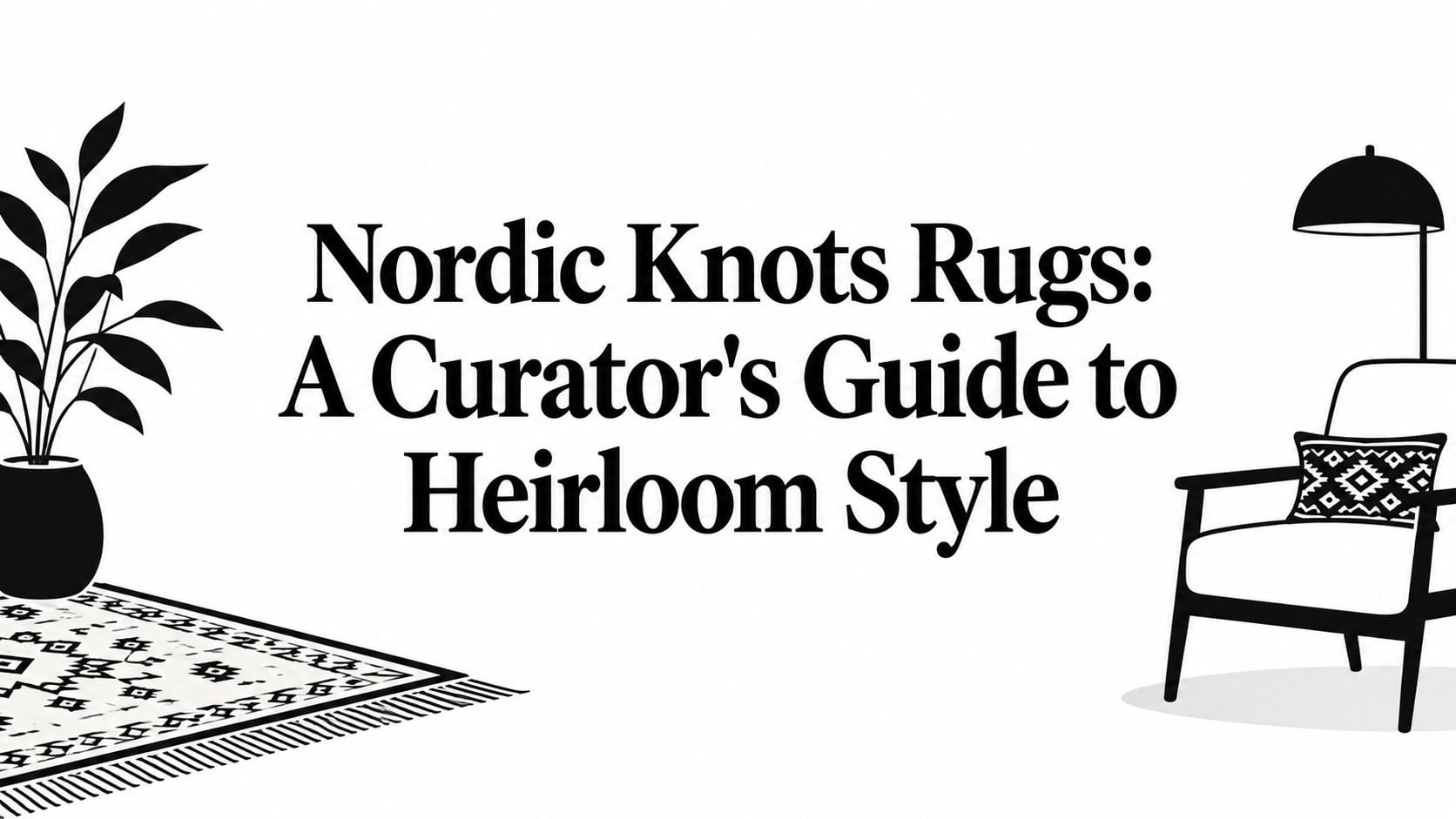
A homeowner may begin with a simple question: which rug will make the living room feel finished? The sofa is in place, the lighting is considered, and the art has been chosen, yet the room still feels as though its pieces haven't quite found one another. Often, the missing decision isn't another accessory. It's the foundation underfoot.
Nordic Knots rugs appeal to homeowners who want calm geometry, tactile materials and a design that can live comfortably with both contemporary and collected furnishings. The right choice can do more than soften a floor. It can bring the room into focus.
The Foundation Beneath Every Curated Room
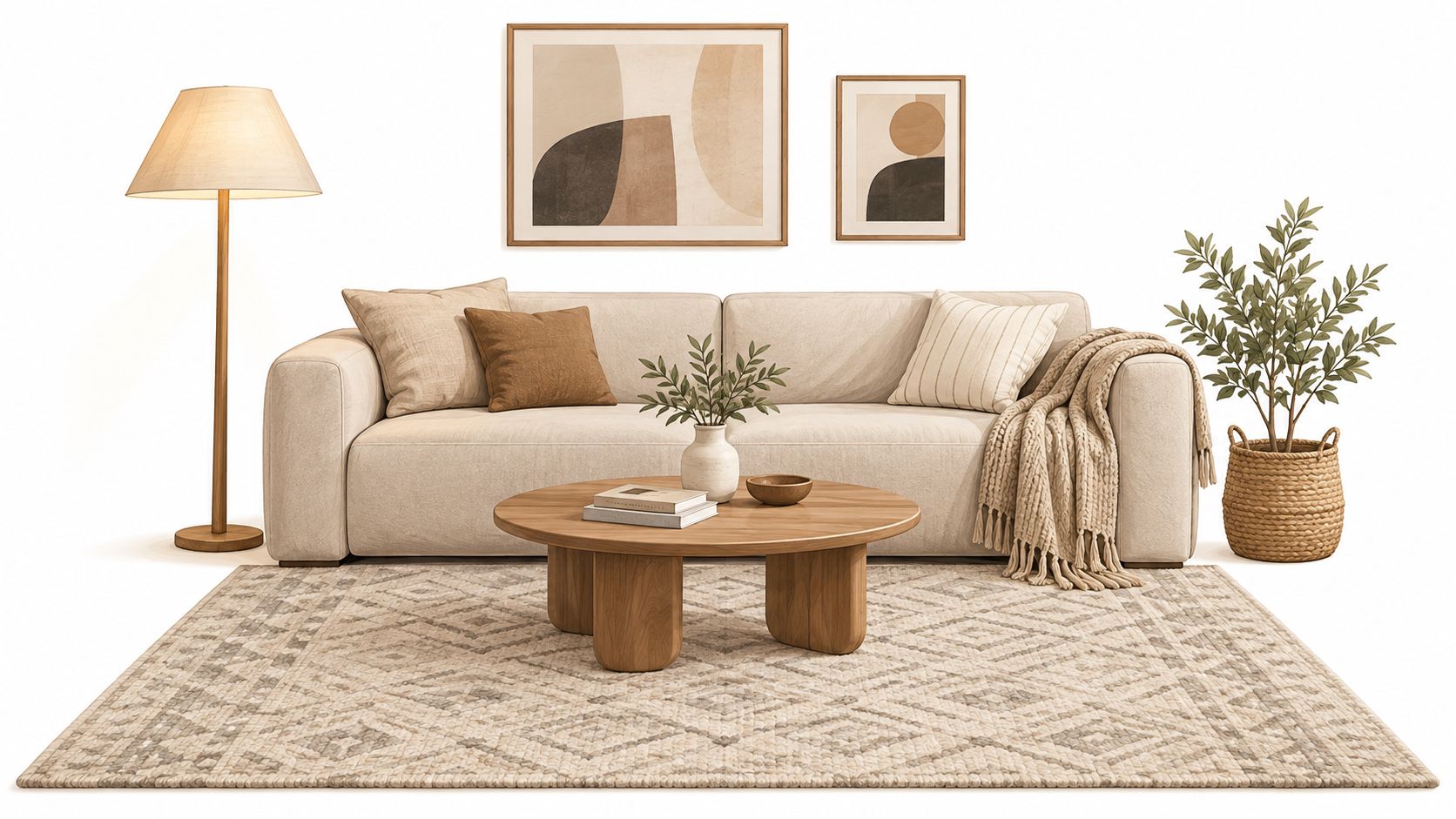
In a considered living room, a Nordic Knots rug doesn't compete with the furniture. Its colour and texture gather the seating, coffee table and lighting into a single arrangement. A restrained pattern can give sculptural furniture room to breathe, while a more pronounced weave adds depth without demanding attention from the art on the walls.
That's why a rug is better understood as the room's foundation, not its finishing touch. Its scale affects how the seating relates to one another; its colour influences the palette; its surface changes how the room feels underfoot. Choosing the rug early can make later decisions more coherent, from upholstery to wood finishes and accent lighting.
Start with the room, not the sample
A small rug swatch can reveal colour and hand, but it can't show how the finished piece will anchor a room. Before settling on a design, consider the seating layout, the floor's natural tone, the direction of daylight and how the room is used. Homeowners weighing rugs against hardwood can also consult this guide to area rugs that protect wood floors, which helps clarify the practical relationship between a rug, a pad and a wood surface.
The Critelli design philosophy puts furnishings into a complete room concept rather than treating each purchase as an isolated decision. A rug search can become a useful starting point for a broader conversation about proportion, material and how the room needs to work.
For a more precise layout, review these rug rules for planning a room. The most successful Nordic Knots rugs don't merely match the sofa. They establish a visual language that lets each piece in the room belong.
What Sets Nordic Knots Apart in Construction
“Nordic Knots” describes a design sensibility, not one universal method of construction. Scandinavian-influenced rugs often favour a restrained palette, clear geometry and an honest expression of fibre and weave. Those qualities can appear in a hand-knotted rug, a hand-tufted build, a flat-weave or a machine-made design, and the construction affects how each one wears and feels.
A hand-knotted rug is made by tying individual knots around the foundation threads. This labour-intensive method can create fine detail and a distinctive surface, while the rug's stability depends on the strength and execution of its entire foundation. A hand-tufted rug is formed by punching yarn through a backing with a tufting tool; it can offer texture and pattern, but its construction differs from a knotted foundation. A flat-weave has no raised pile, giving it a flatter profile and a more direct expression of the yarn and pattern. Machine-made rugs can reproduce a similar visual language, but their method and material structure should be assessed on their own merits.
Read the construction, not the label
Knot density is a construction metric, not a standalone quality score. Available Canadian rug guidance describes a broad range from approximately 25 to more than 1,000 knots per square inch. Around 40 KPSI can be plausible for a relatively open, 100% wool hand-knotted rug, while approximately 120–400 KPSI is more typical of finer handmade construction, according to Canadian guidance on hand-knotted rug construction.
Fine detail can benefit from higher density, but Nordic designs often rely on texture, proportion and a controlled palette rather than intricate motifs. Knot count alone won't tell a buyer how the rug will handle traffic. Fibre quality, the strength of the warp and weft, pile height, compaction and finishing matter too.
| Construction | Process | Typical Feel | Best Room Use |
|---|---|---|---|
| Hand-knotted | Individual knots tied into the foundation | Textured, with character shaped by fibre and knotting | Living rooms and other spaces where the rug is a lasting focal point |
| Hand-tufted | Yarn punched through a backing | Often cushioned, with a more uniform surface | Rooms where softness and pattern are priorities |
| Flat-weave | Yarns interlaced without raised pile | Low-profile and direct underfoot | Dining areas, circulation routes and layered schemes |
For a closer look at hand-knotted rugs versus hand-tufted rugs, compare the back, the edge and the way the rug responds when handled. In the showroom, ask how the construction supports the design, not just what the rug is called.
Comparing Nordic Knots to Persian Turkish and Moroccan Styles
The difference between rug traditions is best understood as a difference in design language, not a contest over which style is superior. Nordic-inspired pieces usually favour negative space, quiet geometry and visible material character. They can settle a room without dictating every other choice.
Persian rugs often build their identity through intricate motifs and dense detail in wool or silk. Turkish rugs are frequently associated with strong geometric compositions and medallions. Moroccan styles may use tribal patterning and a higher-pile, more tactile surface. Those broad distinctions help a buyer identify the feeling a rug brings to a room, but they shouldn't replace a close examination of the specific piece.
Choose the vocabulary that fits the home
A Nordic Knots rug can suit rooms where the furniture already has strong lines, where art carries much of the colour or where the homeowner wants texture without visual excess. A Persian design may be the better anchor when the room calls for ornament and layered pattern. Turkish geometry can bring clarity and definition; a Moroccan rug can add softness and a more relaxed, tactile mood.
Design principle: Choose the rug for the room's balance, not for a label. The best choice is the one that makes the furniture and architecture feel more resolved.
Regional styles can sit together when colour and scale are considered. A restrained Nordic rug beneath contemporary seating might coexist with a patterned accent elsewhere, provided the palette gives the eye a point of connection. Conversely, pairing several high-contrast motifs in one sightline can make a room feel unsettled.
A closer look at hand-knotted Turkish rugs can help clarify how a different tradition uses pattern and structure. The decisive question is practical: should the rug recede gently, or should it carry the room's strongest visual statement?
Construction Details That Define Heirloom Quality
A rug earns heirloom status through the parts buyers rarely photograph. Fibre, foundation, pile, edges and finishing have to work as one system, or a calm Scandinavian surface will tire long before the room around it does. I would rather see a restrained Nordic Knots rug built with care than a louder piece whose beauty depends on first impressions.
Wool deserves its reputation, but the label alone is not a construction standard. Ask how the yarn feels in the hand, how tightly it is spun, whether the pile is dense enough to recover after pressure and how the surface behaves when daylight moves across it. A higher, softer pile can be right for a quiet sitting room. In a dining room or family space, I usually favour a lower, firmer profile that lets chairs move without fighting the rug.
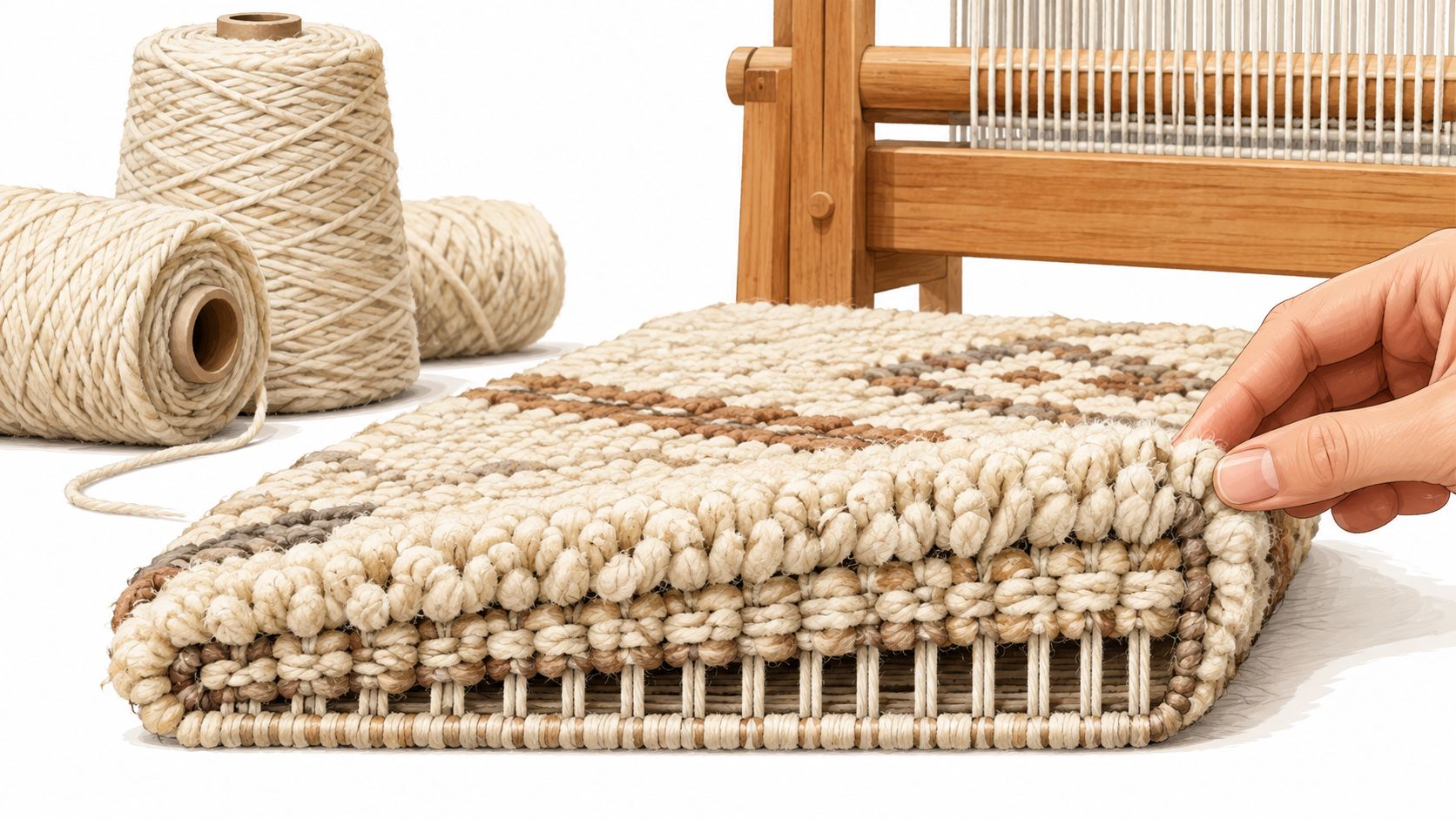
Inspect the rug from both sides
Turn the corner back and look underneath. The foundation should feel stable, the surface should lie evenly and the edges should read as deliberate work rather than rushed trimming. Sound warp and weft threads help a rug hold its geometry; weak finishing is where handsome rugs begin to look tired early. If the back looks confused, the front will eventually confess it.
Use this showroom checklist:
- Foundation: Press the corner and centre; the rug should feel stable and sit flat.
- Pile and surface: Match height and density to traffic, chair movement and the mood of the room.
- Edges: Look for clean, secure finishing with no loose ends waiting to become fray.
- Material: Confirm fibre composition and ask how colour and texture are expected to change with use.
- Condition: Note irregularities before purchase and get clarity on how they will be handled.
Designer's Insight: A hand-knotted rug pairs naturally with considered joinery, mission-style oak or bench-made leather upholstery. The point is shared discipline: materials and construction that reward close attention.
The strongest buying question is simple: where does this rug's quality live? If the answer is only “in the look,” keep walking. If it lives in the fibre, the foundation and the finish, you are looking at the kind of piece that can anchor a curated room for decades.
Why Canadian Homes Respond to Nordic Design
Nordic design feels at home in Canadian interiors because it can bring warmth and definition without overwhelming architecture that may already carry a strong point of view. A calm rug can work beneath contemporary furniture, soften a heritage home's harder surfaces or connect old and new pieces through texture and colour. For households in Southern Ontario, that flexibility matters across settings from Niagara to the Greater Toronto Area.
The interest in natural materials also gives wool rugs a clear place in the conversation. Wool represented an estimated 22.0% of Canada's decorative-rug market in 2025, while the Canadian market is projected to grow at a 4.9% compound annual rate from 2026 through 2035, according to this Canadian decorative-rug market analysis. These figures describe the broader market, not Nordic Knots sales or a specific construction category.
Material honesty, considered design
For a homeowner, the appeal of wool isn't just a label. It's the visible fibre, the surface's response to light and the way a rug brings tactile interest to a room. Yet responsible purchasing calls for questions about the full product, including backing, dyes, treatments, origin and care requirements. A material can be desirable without making every broader sustainability or indoor-air claim true.
A Nordic Knots rug can become the tactile centrepiece of a complete room concept. Its restraint makes room for furniture with a different design heritage, whether the rest of the scheme leans contemporary or traditional. The aim isn't to create a showroom-perfect room that feels untouched. It's to create a room whose materials, proportions and patterns make sense together.
That's why a considered rug choice can serve as more than seasonal décor. It gives the room a lasting centre of gravity, while the other furnishings can evolve around it.
Treating a Rug as an Investment Not an Accessory
A rug deserves the same deliberate attention as a major piece of furniture. It occupies a large visual plane, influences the room's palette and supports the way people use the space. When a homeowner chooses well, the rug can remain relevant through changes to seating, lighting and accessories.
The Critelli Rug Market describes rugs as “art for your floor.” The phrase captures an important distinction: a rug can be both useful and expressive. In a well-composed room, it's not a decorative extra added at the end. It's a foundational work that gives furniture a setting and the room a point of view.
Look beyond the first arrangement
A design-forward rug should work with the furniture the homeowner owns now and leave room for thoughtful changes later. Neutrality isn't the only route to longevity. A distinctive pattern can remain enduring when its colours suit the architecture and the scale feels right. What matters is that the rug belongs to the home rather than a passing trend.
Provenance and construction deserve the same scrutiny as appearance. Canada's area-rug supply is strongly import-dependent, with more than 95% of finished rug sets sourced from manufacturing hubs including India, Turkey and China, according to this Canadian area-rug market analysis. That context makes it sensible to ask where a rug was made, how it was constructed and what information is available about its materials.
The purchase also includes what happens after the decision. A white-glove delivery experience can help carry a rug from the showroom into the home with care and place it where it best serves the room. For homeowners across Greater Niagara, Hamilton and Toronto, that personal attention can make the transition from a considered selection to a finished interior feel effortless.
A rug's value isn't captured by its appearance on delivery day alone. It lies in how well it continues to support the home as tastes and furnishings evolve.
Caring for Wool Rugs Through a Canadian Winter
A wool rug that survives its first Southern Ontario winter is a rug that was placed correctly in November, not rescued in March. Road salt, melting slush and gritty sand enter through every doorway, while forced-air heating dries interiors for months. Add pets, children and a busy front hall, and the care routine matters as much as the fibre itself.
Set the rug up for the room
Entryway: Keep the showpiece rug well inside the entrance, away from the zone where slush, salt and abrasive sand arrive. A washable runner or mat takes the heaviest contamination so the wool never has to.
Living and family rooms: Vacuum regularly, concentrating on walk paths where grit settles into the pile. A well-fitted rug pad prevents slipping and stops the rug from shifting against the floor, the repeated friction that leads to edge curl and premature wear.
Dining rooms: Clear crumbs promptly and blot spills. If chairs move across the rug daily, choose a construction and pile that tolerates it rather than fighting it.
Sunny or damp areas: Rotate the rug periodically so light and foot traffic don't stay concentrated in one place. Keep it clear of persistent dampness, intense direct sun and wet planters.
Conservation guidance for wool carpets recommends vacuuming with low suction and no rotating power head, following the direction of the pile, and blotting spills rather than rubbing them. Rubbing drives a spill deeper and disturbs the surface. For deep cleaning, use a specialist experienced with hand-knotted wool. For storage, roll the rug around a sufficiently wide tube instead of folding it.
Practical rule: Treat seasonal care as part of the rug's placement, not a rescue plan after damage. A washable entry mat, a well-fitted pad and a gentle vacuuming routine make everyday ownership straightforward.
Households balancing daily use against design will find useful direction in this guide to choosing a rug for a high-traffic area. Care will not make any rug indestructible. It will, however, give honest workmanship the decades it was built for.
Choosing the Right Nordic Knots Rug for Your Home
A confident choice begins with the room's needs, not with a colour swatch. Decide what the rug must do: define a seating group, soften a bedroom, add texture beneath a dining table or introduce a quiet pattern to an open-plan space. Then judge the candidate against the furniture, floor and daily routine it will share.
Use a clear buying framework
- Scale: Map the rug's footprint against the furniture. A rug that relates properly to the seating makes the arrangement feel deliberate rather than scattered.
- Colour: Read the room's existing colours in daylight and at night. The right tone should connect major furnishings, not merely repeat a cushion.
- Traffic: Match pile and construction to the room's use. A busy passage and a quieter sitting room don't have the same requirements.
- Fibre and build: Verify the composition, construction method, backing and edge finishing. Ask what the material needs to stay in good condition.
- Provenance: Ask where the rug was made and what details are available about its materials and workmanship.
Colour deserves particular care because it links the rug to everything around it. This guide to choosing rug colour offers a useful starting point for aligning the rug with the room's existing palette.
Designer's Insight: Bring room measurements and photographs into the showroom. A design professional can help test the rug's scale against the furniture, then consider whether a bespoke palette or different construction would better support the room's needs.
A curated selection should invite close inspection, not a rushed decision. Look at the rug in person, compare its surface and construction, and picture it alongside the furnishings that will remain. For homeowners seeking Luxury furniture Niagara, Interior design services St. Catharines, Custom furniture Southern Ontario or Hand-knotted rugs Ontario, the most valuable next step is a conversation grounded in the specific room.
A Nordic Knots rug becomes part of a considered, design-forward interior when expertise guides the choice. The right foundation isn't just attractive. It feels at home in the room and continues to make sense as the household lives with it.
Visit the Rug Market to find your room's foundation and experience the craftsmanship in person at the King Street Showroom. Critelli Furniture offers a curated selection, complimentary design consultations and white-glove delivery for homeowners shaping a complete room concept. Visit Critelli Furniture to begin a thoughtful conversation about the rug that belongs in your home.