
Modern Mid-Century Sectional Design Guide


A modern mid-century sectional does much more than provide a place to sit. It acts as the architectural anchor of the room, bringing the space together with a low profile, clean geometry, and warm wood details that keep the atmosphere open and inviting.
Defining the Modern Mid-Century Sectional Aesthetic
The best examples balance heritage design with the comfort modern households expect. These pieces do not sit heavily in a room; they appear to float, creating visual lightness while remaining substantial enough for everyday gatherings. Tapered legs lift the frame from the floor, while generous cushions make it easy to settle in without sacrificing a tailored, design-forward appearance.
Here is what to look for in the silhouette:
- Low, horizontal proportions draw the eye outward, making ceilings feel taller and rooms feel less confined.
- Clean, geometric lines create order without making the space feel cold or overly formal.
- Exposed wood accents bring warmth and reveal the quality of the construction.
- Structured cushions support everyday lounging while retaining their shape over time.
- Modular configurations allow the sectional to adapt to the room rather than forcing the room to adapt to it.
This distinction matters especially in higher-end homes, where a sectional should feel generous without taking over. A reproduction may approximate the shape, but often misses the subtle relationships between seat height, arm width, wood tone, and upholstery—the details that distinguish attractive furniture from genuine timeless craftsmanship. A well-considered piece should hold up from every angle, including the back, which is particularly important when it floats within an open-concept layout.
Designer’s Insight: Think of the sectional as the room’s long, steady sentence. Its proportions establish the rhythm, while rugs, tables, lighting, and artwork provide the punctuation.
The style has endured because it suits the way families live. It accommodates conversation, reading, movie nights, and entertaining without appearing cluttered or losing the clarity that makes a room feel intentional. Rich navy velvet can bring jewel-like depth, while a graphic rug and pale accent chairs keep the composition balanced. You can see a thoughtful example of this layering approach in modern art for football fans.
Critelli Furniture has been helping families furnish their homes with care since 1914. Its family-run perspective informs a curated selection shaped by heritage, heirloom quality, and lasting craftsmanship. To see how sectional seating can begin a complete room concept, explore the modern mid-century furniture collection in Canada.
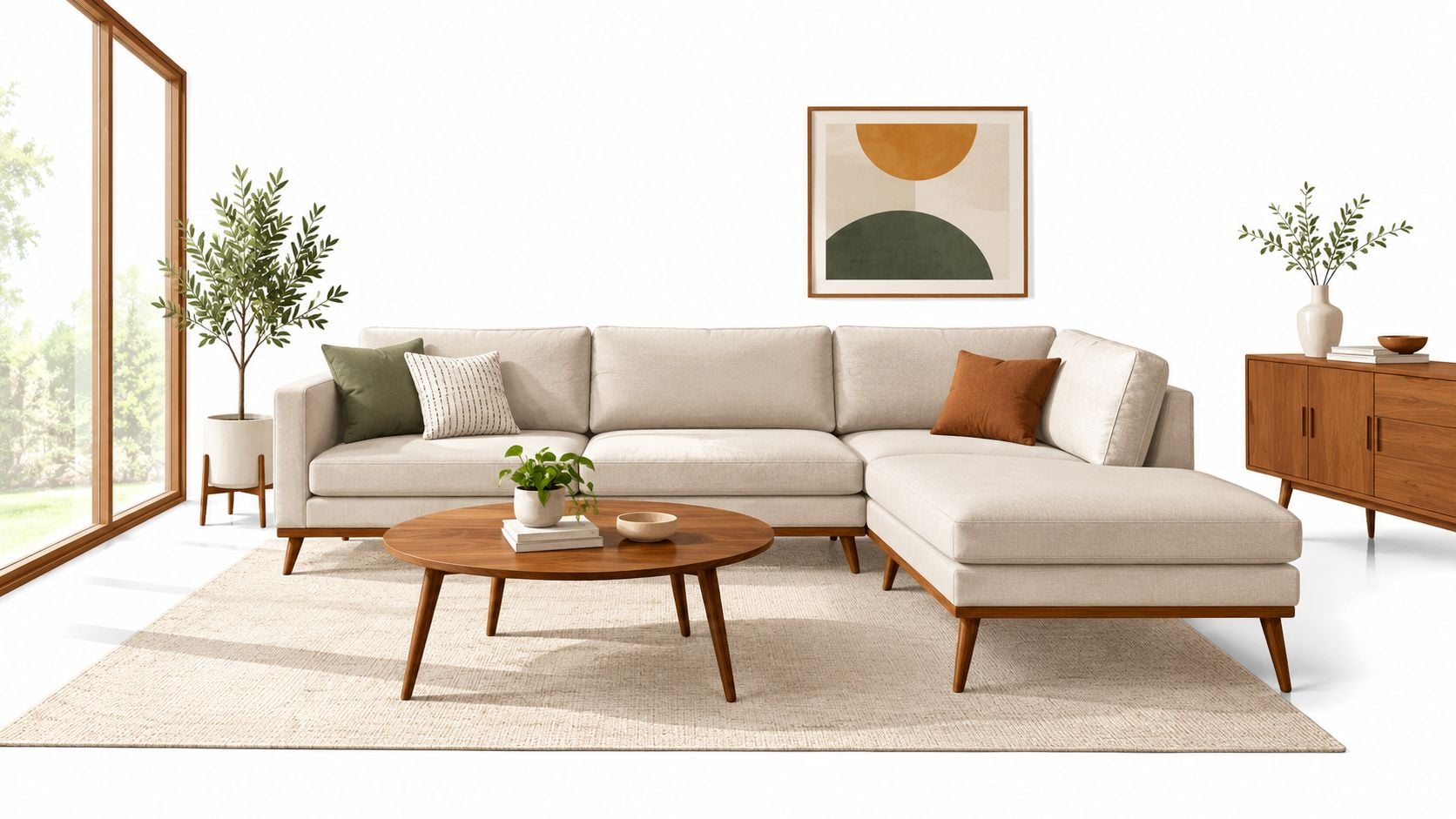
At the Design Studio, the focus is on creating a curated, heirloom-quality collection rather than making a one-off purchase. Consider the sectional as part of a complete room concept, supported by artisanal lighting, hand-knotted rugs, and complementary case goods that share the same design language. At Critelli’s King Street Showroom, you can experience details that photographs cannot convey, from cushion firmness to the character of the wood grain.
Experience the craftsmanship in person at our King Street Showroom, where homeowners from Greater Niagara, Hamilton, and Toronto are welcomed. Book your complimentary design consultation today and begin shaping a room that feels collected, comfortable, and built to last.
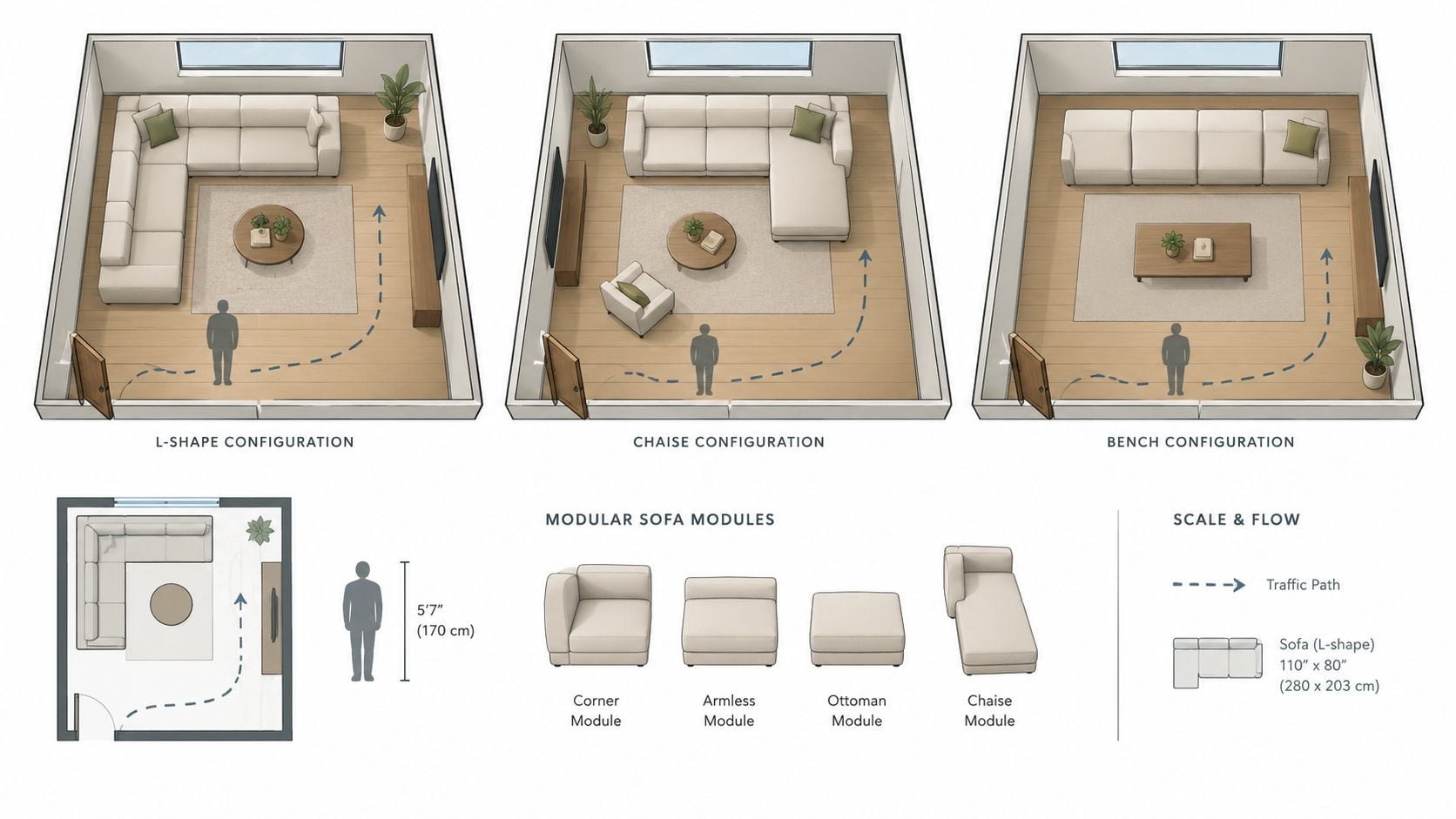
Choosing a modern mid-century sectional starts with proportion, not upholstery. Think of the right piece as a well-placed architectural beam: it should give the seating area presence while preserving clear paths between windows, doorways, and adjoining spaces.
In a compact condominium, measure the full wall and protect a comfortable walkway around the sectional. In a larger Greater Niagara or Toronto home, generous dimensions can anchor an open plan, but scale still matters. A sectional that is too deep may interrupt circulation, while one that is too small can appear lost.
Match the Layout to Daily Life
Think beyond the room’s measurements. Consider how your household moves through the space—where people enter, gather, read, host, and unwind—then select a shape that supports those patterns.
- L-shaped layouts define a conversation zone and work well in open-plan rooms.
- Chaise configurations favour relaxed lounging without requiring a separate ottoman.
- Bench-style arrangements preserve a lighter visual line in narrower spaces.
- Modular formats allow bespoke changes as a floor plan, family, or use evolves.
Sectional Configuration Guide
| Configuration Type | Ideal Room Size | Primary Function | Design Impact |
|---|---|---|---|
| L-shape | Open living and dining areas | Establishes a clear room zone | Creates a defined conversation area without walls |
| Chaise | Compact rooms and casual lounging | Adds comfort without extra furniture | Extends the seating area for stretching out |
| Bench layout | Narrow or circulation-heavy rooms | Maintains visual openness | Keeps sightlines clear and the room feeling spacious |
Before ordering, mark the proposed footprint with painter’s tape on the floor. This simple exercise reveals whether a coffee table leaves enough knee room, doors open freely, and the sectional competes with a fireplace or view. It is a practical form of professional space planning, especially useful for busy homeowners.
Designer’s Insight: Let the room’s architecture lead. A sectional should frame a window, face a focal point, or divide an open plan—never block the features that give the space its character.
Build a Complete Room Concept
At Critelli’s Design Studio, furniture is considered as part of a complete room concept, not an isolated purchase. Wood tones, upholstery, lighting, tables, and rugs should share a measured rhythm while retaining enough contrast to feel collected.
The family-run business has served Southern Ontario since 1914, offering a curated selection for homes across St. Catharines, Hamilton, and Toronto. Its modular approach supports bespoke planning while preserving the clean lines central to mid-century design.
For more configuration guidance, explore this modular sectional sofa guide for Canadian homes. Then bring your measurements to the King Street Showroom, where the team can help assess scale, comfort, and architectural fit. Experience the craftsmanship in person at our King Street Showroom, and book your complimentary design consultation today.
A well-made modern mid-century sectional should feel inviting on day one and continue performing years later. Its real value sits beneath the upholstery, in the frame, suspension, cushioning, and finish that quietly handle daily life while preserving its clean, sculptural character.
Start With the Frame
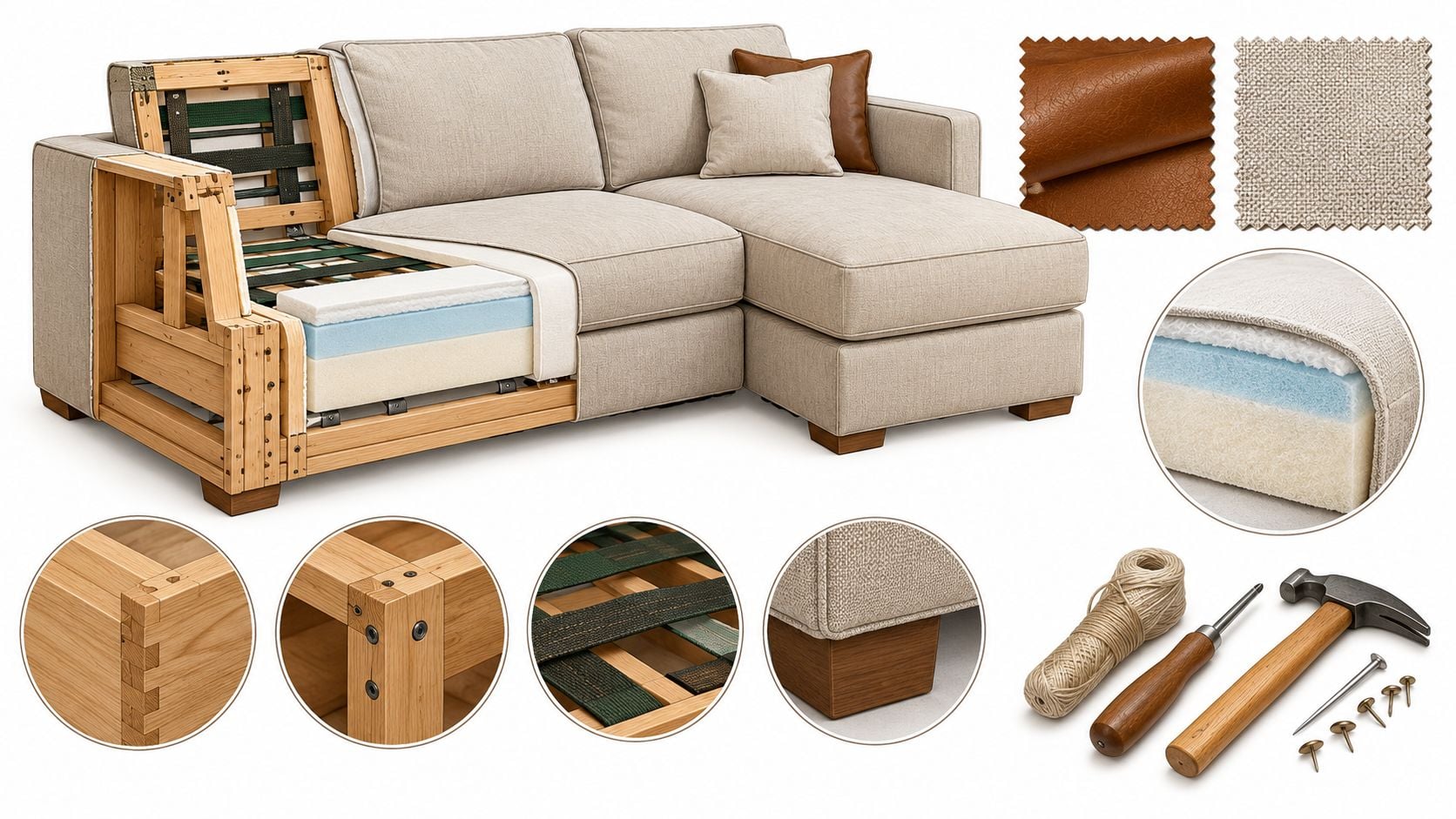
Everything begins here. Solid hardwood construction, reinforced joints, and properly finished exposed legs provide the staying power expected from heirloom-quality furniture. Lift one corner and observe how the frame responds. Does it remain rigid, or does it wobble? Check the underside and back panel whenever the showroom permits. Racking movement, uneven gaps, or a hollow sound when tapping the frame may indicate shortcuts hidden beneath attractive fabric.
Cushion construction carries equal importance. High-resilience foam should spring back reliably rather than flatten after several months of regular use. Layered cushion systems can provide a softer initial feel without compromising long-term recovery. A sectional in a busy household with children and pets typically needs firmer seat support than one reserved for occasional entertaining.
Designer’s Insight: Match the cushion feel to the way you live. A deeper, softer seat suits evening lounging, while a more supportive profile keeps conversation comfortable and makes getting up easier.
Upholstery is what your household touches every day, so weigh appearance against maintenance. Top-grain leather develops character over time, while performance fabrics provide colour, softness, and practical stain resistance for homes with children or pets.
- Leather benefits from gentle dusting and occasional conditioning, allowing its natural grain and patina to develop.
- Performance textiles suit busy rooms where spills and frequent cleaning are part of the routine.
- Textured weaves disguise everyday wear while adding depth to a restrained silhouette.
- Neutral tones provide flexibility as rugs, artwork, and accent chairs evolve.
For a deeper look at upholstery options, see this guide to the best fabrics for sofas.
Tailor Materials to Your Home
Custom options allow you to select upholstery, wood tone, cushion firmness, and finishing details that suit both the room and your routines. A light-coloured fabric may lift a compact St. Catharines condominium, while warm leather can ground a larger gathering space in Southern Ontario.
Critelli Furniture’s family-run legacy, dating back to 1914, shapes this careful, hands-on approach. In the Design Studio, material selection becomes part of a full room concept rather than a standalone purchase, with rugs, tables, and lighting considered alongside the sectional.
Luxury does not have to mean delicate. Prompt spill cleanup, routine vacuuming with the correct attachment, and protection from harsh direct sunlight help quality materials age beautifully. Stop by the King Street Showroom to see the craftsmanship firsthand, and book your complimentary design consultation while you are there.
A hand-knotted rug acts as art for your floor, while also doing important architectural work. Beneath a modern mid-century sectional, it defines the seating zone, dampens sound, adds warmth, and protects floors in busy Southern Ontario homes.
Choose the Right Foundation
Start with scale. Ideally, the sectional’s front legs should rest on the rug, with enough surface extending beyond the coffee table for the arrangement to feel deliberate rather than cramped. In a larger room, placing all the seating on the rug creates a generous, connected conversation area.
For compact St. Catharines spaces, placing the rug beneath only the front portion of the sectional preserves circulation while still anchoring the arrangement. A rug that ends immediately before the sofa legs is a common mistake; it can make substantial furniture look stranded.
- Large living rooms: Choose a rug that accommodates the sectional, coffee table, and accent chairs together.
- Compact rooms: Keep the front legs on the rug while preserving clear walkways.
- Open plans: Let the rug define where the living area ends and dining or passage space begins.
Pile height deserves as much attention as dimensions. A low or medium pile supports the clean, raised profile of mid-century seating and allows doors, tables, and sectional modules to move easily. Plush piles feel comfortable underfoot, but they can obscure tapered legs and make the room feel visually heavier.
Designer’s Insight: Pair a bold sectional with a neutral hand-knotted wool rug, or let a patterned rug lead beneath quieter upholstery. This contrast gives the room character without making every element compete for attention.
Balance Texture and Colour
Wool offers natural resilience, tactile depth, and warmth beneath sleek wooden legs. Silk accents provide a subtle sheen beside leather upholstery, while a restrained neutral palette allows artwork and cushions to evolve with the seasons.
For a sense of what is possible, browse hand-woven area rugs and artisanal floor coverings. Each piece is treated as a room foundation, helping homeowners achieve a collected, lived-in atmosphere rather than a staged showroom appearance.
This layered approach is built into the complete room concepts at Critelli’s Design Studio, where the sectional, rug, tables, and lighting are considered together. Homeowners across Greater Niagara, Hamilton, and Toronto can visit the Rug Market to find their room’s foundation, then experience the craftsmanship at the King Street Showroom.
A modern mid-century sectional works best when the rest of the room feels considered rather than crowded. Treat it as the anchor, then build around its low, architectural silhouette, leaving enough breathing room for the shape to speak for itself.
At Critelli’s Design Studio, a sectional is never considered in isolation. The goal is a complete room that feels collected rather than assembled from a single purchase, whether you are furnishing a St. Catharines townhouse, a home in the Greater Niagara region, or a residence in the Toronto area.
Layer the Main Elements
Start with practical considerations, then add personality in layers that do not overwhelm. A slim coffee table keeps the sectional’s raised legs visible, an important detail because those legs contribute to the piece’s visual lightness. A sculptural floor lamp adds evening warmth without blocking sightlines.
Try pairing a warm wood-toned sectional with a rounded coffee table, a ceramic lamp, and artwork that echoes one tone from the upholstery. This creates connection without making every element feel matched.
- Lighting: Combine ambient, task, and accent sources so the room can shift from entertaining to quiet reading without losing cohesion.
- Tables: Choose open bases or slender profiles; heavy, blocky forms work against the visual lightness of mid-century furniture.
- Artwork: Hang at least one piece with enough scale to hold its own against the sectional. Numerous small frames can appear cluttered beside a substantial sofa.
- Accent seating: One contrasting chair is often enough to create a conversation point without competing with the sectional.
Designer’s Insight: Keep the largest shapes calm and let one expressive artwork, textured cushion, or handmade object provide the focal point.
Textiles soften structured upholstery, but restraint remains important. Try two or three throw pillows in varied sizes: one solid, one subtle pattern, and one distinctive texture. Fold a wool or linen blanket over the chaise corner rather than draping it across the entire sectional.
Style for Real Life
A family room needs to accommodate conversation, movie nights, and guests arriving unexpectedly. Leave space on the coffee table for drinks, place a side table beside the most-used seat, and keep walkways open around the edge of the rug.
For an entertaining space in St. Catharines, try an L-shaped sectional facing two accent chairs. This creates a generous conversation circle without pushing furniture against every wall. In a smaller condominium, a chaise arrangement, compact table, and wall-mounted lighting preserve floor space while maintaining comfort.
Professional interior design services in St. Catharines can refine these choices through space planning, fabric consultation, and in-home perspective. The result should feel personal rather than drawn from a single source.
Critelli Furniture’s family-run legacy since 1914 supports this careful approach through its curated furniture selection and artisanal rugs. The Rug Market treats each covering as art for your floor, providing a grounded starting point for the room.
Experience the craftsmanship in person at our King Street Showroom. Then book your complimentary design consultation today to create a design-forward room that brings timeless craftsmanship, daily comfort, and heirloom quality together.
Choosing a modern mid-century sectional is not only about selecting the right fabric or configuration. Delivery, installation, and placement ultimately determine whether it feels integrated into the room or appears to have been added as an afterthought.
What You Should Actually Expect From Delivery
Critelli’s white-glove delivery manages the transition from showroom to home. A professional team inspects the piece, assembles it carefully, positions it according to the agreed-upon plan, and removes all packaging before leaving.
This level of care is especially valuable in homes across Hamilton and Toronto, where narrow entryways, tight stairwells, elevators, and open-concept layouts can turn delivery into a complex logistical exercise. Proper handling protects flooring, upholstery, and finish while ensuring the sectional looks and performs as intended.
- Inspection confirms that the furniture arrives without damage or flaws.
- Assembly ensures every modular connection is secure and properly aligned.
- Placement positions the sectional around windows, pathways, and focal points so the room feels balanced.
- Final review gives you an opportunity to approve the arrangement before the team departs.
Designer’s Insight: Great placement should feel effortless. If the sectional blocks a sightline, interrupts traffic, or makes the rug appear misplaced, even a small adjustment can transform the room.
You can learn more about Critelli’s white-glove furniture delivery service before making any commitments. It is the level of service expected when investing in heirloom-quality, bespoke furnishings.
Start With the Conversation, Not the Transaction
A complimentary design consultation with Critelli is a collaborative first step rather than a sales pitch. Bring room measurements, photographs, and notes about how your household uses the space. Then sit down with the Design Studio to discuss scale, fabric choices, rug placement, and the way the complete room should function.
Critelli has been doing this since 1914. The family-run business serves homeowners across Greater Niagara, Hamilton, and Toronto with a carefully curated selection and guidance that listens before it advises. Visit the King Street Showroom to see and feel the craftsmanship firsthand, then book your complimentary design consultation today to begin with confidence.
How Do I Choose Fabric for Pets?
If your household is active, choose a performance textile that can withstand daily use. Look for tight weaves, stain-resistant finishes, and materials that can be cleaned without undue concern. Leather is another strong option, particularly top-grain leather, which develops a warm patina rather than deteriorating quickly.
Before committing, request swatches and ask about cleaning protocols and cushion construction. A fabric that looks ideal in a showroom may perform differently after years with children or pets.
Can Modular Units Be Reconfigured Later?
Often, yes. A well-designed modular sectional can adapt as your space or habits change, provided compatible pieces remain available. Ask the design team about connection hardware, overall dimensions, and the likely availability of additional sections several years from now.
How Can I Verify Authentic Joinery?
Look beneath the surface. Solid wood frames, clean-fitting joints, consistent spacing, and a foundation that remains stable when gently nudged are strong indicators of quality. Exposed legs should sit flush against the body without rocking or visible gaps.
These are the signs of genuine craftsmanship, and they matter more than decorative details applied to the surface.
Will It Suit Traditional Décor?
Absolutely. The key is to mix rather than match. Let the sectional’s clean lines sit alongside a hand-knotted wool rug, warm wood surfaces, and traditional artwork. The aim is a layered, collected room rather than one frozen in a single era.
Designer’s Insight: Bring room measurements and photographs to the King Street Showroom. The right sectional should suit your architecture, daily routine, and the overall feeling you want the room to express.
Critelli Furniture has been helping Southern Ontario families find the right fit since 1914, offering design guidance, the Rug Market, and white-glove delivery throughout Greater Niagara, Hamilton, and Toronto.
See the craftsmanship in person at our King Street Showroom and book your complimentary design consultation today.