
Hand Knotted Rugs vs Hand Tufted: An Expert Guide

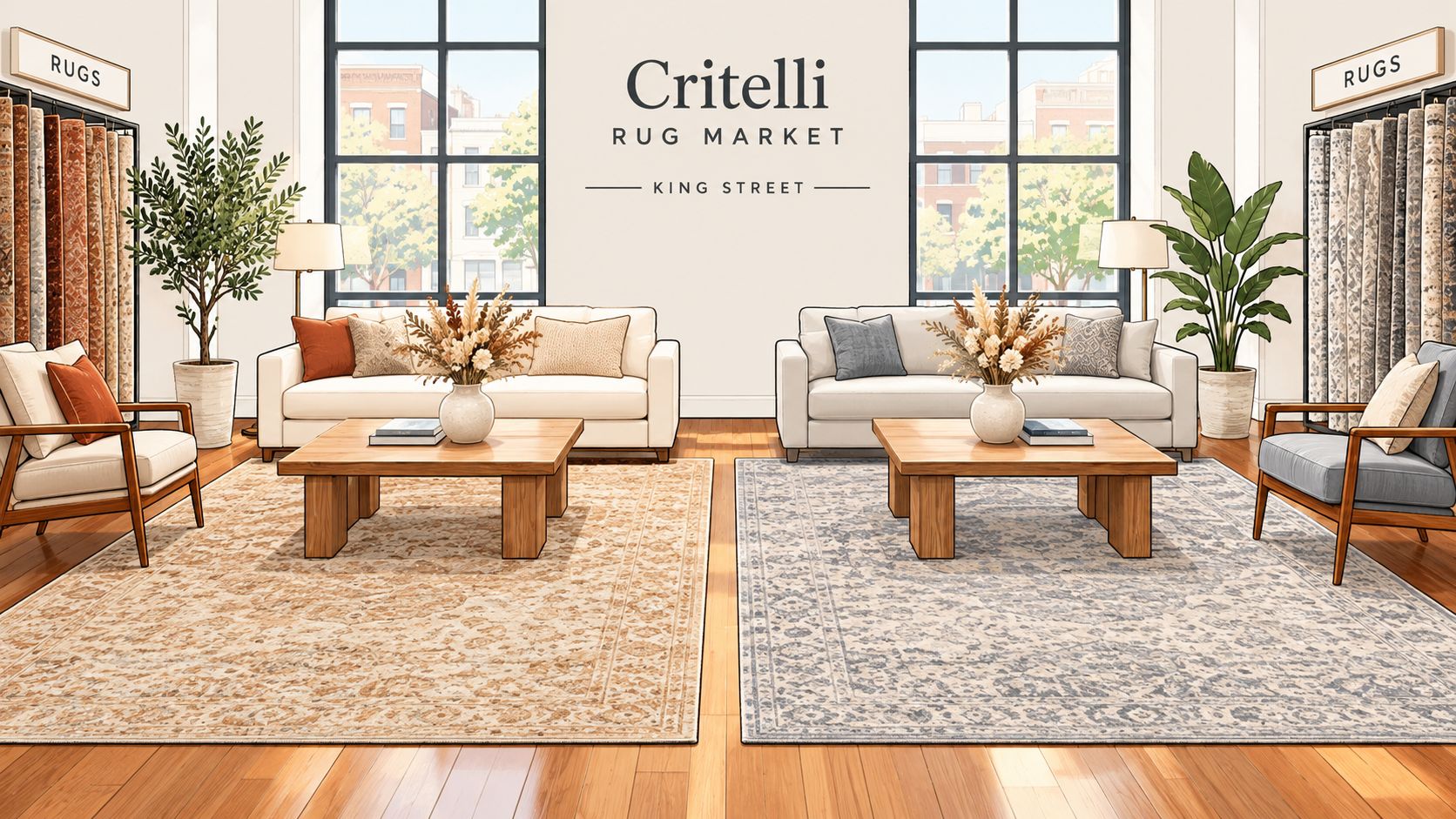
A client stands in the Critelli Rug Market on King Street, comparing two rugs in a similar palette. From across the showroom, they appear to offer much the same softness and visual weight. Turn them over, though, and the difference becomes a practical one: how each rug is made affects how it should live in a home, how it can be repaired, and how it responds to moisture.
The choice between hand-knotted rugs vs hand-tufted isn't a simple contest between good and better. Each construction has a place. Hand-knotted rugs suit buyers seeking enduring craftsmanship and repairability; hand-tufted rugs offer a design-forward look and lower initial cost. The right choice depends on the room, the household, and the care the rug will receive.
Two Rugs That Look Alike but Live Very Differently
A plush rug looks right beside the bed, but the same purchase deserves a different conversation if it's heading downstairs to a damp basement. The palette hasn't changed. The demands on the rug have.
Two rugs can share a pattern, colour story, and size while serving different purposes. For a living room you intend to keep, prioritise repairability alongside appearance. For a dry bedroom, a tufted rug's softer feel, sculptural finish, and lower entry cost can be a sensible trade-off. Choose for the room you have, rather than the promise of heirloom quality.
Begin with use, then consider exposure. Muddy shoes, dining chairs, and repeated foot traffic belong in the purchase conversation. So do basement dampness and moisture at a cottage. At Critelli Rug Market, bring those details into the discussion before narrowing the selection by colour.
Start with the purpose, not the label
For Southern Ontario homeowners, humidity belongs on the checklist alongside furniture placement. A knotted rug offers scope for individual repairs; a tufted rug relies on its backing to retain the pile. That distinction matters when assessing upkeep and moisture exposure, without making either construction a licence to ignore damp conditions.
Resolve moisture concerns before committing to a rug.
Price becomes useful once the room's demands are clear. Choose tufted construction when the design and softer surface justify the maintenance trade-off. Give knotted construction priority when repairability and long-term use matter more than the initial outlay.
Designer's Insight: Let the rug establish the palette and furniture plan, but judge its suitability by daily use before matching it to the sofa.
Use design first, price second, maintenance third as a purchasing sequence, with room conditions built into the design decision from the start. Review the care requirements before buying, so the attractive showroom choice also makes sense at home.
How Each Rug Is Actually Built
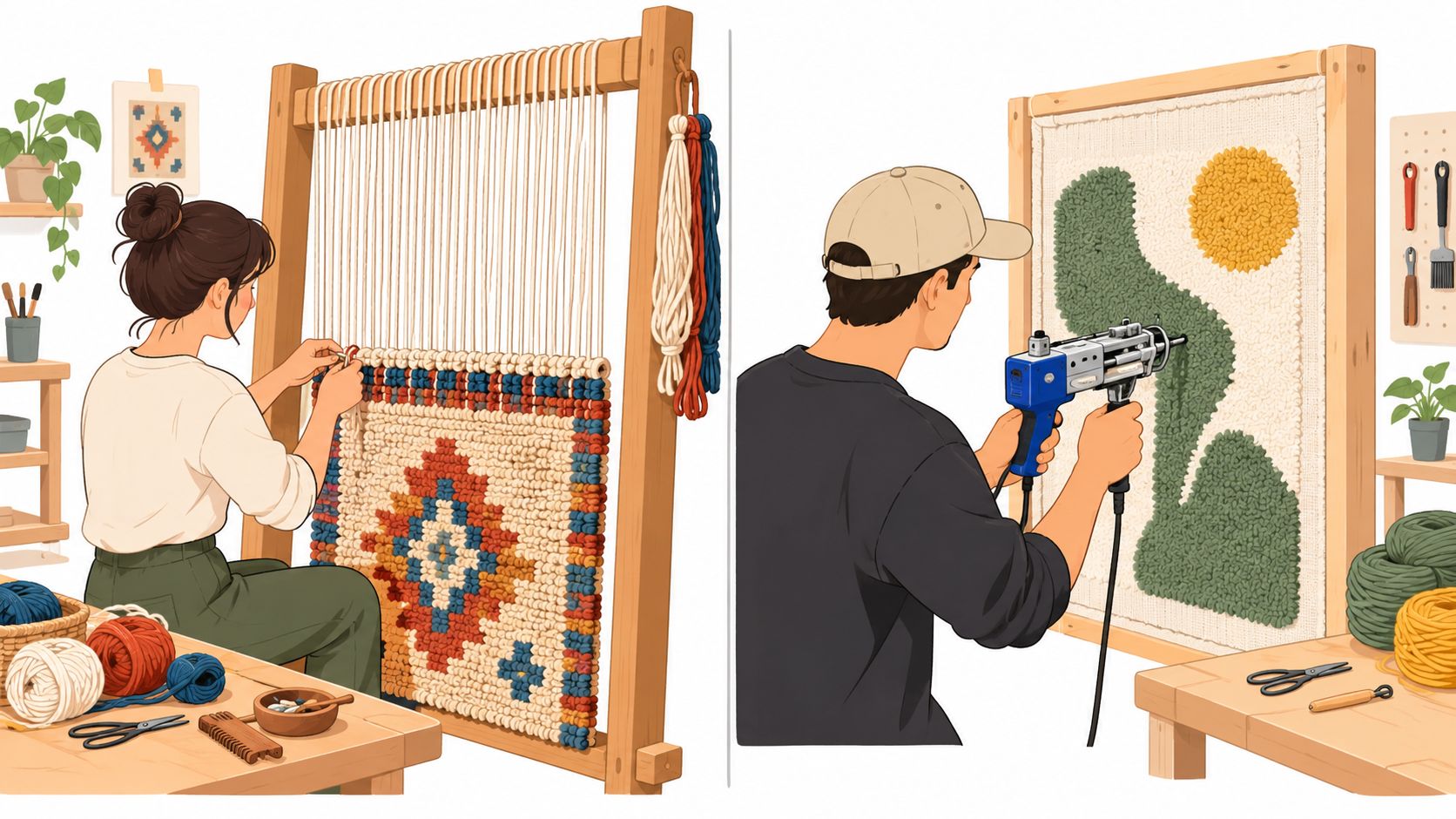
A hand-knotted rug is made by tying yarn around the foundation threads of a loom. The weaver forms individual knots across the foundation, row by row, then secures the structure with weft. Finishing and washing complete the surface, helping define the pile and the rug's appearance.
Because the pile is formed by knots, each one is part of the rug's structure. A damaged area can often be addressed by re-securing or replacing individual knots, subject to the rug's construction, condition, and access to a qualified repairer. This doesn't mean every repair is simple or economical. It does mean the pile isn't relying on a layer of adhesive to stay attached.
The knot and the backing
A hand-tufted rug begins with a primary canvas stretched into place. A tufting tool pushes yarn through that canvas to create the pile. The reverse is then secured with adhesive and finished with a secondary backing. This process can support plush surfaces and sculpted designs, but the adhesive and backing are essential to the rug's integrity.
The Canadian customs system reflects that these are distinct constructions, not interchangeable descriptions. The 2026 Canadian Customs Tariff places knotted carpets under heading 5701 and tufted carpets under heading 5703. The separate headings provide an objective distinction between the two product categories.
That difference also informs care. Knotted construction offers an individually formed pile; tufted construction relies on the bond between yarn, adhesive, and backing. For shoppers considering hand-woven area rugs, it's worth asking about the exact construction rather than relying on a broad handmade label.
The practical question is where each method earns its place. A rug for a demanding, long-used room may call for repairability. A rug chosen for softness, height, or a particular contemporary effect may make a stronger case for tufting, provided the room stays dry and the care instructions are followed.
Side by Side on Feel, Repair, and Pile
| Criterion | Hand Knotted | Hand Tufted |
|---|---|---|
| Feel underfoot | Often feels more structured and firm, depending on pile and fibre | Often feels plush and cushioned, especially with a higher pile |
| Pile and sculpting | Supports varied pile heights and intricate patterns | Suits thick, sculptural surfaces and pronounced high-low effects |
| Knot or tuft density | Can range from approximately 25 to more than 1,000 knots per square inch; density must be considered with fibre, pile, and foundation quality | Ask about tuft density and backing rather than judging quality by appearance alone |
| Repairability | Individual knots may be repaired or re-secured | Detached tufts and backing damage can be more challenging; repair depends on condition and local expertise |
| Expected service life | Quality wool rugs are commonly estimated at roughly 50 years or more under residential conditions | Quality wool rugs are often estimated at approximately 15–25 years, depending on use and care |
| Entry price tier | Generally positioned as a higher-cost, heirloom-oriented purchase | Commonly offers a lower initial cost and design flexibility |
The ranges in the table are practical benchmarks, not guarantees. Density doesn't tell the whole story: fibre quality, pile height, and foundation integrity all affect how a rug performs.
Translate the comparison into the room
Underfoot, a higher-pile tufted rug can feel soft and sink-in. A hand-knotted rug often reads as more architectural, particularly when a lower pile lets the pattern and structure come forward. The surface you prefer depends on the room's role as much as personal taste.
For a buyer worried about a pet catching a loose thread, the key question is whether the pile can be re-secured and who can do that work. Knotted construction can make individual repairs possible; tufted construction places greater importance on the backing remaining intact. Ask for details about the specific rug rather than assuming every piece in a category behaves identically.
Density also deserves a measured approach. A high knot count can support pattern definition, but it isn't a stand-alone quality score. A beautifully dense rug with unsuitable fibre or a compromised foundation may not be the right choice for a busy household.
The clearest shorthand is this: choose hand-knotted for structure, repairability, and a long ownership horizon. Choose hand-tufted when plushness, sculpted design, or a more accessible initial price leads the decision, and the room's conditions suit its backing.
Durability in a Southern Ontario Home
Rug life is shaped by more than its label. Traffic, fibre quality, pile height, foundation integrity, cleaning, and humidity all influence how a rug ages. A carefully chosen construction can still disappoint if it's placed in a damp room or maintained in a way that strains its materials.
As a working residential benchmark, quality hand-knotted wool rugs are commonly placed at roughly 50 years or more, while hand-tufted wool rugs are often estimated at approximately 15–25 years. These are not laboratory guarantees. The estimates vary with use, pile, fibre, and maintenance, so they're most useful for comparing the kind of ownership horizon each construction may suit. The Canadian wool rug care guide offers additional context for understanding the role of home conditions in rug care.
Account for the seasons
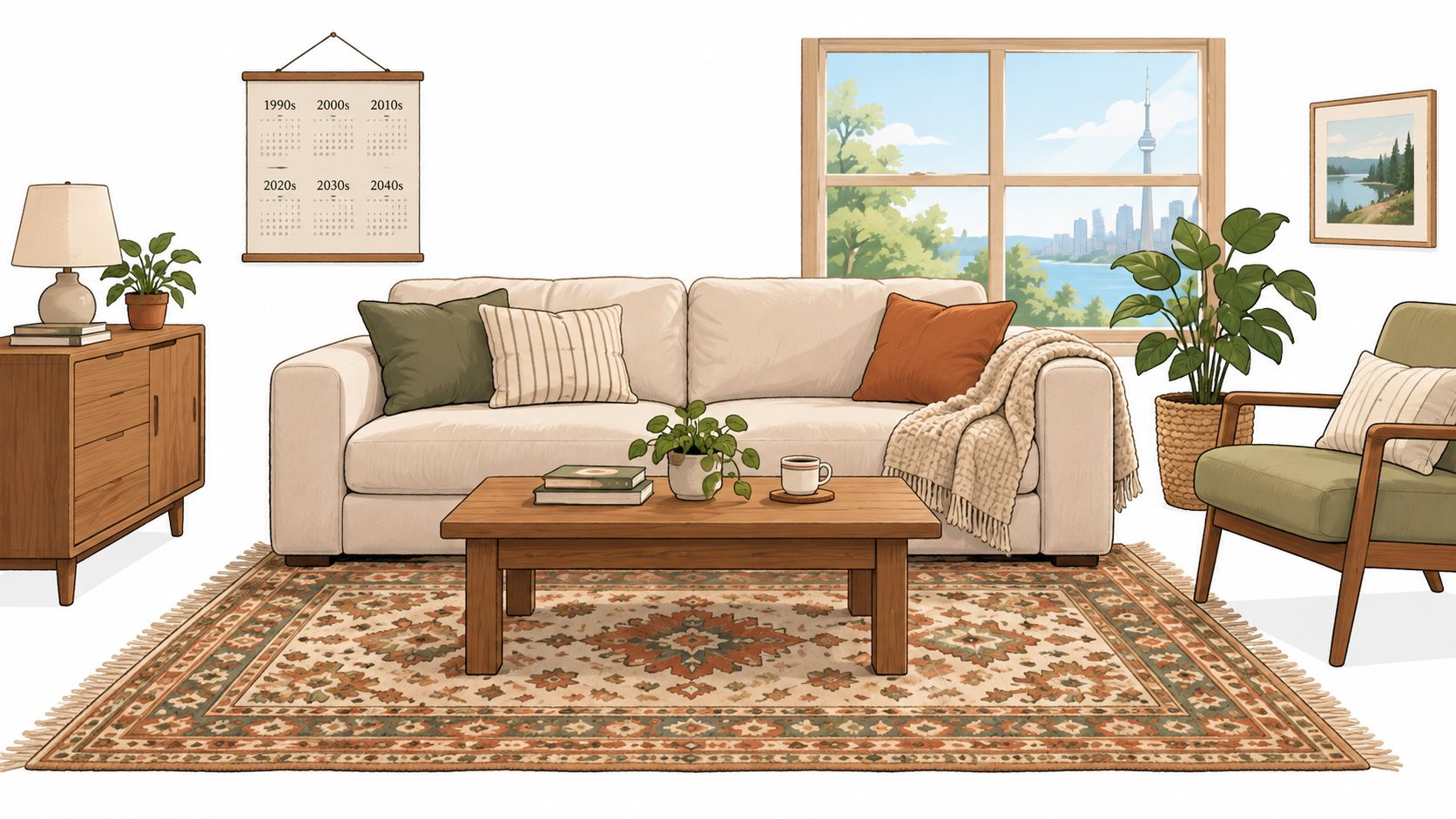
Southern Ontario homes experience seasonal changes that deserve attention. Dry winter indoor air can contribute to wool brittleness and shedding. Summer humidity can raise the risk of moisture beneath a rug, especially over concrete or in a basement room.
A practical target is to maintain indoor relative humidity near 40–50%, with an appropriate breathable pad under the rug. Vacuum according to pile height, and keep tufted rugs away from persistent dampness. These measures don't guarantee a particular service life, but they reduce avoidable stress on fibres and backing.
For cleaning habits, a rug-care guide for Dublin homeowners and businesses can provide useful general guidance to consider alongside the specific care instructions for the rug. Before buying, ask for the recommended cleaning method, especially for a tufted piece where adhesive backing makes moisture control important.
For busy rooms, rug options for high-traffic areas can help frame the selection around actual use rather than appearance alone. Then assess the individual rug's fibre, pile, and foundation. A carefully maintained rug of either construction can serve its room well; the task is to choose one whose build suits the room's demands.
The Question Most Comparisons Skip
Price and expected service life are only part of the decision. In a home with a basement, cottage, wet entryway, pets, or young children, the more revealing question is: what happens if the rug gets wet?
A hand-tufted rug's adhesive-backed construction makes prolonged moisture or repeated damp cleaning a concern. Water exposure can weaken the bond between the pile and its backing, potentially leading to delamination, odour, or mildew. The University of Ottawa's indoor air quality guidance notes that carpets can be damaged following floods and that textiles can contribute to indoor-air contaminants.
A hand-knotted rug doesn't rely on adhesive to secure its pile, but that doesn't make it waterproof or immune to flooding. Any rug exposed to substantial water needs an appropriate assessment and careful drying. The useful distinction is that a knotted rug's pile is structurally woven, while a tufted rug's backing and adhesive are part of what holds it together.
Ask before a damp-room purchase
Before choosing a rug for a room where moisture is plausible, get specific answers:
- Re-backing feasibility: Can the backing be replaced if it fails, and would that repair be suitable for this rug?
- Local repair options: Can detached tufts, loose threads, or other damage be repaired by a qualified local specialist?
- Approved cleaning method: Which cleaning approach is recommended, and what level of moisture should be avoided?
- Warranty coverage: Does the warranty address adhesive or backing failure, and what conditions could exclude coverage?
These questions matter in Southern Ontario basements and cottages, where a room can be attractive on paper but harder to keep consistently dry. They also matter at busy entries, where wet footwear repeatedly introduces moisture and debris.
For a controlled, dry room, a well-chosen tufted rug can still be an excellent design decision. Where water exposure is a credible risk, a hand-knotted piece may present a lower risk of backing-related failure. Buyers comparing hand-knotted Turkish rugs should make repairability and room conditions part of the conversation, not an afterthought.
Matching Construction to the Room
The most useful rug specification starts with a floor plan and the way each room is used. Choose hand-knotted construction for an entryway, formal dining room, or primary living room when durability, repairability, and lasting character matter most. It's also the stronger fit for an heirloom purchase intended to remain part of a home through changing furniture and décor.
A hand-tufted rug suits bedrooms and low-to-moderate-traffic seating areas where comfort, sculptural pile, or a lower entry price carries more weight. It can be a thoughtful choice for a design-led room, provided the rug isn't exposed to persistent dampness and the owner is comfortable with the care its backing requires.
Make the room do the deciding
In an entry, choose a construction that fits frequent use and the household's approach to cleaning. At a dining table, consider chair movement, ease of maintenance, and whether the pile height works with the furniture. In a bedroom, a softer, higher pile may be more appealing because the room usually sees a different pattern of use.
A basement or cottage deserves more caution. If the space has a history of dampness or sits over a moisture-prone surface, don't select a tufted rug without understanding the room conditions and the rug's care requirements. A breathable pad and sensible placement help, but they're not substitutes for managing persistent moisture.
Designer's Insight: Start a complete room concept with the rug's colour and pattern, then select upholstery and finishes around it. A wool rug can anchor the palette, connect a sofa to the floor, and bring furniture into a considered whole. That's more useful than choosing a rug as an afterthought.
For room proportions and placement, practical rug rules for arranging a room can help clarify how the rug should sit in relation to furnishings. The construction decision comes next: pick the one that best supports the room's traffic, comfort, and upkeep needs. That's how a rug becomes part of the architecture of a room rather than a loose decorative accent.
Choosing with Confidence and Living with the Rug
For a long-term home and a room that sees regular use, the recommendation is clear: favour hand-knotted construction when repairability, durability, and heirloom quality are priorities. It asks for a higher initial investment, but its structure makes it a compelling choice for buyers who want a rug to remain central to a room as furnishings change.
Hand-tufted construction is the smarter selection when the design calls for a plush surface, a sculpted effect, or a lower entry price, and the room is dry enough to protect its backing. It can bring character to a bedroom or a quieter seating area without requiring the buyer to treat every rug as a lifelong purchase.
Rugs also work best when considered alongside the rest of the interior. Before settling on a colour, compare it with the room's flooring, upholstery, and natural light. A guide to choosing a rug colour can help connect those decisions to the complete room concept.
Critelli Furniture's St. Catharines story is rooted in family ownership. Joseph Critelli and his son Thomas opened a retail store in Thorold in 1914, expanded into Niagara Falls in 1936, and opened in St. Catharines in 1939; the business remains a family-run enterprise associated with downtown St. Catharines, as described in this account of Critelli Furniture's local history. For homeowners across the Greater Niagara, Hamilton, and Toronto markets, white-glove delivery supports a careful transition from showroom selection to placement at home.
The considered choice isn't the rug with the most impressive label. It's the one that fits the room, budget, and care the household can provide. Experience the craftsmanship in person at our King Street Showroom. Book a complimentary design consultation and compare how each construction feels beneath the hand and underfoot.
Visit the Critelli Rug Market for a curated selection of artisanal rugs and design guidance to help establish your room's foundation. Experience the craftsmanship in person at our King Street Showroom, and visit Critelli Furniture to book your complimentary design consultation.