
Sectional Sofa with Ottoman Planning Guide


The living room feels comfortable until someone stretches out and another person needs to reach the patio door. A tray competes with a pair of feet, guests shift their seats, and the furniture that looked generous in the showroom suddenly feels awkward at home. A sectional sofa with ottoman can resolve those competing needs, provided the ottoman is planned as carefully as the sofa.
The most useful starting point isn't colour or size. It's understanding how the household moves, relaxes, and gathers, then choosing pieces that support those habits without taking over the room.
Why a Sectional Sofa with Ottoman Works
On an ordinary evening, a Southern Ontario living room might accommodate someone reading, someone watching television, and a family member passing through from the kitchen. At the weekend, the same room may need to welcome guests. Connected seating provides a comfortable base, while a separate ottoman allows the arrangement to change without moving the entire sofa.
That distinction matters. An ottoman isn't just the finishing touch in front of a sectional. Depending on its construction, it can serve as a footrest, an occasional seat, a coffee-table stand-in with a suitable tray, or a temporary chaise extension. Anyone considering ottomans for Canadian homes should begin with the role the piece will perform most often, rather than trying to make every ottoman do everything.
Flexibility should feel effortless
Consider a household that usually lounges together but entertains more formally. During an evening at home, the ottoman sits close to the sectional. When guests arrive, it moves aside to open the conversation area, provided the manufacturer approves it for seating and its weight makes that move manageable.
The flexibility only works if there's somewhere useful for the ottoman to go. A movable piece without a planned alternative position can become an obstruction.
Curator's perspective: Heirloom quality is better judged by comfortable proportions, maintainable construction, and timeless craftsmanship than by the largest silhouette a room can hold.
A complete room rather than an isolated purchase
A complete room concept considers the sectional alongside the rug, lighting, tables, windows, and architecture. Upholstery should relate to the room's daylight and daily use. A rug, approached as Art for your Floor, can establish the palette before the sofa fabric is chosen.
For homes across Greater Niagara, Hamilton, and Toronto, that approach also keeps practical realities in view. Room proportions, delivery routes, and access to outdoor spaces deserve attention before a configuration is finalised.
The decisions become clearer when considered together:
- Configuration: Connected seating should suit conversation and reclining.
- Circulation: The ottoman needs an everyday position and a realistic alternative.
- Ownership: Fabric, cushion construction, and repair options should suit household routines.
The aim is practical judgement, not a catalogue tour. A thoughtfully proportioned ensemble can feel more generous than a larger arrangement that leaves no room to move.
Choosing a Configuration You Can Live With
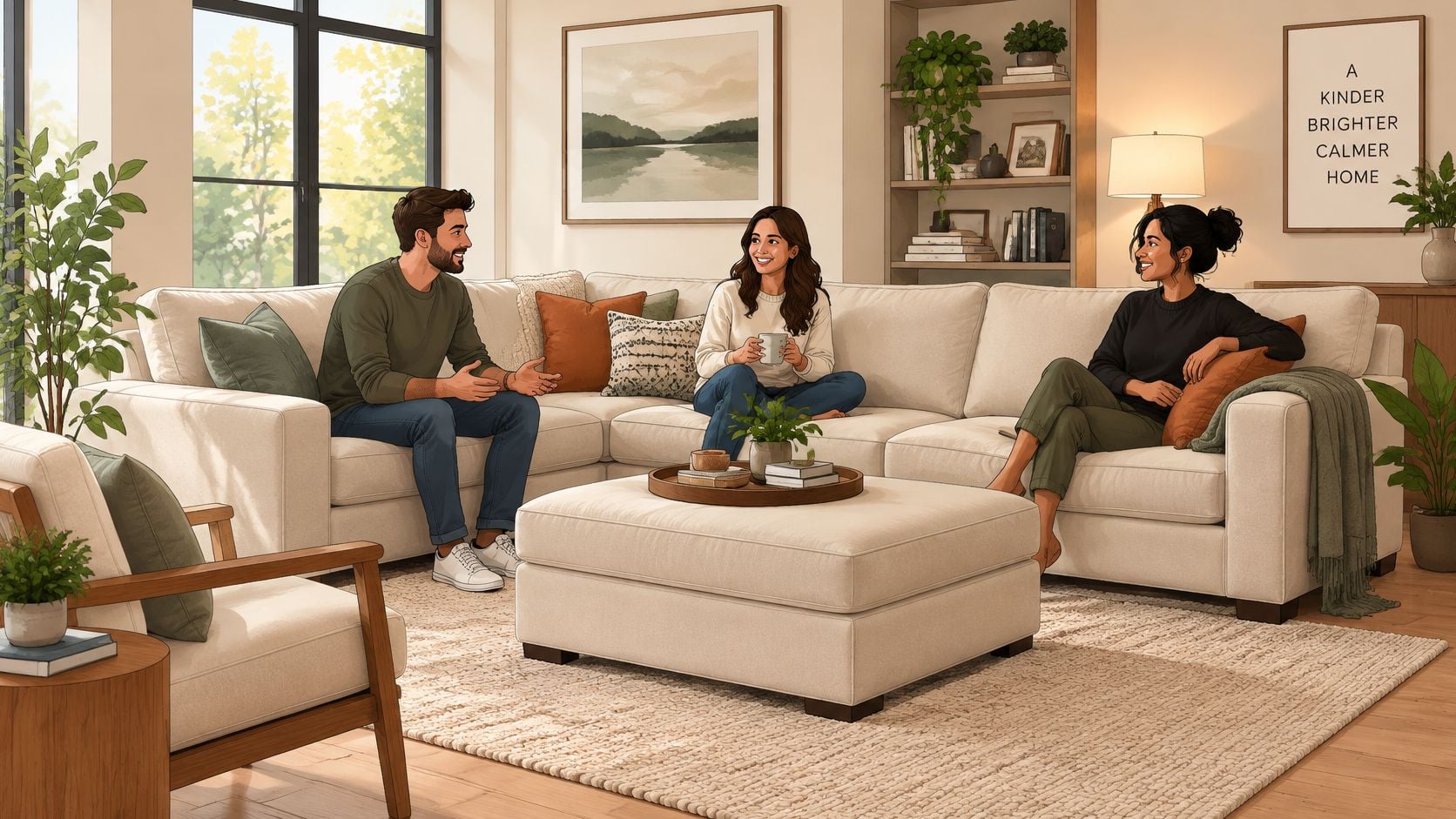
A household that gathers for conversation needs a different seating shape from one that centres on television or gives one person a regular place to stretch out. Start with those habits. The configuration should support them while leaving the ottoman a useful place to land, much like a small movable table that also serves as a footrest.
Attached chaise or movable ottoman
An attached chaise offers a dependable lounging spot without a separate piece to reposition. Its projection, however, takes up room whether or not anyone is reclining.
A movable ottoman can shift between lounging, extra seating, and serving as a surface. That flexibility depends on its weight, base, proportions, and upholstery. If it is awkward to move, it may become a fixed obstacle rather than useful adaptable furniture.
Test the movement in person. Shift the ottoman into its likely alternate position, then consider whether its glides or casters suit the flooring and follow the manufacturer's guidance. The key question is practical: can someone move it comfortably, and does the room still work when it has been moved?
Let the shape serve the room
An L-shaped sectional can anchor a corner while keeping one side open to the rest of the room. It suits connected seating without enclosing the entire conversation area.
A U-shaped arrangement brings people closer together, though entry into the seating group and access to occasional tables need consideration. A compact modular arrangement offers another option when its pieces can be reconfigured to suit different uses.
Ottoman shape also affects how the grouping feels and functions. A square ottoman can suit a compact arrangement or provide a broad shared footrest. A rectangular one follows the length of a sofa for a more extended lounging position. A round shape softens the lines of angular seating and can sit comfortably within an open conversation area.
For a design-forward selection, assess construction, ergonomic support, and artisanal detail together. Documented construction and a comfortable fit help determine whether a model suits the room and the people using it.
Designer's Insight: Leather beside a neutral hand-knotted wool rug creates contrast without making every surface compete for attention. The rug gives the seating a calm visual setting, while the leather remains a distinct material choice.
A generous arrangement is only useful if daily routines still feel easy. Choose a configuration that supports how the household gathers, and an ottoman that can serve the room without interrupting its flow.
Planning Clearance Before You Order
Measure the route, not just the footprint. A sectional can fit its intended wall and still be difficult to deliver or inconvenient to live around.
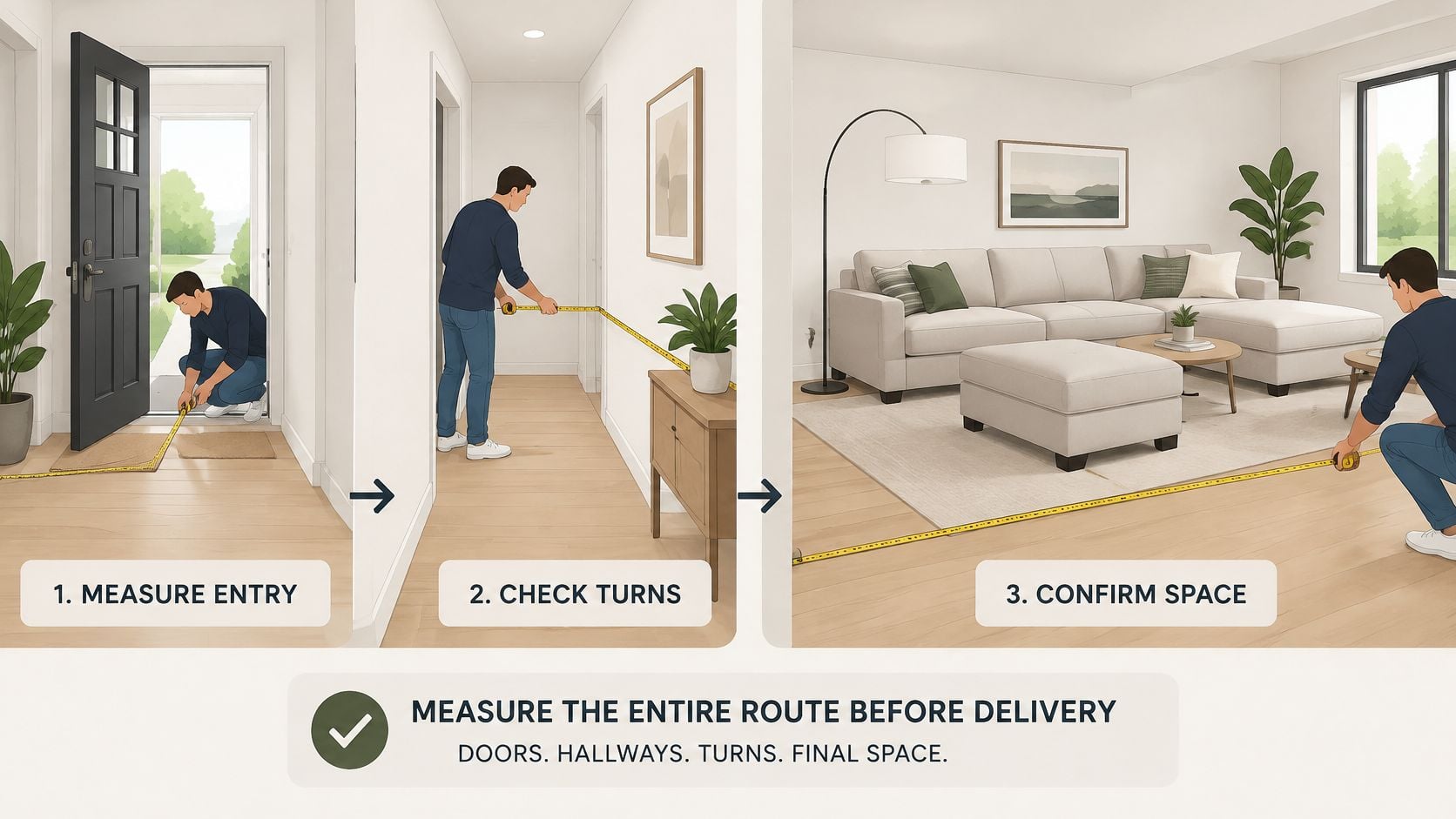
Accessibility Standards Canada identifies 1,200 mm as the minimum interior path width and 860 mm as the minimum clear doorway width for accessible-ready housing, useful planning benchmarks rather than a blanket statement about every existing home's legal requirements (accessible-ready housing clearances).
Start at the delivery entrance
The measurement sequence should follow the furniture's actual journey. An entrance opening alone doesn't reveal whether a large component can turn into a hallway or negotiate a landing.
- Record clear openings: Measure between obstructions, including door stops, trim, and projecting hardware.
- Check changes in direction: Note stair turns, landings, ceiling restrictions, and the space available beyond each doorway.
- Inspect shared access: Include elevator interiors and building restrictions where applicable.
- Compare component dimensions: Obtain the dimensions of the largest transportable unit, not only the assembled sectional.
Separable modules may make a tight route more manageable, but they aren't a guarantee. The delivery team should assess the relevant dimensions before an order is confirmed.
Draw the room in its everyday state
A scaled plan should include the sectional, ottoman, door swings, vents, radiators, and the principal circulation corridor. Critelli's residential space-planning guidance provides a relevant starting point for considering the furniture as part of the whole room.
For households that find flat drawings difficult to interpret, visual walkthroughs can help communicate spatial relationships. Nim's resource on using walkthroughs to make property layouts clearer for buyers offers a related way to think about presenting a room, although physical measurements remain essential.
The ottoman should appear in its usual lounging position on the plan. Moving it closer can improve leg support while narrowing a route; moving it farther away can reopen the route while making it harder to reach.
Practical rule: The decisive measurements are the largest component that must enter the home and the clear passage remaining after the ottoman is placed.
For an installation near Hamilton, Toronto, or Greater Niagara, resolving those questions early is more useful than discovering a difficult turn on delivery day.
Layout Examples for Real Ontario Rooms
A condo, a narrow living room, and an open-plan main floor each ask a different question of the sectional and ottoman. Start with how people move through the room, then choose shapes that serve both seating and circulation.
A condo with a balcony door
In a condo where the entrance faces balcony glazing, a compact sectional can sit against an uninterrupted interior wall. A square ottoman can tuck beside the open end when the balcony route needs to stay clear. Its parked position matters as much as where it sits during lounging.
Check the floor plan for heating vents near the glazing, and view fabric samples in the room's natural light. The arrangement works only if the ottoman, whether in use or tucked away, leaves the balcony door and heating outlet unobstructed.
A narrow living room
A rectangular ottoman can extend the lounging area without fixing a chaise in place. Set the sectional along the longer wall, with the route from the entry to a rear patio door kept open.
Check the room's cross-section: sofa depth, ottoman position, and remaining passage. If the combination narrows the main route, choose a shorter sectional or a less projecting ottoman. The floor is not spare space; it is part of how the room works. These sectional layout rules for tight living rooms offer a useful way to assess seating capacity alongside circulation.
An open-plan main floor
A sectional can mark the living zone while leaving the natural path between the kitchen and patio open. A round ottoman softens the centre of the seating group, but its likely movement area should stay clear of windows, vents, and door swings.
Consider flooring across connected zones, rather than choosing it around the sofa alone. The flooring advice for Melbourne home renovators offers a separate renovation perspective to weigh alongside local material and installation advice.
Ottoman Roles by Room Type
| Option | Best room | Main risk | Everyday role |
|---|---|---|---|
| Square ottoman | Compact condo grouping | Blocking the balcony route when shifted | Shared footrest or occasional seat, if designed for seating |
| Rectangular ottoman | Narrow living room | Projecting into the main passage | Movable lounging extension |
| Round ottoman | Open-plan conversation area | Occupying a crossing point between zones | Central footrest or tray surface |
For smaller living spaces, choose modular and multifunctional pieces selectively. Each added module should create a useful seating position without reducing a primary circulation route. The largest sectional isn't automatically the most luxurious choice. A slightly smaller sofa with a well-proportioned ottoman can serve more everyday needs while keeping room routes open.
Fabrics Leather and Comfort That Last
The same sectional can feel composed or awkward depending on its upholstery and cushion response. The ottoman matters too: its surface, stability, and repair options affect how the room serves daily use.
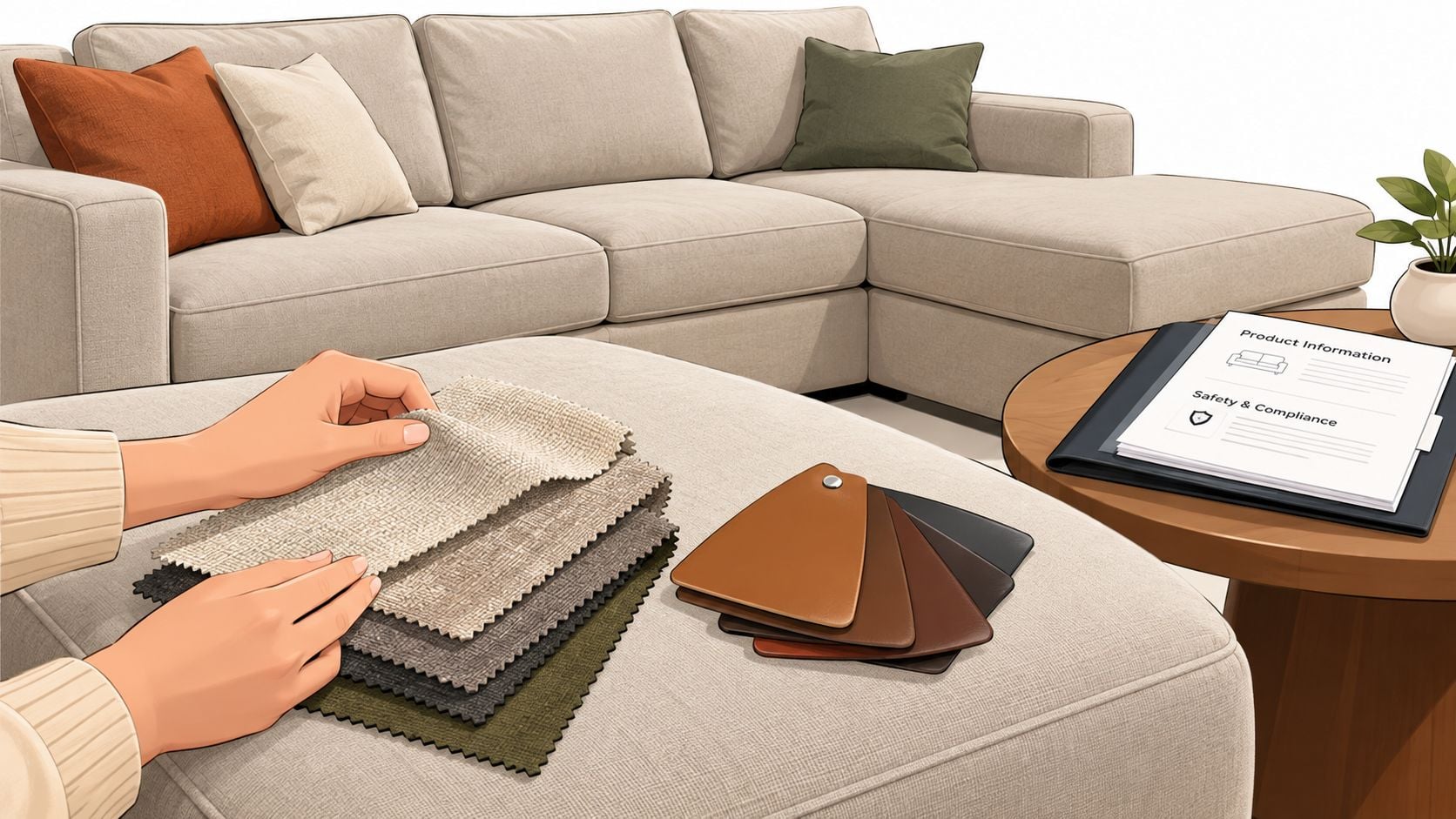
Canadian upholstered furniture is subject to federal textile-labelling requirements, while UFAC is a voluntary industry flammability program. Canada does not have a federal regulation specifically governing upholstered-furniture flammability. A leather grade, premium price, or foam density is not proof of fire performance. The Competition Bureau's upholstered-furniture guidance explains the relevant labelling and program context.
Ask for Canadian label information, upholstery composition, cushion-core details, and applicable test or program documentation. Request these for both the sectional and ottoman. Matching colour and texture do not establish that pieces from separate production runs use identical materials.
Comfort is a hands-on decision
High-resilience foam, a foam-and-fibre blend, and loose down or feather each compress and recover differently. Their feel also varies in edge support and upkeep. Treat the showroom description as a starting point, then test the actual cushion.
Sit in the centre and pause long enough to feel the support beneath the initial softness. Shift toward the front edge to check whether it holds or gives way. Stand, then observe how the cushion recovers. Ask about recommended reshaping or rotation. Finally, rest your legs on the ottoman and check its stability. Confirm separately whether it is approved for sitting.
Ergonomic-luxury seating belongs in the comparison, but personal fit, edge support, and recovery matter more than brand recognition. For household-use considerations, consult this guide to choosing fabrics for sofas. View fabric and leather samples in the room's own light before approving them; daylight can make a colour read differently from showroom lighting.
An environmental claim does not specify durability. Ask how the upholstery can be maintained, repaired, or replaced.
A complete room concept includes serviceability. Check whether covers can be replaced, seams repaired, leather cared for according to specific instructions, and the ottoman reupholstered on its own. Those choices help keep the seating useful as the room and household needs change.
How to Choose a Complete Room Concept
A sectional and ottoman can shape more than the seating area. Their footprint affects the route between the sofa, rug, and other furnishings, while the ottoman may serve as a footrest, a movable seat, or a surface for a tray. Decide how it will be used and moved before treating it as a finishing touch. That choice helps the room feel considered and keeps everyday circulation practical.
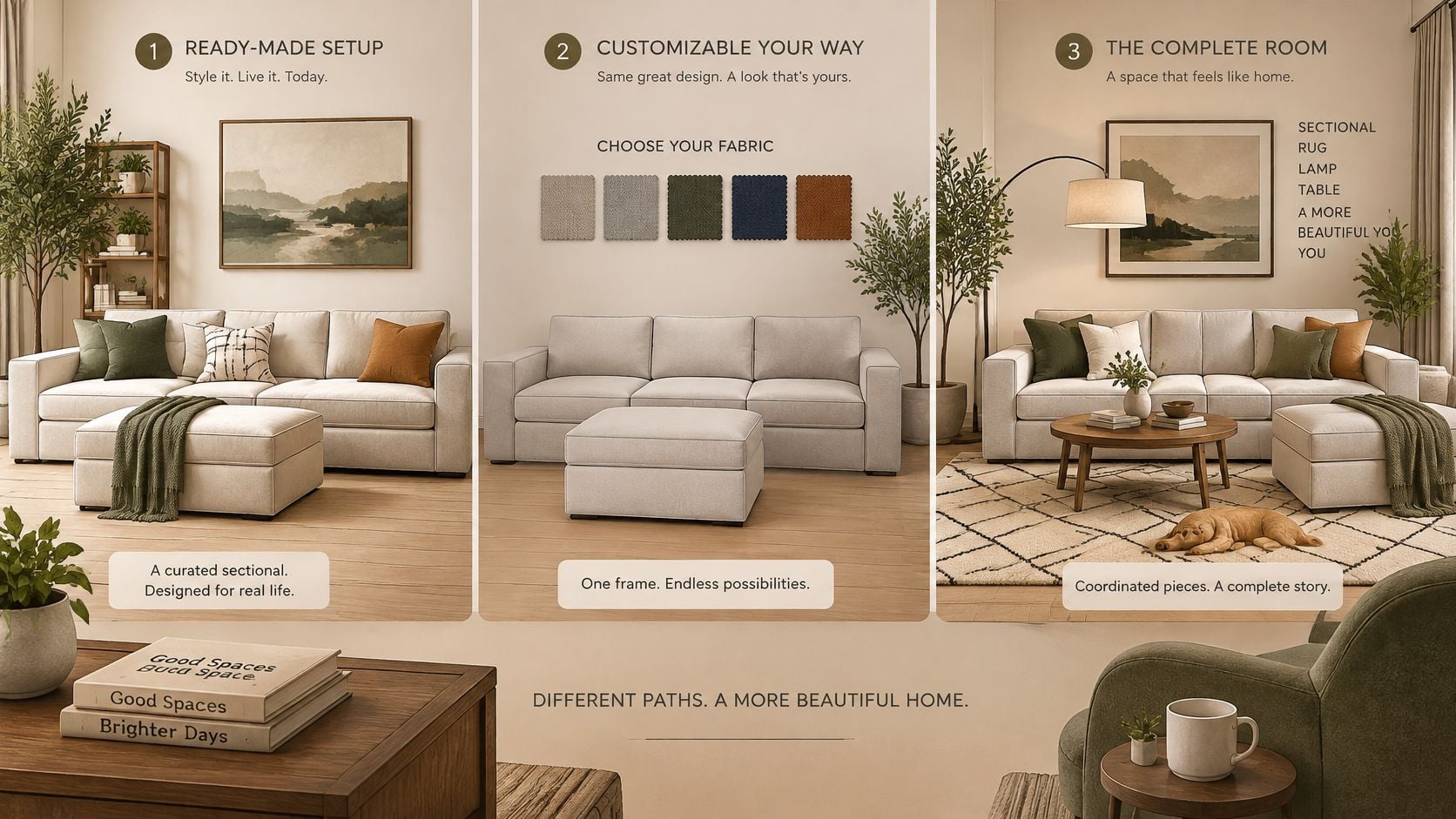
The level of design help should match the room's needs. If the layout, rug, and surrounding furniture already work, a standalone purchase lets you choose a sectional and ottoman within the room's existing dimensions and palette. The ottoman still deserves its own place in that plan: allow enough room to move it without blocking a walkway or access to nearby furniture.
For a room with uncertain proportions, or a bespoke order, a design-studio approach can help connect upholstery and finishes to the architecture and natural light. Critelli's Interior Design Studio offers space planning, fabric, leather, and finish selection, along with in-home consultation. Bring the intended ottoman use into that discussion, since a configuration suited to lounging may not be as convenient for serving or regular passage.
A trade-professional pathway can coordinate seating with a larger renovation and other furnishings. Homeowners exploring interior design services in St. Catharines or custom furniture in Southern Ontario can clarify who approves dimensions, specifications, and final selections before orders are placed. This avoids treating the sofa as a separate purchase from the room around it.
Heritage with a practical setting
Critelli's family history offers context for its local presence. The business began with Joseph Critelli and his son Thomas in Thorold in 1914, followed by a downtown St. Catharines location in 1939 and the King Street store in 1963. Its documented family continuity includes fourth-generation Joe Critelli and fifth-generation Julia Critelli (Critelli's store history).
The furnishing environments at 126 King Street and 169 St. Paul Street offer different settings for comparing how pieces relate to a room (St. Catharines showroom locations). For those exploring luxury furniture in Niagara, looking at upholstery, wood, and rug colours together can reveal relationships that are harder to judge from an isolated sample.
The locally documented Rug Market forms part of Critelli's downtown offering. Its Art for your Floor approach places rug colour and pattern alongside the sectional, rather than leaving them to an afterthought. For households considering hand-knotted rugs in Ontario, compare complete combinations of rug, upholstery, wood, and light. The result is a room concept in which the ottoman has a useful position and purpose, not merely a matching finish.
From Showroom Choice to Home Placement
A sectional can look settled in a showroom and still raise practical questions at home: how will it be maintained, who handles service, and can one piece be repaired without replacing the whole ensemble? The ottoman belongs in that conversation. Its location affects circulation, while its separate construction may make reupholstery or repair easier.
Turn selections into a written handover
A showroom visit lets the buyer resolve construction, comfort, and serviceability questions that photography cannot answer, including whether the ottoman can be reupholstered independently. Record the approved configuration, upholstery, component dimensions, and care requirements in the final order. If a sample, display model, or verbal explanation shaped the choice, put the relevant specification in writing.
Delivery is part of the room plan, not a final detail. Critelli's white-glove delivery service serves Greater Niagara, Hamilton, and Toronto, and describes inspection, assembly, precise placement, and packaging removal as part of its service. Confirm building access requirements and any site-specific limitations before scheduling, so the delivery team can place the sectional and ottoman where the circulation plan requires.
Consider the whole ownership commitment
The purchase includes more than the displayed price. Access, placement, routine care, repair logistics, and local assistance all shape how well the furniture serves the household over time.
- Confirm the handover: Know whom to contact about delivery and later service enquiries.
- Keep the records: Retain the order specification, care instructions, warranty information, and upholstery identification.
- Review purchase terms: Ask about financing and the Low Price Guarantee, including current conditions, without letting either rush the decision.
A room works best when each piece has a clear role. Leave enough passage around the sectional, position the ottoman where it can serve as a footrest or movable surface, and check that it can be shifted without obstructing access. Choose materials the household can care for, and keep repair options in view. That is how heirloom quality becomes a practical ownership goal rather than a decorative phrase.
For a sectional sofa with ottoman considered as part of a complete room, Critelli Furniture offers a curated selection, design consultation, and the Rug Market. Visit the King Street Showroom with room photographs and a measured plan to assess craftsmanship in person. You can book a complimentary design consultation or visit the Rug Market to consider the room's foundation.