
Best Mattresses for Side Sleepers Canada: 2026 Guide

A side sleeper usually knows the problem before knowing the solution. The shoulder goes numb. The hip feels tender by morning. The lower back carries a quiet complaint into the day. Most often, the mattress isn't poor. It's unsuitable for the body resting on it.
That's why the search for the best mattresses for side sleepers in Canada shouldn't be treated like an impulse online purchase. A mattress is part comfort layer, part support system, and part design decision. It sets the tone for the entire bedroom, from the height of the bed to the lines of the headboard, the scale of the rug, and the rhythm of nightly rest.
For a family-run firm founded in 1914, the standard has never been about quick fixes. It has always been about lasting comfort, timeless craftsmanship, and rooms that feel settled the moment one steps inside. A well-chosen mattress belongs in that same tradition. It should support health, yes, but it should also belong to a complete room concept that feels calm, organised, and beautifully resolved.
Table of Contents
- The Pursuit of Restorative Sleep
- Understanding the Side Sleeper's Needs
- A Curated Guide to Mattress Materials
- Finding Your Ideal Firmness Level
- Our Curated Selections for Side Sleepers
- The Art of the Complete Bedroom Concept
- The Canadian Luxury Shopping Experience
The Pursuit of Restorative Sleep
A side sleeper rarely needs more advice. What's needed is a better standard. The body already gives the verdict each morning. If the shoulder feels compressed and the spine never seems to settle, the mattress has failed its most basic duty.

Good sleep isn't accidental. It's designed. The right mattress supports the body's natural alignment, eases pressure where side sleepers need relief most, and creates the conditions for the deeper kind of recovery associated with improve your sleep quality. That's the difference between lying down and waking restored.
A mattress is a long-term design decision
A beautifully composed bedroom can't compensate for poor support. Fine bedding, elegant case pieces, and a designed headboard all lose their meaning if the bed itself is uncomfortable. The mattress is the foundation of the room in both the practical and emotional sense.
A bedroom should feel composed at night and forgiving by morning.
That's why a thoughtful mattress purchase belongs beside any conversation about well-being, interior design services in St. Catharines, and custom furniture in Southern Ontario. It's also why a high-quality sleep surface should be viewed as a health investment, not a temporary convenience. This perspective is reflected in why a high-quality mattress matters for long-term health.
Why this matters for Canadian side sleepers
Canadian shoppers face a crowded market and too much generic advice. The best guidance is simpler. Side sleepers need contouring, structure, and materials that hold their character over time. They don't need a mattress that feels theatrically soft for ten minutes in a showroom and punishing by week three at home.
When seeking best mattresses for side sleepers Canada, the goal should be clear. Choose a mattress that delivers restorative comfort and belongs to a complete, design-forward bedroom. Everything else is noise.
Understanding the Side Sleeper's Needs
Side sleeping puts the body into a very specific relationship with the mattress. The shoulders and hips carry the most direct contact. The waist needs gentle support so the spine doesn't dip. The neck depends on the rest of the body staying level. Once that is understood, the decision becomes far easier.
Where pressure builds first
A side sleeper doesn't rest evenly across the mattress surface. Weight concentrates at two points first: the shoulder and the hip. If the mattress is too firm, those areas press back against the body. If it's too soft, they sink too far and pull the spine out of line.
That's why pressure relief matters. The mattress must yield enough to cradle the shoulder and hip, rather than forcing them to bear the night's weight without contouring.
Canadian testing guides consistently favour medium to medium-firm support with targeted cushioning for side sleepers. One Canadian review specifically points to deep sinkage as useful for shoulder pressure relief, while other Canadian review sources emphasize plusher comfort layers for stronger contouring. The broader point remains the same. The strongest performers optimise contouring, not brute firmness, for side sleepers in Canada, as noted in this Canadian mattress guide for side sleepers.
Why support matters as much as softness
Softness alone is not sophistication. A mattress can feel plush on first contact and still fail overnight. What matters is whether the core support keeps the spine aligned while the comfort layers cushion the pressure points.
A practical showroom test helps:
- Shoulder check: The shoulder should settle into the surface without feeling jammed upward.
- Hip check: The hip should feel cushioned, not trapped.
- Waist check: There shouldn't be a hollow gap under the waist, but there also shouldn't be a collapse through the centre.
- Turn check: The sleeper should be able to change position without effort or strain.
Practical rule: A side sleeper needs the mattress to give way at the edges of the body and hold steady through the middle.
Many buyers go wrong by shopping by softness label alone. A more informed approach weighs two criteria together: pressure relief and spinal alignment. When those are in balance, comfort stops being vague and becomes measurable in the body itself.
A Curated Guide to Mattress Materials
Materials matter because they shape the entire experience of sleep. They affect how quickly the body settles, how much the mattress contours, and whether the bed feels buoyant, embracing, or balanced. For side sleepers, those distinctions are not minor. They are decisive.
A design-led bedroom also benefits from selecting materials with intention. The mattress height, edge profile, and overall feel influence bed styling, foundation choice, and the visual weight of the room.
Mattress Material Characteristics for Side Sleepers
| Material | Pressure Relief | Spinal Support | Feel |
|---|---|---|---|
| Memory foam | Excellent contouring around shoulders and hips | Good when built over a supportive core | Close, enveloping, quiet |
| Natural latex | Gentle contouring with less sink | Strong, buoyant support | Lifted, responsive, airy |
| Hybrid | Balanced cushioning with structural support | Excellent for many side sleepers | Stable, layered, versatile |
How each material behaves in a real bedroom
Memory foam suits the side sleeper who wants a deeper cradle. It softens the sharper pressure points and creates a calm, absorbed feel. In a bedroom scheme, this often pairs well with upholstered beds and layered textiles because the entire room leans toward softness and retreat.
Natural latex feels more suited. It compresses, but it also pushes back. For a side sleeper who dislikes the sensation of being held too tightly by the mattress, latex often feels cleaner and more buoyant. It complements a bedroom with a more architectural sensibility, especially where crisp bedding, fine woodwork, and heirloom quality lines matter.
Hybrid construction is usually the most broadly successful choice. It combines comfort layers that relieve pressure with a support core that keeps the body organised. For many households, this is the most sensible route because it balances contouring, edge integrity, and ease of movement. Those exploring this construction in greater depth can review what defines a hybrid mattress.
Some sleepers want to sink in. Others want to be gently lifted. The right material answers that preference without sacrificing alignment.
A few direct recommendations help simplify the decision:
- Choose memory foam if pressure relief is the overriding concern.
- Choose latex if responsiveness and a more natural, buoyant character matter most.
- Choose hybrid if the sleeper wants the most balanced performance across comfort and support.
For most readers looking into the best mattresses for side sleepers in Canada, hybrid designs deserve the first look. They tend to behave well across a wide range of bedrooms, body types, and sleep preferences.
Finding Your Ideal Firmness Level
Firmness confuses shoppers because the labels are inconsistent and often unhelpful. “Soft” can feel supportive in one model and unstable in another. “Firm” can mean crisp support or unnecessary pressure. Side sleepers need a narrower target.
The medium-firm sweet spot
For Canadian side sleepers, the most cited firmness target is medium-firm, typically 5.5 to 7 out of 10, because side sleeping creates concentrated pressure at the shoulders and hips and still requires enough support to keep the spine aligned, according to this Canada-focused side sleeper firmness guide.
That range matters because it removes guesswork. It tells the shopper to stop drifting toward extremes. Most side sleepers don't need a cloud. They need measured give over dependable support.
A mattress below that range can let the torso sink too far. A mattress above it often creates pressure where the body should be cushioned.
When softer or firmer makes sense
There are exceptions, but they should be deliberate.
- A slightly softer feel can work for someone with pronounced shoulder sensitivity who wants more contouring near the upper body.
- A slightly firmer feel can suit a side sleeper who also spends part of the night on the back and wants a flatter, more stable surface through the lumbar area.
- A medium-firm profile remains the safest and most elegant recommendation for the majority of side sleepers because it avoids both sagging and hardness.
The finest mattress choices are rarely extreme. They are balanced.
This is also where aches and pains often begin to make sense. A sleeper who wakes sore may assume the mattress is too firm, when in fact the problem is often poor support beneath a superficially soft top. Anyone sorting through discomfort should also consider broader guidance on mattress choices for back pain, since side-sleeping pressure and spinal strain frequently overlap.
For practical shopping purposes, 5.5 to 7 out of 10 is the right filter. It is the number worth remembering before stepping into any showroom.
Our Curated Selections for Side Sleepers
A good mattress choice should read like a room plan. It must suit the sleeper, the frame, the bedding, and the way the bedroom is meant to feel at the end of a long Ontario day. For side sleepers, that calls for discernment, especially for larger bodies that are often pushed toward plush models that photograph well and perform poorly.
For the classic side sleeper
Start with a medium-firm hybrid or high-quality foam design that cushions the shoulder and hip without swallowing the body. The surface should have some grace to it, but the structure underneath must stay composed. If turning over feels laboured, the top is too dense or too soft.
Collections such as Magniflex suit this sleeper well because they balance pressure relief with a cleaner, more architectural profile. That matters in a considered bedroom. A mattress should feel restful at night and look disciplined when the bed is dressed in the morning.
Critelli Furniture presents mattresses within a broader bedroom plan, which is the right way to shop for a principal bedroom rather than treating the mattress as a boxed afterthought.
For the heavier side sleeper in Southern Ontario
This shopper is still underserved. Many larger side sleepers across Southern Ontario are steered toward plush comfort layers, then wonder why their hips sink and their shoulders ache by morning.
The better answer is usually a more supportive medium-firm build with serious reinforcement through the core and enough pressure relief at the surface to prevent sharp compression at the shoulder and hip. Weight changes how a mattress performs. What feels pleasantly cushioned to one sleeper can feel unstable to another.
Use these standards:
- Avoid overly plush builds that feel inviting for five minutes and unsupportive for eight hours.
- Choose stronger internal support with comfort layers placed where side sleepers bear weight.
- Prefer edge stability and surface control if the mattress sits on a substantial upholstered or wood bed, where sagging quickly spoils both posture and appearance.
Many clients in this category also benefit from learning how an adjustable base can improve comfort and well-being, especially if shoulder pressure, circulation, or late-night reading are part of the brief.
For the design-minded shopper
A mattress affects more than sleep. It changes bed height, the reveal of the headboard, the fall of the coverlet, and whether the entire room feels crisp or overstuffed.
Choose a mattress with:
- A clean, proportional profile that sits properly within the bed frame
- Meaningful comfort without unnecessary bulk
- A stable edge that keeps the bed looking sharp and makes daily dressing easier
The right mattress should support the body and respect the room. In a well-composed bedroom, those are the same standard.
The Art of the Complete Bedroom Concept
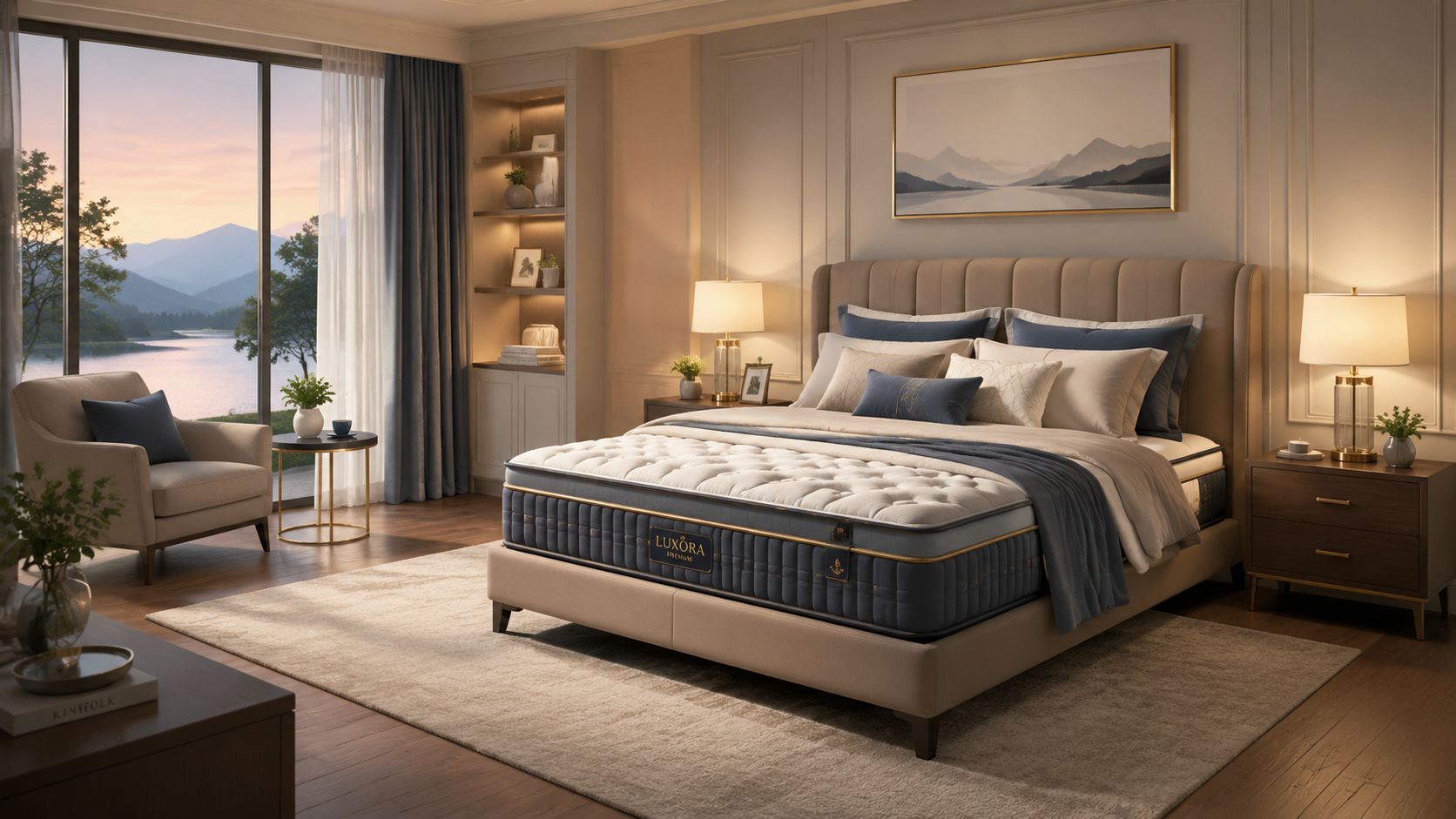
A mattress is never an isolated object in a well-designed home. It governs the bed height, influences bedside proportions, changes the amount of visible headboard, and determines whether the room feels balanced or top-heavy. Good design begins there.
The bed as the room's anchor
A serene bedroom depends on proportion. A thick, generously cushioned mattress can soften a room and invite layered linens. A cleaner, more structured mattress can sharpen the silhouette of a wood or upholstered bed. Neither is naturally superior. The room needs internal harmony.
A complete room concept matters. A mattress should be chosen alongside the bed, benches, lighting, textiles, and rug, not after them. In refined interiors, the rug is often the visual foundation. Hand-knotted rugs in Ontario bring weight, texture, and tone to the room long before the duvet is folded back. The Rug Market approach treats these pieces as Art for your Floor, which is exactly right.
Designer's Insight
Designer's Insight: A tailored mattress profile pairs beautifully with a sculptural headboard, crisp percale bedding, and a quiet hand-knotted wool rug. The result feels grounded, not overstuffed.
An adjustable foundation can also refine comfort without disrupting the room's elegance. It adds practical versatility for reading, resting, or easing pressure through the upper body, especially when integrated thoughtfully into the bed design. Clients considering that option may find value in the benefits of an adjustable base for comfort and well-being.
A few principles keep the room composed:
- Match mattress depth to headboard scale. A lofty mattress can shorten the visible headboard if proportions aren't considered.
- Use bedding to reinforce the feel. Structured mattresses suit fitted bedding. Softer builds welcome more drape and layering.
- Start with the floor. A bedroom settles best when the rug anchors the bed and extends the visual comfort of the mattress into the wider space.
This is the difference between buying a mattress and designing a bedroom.
The Canadian Luxury Shopping Experience
You wake in a handsome bedroom with the right rug, proper casegoods, and a beautifully scaled bed. Yet the mattress still leaves your shoulder numb and your lower back tense. That is the problem with treating a mattress like a quick online order. For side sleepers, and especially for heavier side sleepers across Southern Ontario, comfort has to be judged in person, within the context of the room and the way you live.

Why in-person testing still matters
A product page can describe pressure relief, support, and motion control. It cannot tell you whether your shoulder sinks enough, whether your waist stays lifted, or whether the mattress keeps its poise under a heavier frame. Those are physical judgments. They belong in a showroom.
This matters even more if you are furnishing a primary bedroom with intention, not merely replacing an old mattress. The right model must suit the sleeper, the bed frame, the bedding profile, and the overall character of the room. A tall pillow-top changes the line of a headboard. A firmer, cleaner profile creates a different look entirely. Good shopping accounts for both sleep and design.
A mattress can sound excellent online and still feel wrong in the body and out of place in the room.
From showroom to bedroom
Luxury shopping should feel measured and well handled from the first test rest to the final installation. Strong service includes informed guidance, clear answers, and delivery that protects the room you have already invested in. That final stage matters. A mattress is not fully chosen until it is properly set in place and the bedroom is left orderly.
That standard usually includes:
- Placement on the bed base or foundation
- Careful removal of packaging
- Respect for surrounding furniture and finishes
- A calm, well-managed installation process
If you want a clear sense of what white-glove delivery includes, review the service before you buy. It is particularly valuable in homes with substantial bedroom furniture, narrow stair access, delicate walls, or a fully designed scheme that should not be disturbed by a rushed drop-off.
The bed-in-a-box model reduces the decision to shipping. A curated Canadian shopping experience restores judgment, proportion, and proper service. For clients in Niagara, Hamilton, Toronto, and the surrounding Southern Ontario market, that is the better way to buy a mattress, especially when the goal is a complete bedroom that feels resolved on day one.
For homeowners seeking luxury furniture in Niagara, interior design services in St. Catharines, and a more considered answer to the search for the best mattresses for side sleepers in Canada, Critelli Furniture offers a design-led path from selection to installation. Experience the craftsmanship in person at the King Street Showroom. Book your complimentary design consultation today. For those building the entire room from the ground up, visit the Rug Market to find your room's foundation.