
Accent Chair Velvet: Your 2026 Style Guide


The room is nearly finished, yet something still feels unresolved. The sofa is comfortable, the lighting is considered, and the artwork has its place, but the space lacks a piece with enough presence to gather everything around it. A well-chosen velvet accent chair can provide that missing note, adding colour, texture, and a sense of intention without demanding a complete redesign.
In Southern Ontario homes, the best chair does more than photograph beautifully. It needs the right scale for the room, a fabric suited to the household, construction that supports long use, and companions that make the whole interior feel composed. The chair becomes the room's soul when it connects comfort with heirloom quality, rather than functioning as a decorative afterthought.
Choosing the Perfect Velvet Accent Chair
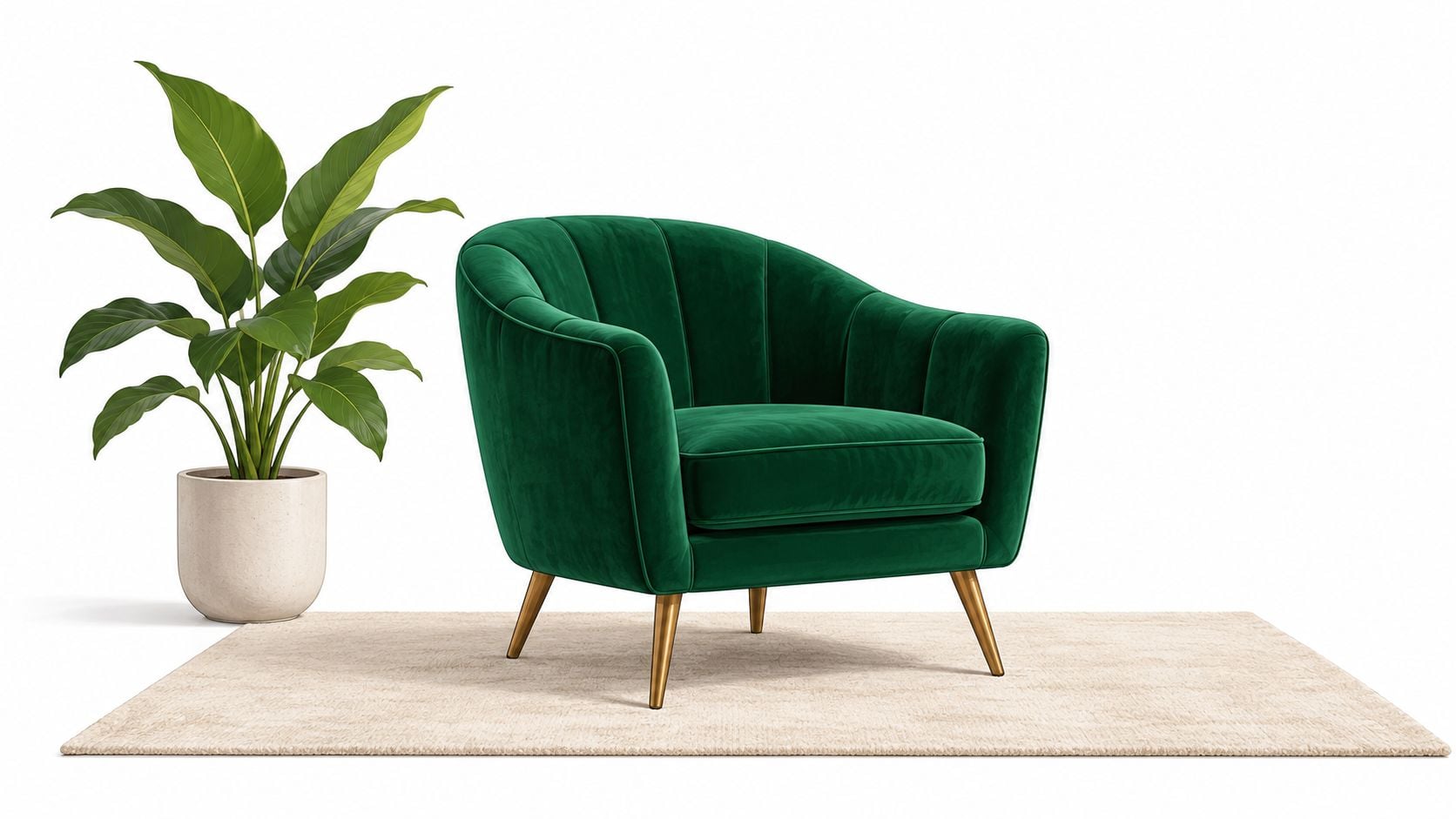
A homeowner in St. Catharines may begin with a simple wish: a statement chair for an empty corner beside a bookcase or window. Perhaps the room already contains quiet neutrals, so an emerald, sapphire, or deep rust velvet seems like the right way to introduce character. The decision becomes more meaningful once the chair is considered as part of the room's daily life, not merely as a colour sample.
Velvet has remained relevant because its surface changes with light and movement. Its pile can appear lighter in one direction and deeper in another, giving a chair visual richness that flat woven upholstery often lacks. That depth allows a single accent chair to bridge traditional architecture and contemporary furnishings, especially in older Niagara homes where heritage trim sits comfortably beside modern pieces.
Start with the room, not the swatch
Before choosing colour, measure the available footprint and observe the visual weight of the surrounding furniture. A high-backed chair with broad arms can anchor a generous sitting room, while a compact swivel or slipper silhouette may suit a condo reading corner more naturally. The chair should provide contrast, but it shouldn't make the sofa, side table, or artwork appear undersized.
Comfort matters just as much as appearance. A chair intended for reading needs supportive arms, a usable seat depth, and a back proportioned to the sitter. A piece used occasionally in an entry or bedroom can be more sculptural, but a family-room chair should invite regular use.
For homeowners exploring a refined silhouette, a modern lounge chair can offer a useful reference point for balancing upholstery, frame, and proportion. The strongest selection often has one memorable feature, such as a curved back, turned leg, channel detail, or restrained metal base, rather than several competing details.
Look for lasting character
The most successful accent chair velvet choices feel at home beside both classic and contemporary pieces. A rich jewel tone can enliven pale walls, while tobacco, moss, navy, or charcoal can create a quieter foundation. The aim isn't to follow a temporary colour cycle. It's to choose a shade that works with the architecture, daylight, flooring, and furnishings already present.
That is where a curated selection matters. A chair with refined lines and sound construction can move from one room to another over the years, especially if its upholstery can be professionally refreshed. California's furniture-repair and reupholstery sector illustrates the commercial importance of maintaining upholstered seating. In 2026, the sector was estimated at approximately $290.1 million, with 2,202 businesses employing about 3,411 people, according to IBISWorld's California furniture-repair and reupholstery profile. The figures also show a specialised service market under pressure, which makes repairable construction and thoughtful fabric selection more valuable.
Understanding Velvet Fabric Characteristics
A velvet accent chair often becomes the soul of a room, but only if the fabric suits the way the chair will really be used. In practice, velvet is a category, not a single material. Fibre content, pile height, backing, seam construction, cushion fill, and cleaning requirements all shape how the chair looks after a year of daily sitting, not just how it photographs on the showroom floor.
Read the fabric specification
Start with the specification sheet. Polyester velvet often handles everyday wear well and tends to hold colour and texture with more consistency. Cotton and rayon velvet can offer a softer hand and a subtler response to light, but they usually ask for gentler treatment. Blends sit in the middle, and the exact composition matters far more than the general label “velvet.” For a broader upholstery comparison, see our guide to the best fabrics for sofas.
Pile deserves the same level of attention. A dense, even pile usually appears more refined and stays visually controlled. A longer or looser pile can be beautiful, though it will show tracking, shading, crushing, and pressure marks more readily. That is not automatically a flaw. It is part of velvet's character, and it should match the atmosphere you want, whether that is polished and formal or softer and more relaxed.
Before ordering, ask for the upholstery specification and read it carefully. It should cover:
- Fibre content: Confirm whether the velvet is polyester, cotton, rayon, a blend, or a performance construction.
- Backing: Ask how the face fabric is supported and whether adhesives or finishes are part of the upholstery build.
- Abrasion information: Request the actual performance documentation rather than accepting a vague “high durability” claim.
- Care instructions: Check whether professional cleaning is allowed and which methods may alter the pile.
- Colour and finish: Confirm the exact colourway, treatment, and whether the sample matches the finished upholstery.
A material listing such as buy luxe cuddle velvet by the yard can be useful for learning how velvet is described and sold as a textile. Still, a yardage sample does not tell the whole story of a finished chair. It can show softness, directionality, pile density, and how the nap responds to touch, but it cannot confirm how the upholstery will behave once stretched over arms, seat rails, corners, and cushions.
Prioritise the complete chair
The face fabric matters, though durability never rests on abrasion figures alone. Frame construction matters just as much. Kiln-dried hardwood frames, reinforced corners, orderly seam placement, and cushion fills suited to the chair's depth and pitch all help keep velvet looking composed instead of strained. If the frame flexes, the seams will work harder. If the cushion collapses quickly, the pile will crease and wear unevenly.
Sit in the chair if you can. The seat should feel stable when you lower yourself into it and when you rise. Arms and backs should feel quiet and secure under ordinary pressure, not loose or restless. A velvet chair is decorative, but it is still working upholstery.
That broader standard of craftsmanship has long shaped the furniture trade, as noted in a Los Angeles Times account of the regional furniture industry. For a homeowner, the practical lesson is simple. Skilled construction affects how well a chair supports its upholstery over time.
Practical rule: A luxurious surface cannot make up for a weak frame, poor seam work, or a cushion that does not suit the way the chair will be used.
Canadian buyers should also request documentation for the finished upholstery fabric under CAN/CGSB 4.2 No. 27.5, the Canadian 45-degree, one-second flame-impingement method. Raised-fibre textiles such as velvet have a different threshold from products without a raised fibre surface. Health Canada outlines the relevant requirements in its Canadian textile flammability guidance. A supplier's statement that a fabric is “fire resistant” is not the same as documented compliance for the exact face fabric, colourway, backing, and finish.
Styling Strategies for Color and Scale
A velvet chair succeeds when colour and scale work together. A dramatic shade in a delicate frame can feel ornamental, while a restrained colour on an oversized silhouette may dominate the room. The most persuasive interiors give the chair a clear role, then support that role with proportion, texture, and repetition.
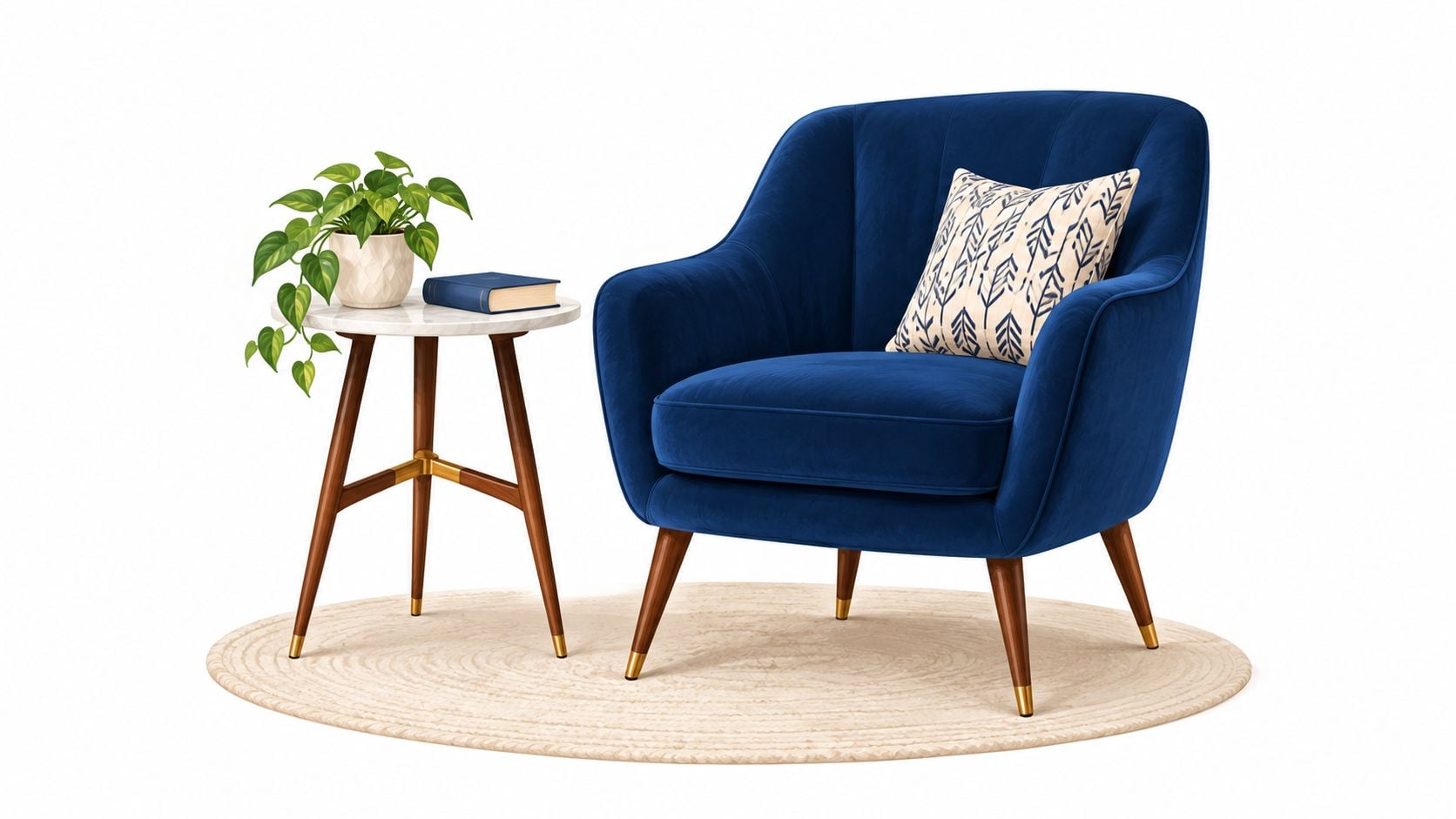
A homeowner might choose a deep blue chair beside a pale sofa, then echo the blue subtly in a rug border, artwork, or ceramic object. Another room may call for a muted olive chair that blends with timber, aged brass, and warm stone. Neither approach is automatically better. The decision depends on whether the chair should lead the composition or subtly complete it.
Build a visual conversation
Colour becomes refined when it appears in controlled relationships rather than exact repetition. Velvet already carries depth through its pile, so a chair doesn't need a loud pattern to make an impression. A single saturated colour can be balanced by quieter upholstery elsewhere, natural wood, brushed metal, or a rug with restrained movement.
Texture adds another layer. Smooth velvet beside a nubby wool rug creates tactile contrast, while velvet paired with polished surfaces produces a more formal atmosphere. The principles described in texture in interior design are especially useful here because the chair's impact depends on how its surface interacts with everything around it.
Let scale govern the decision
The chair's arms should relate comfortably to the sofa and neighbouring seating. The seat height can vary, but a major difference in arm height may make the arrangement look accidental. A homeowner can use painter's tape to mark the proposed footprint on the floor before ordering, then test walking routes, table clearances, and door swings.
The surrounding room should determine whether one chair or a pair makes sense. Two broad chairs may create a balanced conversation area in a generous room, but they can crowd a smaller living space. A compact chair may look elegant beside a console yet feel insignificant next to a deep sectional.
A simple visual test helps:
- Check the footprint: Mark the chair's width and depth on the floor.
- Study the sightlines: View the proposed position from the doorway, sofa, and main circulation route.
- Compare arm levels: Relate the chair's arms to nearby seating.
- Assess visual weight: Consider whether the frame, upholstery colour, and back height need a lighter or stronger companion.
- Plan the landing point: Use a rug or side table to give the chair a defined place in the room.
The chair becomes a focal point when it feels inevitable in its setting. That result comes from proportion, not volume.
Essential Care and Maintenance Tips
Velvet rewards a measured care routine. The objective isn't to scrub the pile into submission. It's to prevent dust from settling, respond to spills before they migrate into the backing, and preserve the direction and finish recommended by the manufacturer.
Establish gentle habits
Regular vacuuming with a soft upholstery attachment removes grit that can work between the fibres. The nozzle should move with the pile rather than against it, and forceful brushing should be avoided. A soft clothes brush may help restore the nap after light use, but only if the upholstery instructions permit it.
Spills need immediate attention. Blot with a clean, absorbent cloth and lift moisture rather than rubbing it across the surface. Water, heat, household detergents, and improvised stain removers can produce rings, flatten the pile, or alter the colour. The correct response depends on fibre content and finish, so the care label and supplier's instructions take precedence over a universal cleaning recipe.
Protect the finish from avoidable stress
Place the chair away from intense direct sunlight when possible, particularly if the upholstery is a saturated colour. Rotate loose cushions if the design allows it, and keep sharp objects, rough throws, and untrimmed pet claws away from the pile. In a Southern Ontario household, winter salt and muddy footwear make placement important. A chair positioned beyond the main entry path will face less accidental contamination than one used as a landing point for coats and shoes.
For households with animals, the upholstery should be judged by more than its appearance. A pet-friendly furniture guide can help frame the decision around cleaning access, fibre behaviour, seam exposure, and the pet's habits. A tightly woven, practical velvet may serve better than a delicate surface chosen solely for its sheen.
Small structural problems shouldn't be ignored. Loose legs, uneven feet, or a shifting support can place additional stress on the frame and upholstery. General guidance on DIY furniture support fixes may help with simple inspection and support questions, although complex repairs should be handled by a qualified professional.
Designer's Insight: The most durable care plan is the one the household can follow consistently. A chair that's easy to maintain will remain beautiful longer than one that requires unrealistic rituals.
Benefits of Custom Design Consultations
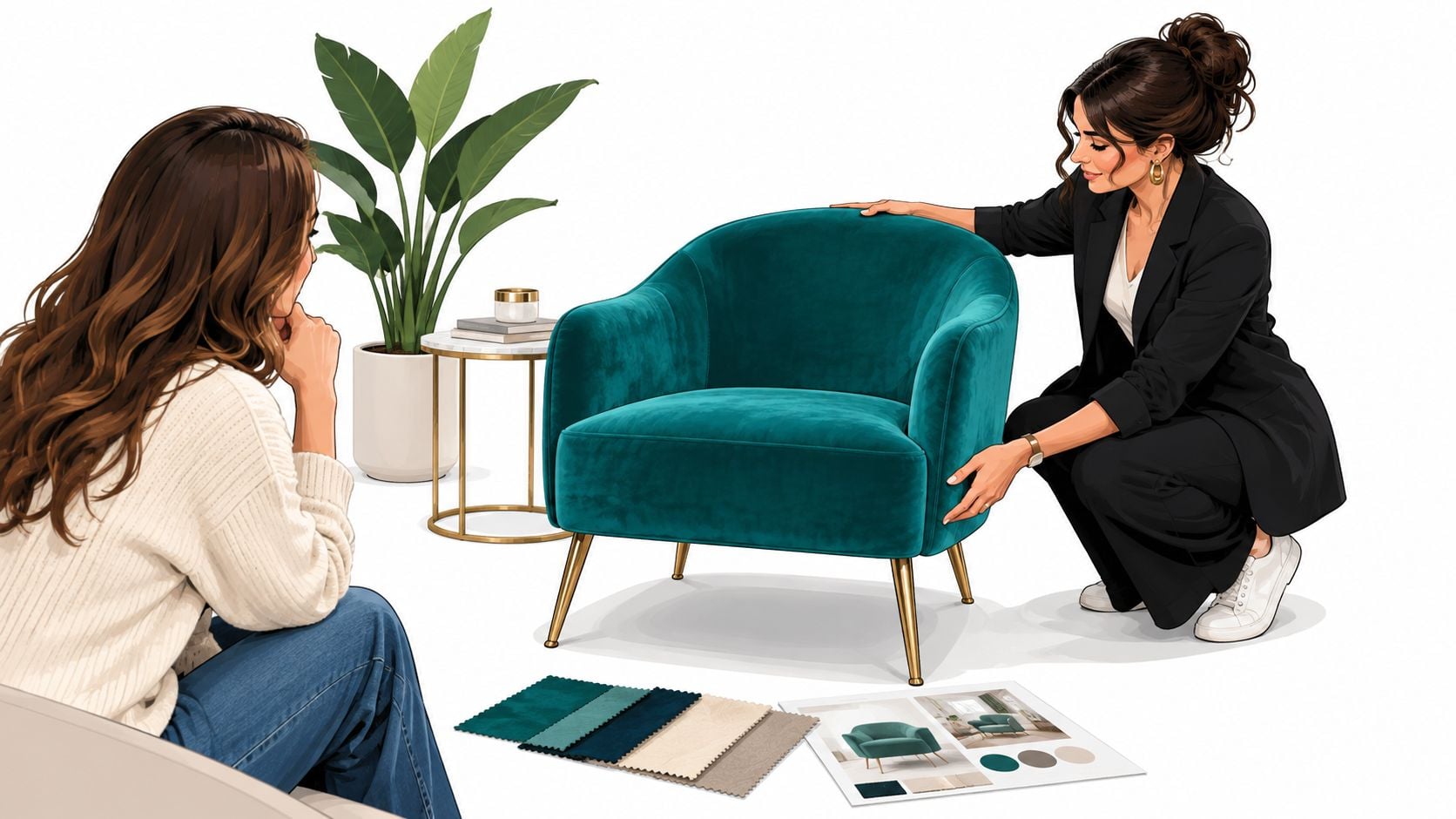
A velvet chair becomes far more successful when its specification begins with the room rather than the showroom floor. Professional design advice can identify a mismatch before it becomes an expensive lesson, whether the problem is an oversized back, an unsuitable seat depth, a colour that fights the daylight, or a fabric that doesn't suit the household.
Critelli Furniture was founded in 1914 by Joseph Critelli and his young son Thomas at the corner of Ormond Street and Albert Street in Thorold, Ontario. The family-run business remains connected to later generations, including fourth-generation owner Joe Critelli and his daughter Julia, representing the fifth generation, as described by the Greater Niagara Chamber of Commerce profile. That continuity gives the phrase timeless craftsmanship a specific local context.
Solve the room before selecting the chair
A design consultation can consider circulation, architecture, natural light, existing finishes, and the relationship between seating pieces. Critelli's design offering includes professional space planning, bespoke customization, and in-home consultations, with appointments addressing either a single corner or an entire estate, according to its collaborative design process.
That process matters because a velvet accent chair rarely lives alone. The designer can coordinate its upholstery with a sofa, leather piece, drapery, lighting, occasional tables, and flooring. The result is a complete room concept, not a collection of individually attractive purchases.
A consultation is particularly valuable when the homeowner is deciding between two plausible directions. Consider a warm green velvet with a timber frame versus a cooler blue velvet with a metal base. Both may be beautiful, but one may better suit the home's daylight, architectural details, and existing rug. Seeing full samples beside the actual room materials often reveals a distinction that a small online image can't provide.
Specify what the room needs
Bespoke work can address dimensions, seat firmness, leg finish, seam detail, and upholstery. Those choices should be guided by use:
- For reading: Prioritise supportive arms, a comfortable back, and enough seat depth for relaxed sitting.
- For conversation: Consider a more upright profile that keeps the sitter connected to the room.
- For a family room: Favour a documented, practical fabric and sturdy cushion construction.
- For a decorative corner: Allow more freedom for a sculptural frame or dramatic colour.
The same discipline applies to established furniture makers. Collections from Stickley, Stressless, Magniflex, and other carefully selected brands can be evaluated according to the room's purpose rather than treated as isolated labels. The design studio's role is to edit the possibilities until the chosen chair feels personal, proportionate, and useful.
The Importance of a Foundational Rug
A velvet chair can provide the room's soul, but a rug gives that soul a place to live. Without a grounding layer, an accent chair may appear to float beside the sofa, especially in an open-plan room where furniture needs visual boundaries. The rug connects the chair to the floor, defines the seating area, and establishes a palette that other pieces can follow.
Critelli describes its Rug Market as “Art for Your Floor”, with a focus on hand-knotted, artisanal rugs sourced from around the globe. Its approach treats the rug as the foundation for a room's colour palette and character, which makes it particularly relevant when selecting a dramatic velvet chair. A homeowner seeking hand-knotted rugs Ontario can consider the rug before finalising the upholstery, rather than using it to correct a colour decision later.
Choose the rug as a composition tool
A patterned rug can temper a plain velvet chair, while a quiet rug can let an unusual chair shape or saturated colour lead. The rug doesn't need to match the upholstery. It should share at least one meaningful relationship, such as warmth, value, undertone, or a small repeated colour.
Texture also affects the balance. A hand-knotted wool rug can soften a room filled with hard surfaces, while a more graphic pattern can sharpen a collection of rounded furniture. The chair's legs should sit convincingly within the arrangement, and the rug should be large enough to make the seating area feel intentional rather than narrowly isolated.
Consider the full room
The best pairing often begins with the question of mood. A calm neutral rug can support a jewel-toned chair in a bedroom or reading corner. A more expressive rug can give a restrained velvet chair an artistic setting in a formal sitting room. In both cases, the rug determines how the chair is read from across the room.
This is why the accent chair shouldn't be selected as a final decorative flourish. Upholstery, rug, sofa, lighting, and tables should be considered as a sequence of related decisions. When the foundation is right, the velvet feels collected rather than staged.
Experience White-Glove Delivery Service
The final test of a furniture purchase happens at home. A chair may have been chosen carefully, upholstered to specification, and paired with the right rug, but the transition can become frustrating if it arrives at the entrance in a large carton with no help for placement or assembly.
A white-glove service handles that final chapter with care. Critelli's published description includes room-of-choice placement, unpacking, assembly, final positioning, and packaging removal. The team carries the chair to the intended room, protects walls and floors, inspects surfaces and components, attaches hardware where required, levels the piece, and positions it according to the planned clearances.
Protect the design intent
A homeowner should confirm access routes, door widths, stair conditions, and the intended location before delivery. Moving guidance such as Gentle Giant Removals moving tips can help households think through protective coverings, handling points, and the risks of dragging upholstered furniture across floors.
Once inside, placement should follow the complete room concept. The chair may need to sit at a precise angle toward the sofa, maintain clearance from a table, or align with the edge of the rug. A professional team can make those adjustments while protecting the upholstery and leaving the room free of cardboard and packing materials.
For details on the service and its practical inclusions, homeowners can review white-glove delivery service. The experience should feel like a smooth transition from the showroom to the home, with the velvet chair ready to become part of the room rather than another project awaiting attention.
Critelli Furniture offers curated accent seating, bespoke upholstery guidance, complete-room planning, and a Rug Market centred on artisanal “Art for Your Floor.” Homeowners across Greater Niagara, Hamilton, and Toronto can visit Critelli Furniture to explore the craftsmanship in person at the King Street Showroom and book a complimentary design consultation today.