
Modern Recliner Sofa Guide for Stylish Comfort at Home

A living room can be beautifully furnished and still leave one person shifting cushions, stretching sore legs, or choosing between an attractive sofa and a comfortable chair. For many Southern Ontario homeowners, the modern recliner sofa now resolves that tension. It offers the ease of supported lounging while fitting more naturally into a room designed for conversation, reading, and entertaining.
The difference lies in the details. Slimmer profiles, discreet controls, considered upholstery, and carefully scaled silhouettes have moved reclining furniture beyond the bulky television-room stereotype. A well-chosen piece can feel design-forward, comfortable, and integrated with the architecture of a St. Catharines heritage home, a Hamilton townhouse, or a Toronto condominium.
Introduction to the Modern Recliner Sofa Reimagined
A homeowner may begin with a familiar dilemma. The existing sofa has the right colour and proportions, but it doesn't support the lower back. A separate recliner solves the comfort problem, yet interrupts the room's visual balance. A modern recliner sofa brings those priorities together by making ergonomic performance part of the overall composition.
The category has also grown with the wider Canadian upholstery market. The Canada sofa market is projected to generate US$9,396.0 million in revenue in 2025 and reach US$12,860.1 million by 2033, implying a 4.1% CAGR from 2026 to 2033. Recliner sofas are among the tracked product segments, which places modern reclining seating within a substantial, expanding Canadian furniture category rather than treating it as a niche product (Canadian recliner sofa collection).
Comfort without visual compromise
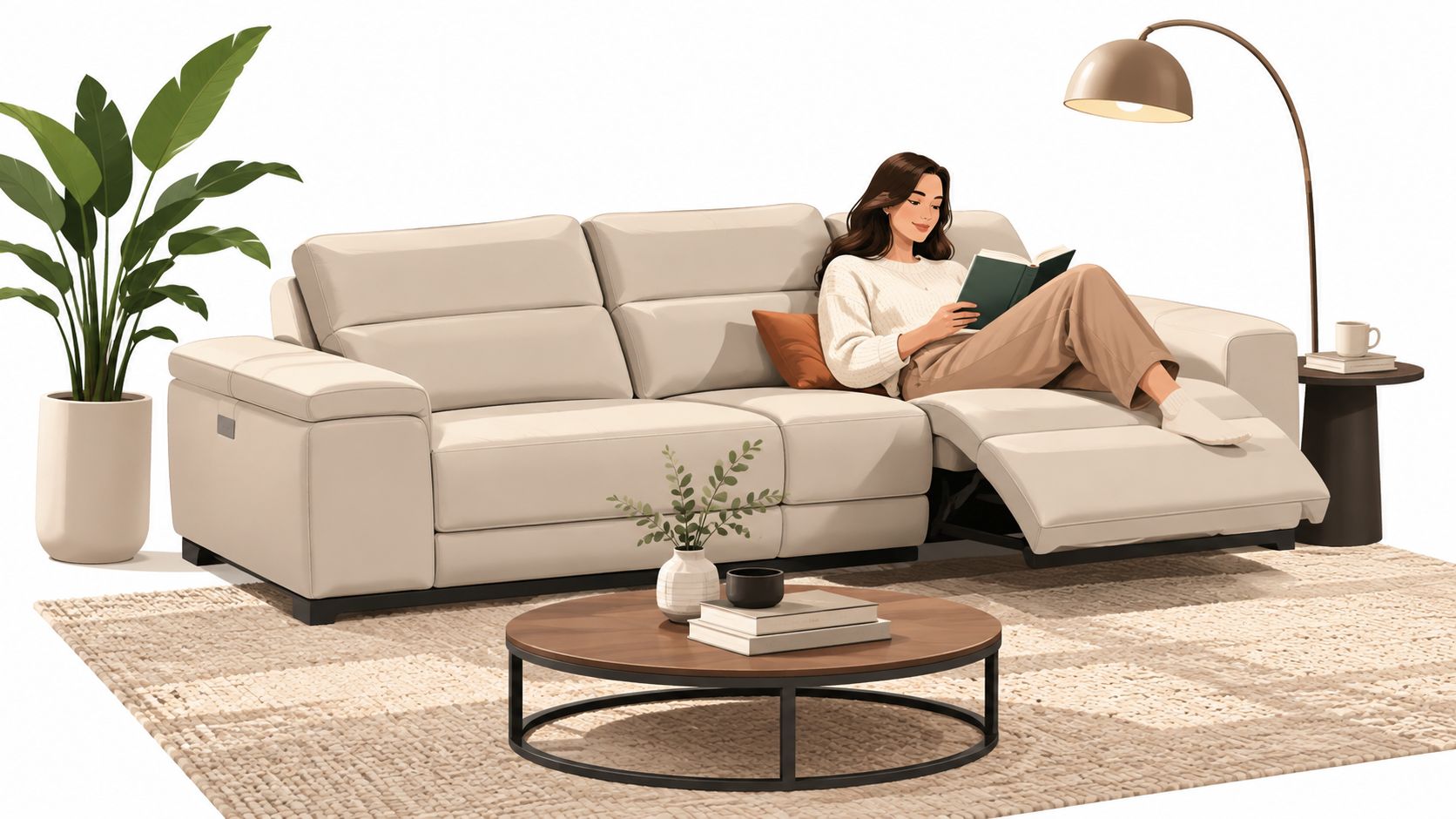
The most successful designs conceal their working elements. A power button can sit within easy reach without becoming the focal point. Adjustable headrests and lumbar support can remain visually restrained. A refined arm, a clean base, or a warm leather finish allows the sofa to read as furniture first and reclining technology second.
That restraint matters in rooms where the sofa must support several kinds of living. A reader may want a deeper angle and raised legs, while a guest may prefer an upright seat for conversation. The furniture should accommodate both without making the room feel like a dedicated media suite.
A family-run furniture destination with roots dating to 1914, Critelli Furniture has spent more than a century working with homeowners who want comfort to sit within a larger design language. That heritage encourages a more measured approach, one based on heirloom quality, timeless craftsmanship, and a curated selection rather than a rushed feature checklist.
A broader way to think about reclining seating
The modern recliner sofa should be judged as part of a complete room concept. Its scale affects the rug, coffee table, lighting, circulation, and sightlines. Its upholstery influences the wall colour and surrounding wood tones. Its mechanism affects delivery access, power placement, and long-term service.
Readers comparing supportive seating for mobility needs may also find practical context in this guide to lift chairs from DME Superstore, particularly when the priority is assisted movement rather than a living-room sofa arrangement. The distinction helps clarify which type of seating best matches the household's daily requirements.
For a busy homeowner, the clearest starting question is simple: should the sofa disappear into the room, or should it make a confident design statement? Both can work. The right answer depends on architecture, use, material, and how carefully the entire room is considered.
How to Choose the Right Modern Recliner Sofa for Your Home
A living room can look finished on paper and still feel wrong once the sofa arrives. A modern recliner sofa asks for a different kind of decision, because it has to fit the room, support the body, and work with the way a home in Southern Ontario runs, from tight hallways to winter boots by the door.
Manual, power, and smart movement
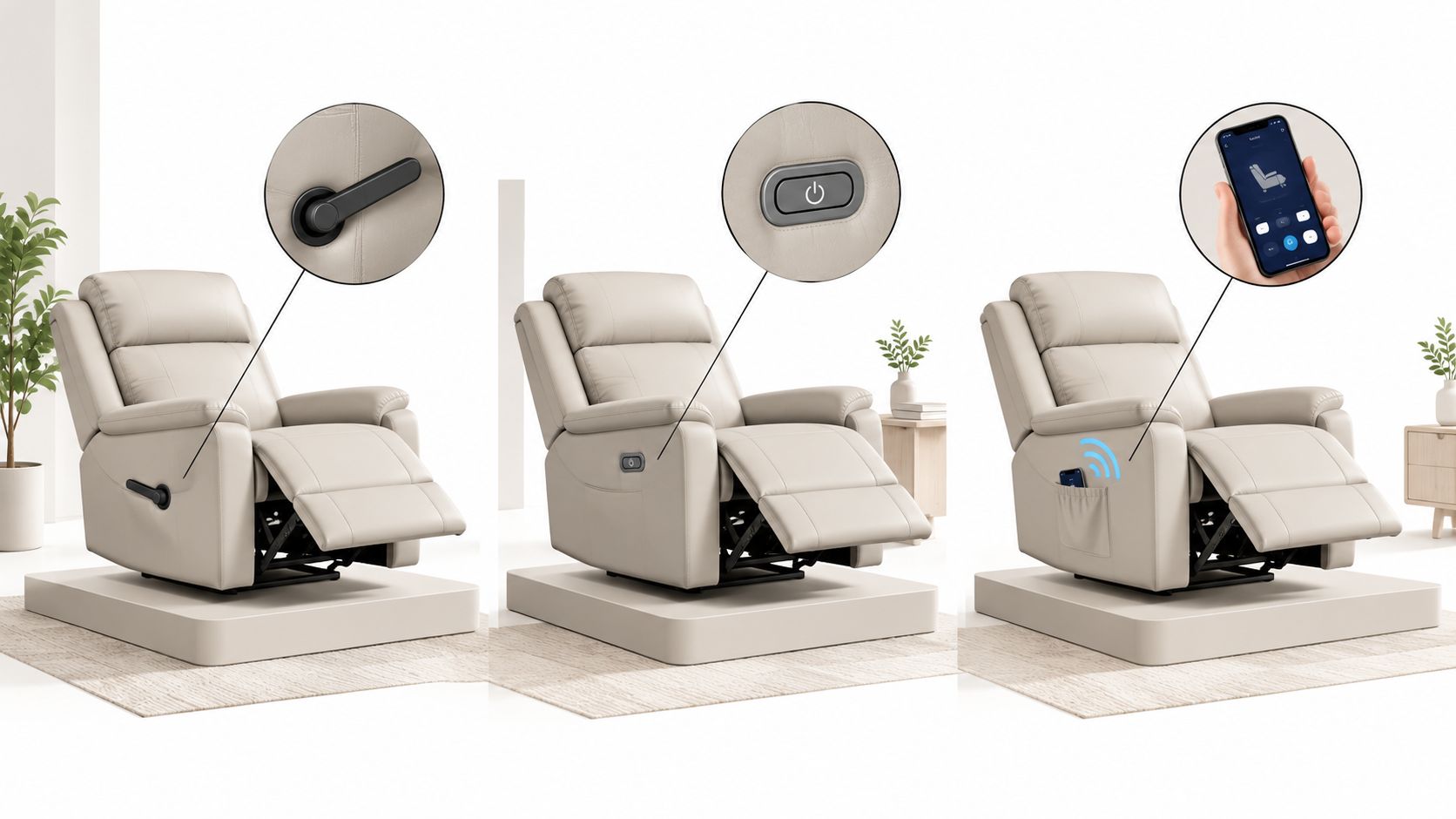
Start with the mechanism, because it shapes daily use. A manual recliner suits a home that values simple operation and flexible placement. It does not need an outlet, so it can sit where the room composition works best. The tradeoff is physical effort, and the range of positions is often more limited.
A power recliner gives smoother adjustment with less strain. That matters in a household where someone wants easier leg support or more exact control over posture. It does need planned power access, and the motor should come with clear service support. For readers weighing those differences in a practical way, this power recliner versus manual comparison is a useful place to start.
A smart recliner adds connected controls or personalized settings. Those features can help when they solve a real routine, but they should not distract from the basics. The frame still needs to be sound, the seat still needs to support well, and the mechanism still needs to be serviceable. As the recliner sofa market coverage suggests, demand continues to rise for connected comfort features, while North America remains a major part of the category (recliner sofa market coverage).
| Feature | Best For | Style Impact | Consideration |
|---|---|---|---|
| Manual movement | Buyers who want fewer components and easier placement | Controls can stay visually discreet | Requires physical effort |
| Power movement | Users seeking low-effort adjustment | Can preserve a clean silhouette when controls are integrated | Needs power planning and service support |
| Smart features | Households with a clear need for connected or personalized adjustment | May add convenience without changing the overall form | More complexity is not always better |
| Wall-hugger construction | Condos and compact rooms | Keeps the profile visually close to the wall | Fully reclined clearance still needs checking |
Construction matters more than decoration
A strong frame and a stable mechanism protect comfort over time. Canadian safety guidance points to CAN/CGSB-177.1, the Canadian General Standards Board standard for upholstered and soft-bodied furniture, as the governing standard for upholstered recliners sold in Canada (Canadian recliner safety guidance). That makes it sensible to ask how the frame, seat support, joints, and moving parts have been built, not only how the upholstery looks.
The seat should support the thighs without forcing the knees too high. The back should support the lumbar area without creating a hard pressure point. A headrest should support the neck in a reclined position, then stay comfortable when the sitter returns upright.
Upholstery shapes the room's character after the structure is settled. A richly coloured, full-grain leather can become an architectural accent. A refined performance fabric may feel softer and more relaxed in a family room. Textured textiles, leather-look materials, and blended covers should be weighed for both care requirements and Canadian compliance, rather than chosen as decoration alone.
Designer's Insight: A strong leather finish gains balance when paired with a neutral hand-knotted wool rug. The leather supplies visual authority, while the rug softens the room and gives the seating a settled, layered quality.
The strongest choice is rarely the model with the longest feature list. It is the one that supports the household's bodies, fits the room's proportions, and reflects a preference for artisanal construction over disposable styling.
Measuring and Planning for a Perfect Fit
A modern recliner sofa can look modest on a showroom floor and feel oversized once it reaches a compact room. Movement changes the calculation. The closed footprint is only part of the picture. You also need clearance behind the back, room for the footrest or seat to travel forward, and a clear path from the front door to the final spot.
A practical measuring sequence
Start with the room itself. Measure wall length, usable depth, ceiling height where relevant, and the location of windows, radiators, vents, outlets, and door swings. Then mark the sofa's proposed footprint on the floor with painter's tape. A taped outline shows more than a product photo ever can. It reveals whether the piece interrupts a walkway or competes with a fireplace.
Next, measure the reclined position. Ask for the manufacturer's closed depth, fully open depth, wall clearance, and any required front clearance. A wall-hugger still needs planning. The back may stay close to the wall while the seat travels forward into the room.
The delivery route matters just as much:
- Measure the entrance. Record door width, height, threshold conditions, and the room available for turning.
- Follow the actual path. Include hallways, stair landings, elevator doors, condo corridors, and tight corners.
- Check obstructions. Note railings, pendant lights, low ceilings, and built-in cabinetry.
- Plan power access. Keep cords away from walking paths and place outlets so the sofa does not require an awkward extension setup.
- Test the open footprint. Mark the fully reclined position and confirm that the footrest will not strike a coffee table or block a main route.
For a more detailed moving checklist, the TLC Moving & Storage couch guide gives useful context on access, handling, and preparation. That same discipline helps with a powered sofa, where controls and cords need equal care.
Comfort is a measurement, too
Seat depth changes how the sofa fits the person, not just the room. A shorter occupant may need a shallower seat so both feet stay supported. A taller occupant may need more depth and a higher back. The seat depth measurement guide helps translate body proportions into a more informed choice.
Frame quality and mechanism construction also affect how long a recliner can serve a home. Canadian furniture guidance points to hardwood framing and well-built mechanisms as signs of longer service, while lighter construction tends to wear sooner. In practical terms, a sofa that must be forced through a doorway, or placed where its motion catches another piece, will face unnecessary strain. That is why measuring is part of durability planning, not just installation prep.
A professional design studio can map the sofa with the rest of the room, instead of treating it as a stand-alone purchase. That room-wide approach matters in heritage homes, where narrow stairs, irregular walls, and original trim can change the answer. It also helps in newer Southern Ontario homes, where open-plan rooms can still feel tight once a large reclining piece starts moving.
Practical rule: Measure the route before falling in love with the upholstery. A beautiful sofa that cannot arrive safely is not the right selection.
Styling Your Modern Recliner Sofa as Part of a Complete Room Concept
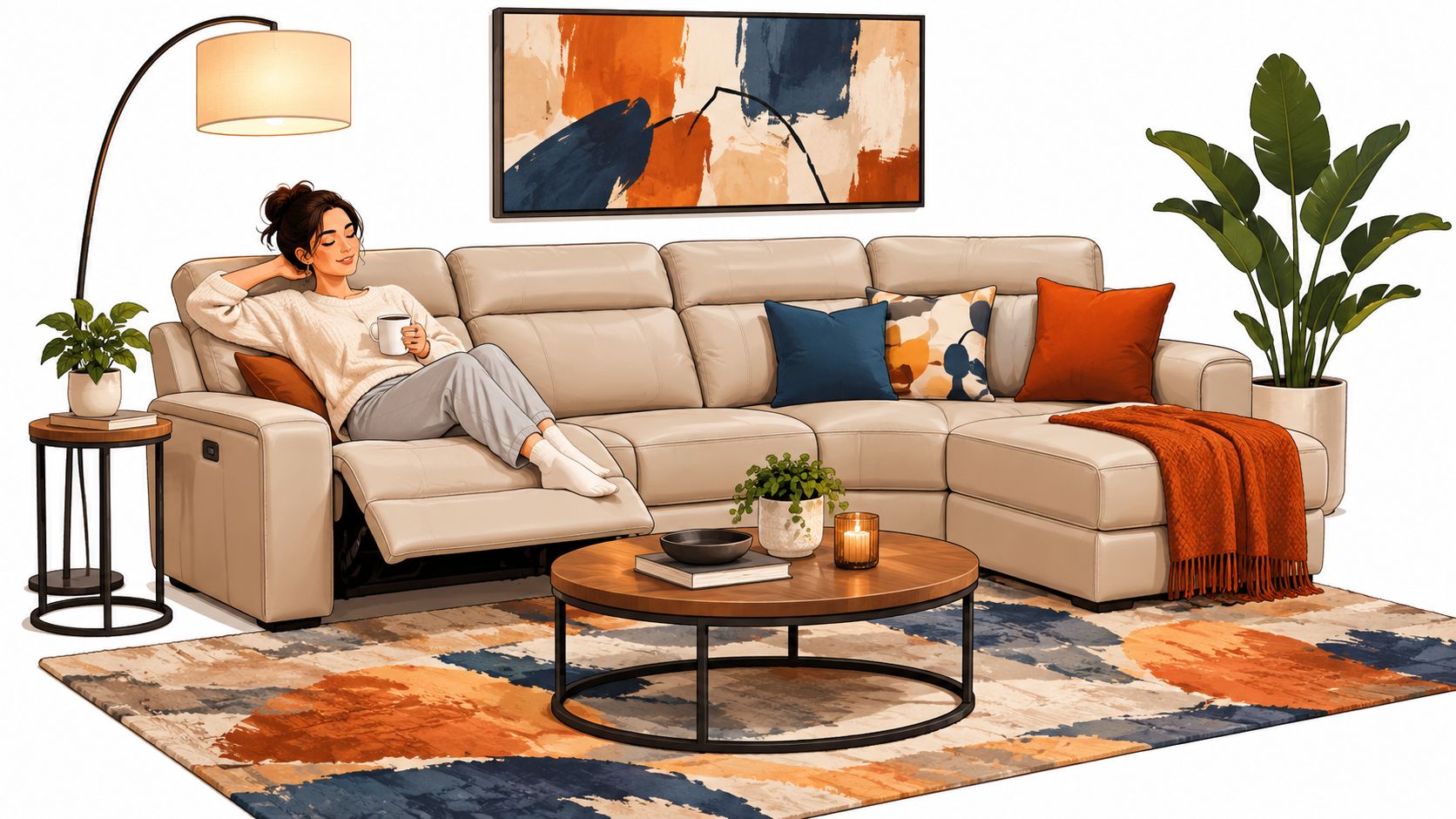
A modern recliner sofa works best when the rest of the room is planned around its scale and motion. The aim is not to hide the mechanism. It is to give the sofa a clear role through proportion, texture, colour, and placement, so the room feels designed rather than assembled.
Begin with the floor
The floor sets the stage, especially in Southern Ontario homes where living rooms often need to carry both daily use and a sense of welcome. A rug anchors the seating area, gathers the pieces into one conversation, and softens the visual weight of a substantial sofa. For homeowners looking at home interior design ideas, the question is not only colour. It is whether the rug leaves enough room for the sofa to recline comfortably and still keeps circulation easy.
A rug works a little like a frame around a painting. If it is too small, the sofa can feel adrift. If the pattern is too loud, the upholstery loses clarity. A restrained wool rug can steady a stronger leather finish, while a more expressive rug can give a quiet neutral sofa some life.
Build a coordinated palette
A complete room concept uses repetition with restraint. Wood can return in a side table, a picture frame, or a mantel detail. Metal can echo in a lamp base or a cabinet pull. Cushions can borrow a secondary tone from the rug instead of copying the sofa exactly, which gives the room more depth.
The same logic works across different styles:
- For traditional rooms: Pair reclining upholstery with turned wood, framed art, and a rug with controlled pattern.
- For contemporary rooms: Use a clean silhouette, sculptural lighting, and quiet accessories that keep the mechanism visually calm.
- For transitional rooms: Combine softly textured fabric with heritage wood tones and modern artwork.
- For relaxed family rooms: Choose durable upholstery, generous tables, and a rug that can handle daily traffic.
Ergonomic Scandinavian seating and enduring hardwood craftsmanship each bring a distinct design language. The point is not to collect labels. It is to make sure every material has a reason to be in the room, just as a good room plan balances comfort, movement, and visual order.
Use local design expertise
Ontario generated 51.3% of total operating revenue in Canada's specialized design services sector in 2024, and that share rose 4.8% year over year (Canadian white-glove and design services context). That regional strength supports the value of working with interior design services in St. Catharines when one seating choice affects the whole room.
A consultation can sort out sightlines, window light, rug proportion, art placement, and the relationship between the sofa and the rooms beside it. Critelli's home interior design ideas can also help homeowners shape a direction before choosing individual finishes.
For readers who want to keep spending under control, budget-friendly design from Joey'z Shopping offers useful guidance on prioritising what matters most and layering choices with care. A design-forward room does not need every piece to carry the same weight. It needs the main pieces to support one another and make the sofa feel like part of the home, not a separate purchase.
Caring for Heirloom Quality and Ensuring Lasting Comfort
Care begins with knowing what the upholstery can tolerate. Leather, coated materials, delicate textiles, and performance fabrics don't share the same cleaning routine. A product's care label and manufacturer guidance should take priority over a general household cleaner.
Match the routine to the material
For leather, remove dust with a soft, dry cloth and address spills promptly with a clean, lightly damp cloth where the care instructions permit. Conditioning should be compatible with the finish. The leather furniture care guide provides a more detailed framework for preserving suppleness and surface character.
For fabric, vacuum seams, crevices, and the area around the mechanism using a suitable attachment. Blot spills instead of rubbing them deeper into the fibres. Avoid saturating cushions or working liquid near motors, switches, and electrical connections.
A modern recliner sofa also needs mechanical care. Keep toys, cords, crumbs, and pet hair away from moving areas. Operate the mechanism smoothly, never force a footrest closed, and report unusual noise, uneven movement, or resistance before a minor issue becomes a larger repair.
Compliance and daily stewardship
Canadian federal textile flammability requirements apply to upholstered recliners. Textile products without a raised fibre surface must have a flame spread time greater than 3.5 seconds. Products with a raised fibre surface that show ignition or fusion of their base fibres must exceed 4 seconds, while bedding in the same regulatory framework must exceed 7 seconds. The test method is CAN/CGSB-4.2 No. 27.5.
Those requirements reinforce an important principle. Upholstery selection and testing are compliance-critical design steps, especially when textured fabrics, leather-look textiles, or blended covers are specified for the Canadian market.
A simple maintenance rhythm protects both comfort and finish:
- Weekly: Remove surface dust and inspect seams, controls, and visible moving areas.
- After spills: Blot immediately and follow the approved care method for the upholstery.
- Seasonally: Review leather conditioning needs, cord placement, and mechanism movement.
- When problems appear: Stop forcing the sofa and arrange qualified service.
Preventative care preserves more than appearance. It protects the frame, the mechanism, and the everyday comfort that made the sofa worth choosing.
The aim is heirloom quality, not showroom perfection. Natural leather may develop character, and well-used fabric may show the life of the home. Good care keeps that character graceful rather than neglected.
Bringing Your Vision Home with Confidence
The last test of a modern recliner sofa happens at the threshold. Southern Ontario homes often bring narrow staircases, tight hallways, older door frames, condo elevators, and rooms where a large motorised piece has to be placed with care. Delivery shapes the final result as much as fabric or scale, especially in homes with tricky access.
Why white-glove service matters
Canadian white-glove delivery commonly includes delivery to the room of choice, unpacking, inspection or wipe-down, assembly when required, and removal of packaging materials (white-glove delivery service details). For large, heavy furniture, that kind of service protects the piece and keeps the process orderly inside the home.
Critelli's white-glove furniture delivery supports the move from showroom selection to a finished room. That matters across the Greater Niagara, Hamilton, Burlington, Oakville, and Toronto markets, where homeowners may be furnishing historic houses, newer builds, or high-rise condominiums.
A careful delivery team should confirm the route, protect nearby finishes, place the sofa according to the room plan, assemble components when necessary, inspect the furniture, and remove the packing material. For a power recliner, the final position should also allow safe cord management and full movement of the mechanism.
A considered purchase has a longer view
The best modern recliner sofa respects the home's architecture, supports the people who use it, complements the rug and surrounding furnishings, and arrives without turning installation into a second project.
That is the value of a curated selection, a design-led consultation, and white-glove service working together. A century of family-run furniture experience, beginning in 1914, provides a heritage-aware foundation, while contemporary upholstery, bespoke finishes, and ergonomic options keep the result suited to present-day life.
Experience the craftsmanship in person at our King Street Showroom. Book your complimentary design consultation today. Visit the Rug Market to find your room's foundation.
Visit Critelli Furniture to explore a curated selection of modern recliner sofas, artisanal furnishings, and rugs for a complete room concept. Experience the craftsmanship in person at the King Street Showroom, book your complimentary design consultation today, and arrange a white-glove transition from the showroom to home.