
Critelli’s: Perfect Counter Height Tables for Your Home

Morning often tells you whether a dining space is working.
A parent is packing lunches at the counter. Someone else is answering email with a coffee. A child needs a spot for cereal that isn’t cut off from the kitchen conversation. In many Southern Ontario homes, especially across St. Catharines, Hamilton, and the Greater Toronto market, that daily rhythm has shifted away from a formal dining room and toward a more connected kitchen-centred layout.
Counter height tables fit that way of living unusually well. They sit higher than a standard dining table, feel more integrated with surrounding cabinetry, and often make a room feel more composed because their proportions echo the kitchen itself. For homeowners trying to balance family use, entertaining, and work-from-home spillover, that matters.
Homes also deserve context, not just furniture. Since 1914, Critelli has worked from a family-run point of view that treats each piece as part of a longer story of living well. That heritage shows up in how a table is considered alongside lighting, seating, circulation, and the room’s visual foundation. A complete room concept might include Stickley craftsmanship, Stressless comfort, or a hand-knotted rug chosen as Art for your Floor through the Rug Market.
The result isn’t a one-piece decision. It’s a room that feels resolved.
Introduction to counter height tables
Counter height tables sit between the everyday ease of a kitchen island and the intention of a dining table. They’re casual, but not careless. They invite conversation, but they also handle the practical moments that fill a home. Breakfast, homework, remote work, evening wine with friends. One surface can support all of it.
That flexibility helps explain why this format has become so visible in Southern Ontario interiors. Counter height tables, measuring 34–36 inches in height, have become a cornerstone of modern kitchen design in Southern Ontario, aligning with standard kitchen countertops and fostering multifunctional spaces, with a 30–40% increase in open-plan layouts by 2015 according to this discussion of regular vs counter height dining tables.
For many homeowners, the appeal isn’t trend alone. It’s proportion. A counter height table feels at home beside cabinetry, pendant lighting, and open sightlines. In an older Niagara row house or a newer condo with a combined kitchen-dining zone, that visual continuity can make the whole room feel more settled.
It also changes how people gather. A lower table encourages a slower, more anchored meal. A counter height table creates a slightly more upright posture and a livelier rhythm. That can be ideal in homes where family members move in and out of the space throughout the day.
A good table doesn’t only suit the room. It suits the tempo of the household.
For design-minded homeowners, the decision becomes less about “Do I like pub height?” and more about “Does this height support how we live?”” That’s the more useful question, and it usually leads to a better room.
Understanding counter height tables dimensions
The easiest way to understand counter height tables is to think about your kitchen counter. If the two surfaces feel related, the room usually feels coherent.
The height that defines the category
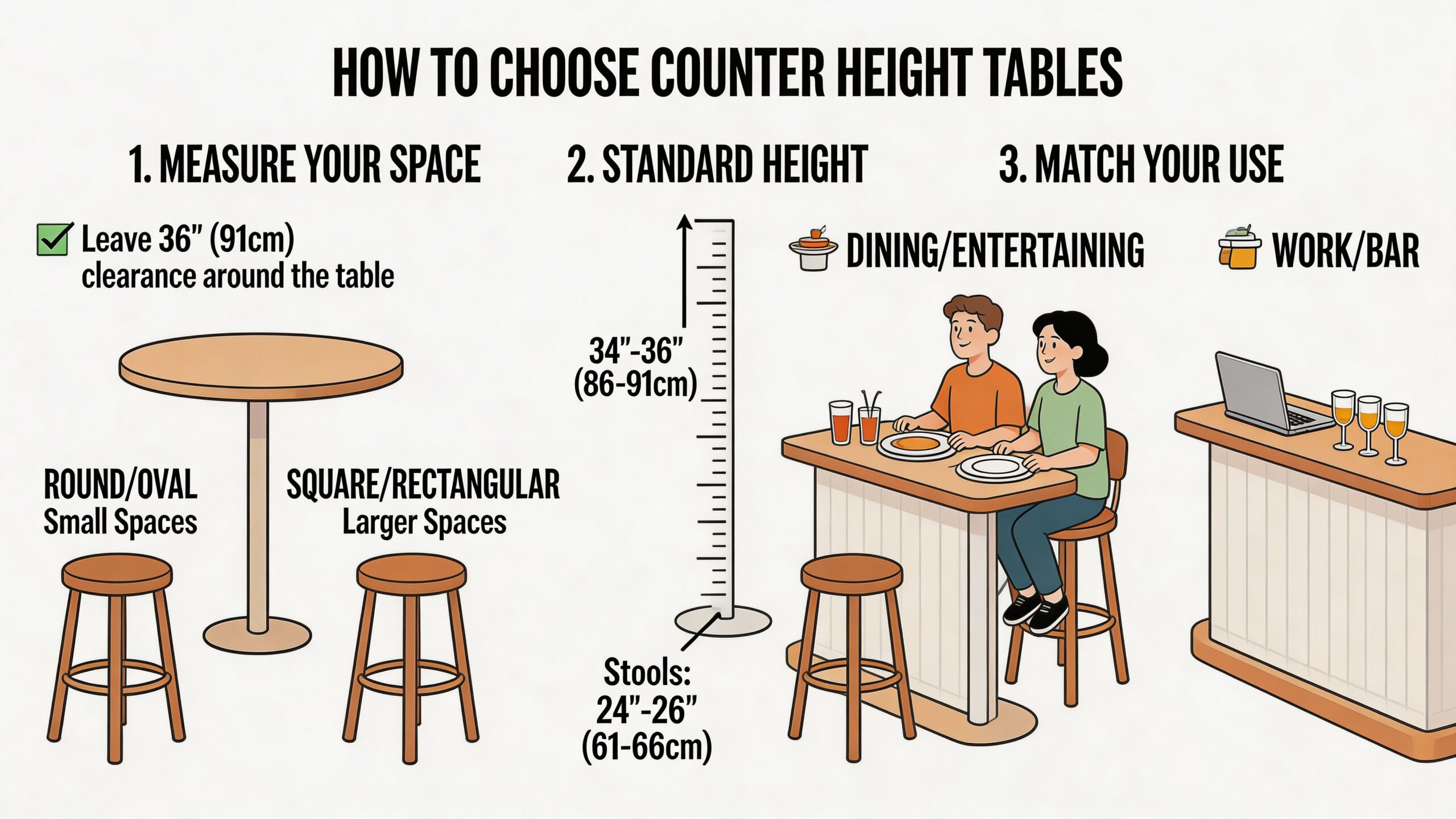
A counter height table generally measures 34 to 36 inches tall. That range mirrors the height many homeowners already know from their kitchen work surfaces, which is why these tables often feel intuitive in open layouts.
In practical terms, you’re not dropping down into a traditional dining posture. You’re sitting a little higher, closer to the working height of the room. That’s why these tables often work well in breakfast areas, compact dining zones, and spaces that do double duty.
The layout matters as much as the table itself.
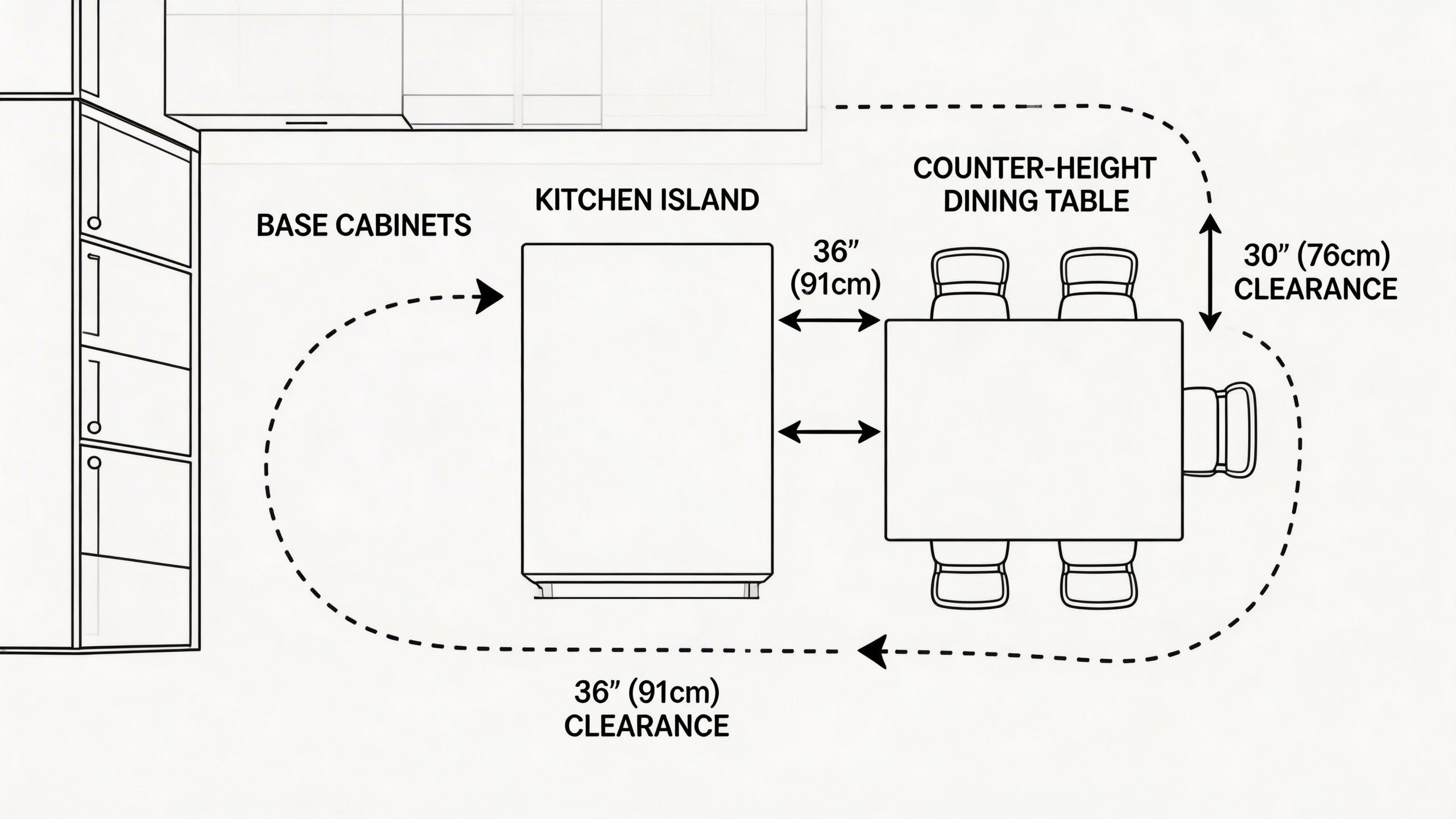
If you’re planning around an island, doorway, or banquette, start with accurate room measurements. A simple measuring guide such as this furniture measuring resource can help you note widths, turning points, and tight transitions before you fall in love with a silhouette that won’t sit comfortably in the space.
The stool relationship
The second dimension people often miss is the seat height. Counter height tables usually pair with stools in the 24 to 27 inch range. That pairing is what creates a comfortable sitting position.
If the stool is too low, people hunch upward toward the tabletop. If it’s too high, knees crowd the underside and the seat feels awkward within minutes. This is why table and stool should always be chosen together, not as separate purchases made weeks apart.
A quick rule helps:
- Table at 34 to 36 inches usually calls for counter stools
- Bar-height seating belongs with a taller table entirely
- Standard dining chairs won’t feel proportionate here
Why this height became so common
Counter height tables fit naturally into Southern Ontario’s open-plan homes because they align with kitchen counters visually and functionally. In rooms where cooking, dining, and conversation happen in one shared zone, that alignment makes the room feel less chopped up.
There’s also a heritage thread worth noticing. Higher table formats have older European precedents, but today’s appeal is thoroughly contemporary. Homeowners want one well-proportioned surface that can handle daily life without making the room feel heavy.
What to check before you choose
Bring these measurements with you when shopping:
| What to measure | Why it matters |
|---|---|
| Room width and length | Confirms whether the table scale fits the footprint |
| Distance to counters and walls | Helps preserve easy movement around the table |
| Existing counter height | Shows how closely the table will align with the kitchen |
| Preferred stool seat height | Prevents the common mistake of mismatched seating |
Practical rule: If a table looks right but the seating feels wrong, the problem is usually proportion, not style.
That’s the heart of dimension planning. Counter height tables aren’t difficult to understand, but they do reward precise choices.
Comparing counter height tables and other table heights
Not every room wants the same posture. That’s why table height should be treated as a functional choice first and a style choice second.
Three heights, three different experiences
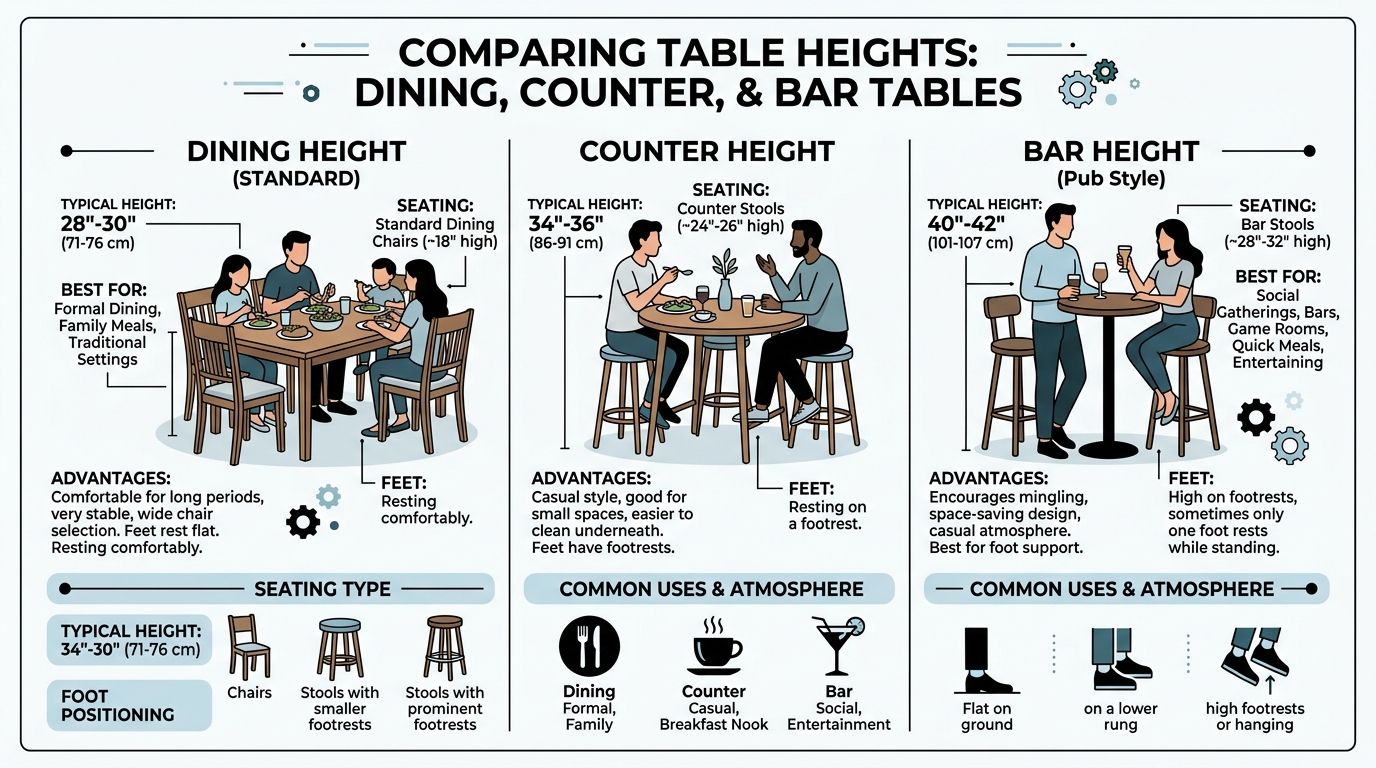
A standard dining table usually sits at 28 to 30 inches. A counter height table sits at 34 to 36 inches. Bar height moves taller still, typically 40 to 42 inches.
Those numbers sound close on paper, but they create very different rooms.
| Table type | Typical height | Typical feel | Best suited to |
|---|---|---|---|
| Standard dining | 28 to 30 inches | Relaxed, grounded, slower meals | Formal dining, long dinners, upholstered seating |
| Counter height | 34 to 36 inches | Casual, upright, conversational | Open kitchens, breakfast nooks, hybrid spaces |
| Bar height | 40 to 42 inches | Perched, social, more elevated | Entertaining zones, pub-style settings |
Counter height often becomes the middle path. It offers a more elevated style than a standard dining set without crossing into the less family-friendly feel of bar height.
The ergonomic difference
The strongest functional argument for counter height tables is how they relate to the body in a kitchen-centred room. Counter height tables (34–36 inches tall) provide an ergonomic advantage by aligning with average kitchen counter heights and reducing lumbar flexion by 28% compared to standard tables, according to the Woodstock Outlet discussion of counter and bar height tables.
That sounds technical, but the lived version is simple. You don’t drop as far from standing to seated. The shift feels easier, especially in spaces where people move between prep, serving, and eating.
How they change the room visually
A higher table can also feel lighter in a compact kitchen-dining area than homeowners expect. Because the top sits higher, the room can read as less crowded than it would with a lower, broader visual plane. This is one reason counter height tables often suit condos and open-plan family homes.
For readers comparing global dining traditions, it can also help to look at very different formats, such as traditional Japanese dining tables. They show how dramatically culture, posture, and floor-level habits shape what “comfortable dining” means. Height is never arbitrary.
A simple decision filter
If you’re still deciding, ask these questions:
Do you host long, lingering dinners often
Standard dining may feel more natural.Does your dining area connect directly to the kitchen
Counter height usually creates stronger visual harmony.Do you want a casual, multi-use surface
Counter height tables are often the most adaptable.Are you furnishing purely for entertaining adults
Bar height may suit the mood, but it’s usually more specialised.
If you want a second reference point while comparing dimensions, this guide to dining table heights lays out the distinctions clearly.
The right height should feel unsurprising once you sit down. Your body should understand it immediately.
Exploring styles and materials for counter height tables
A counter height table has a stronger architectural presence than a lower dining table. Because it sits higher in the room, you notice its materials quickly. Grain, finish, edge detail, leg shape, and base construction all matter more than many homeowners expect.
Wood first, then finish
Wood remains the most enduring choice for counter height tables because it balances warmth with structure. Maple feels crisp and refined. Oak brings visible grain and a little more visual weight. Walnut reads richer and more formal, especially in darker interiors.
The finish decides the mood.
A soft matte finish often suits heritage and transitional rooms. A smoother, deeper stain can sharpen a more urban setting. Painted or mixed-material bases can bridge cabinetry colours and nearby hardware if the dining zone sits directly off the kitchen.
For homeowners comparing constructions, edge profiles, and surface options, browsing various table tops can be useful as a visual reference for how top thickness and material treatment change the character of a table.
Why style has shifted upward
Counter height isn’t a niche category anymore. In Southern Ontario’s premium furniture market, counter height tables at 35–39 inches account for 42% of casual dining purchases, driven by millennial buyers favouring pub-style versatility, with a 22% sales growth from 2010–2020, as noted in this overview of counter vs dining height.
That shift tells us something important. Buyers aren’t choosing these tables only for novelty. They’re choosing them because they fit the way contemporary homes are used.
Style directions that work well
Some of the strongest looks for counter height tables include:
Heritage-inspired woodwork
Turned legs, framed tops, and visible joinery suit homes with traditional detailing or older neighbourhood character.Clean-lined modern forms
Slimmer profiles, restrained bases, and quieter finishes work beautifully in condos and renovated open-plan spaces.Industrial accents
Wood paired with metal stretchers or hardware can bring definition without making the room feel cold.Community-table proportions
Longer rectangular forms encourage gathering and suit homes where meals, schoolwork, and visiting often overlap.
The room beneath the table matters too
A table never stands alone. Rug choice changes everything.
A hand-knotted rug softens acoustics, defines the dining zone, and introduces pattern beneath a table that might otherwise feel stark. Rooms become memorable with such details. The table provides function. The rug provides atmosphere and visual grounding.
That’s also why hardwood selection deserves care. If you’re weighing durability against character, this guide to choosing the right hardwood is a practical primer on how species affect longevity and appearance.
One factual product example
One option in the market is the Bennington Counter Height Pub table, listed at 35 inches high. A dimension like that illustrates how many counter height tables are designed to sit neatly within the expected range while still reading as substantial in the room.
Material choice should answer two questions at once. How will it wear, and how will it age visually?
That’s the standard worth keeping. A design-forward table should still feel right after the novelty of the purchase has worn off.
How to choose counter height tables for your space
Most mistakes with counter height tables happen before the furniture arrives. The table may be beautiful, but the footprint is wrong, the stools tuck poorly, or the circulation path pinches the room. Good selection starts with measurement and a realistic reading of how the space is used every day.
Start with the room, not the table
Walk through the space at the busiest time of day. Notice where people pause, pass behind one another, unload groceries, or pull out seating. That pattern tells you more than a floor plan alone.
In compact homes, this matters even more. Counter height tables optimize small-space functionality in Southern Ontario’s urban condos by creating an illusion of 10–15% more space, with optimal knee clearance of 10–12 inches supporting ergonomic seating and reducing dining fatigue by 35%, according to this explanation of how counter height dining sets differ from standard tables.
The key phrase there is optimal knee clearance. A table can look slim and still feel cramped if the base intrudes where people need to sit.
A five-step way to narrow the choice
Mark the footprint on the floor
Use painter’s tape to outline the proposed table size. Do this before shopping if possible.
Seeing the footprint in real scale helps you judge whether the room still breathes. It also reveals whether a rectangular, round, or square shape makes more sense.
Sit higher in your mind
Homeowners often visualise a table only from standing height. Counter height tables need to be judged from the seated position too.
Pull up a stool or chair of similar height if you have one. Notice sightlines to the kitchen, windows, and adjacent seating. A higher table changes those relationships.
Check the base, not just the top
The tabletop dimensions tell only half the story.
Look closely at pedestals, trestles, stretchers, and corner legs. The most comfortable tables allow knees and feet to move naturally. If the base is too dominant, the table may seat fewer people comfortably than it appears to.
Choose shape by movement pattern
Different rooms call for different shapes.
- Round tables soften corners and help conversation in tighter breakfast spaces.
- Rectangular tables suit longer rooms and homes where multiple uses happen at once.
- Square forms can work beautifully in balanced rooms but can feel blocky in narrow plans.
Select stools at the same time
This is not an afterthought. It’s part of the specification.
Bring stool dimensions into the decision early, especially the seat height, back height, and whether arms need to clear the apron. A stool that looks lovely online may be entirely wrong for the table once the numbers meet.
Don’t ignore who uses the room
Children often like counter height because it feels a little more active and social than a standard dining setup. Adults often appreciate the easier transition between standing prep and seated eating.
Accessibility needs a more careful lens. Some people enjoy the higher perch. Others find repeated climbing onto stools tiring or unstable. If an older family member uses the table daily, prioritise supportive seating, easier transfer in and out, and enough surrounding space to approach comfortably from more than one angle.
Some rooms ask for drama. Others ask for ease. Daily dining spaces should favour ease.
Build a specification sheet
Before making a final decision, write down:
| Item | What to record |
|---|---|
| Table height | Confirm it falls in the counter height range |
| Tabletop size | Length and width that fit the taped footprint |
| Base type | Pedestal, four-leg, trestle, or other |
| Stool seat height | Match to the final table height |
| Room notes | Tight corners, vents, windows, traffic paths |
That simple sheet becomes invaluable if you’re working with an interior designer, ordering bespoke furniture, or comparing several models side by side. It turns preference into a clear brief.
Styling counter height tables with stools
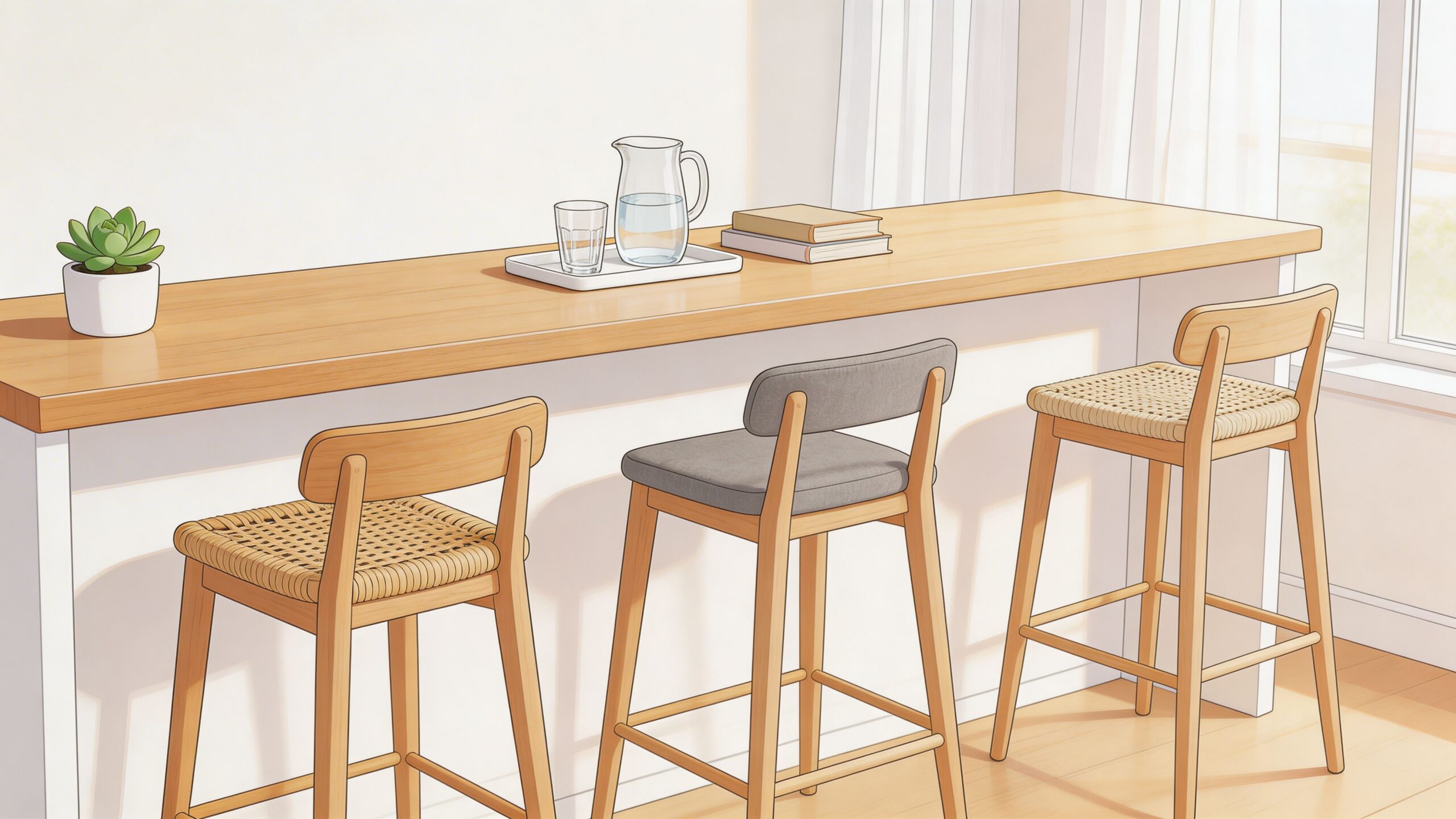
Once the dimensions are settled, the room becomes about balance. Counter stools can either refine a table or fight with it. The difference usually comes down to proportion, material, and restraint.
Match the stool to the room’s mood
A backless stool keeps the room open and works well where sightlines matter. A stool with a back feels more anchored and suits homes where people stay seated longer. Upholstery adds comfort, but it also adds visual weight, so it should be chosen with the table finish and flooring in mind.
Leather tends to bring depth and patina. Wood feels timeless and artisanal. Metal accents sharpen the look if the space leans contemporary.
The safest pairing isn’t always the most interesting one. A richly grained wood table can benefit from stools with quieter lines. A clean modern table often needs a touch of texture so the room doesn’t feel flat.
Think in layers, not matches
Rooms become elegant when materials relate without repeating exactly.
Try one dominant material, one secondary texture, and one softening layer. For example, a wood table might anchor the room, leather stools might add character, and a wool rug might bring softness underfoot. That layered approach feels collected rather than purchased all at once.
If you’re shopping by silhouette, a made-to-order option such as the FAE counter stool is a good reminder that stool choice often deserves the same attention homeowners give the table itself.
Consider the view from every angle
Counter height tables are seen differently than standard dining tables. You notice the underside, footrests, stool legs, and spacing between seats more readily.
That means styling should account for what the room looks like when no one is sitting there. Leave enough visual breathing room between stools. If the table sits in an open-concept area, make sure the stool backs don’t create a hard visual barrier toward the kitchen or living room.
Designer’s Insight
Designer’s Insight
Our designers suggest pairing a bold Hancock & Moore leather stool with a neutral hand-knotted wool rug to balance the room’s energy. The leather adds structure and presence. The rug softens the composition and defines the dining zone without making it feel boxed in.
Small styling details that matter
A few details can enhance the whole setting:
- Use a lower centrepiece so conversation stays easy across the higher tabletop.
- Repeat one finish elsewhere in the room, perhaps in lighting or hardware, so the table doesn’t feel isolated.
- Choose stools with foot support if the table is used daily rather than occasionally.
- Let the rug lead the palette when you want the dining area to feel integrated with the rest of the home.
What not to do
Avoid treating the stools like bar seating if the room is still a family dining area. Oversized, nightclub-style stools can make a home feel less welcoming and harder to use.
Also avoid overfilling the table with decor. Counter height already has presence. It usually needs less ornament, not more.
When the stool, table, and rug speak the same design language, the room feels calm even before anyone sits down.
That’s the goal. Not decoration for its own sake, but a dining area that feels composed, generous, and ready to live in.
Care of counter height tables and white-glove delivery
A well-made counter height table should settle into daily life gracefully. That doesn’t happen by accident. Higher tables are touched constantly, leaned on casually, and used for more than meals. Coffee cups, laptops, school bags, serving platters, and elbows all leave their mark over time.
Daily care that preserves the finish
Start with the basics. Use a soft cloth for routine dusting and wipe spills promptly so moisture doesn’t sit on the surface longer than necessary. If the table is wood, avoid harsh cleaners that can dull the finish or leave residue.
Think seasonally too. Southern Ontario homes move through dry heating months and more humid periods, and natural materials respond to those shifts. Consistent indoor conditions help wood remain stable and looking its best.
A few habits go a long way:
- Use felt or protective pads under objects that stay on the table regularly.
- Rotate decorative pieces occasionally so sunlight and pressure don’t age one area unevenly.
- Lift rather than drag accessories across the top.
- Check stool footrests and hardware from time to time if the set gets heavy daily use.
Accessibility deserves equal attention
Care isn’t only about finish maintenance. It’s also about making sure the table remains comfortable and safe for everyone who uses it.
Existing content often overlooks elderly accessibility challenges with 34–36-inch tables in Ontario, where 18% of the population is over 65; Critelli addresses this with custom stool heights and in-home consultations aligned with local Aging at Home initiatives, as noted in this discussion of counter height dining sets and their pros and cons.
That matters in many households across Niagara and beyond. A counter height table may feel perfect for one family member and tiring for another. The answer isn’t always to reject the format. Sometimes it means choosing a stool with a supportive back, a steadier base, or an easier sit-to-stand feel.
Why delivery service matters more with taller tables
Counter height tables don’t just need to fit your room. They need to arrive, be assembled correctly, and be placed with care so the room functions from the first day.
That’s where white-glove service becomes part of the ownership experience. Placement, levelling, stool spacing, and packaging removal all shape whether the piece feels settled or disruptive. If you’re reviewing what that process typically includes, this delivery overview is a helpful example of the details homeowners should ask about.
A table that arrives beautifully but sits poorly isn’t finished.
The complete-room view
This is also where a design studio approach proves valuable. When a table is selected as part of a complete room concept, care decisions get easier. The finish can be matched to the light in the room. The stool upholstery can be chosen for real household use. The rug underneath can support the composition rather than compete with it.
White-glove delivery extends that thinking into the home itself. Placement is refined. The room feels resolved. The transition from showroom idea to lived-in reality becomes far smoother.
Furniture maintenance is often less about special products and more about thoughtful habits, steady conditions, and good setup from the beginning.
That’s especially true with heirloom quality pieces. Longevity begins with the first day the table enters the room.
Conclusion and next steps with Critelli
Counter height tables work best when they’re chosen with both discipline and imagination. The discipline is in the measurements, stool fit, movement paths, and material choices. The imagination is in seeing how one table can become the social centre of an open kitchen, a daily breakfast spot, a work surface, and a gracious place to gather.
For many Southern Ontario homes, that combination is hard to beat. The height feels connected to the kitchen, the posture feels lively, and the room often gains a cleaner visual rhythm. Add timeless craftsmanship, thoughtful styling, and the grounding presence of Art for your Floor, and the dining area begins to feel complete rather than merely furnished.
That heritage-minded approach has defined Critelli since 1914. A table isn’t treated as an isolated purchase. It’s considered within the architecture of the room, the habits of the household, and the long life of the materials themselves. That’s what turns a practical choice into an enduring one.
Experience the craftsmanship in person at our King Street Showroom.
Book your complimentary design consultation today.
Visit the Rug Market to find your room's foundation.
For homeowners seeking luxury furniture Niagara, interior design services St. Catharines, custom furniture Southern Ontario, and hand-knotted rugs Ontario, Critelli Furniture offers a heritage-focused starting point. Experience the craftsmanship in person at our King Street Showroom, book your complimentary design consultation today, or visit the Rug Market to find your room's foundation.