CRITELLI'S SUMMER SALE | UP TO 70% OFF



High End Mattress Brands What Truly Sets Them Apart


A busy professional can spend an evening comparing beautifully dressed bedrooms, then wake the next morning wondering why a mattress that felt impressive in a showroom doesn't feel quite right at home. The difference often sits beneath the fabric, in the foam density, support structure, climate response, and service that follows the sale.
High end mattress brands deserve a more careful reading than a price tag alone allows. A premium bed should offer heirloom quality, considered materials, dependable construction, and an ownership experience suited to a Southern Ontario home. It should also fit the room itself, much like a finely made chair or a hand-knotted rug.
Introduction Why High End Means More Than a High Price
The most persuasive luxury mattress is often the one that reveals its quality gradually. A plush surface may create an immediate impression, but lasting comfort depends on what happens after months of nightly use, through winter heating, humid summers, changing sleep positions, and the ordinary movement of two people sharing a room.
A discerning buyer should therefore ask more than whether a mattress feels soft or firm. The better questions concern how the bed is built, how its materials age, how its support behaves, and what happens if the chosen comfort level isn't right. A useful overview of the long-term reasons to choose carefully is available in this guide to investing in a high-quality mattress.
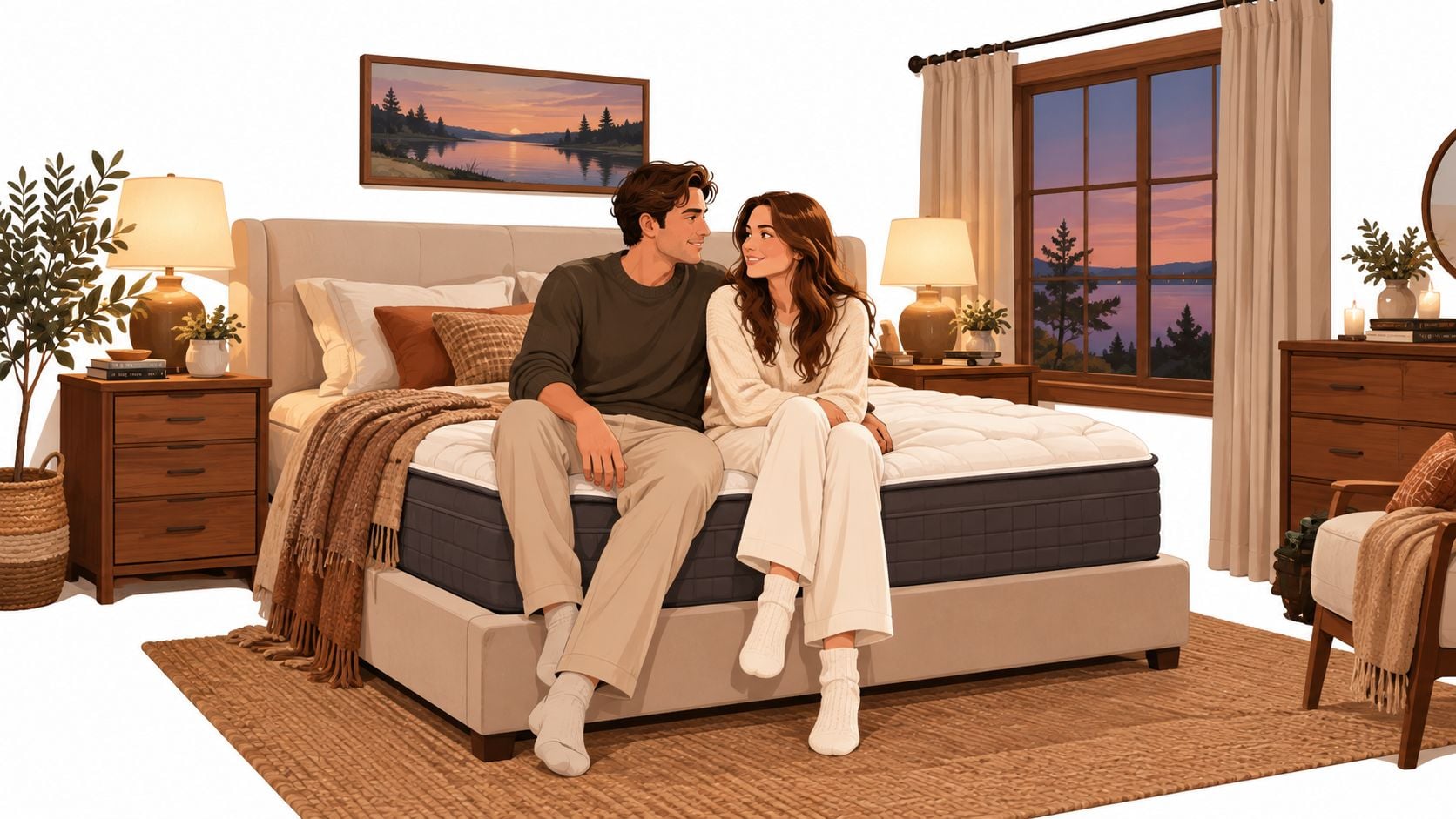
A room should feel composed, not merely furnished
Critelli Furniture's family-run history, dating to 1914, offers a useful perspective. Furniture that lasts isn't selected only because it looks appealing on delivery day. Its proportions, materials, joinery, and relationship to the rest of the room determine whether it remains welcome years later.
The same principle applies to sleep. A mattress can be technically advanced yet unsuitable for a person who sleeps warm, prefers a responsive surface, or shares the bed with a restless partner. Conversely, a quieter, more measured design may become the most valuable piece in the bedroom because it supports daily life without demanding attention.
Ontario is particularly relevant for premium mattress shoppers. Industry coverage identifies the province as Canada's largest mattress manufacturing centre, with production concentrated in the Greater Toronto Area, Southwestern Ontario, and the Ottawa region. Canadian market listings also identify more than 30 mattress brands manufacturing in Canada, including premium-positioned names connected with Ontario operations such as Marshall, Restonic, and Sleep Country's Logan and Cove line, as outlined in this guide to Canadian-made mattress brands.
Designer's Insight: Luxury is most convincing when comfort, construction, scale, and service all tell the same story.
This article approaches high end mattress brands as a curator would approach an heirloom furnishing. The aim isn't to crown one universal winner. It's to help buyers recognise meaningful differences, weigh a mattress over a 10-year lifecycle, and choose a bed that feels as considered in the home as it did in the showroom.
What Defines a High End Mattress Brand Today
A high end mattress brand resembles a bespoke cabinetmaker more than a flat-pack furniture producer. Both may create attractive finished pieces, but the cabinetmaker pays closer attention to the grain, the joinery, the tolerances, and the way the object will be used over time.
The same distinction appears in mattress construction. Premium brands generally earn their position through four connected qualities: deliberate material selection, precise engineering, consistent craftsmanship, and ownership support. A large catalogue alone doesn't establish luxury, and a lofty description cannot compensate for weak internal components.
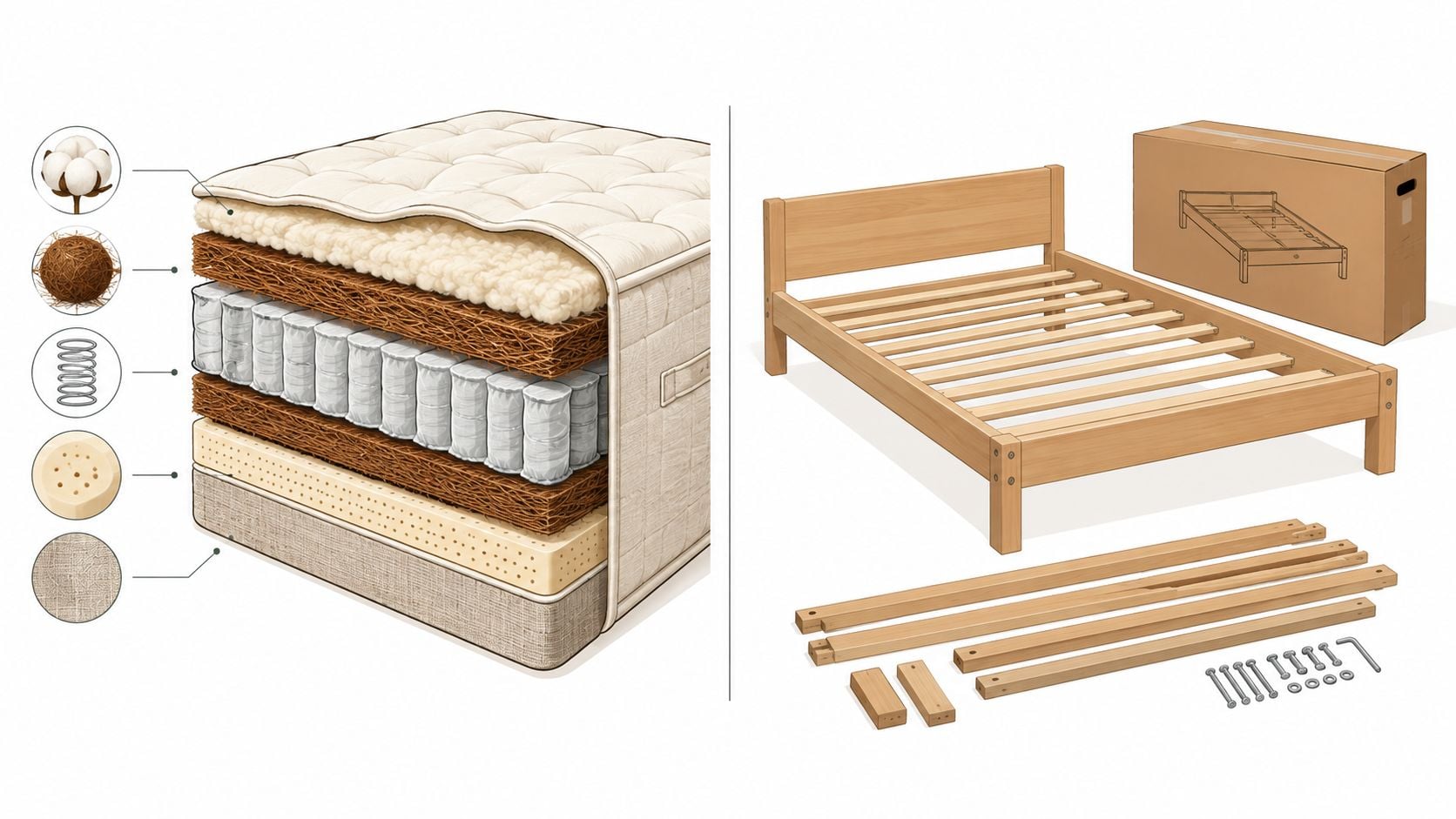
Four hallmarks of considered construction
Intentional material selection starts with the comfort and support layers. A design-forward brand may choose dense memory foam, natural latex, pocketed coils, wool, cotton, or combinations of these materials for specific reasons. The material should contribute to pressure relief, temperature management, motion control, or structural resilience rather than add an impressive-sounding feature.
Precise engineering determines how those layers work together. A mattress must distribute weight, maintain spinal support, and transition smoothly from the centre to the perimeter. The surface feel is only the first impression. The internal architecture creates the lasting experience.
Consistent craftsmanship matters because small inconsistencies can become large comfort problems. Layer placement, edge finishing, tufting, quilting, and cover construction all influence whether a mattress retains its intended shape.
Service-backed ownership completes the equation. Delivery, setup, removal of packaging, trial terms, warranty conditions, and local assistance can make the difference between a smooth purchase and a frustrating one.
Curation has a practical purpose
A curated selection helps shoppers compare meaningful differences instead of wandering through an undifferentiated catalogue. Brands such as Magniflex approach sleep as part of a broader design language, and an Italian-made sleep system can sit comfortably within a bedroom planned around proportion, upholstery, lighting, and textiles.
Ontario's manufacturing concentration also gives local buyers access to a wider domestic premium assortment, with shorter supply chains and more room for local service or customization. The relevant question isn't whether a mattress was made nearby for the sake of origin. It's whether the brand, retailer, and construction provide a coherent ownership experience.
A useful starting point for shoppers comparing categories and construction is this resource on mattress brands available in Canada. The most reliable choice will be the one whose materials, feel, and service align with the sleeper and the room.
Inside the Build Materials and Construction That Create Lasting Comfort
The inside of a mattress should be read like the plan of a well-built room. The cover creates the first impression, the comfort layers shape the immediate experience, and the support core carries the long-term structural responsibility.
Foam density is one of the clearest specifications to examine. Premium memory-foam comfort layers are generally specified at 3.0 to 5.0 lb/ft³, while support cores are often 1.8 to 2.5 lb/ft³, according to this foam-density guide. Density refers to the amount of raw polymer material contained in a given volume. It doesn't mean a mattress will automatically feel firmer.
Below roughly 3.0 lb/ft³, memory foam tends to soften and show body impressions more quickly. Higher density can preserve pressure relief because the material contains more polymer mass, not because the surface must feel hard or unyielding.
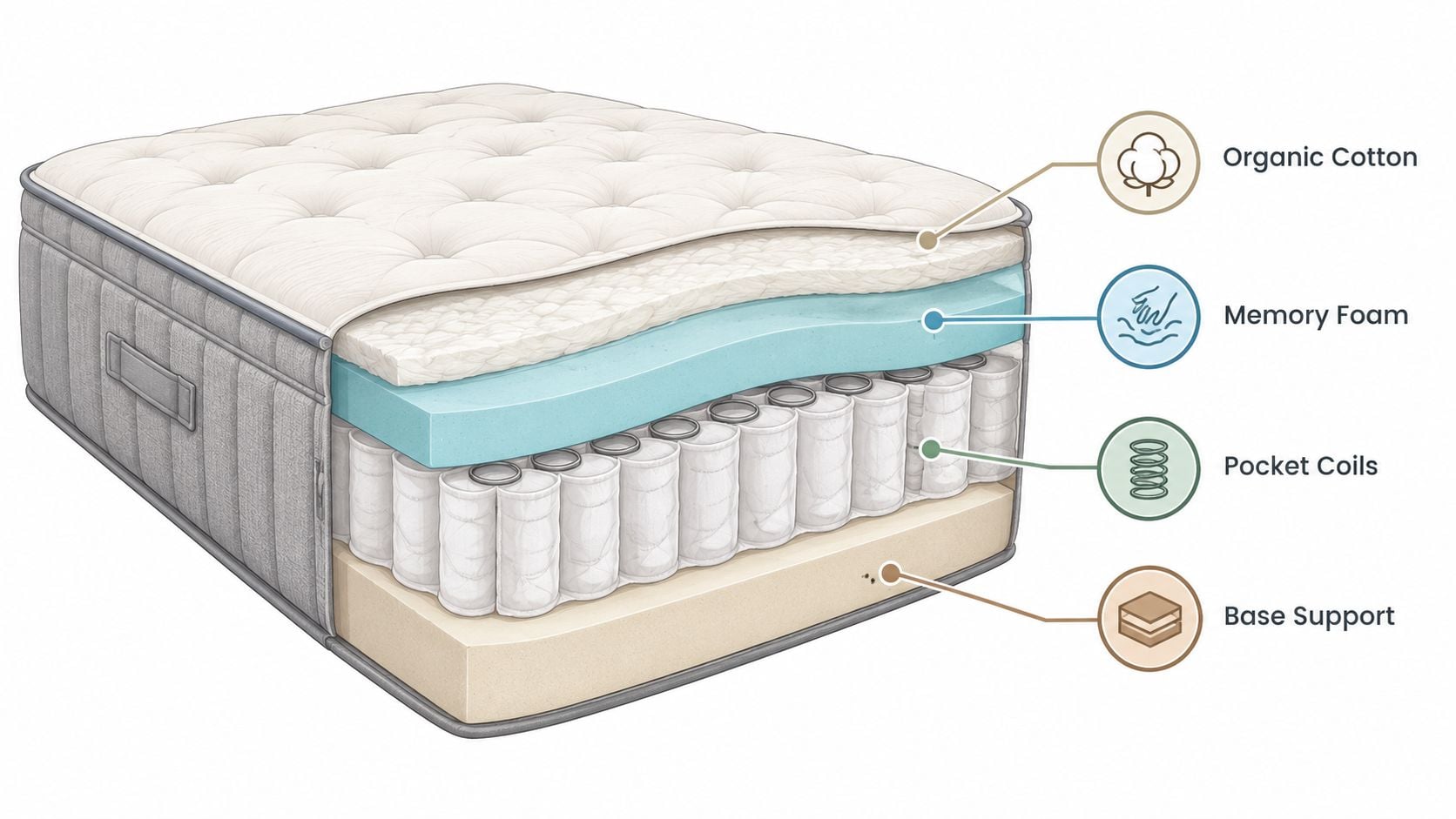
Reading the layers like a curator
A premium comfort layer should cradle the body without allowing the sleeper to lose support. Memory foam often offers a slower, more enveloping response, while latex tends to feel buoyant and easier to move across. A hybrid arrangement can combine foam's pressure relief with the responsiveness and airflow of coils.
Pocketed coils move independently because each spring is enclosed. That construction can help a mattress adapt to different areas of the body and reduce movement travelling across the surface. Edge support adds another practical benefit, allowing the sleeper to use more of the mattress and making sitting at the edge feel more secure.
Support cores deserve as much attention as the comfort surface. A beautiful quilted top cannot correct a weak foundation beneath it. Buyers comparing hybrid designs can use this explanation of what a hybrid mattress is to clarify how foam and coil systems share the work.
Hand-finished details also have a role. Hand-tufting can help hold internal materials in place, while carefully finished borders and breathable covers may contribute to shape retention and air movement. These details don't make a mattress luxurious on their own, but they can signal a brand's attention to construction rather than decoration alone.
Designer's Insight: A taller mattress can become the visual anchor of a bed, so its profile should be balanced with the headboard, frame, bedside tables, and rug scale. A substantial mattress belongs in a room with equally deliberate proportions.
How to Judge Performance Durability Certifications and Testing
A premium mattress should perform well in the conditions in which it will live. Southern Ontario bedrooms experience winter heating, seasonal humidity changes, and shifts in bedding layers, so a shopper should evaluate temperature regulation as carefully as surface comfort.
Luxury mattresses sold in Canada are commonly positioned to last 10 to 15 years or longer, while some premium constructions are described as lasting 15 to 25 years, as explained in this Canadian luxury mattress guide. Longevity depends on the complete build, the support base, body weight, use, and care. A warranty can provide useful protection, but it isn't a guarantee that the mattress will feel identical throughout its life.
Performance signals worth examining
Motion isolation matters most for couples. Dense foam can absorb movement, while independently moving coils can limit the spread of disturbance without making the bed feel completely unresponsive. The right balance depends on whether the sleepers prefer a still, enveloping surface or easier movement.
Temperature regulation requires a broader view. Breathable fibres, ventilated structures, coil spaces, and material choice all influence how heat and moisture move through the bed. A cool showroom surface doesn't necessarily predict comfort after several hours under winter bedding.
Firmness should be tested against personal preference rather than prestige. One Canadian survey cited in market coverage found that over 73% of respondents preferred at least medium firmness, suggesting that an ultra-soft luxury model may not suit a large share of buyers. The finding doesn't make medium firmness universally correct. It reinforces the need to test support rather than equate softness with refinement.
| Signal | What Indicates Quality | Common Misconception |
|---|---|---|
| Foam density | Clear density specifications for comfort and support layers | A softer feel means weaker foam |
| Motion control | Foam structure or independently moving coils that limit disturbance | Total motion isolation is always the most comfortable choice |
| Temperature management | Breathable materials and a construction that permits airflow | A cool cover alone controls overnight heat |
| Certifications | Verifiable standards for material content, emissions, or responsible production | The word “natural” proves a product is certified |
| Warranty terms | Clear coverage, exclusions, and support process | A long warranty guarantees the original feel |
Certifications should answer a specific question
A certification is useful when it validates something defined, such as material content, emissions, or manufacturing practice. Buyers should identify what the certification covers and whether it applies to the entire mattress or only a particular component.
For the bedroom as a whole, small maintenance choices also affect comfort. Readers reviewing when to replace pillows and duvets can consider how older bedding may alter temperature, loft, and support around a new mattress.
Pressure relief remains personal. A shopper with pronounced shoulder sensitivity may need more surface cushioning, while another sleeper may prefer a lifted, responsive feel. A pressure-relief mattress guide can help frame the discussion, but a thoughtful in-person test remains valuable.
Understanding Pricing Warranties and Trial Policies in Canada
Premium pricing becomes easier to understand when the mattress is treated as a household furnishing with a long service life. Canadian market guides place luxury and organic models at roughly CA$2,000 or more per queen, with some high-end latex models exceeding CA$3,000. Specialised organic options can range from about CA$2,500 to CA$4,500 for a queen set, according to this Canadian mattress pricing guide.
Ontario-focused guides commonly list premium Canadian-made mattresses such as Marshall around CA$1,500 to CA$3,000 per queen, while Logan and Cove is positioned in the CA$1,000 to CA$2,000 segment. Separate market coverage places luxury queen mattresses in Ontario commonly at C$3,000 to C$5,000 or more, illustrating how broad the premium category can be.
Look beyond the ticket price
A sensible comparison includes four financial questions:
- Construction: Which materials justify the price, and are density or support specifications available?
- Longevity: Does the build appear suited to the expected ownership period?
- Service: Does the offer include delivery, setup, packaging removal, or in-home assistance?
- Flexibility: What happens if the comfort choice isn't suitable after the showroom test?
A mattress priced higher at the outset may offer better lifecycle value if it preserves pressure relief and support for additional years. That calculation should remain practical rather than romantic. A premium bed isn't automatically a wise purchase if its firmness, temperature response, or dimensions don't suit the sleeper.
Warranty and trial terms need close reading
A warranty should be read for coverage, exclusions, sagging thresholds, required foundations, and the process for making a claim. Trial policies deserve equal attention, particularly for mattresses purchased online. Buyers should look for the trial duration, return conditions, transportation responsibilities, hygiene requirements, and whether fees apply.
White-glove service changes the ownership equation as well. In-home setup and packaging removal reduce the work required at delivery, while local support can simplify questions about foundations, adjustments, and future service. The value isn't only convenience. It's the confidence that a substantial purchase will arrive, be positioned, and be assessed in the intended room.
How to Evaluate Brands In Store and Online With a Buyer Checklist
A showroom visit should feel less like a performance and more like a quiet inspection. The goal isn't to choose the mattress that feels most luxurious for a few moments. It's to gather enough information to judge whether the bed will support ordinary nights at home.
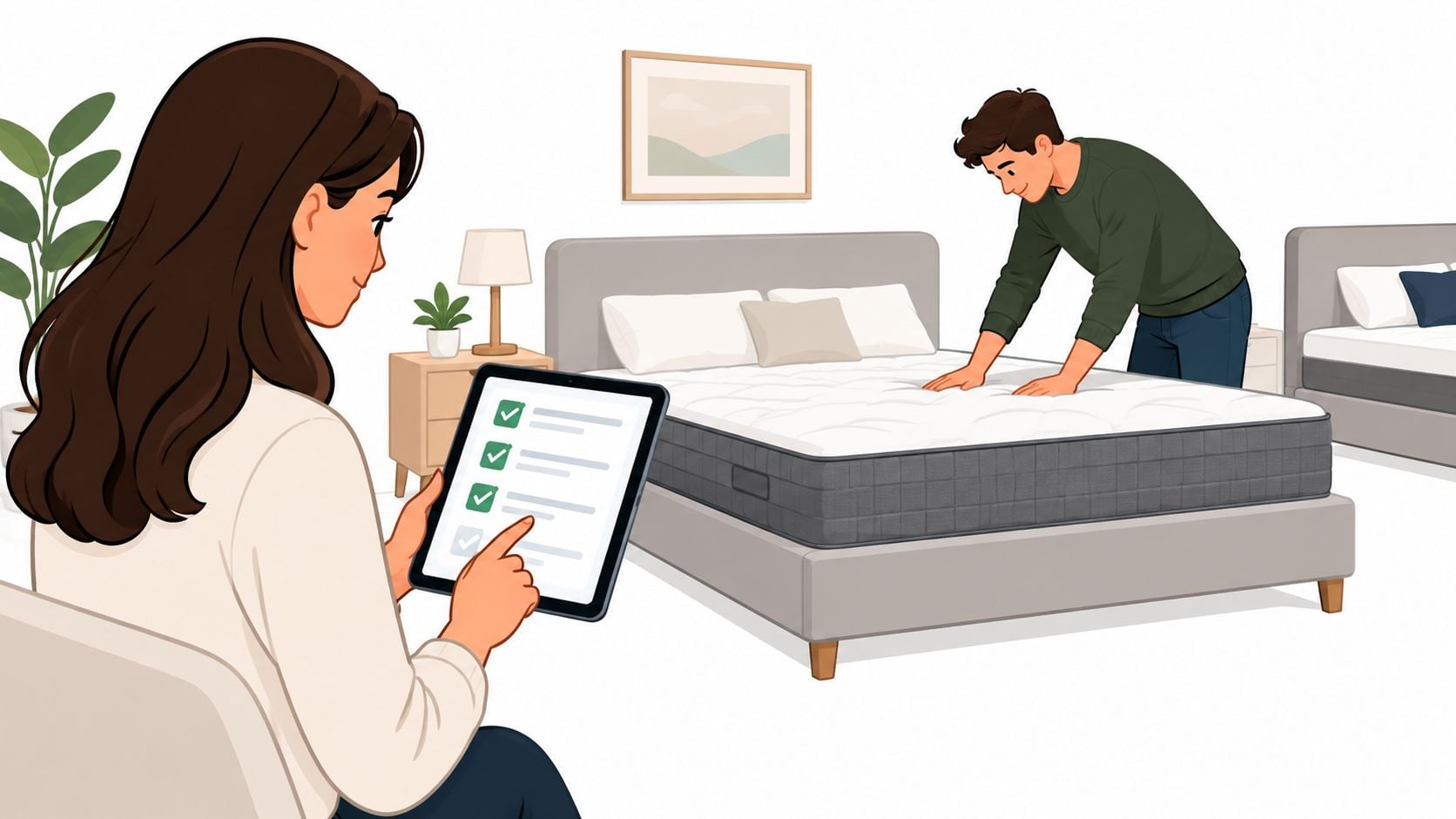
A showroom checklist for busy buyers
- Test the usual position: Lie in the position used most often, then remain still long enough to notice pressure around the shoulders, hips, and lower back.
- Assess movement: Change positions without relying on momentum. A surface that feels supportive should still allow natural movement.
- Check the edge: Sit and lie near the perimeter to assess stability and usable space.
- Test partner disturbance: If shopping as a couple, take turns sitting, turning, and rising while the other person remains still.
- Notice temperature: Pay attention to heat retention under the body rather than judging only the first touch of the cover.
- Ask for specifications: Request foam densities, support-core details, materials, certifications, and foundation requirements.
- Record the service promise: Write down delivery, setup, removal, trial, warranty, and return terms before comparing prices.
Online research requires the same discipline. Product pages should identify the construction clearly, while reviews are most useful when they describe sleep position, body comfort, temperature preference, service experience, and length of ownership. General praise is less useful than a specific account of how the mattress behaves.
For buyers moving between digital research and local appointments, these omnichannel mattress marketing insights offer helpful context on how online and traditional shopping experiences differ. The practical lesson is simple. Online information should prepare the questions, while in-person testing should verify the feel.
A polished showroom experience is only the beginning. The mattress has to make sense in the bedroom, on the foundation, beneath the bedding, and beside the person sharing it.
The mattress belongs to a complete room concept
Critelli's Design Studio treats furnishings as part of a complete room concept rather than isolated purchases. That approach matters because the bed's height, upholstery, fabric, lighting, and surrounding textiles influence how restful and balanced the bedroom feels.
A custom upholstered bed can pair with a neutral, hand-knotted wool rug as Art for your Floor, creating a calm foundation beneath a more expressive headboard. A curated selection becomes useful. It helps the buyer consider comfort, scale, colour, texture, and durability in one conversation.
Local shoppers can also weigh proximity to the Greater Niagara, Hamilton, and Toronto markets. For Niagara Region customers, Ontario retailers may offer free local mattress delivery on orders over $199, with service extending to St. Catharines, Niagara Falls, Welland, Niagara-on-the-Lake, Thorold, and Fort Erie. One retailer states that delivery in Niagara is typically 1 to 3 days and includes white-glove setup plus packaging removal, as described in this Niagara mattress delivery guide.
Bringing It Home Curated Comfort With Critelli Guidance
A high end mattress should earn its place in the home through repeated use, not through showroom theatre. The strongest choice balances pressure relief, temperature response, motion control, material transparency, and service. It also respects the bedroom as a composed interior, where the mattress works alongside the bed, rug, lighting, and surrounding furniture.
Southern Ontario buyers have access to a meaningful local context. Ontario's manufacturing base supports a broad domestic premium assortment, while regional retailers can add practical value through delivery coordination, setup, consultations, and after-sale guidance. In the Niagara area, one St. Catharines-region retailer reports carrying 100 or more Canadian-made mattresses and offering white-glove delivery across Niagara, details included in this St. Catharines mattress shopping guide.
A more considered way to choose
Critelli Furniture has operated as a family-run business since 1914, with a heritage rooted in refined living and personal service. Its approach places the mattress within a broader design conversation, alongside custom furniture, carefully selected upholstery, and the Rug Market, where rugs are treated as Art for your Floor and the foundation of interior design.
For a busy professional, this kind of guidance can save time without reducing discernment. A complimentary design consultation can help coordinate the mattress profile with the bed frame, room proportions, and existing furnishings. White-Glove Delivery can then provide a better transition from showroom to home, including the practical details covered through the White-Glove Delivery Service.
The most convincing luxury is quiet. It appears in the way the bed supports the body, the way the room feels settled, and the way the purchase continues to make sense years after delivery.
Critelli Furniture offers a curated selection of premium mattresses, bedroom furnishings, custom pieces, and hand-knotted rugs for homes across Southern Ontario. Visit Critelli Furniture to experience the craftsmanship in person at the King Street Showroom, book a complimentary design consultation, and visit the Rug Market to find your room's foundation.